

We live in an age that celebrates visibility while quietly starving the world of moral leadership. Institutions grow larger, crises become more sophisticated, and technology allows injustice to travel faster than compassion can respond. Human trafficking has become one of the world’s fastest-growing criminal economies. Organised crime now crosses borders with unprecedented ease. Millions of young Africans inherit a continent rich in talent yet burdened by systems that too often mistake credentials for wisdom and authority for service. In such a moment, the most important question is no longer who occupies the corridors of power, but who remains committed to protecting human dignity when no audience is watching. Margaret Akullo belongs to that increasingly rare tradition of African leaders whose lives remind us that leadership is not measured by titles collected across continents, but by lives restored, voices empowered, and futures reclaimed.
Her remarkable journey from a childhood impacted by political violence in Uganda to the frontlines of criminal justice in London, the United Nations, and now the patient work of mentoring a new generation offers something our fractured world desperately needs: proof that courage can be cultivated, that justice begins with empathy, and that the greatest legacy of a life is not the institutions one serves, but the people one leaves stronger than they were found. Before you finish this conversation, you may find yourself rethinking not only what leadership means, but what your own responsibility is to the world that will outlive you.
The African Story Is Bigger Than Its Problems
FAB: There are people who spend their careers chasing power, and others, like yourself, who spend their lives protecting people. Looking back over 35 years, from policing in London to leading United Nations programmes across multiple continents, which moments have quietly defined who Margaret Akullo became?
Margaret Akullo: I was actually having a conversation with friends and family about this interview, and I thought, how do you condense 35 years of professional life into an hour-long conversation?
But in terms of impact, which is what you are really asking, I think there have been so many defining moments. And how do we measure impact? There is the official measure, which is receiving commendations and recognition. That is the public acknowledgement of one’s work, and what the public defines you as.
You mentioned my trajectory, from working with the police to working with the United Nations. Previously, I received several commendations from the London Metropolitan Police Service for my analytical work on child trafficking. During my time with the UN, I received the Cambodia King’s Award for exceptional work combating child sex offences in Cambodia, including my work on child sexual exploitation in travel and tourism across Southeast Asia.
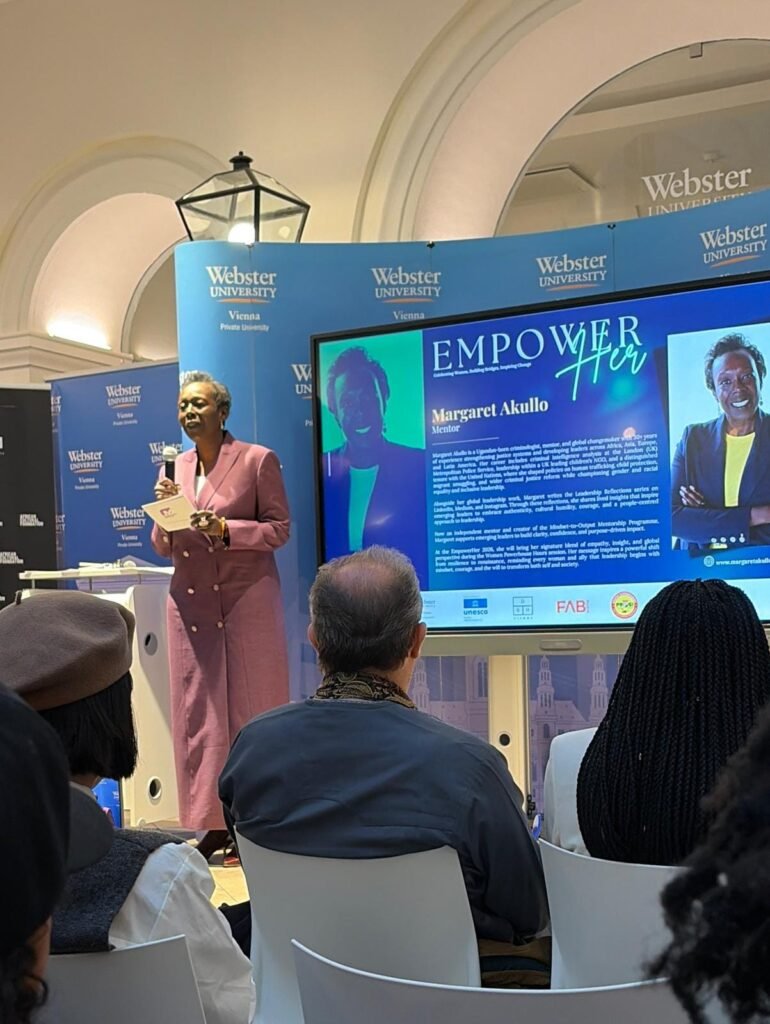
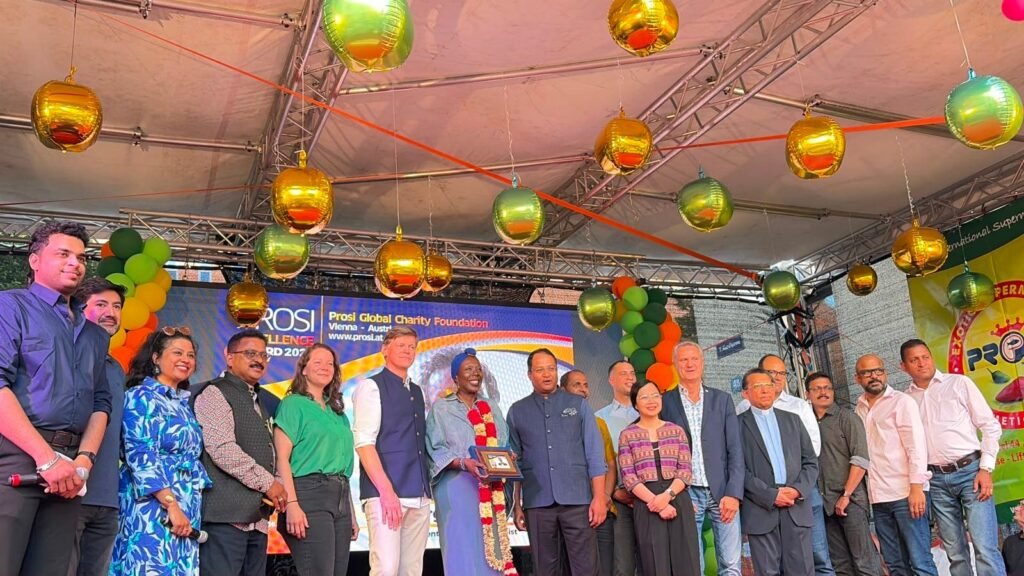
More recently, a Nigerian magazine, Leading Ladies Africa, featured me and my mentee, among others, on International Women’s Day 2026, recognising the work mentors do for African women across the continent. In June 2026, I also received a PROSI Excellence Award in Vienna for my work with the diaspora, particularly around mentorship in Austria and globally.
But to answer your question properly, I think the true measure of impact is what people take away from the work you do. It is the effect you have on the people you work with. Now that I am a mentor, I see the greatest reward as watching what I would call the seeds of guidance I have planted take root, and seeing my mentees flourish.
So yes, there have been many impactful moments throughout my career. But what matters most to me now is what I am doing through mentorship: helping emerging leaders from around the world own who they are, own their professions, and develop the confidence to walk fully into their potential.
There are many examples, but I would say my Impact Leaders Initiative has been my most impactful work to date, and what truly defines who I am becoming. My work with the United Nations was incredibly meaningful. I worked across four continents and over 20 countries, dealing with criminal intelligence and other complex issues around transnational organised crime. All of that had an impact. But taking those experiences and using that knowledge to support young, emerging leaders has been even more meaningful, because I can now see the results directly empowering them.
My earlier work was largely institutional. Today, it has become much more personal. I am taking everything I have learned from my career and feeding that knowledge into the next generation, helping young people draw from those experiences as they navigate their own journeys and growth.
So I would say I am still “becoming.” I am someone who values growth, kindness, integrity, empathy and courage. I want to understand people and the world around us. My role, and who I am, is defined by my lived experience.
Africa’s Greatest Strength May Be Its Young Population
FAB: We could spend much more time discussing your mentorship programme, but you spoke about impact, and it’s one thing to impact other people. It’s another for those experiences to change you as well.
Your work, as you mentioned, has taken you into some of the most difficult and painful areas of human experience: human trafficking, cybercrime, child exploitation, migration, and criminal justice reform. How do you carry those stories without allowing them to harden your view of humanity?
Margaret Akullo: I think it comes down to believing in humanity, and believing that whatever you do, you can make a difference. That belief also influences my vision for mentorship. Part of what I want to do is prepare emerging leaders and help them build the resilience they need to deal with difficult issues.
Throughout my career, particularly during my time with the London Metropolitan Police Child Abuse Investigation Team, we underwent psychological assessments to make sure we had the resilience to deal with some of the most horrific child abuse cases.
But I think my own resilience began much earlier, and it goes back to Uganda. I was very young when I witnessed conflict. Looking back, I realise my interest in human behaviour began there, even though I didn’t know it at the time.
I am talking about the 1970s, growing up during armed conflict. As a child, I saw dead bodies on the streets. I witnessed shootings and watched firing squads on television. Those experiences have a profound impact on you.
Even as a child, I knew instinctively that something was wrong. In the language we would use today, I would call it gross injustice. So I think that was where my resilience began. I knew something had to be done. I just didn’t know what that something was.
As I grew older, that curiosity developed into an interest in detective stories. I don’t know if you remember Enid Blyton’s The Famous Five and The Secret Seven — British fantasy stories about children solving crimes and protecting other children. I remember feeling excited whenever the stories involved children being protected. Looking back now, I realise those stories connected with something that had already been developing inside me.
We recently commemorated the Day of the African Child, June 16th, which honours the memory of students killed during the 1976 Soweto Uprising. The day focuses on young people who fought for their right to education in South Africa. I remember asking my father, “Why are they doing this to children?” It seemed so wrong to me. All they wanted was an education. Why should children have to fight for that right? I think that was where my interest in child protection began.
Perhaps that was also where my resilience started to develop. When you grow up witnessing trauma, people suffering, people being killed, and abuse taking place, you have to find ways to process what you have seen. Part of that resilience comes from the institutions you work within and the protection they provide for people dealing with traumatic situations. But you also need your own support systems, whether that is family, friends, or simply people around you with whom you can talk. In those days, we didn’t really talk about therapy the way we do today. Your therapy was often the community around you. That is where I think resilience is also built.
Looking back at my career, I also made a conscious choice to step away from the most intense child protection and human trafficking work at certain points. I would move into more managerial and leadership roles, which gave me the opportunity to step back, breathe, and rebuild my resilience. I think that balance was important. You cannot spend your entire life immersed in the most difficult aspects of human suffering without giving yourself space to process what you have experienced and heal from it. For me, stepping into leadership and management roles created that space while still allowing me to contribute to the broader mission of protecting people and making a difference.
FAB: I would love to delve even deeper into your Ugandan background. What was it like growing up?
Margaret Akullo: Uganda is a beautiful country. It still is. I don’t mean that in a biased way. I was born in 1967, and I am 59 now. I also grew up during the era of Idi Amin, 1971 to 1979, the dictator who ruled Uganda with an iron fist, for want of a better expression. So while immense beauty and a strong community existed in growing up there, the war and the political violence cast a dark shadow over everything.
I come from a large family of seven children, and my father worked for the government, which eventually made him a political target. When the dictatorship took hold and people began disappearing and being killed, my father became one of the people they came looking for. I was only seven or eight years old when a soldier pointed a gun at me, my mother and my siblings. That is about as terrifying as childhood can get.
But the starkest memories, the things that never really leave you, are of seeing people killed, seeing dead bodies on the streets, and watching so-called government opponents being executed. Some of it was even broadcast on television. Unfortunately, I am one of the people who often remembers the negative more than the positive.
But when I think about my childhood as a whole, perhaps we as a family were lucky in some ways. My father worked with the United Nations in Ghana, and eventually we moved to Accra in 1976. I remember the impact those experiences had on me even after we left Uganda.
Ghana was peaceful, but I remember seeing a group of soldiers walking one day. My siblings and I were in a car, and we immediately dived down into the footwell and hid, because we thought we were about to be killed. That was the psychological impact of witnessing such horrific circumstances at such a young age in Uganda. But children are resilient, and despite the trauma, we still found ways to enjoy life in Ghana.
I have been back to Uganda since, but I won’t lie: whenever I see any indication of danger or instability, I immediately become terrified, because the childhood memories of fear come flooding back. At the same time, there is a sense of peace that comes with returning home to your place of birth. You find a certain peace and sense of belonging within yourself. So I have a mixture of memories growing up in Uganda.
One of my most beautiful memories connects directly to my international perspective today. Uganda hosted a conference for the Organisation of African Unity, and as schoolchildren, we stood on the streets waving Ugandan flags and welcoming international delegates to the country. It was absolutely memorable, and I remember looking at those delegates and thinking, “I want to be one of those delegates one day.”
Even as a child, I thought that perhaps as an adult I could make decisions that would create a better world for children. That was the beginning of that aspiration. I grew up in Entebbe, which is a beautiful town by the lake, so I have many positive memories alongside the difficult ones. But when I think about the foundation of who I am today, and the experiences that shaped the person I eventually became, I believe it all started there.
FAB: You’ve advised governments, worked with diplomats, and collaborated with ministers, police commissioners, and international institutions. What have those rooms taught you about leadership that the public rarely gets to see?
Margaret Akullo: One of the biggest lessons has been about diversity and inclusion. You enter rooms where diversity can sometimes feel like a box that needs to be ticked. Our voices are not always given equal weight, and sometimes you find yourself minimising your own perspective simply to fit the institutional narrative.
I enjoyed the work. I genuinely did. I enjoyed diplomacy and my international career. But there was always a feeling that I could do more, and sometimes I couldn’t, because of bureaucracy and red tape. As an international civil servant, you have to toe the institutional line, so to speak. I am speaking particularly about my experience with the United Nations, rather than the London Metropolitan Police. Within the UN, donors often drive the agenda, and member states, who are usually the donors, ultimately dictate the priorities. You become the implementer, or one of the implementing agencies, responsible for delivering that member state’s agenda.
For me, the question was always: what is actually sustainable? I believed strongly in investing in the people who were already on the ground, particularly national staff from those countries. They understand their communities and the local context far better than outsiders and donors ever can. So I strategically focused on empowering the national staff.
Whenever I went into a meeting with a government institution, for example, regardless of the rank of the officials we were meeting, I would always bring a national staff member with me. That was part of the empowering process. They were learning and developing through those experiences. We might not have called it mentoring at the time, but I was mentoring them indirectly, and giving them opportunities to contribute to the work happening in their own country. It was important to me that nationals of the countries the UN supported were not simply observers. They needed a voice in the room.
It was an interesting UN career, and I would never dismiss the experience. It contributed enormously to who I am becoming today. But there were clear challenges around diversity, inclusion, and gender. Sometimes you have to remain quiet because the institution has an agenda, and you are expected to follow that line. If I could have changed that, I would have. But within a large institutional framework, meaningful change can be incredibly difficult.
So I would not describe my experience as entirely negative. There were many valuable aspects, and I learned a great deal. But there was often an ethical misalignment between the institution’s priorities and my own values, particularly when it came to advocating for people from Africa or the diaspora. I spent much of my career working outside my own country, and I often wondered what could be achieved if those same principles of diversity, inclusion and gender were truly applied.
As I mentioned, those were important rooms to be in: rooms with government officials, diplomats, ministers, police commissioners, international institutions, that the public rarely gets to see in action. Being in those rooms gave me such valuable experience and perspective. What was clear, however, was that there was always a lack of genuine inclusion. And if you were part of the diaspora, that lack of inclusion was particularly evident, visually and in practice.
FAB: Let’s talk about mentorship now. Many young professionals believe success is simply about collecting degrees and promotions. In your own journey, you’ve accumulated both. Yet today, your work centres on mentorship and legacy. At what point did success stop being about achievement and start becoming about significance?
Margaret Akullo: Of course, there is a career trajectory most of us are taught to follow. You get your degree, then another degree, gain work experience, move up the ladder, and continue progressing. And I don’t think you arrive at the stage I have reached without that foundation. The degrees matter. The experience matters. They create the platform from which you grow. But I don’t think learning ever stops.
I often use the phrase “lifelong learning,” because I genuinely believe we continue learning at every stage of life. It may not always come with a certificate, but life itself is our greatest classroom. We keep learning until we take our last breath. That philosophy informs my mentorship. My work isn’t focused on helping people collect accolades or simply advance their careers. It focuses on developing the person behind the profession. I ask, how do you gain clarity? How do you build confidence? How do you become the person capable of leading?
My Impact Leaders Initiative is built around what I call leadership shaped from the inside out. I arrived at that idea after noticing a pattern over many years. The people I worked with were intelligent. They were driven. They had ideas. They were committed. The problem was rarely a lack of ability. More often, they lacked structure, clarity, confidence, and a practical framework they could carry forward into their lives. So I developed what I call the Mindset to Output Framework. The idea is simple: before you can produce meaningful results, you have to transform the way you think. It is about shifting your mindset and developing the discipline, clarity, and confidence that allow your ideas to become action.
At the centre of that framework is a concept I return to repeatedly: going back to self. One of the tools I use is the Japanese concept of “ikigai,” which explores a person’s reason for being. I simply ask the four questions – What do you love? What are you good at? What does the world need? What can you be paid for? Those four questions reveal so much. The first speaks to your passion. The second speaks to your profession, where your education, skills, and experience come into play. The third is about your mission. The fourth is your vocation. If I answer those questions for myself today: my passion is mentorship, my profession is leadership and mentorship combined, my mission is helping people gain clarity about themselves and the world around them, and my vocation is giving guidance. That is the same process I take my mentees through.
What is fascinating is that, despite all the qualifications and achievements, a common thread always emerges with the mentees. Many are accomplished, but they still lack confidence, because the world has a way of diminishing people. Part of my role is helping them stop diminishing themselves. I want them to recognise the leadership qualities they already possess, and then develop those qualities intentionally. The programme is not simply about improving a CV or polishing a LinkedIn profile. It is about building what I call a portfolio of influence. Some mentees have gone on to develop outstanding strategy documents after initially believing they weren’t capable of doing so. The ability was always there. They simply needed someone to help them recognise it.
So yes, the degrees matter, the accolades matter. But what matters just as much, if not more, is emotional intelligence. We talk a great deal about IQ, and of course it is important. But IQ can be taught. Your emotional intelligence, your EQ, is about who you are. It impacts how you lead, how you connect with people, and ultimately why you do what you do. That, for me, is where legacy and success is significant.
FAB: I have to confess, you are an exceptional teacher, because that framework answers something many people struggle to explain. It helps explain why so many talented young professionals remain caught between potential and execution. And I think you touched on one of the biggest reasons: confidence.
Margaret Akullo: Absolutely. I also think it comes down to knowing that someone genuinely believes in you. Many of my mentees are complete strangers when they first reach out to me. I don’t know them personally. But I choose to believe in them, often before they believe in themselves. Sometimes I can see something in them that they simply cannot see yet. I didn’t really have that growing up. Our mentors were our communities, our parents, our aunties, our uncles. They guided us, but not through the kind of structured mentorship we see today.
I remember mentoring a young woman who was absolutely brilliant. She was about 21 or 22, but she constantly diminished herself. She kept saying, “I haven’t done this yet, I haven’t achieved that yet, I am not ready.” I simply said to her, “You are ready. You are ready to take on the world. You just need to work through the process.”
Sometimes hearing someone genuinely say, “I believe in you,” changes everything. People need someone who truly believes in them, not because it’s fashionable, or because someone is ticking a mentoring box, but because they genuinely see their potential. That also means being honest.
Sometimes mentorship is about holding up a mirror. When my mentees answer those four ikigai questions, I don’t immediately explain why I’m asking them. Instead, I reflect their own answers back to them. That often reveals things they hadn’t recognised about themselves. Sometimes, for example, cultural issues emerge that they didn’t realise had been holding back their progress.
I remember mentoring another young woman in her mid-twenties. She had an outstanding professional profile but was terrified of sharing it online. She said, “My friends will think I am boasting.” I told her, “You are putting yourself at a strategic disadvantage. You have all these skills, yet you are allowing the fear of what other people might say to hold you back.”
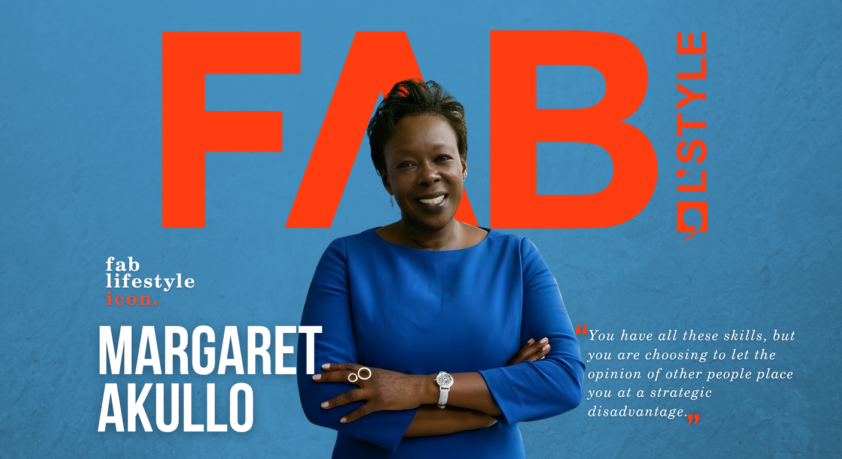
We all do that to some extent. It takes confidence, and sometimes maturity, to reach the point where you can say, “I am putting my work out there regardless.” I explained it from a practical perspective. She was looking for work in Europe. I told her that most recruiters would search LinkedIn before they ever spoke to her. At that point, her LinkedIn profile simply didn’t reflect her capabilities. Her CV might tell one story, but recruiters also wanted to see her professional presence. I said, “You have all these skills, but you are choosing to let the opinion of other people place you at a strategic disadvantage.” That opened up a much broader conversation about culture and digital presence.
Many of us come from backgrounds where confidence is sometimes mistaken for arrogance. If you say, “I am good at what I do,” someone immediately says, “Why are you boasting?” I think many of us have experienced that. So a great deal of mentorship is about helping people separate confidence from ego. It is about giving themselves permission to be seen.
People often ask me why the Impact Leaders Initiative focuses primarily on those between the ages of 21 and 32. The answer is quite simple. At that stage, people are incredibly open to learning. They are curious. They are willing to grow. They are still shaping the habits and beliefs that will influence the rest of their careers.
That doesn’t mean I won’t mentor people beyond that age range. I am always happy to. But as people become more established in their careers, their needs become different, and often much more complex. Supporting them requires a different level of capacity. For now, I have chosen to focus my energy where I believe it can create the greatest long-term impact.
The World Still Has a Narrow View of Africa
FAB: Let’s talk about Africa. Across Europe, Asia, and Latin America, you’ve seen different systems of justice, governance, and leadership. Looking beyond politics, what strengths does Africa possess that the rest of the world still underestimates?
Margaret Akullo: I think one of Africa’s greatest strengths is its young population. There is a real opportunity to capitalise on what is often called the youth dividend. Africa has the skills. Africa has the population. And if we think globally, I believe the diaspora is also an advantage.
People in the diaspora have the experience of living outside the continent. They can engage with Africans on that level while also navigating the international landscape. That gives them a unique position.
There is so much potential across Africa. Where do you even begin? Culture, heritage, education, entrepreneurship, the list goes on. Of course, there is still a great deal to address. And even though you asked me to look beyond politics, politics, unfortunately or fortunately, plays a significant role in determining the pace of progress.
But if you look at individuals, I think change happens through a ripple effect. One person plants a seed, and that seed grows. I work mainly with Africans through my mentorship programme, some in the diaspora and some on the continent. Someone once asked me, because this is not an institutional programme, “Margaret, why are you only taking five to seven people per cohort?” I said, “I am not in a hurry. I am building a pipeline.” The idea is that those five or seven people will eventually go on to plant their own seeds and influence others.
I genuinely believe Africa has enormous potential, but it will not be one person who unlocks that potential or drives the entire agenda. It will take a network of people willing to invest in one another. One of the frameworks I use, and I have mentioned it already, is mindset. We need a mindset shift. We cannot remain too entrenched in the ways we have always thought, particularly when engaging with the international community. The same applies to the diaspora.
Let me give you a funny example. I am Ugandan, but I grew up mainly in the UK, so I don’t have a Ugandan accent. Whenever I return to Uganda and say, “I am Ugandan,” people sometimes respond, “No, you are not.” I remember registering for an event where Ugandans were entitled to a discount. I had flown in as the chair of an NGO board, and when I asked whether I qualified for the discount, the woman asked me, “Why?” I said, “Because I am Ugandan.” She looked at me and said, “Are you sure?” That has happened to me in Vienna as well.
It’s funny, but it reveals something important. We have to be open-minded about what an African looks and sounds like. Ugandans, Nigerians, Ghanaians, people from across the continent, have left Africa for many reasons: education, economic opportunities, family reunification, and many others. They may not fit the profile you expect, but they are still African. That mindset has to shift gradually, and I do see it happening.
I am essentially a one-person operation, so the way I see the impact of my work reaching Africa is through this pipeline of mentees. They are not all African, but the majority are. My hope is that they will take what they have learned and plant those seeds elsewhere. That is how I see my contribution to a change I think is currently underestimated.
Africa’s Youth Dividend Is an Opportunity, Not a Guarantee
FAB: Still on leadership, that is one word that appears repeatedly throughout your work. After three decades across continents, if you had to redefine leadership in one sentence for this generation, how would you define it?
Margaret Akullo: You ask such difficult questions. Could I answer that with a quote I often use, and see whether your readers can embrace it?
FAB: Absolutely.
Margaret: It is by Simon Sinek, the leadership expert and coach. He says, “The joy of leadership comes from seeing others achieve more than they thought they were capable of.” For me, that captures something fundamental, because it is not about personal achievements.
As you progress on your own leadership journey, you should also empower others. You should take joy in seeing people achieve things they once believed were beyond their reach. I personally believe leadership is a skill everyone possesses. People often think leadership is about having a title or holding a position of power. That is not leadership. Leadership is about inspiration. Leadership is also a privilege.
I feel privileged when someone believes my lived experience can help them, guide them or mentor them. My philosophy is rooted in ethical leadership. It has to embrace integrity. It has to be connected to social impact.
But as you climb your own ladder, you should also be helping to build other leaders. It doesn’t have to happen through a formal programme. Sometimes it is simply one sentence of encouragement. One sentence can empower someone. That is why I keep returning to emotional intelligence and the idea of developing leadership from the inside out.
We spoke earlier about accolades and credentials. Leadership should not be built solely on qualifications or climbing the career ladder. It has to be grounded in your identity. It has to be grounded in your lived experience.
Lived experience is often minimised in policy discussions, but I see it differently. I use the phrase “portfolio of influence” because I believe leadership is the sum of everything we have experienced, lived, learned and contributed throughout our lives.
One of my mentees once minimised the fact that she had been head girl of her school. She said, “I can’t put that on my CV.” I asked, “Why not?” She said, “It’s just a school.” I told her, “Let me reframe that for you.” Being the head girl of a school with 1,000 students is not something every 16 or 17-year-old does. There is only one head girl. I asked her to think about what she had actually done. She had led and managed a student body. She had negotiated with people. She had represented students in meetings. She had met members of parliament. She had delivered keynote speeches and spoken on behalf of an entire student community. I told her, “That is leadership.” I said, “You are going to put that on your CV. You are going to put it on your professional profile. And when you speak about yourself, you are going to recognise that experience for what it was.”
That is the kind of leadership I want young people to recognise in themselves. There is leadership in almost everything we do. If you have led a project, that is leadership. If you have organised a team, that is leadership. If you have taken responsibility for something and brought people together to achieve an outcome, that is leadership. Whether you are in school, an emerging professional, or in the middle of your career, there is lived experience you can draw from. As we move through life, we accumulate experiences. Those experiences are not simply anecdotes. They are resources. They can help us understand ourselves, develop our leadership skills, and empower others.
So, going back to Simon Sinek, I would say to that young person: you will find joy in leadership when you realise how empowering it is to watch other people discover they are capable of more than they thought. That applies to young people, emerging professionals, mid-career professionals, and really, anyone willing to lead.
FAB: And for a 25-year-old woman who wants to become a diplomat, and is preparing to enter diplomacy, international development or criminal justice, what is the one truth you hope she carries with her before she walks into her very first room?
Margaret Akullo: I think the first truth is that she should start engaging with the discipline before she officially enters it. There are so many free opportunities to learn about diplomacy and international development. Look for summer schools if they’re available. Take relevant courses. If you’re at university, explore programmes that help you understand how diplomacy and international affairs actually work.
Internships are also incredibly valuable, because they expose you to the reality of the work. Sometimes, when a young person experiences that reality before taking the job, they realise it isn’t what they imagined. I had a mentee considering work with the United Nations. I told her, “Come and spend a few days. Visit the headquarters. Let’s see how the UN actually operates within the world of diplomacy.” After two or three days, she came back and said, “There was just too much talking.” She felt there was too much discussion and not enough action.
So my advice to a young person entering this field would be: build your knowledge before you step in. It can look glamorous from the outside, but it isn’t always glamorous. Understand what you are getting into. Take the courses. Get the experience. Do the internships. Learn as much as you can before you enter the field. And understand that it is not easy. You are essentially uprooting yourself from what is familiar. You are moving into environments where you are constantly engaging with people from different cultures, countries and backgrounds. You need resilience. You need adaptability. And ultimately, your personality is what will help you navigate that world.
You also need to understand the importance of communication. Diplomacy requires you to know how to communicate well, how to be measured in your words, and how to navigate difficult conversations without compromising your integrity. And I would strongly encourage young people to learn a second language. Language opens doors. It gives you another way of understanding people and cultures, and in international work, that can be incredibly valuable.