




As skincare becomes more ingredient-conscious, the body is receiving a new level of attention. Retinol, peptides and other established actives are finding their way into body lotions, serums and treatments. But what insights does the science provide regarding this shift?
For a long time, the skincare conversation seemed to end somewhere around the jawline. The face had its cleansers, toners, serums, exfoliants and carefully selected moisturisers. It had routines built around individual concerns, from uneven pigmentation to fine lines and loss of firmness. The rest of the body was often given a different treatment. A shower gel, perhaps, followed by a generous application of body lotion. That was usually enough.
But the distinction is becoming less convincing. The skin on the arms, shoulders, chest, back and legs experiences many of the same environmental and age-related changes as facial skin. Sun exposure leaves its marks. Texture changes with age. Dryness, breakouts, uneven pigmentation and loss of firmness are not concerns limited to the face.
Now, the products are beginning to reflect that reality. In 2026, body care is moving beyond the traditional promise of soft, moisturised skin. Brands are introducing formulations that contain retinol, peptides, niacinamide, exfoliating acids and barrier-supporting ingredients. Some come in the familiar form of lotions and creams. Others are presented as body serums, treatment washes and targeted overnight products.
The industry has a name for this development: skinification. It describes the movement of facial skincare principles into other personal-care categories, particularly body care. Instead of treating the body as one large area that needs general moisturising, brands are beginning to address specific skin concerns with more targeted formulations.
This is not simply a change in packaging. It reflects a wider change in how people understand and care for their skin.
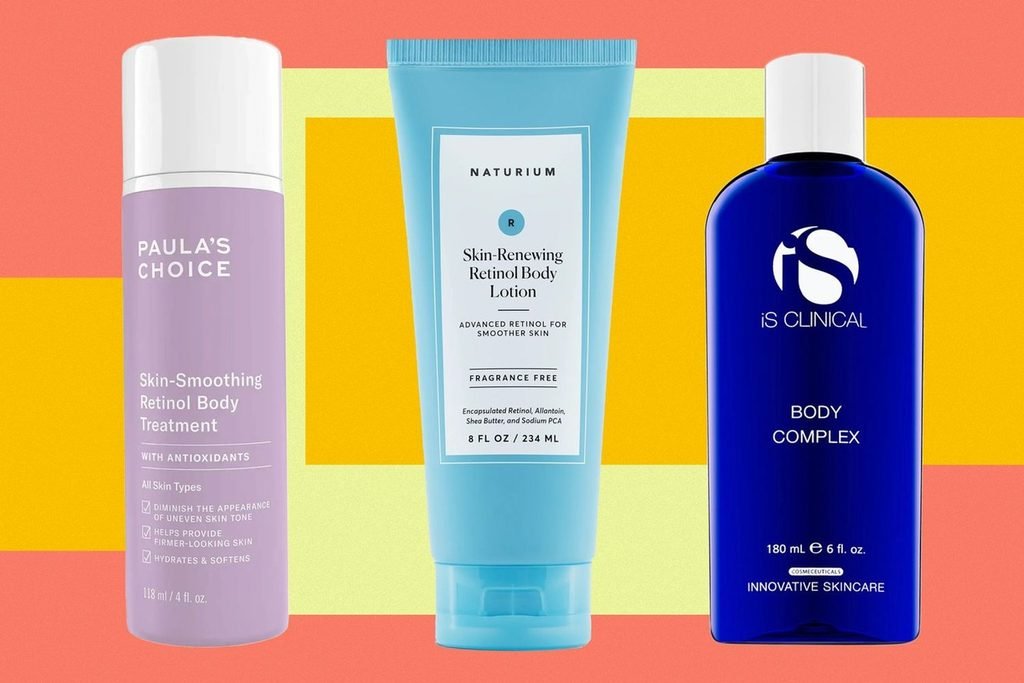
The body is getting its own skincare conversation
The growing interest in body skincare has been visible across the beauty industry. Vogue’s 2026 body-care trend report identifies retinol treatments, serum-based washes, targeted exfoliation and lightweight moisturising formulas among the developments shaping the category. The global cosmetic industry has also documented the expansion of facial skincare ingredients into body formulations, including retinol, peptides and ceramides.
There is a practical reason behind this development. Body skin has its own characteristics. It does not behave exactly like facial skin. According to Dr Harisha Karpath, a general practitioner and aesthetic doctor interviewed by South African retailer Clicks in September 2026, the skin on the arms, legs and torso is generally thicker, drier and has fewer sebaceous glands than facial skin.
The neck, chest and hands are important exceptions. Their skin is thinner and more delicate, and can show signs of ageing in ways that resemble facial skin.
These differences matter when choosing skincare products. A formula developed for the face cannot automatically be assumed to perform in the same way on the body. The concentration of an active ingredient, its delivery system, the product’s texture and the condition of the skin all influence how it performs.
The opportunity, therefore, is not to copy an entire facial routine and apply it everywhere. It is to understand what different parts of the body need and formulate products accordingly. That distinction is central to the new generation of body care.
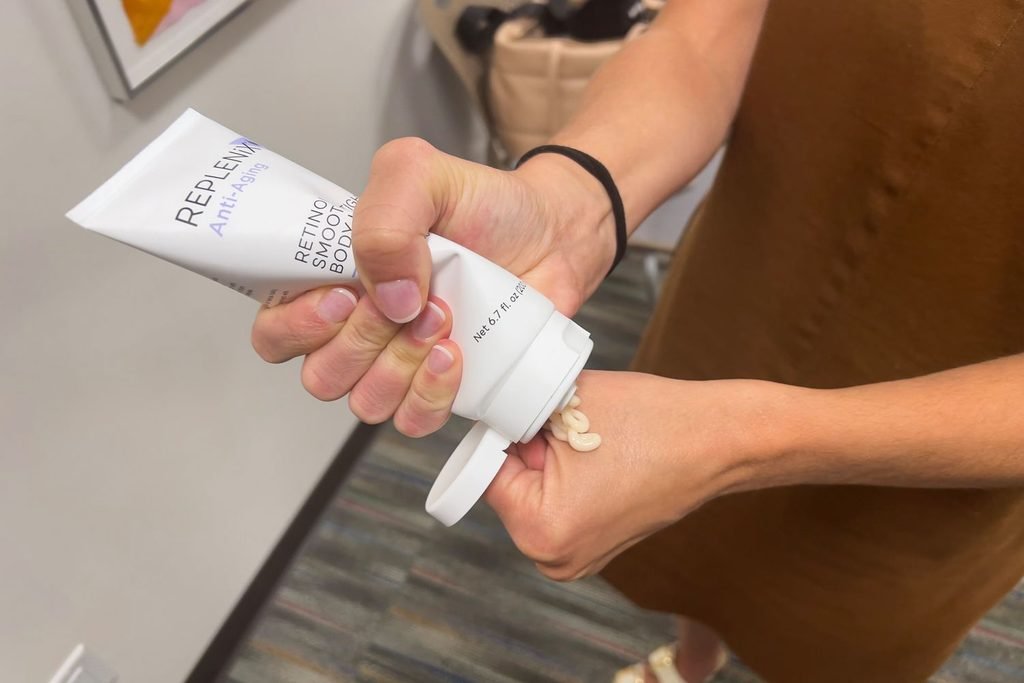
Why retinol is making the move
Among the ingredients making this transition, retinol has one of the strongest scientific foundations. Retinol is a form of vitamin A. It belongs to a wider family of ingredients known as retinoids. In skincare, retinoids are used to influence skin-cell activity, improve the appearance of uneven texture and pigmentation, and support collagen-related processes.
For years, retinol has been associated mainly with facial treatments. Its movement into body care is an extension of its established applications, rather than the discovery of an entirely new ingredient.
The chest and forearms, for example, receive considerable exposure to sunlight. Over time, such exposure can contribute to visible pigmentation, roughness and other signs of photoageing.
Dr Aderonke Obayomi, a board-certified dermatologist at Mount Sinai in New York, addressed this in a June 2026 interview with Vogue. She noted that retinoids can help with sun damage on the chest and forearms, keratosis pilaris and persistent dark marks.
Dermatologist Y. Claire Chang of UnionDerm also observed that patients are increasingly asking about changes in the neck, chest, arms and knees, particularly early signs of uneven pigmentation, fine lines and crepey texture.
There is also clinical research that helps explain the interest. A 2015 controlled clinical trial published in the Journal of Drugs in Dermatology investigated a stabilised 0.1% retinol formulation over 52 weeks. The main study involved 62 participants who applied the product to their faces. A separate exploratory study involved 12 participants who applied retinol to their forearms.
The researchers reported improvements in signs of photoageing. They also observed increased expression of type I procollagen and other skin-related markers.
The distinction is important: the main clinical findings came from facial treatment. The forearm investigation was a much smaller exploratory study. It would be inaccurate to present this research as proof that every retinol body lotion produces the same results. Nevertheless, it provides a scientific basis for investigating retinol beyond facial skincare.
Formulation is another important part of the development. Retinol can cause dryness, redness and irritation, especially when introduced too quickly. Newer body formulations often combine it with ingredients such as ceramides, hyaluronic acid and niacinamide to support hydration and skin-barrier function.
The intention is to make treatment more comfortable and easier to maintain. As Chang explained in her Vogue interview, barrier-supporting ingredients in newer formulations can improve their tolerability.
The shift is therefore not only about putting retinol into a larger bottle. It is also about making active ingredients work within products designed for the particular needs of body skin.
Recommended For You
Peptides: the growing interest in skin firmness
If retinol represents the established science behind this movement, peptides represent an area of growing interest. Peptides are short chains of amino acids. Amino acids are the building blocks of proteins, including collagen and elastin, which help give skin its structure and elasticity.
In skincare, different peptides are designed to perform different functions. Some are known as signal peptides because they interact with processes involved in collagen production. Others act as carrier peptides or target different cellular activities. Their presence in body products is particularly relevant to concerns about firmness, fine lines and changes in skin texture.
However, the science requires a closer look. In June 2026, Dr Shasa Hu, a cosmetic dermatologist with the University of Miami Health System, discussed the growing interest in peptides in an article published by UHealth Collective.
Her assessment was measured. She acknowledged that scientific evidence supports the use of certain peptides but cautioned against treating them as miracle ingredients. She also stressed that different peptides have different functions and that formulation plays an important role in their performance. Peptides can support a skincare routine, but they should not be confused with more established treatments such as retinol.
A systematic review and meta-analysis published in Frontiers in Medicine on 17 March 2026 adds another layer to the discussion. The researchers examined 19 randomised controlled trials involving oral and topical peptides. Their findings suggested improvements in some measures of skin hydration, brightness and wrinkle reduction.
But there was a significant limitation: only two of the 19 studies examined topical peptide treatments. The other 17 focused on oral formulations. The researchers also reported substantial differences between the studies in peptide types, doses, treatment periods and measurement methods.
This means the overall findings cannot be used as definitive proof that topical peptide body lotions deliver the same benefits. The evidence is promising, but further research is needed.
For consumers, this distinction is important. A product carrying the word peptide on its label is not automatically an effective firming treatment. The type of peptide, its concentration, formulation and ability to reach the intended part of the skin all influence its potential performance. The ingredient name alone tells only part of the story.
Beyond two ingredients: a more targeted approach to body care
Retinol and peptides are receiving considerable attention, but they are not the only ingredients shaping this development.
The wider movement includes several established skincare ingredients, each serving a different purpose.
- Niacinamide: Helps improve the appearance of uneven skin tone and supports the skin barrier.
- Ceramides: Help maintain the skin barrier and reduce moisture loss.
- Urea: Helps hydrate dry skin and soften rough areas.
- Alpha-hydroxy acids (AHAs): Ingredients such as glycolic and lactic acid help remove dead skin cells and improve rough texture.
- Salicylic acid: Helps clear clogged pores and is useful in products designed for body acne and ingrown hairs.
Dr Karpath identified these ingredients in her September 2026 interview with Clicks, explaining how their different functions can address common body-skin concerns. This is where the new approach becomes particularly interesting.
Someone dealing with persistent bumps on the upper arms may need a different formulation from someone concerned about dark marks on the back. Dry, rough elbows require a different approach from a chest showing signs of sun damage.
Body care is becoming less about finding one product for everything and more about identifying the concern before selecting the treatment. It is a change in how products are developed, marketed and used.
The science must come before the marketing
There is, however, a risk in the growing popularity of skinification. As more active ingredients enter the body-care market, the distinction between a scientifically supported benefit and a marketing promise can become difficult to recognise.
The presence of retinol does not guarantee a particular result. Neither does the addition of peptides establish that a product will improve firmness or restore lost elasticity. Concentration, stability, formulation, application and consistency all matter.
The limitations of peptide research are a good example. Although the 2026 systematic review found encouraging results, its small number of topical studies makes it difficult to draw firm conclusions about the effectiveness of peptide creams and lotions.
The same care is needed when interpreting claims about body firming, cellulite reduction and collagen production. A product that improves the appearance and hydration of the skin does not necessarily change the underlying structure of the body.
There is also the question of irritation. Introducing several active ingredients at once can increase the risk of dryness, redness and damage to the skin barrier. Retinol should be introduced gradually, with frequency adjusted to the individual’s tolerance. Dermatologists interviewed by Vogue recommend starting with once or twice weekly applications and increasing use as the skin adjusts. They also emphasise daytime sun protection, particularly on exposed areas. Retinoids are generally not recommended during pregnancy or breastfeeding.
The more sophisticated the product range becomes, the more important it is for consumers to understand what they are applying. A longer routine is not necessarily a better routine.
A new relationship with the skin below the neck
Perhaps the most significant part of this development is not the arrival of another fashionable ingredient. It is the change in attention.
For years, the face has received a disproportionate share of skincare investment, product development and consumer education. The body has often been treated as an afterthought, despite having its own needs and experiencing many of the same environmental pressures. That is beginning to change.
Consumers are becoming more familiar with ingredient names. They are asking what products contain, why those ingredients are included and whether the claims have evidence behind them. Brands, in turn, are responding with products that promise more than temporary softness or fragrance.
The result is a body-care category that increasingly sits at the intersection of cosmetic science, personal care and everyday beauty.
But there is no need to turn every shower into a clinical procedure. A gentle cleanser, a suitable moisturiser and protection from the sun remain important foundations. Targeted treatments can then be introduced according to individual skin concerns. Retinol and peptides are part of this evolution, but neither should be treated as a universal solution.
The future of body care will depend less on how many facial skincare ingredients brands can transfer into lotions and creams, and more on how effectively they can formulate, test and explain those ingredients for the skin they are intended to treat. After all, good skincare was never supposed to stop at the neck.