The story behind ONALAJA’s Spring/Summer 2027 collection began with a fire. On 11 June 2026, a blaze destroyed the brand’s London studio, including more than a decade of collections, samples, fabrics, embellishments, bespoke commissions and archive material. For founder and creative director Kanyinsola Onalaja, the loss was not only financial. It removed much of the physical record of a fashion house she had spent years building.
Three months later, she presented a new collection at London Fashion Week. On 28 October, she brought it to Lagos, where ONALAJA presented Re as part of the 2026 Lagos Fashion Week programme. The Lagos event, held in partnership with Sparkle, offered an expanded selection of the Spring/Summer 2027 collection and a different way to experience the clothes.
The presentation arrived during a season in which African fashion was examining its relationship with heritage, production and commercial growth. Under the theme CRAFTED: Heritage. Innovation. Circular Futures., Lagos Fashion Week placed artisans, traditional techniques, material use and the economics of fashion alongside the runway programme. ONALAJA’s collection spoke to several of these concerns, but its starting point was personal: what remains of a fashion brand when its archive, samples and accumulated work disappear?
A collection that became personal
Re was first conceived in 2020 as an exploration of transformation. Its central image was the phoenix, a symbol of destruction followed by renewal. At the time, the idea existed as a creative concept. The June 2026 fire gave it a different meaning.
After the fire, Onalaja returned to the original sketches. The collection no longer dealt with renewal as an abstract idea. It became a response to an event that had changed the direction of her business and her relationship with her work.
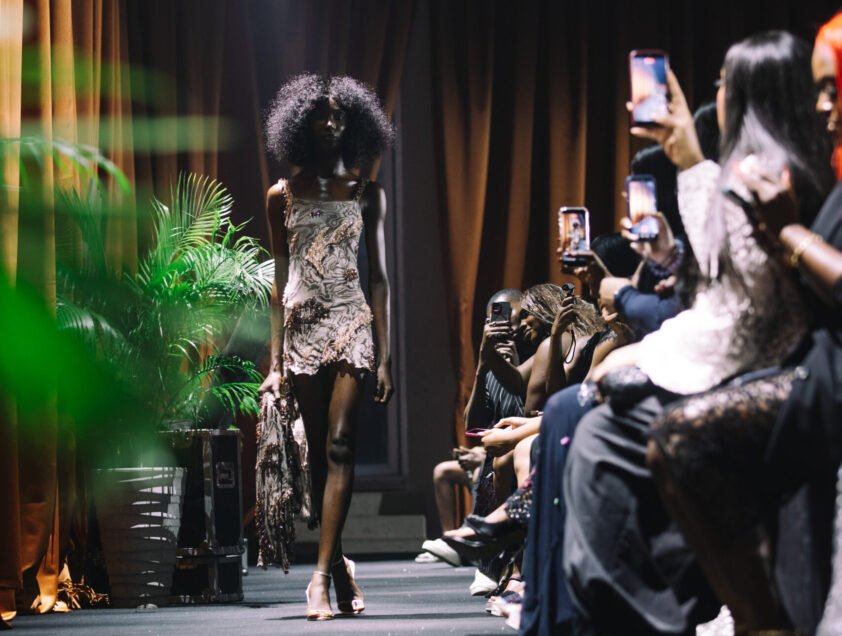
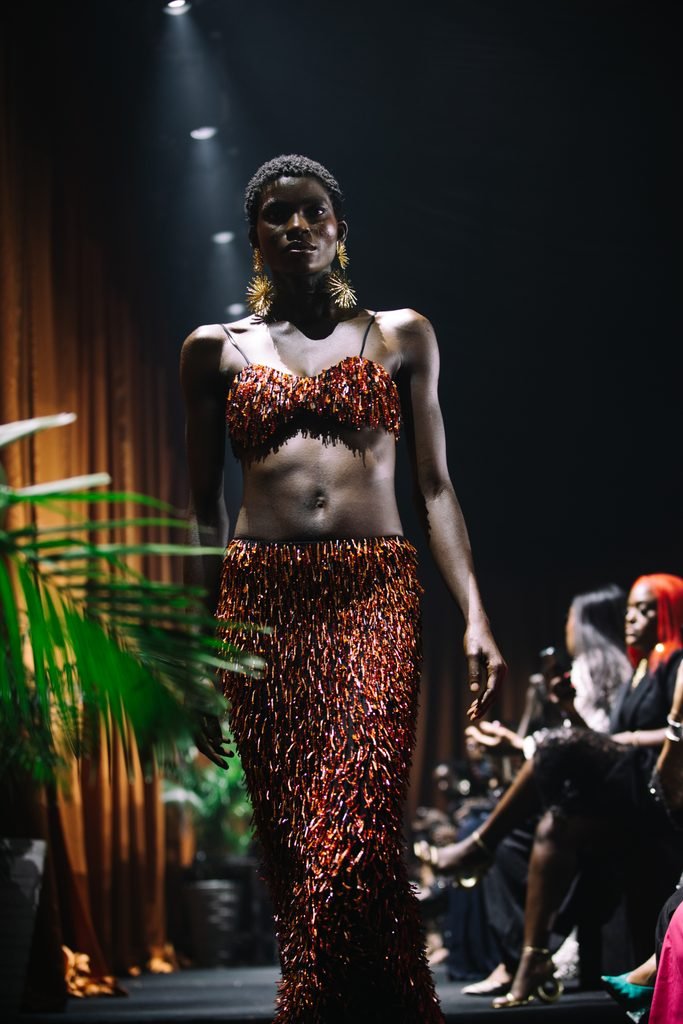
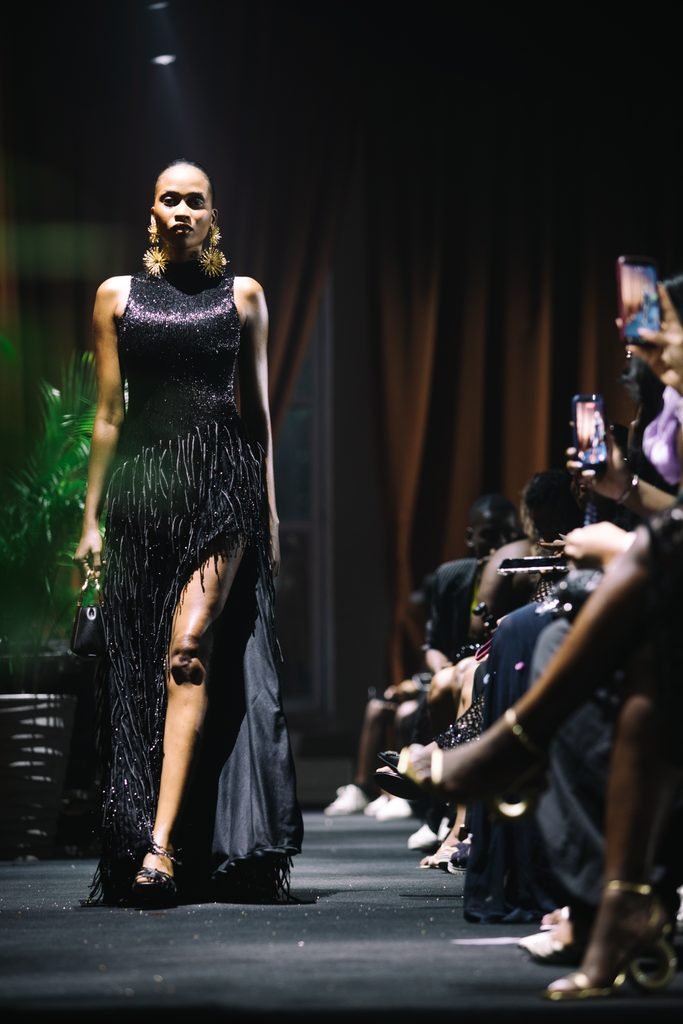
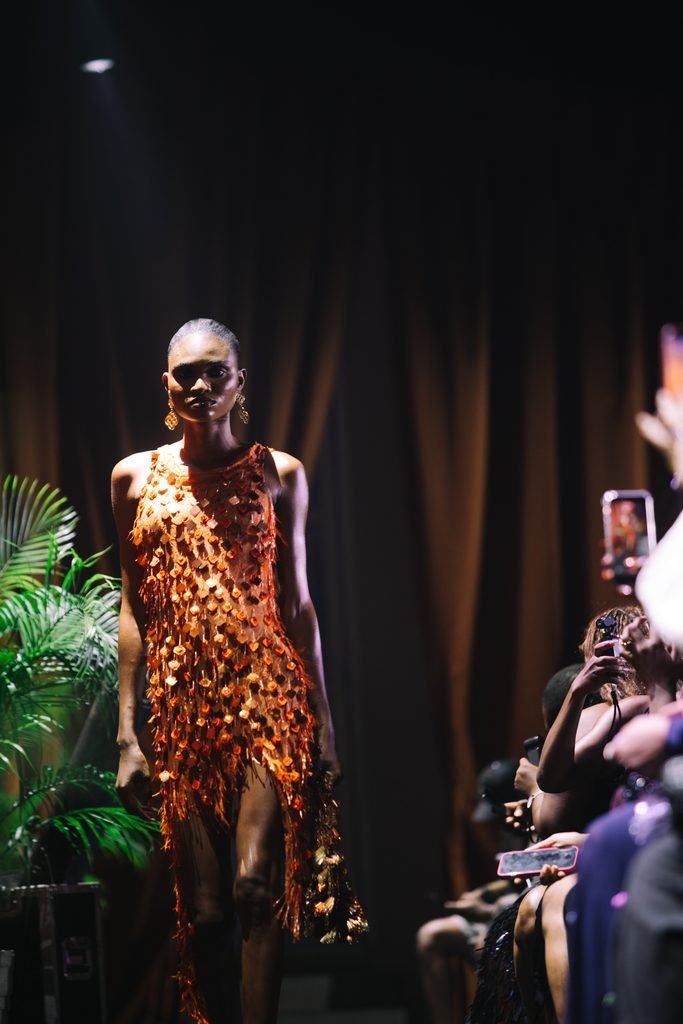
The collection follows three movements: The Burn, The Ash and The Rebirth. The first uses ember reds, burnt oranges and terracotta. The second moves into smoky black, charcoal and distressed textures. The final section introduces molten gold, iridescence, vivid colour and more elaborate embellishment. The sequence gives the collection a clear visual structure. It also allows the clothes to carry the story without relying on a literal representation of fire.
This is an important distinction. A collection based on personal tragedy can easily become an exercise in illustration. ONALAJA instead used colour, surface, texture and movement to examine the emotional stages of loss and recovery. The clothes do not attempt to reconstruct the destroyed archive. They present a new body of work informed by what happened.
The collection’s London debut also involved a difficult rebuilding process. In an interview with The Business of Fashion, published on 27 October, Onalaja explained that she and her five-person team used Adobe Firefly to test prints, fabrics and embellishment ideas before making physical samples. The tool helped them prepare clearer visual references and technical briefs for artisans. The final garments, however, still depended on hand embroidery, beading and other forms of manual work. The distinction matters: digital tools helped the team manage time and sampling costs, but they did not replace the knowledge and labour required to make the clothes.
For a small independent label rebuilding after a major loss, this approach points to a practical use of technology. It also adds another dimension to the season’s discussion of innovation. The question is not whether technology should replace traditional craft. It is whether designers can use it to improve their processes while retaining the skills that give their work its character.
Nigerian heritage as a design language
ONALAJA has built its identity around detailed embellishment, sculptural forms and a contemporary interpretation of Nigerian cultural references. The brand draws on the designer’s Yoruba and Edo Bini heritage, using textile techniques, fabric painting, dyeing and handwork as part of its design vocabulary.
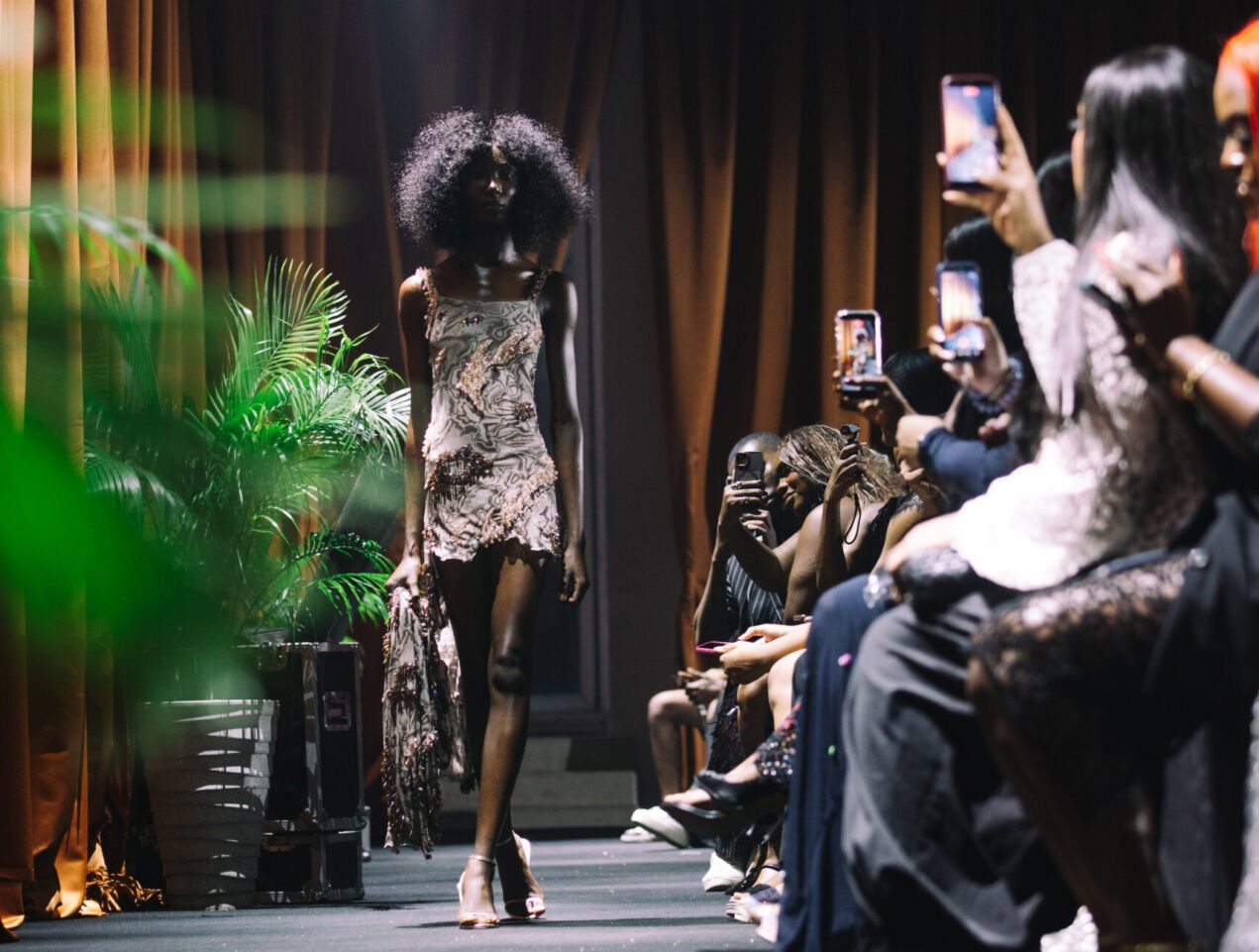
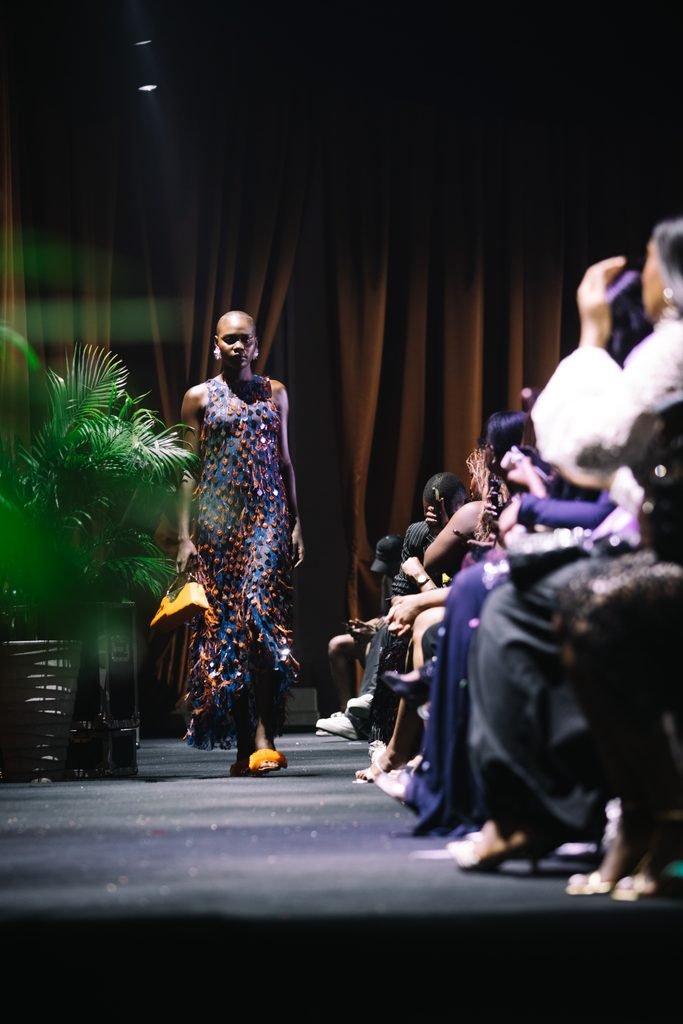
At the Lagos presentation, these references appeared in hand-painted prints, elaborate embroidery, beaded surfaces and raffia accessories. Traditional motifs and techniques were used alongside contemporary silhouettes. The collection also included a sculptural feather mini dress, a two-piece trouser and fringe ensemble, ombré fringe designs, beaded raffia handbags and embellished footwear.
The use of Yoruba and Edo Bini references is significant within the wider discussion of African luxury fashion. Designers are increasingly working with specific cultural histories rather than relying on a broad idea of African identity. This approach gives a collection a clearer point of view, but it also requires research and care. Cultural references must be understood in context, especially when they move from traditional use into luxury products and international markets.
There is also a difference between using a traditional technique and building a working relationship with the people who practise it. Lagos Fashion Week addressed this directly during its opening-day discussion, Crafted: By Whom, For Whom and at What Cost? The panel considered the position of artisans in the value chain and the need for long-term relationships between designers and craftspeople. The same question applies to a label such as ONALAJA, whose visual identity depends on skilled handwork.
The value of such work cannot be measured only by the finished garment or its retail price. It also rests on the knowledge of the people who paint, embroider, bead, dye and construct the pieces. As African fashion attracts greater attention from international buyers and luxury markets, the industry must find ways to make these relationships fair and commercially sustainable.
Recommended For You
Beyond the Runway, African Fashion Confronts the Business of Craft
Fashion presented as an experience
For its Lagos presentation, ONALAJA moved away from the conventional runway format. Models walked slowly through the gathering, passing between guests in a procession. The arrangement allowed people to examine the garments at close range, including the placement of beads, the movement of fringe and the construction of individual pieces.
The event also included installations that combined mannequins with live models. This gave guests two ways to consider the clothes: as constructed objects and as garments in motion. A separate accessories display presented the brand’s handbags and footwear, while selected collection pieces were included in a live auction powered by Sparkle and Ionec Nigeria.
The format was consistent with the collection’s subject. A conventional runway gives the audience a brief view of each look before it moves out of sight. ONALAJA’s salon-style presentation allowed more time with the garments and placed greater attention on their construction. It also brought the audience closer to the commercial side of the collection.
The event extended into music, food and hospitality. Oladimeji Onalaja created an original soundscape to accompany the presentation, while Chef Fregz developed the culinary experience. Get A Bar provided drinks, and DJ Obi played at the after-party.
These elements formed part of a wider attempt to present fashion as a cultural experience rather than an isolated display of clothing. This approach is not new to luxury fashion, where exhibitions, private salons and immersive presentations have long been used to build a closer relationship between a brand and its audience. In Lagos, however, it also reflected the city’s wider creative culture, where fashion, music, food and social life often meet at the same events.
The commercial question behind the celebration
One of the more interesting decisions at the Lagos presentation was the live auction. Rather than keeping the sale of garments separate from the creative experience, ONALAJA invited guests to bid on selected pieces while models moved through the room. The accessories installation also gave guests direct access to the brand’s new handbags and footwear.
This placed commerce within the presentation itself. It offered guests a way to engage with the collection beyond viewing it, while giving the brand an opportunity to connect its creative work with sales. The partnership with Sparkle also brought a financial services company into a fashion event built around entrepreneurship and rebuilding.
The connection was relevant to the wider Lagos Fashion Week programme. Across the four days, business sessions addressed access to finance, retail readiness, intellectual property, brand partnerships and the need for better production systems. Speakers repeatedly stressed that creative visibility does not automatically produce a stable business. Designers need accurate records, clear pricing, reliable production, working capital and the ability to fulfil orders.
For ONALAJA, the fire made these issues immediate. The destruction of the studio and archive meant rebuilding not only a collection but also the working structure behind the brand. The support of long-standing artisans and collaborators, the use of digital tools to reduce sampling time and the decision to bring the collection to Lagos all formed part of that process.
The auction also raises a wider question about how African luxury labels convert cultural value into commercial value. A garment may carry hours of handwork and a strong cultural reference, but the brand must still find customers who understand its price and are willing to pay it. This requires more than a well-staged event. It requires a clear product offer, consistent quality, a reliable route to market and a customer base that can support the cost of skilled production.
The place of inclusive luxury
Another part of ONALAJA’s identity is its approach to sizing. The brand produces womenswear from XXS to 4XL, an unusually broad range for a label working in the demi-couture and luxury market. In an interview with British Vogue ahead of the London presentation, Onalaja described the brand’s intention to create clothes for women who have often been overlooked by luxury fashion.
This is more than a question of adding sizes to a collection. Luxury fashion has long presented a narrow idea of who its customer should be. By offering an extended size range, ONALAJA challenges the assumption that elaborate construction, detailed embellishment and high-end design belong only to a limited set of body types.
The approach also gives the brand a clear position in a competitive market. Its maximalist aesthetic, hand-finished garments and broad size range address a customer who wants distinctive occasionwear without being excluded by standard sample sizes. This is a commercial decision as well as a statement about representation.
For African fashion brands seeking international growth, a clear customer proposition matters. Cultural identity may attract attention, but customers also need to understand what a brand offers, how its products fit their lives and why they should return. ONALAJA’s combination of Nigerian references, elaborate handwork and inclusive sizing gives the label a recognisable position within the luxury market.
Lagos as more than a homecoming
The Lagos presentation carried a particular meaning for Onalaja. It brought the collection to the city and creative community connected to the heritage that informs her work. But the event also took place at a time when Lagos is strengthening its position as a meeting point for African designers, fashion businesses, buyers, media and cultural organisations.
Lagos Fashion Week’s 2026 programme showed the range of issues facing the industry. Designers explored Aso Oke, Akwete, Adire, barkcloth, crochet and other forms of material knowledge. Some reconstructed existing garments, while others used traditional textiles in new silhouettes. Business discussions examined the conditions required to protect and grow these practices. The programme made clear that African fashion is not short of design ideas. Its more difficult task is to build the production, legal and financial systems that allow those ideas to support viable businesses.
ONALAJA’s presentation connected with that wider discussion in several ways. Its use of Nigerian heritage placed cultural knowledge within a contemporary luxury product. Its hand-finished garments relied on skilled labour. Its use of digital tools showed how technology can support a small design team. Its auction and retail display brought the commercial side of fashion into the event itself.
The brand’s return to Lagos also showed why international recognition and local engagement should not be treated as competing goals. ONALAJA presented Re at London Fashion Week before bringing an expanded version to Lagos. The two presentations addressed different audiences and offered different ways to experience the collection. For an African luxury label, the ability to work across these markets can strengthen its reach, provided that its production and business structures can support that growth.
Rebuilding is also a business decision
The story of Re is compelling because the collection’s concept and the designer’s experience became closely connected. But the longer test for ONALAJA will be what happens after the presentation. Rebuilding an archive is one task. Rebuilding a business, maintaining relationships with artisans, meeting customer demand and developing new markets are longer commitments.
The collection does not resolve the structural problems facing African fashion. It does, however, offer a useful example of how a designer can respond to a crisis without abandoning the principles behind a label. Onalaja returned to the techniques, cultural references and design approach that had defined her work, while using new tools and formats to move the business forward.
There is a lesson here for the wider industry. Heritage cannot survive on admiration alone. It needs people who can practise it, businesses that can pay for it and customers who value the work. Innovation is useful when it improves those conditions rather than removing the human knowledge at their centre.
At Lagos Fashion Week 2026, Re was one of several presentations that placed craft within a contemporary fashion context. Its particular strength was the direct relationship between the collection’s story and the circumstances of its making. It gave the season’s wider questions a human example: a fashion house had lost much of its material history, but not the knowledge, relationships and creative judgement needed to continue.