
Beyond the political headlines, America’s midterm elections carry implications for museums, independent filmmakers, cultural institutions and creative economies far beyond its borders. As the relationship between public funding, philanthropy and cultural diplomacy comes under renewed scrutiny, the global arts community faces an important question: what happens when the priorities of a major cultural funder change?
An election can change more than the people who occupy government offices. It can change which stories receive funding, which institutions receive support, which cultural exchanges remain possible and which creative communities have access to international opportunities.
For the arts, these changes are not always immediately visible. They may begin with a revised budget, a delayed grant announcement, a change in the priorities of a cultural foundation or the withdrawal of support from an international programme. Months later, the consequences may appear in a museum exhibition that never happens, a documentary that struggles to secure distribution or an independent theatre company that loses an important source of funding. This is why the 2026 United States midterm elections deserve attention beyond Washington.
Held on 3 November 2026, the elections determine the composition of the US Congress for the remainder of the presidential term. Their significance for the cultural sector lies partly in Congress’s authority over federal appropriations, oversight and legislation. The results do not automatically rewrite arts policy, but they influence the political environment in which funding decisions are negotiated and implemented.
For artists, curators, filmmakers, museum directors and cultural organisations, this distinction is important. The election result is one event. The funding decisions that follow are a longer process. And increasingly, that process has international consequences.
The election result: A change in Washington, a question for the arts
The November 3 midterm elections produced a significant change in the balance of power in Washington. Democrats won control of both chambers of Congress, ending unified Republican control while President Donald Trump remains in the White House.
As of November 23, Democrats have secured at least 258 seats in the House of Representatives, with four races still unresolved. They are also set to enter the next Congress with a 56–44 Senate majority. The new Congress will take office in January 2027.
For the cultural sector, the importance of this result lies in what Congress can influence next: federal spending, institutional oversight and the future of public cultural programmes.
The National Endowment for the Arts (NEA), the National Endowment for the Humanities (NEH) and the Institute of Museum and Library Services (IMLS) are particularly important to this discussion. These agencies support different parts of America’s cultural infrastructure, from museums and libraries to theatres, community arts organisations, research and public humanities projects.
Their budgets are not simply administrative figures. They help determine whether an organisation can maintain an exhibition programme, preserve a collection, employ an education team or make its work accessible to communities that cannot rely on commercial revenue.
There is already a funding debate waiting for the incoming Congress. The current government funding arrangement maintains NEA and NEH appropriations at approximately $207 million each for the 2026 financial year. However, the House’s proposed 2027 budget includes a reduction to $135 million for each agency. Congress must resolve outstanding funding differences before the current continuing resolution expires on December 11, 2026.
The election therefore arrives at a particularly important moment. It changes the composition of the institution responsible for negotiating the next budget, but it does not automatically restore funding or reverse existing executive decisions.
For arts organisations, the immediate concern is not simply who won the election. It is what the new Congress will do with its spending authority.
Why American arts funding matters beyond America
It is tempting to think of American cultural funding as an entirely domestic affair. After all, the NEA primarily supports arts activity within the United States. But the country’s cultural influence extends well beyond its borders.
American museums, universities, foundations, film institutions and cultural organisations participate in international collaborations involving artists, researchers, curators, filmmakers and cultural producers from different parts of the world.
When a New York museum organises an exhibition featuring African contemporary artists, when a university invites an international filmmaker for a residency or when an American cultural institution commissions research into an overlooked artistic tradition, the relationship between domestic funding and international cultural exchange becomes visible.
The same applies to educational and cultural diplomacy. The US Department of State’s Bureau of Educational and Cultural Affairs supports programmes that connect American institutions and citizens with international communities. Its activities include academic exchanges, professional partnerships and cultural initiatives.
For the 2026 financial year, Congress approved $667 million for the department’s educational and cultural exchange programmes, compared with $741 million in the previous financial year. This funding supports programmes including Fulbright and other international exchange initiatives.
These programmes are not all arts grants, and their funding should not be confused with the NEA’s budget. Nevertheless, they form part of the wider infrastructure through which creative knowledge, professional relationships and cultural ideas move across borders.
A change in American funding priorities can therefore affect the international organisations and individuals who depend on these relationships.
For an artist in Lagos, a filmmaker in Accra or a curator in Nairobi, the consequences may not arrive as a direct cut to an American grant. They may appear as fewer exchange opportunities, a postponed residency, a reduced institutional partnership or a more competitive international funding environment. That is where the global conversation begins.
The Smithsonian question: Who decides what culture represents?
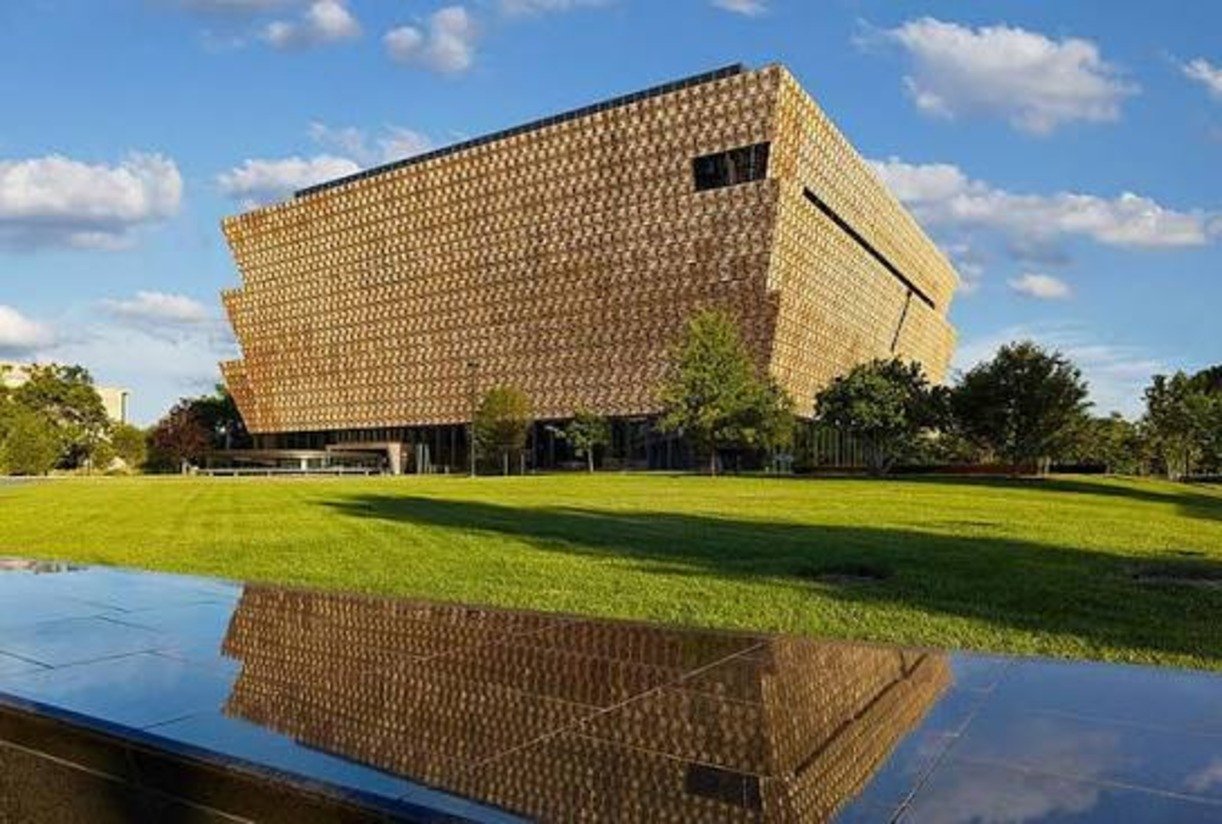
Few American cultural institutions illustrate the relationship between politics, public funding and national identity as clearly as the Smithsonian Institution.
Its museums and research centres preserve collections that tell stories about American history, science, art and society. They also hold materials and present exhibitions that connect the United States to wider global histories, including African art, migration, colonialism and the development of contemporary culture.
In 2026, the Smithsonian became part of a wider political and institutional debate over how American history and cultural representation should be presented. The Trump administration’s scrutiny of the institution and its exhibitions raised questions about federal oversight, institutional independence and the interpretation of national history.
These questions matter because cultural institutions do more than display objects. They make decisions about which histories receive attention, which artists enter the historical record and which communities see their experiences represented.
For international audiences, this is especially significant. An exhibition about African modernism, for example, does more than introduce American visitors to a different artistic tradition. It also influences how African art is documented, discussed, collected and understood internationally.
The funding question is therefore inseparable from the question of cultural authority. Who has the resources to preserve a collection? Who decides which stories receive institutional attention? And how much independence should museums have when their financial support comes partly from public funds? The incoming Congress will inherit these questions alongside its budget responsibilities.
The film industry and the changing economics of independent storytelling
The implications extend into film, particularly independent cinema and documentary production. Unlike major commercial studios, independent filmmakers often build their projects through several funding sources. These may include private investors, film funds, cultural foundations, public grants, university partnerships, international co-productions and festival development programmes.
Public funding is particularly important for stories that may not promise immediate commercial returns. Documentaries about migration, indigenous communities, political history, environmental change and cultural identity often require years of research and production.
When public institutions reduce their support, filmmakers may have to reconsider the scale of their projects, seek international partners or turn to private financing. This does not mean that every American funding reduction will affect an African or European filmmaker directly. The relationship is more complex. However, American institutions remain important participants in international film financing, distribution, research and exhibition.
The question for independent filmmakers is whether the changing funding environment will make international partnerships more selective.
There is also a wider concern about the types of stories that attract financial support. Commercial investors tend to consider audience size, distribution potential and financial returns. Cultural funding can support projects whose value lies in documentation, artistic experimentation or the preservation of stories that might otherwise disappear.
Both models have a place in the creative economy. But they do not always serve the same purpose. For filmmakers outside the United States, the coming funding cycle will be worth watching, particularly when approaching American universities, foundations, documentary institutions and cultural partners.
Europe is watching, too
Europe has its own established public arts funding structures, and the American election does not determine their budgets. Institutions such as the European Commission and national cultural ministries operate through different political and financial systems.
However, international cultural cooperation is interconnected. The European Union’s Creative Europe programme supports cultural and audiovisual cooperation across participating countries. Its international reach also makes it an important part of the broader European cultural landscape.
For European museums, film festivals and cultural organisations, a changing American funding environment could influence the availability of transatlantic partners, touring exhibitions, research collaborations and exchange opportunities.
Vienna offers an interesting perspective on this relationship. As a city with a strong cultural identity and an international network of museums, galleries, performance venues and creative institutions, it occupies an important position in European cultural exchange. Its institutions are not dependent on American public funding, but they operate within an international environment where institutional partnerships and private philanthropy matter.
If American organisations become more cautious about spending or international commitments, European institutions may need to reconsider how they approach certain collaborations.
Equally, this could create opportunities for European cultural organisations to strengthen their relationships with African, Asian and Latin American institutions. The important point is that cultural cooperation does not stop when one funding relationship becomes uncertain. It changes direction, finds new partners and sometimes develops entirely different models.
The growing importance of private philanthropy
One of the likely conversations to emerge from the changing funding environment concerns the role of private wealth in supporting the arts.
In the United States, private foundations, individual donors and corporate sponsors already play a substantial role in cultural funding. Institutions such as the Ford Foundation and the Andrew W. Mellon Foundation have supported cultural organisations, research, scholarship and artistic practice.
These institutions operate independently of the federal appropriations process, although their own priorities and financial decisions are influenced by wider economic conditions.
As public funding becomes a more contested subject, private philanthropy may attract greater attention. But this introduces another important question: can private donors replace public investment? Not entirely.
Public funding can reach organisations and communities that may not attract major private donors. It can also support projects whose cultural, educational or social value is difficult to measure through commercial returns.
Private philanthropy, meanwhile, can provide flexibility, fund experimentation and support long-term institutional development. A balanced cultural economy needs both. It also needs transparent funding structures that protect artistic independence and prevent financial influence from becoming control over creative expression.
What cultural institutions should be watching next
The election result provides a political signal, but the next stage will be determined by legislation, appropriations and institutional decisions.
Three developments deserve particular attention.
First, the December 11 funding deadline. Congress must address the outstanding federal budget arrangements. The outcome will provide a clearer indication of what American cultural agencies can expect in the immediate future.
Second, the 2027 appropriations process. The difference between the House proposal of $135 million and the current $207 million NEA and NEH funding levels illustrates how much remains unresolved. The incoming Congress will have an opportunity to negotiate these allocations, but the final outcome cannot be assumed.
Third, international exchange programmes. The future of cultural diplomacy, educational exchanges and international partnerships deserves attention alongside domestic arts grants. These programmes connect people and institutions across national borders and contribute to the international movement of cultural knowledge.
For artists and cultural organisations, monitoring these developments is not simply a political exercise. It is part of understanding the financial environment in which creative work takes place.