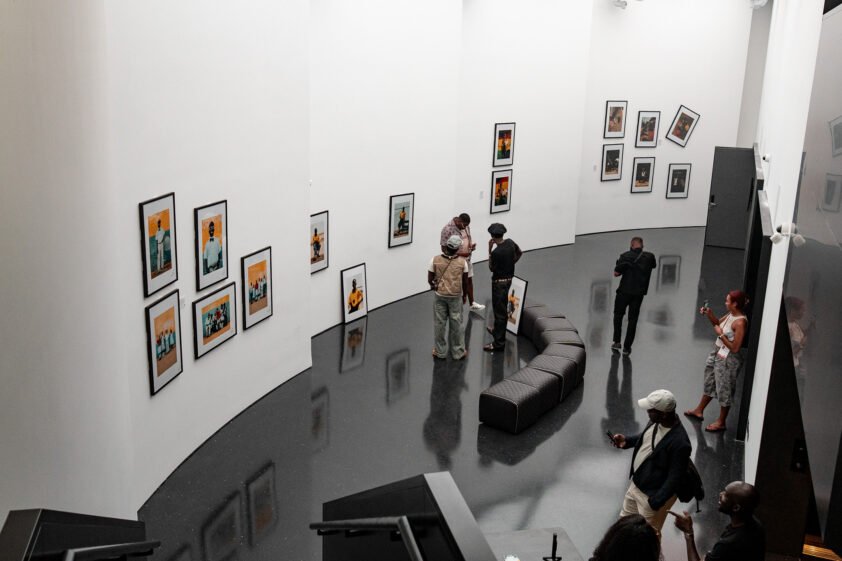
At Art’otel London Hoxton, Ghanaian photographer and director Nana Kinq brought together more than 200 guests for an exhibition that asks a simple but uncomfortable question: what if the children we called unfocused were actually finding their way?There are some words that follow people long after childhood. They can be spoken casually, even as a joke, but they leave a mark. For Ghanaian photographer and director Nana Kinq, “Kubolor” was one of those words.
It was a label used for children who seemed restless, children who moved between football, music, fashion and whatever else caught their imagination without appearing to have a clear plan. But Kinq has come to see that restlessness differently. What looked like a lack of direction may have been something else entirely: creative instinct developing outside formal systems.
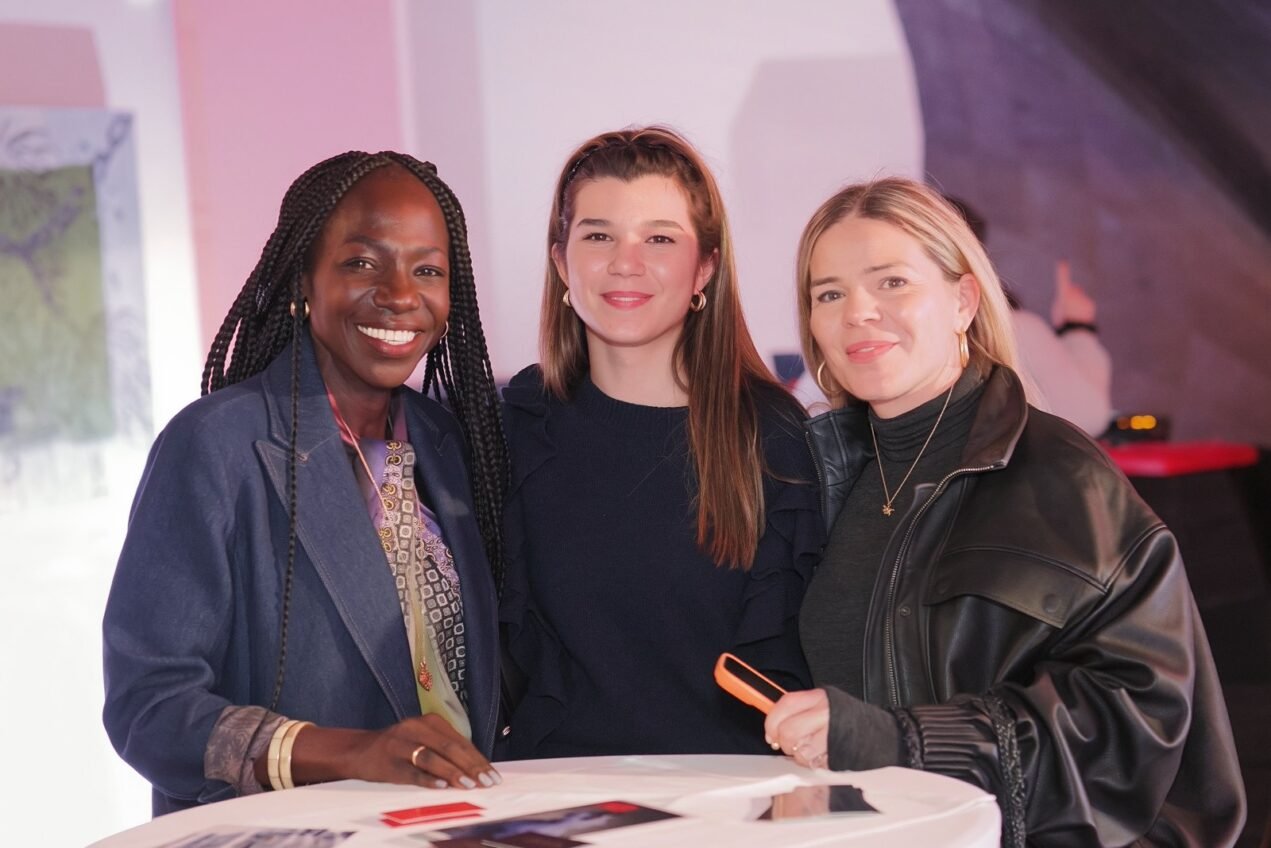
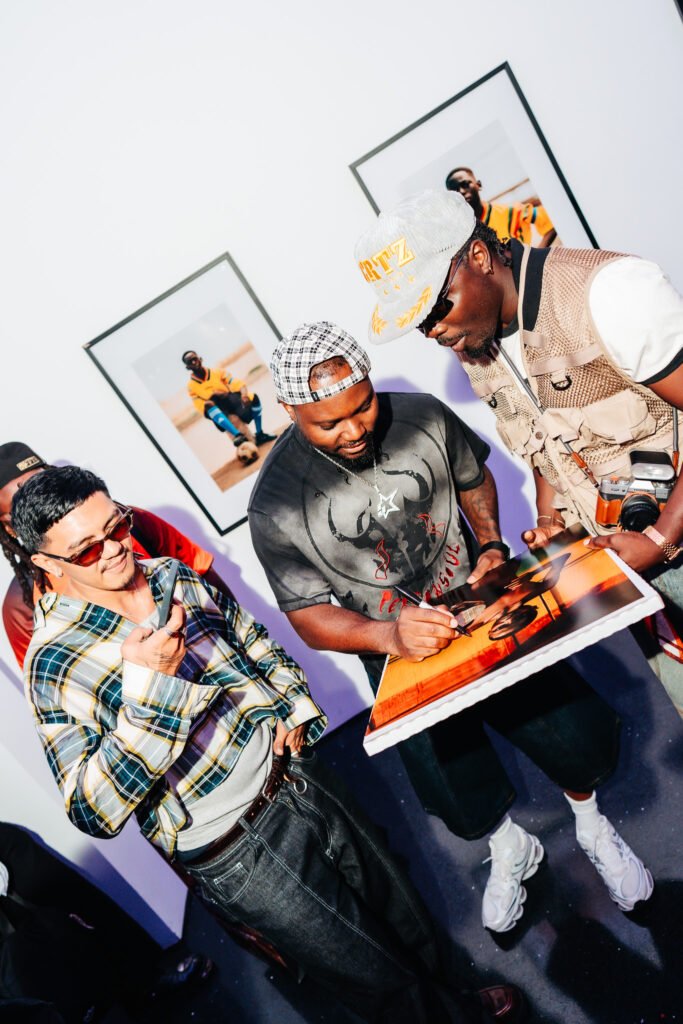
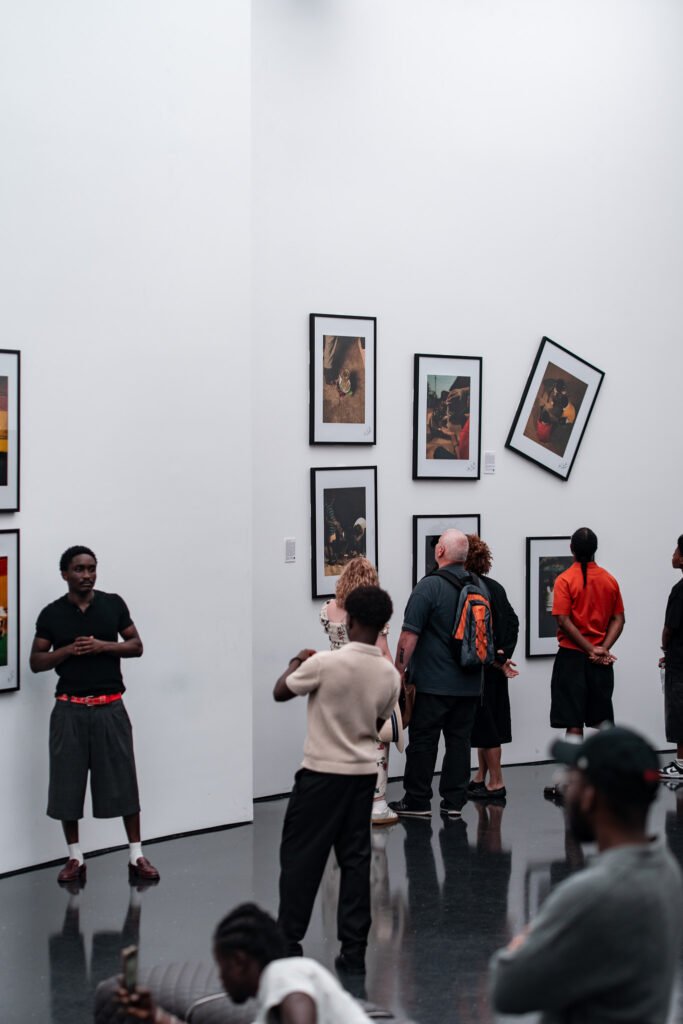
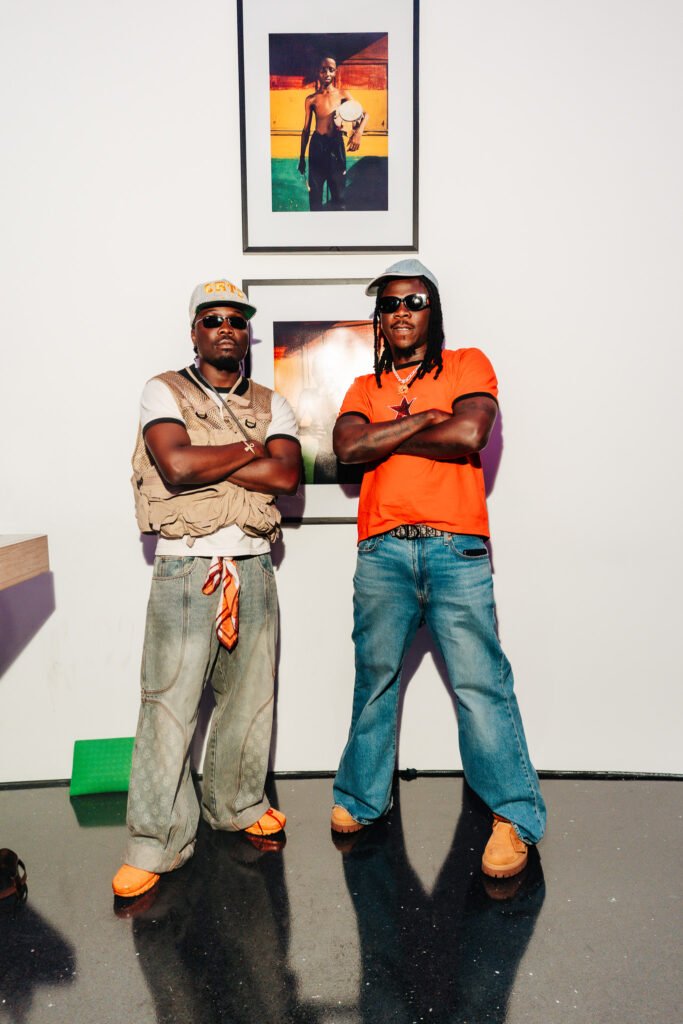
That idea became the heart of KUBOLOR, Kinq’s first exhibition and short documentary, which brought more than 200 creatives and cultural enthusiasts to Art’otel London Hoxton on 8 August 2026. Among those in attendance were Ghanaian music stars Stonebwoy and King Promise, whose own childhood memories were brought back by the work. Both artists signed copies of the KUBOLOR artwork in support of the project. Before the exhibition, artist Rema had also signed a copy with a simple message: “Let’s do this for the kids.”
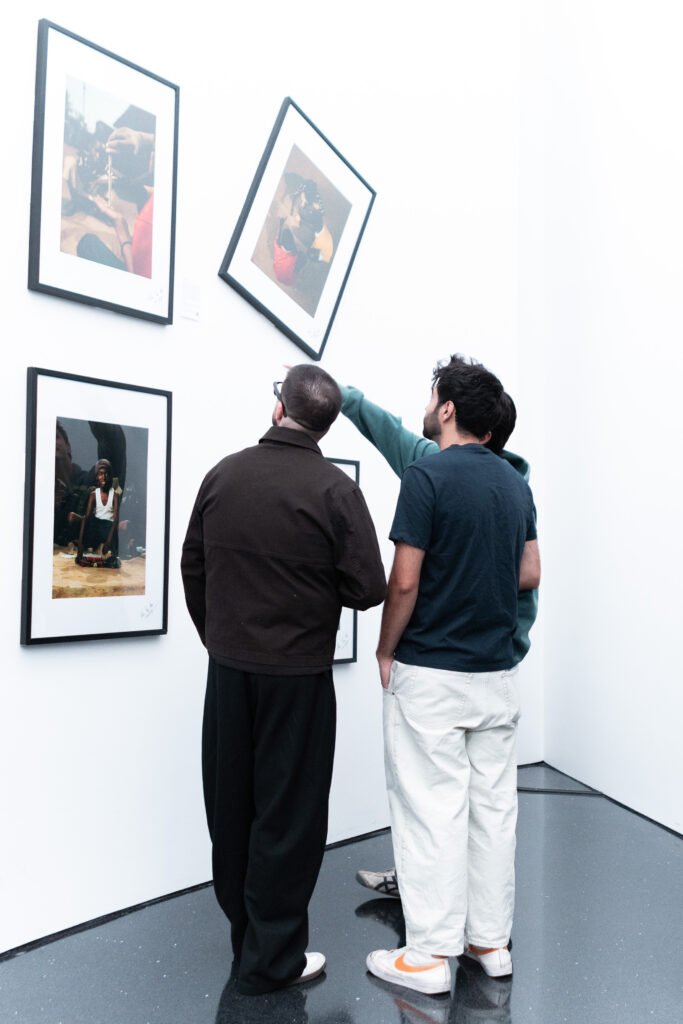
But KUBOLOR is not simply an exhibition about childhood. It is about what happens when a society mistakes unconventional beginnings for a lack of potential. The London exhibition was curated in collaboration with creative consultant and cultural curator Jay Tagle, whose role extended beyond the presentation of the photographs. Tagle helped drive the experience, guest community and programme around KUBOLOR, bringing together voices from music, fashion, art and culture and creating a wider conversation around the ideas at the centre of the project. The result was an exhibition that felt less like a static presentation of photographs and more like a meeting point for a generation of creatives whose stories often cross disciplines.
Reclaiming a word
The word “Kubolor” once carried a dismissive meaning. It was used for children who appeared to be everywhere and nowhere at once, moving between interests without the neat progression adults often expect.
Kinq knows that experience personally. “I was called a kubolor as a child, and not kindly,” he says in the exhibition statement. “I have spent the years since watching people from backgrounds exactly like mine become some of the most respected creatives working today.”
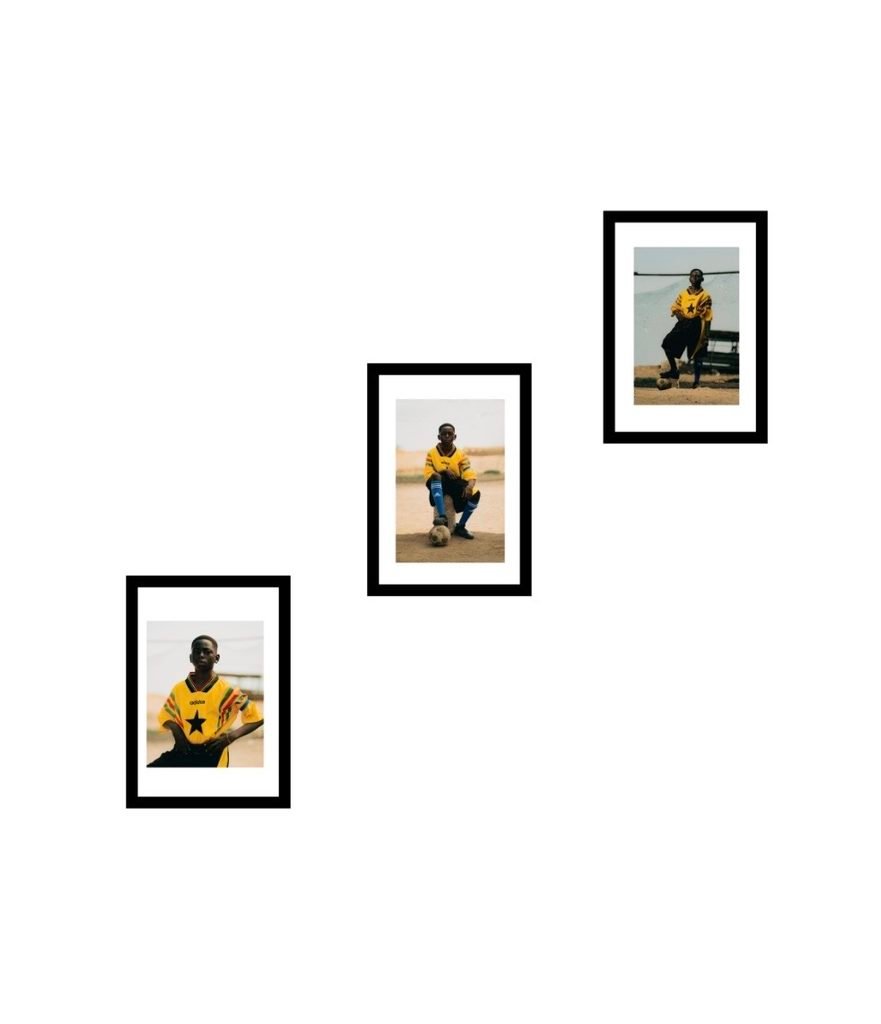
That personal history gives the exhibition its emotional centre. Rather than presenting the young people documented through the project as victims of circumstance, KUBOLOR looks at their environments differently. The street footballer chasing visibility, the self-taught sound creator and the young stylist drawing from local fashion codes are not portrayed as children waiting to be rescued.
They are already creating. They are experimenting, adapting and building identities with whatever resources are available to them. The exhibition describes this as “raw creative instinct built outside of systems.” KUBOLOR does not romanticise struggle. Instead, it asks viewers to reconsider the assumptions attached to it.
When the street becomes a classroom
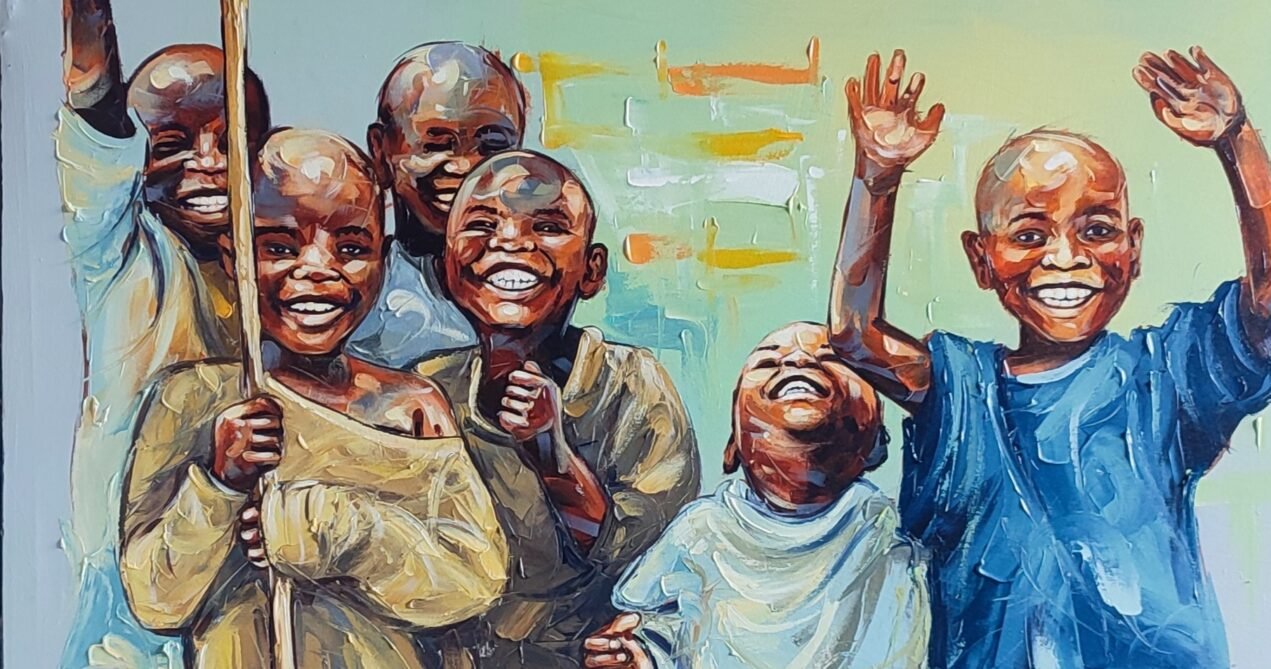
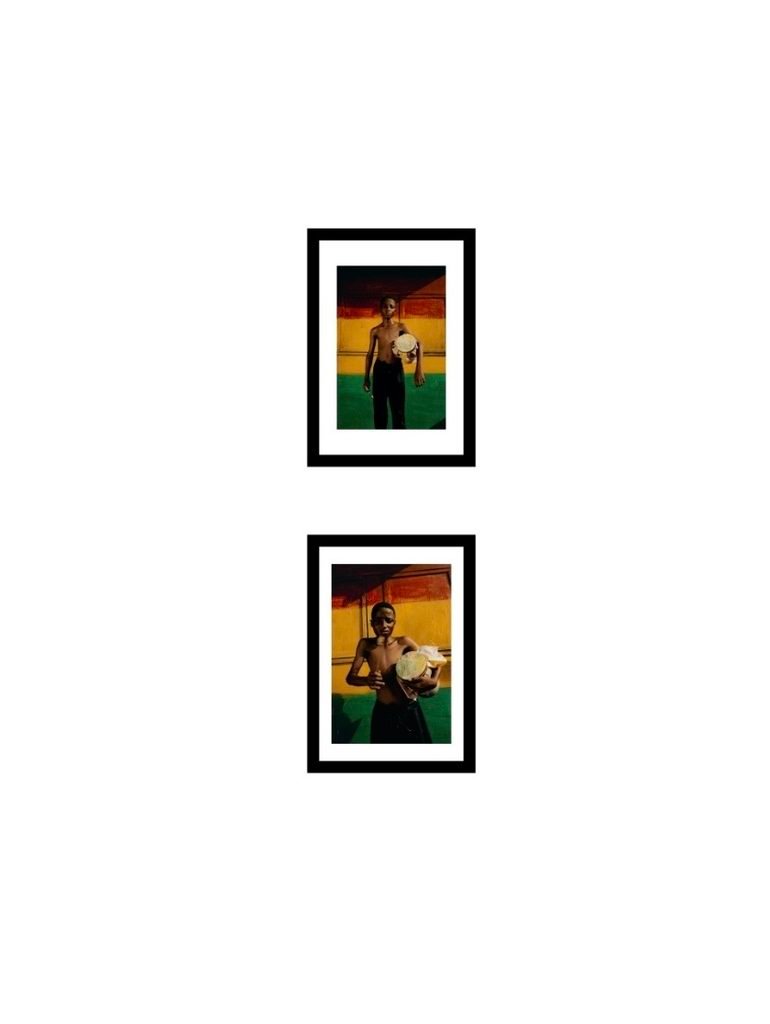
The project takes its subjects seriously. Its photographs and film document young “Kubolor” kids across Ghana, capturing the footballer, the self-made sound engineer, the stylist and others whose creative instincts have developed without the structure of formal institutions. Their stories suggest that creativity does not always begin in a classroom, a studio or an academy.
Sometimes it begins on the street. Sometimes it begins with football. Sometimes it starts with a borrowed piece of equipment, an improvised outfit or an idea that nobody around you quite understands. KUBOLOR is interested in those beginnings.
The exhibition statement puts it plainly: “This is not documentation, it is a redefinition of what was always there.” That redefinition extends beyond the people pictured. It also challenges the audience. How many young people have been dismissed because their talent did not arrive in a recognisable form? How many children have been told to choose one thing when their ability lies precisely in the connections they make between several worlds? Kinq’s own career offers an answer.
From client work to personal storytelling
Kinq, whose full name is Nana Kwesi Akwaboah-Opoku, is a London-based Ghanaian photographer and director working across music, sport, fashion and culture.
After moving to London in 2022 to study design and branding, he built his photographic career through practice, relationships and work within the city’s music, sport and cultural scenes. His client list has included Arsenal, London Lions, Chivas, Nike and Timberland, while his camera has captured figures including Wizkid, Sarkodie, Shatta Wale, Burna Boy, Mohammed Kudus and Giveon.
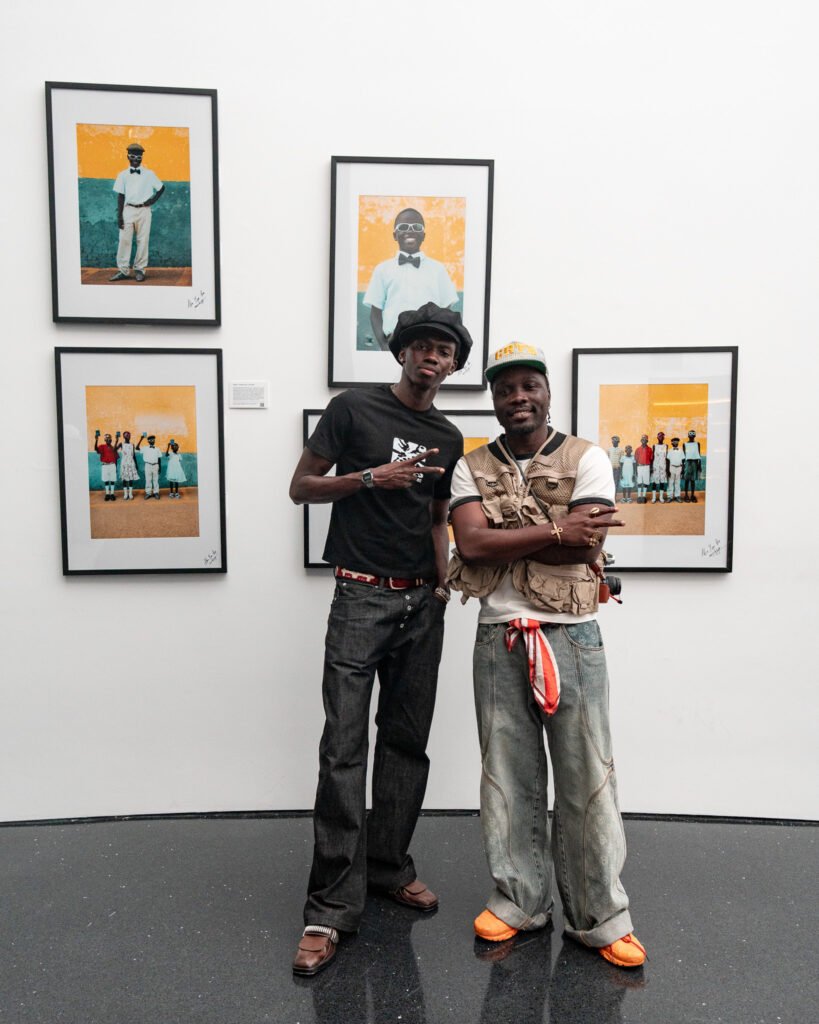
KUBOLOR marks a different kind of movement. This time, the story is not commissioned by a brand or built around a major cultural event. It comes from his own upbringing. The result is more intimate. It is also more vulnerable.
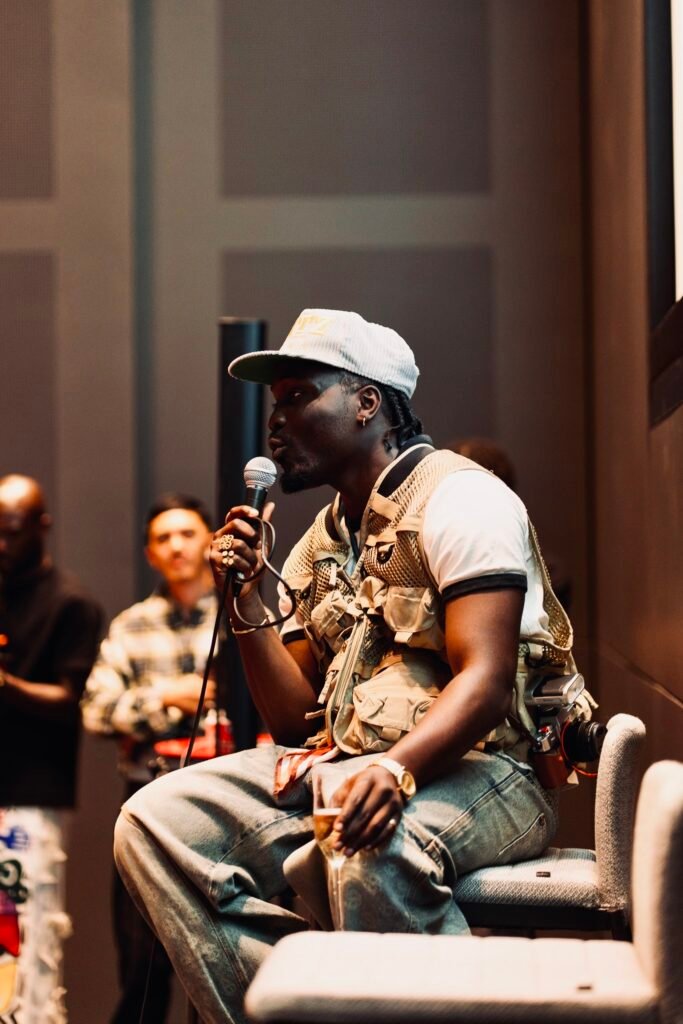
Kinq has taken a word that was once used to diminish him and placed it at the centre of his first exhibition. “No matter what tag you are given, if you want to do something and you set your mind to it, you get through it,” he said at the exhibition. “You can be called a Kubolor and be in a stadium with 20,000 people shouting your name.” It is perhaps the clearest expression of what KUBOLOR is trying to achieve. The label does not disappear. Its meaning changes.
A room full of people who understood the journey
The London exhibition also created space for a wider conversation about creative careers. The panel, titled “Navigating Creative Careers,” brought together OGD of NSG Music Group, director and culture lecturer Christian Saint, photographer and director Will Ainsworth, and fashion PR professional Roxanne Tierney. Each brought a different perspective on entering and surviving the creative industries.
Their presence reinforced one of the project’s central arguments. There is rarely a straight road into creative work. People build careers through relationships, experimentation, failure, persistence and often through several disciplines at once. The neat career path is frequently imposed in retrospect, after success has already made the journey look inevitable.
For many young creatives, it is anything but. That is why the stories behind KUBOLOR matter. They recognise the period before the recognition, when talent can be difficult to see even to the person carrying it.
From exhibition to opportunity
KUBOLOR is not intended to end on the gallery wall. Proceeds from the sale of its limited edition prints will support mentorship and practical resources for young creatives and athletes who are navigating the same uncertainty Kinq experienced. Each image is limited to five prints, with no further editions planned. That decision gives the project a practical dimension.
The exhibition asks audiences to rethink young people’s potential, but it also acknowledges that recognition alone is not enough. Talent needs access. It needs mentorship, resources and opportunities.
The project’s next chapter will arrive on 1 September 2026, when the KUBOLOR short documentary is scheduled for public release. A one-off mentorship event is also planned in Ghana next year.
The work, therefore, moves in three directions at once: memory, documentation and intervention. First, Kinq looks back at the word and the childhood behind it. Then he documents young people living similar experiences today. Finally, the project attempts to give some of them the support that was not always available before.
Recommended For You
Why International Growth Kills More Fashion Brands Than It Builds
The potential we overlook
There was a quiet contradiction at the centre of the London exhibition. The people in the photographs may have once been described as unfocused. Yet the room around their stories was filled with people working in music, fashion, photography, film, sport and culture. The distance between the child called “lost” and the adult called “creative” can be surprisingly small.
Sometimes, it is simply a matter of who gets the opportunity to keep going. That is ultimately what makes KUBOLOR more than a personal reclamation by one photographer. It is a reminder that creativity rarely announces itself in the language of achievement. Sometimes, it can look like curiosity. It can look like a distraction. It can look like a child refusing to stay in one lane. And sometimes, the child who cannot seem to choose one thing is the person capable of seeing connections that others cannot.
Kinq’s final message is deliberately simple: “Everyone has got amazing potential. Let’s not disregard young potential because of where they’re from or how we see them. Everyone can be great.” At Art’otel London Hoxton, KUBOLOR gave that potential a room, an audience and a name. This time, the name was not an insult. It was a declaration.
Exhibition Experience & Guest Curation: Jay Tagle