Luxury has spent decades teaching us to look. Felix Tamas is asking us to look again. At a moment when the industry is saturated with logos, oversized boutiques, relentless launches and the pressure to be seen everywhere, the founder of OSZI is pursuing almost the opposite idea: that the rarest form of luxury may be the one that unobtrusively announces itself. His creations are made to order, entrusted to individual Parisian artisans and produced slowly, with each piece receiving the attention that industrial production cannot offer.
But this approach is not simply a rejection of fashion’s appetite for visibility. The larger question is what luxury is becoming: is value still in the object, the maker, the time spent, or the experience of being one of the few who can access it? Tamas, whose entrepreneurial journey into luxury began remarkably young, is building OSZI at precisely this fault line between heritage and reinvention, craftsmanship and commerce, exclusivity and exposure. His proposition is deceptively simple but increasingly radical: if everything in luxury is designed to be seen, what happens when the product becomes something to be discovered instead?
In this conversation with FAB L’Style, Tamas reflects on the making of OSZI, the philosophy behind its leather, the discipline of building a maison from the ground up, and why the future of luxury may belong not to those who make the most noise, but to those who understand the value of restraint.
A Family Photograph Became the Beginning of OSZI
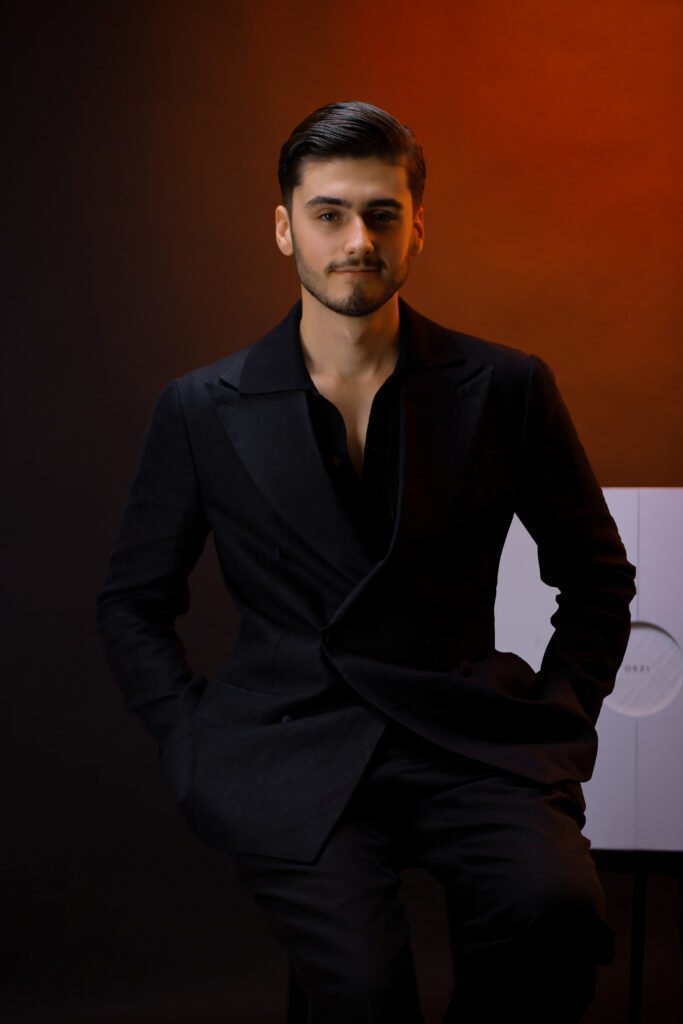
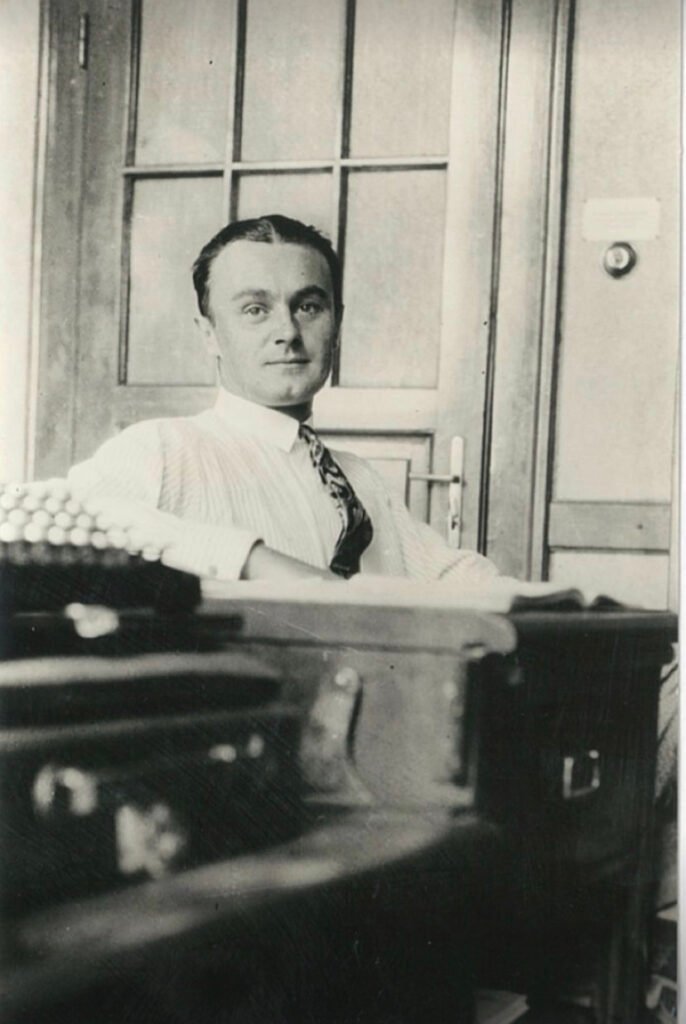
FAB: Oszi is a name with a family history behind it. Before we talk about the brand, we’d love to start with the story. Who was your great-grandfather, and why did naming the maison after him feel like the right beginning?
Felix Tamas: It’s a story about passion. It all started a few years ago, in 2022 or 2023, when I discovered a photograph of a man named Oszi. “Oszi” comes from the Hungarian word meaning “autumnal” or “of autumn”. He was born in Hungary in 1901, during the Austro-Hungarian Empire, so his story is not something you often encounter in the luxury ecosystem.
I felt inspired by him. At first glance, the first photograph I saw of him made me wonder whether he was a gangster from the mafia or simply a charismatic man from Hungarian culture. I wasn’t sure. What I did see was someone with incredible charisma and a remarkable eye for detail. That was the first thing that struck me. From his clothes to the cigarette holder he carried and the way he held it, everything was about details.
As I learned more about him, I began to understand the way I had been raised. He arrived in France a century before I started paying attention to his story, and that connection gave me access to a world of savoir-faire, which we’ll come to later.
But in that first photograph, it was the details that really stood out, especially his shoes. Perhaps you’ve seen the shoe glazing process. It involves working with water and leather to create a bright, highly polished finish. He had that kind of finish on his shoes, so I started learning the process myself.
That was my first real connection with leather, and I fell in love with it. I can’t fully explain it. I simply adored leather. To me, it is an extension of the soul. It is practically an extension of your skin. It is so deeply connected to nature that I immediately felt drawn to it. That’s how it all started.
Then I began learning more about my family and the women who surrounded Oszi: his grandmother, his mother, and his sister. Unfortunately, Oszi lost his father very early in life, as had his grandfather, so he grew up surrounded by very strong women. I felt the need to honour them too because their stories inspired me deeply.
From there, I began learning more about leather. I tried making cup holders on my own and started stitching them myself. That was when I realised that leather craftsmanship requires decades of mastery. You can’t simply teach yourself and expect to become an expert overnight. It was incredibly difficult. I would stitch my own fingers, and the process would become bloody and painful. That’s when I decided to surround myself with people who were experts in the craft.
It all came through encounters. So many encounters. I’ve spent years building those relationships. I spent at least a month in some workshops in Paris, and I really went everywhere, learning, meeting people, and getting to know artisans who are sometimes not the easiest people to approach. They can be like bears in their den.
I imagine you’ve met artisans in your life, but the ones I’ve encountered are truly special characters. They are incredible people to meet and build relationships with, but they tend to remain hidden. They stay away from cameras and exist in their own world, their own universe.
That’s where I began creating relationships with them and building trust because they only work through trust. The first time I entered my main artisan’s workshop, I honestly thought I wasn’t going to come out. There is leather everywhere. It looks like a war scene made entirely of leather. It’s a real passion of mine to talk about this because I believe it reflects the reality of many workshops in Paris. I think they understood that I wasn’t there to use their savoir-faire as a marketing argument. I genuinely wanted to learn from them, protect what they knew and build something with them over time. That trust took years to build, and today, it is probably one of the most valuable things OSZI has.
So, it all began with Oszi, a man who inspired me through his story. I felt the need to honour him and my family through this connection with leather. I suppose that was the thing that connected us because, of course, I never met him. Unfortunately, I was too young. He died, I think, about 15 years before I was born. That is a real disappointment, but it is also what makes the connection so meaningful to me.
That’s how it all started. Then those family connections extended to the artisans, the clients, and everyone else who became part of the journey. I felt the need to share and convey that same sense of connection with other people.
Since the beginning, everything has been built through trust and human encounters. Whether it’s craftsmanship, commerce or creativity, everyone who became part of OSZI entered the story through a genuine connection. That, to me, is the essence of OSZI. We built it through people.
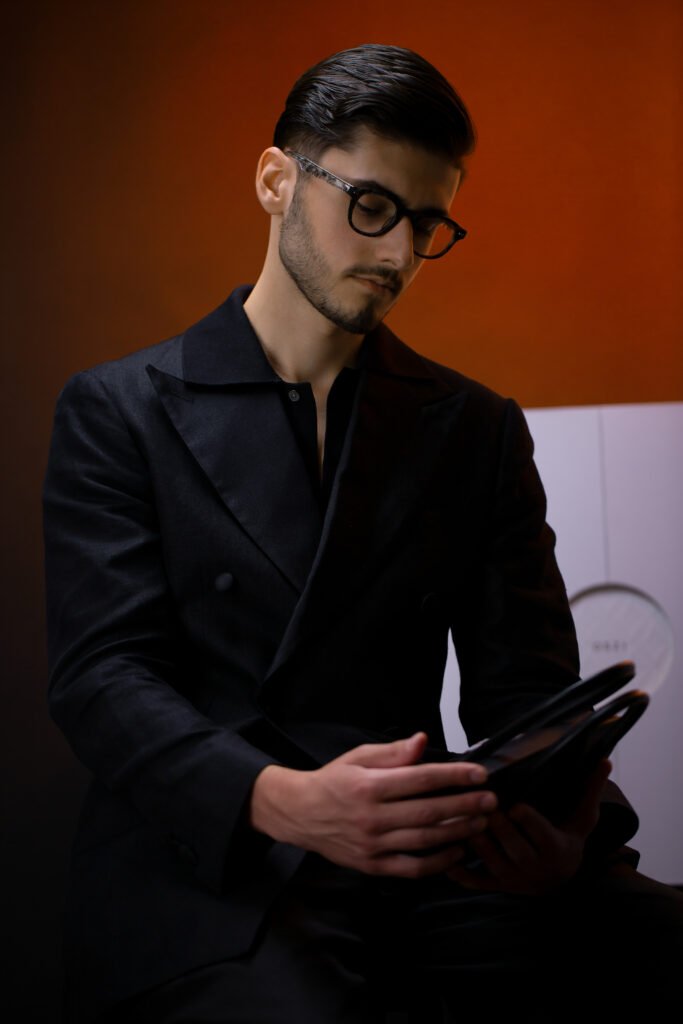
Who is Felix Tamas?
FAB: Let’s talk about the man behind the brand. Who is Felix? Where are you coming from?
Felix Tamas: Well, that’s a long story, but I’ll keep it short. I’m just a guy from Paris who was born there and hated school. That’s the truth. I hated school. I always felt I had to be doing something else.
I played tennis when I was young and wanted to become a professional tennis player. I was probably the only person in my high school in Paris who regularly missed classes to train in the morning and again in the afternoon.
So I had a very challenging schedule. When I got home at 7 or 8 p.m., I had to catch up on all the classes I had missed during the day because I had been playing tennis. It taught me to take responsibility very early in life.
I couldn’t see myself going through university. So, right after high school, I decided to stop studying. You were talking about risk. Well, I’m a big fan of it. I didn’t even apply to university. I decided I would rather launch my own thing. I was so convinced by Oszi and the inspiration I drew from his story that I put everything into it.
Perhaps the one thing I have done well since then is surround myself with people who know more than I do. Of course, I was coming straight out of high school. You don’t know much when you leave high school, so you have to learn along the way. I call it empirical learning. I’ve always believed strongly in it and consider myself a disciple of empiricism.
So I gathered people around me. Today, we have 38 shareholders and around 15 people on the team. Not everyone works in-house, but we also have freelancers and other collaborators working with us in different capacities.
I also created a strategy committee made up of people who have built careers across different industries, including finance, advisory, and marketing. Their role is to help us understand where we should position ourselves. They don’t constrain my vision. Instead, they help me structure it and avoid the obvious traps I might otherwise fall into. I think that is at the heart of empiricism.
But the main thing I have done since the beginning is trust people and give them responsibility. When I say I give people trust, I mean I tell them I trust them to handle a task and, in many cases, I give them shares in my company.
Almost all of my team members are shareholders because I believe we have to make decisions together. It is a shared responsibility. Everyone involved in this story, all the stakeholders, must have something to gain from it. I believe in a win, win, win, win, win situation. Everyone has to win: the clients, business partners, commercial teams, artisans, and journalists. Everyone.
We now have a new vision of luxury. It is very sharp and very different, and we need to promote it in our own way. That has been my philosophy from the beginning. The people who have gathered around me understood it, and they are all playing the game. Surprisingly, it works very well. So we trust time. That has been my motto from the beginning.
I have always believed that time works in your favour when you have the right people around you.
FAB: You dropped out of the four walls of school, but you never stopped learning. So, just to clarify, you’re still learning every day. You’re still educating yourself, and you’re smart enough to surround yourself with people who probably know more than you do.
Felix Tamas: Absolutely.
FAB: You mentioned something about luxury and how the Hungarian story is hardly associated with luxury in some ways. Luxury has become one of the most overused words in fashion today, with almost every brand claiming to be luxurious. What does luxury actually mean to you today?
Felix Tamas: I could give you the most basic answer and say luxury is time, luxury is quality, luxury is this or that. Everyone says that. Everyone gives you more or less the same speech. It has become standardised, especially because I think the meaning of luxury is going to change dramatically in the next few years.
Let me explain what I mean. In 10 or 15 years, I believe we are going to reconsider what luxury means. There is a major shift coming in the market because, within the next five or ten years, we may have advanced robotics capable of doing many of the things artisans currently do by hand.
That will change how we perceive luxury. If a machine can produce something in a few minutes that once took an artisan hours, days, or weeks to create, then what does that object mean anymore? I think the only thing that will remain truly luxurious in 10 years is the fact that some human beings are still capable of creating extraordinary things with their hands.
It won’t only be about leather bags. It could be a table, a chair, a piano, or anything else made entirely by hand. That, to me, will become luxury: having an exceptional level of knowledge and savoir-faire and using it to create extraordinary objects by hand rather than by machine. To me, luxury is, of course, about time. It is about devotion, but above all, it is about genuine authenticity. I’m not just saying that. I’m expressing my family story and my vision of extraordinary objects created through human passion in Paris. We don’t optimise anything. It takes weeks to make a piece, and we never compromise on quality.
Those are the foundations of luxury. If you don’t have those things, then, to me, you’re out of the game. Having an exceptional product is the foundation of luxury. That is the bare minimum. Our approach has been to take that standard as far as we possibly can, and that, to me, represents another level of luxury.
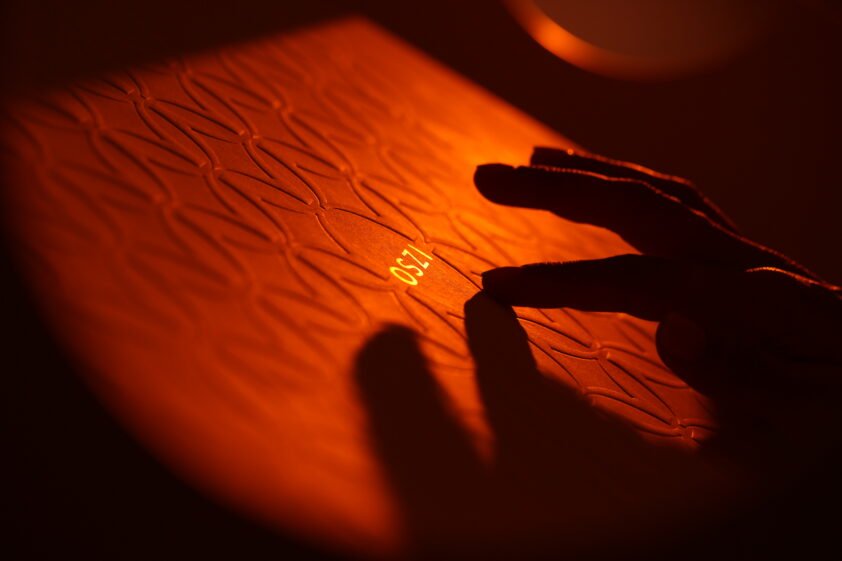
We have a giant box that unfolds to more than a metre. It weighs six kilograms. It has to be an art object in its own right, something you can carry and keep at home.
We decided that the product is not just the product itself. It is also the packaging, the presentation, and the story we tell our clients through the entire experience. Of course, there is another essential element of true luxury: the personalised relationship you have with your clients.
At Oszi, we create extremely personalised pieces. We have a range of products that are naturally accessible as they are, but we can also personalise them as much as possible. That is incredibly important to us. For example, if a client comes to us and wants an entire crocodile leather ceiling, we can make it. There are no limits to what we can explore.
Today, that vision already takes a very concrete form through ROSZI, our haute maroquinerie collection. The pieces are numbered and produced in extremely limited quantities, and depending on the creation, a single piece can require several weeks of work from an artisan. We don’t present the full collection online. It is discovered through private encounters, where we can understand the client, their tastes and what they want to create with us.
Today, we work primarily with private clients who are looking for something much more personal and discreet than conventional luxury consumption. Some are entrepreneurs, collectors or people accustomed to exceptional objects, but what interests me is less their profile than their desire for rarity, craftsmanship and a genuine relationship with the Maison.
Leather goods are our first territory of expression because that is where the story began, but they are also the foundation of something broader. The relationships we have built with exceptional artisans allow us to progressively explore other métiers d’art, always with the same principle: very limited production, exceptional craftsmanship and the possibility of creating something deeply personal.
That is part of our growth strategy. Our ambition is that, in five, ten or fifteen years, especially for people from my generation, OSZI becomes one of the names that naturally comes to mind when they think about exceptional craftsmanship and luxury.
I believe the market is shifting. A lot of younger people are beginning to consume more luxury, but they are also looking for something different. When they think about amazing experiences, I want them to think about Oszi. When they think about mystery, I want them to think about Oszi too, because, to me, mystery and luxury are deeply connected.
I want to make sure Oszi can eventually scale across many different sectors. The one common denominator, as I said in the beginning, is that every luxury product must have exceptional quality. How do you achieve that? You build relationships with networks of artisans who work through trust. That is where I entered the world.
So I am confident that I can achieve an extremely high level of quality and push that standard as far as possible across different sectors. Today, we create an extremely personalised relationship with our clients. That also means producing in limited quantities because personalisation takes time. And time is incompressible. You cannot compress time.
So you have to limit your quantities because the number of hands capable of creating these pieces is limited. That gives you rarity, personalisation, and the ability to create across different projects based on what clients actually want. That is my job: to offer my clients the possibility of creating whatever they have in mind and to work with them over time.
I want to become the right hand of my generation when it comes to luxury. When they think about the best, the most mysterious, the most exceptional, I want them to think about OSZI 10 years from now, with one defining principle: exceptional quality, absolute reliability and limited production
Can Luxury Still Be Rare When Everything Is Made to Scale? Felix Tamas Asks
FAB: I caught you talking about mystery there, and it begs the question. Most brands spend their energy trying to be everywhere, paying influencers and media houses for visibility, so to speak. But you seem comfortable being difficult to find. Has that ever felt like a risk?
Felix Tamas: It’s interesting that you use the word “risk” because, yes, it is. Today, you get the impression that, in the luxury industry, the less you show your product, the less likely people are to buy it or recommend it. The entire market is moving towards massive visibility. It has become excessive. Everything is everywhere, and everything is increasingly flashy. I don’t think clients, especially high-potential clients, will want that forever. I think they will increasingly look for something personalised. They will want to make something their own.
As we have already seen, consuming luxury has increasingly become about the experience rather than simply owning products. In many boutiques, you can now find products made from materials that were once extremely difficult to access. Even access to prestigious materials has become more common.
I believe the current phase of endless scaling will eventually come to an end. You cannot keep going in the same direction forever. At some point, excessive visibility stops being meaningful.
Our strategy was to ask ourselves a different question: What happens if everyone knows there is something they cannot access because it is limited, and the only way to access it is through a genuine connection with the people inside? People will want it because they are searching for that connection.
It is not about spending €200,000 on small leather goods or perfume before gaining access to our haute maroquinerie. It is about how you know us, how you feel about Oszi, whether you want to embrace our values, and how you connect with our family story. That is why we produce those pieces in limited quantities.
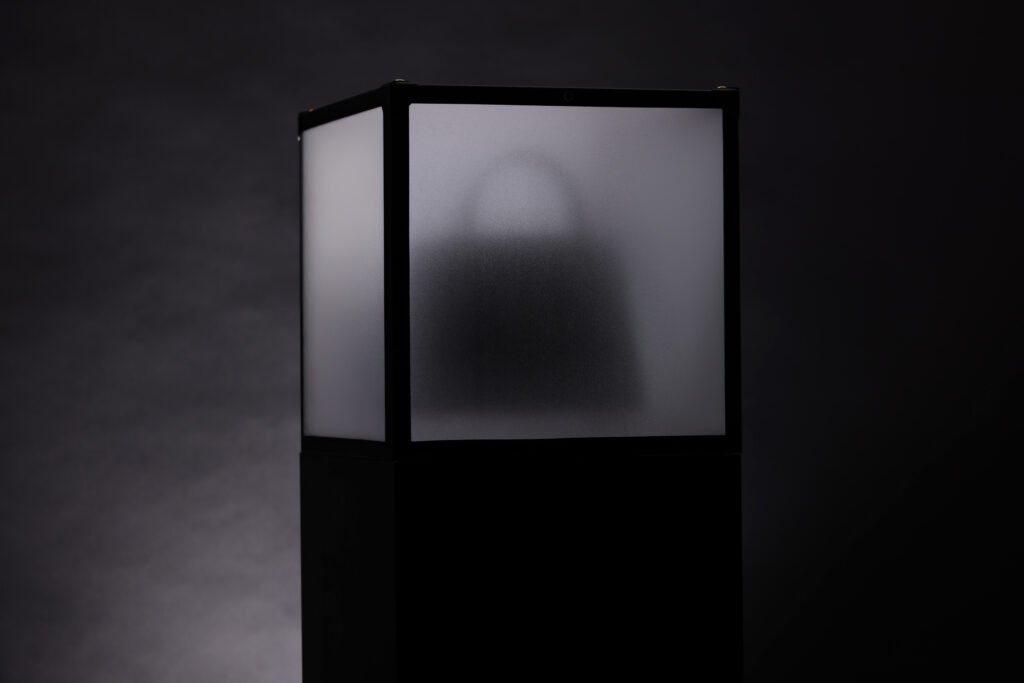
This is already how we operate with ROSZI, our numbered haute maroquinerie collection. The collection is not fully shown online. The pieces are discovered through private encounters, introductions and a very limited network around the Maison. We hide the pieces, blur the details, and make them impossible to see unless you have a private encounter with us. That is how we want to develop because it immediately creates something different. I don’t even use the word “luxury” anymore because that is not how I position Oszi. It is not even about luxury.
We would rather talk about leather art because the process is so personalised that the client almost becomes an artist and part of the creative process, just as the artisan is. It becomes a process of creation in which the client can participate if they want to. Some clients simply want something simple and want the product delivered. Others want to be deeply involved. So we work across different levels within the range.
The strategy of not showing the product is, of course, disruptive. We don’t benefit from the natural traffic that comes through Instagram or the internet because we deliberately choose not to reveal everything. But we genuinely believe that, if we go through this stage, we can invert the traditional mechanism.
It takes time. It might take two, three, four, or five years. Becoming a reference takes time. Building trust and legitimacy takes time. But we are willing to take that time to make sure we get it right because, if we do, we won’t need excessive visibility.
We don’t want to depend on it. If we do, we become dependent on the direction of the industry. Instead, we want to position ourselves in the opposite direction and remain independent of those trends.
What is encouraging is that this model is already finding its audience. We are building through private clients, introductions and trusted prescribers rather than traditional retail traffic. It is slower, of course, but every relationship strengthens the next one.
I’m confident that, in a few years, the industry will come back to us. By then, we will have several years of experience and a significant head start. I genuinely believe there is a need to return to things that feel personal. That is why we put so much effort into making sure our ready-to-deliver range remains discreet. I think discretion will become one of the defining values of tomorrow’s world.
FAB: I love the intentionality behind every choice you make around the brand. It feels incredibly thoughtful. When we started this conversation, you spoke about one artisan producing a product from beginning to end. What changes when one artisan creates an object from start to finish rather than dividing the work across multiple hands?
Felix Tamas: There are several reasons why the industry has increasingly divided production between different hands. It allows greater efficiency, standardisation and production capacity. But the consequence is that an artisan may sometimes spend a significant part of their career repeating the same operation rather than mastering and expressing the craft as a whole. Having one artisan make a bag from beginning to end is beneficial for many reasons. First, the artisan is happier. They get to make different bags every time, especially when the pieces are personalised. It is challenging work, but it allows them to grow and cultivate their creativity.
For the well-being of artisans, I think that is incredibly important. That is also one reason why people stopped wanting to work in these sectors in France. Artisans were paid very poorly, and the salaries were extremely low. If your job is to make the same handle for the rest of your life, there are probably better jobs you could choose. So, for us, the artisan comes first.
The second consideration is that we deliberately choose not to optimise the production process. If you have someone making 10 handles, for example, they will work much faster. You can scale production because repetitive tasks allow you to calibrate machines, standardise threads, and industrialise the entire process.
To me, industrialisation kills craftsmanship. So we don’t optimise our production. It is much more expensive for us to work with one artisan because that person completes one bag before starting another.Those pieces have to represent the finest level of craftsmanship we can offer. That is our promise, and we will never compromise it.
But this is also about the relationship between the product and the client. What happens when a client knows that one person spent three weeks of their life working on their piece, but with passion and love, creating something specifically for them?
It becomes much more powerful. The artisan knows the person they are creating for. They understand the client’s needs. That is where you give a part of yourself to the creation.
I want clients to feel that what they are wearing is not simply a status symbol. It is also the result of people who devoted decades of their lives to mastering their craft and who are now sharing that knowledge through these creations. They found solutions along the way. They gave their heart and passion to the work. They gave their heart, their time and their passion to the work. That gives a piece a soul. When a client knows that one person spent three weeks of their life creating something specifically for them, the relationship with the object becomes completely different. Leather is a natural, living material, and I believe you cannot dilute that human connection. That is one of the reasons why a single artisan works on the piece from beginning to end, and why we deliberately limit our production.
FAB: Oszi is known for exceptional and often exotic materials. How do you approach the conversation around responsible sourcing and sustainability within the world of luxury leather? Or, I should ask, what qualities do you look for in a leather before it becomes worthy of the Oszi name?
Felix Tamas: I’ll answer that in two parts because sustainability is an important topic, and we have to address it. The first part is how we select our leathers and the qualities we look for.
There are two things that, to me, are indispensable. We cannot use leather that has been heavily coated with layers of plastic simply to prevent scratching. In some cases, we can do that for a specific client request because we understand that the intended use may require additional protection. But it is not what we recommend.
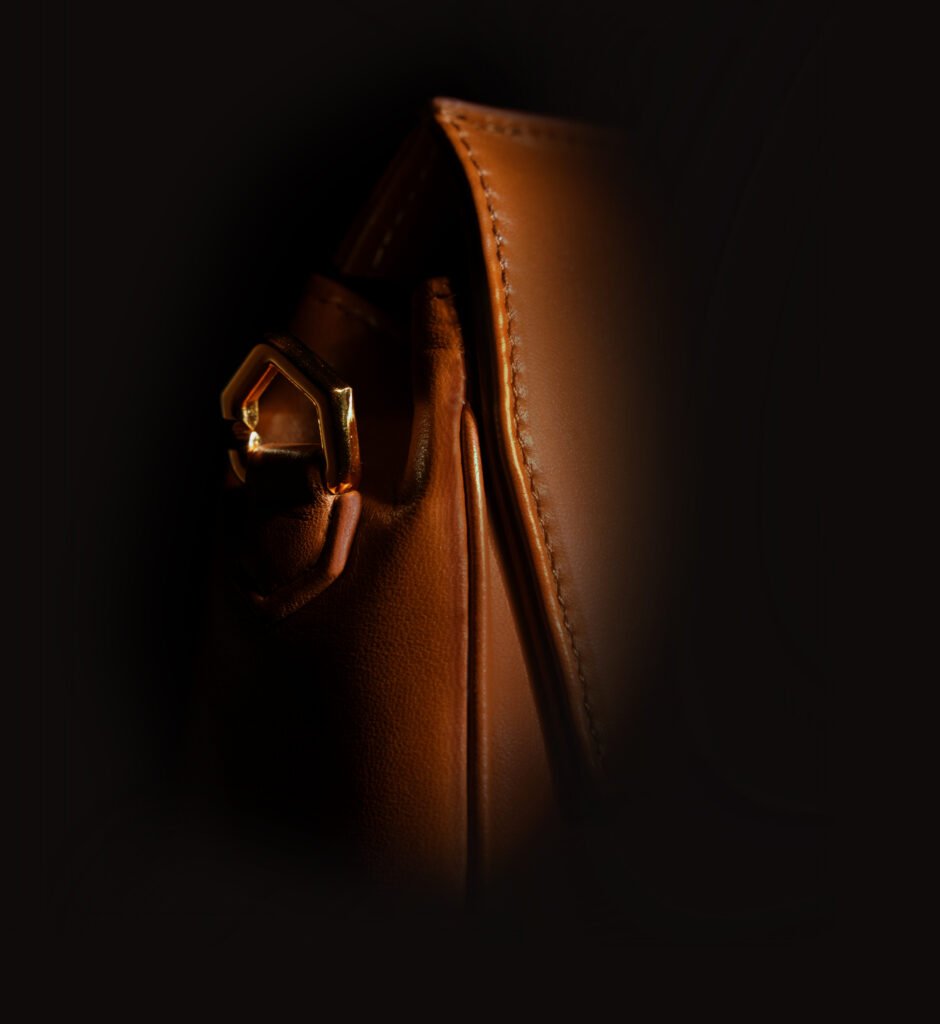
We prefer leather that is as natural as possible. We always come back to the natural quality of the material. You should be able to smell the leather.
We look at several characteristics at once. It is about how the skin behaves because we continue to work with the material after we acquire it. When you touch it, it needs to feel incredibly soft and supple. It has to be flexible. It cannot be overly rigid. If it is too rigid and cracks when you bend it, we won’t use it.
That is why, with exotic leathers, we avoid many of the extremely shiny finishes. You cannot move the material properly, and if you bend the skin, it can crack. That makes it less durable. We want materials that are highly elastic. If the leather has that quality, you can shape it, and it will follow the form of the bag smoothly and beautifully.
For us, leather should enhance the craftsmanship, but craftsmanship always comes before design. Why? Because when the craftsmanship is perfect and not constrained by design, the quality of the product will always show. Eventually, that quality gives the creation an extraordinary presence and charisma.
For example, we use only lamb leather for our linings because, to me, lamb leather is one of the most precious leathers you can find. I can recognise it by the smell, and I can recognise it by touch. There is something extremely feminine about it, and we look for what I would call feminine leathers. By that, I mean leathers that are highly sensitive and sensorial.
I can tell almost immediately when I touch a skin whether I want it or not. That is how I work. If I don’t feel it, I won’t take it. We apply the same approach to every client. We have experts who work with us and pre-select the leathers, but I still need to touch and validate them myself. I can tell when something feels unusual, when it is slightly off, or when it is exactly right. So we make those decisions very carefully.
Now, to the second part of your question, sustainability. I think we have to approach this subject with humility because leather is a complex industry, and I don’t want to pretend that there is a simple answer.
Our responsibility is to make deliberate choices at every stage. We produce in very small quantities, primarily with artisans around Paris, and we create objects that are designed to last, to be cared for, repaired and eventually passed from one generation to another. We source our leather primarily in France, although we also work with Italy when we find an exceptional calfskin or a material that meets our standards.
For us, one of the most important ideas is longevity. If we use an extraordinary natural material, it has to justify its existence through the quality of the object we create with it and through the amount of time that object can live. I want an OSZI piece to be used for decades, repaired when necessary, and eventually transmitted.
Exotic leather requires particular attention. We work with specialised and established suppliers, and our responsibility is to be extremely careful about provenance, traceability and the regulatory framework surrounding the materials we use.
I don’t think sustainability should be used as a marketing word. We have a responsibility in how we select our skins, who we work with, how much we produce, how our objects are made and how long they are designed to last. Our objective is simply to make the most responsible choices we can while preserving the exceptional craftsmanship and natural materials that define our work.
FAB: If someone inherited an Oszi piece 50 years from now, what would you hope they discover? Not only about the object itself, but also about the values of the era in which it was created?
Felix Tamas: First, I hope the previous owner will have treated it with great care and respect. Our pieces are made from natural leather, so they need to be looked after. They will last for generations, but they have to be cared for. I hope the piece arrives in one piece, so to speak. It should still be in beautiful condition.
I also hope the person who inherits it notices my very particular taste for what I consider genuinely beautiful: beautiful lines, beautiful stitching, beautiful details. I want all of that to have been preserved. Of course, we offer after-sales services to help maintain our pieces, but I hope the owners have treated them carefully.
At the same time, I want to see that the piece has lived. I want it to be full of stories, emotions, and an entire lifetime. When someone inherits an Oszi bag, a jacket, a pen holder, or any other object, I hope they can see how much history is imprinted in the leather. I hope they can feel how much of the previous owner’s life and emotions the piece has carried through important moments.
I want it to be full of memories. If an Oszi piece can transmit even a small part of what we experience as human beings during the important moments of our lives, that would be my deepest dream.
I want these objects to survive over time so that, when someone needs something of exceptional quality, something that will stay with them and live alongside them, they know there is a story they can trust in Oszi because the previous owner did too.
And it has to be about family. The fact that you framed the question around inheritance means that the family connection is being passed on again. That is more than I could ever expect or dream of. It would be beautiful. That is the kind of story I want to hear.
FAB: If you could leave the luxury industry with one uncomfortable question it has been avoiding for too long, what would you ask?
Felix Tamas: I think I would ask something provocative : Why lie? So perhaps the uncomfortable question is: can something still be called rare when the system behind it is built for scale?
I’ll end with something the father of one of my artisans once said: “The day artisans die, museums will be graveyards. ” I believe the industry is partly responsible for that future. My job is simply to transmit craftsmanship because it represents the last imprint of our time on Earth. It is art. It is what gives soul to our existence and to our place on this planet. It is our creativity. So why destroy it?