
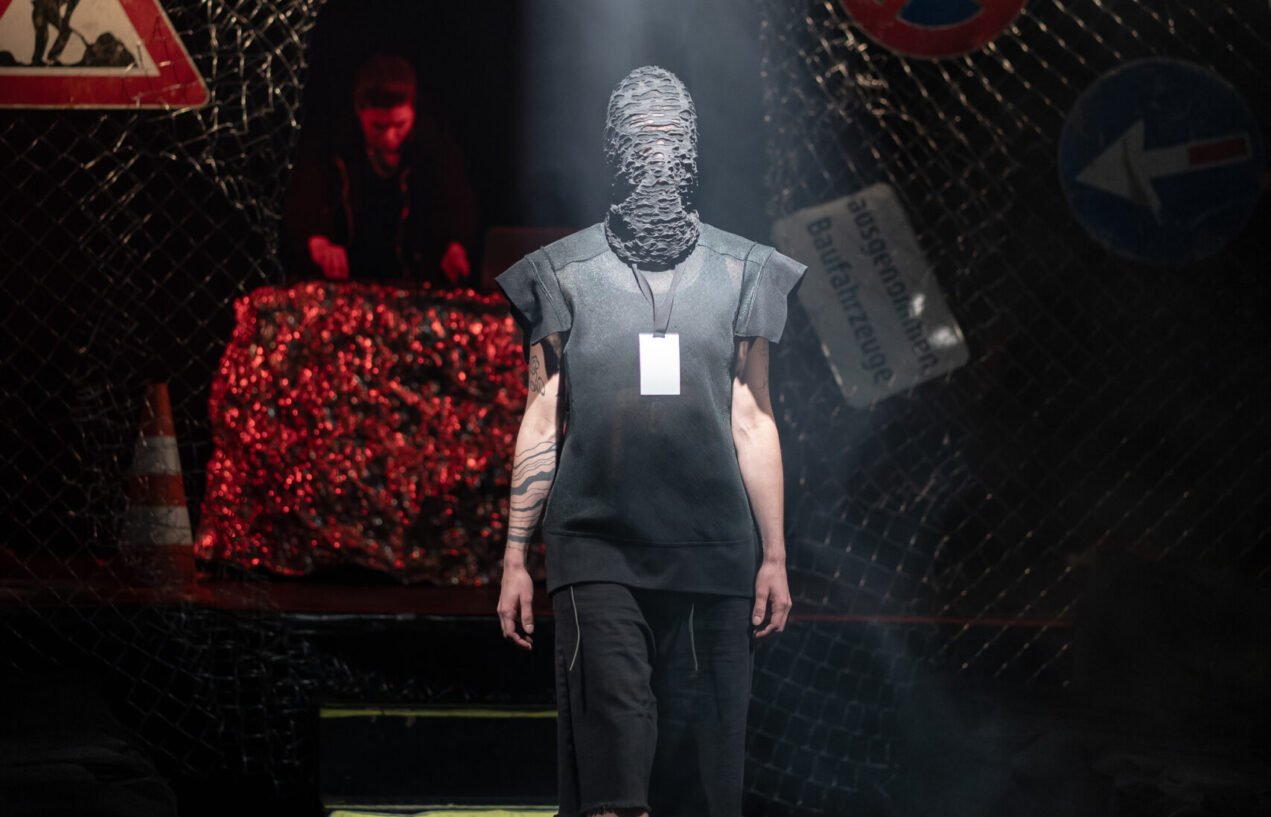


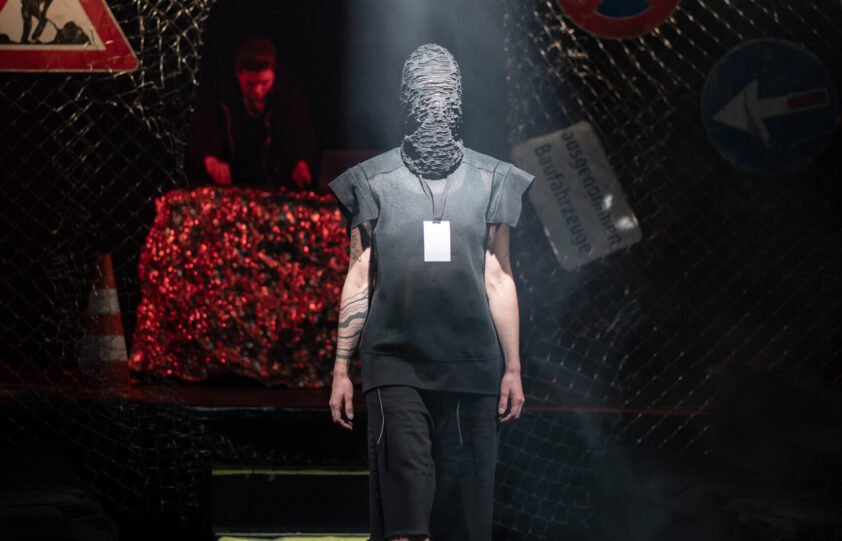
At what point does a shared sense of style become a rule? Iraqi designer Kareem Aladhami put this question at the centre of his latest fashion presentation at Spektakel Wien, where he examined the tension between personal identity and the expectations that can develop within modern techno culture.
The event attracted approximately 200 guests and sold out, bringing fashion and social commentary into a space associated with Vienna’s creative scene. Its central idea challenged an assumption often attached to techno culture: that a community built around individuality and self-expression must also allow people to express themselves without restriction.
Aladhami’s collection approached this contradiction through the concept of the dress code. In a scene where appearance can communicate belonging, clothing can become more than a personal choice. Unwritten expectations may influence how people dress, creating pressure to adopt a particular look to gain acceptance. The result is a difficult question: can people remain individual when they feel compelled to look like everyone else?
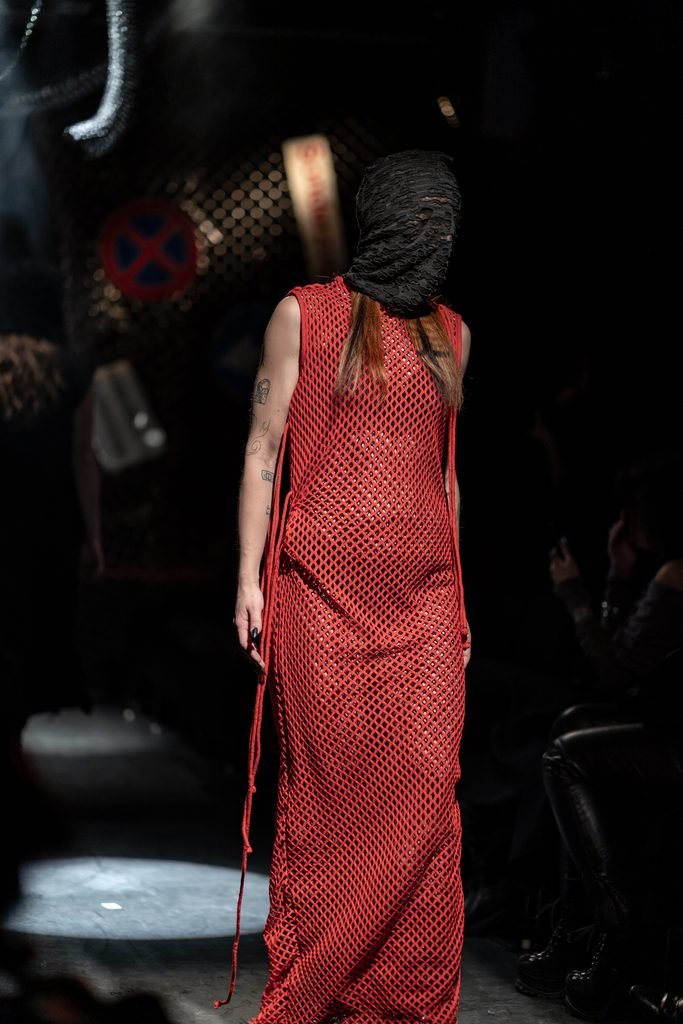
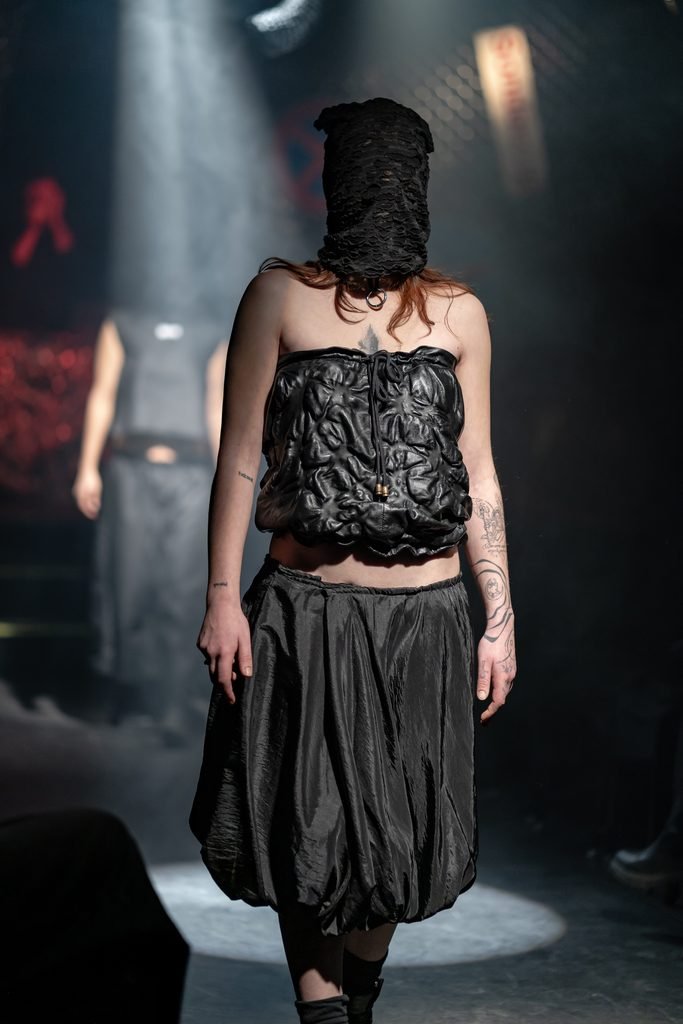
Masks provided a central visual symbol in the presentation. They represented people concealing parts of themselves when they no longer feel comfortable expressing their identity. Within this concept, the mask was not simply an accessory. It pointed to the distance between how people present themselves and who they feel they are, particularly in environments where conformity can take priority over authenticity.
When Fashion Becomes Social Commentary
For Aladhami, fashion offers a way to examine questions that extend beyond appearance. His work draws on his Iraqi background, personal history, contemporary challenges and ideas about the future. These influences inform designs that engage with cultural and social tensions.
The Vienna presentation continued this approach by using the language of fashion to question conventions within a specific subculture. Rather than treating the dress code as a matter of taste alone, Aladhami examined its potential influence on individual freedom. His subject was not whether people should share a visual identity, but whether that identity should become an expectation.
This distinction is important in communities that place a high value on self-expression. A shared aesthetic can help people recognise one another and build a sense of belonging. However, when that aesthetic becomes an informal condition for acceptance, it can narrow the very freedom the community claims to celebrate.
Aladhami’s concept therefore turned the runway into a space for considering the relationship between belonging and self-determination. It asked whether people can participate in a culture without having to surrender parts of their identity to fit its expectations.
Bringing Vienna’s Creative Community Together
Hosted by WHYZ, a Vienna-based connection event for a young audience interested in creativity, culture, fashion and new encounters, the show brought together different parts of the city’s creative community. The production was realised with modelling agency Shooting Connection, with Sarah Fischereder overseeing runway management.
The sold-out presentation demonstrated the event’s ability to draw an audience around a fashion concept with a wider social question. Its significance, however, lies beyond attendance. Aladhami used the platform to raise an issue that reaches beyond techno culture: the pressure to change one’s appearance or behaviour in order to be accepted.
The question left by the show is difficult to dismiss. How free can a community be when it begins to prescribe what freedom should look like? For Aladhami, individuality cannot depend on meeting a dress code. It must begin with the freedom to decide who one is and how one chooses to express it.