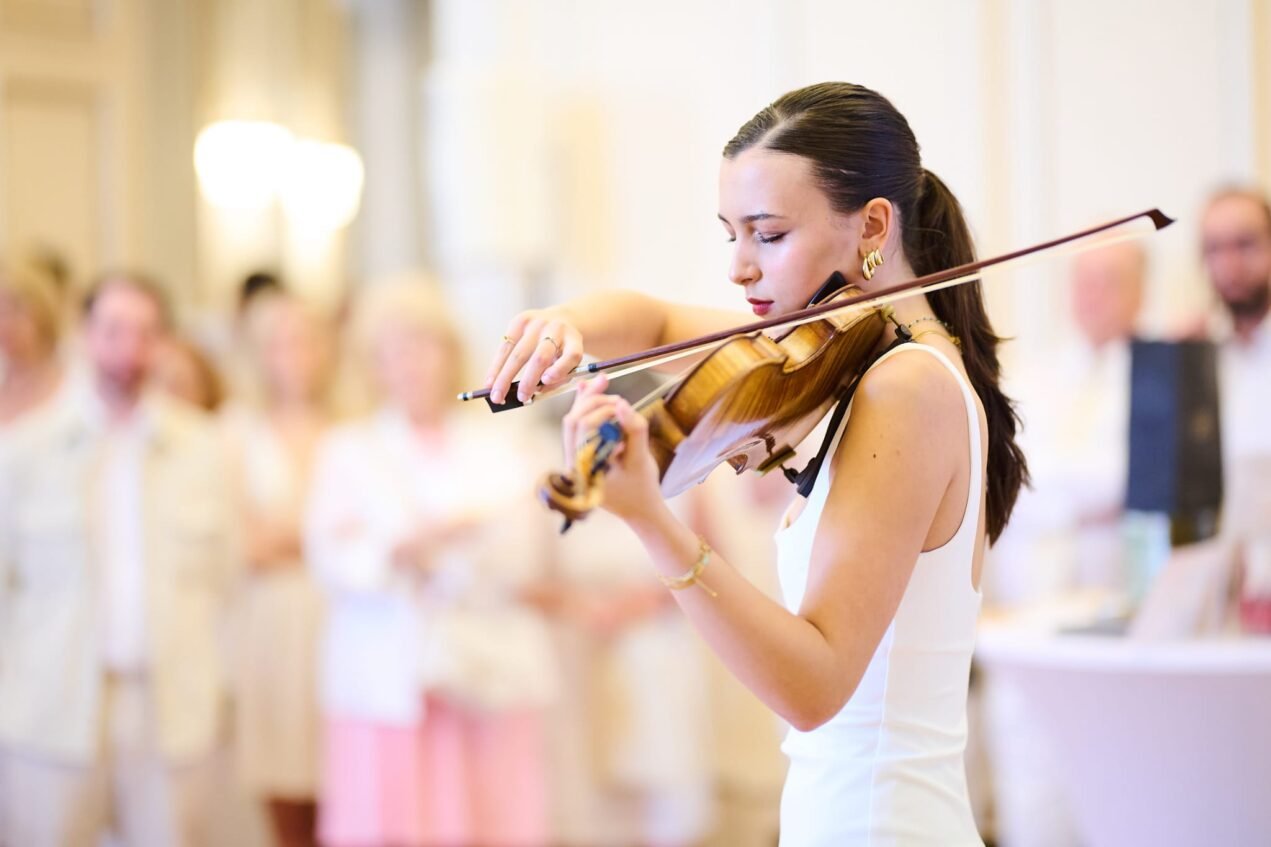

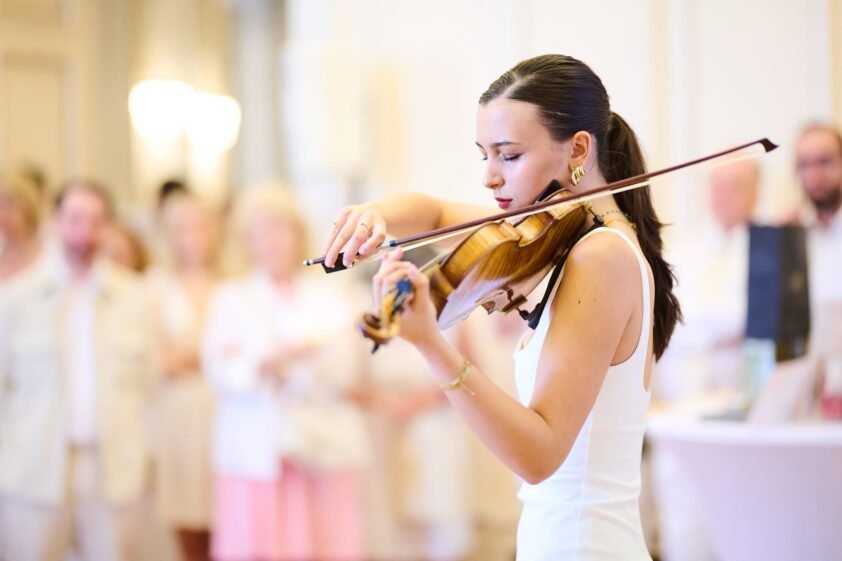
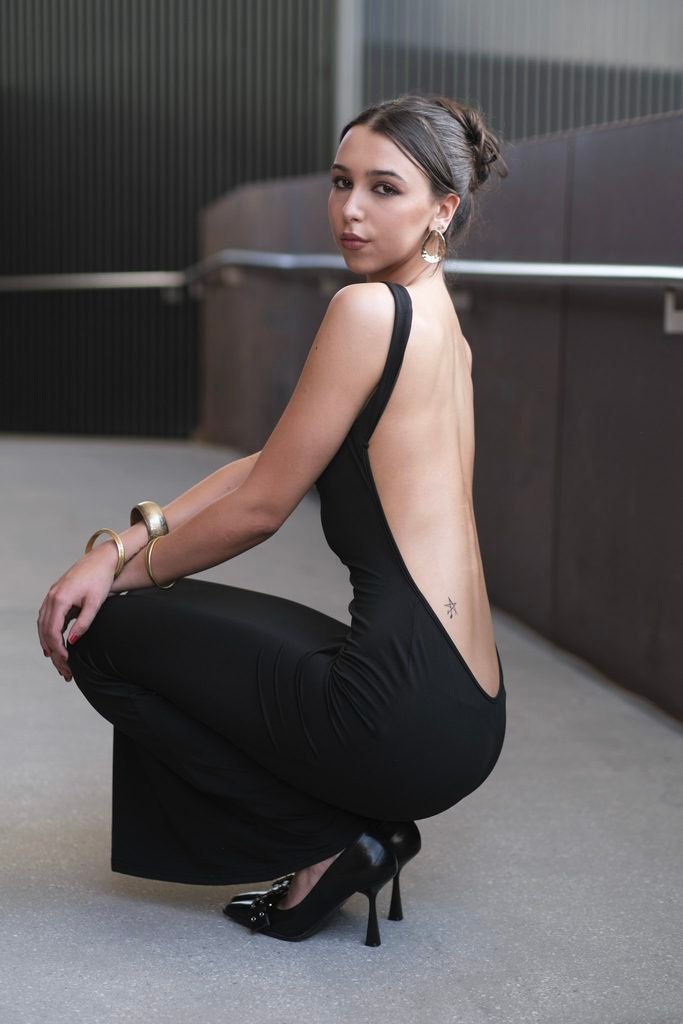
Tea Grell has a few problems with Vienna’s idea of a respectable young woman. For one, she would rather spend her time playing the violin, modelling, writing about fashion and dreaming up a magazine than settle into the safe, well-paid career everyone seems to admire. Her part-time job at a bank? She calls it her nightmare. Her wardrobe? Apparently, a little too adventurous for Vienna. And the wealthy, conservative social circles she once knew? She has no particular desire to return to their bubble. At 20, Grell is already juggling more identities than most people have plans for: violinist, model, journalism student and aspiring magazine founder. She started playing the violin at five, entered modelling at 14 and is now discovering that life becomes considerably more interesting when you stop trying to fit into one neat description.
Grell also has a few things to say about fashion conformity, social media’s influence on young people, the politics of creativity and why money is a rather poor substitute for happiness. When she sat down with FAB L’Style, we spoke about finding her voice, dressing outside Vienna’s comfort zone, the pressure to have life figured out by 20 and her determination to make room for every creative instinct she has. One thing is certain: Tea Grell has no intention of playing life’s tune exactly as written.
FAB: You grew up with a violin in your hands, a model for a mother, and a French-language education in Vienna. What was it like growing up?
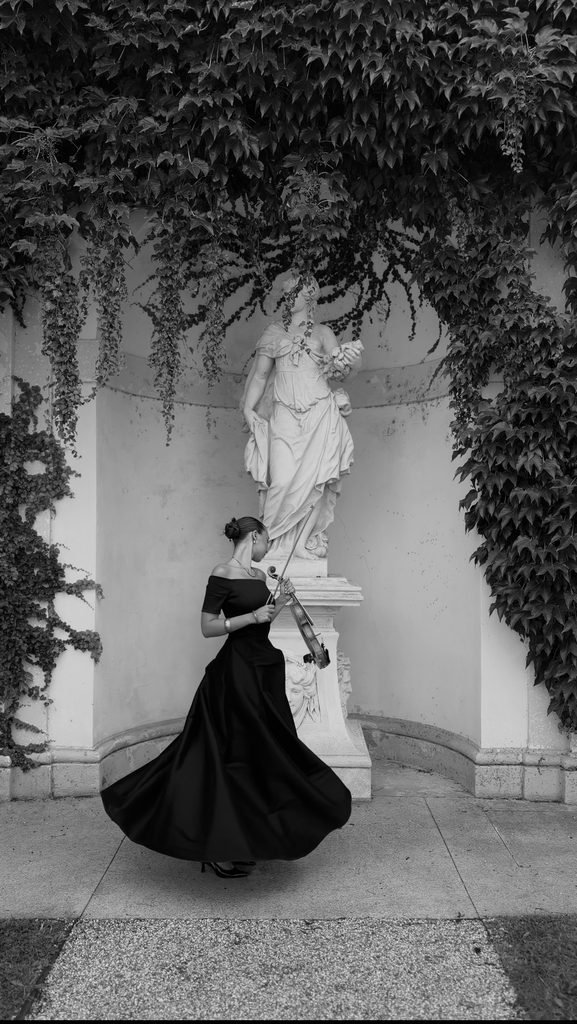
Tea Grell: I started playing the violin when I was five years old. My grandfather played it, and I was always watching him. He knew how interested I was in the instrument, so one Christmas, he gave me a violin. That was how I started playing and practising.
My early learning was different from the usual approach. I played with my grandfather for fun. I learned by listening to music rather than reading sheet music or practising advanced techniques. Later, I joined a music school alongside my French school, so I attended two schools. At the music school, I began to study technique and practise regularly.
I have played in an orchestra since I was seven, and I have also performed as a soloist at several concerts. Music has always been part of my life, but it was difficult to keep up with it alongside school. My French school day ran from 8:30 a.m. to 17:30 p.m. After that, I still had to practise the violin for about two hours. I was often tired, and it was challenging to maintain that routine, but I managed to do well.
When I finished school two years ago, I had to decide whether I wanted to make the violin my main career or pursue something else. I had always imagined becoming a violinist because music is literally my life. It is how I express myself. I have tried other instruments, but the violin has always been my main one.
The challenge was that I needed to catch up on a lot of technical training to become a professional violinist. I had not practised six hours a day like some of the other music students because I simply could not manage that alongside my other commitments. I still perform semi-professionally and have plenty of concerts. I also have a very good teacher who helps me study music at a high level.
I am not studying at a music university because I have so many other interests. I could not imagine giving them all up to focus only on the violin, even though that level of commitment would be necessary if I wanted to become a professional musician. I think it would be sad to give up so many things I enjoy.
Right now, I am trying to do everything and do it perfectly. That can be difficult, and I sometimes feel overworked, even though I have only just turned 20. Still, I am happy because I can express myself as a creative person. I do many creative things, and I am grateful for that.
Learning to Trust the Ear
FAB: There is something interesting about your relationship with the violin. You can play at a very high level, often by ear, without having fully learned to read music. What has playing by ear taught you about trusting your instincts?
Tea Grell: I do not know if this is just a problem I have, but I have really tried to learn how to read music. When I need to learn a piece, though, I cannot play it just by reading the notes if I have not heard it first. The notes do not make sense to me in the same way. I need to hear them.
For example, if someone plays a note, I can copy it immediately. I can recognise the sound, but I cannot tell you its name or write it down. Some people can hear a note and identify it by name straight away. I think that is called ‘perfect pitch’ in English. My ability works differently.
I have never learned to play the piano properly, but I can play Bohemian Rhapsody by Queen on the piano just by listening to it. My ear is so strong that I think I have relied on it instead of learning to read music in the usual way. I naturally process music by listening rather than looking at notes.
I trust my hearing because that is how I have played throughout my life. Of course, I can now read some sheet music because I need to understand what is written. But I still find it difficult to play a piece if I have not heard it first. When I listen to it and read the notes together, I understand it much better.
Choosing Instinct Over Convention
FAB: How does that approach to music inform the choices you make in life, especially when it comes to following your instincts?
Tea Grell: It was difficult because I attended a French school that prepared students for a very academic path. Many people from my school went on to study at major universities such as Harvard and Oxford. The school placed a strong emphasis on academic subjects, but we did not have music or art. It did not encourage us to explore creative interests, so it was hard for me to keep following mine.
But my instincts kept telling me that I needed to create. I could not imagine working a regular office job where I had to sit at a desk and count numbers. My part-time job is at a bank, where I work as a bank assistant, and it is literally my nightmare. I only work about 10 hours a week, so it is manageable for now.
At school, I saw people choosing conventional careers that promised good salaries. Earning a lot of money was a major topic, and I often felt that I was the only person saying, “I do not care about the money. I just need to do things that fulfil me as a person.”
So I followed my feelings and instincts. I did not grow up in a particularly creative environment, but I knew I had to pursue the things that mattered to me. Otherwise, I would not be happy.
From the Tall Girl to Her Own Person
FAB: You were very tall from a young age, and you have spoken about sometimes feeling that you did not quite fit in at school. Was your move into fashion a way to change how others saw you or, more importantly, a way to learn to see yourself differently?
Tea Grell: I think it was more about learning to see myself differently. When I was 11, I was already 1.78 metres tall. That is very tall for that age, when most children are much smaller. I was always the tallest person in the room, so everyone noticed me. I could not hide, even though I was very shy and did not have many friends at school.
People always saw me as the tall girl who played the violin. That was my identity to them. I also attended a private school where many students came from wealthy or influential Austrian families. I did not come from that background, so I found my own small group of people who felt like outsiders.
After school, I realised that this world was not for me. There were so many other people and completely different social circles out there. Through fashion, I started experimenting with my style and discovering how I wanted to present myself. I think it went well because I love my style now. I enjoy putting together cool outfits and trying new things. People see me as cool and creative, and they appreciate that side of me much more.
Some people from my old school now message me to say, “Oh my God, you have become so cool, and you are a model now. Do you think I could model too? Can you introduce me to your agency?” It is funny because, two years ago, some of those people barely noticed me. Now they think I am cool because I post pictures on social media.
On one hand, I am happy that people see and appreciate me now. On the other hand, I have moved on from that part of my life. I have closed that chapter because it was not the right environment for me. I am glad when they reach out, but sometimes it feels a little fake.
Finding Freedom After School
FAB: You entered modelling at 14, but you only began exploring it for yourself after school. What changed?
Tea Grell: My mother introduced me to modelling. She was a model, and she has always been very interested in fashion. She was also a fashionista, so I grew up admiring what she wore. She was my cool mum, and I loved her style. At 14, I got my first campaign job, but then I took a break because I wanted to focus on the violin.
When I realised that I could not focus on the violin alone, I began to express myself in other ways. After school, I no longer felt judged or confined by the same social circle. I started working and earning my own money, which meant I could buy more clothes and experiment with my style. I also moved out of my parents’ home and now live with my grandmother. I had more time to myself and more space to discover who I was.
I think everyone develops in their own way after school. At school, you see the same people and follow the same routine, so you can become stuck in a particular version of yourself. After I left, it felt as if something had set me free. I became more confident and stopped being afraid to wear unusual clothes in public. I could try things, discover what I liked and learn what did not work for me.

Is Fashion in Vienna Really That Crazy?
FAB: Did you just describe your fashion sense as “crazy”? Did I hear that correctly?
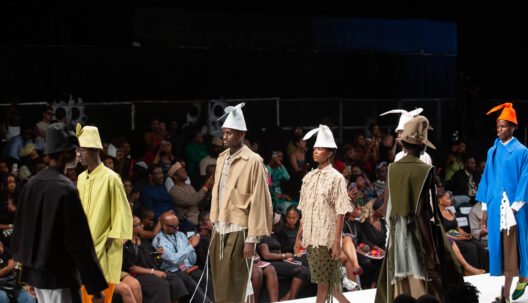
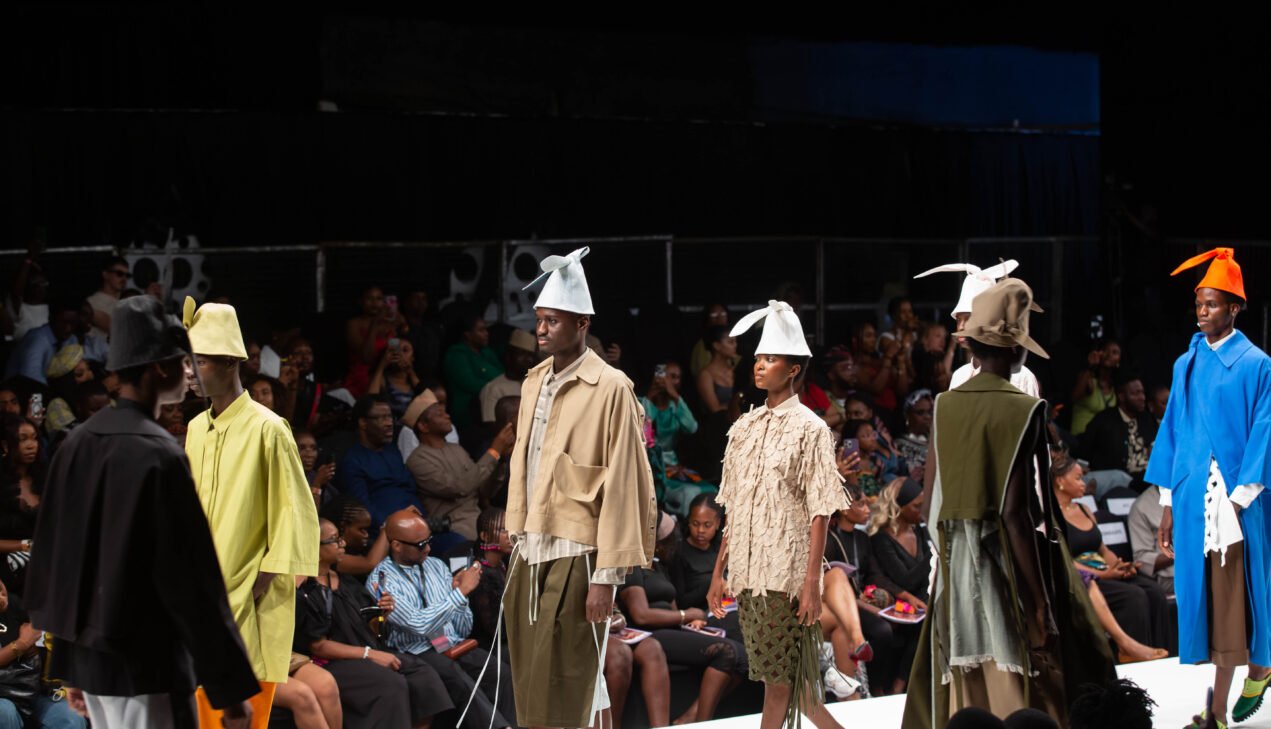
Tea Grell: I think it is crazy because you do not see styles like mine every day, especially in Vienna. Vienna is not much of a fashion city. Sometimes I go out wearing lots of colours, or I style a T-shirt in an unusual way. People notice because they are not used to seeing those combinations. So, by Vienna’s standards, I would say my style is quite crazy.
FAB: From what you have observed, how do people react when they see you wearing these “crazy fashion looks”?
Tea Grell: I think people find it cool. They may not all like my style, but I often see them smile or give me compliments. I think they appreciate it, and perhaps it gives them something to think about.
I want to show people that, even though Vienna can feel conservative and many people dress in similar ways, you do not have to be shy or afraid to express yourself. You can just do it.
For example, my best friend is gay, and I think Vienna can make it difficult for gay men to express themselves freely. When we go out together, we feel confident and encourage each other. We enjoy being seen, although we sometimes receive negative reactions. Some of the comments directed at him because he is gay have been terrible.
Still, I think people who are open-minded and accepting appreciate what we do. They enjoy seeing people express themselves without fear.
Can Vienna Become a Fashion Capital?
FAB: Do you see Vienna changing from a conservative city into a major fashion destination, perhaps one capable of hosting an event on the scale of Paris Fashion Week or London Fashion Week?
Tea Grell: I visited Paris quite often. To be honest, I felt that people were more comfortable experimenting with fashion in Paris. Of course, it depends on the day, but it was more common to see people trying different styles without attracting the same attention.
I recently returned from Japan, where I visited Tokyo. For the first time, I felt that people were not judging me for what I wore. Tokyo has so many different styles, from classic and simple outfits to much more unusual looks. I was surprised by the range of individual styles I saw. It felt good because I could wear whatever I wanted.
Even though I am confident in my fashion choices, I sometimes still wonder whether I should wear something or whether people will stare at me. I try not to think that way, but the feeling is still there sometimes. In Tokyo, I felt free to wear whatever I wanted, and that was a new experience for me.
What I find funny is that, before I went to Japan, many people told me to be careful about showing too much skin because it might not be well received there. But that was not my experience at all. From what I observed, people did not seem to care much about what I was wearing.
Recommended For You
Fashion Through a Journalist’s Eyes
FAB: You are studying journalism and communication. Some people might ask why you are not studying beauty, merchandising or public relations, given your interests in modelling and fashion. What can a journalist see about fashion that someone working inside the fashion industry might miss?
Tea Grell: I wanted to study journalism because I love writing. I express myself much better through writing, especially because I speak several languages. When I speak, I sometimes get confused, but writing gives me time to think. Once I find my flow, I can express myself very well.
Journalism is also important, especially today, when so much is happening. People often ask whether I am sure I want to pursue journalism because of AI. My answer is yes. That is partly because I want to create something genuine. Even fashion magazines, including Vogue, seem increasingly focused on advertising and content shaped by commercial interests.
I want to explore what happens behind the scenes, how fashion makes people feel and why fashion is also political. I want to tell stories that people in the fashion industry can appreciate and connect with. I do not want AI to replace my creative work. I think more people should pursue creative careers and show that, even in a technological world, human creativity has its own value.
Fashion is a statement, and journalism gives me a way to explore what that statement means. For me, combining the two makes perfect sense.
A Magazine for Emerging Creatives
FAB: You mentioned magazines earlier. Your dream is to create your own publication that combines fashion, music, photography and art. What is missing from the magazines you read today, and what would you want your publication to give young creatives?
Tea Grell: I read quite a lot of fashion magazines, but sometimes they all feel very similar. I do not want to criticise Vogue because the people who work there are excellent. However, much of the content feels staged and focused on major campaigns, large brands and the companies that pay for them. It can be difficult to feel a personal connection to what I read.
Sometimes Vogue explains how a designer created a collection or developed an idea. I learn something, but I do not always feel the emotion behind the work. The story does not necessarily make me want to explore the subject further. Fashion can have a powerful emotional impact, and I do not think magazines always show that side of it.
We often see the same major models in the same campaigns. The content can become predictable, especially when magazines focus on the trends for the next season. I want to do something different. I love photography, and I think I have a good eye for aesthetics. I want to show how things are made and introduce people to small brands and designers who are talented but struggle to reach a wider audience.
There are so many creative people who do excellent work but do not have access to a large platform. I want my magazine to give them that visibility. I want to show people what these emerging creatives can do, rather than focusing only on the major brands that already receive so much attention.
Making Room for Possibility
FAB: At 20, how do you deal with the pressure to know exactly who you are going to become?
Tea Grell: The pressure is there, especially because social media makes it seem as if everyone is successful at a young age. I think younger generations are under a lot of stress because of that. I have learned that I cannot predict exactly where I am going. New opportunities appear every week, and so much can change within a year.
For now, I want to keep doing as much as I can and see where life takes me. Sometimes it is stressful to manage everything, but I do most of it quite well, and it fulfils me. People have told me to focus more on my studies and journalism and give up the violin. But I cannot simply stop playing. Music has been part of my entire life.
I know I will not be able to do everything at the same level forever, so I am learning to manage my time better. I will continue practising the violin every day, but I will try to accept fewer concerts. This year, I became very stressed because I booked myself for too many performances. I kept saying yes to everything, and I realised that I also need to protect my free time and prioritise myself.
My immediate priority is to finish my bachelor’s degree. After that, I want to work at a magazine or somewhere in journalism so I can gain experience and understand how the industry works. I have also been modelling for about a year, and I am enjoying the experience. I meet many interesting people, and those connections may lead to other opportunities.
I feel that I am gradually building my career, and I want to see where each opportunity takes me. For now, I do not want to give up any of the things I love.
The Assumption Behind the Outfit
FAB: What might people assume about you from your appearance that is completely wrong?
Tea Grell: I have heard people from Vienna’s more conservative and wealthy circles say that I dress the way I do because I want everyone to look at me.
The young social scene in Vienna can be complicated. There are wealthy people who seem to dominate it. They attend the best parties and appear everywhere, but not everyone likes the social bubble they create. I went to school with people from that environment, so I heard a lot of these opinions.
When people say I dress this way to get attention, I wonder why I would do that for anyone other than myself. People on the street might see me for two seconds and smile. What would I gain from choosing my clothes only to impress them?
I dress this way because I enjoy it. I do it for myself and for fun. I love experimenting with fashion, and I do not want my choices to depend on what other people think of me.
A Headline for the Times
FAB: If your life right now were a magazine spread, what would the headline be?
Tea Grell: Oh, wait. Let me think about that. “The Power of Creativity.” No, “The Need for Creativity.” Can I use a bad word?
FAB: Yes. Take your time.
Tea Grell: “The Need for Creativity in a [Messed-Up] Society.” No, but I cannot say that.
FAB: But I love it. Believe me, I love it.
Tea Grell: I would say something along those lines. Creativity is more powerful than simply being conservative. I love traditions, but I sometimes feel that in Austria, people insist that we must preserve tradition at all costs. When someone introduces a new idea, the response is often, “No, we do not want that.”
But society cannot move forward that way. We need to respect traditions while remaining open to new ideas. I would bring all those thoughts together in the headline.
FAB: What song would play in the background?
Tea Grell: I love old-school hip-hop. I would play something by The Notorious B.I.G.
FAB: And what would the photograph look like?
Tea Grell: I would put a collection of shoes on one side, all arranged on the floor. On the other side, I would place a music score. I would be lying in the middle, surrounded by my shoes and colourful bags on one side and my sheet music on the other.
FAB: I am taking my mind on a journey right now.
Tea Grell: Something like that. I want the photograph to give the impression that these two things make me float.
What Money Cannot Buy
FAB: You experienced the contrast between being around wealth at school while coming from a less wealthy family. Did that experience change your relationship with luxury, fashion and status? What does looking expensive mean to you now, if anything?
Tea Grell: I think I developed an aversion to that kind of luxury lifestyle because, at the end of the day, I felt that for some of these people, it was all they had. They had money and material things, but those seemed to be their main source of happiness. Of course, they wanted to show what they had, and I understand that. If I had a nice little bag, I would probably show it off too. But I never wanted material things to become my only source of happiness.
I have a good relationship with my parents, and even though we did not have all the money in the world, we were fine. I realised that I did not need to be rich to be happy. Since starting university, I have met so many people who live more like my family and me. They seem more open and kind to one another. I think when you grow up without a lot of money, you learn to find happiness elsewhere, often through friends, family, hobbies and feeling loved.
That experience showed me the difference between material wealth and emotional fulfilment. I decided that money would not be my main source of happiness. I would rather find joy in my hobbies, my friends and my family. For me, that emotional connection matters more than material things.
Breaking Out of the Trend Factory
FAB: Vienna is often described as a conservative place. For people in your generation, what practical steps could help change things so that creativity and productivity can grow instead of being held back?
Tea Grell: People need to stop following every trend. Right now, there is an extreme right-wing trend on social media. I see it in my own family. My little sister is 12, and I hear people her age talking about how wrong it is to be homosexual or how women should not do certain things. Sometimes I am genuinely shocked. I wonder what is happening to this new generation, which seems to be becoming so conservative.
Then I realise how much of it comes from social media. People speak in front of a camera and say straight-up bullshit. Sorry, but that is what it is. Young people pick up these ideas because we live in a generation where trends constantly feed us, and we want to follow them. We keep copying what we see.
People need to become individuals again. They should think for themselves and do what they want, believe what they believe, and enjoy what they enjoy. We need to break out of this trend factory.
Choosing Creativity Over Convention
FAB: You have discovered that creativity is essential to your happiness. If you had to choose between conventional success and a more uncertain life that fulfils you creatively, which would you choose?
Tea Grell: Obviously, the second one. I do not want a conventional job, even if it could make me very rich. I really do not care about that. At the end of the day, I do not think I would be happy even if I had all the money in the world. I would feel as if something were being taken away from me, or my creativity were being blocked. I could not live happily that way. So, I really do not care about the money.