


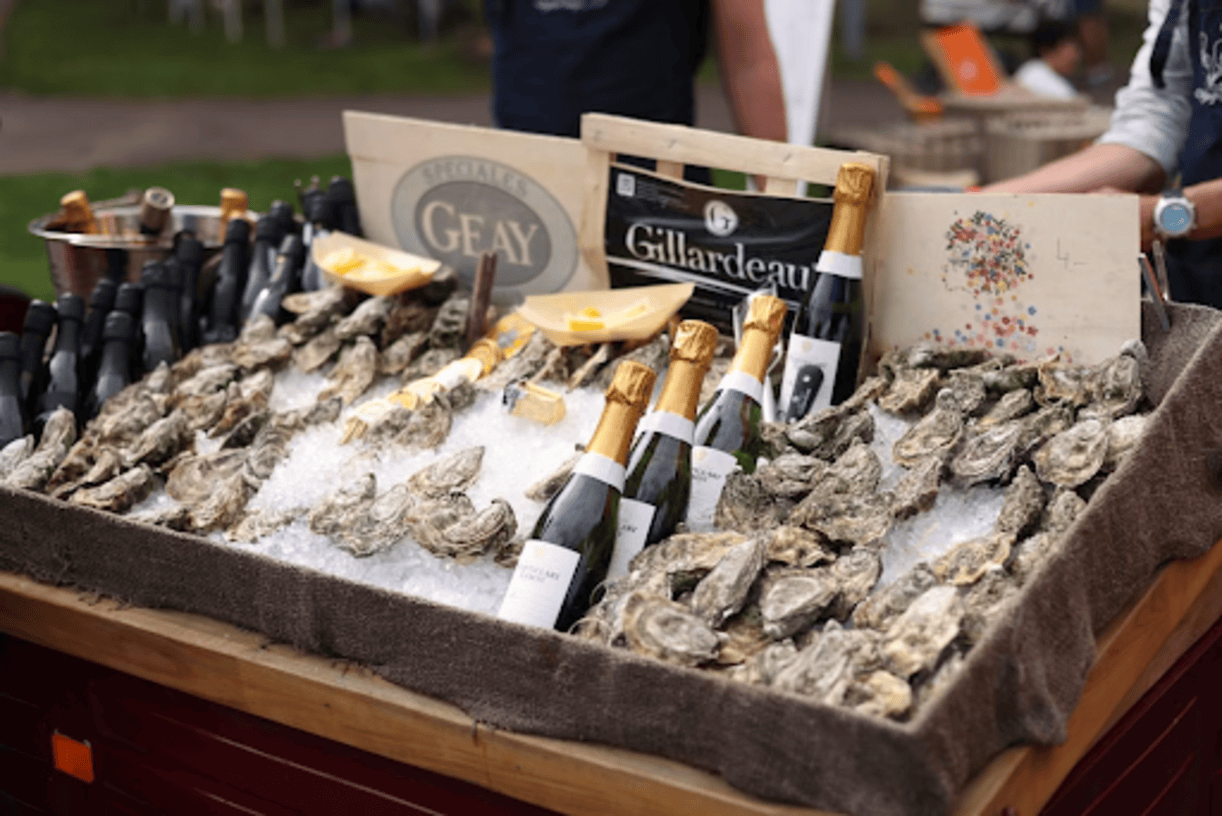
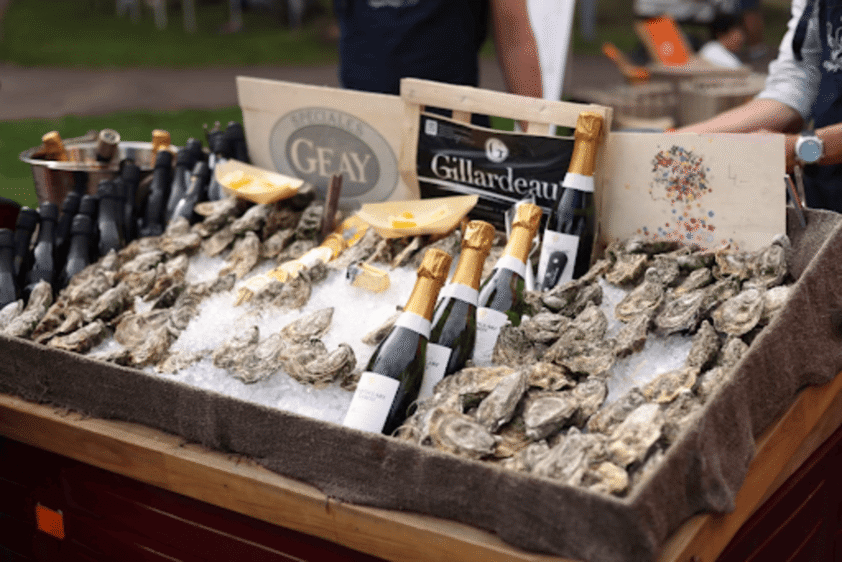
A seafood display can serve as both the centerpiece and the menu at a creative gathering. Oysters arranged over sculpted ice bring texture, movement, and a sense of occasion to the table, while thoughtful garnishes invite guests to shape each bite. The best displays also work on a practical level, keeping chilled food at a safe temperature and giving people enough room to serve themselves comfortably. This approach reflects the new rules of stylish entertaining at home, where thoughtful details and comfortable surroundings help create memorable gatherings.
Visual Drama on Crushed Ice
Start with the shape of the table and the number of guests. A long rectangular table suits a flowing arrangement with oysters placed in curved rows, while a round station works well with a raised ice centerpiece and shellfish arranged around its base. For a gathering of 20 people, aim for a display large enough to accommodate the oysters, garnishes, and serving tools without overwhelming the available table space.
Professional event ice sculptures can incorporate bowls, tiers and channels that hold chilled ingredients. A smaller home setup can achieve a similar effect with a deep tray, several pounds of crushed ice and an elevated serving bowl. Place a waterproof mat beneath the tray and keep folded towels nearby to manage condensation.
Height creates drama, but guests must still be able to see and reach the food. Keep the tallest decorative element behind the serving area or at the center of a round table. Shellfish should sit in shallow impressions so it remains steady when someone reaches for a piece.
For a more controlled presentation, arrange the oysters in shallow beds of coarse salt on chilled serving trays positioned over a separate bed of ice. The salt helps keep the shells stable, while the ice beneath the trays maintains the necessary cold temperature without allowing the oysters to sit in melting water. Replenish the ice as needed throughout the event.
Lighting also affects how ice appears. Soft side lighting reveals carved details and gives the surface dimension. Avoid placing hot spotlights directly above the display since heat speeds melting. Examples of custom ice artistry show how logos, botanical shapes, and geometric forms can become part of an event’s visual identity without overwhelming the food.
Recommended For You
Choosing and Sourcing Quality Oysters
Order seafood only after confirming the guest count, delivery date, and available refrigerator space. A raw bar should look abundant, but buying far beyond your needs creates storage problems and unnecessary waste. Two to three oysters per person may be enough when several appetizers are served. Plan for four to six per person when the display is a main feature of the menu.
Hosts planning a raw bar can explore Maine Lobster Now’s oyster selection, which includes Damariscotta oysters from Maine and Blue Point oysters from Connecticut. Each variety comes in a 12-count pack of live, shell-on oysters that require shucking before serving. Compare the available varieties and plan the quantity around your guest count, allowing enough time to receive the order, refrigerate the oysters properly, and prepare the serving station.
Keep oysters refrigerated and contained so melted ice or other foods cannot contaminate them. Discard any shell that is cracked or remains open when gently tapped before preparation. Never leave the display sitting at room temperature while you finish decorating the rest of the space.
Ask a fishmonger or supplier about flavor profiles before ordering. Some oysters taste clean and lightly sweet, while others have a stronger briny finish or a mineral quality. Serving two distinct varieties gives guests an easy comparison without turning the menu into a complicated tasting exercise. Label each type with a small waterproof card and include its growing region, which adds context and helps people remember their favorite.
Balancing Brine and Garnishes
Oysters already carry their own seasoning from the sea, so every garnish should have a clear purpose. Acid brightens rich flavors, mild sweetness softens sharp brine, and herbs add freshness. Three or four options are usually enough for a polished station.
A classic mignonette made with vinegar, finely minced shallot and cracked pepper is a reliable starting point. Prepare it several hours ahead so the shallot softens. Fresh lemon wedges offer the simplest option, while a cucumber relish or apple mignonette gives the display a more distinctive seasonal note. Keep sauces in shallow containers nestled into the ice and provide a separate spoon for each one.
Color deserves attention too. Pale oyster shells can disappear against clear ice, so use restrained accents such as green herbs, thin radish slices, or edible flowers approved for culinary use. Avoid covering the entire tray with decoration. Guests need to identify the food and lift each shell without dragging a garnish across the ice.
An effective culinary ice display treats food placement and ice design as one composition. Follow that principle at home by repeating colors in small amounts. If cucumber appears in a sauce, a few cucumber ribbons elsewhere on the table can connect the arrangement.
Set hot sauce at the edge of the station instead of directly on the ice. Bottles stay easier to grip there, and labels remain readable. Include small forks, cocktail napkins, and a clearly marked container for empty shells so the serving surface stays tidy.
Elevating the Interactive Host Role
A beautiful raw bar still needs active attention once guests arrive. Assign one person to monitor the ice, replenish the display, and clear empty shells. For a larger gathering, that person may be a caterer or server. At home, the host can ask a trusted friend to check the station every 15 to 20 minutes.
Open with a brief explanation of what’s available. Name the oyster varieties, point out the sauces, and mention which garnish is mildest. Guests who don’t often eat oysters may hesitate if the station offers no direction. A simple suggestion such as starting with lemon before trying mignonette gives them an easy entry point.
Stagger replenishment instead of placing the entire supply on the table at once. Bring out smaller batches from refrigeration as needed and refresh the crushed ice when it becomes watery. This keeps the arrangement crisp while limiting how long each oyster remains on display. If the room is warm or the event extends for several hours, use multiple trays so one can be cleaned and reset while another remains available.
Keep raw oysters chilled until serving and replenish the display in small batches rather than placing the entire supply on the table at once. Offer a cooked seafood alternative for guests who are pregnant, young children, older adults, or people with weakened immune systems, as these groups should avoid raw oysters.
The host should also protect the flow around the table. Place plates and napkins at the beginning of the serving path, followed by oysters, sauces, and the shell container. Leave enough open space for two or three people to browse without blocking a doorway or the main seating area.
Interaction can feel stylish without becoming formal. A small printed tasting card lets guests note which variety they preferred, while discreet labels encourage conversation. The display then becomes an experience people can explore at their own pace, supported by a host who keeps it inviting, orderly, and properly chilled.
As the first layer of crushed ice begins to settle, refresh the edges and wipe the tray before adding the next batch. That small act keeps the entire centerpiece looking newly arranged, even late in the gathering, and ensures the final guest receives the same thoughtful presentation as the first.