



Somewhere in a warehouse outside London, a trench coat that cost an Italian mill several hundred pounds to produce sits folded in plastic, waiting for a decision that has nothing to do with its quality. It was cut correctly. It was sewn correctly. The buyer who selected it for the showroom believed in it. It simply did not sell, and now it exists in the particular limbo that luxury fashion reserves for its failures: too expensive to give away carelessly, too compromising to be seen at a discount, and too much a part of a brand’s carefully built mythology to be treated as ordinary unsold stock.
What happens to it next will be decided not by anyone who touched the fabric, but by a calculation about what the coat’s continued existence, at the wrong price, in the wrong hands, might do to the idea of the brand that made it.
This is the part of fashion that the industry has spent decades trying not to discuss, and the part that, when it does surface, tends to produce the kind of scandal that briefly reorders an entire company’s public relations strategy. Burberry learned this in 2018, when its annual report disclosed, almost as a footnote, that it had destroyed twenty-eight million pounds worth of unsold goods in a single financial year. The number became a story not because it was unusual, but because it was, for once, written down.
The Logic of Destruction
The practice of destroying unsold luxury goods is old, widespread, and until recently almost entirely unregulated. Burberry was not unusual in burning roughly thirty-seven million dollars of stock. It was simply the company unfortunate enough to have the disclosure surface in a way the public noticed. Chanel, Gucci, Michael Kors, Eddie Bauer, Victoria’s Secret, Urban Outfitters, and Walmart have all, at various points, been documented destroying merchandise rather than discounting or donating it. Richemont, the conglomerate that owns Cartier and Montblanc, destroyed five hundred and seventy-two million dollars’ worth of watches in 2017 alone, dismantling and incinerating timepieces of considerable value rather than risk them entering circulation at a price below what the brand had decided they were worth.
The reasoning, when luxury executives have been willing to articulate it, is consistent. A garment or accessory sold at clearance undermines the price the brand charged the customer who paid full price for the same item the previous season. A counterfeiter who acquires deadstock luxury goods can use them to legitimise fake supply chains or simply resell authentic pieces through channels the brand does not control, eroding the exclusivity that the entire pricing structure depends on. An academic researcher at the University of Technology Sydney, who has studied the practice closely, has described the logic plainly: destroying unsold goods is, in a sense, perverse, but the brands doing it are protecting the idea that scarcity itself is part of what the customer is paying for.
This is the uncomfortable truth at the centre of luxury economics. The product is not only the coat. It is the promise that the coat’s price reflects a desirability the brand has carefully constructed and has no intention of devaluing, even when devaluing it would put the actual physical object to better use. Burning the trench coat is, from inside this logic, not wasteful. It is the cost of doing business in an industry whose value proposition depends on artificial scarcity holding.
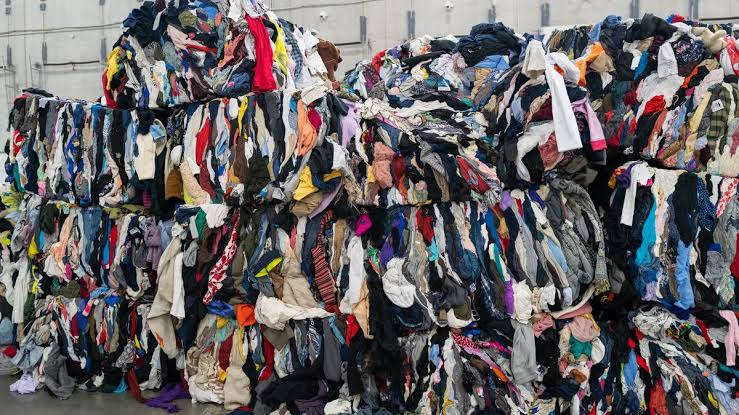
The environmental cost of that logic has become harder to ignore. The fashion industry produces more than ninety million tonnes of textile waste annually, and a textile-laden garbage truck is, by some estimates, dumped into landfill or burnt somewhere in the world every single second. France became the first country to legislate against the practice, banning the destruction of unsold non-food products from January 2022 under its Anti-Waste for a Circular Economy law, which the country’s environment ministry quantified at the time of passage as between ten and twenty thousand metric tonnes of textile products destroyed annually in France alone, a volume the ministry compared to the weight of one to two Eiffel Towers. Spain followed at the end of 2024. The European Union’s broader Ecodesign for Sustainable Products Regulation, which entered into force in 2024, will ban the destruction of unsold textiles and footwear across the bloc from July 2026, permitting exceptions only for goods that are genuinely unsafe or non-compliant, with documentation that companies must retain for five years and produce to regulators within thirty days of request.
For a luxury house, this changes the calculation considerably. The decision that used to be a private matter of brand protection has become, increasingly, a matter of legal compliance. The trench coat in the warehouse outside London is no longer simply a problem of inventory. It is a regulatory question with a paper trail.
The Quieter Paths
Not every unsold garment meets the incinerator, and the alternatives that exist reveal almost as much about the industry’s priorities as the destruction does.
Burberry, after the 2018 backlash, became the first major luxury house to publicly commit to ending the practice, and its response is instructive in both its genuine innovation and its limits. The company partnered with the resale platform The RealReal, encouraging customers to consign rather than discard old Burberry pieces. It began donating leather scraps to Elvis & Kresse, a company that weaves waste leather into new accessories and homeware. It started sending damaged or unsellable fabric to Progetto Quid, an Italian social enterprise that employs women who are survivors of violence and trafficking, former prisoners, and refugees, to be remade into new garments. The brand also began dressing unemployed women, some homeless, others recently released from prison, in donated stock for job interviews through the charity Smart Works, a partnership the company has been candid about serving a dual purpose: dignity for the people being dressed, and a productive outlet for stock that would otherwise have gone to the incinerator.
These initiatives are genuine, and they matter to the people they reach. They are also, by the scale of the industry’s overproduction problem, marginal. A handful of leather accessories made from offcuts and a few hundred interview outfits donated annually do not absorb the volume of excess production that an industry making well over one hundred billion garments a year generates. Gucci and Moncler are reported to have quietly stopped burning unsold stock, though neither has been willing to discuss the details of their current disposal practices on record, which is itself revealing. The silence that surrounds what does happen to luxury deadstock, even among brands that claim to have reformed, suggests an industry more comfortable avoiding the question than answering it transparently.
H&M, operating at a different scale and price point but facing comparable scrutiny, has insisted that none of its unsold stock is sent to landfill or incinerated, attributing the documented historical burning of clothing in Denmark to items contaminated with mould or excessive lead content rather than ordinary surplus. Independent verification of these claims is, in the absence of mandatory public reporting, largely impossible. This is the structural problem beneath every individual brand’s account of its own practices: because disclosure has been voluntary until very recently, the industry has been able to manage the story of what happens to its waste as carefully as it manages the story of what its products mean.
Where the Donations Actually Go
The instinct to donate unsold clothing feels, to most consumers, like an unambiguous good. The reality, traced honestly, is considerably more complicated, and nowhere is that complexity more visible than at Kantamanto Market in Accra, Ghana.
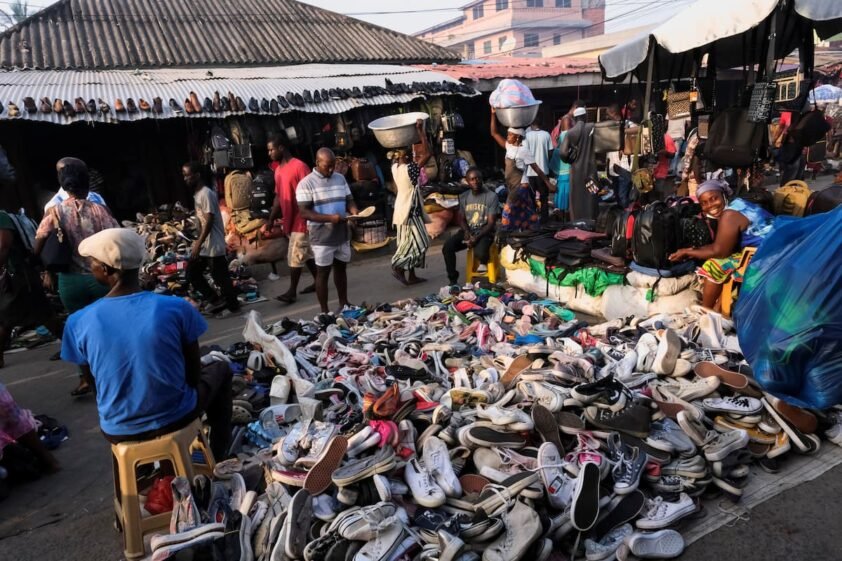
Kantamanto is the largest secondhand clothing market in West Africa, a sprawling, densely packed commercial district that receives an estimated fifteen million garments every week, arriving in compressed bales from the United Kingdom, the United States, Canada, and continental Europe. Ghana imported clothing worth between one hundred and twenty-one million and two hundred and fourteen million dollars in recent years, making it among the largest secondhand clothing importers in the world. The market sustains an estimated thirty thousand traders, who buy bales sight unseen from importers, a transaction that the people who work there describe, accurately, as a lottery.
The lottery is rigged against the buyer with increasing frequency. Traders and researchers who have studied Kantamanto closely report that approximately forty percent of the clothing arriving in any given bale, an estimated six million garments every week, is unsellable on arrival: torn, stained, mouldy, or made from synthetic fabric unsuited to Ghana’s climate and the market’s demand. A trader who has purchased a bale believing it would yield saleable stock often finds, on opening it, that a significant share of its contents are not donations finding a second life but waste that someone else has declined to dispose of properly, exported instead under the more comfortable language of charitable giving.
This is the mechanism by which “what happens to unsold luxury fashion” connects to one of the most documented environmental and social crises in contemporary fashion. The clothing that arrives in Kantamanto unsellable does not vanish. Some is collected, at considerable public cost, by Ghana’s overwhelmed waste management services. Much is burnt in open pits alongside other refuse. A great deal is dumped directly into the Korle Lagoon, a body of water near Accra that pollution researchers and Ghana’s own president have described as among the most contaminated on Earth, or it washes onto the city’s beaches, where mounds of textile waste, locally known by the Twi phrase ‘obroni wawu’, meaning ‘dead white man’s clothes’, now bury sand that families once used for recreation. A January 2025 fire that swept through Kantamanto, destroying roughly two-thirds of the market and the livelihoods of thousands of traders, has been linked by researchers to exactly this dynamic: the accumulation of flammable synthetic textile waste in conditions never designed to absorb it.
Yayra Agbofah, a Ghanaian designer who founded the nonprofit The Revival in 2018 after witnessing the scale of the waste firsthand, has built a model that treats Kantamanto’s discarded textiles as raw material rather than rubbish, training tailors to repair, recombine, and remake garments that would otherwise be destroyed, including a partnership with London’s Victoria and Albert Museum that has converted landfill-bound denim into accessories sold in the museum’s own shop. His organisation has recovered millions of garments over several years. It is, by any measure, an extraordinary intervention. It is also, set against the scale of six million unsellable garments arriving every week, a demonstration of how much more structural support the problem requires than any single initiative, however well run, can provide.
What this means for the question of unsold luxury specifically is sobering. Donation is frequently the destination luxury brands point to when explaining what happens to stock they no longer wish to sell at full price and have committed not to destroy. But donation, once it leaves a brand’s hands and enters the secondhand export economy, does not guarantee a dignified second life. It guarantees entry into a global trade whose downstream costs are paid almost entirely by countries that did not generate the surplus and have not been resourced to absorb it. The luxury industry’s growing discomfort with burning its own stock has, in many cases, simply moved the disposal problem further down the supply chain, to a market in Accra that lacks the infrastructure, and has not been offered the funding, to handle what arrives.
The Resale Economy’s Limits
The most commercially celebrated solution to unsold luxury inventory is resale, and the growth of platforms like The RealReal, Vestiaire Collective, and an expanding ecosystem of brand-run resale programmes has genuinely changed how some luxury stock moves once it leaves the primary retail channel.
Resale works well for a specific category of unsold luxury: items that retain enough brand cachet and physical quality that a secondary buyer will pay a meaningful price, allowing the brand to recoup some value while a customer acquires a discounted but still desirable product. It works considerably less well for the categories of unsold stock that make up the bulk of overproduction: the trend pieces that did not land, the colourways that did not resonate, and the sizes that did not move. These items are frequently too far below the brand’s pricing dignity to be sold through official channels at any discount the brand is willing to publicly authorise, and not distinctive enough to generate resale demand on their own merits.
This is the gap that off-price retailers, outlet stores, and ultimately the export economy exist to fill, and it is a gap that no resale platform, however successful, currently closes. The luxury industry has been more willing to celebrate the existence of circular initiatives than to disclose what percentage of its actual unsold inventory those initiatives meaningfully absorb. The honest answer, based on the scale of the waste data available, is very little.
Recommended For You
Who Gets Access to Global Opportunities?
Turning African Jewellery Into Queer Protest and Personal Power
The Coat, Revisited
Return to the trench coat in the warehouse outside London. Its most likely paths, in the current state of the industry, are these. It may be quietly discounted through an outlet channel the brand does not advertise, sold at a fraction of its original price to a customer who will never know how close it came to a different fate. Also, it may be donated, entering a charitable supply chain that, with good fortune, places it with someone who needs a coat, and with less fortune, sees it baled, shipped, and resold three or four times before arriving, eventually, in a market like Kantamanto, where a trader will gamble on it, and where, if it has degraded in transit or simply does not suit the local market and climate, it may end its life in an open-air burn pit on the edge of Accra rather than the carefully managed incinerator the brand might have used at home.
It may, if the brand has invested in the infrastructure, be recycled, its wool fibres reprocessed into insulation or new yarn, and its lining separated and downcycled, a process that remains technically difficult and commercially marginal but is improving as bio-based and mechanical recycling technologies mature. Or, if regulatory pressure and brand caution combine in the way the European Union now intends, it may simply never have been produced in this quantity at all, the industry’s planning systems having grown sophisticated enough to avoid manufacturing the surplus in the first place.
That last outcome, prevention rather than disposal, is the one that every serious voice in this conversation, from the regulators in Brussels to the traders in Kantamanto to the designers building circular alternatives, agrees is the only genuinely sustainable answer. Better demand forecasting. Smaller, more considered production runs. A luxury industry willing to treat scarcity as something achieved through restraint in manufacturing rather than through destruction after the fact. This is a harder commitment than any single recycling partnership or donation programme, because it requires the industry to produce less, sell less, and in some cases, earn less, rather than finding increasingly elaborate ways to dispose of what it has already made too much of.
Until that commitment is made at scale, the coat will keep being made, and somewhere, every season, a version of it will keep ending its short life in a warehouse, deciding nothing about its own fate, while a long chain of people in London boardrooms, Italian disposal facilities, and Accra’s market stalls decide it for it.