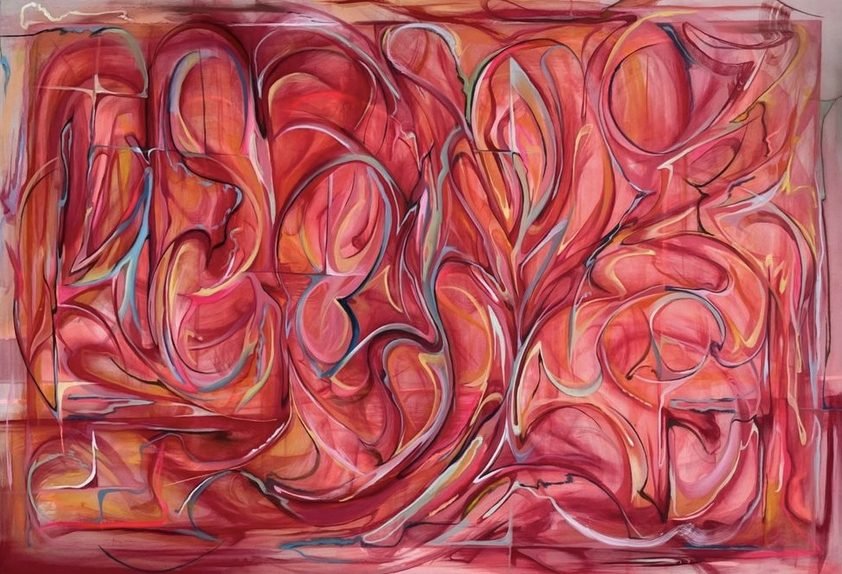
There is a temptation to explain art before allowing it to be experienced. CÉ LA VI
Perhaps it is a symptom of our time. We search for captions before conversations, context before curiosity, and certainty before emotion. Every image demands an explanation, every exhibition a statement, every artist a definitive answer. Somewhere along the way, we have become uncomfortable with simply feeling.
Walking into CÉ LA VI, that instinct quickly dissolves.
Presented as part of The Encounter Collection during Social Club RSVP’s first anniversary at CÉ LA VI London, the exhibition rejects the conventions of the white cube. Here, paintings do not exist in isolation, waiting patiently to be observed from a respectful distance. They exist within the rhythm of an evening. Conversations spill across the room, music reshapes the atmosphere, strangers become familiar, and as daylight gives way to night, the exhibition transforms into something far less static than a collection of works on walls. It becomes a living environment where the audience completes the work simply by being present.
The exhibition explores what Social Club RSVP describes as “the emotional architecture of a party”—the tension between intimacy and performance, observation and participation, stillness and movement. As the evening unfolds, the distinctions between artwork, audience and environment begin to disappear.
Yet beneath the music and celebration lies a quieter conversation.
Spend time with the artists featured in CÉ LA VI and a pattern begins to emerge. Few speak first about technique. Instead, they talk about memory, vulnerability, identity and growth. Their work searches for meaning in a world increasingly obsessed with speed, certainty and perfection.
That’s what makes the exhibition feel so timely. In an age shaped by algorithms and digital efficiency, these artists remind us that imperfection is often what makes something feel most human.
Learning to Feel Again
Long before Simon-Andrés Littasy Benitez understood language, he already understood emotion.
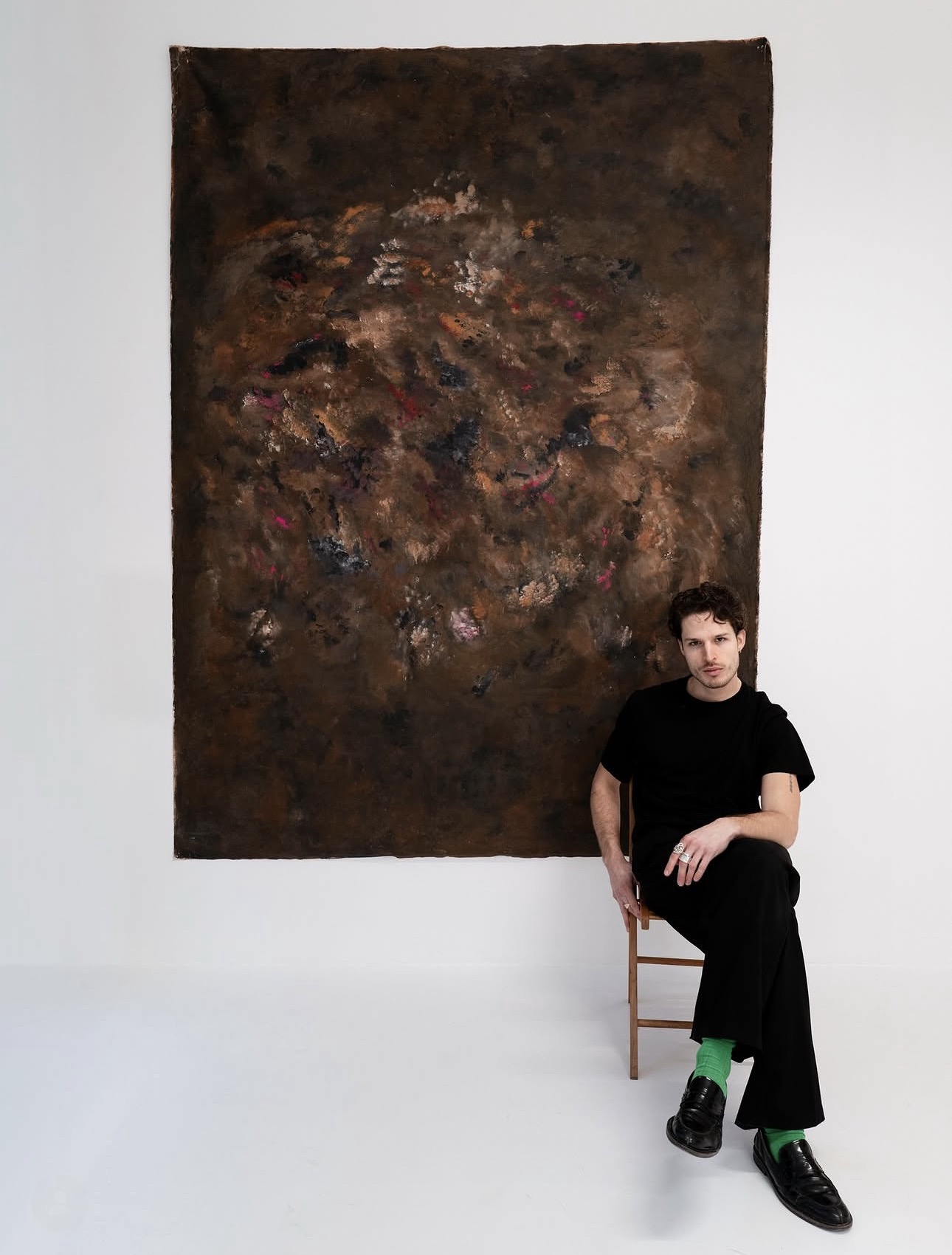
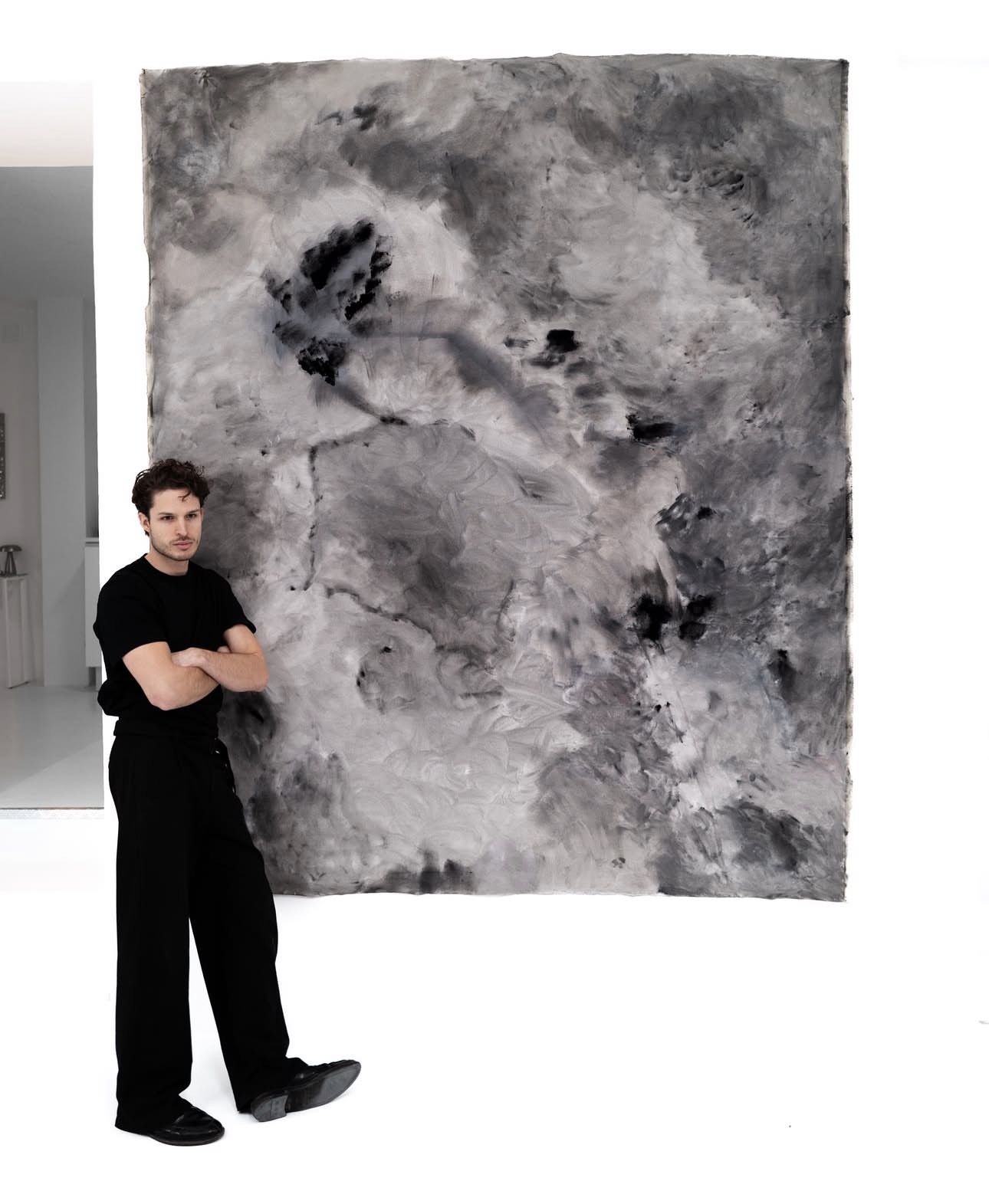
Looking back at family recordings, he remembers himself slowly spinning in circles with his arms stretched wide, completely absorbed by Celine Dion’s My Heart Will Go On. He didn’t understand the lyrics. He simply understood the feeling.
“I clearly must have had a moment of realisation at some point that I could feel music and creativity more intense than my body can handle.”
Years later, very little has changed.
“I’m still the same kid spinning in circles to My Heart Will Go On. Growing up changes the man but never the kid.”
There is something refreshingly uncomplicated about the way Simon describes his relationship with painting. Rather than searching for grand narratives or hidden symbolism, he is drawn to the quiet details that often go unnoticed.
A crack stretching through a pavement.
Sunlight catching the bark of a tree.
The weathered texture of an ageing wall.
“I’m not interested in telling the deepest story,” he says. “I’m way more interested in depicting the fragments and emotion of life that occur to me every day.”
His featured work, Reverie, reflects that philosophy. Described as “the last dance of a shapeless entity, suspended between implosion and explosion,” the painting occupies a space somewhere between dream and reality, never settling fully into either.
Simon never asks viewers to decode hidden meaning.
“I hope they won’t have to understand a meaning. I hope they will feel what I lived for.”
Complexity Is Not Something to Solve
Where Simon finds beauty in simplicity, Funmi Lijadu embraces complexity.
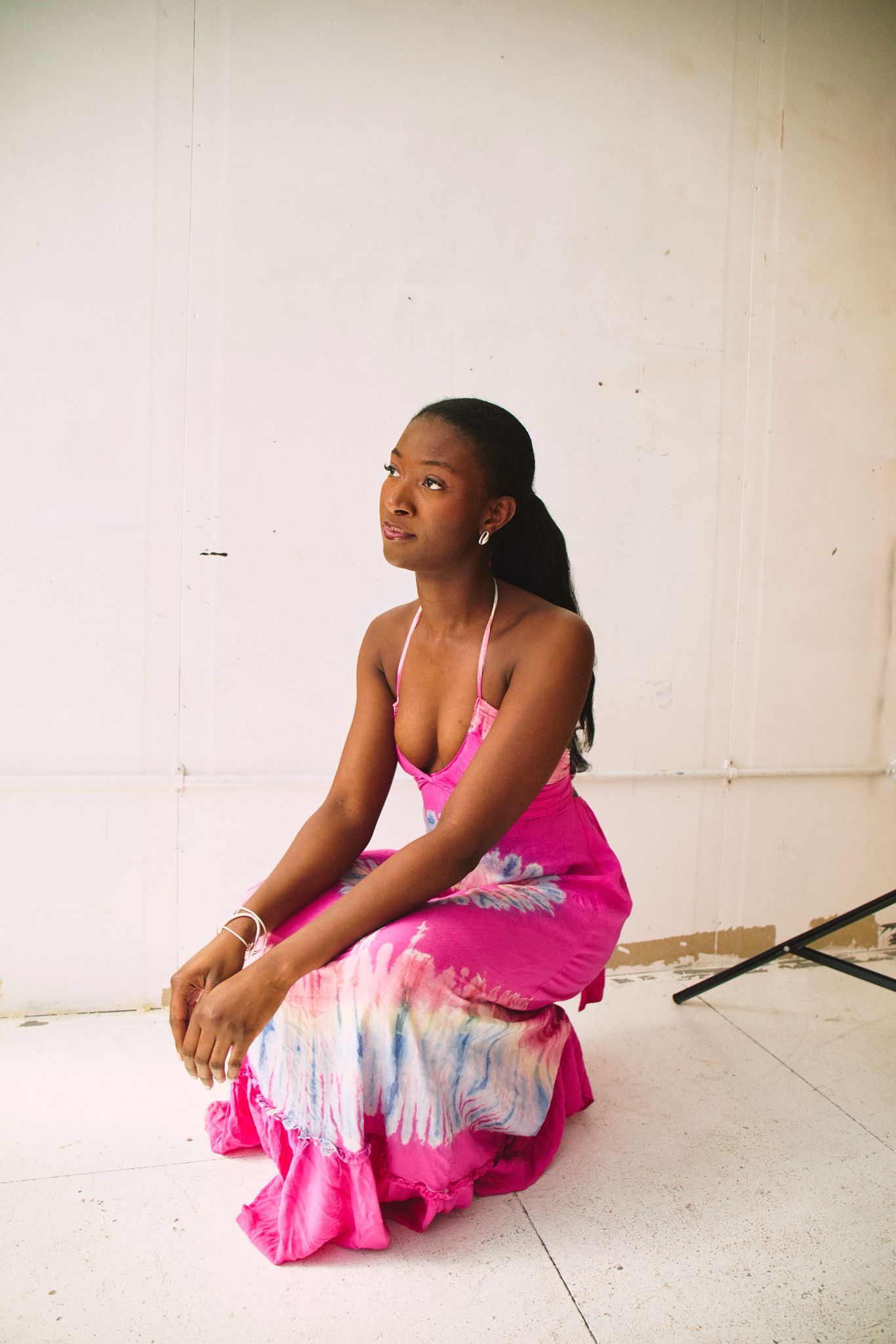
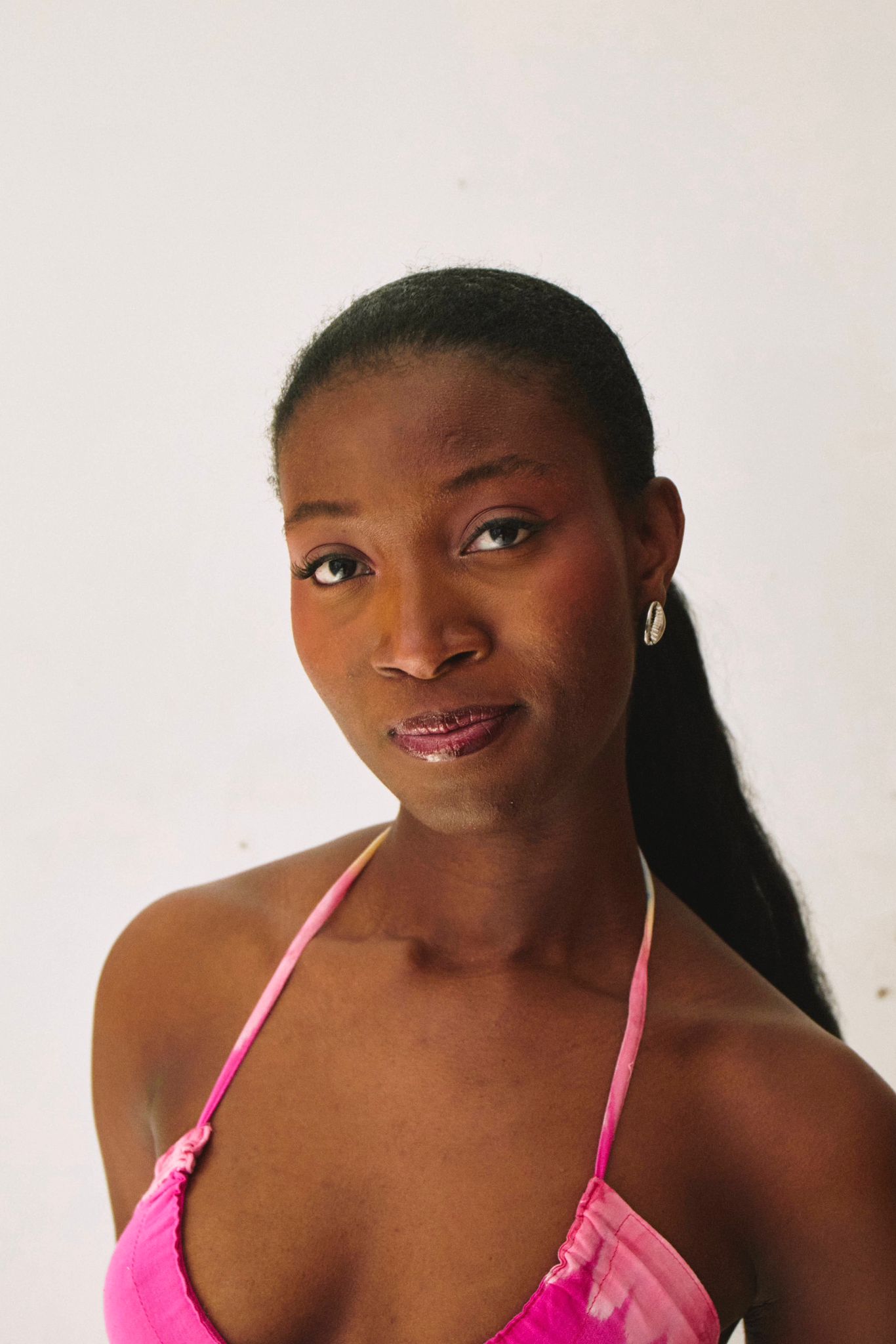
Growing up surrounded by Nigerian and African art collected by her father, creativity wasn’t introduced into her life—it was simply part of it. Designing T-shirts as a child eventually led to commissions with Tate while she was still studying, but despite those milestones she resists the idea that artistic journeys are defined by singular breakthrough moments.
“Art is a way of life,” she says.
That belief quietly runs through everything she creates.
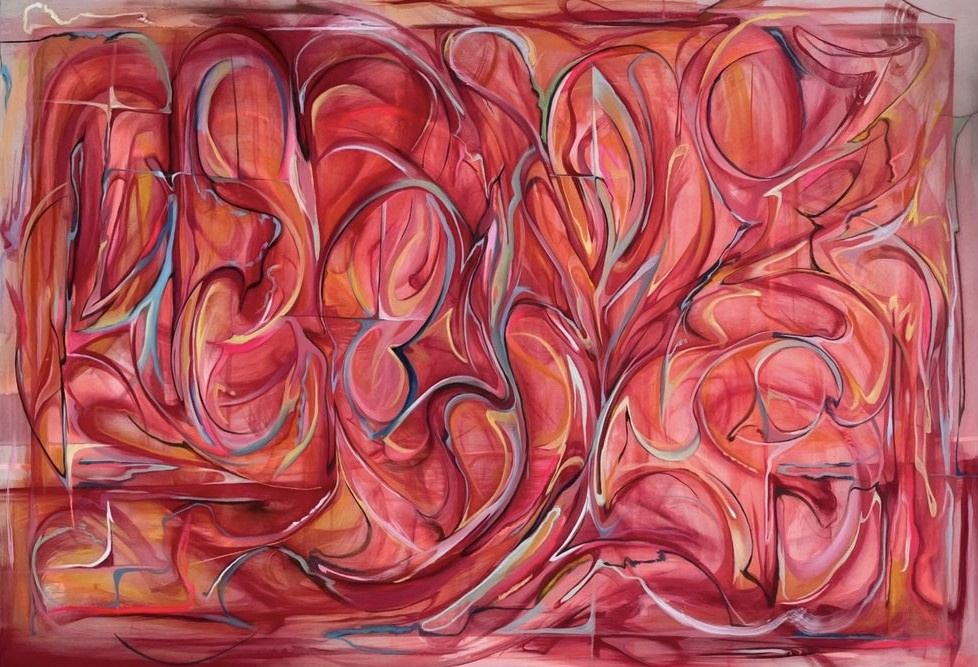
Working across collage, assemblage, writing, sound and moving image, Funmi constructs layered visual worlds that resist immediate understanding. Her featured work, Communion, reflects on the shared experience of listening to music together, capturing the emotional intensity and connection that can emerge on a dancefloor and beyond. Built from collage, acrylic and found materials, the work mirrors memory itself—assembled through fragments, overlapping histories and multiple perspectives rather than singular truths.
Unlike a culture that increasingly demands immediate opinions and clear conclusions, Funmi deliberately leaves room for ambiguity.
“My hope is that people embrace the complexity and nuance in my work rather than attempting to condense or oversimplify it.”
Rather than prescribing conclusions, she invites viewers into an ongoing conversation about identity, power, privilege and culture, allowing multiple readings to exist at once.
Painting Memory
Memory rarely arrives intact.
It appears through colours.
Textures.
Places.
Feelings.
For Iona Gordon, those fragments become the starting point of every painting.
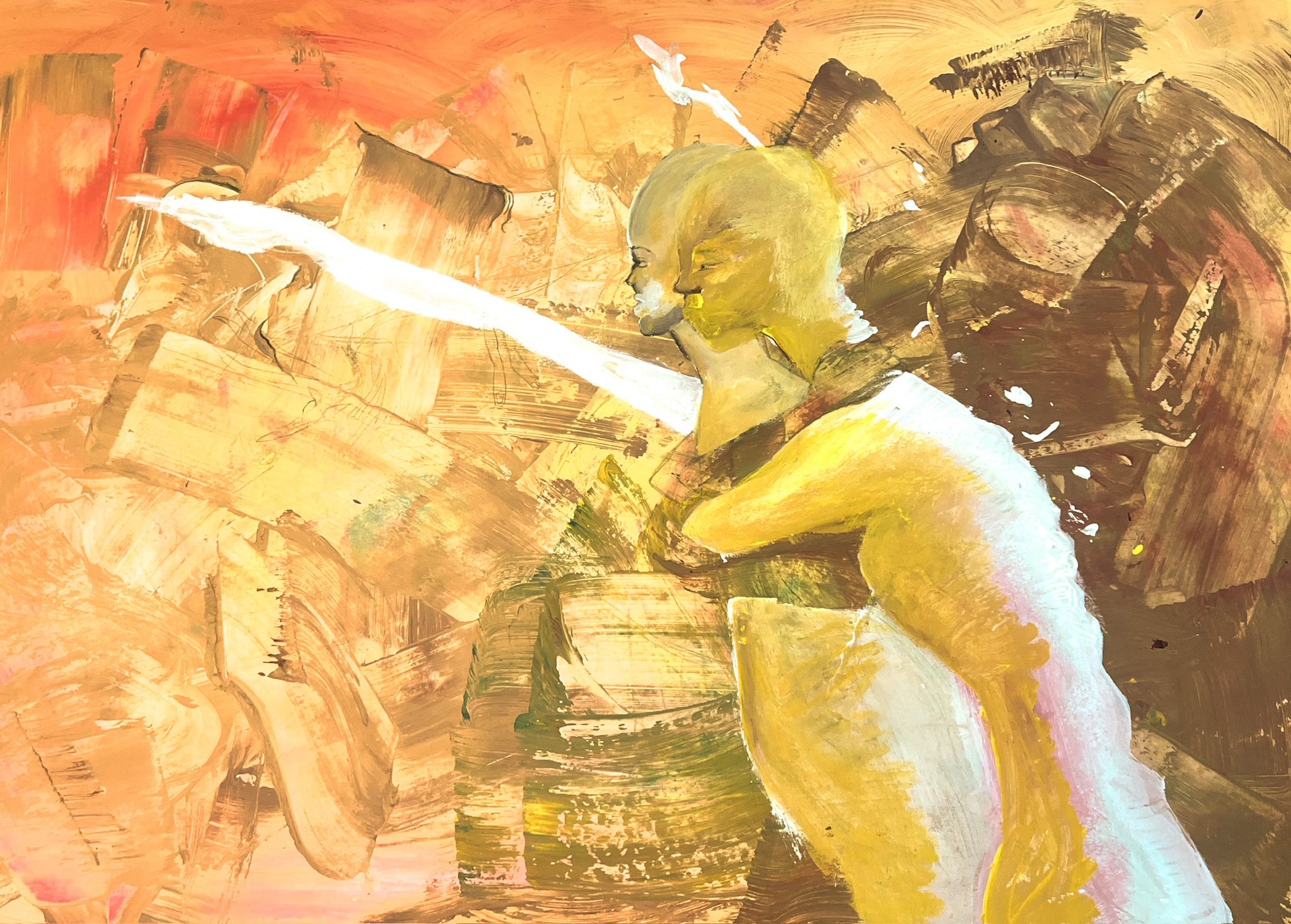
Born in Accra and raised in London, Gordon’s multidisciplinary practice spans painting, photography and poetry, drawing on both her Scottish and Ghanaian heritage to explore ideas of belonging, ancestry and cultural inheritance.
Rather than working on traditional canvas, she paints primarily on chiffon—a material chosen not simply for its appearance, but for what it allows memory to do.
The translucent fabric reveals.
Then conceals.
Light passes through it.
Layers remain visible beneath one another.
Nothing feels entirely fixed.
“I still believe in wanting my work to be immersive,” she says, describing her desire to move beyond paintings that simply hang on a wall and instead create something viewers can step into.
Preparing the fabric becomes as important as the painting itself.
“It allows me to be more connected to the work because I have to be gentle with the fabric.”
That gentleness carries into Aseye, a work dedicated to her younger sister. Inspired by childhood memories of picking pink oleanders after church in Keta, the painting reflects both the tensions and tenderness of sibling relationships, and the understanding that often arrives with time.
Interestingly, Gordon admits she often enjoys process more than completion. She sections paintings with tape, rotates them repeatedly and isn’t afraid to start again. What appears spontaneous often contains remarkable intention beneath its fluidity.
The Courage to Meet Your Shadows
If Simon asks us to notice the world around us, Venus asks us to confront the one within. Painting, for her, has never been performance.
It has always been survival.
“When I paint, I don’t see myself as an artist or a name creating something. I’m simply a person alone within my four walls trying to understand what exists inside of me.”
Her paintings exist precisely within that confrontation.
“If you don’t meet your shadows,” she asks, “who else will?”
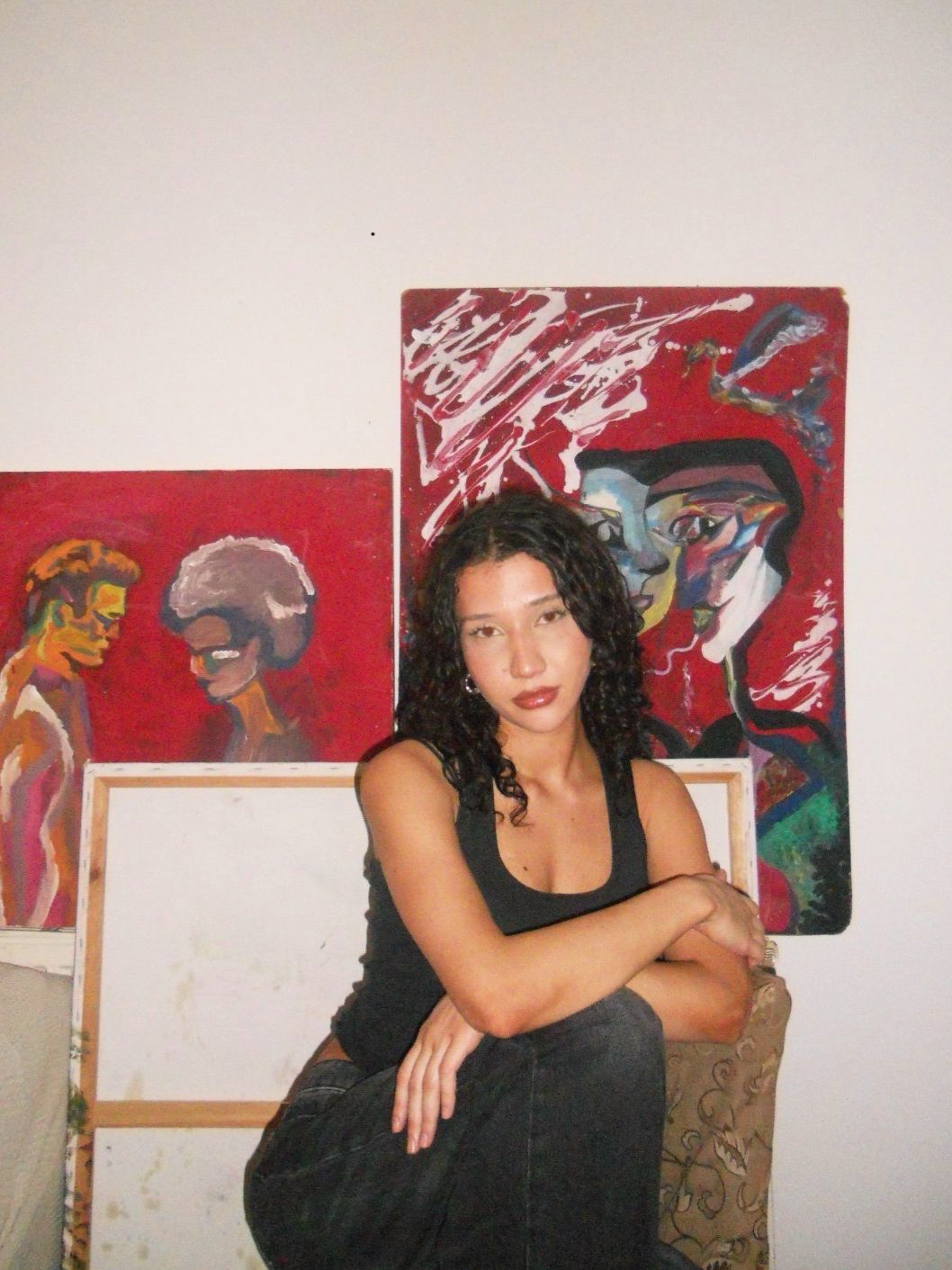
Figures stretch beyond anatomy, existing somewhere between physical bodies and emotional landscapes. Every canvas begins with red—whether visible in the finished work or buried beneath countless layers.
“It’s always the first colour I cover my canvas with. Even if you can’t see a single trace of red in the finished painting, I can promise you it’s there.”
For Venus, red isn’t simply a colour.
It’s pulse.
Life beneath the surface.
The hidden heartbeat every painting carries.
Her featured work, The Exodus of the Light, explores the violence of losing direction while suggesting that getting lost can become a form of transformation rather than defeat. Through distorted anatomy and layered abstraction, the work sits somewhere between collapse and renewal.
For Venus, paintings are never intended to provide answers.
“Art shouldn’t close a conversation,” she says.
“It should open one.”
Movement, Memory and the Body
If there is one thing that connects the artists in CÉ LA VIE, it is an understanding that the body remembers long after words fail.
For Bijoux Chima, that memory is carried through movement.
Watching Spirited Away as a child first opened his imagination to worlds beyond his own, but today his practice looks inward just as much as outward. Working predominantly in acrylic, Bijoux builds his paintings through countless layers, creating the richness often associated with oil paint while keeping the freedom that acrylic allows.
“I prefer the quick trial and error you can achieve with acrylic,” he says. “We create the illusion of oil paint with countless layers.”
That willingness to experiment mirrors the way he approaches creativity as a whole. Painting, music, production and creative direction are not separate disciplines but connected ones, each feeding into the next.
“There’s something to take from each discipline. Everything inspires me.” At the centre of his work remains the human figure—not as portraiture, but as energy.
“I hope people feel the power and energy that the human body is able to generate. When we dance as a form of expression there is a lot of beauty in it.”
While many of the artists in the exhibition turn inward, Bijoux captures movement itself, searching for new ways to express emotion through the body.
Asked what success looks like, his answer is simple.
“It’ll be the day I can leave a world behind that is one hundred percent authentic to me.”
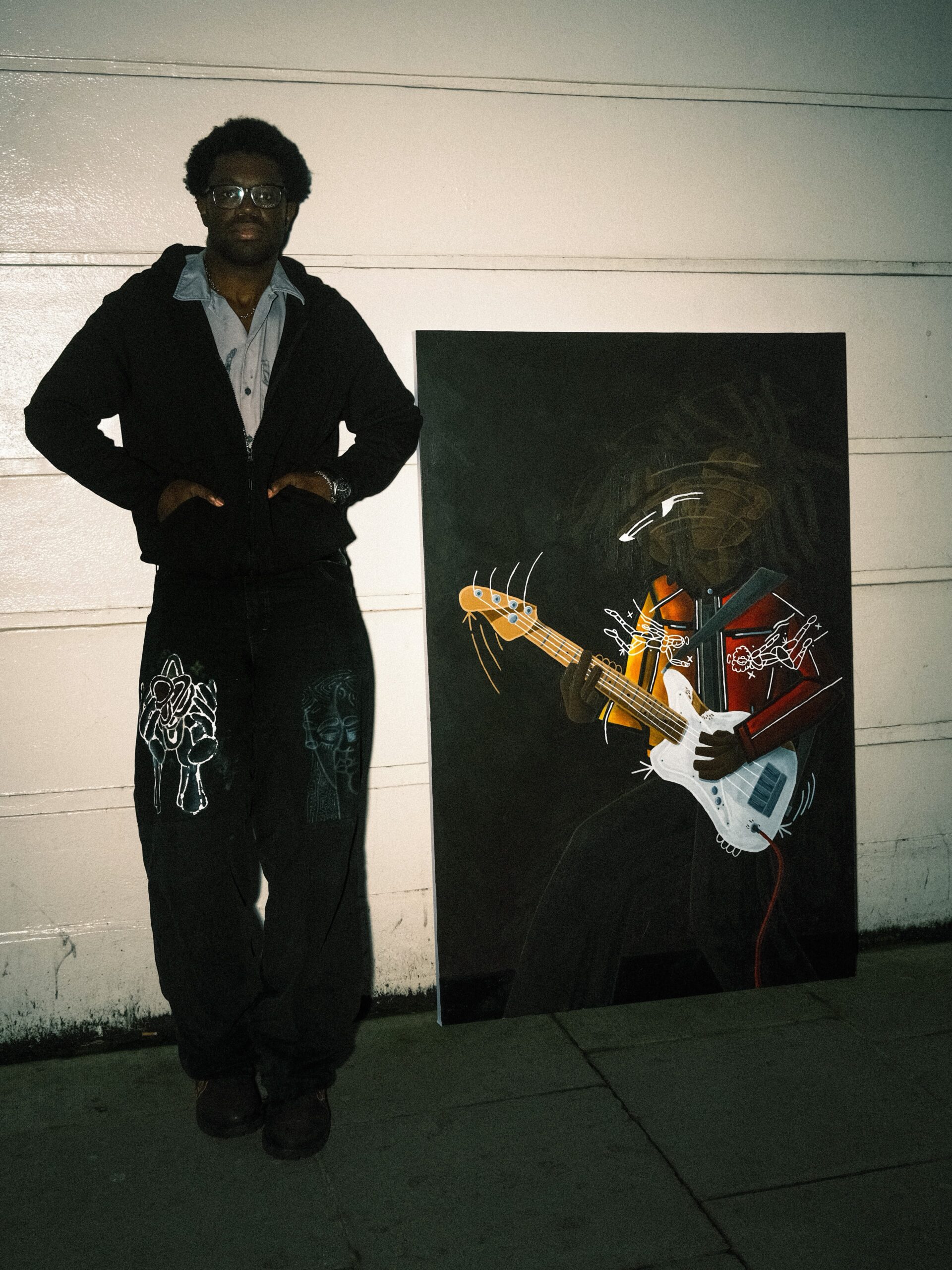
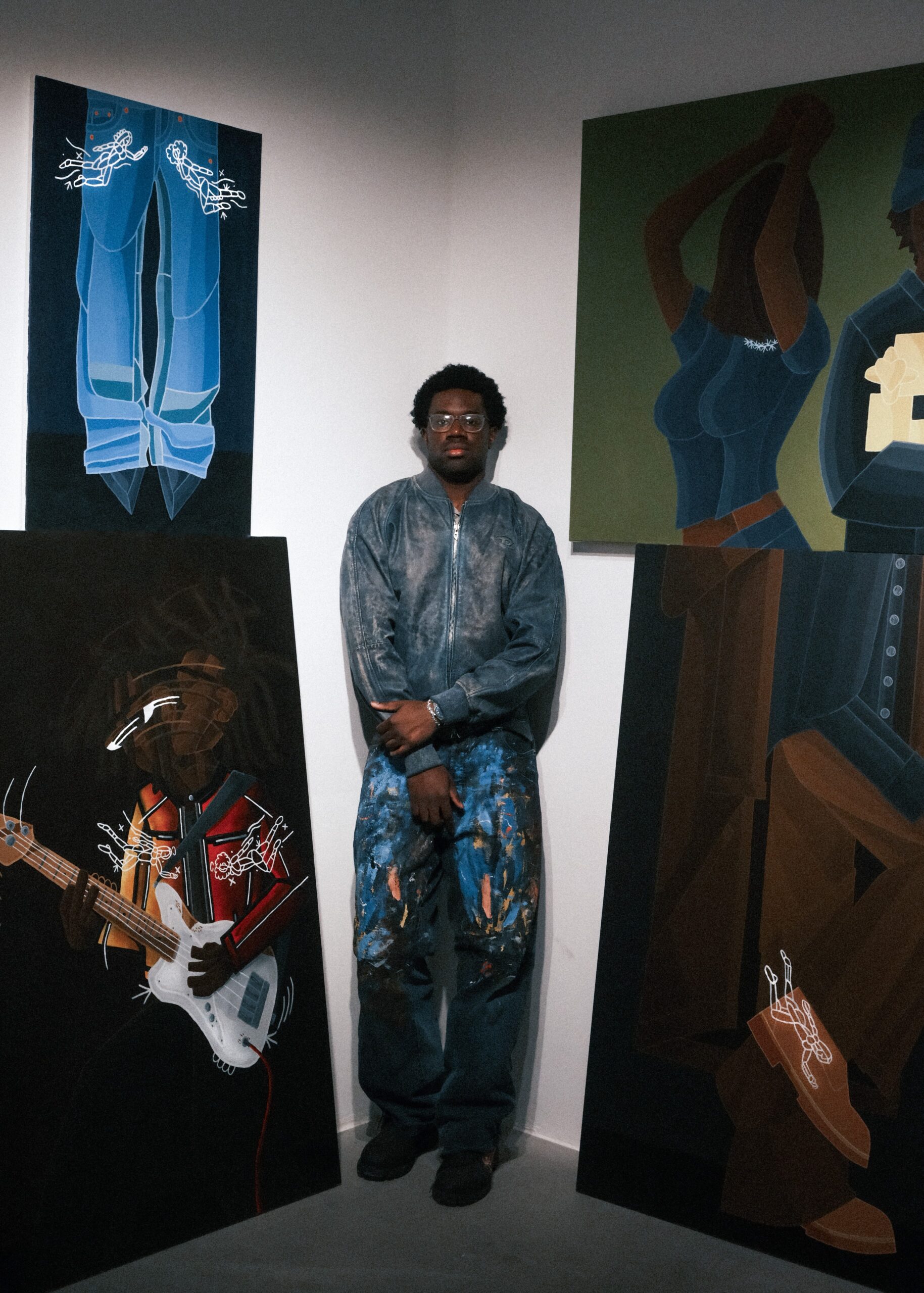
That relationship between body and performance continues in the work of Teddy Opong, whose multidisciplinary practice moves between painting, fashion and wearable art. His featured painting, Artists Are The New Rockstars, captures the intensity of live performance—a musician completely immersed in the moment, disconnected from everything except the music itself. Confidence and vulnerability exist side by side.
Through his label Abve All Else, Teddy celebrates individuality by rejecting repetition. No two works are the same, reflecting his belief that people themselves shouldn’t be reduced to uniformity.
Together, Bijoux and Teddy explore different forms of performance—one through movement, the other through presence. Both remind us that expression often speaks loudest without words.
Growth Isn’t Beautiful Until You Look Back
For SI XIAZI, painting has never been about answers.
It has always been about becoming.
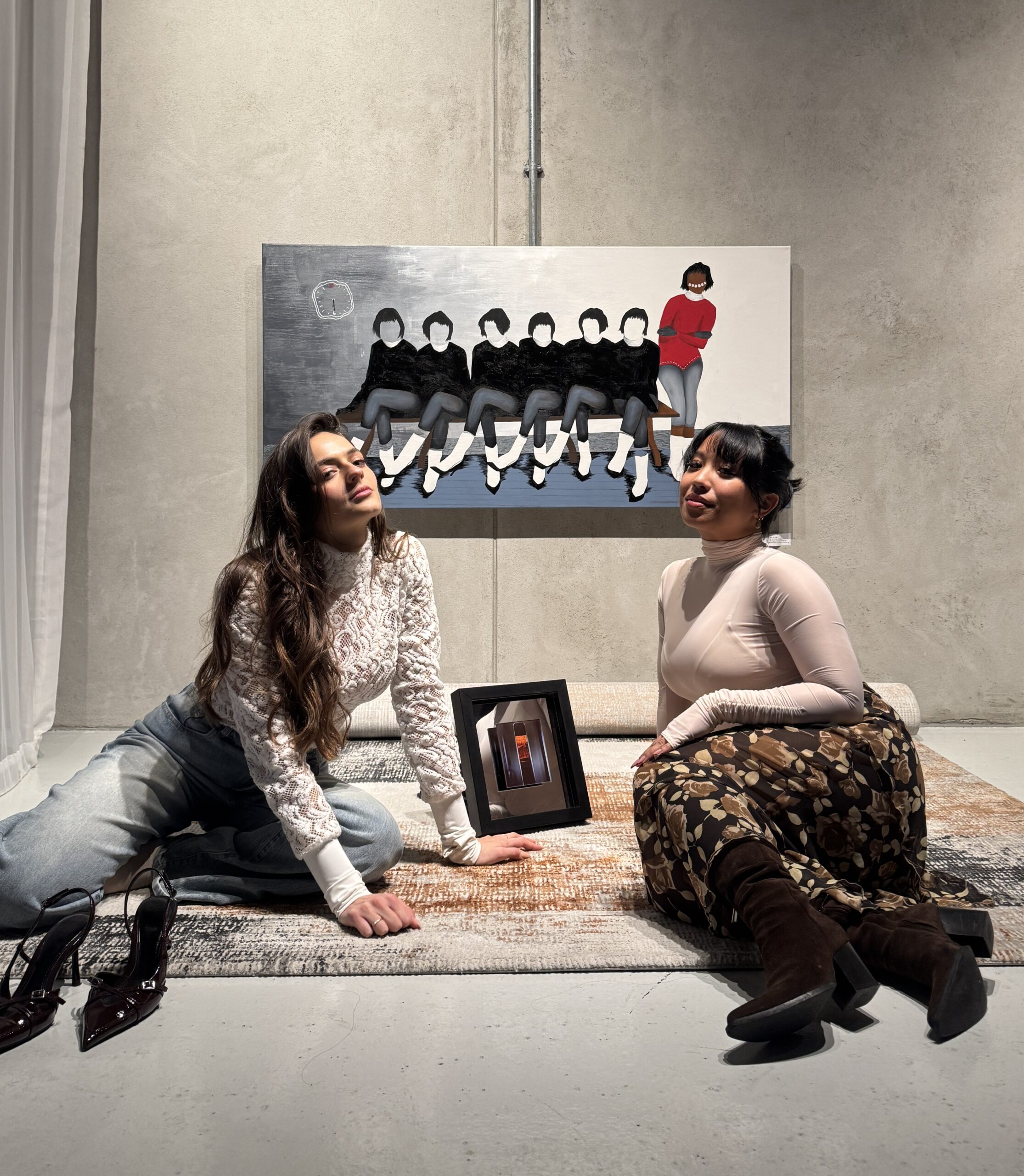
Born in Angola before moving through South Africa to London, his work is shaped by migration, resilience and the ongoing negotiation of identity. Yet rather than telling autobiographical stories directly, SI deliberately removes one of portraiture’s defining characteristics.
Faces.
None of his paintings include them.
“I want people to see themselves within the work rather than someone else.” In doing so, every painting remains unfinished until someone stands in front of it. Each viewer contributes their own memories.
Their own emotions.
Their own story.
His paintings become shared spaces rather than fixed narratives.
More than anything, SI speaks about growth—not the polished version often celebrated online, but the uncomfortable reality of becoming.
“Real growth is never beautiful in the beginning. It’s uncomfortable, uncertain and often messy before anything blooms.”
That philosophy extends into his process.
Rather than working on one painting at a time, he often develops five or six simultaneously, comparing artistic practice to athletic training.
“I treat creativity the same way an athlete treats training.”
The catalogue describes his practice in four simple words:
Turn pain into champagne.
It sounds playful, but it reflects the optimism that runs throughout his work—the belief that difficult experiences can still become something worth carrying forward.
The Body as a Vessel
Where SI looks outward toward shared experience, Alessia Badia turns inward.
Growing up watching her father perform surgery, the human body became familiar long before it became artistic subject matter. Anatomy was never simply physical; it became a way of thinking about memory, emotion and lived experience.
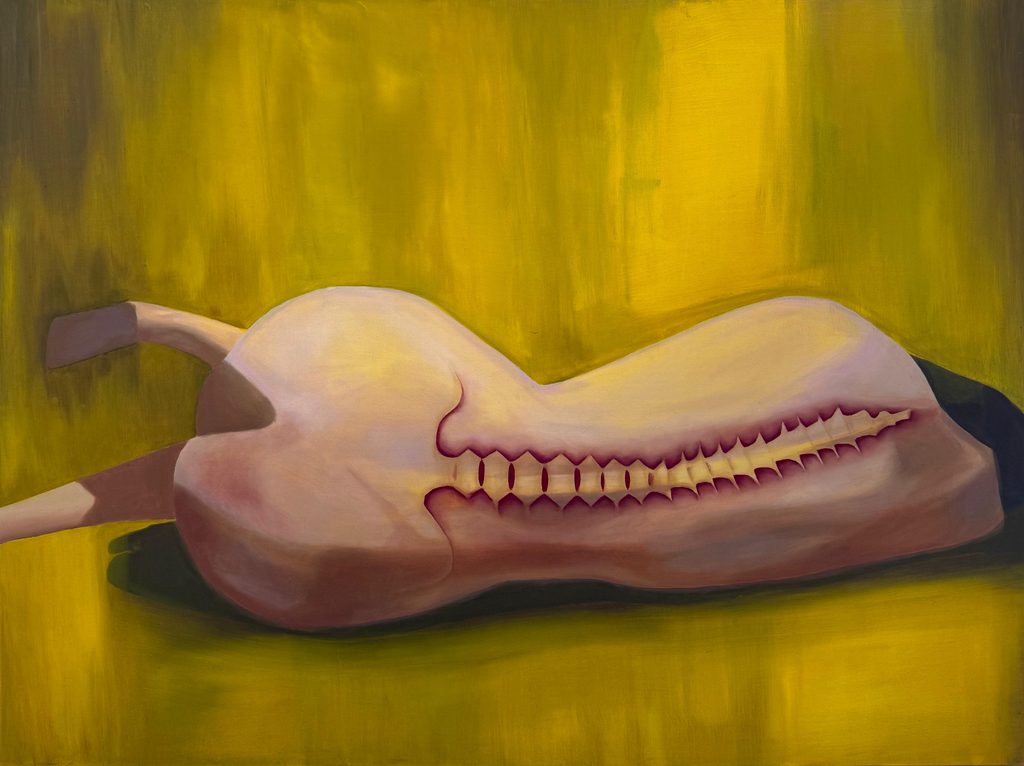
Her featured work, Vessel, depicts a figure curled inward, exposing its spine while simultaneously turning away from the viewer. The painting balances protection and vulnerability, using the spine as a symbol of resilience shaped through experience rather than strength alone.
Working across photography, drawing, painting and more recently sound, Badia’s multidisciplinary approach reflects an artist interested less in medium than in feeling. The body becomes the place where internal experience quietly reveals itself.
Who Completes a Painting?
Perhaps the most interesting question running through CÉ LA VIE isn’t what the artists are trying to say.
It’s who ultimately completes the work.
Nigerian artist, poet and creative director Dav3, professionally known as G3negraphy, offers perhaps the exhibition’s most direct answer.
“I don’t create art for the masses.”
“The masses are the art.”
Rather than assigning fixed meaning to his work, he leaves interpretation entirely open. Every viewer arrives with different memories.
Different experiences.
Different ways of seeing.
His work echoes one of the exhibition’s central ideas—that meaning isn’t fixed, but shaped by the people who experience it.
It’s an idea that runs quietly through the entire exhibition.
The paintings change as conversations unfold around them.
A work means something different depending on who’s standing in front of it. In that sense, CÉ LA VIE never exists in exactly the same way twice.
Recommended For You
Why the World’s Biggest Museums Are Collecting African Diaspora Artists
Turning African Jewellery Into Queer Protest and Personal Power
CÉ LA VI
While each artist approaches CÉ LA VI differently, the exhibition is held together by a shared curiosity about people—how we remember, how we grow and how we make sense of the world around us.
Memory, identity, vulnerability and movement run throughout the exhibition, but never in the same way twice. Every work leaves space for interpretation, inviting viewers to bring their own experiences into the room.
Like the exhibition itself, the conversation doesn’t end when you leave.