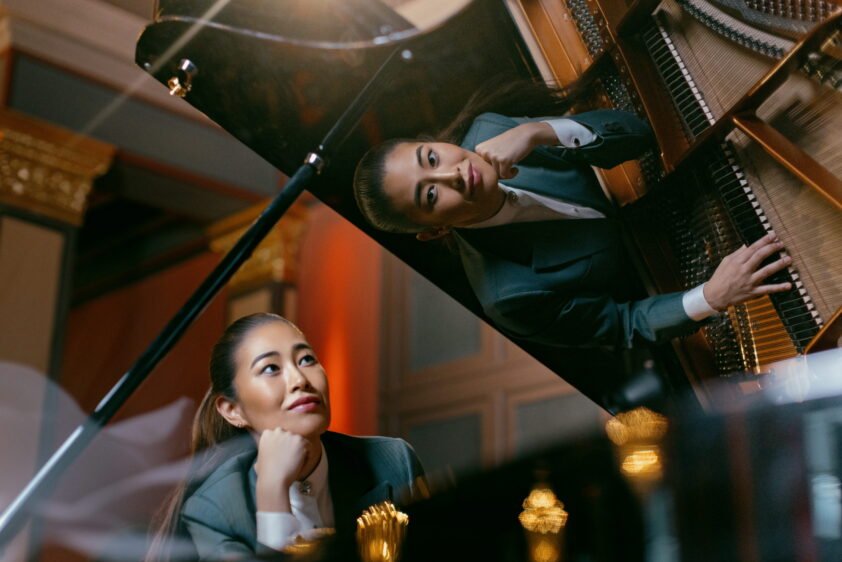
Pianist Gile Bae’s career took a clear direction in childhood, yet her artistic path has never been defined by competitions, but by inner freedom and sincere expression. At home on international concert stages, Gile Bae considers Bach’s music an essential spiritual and intellectual anchor, while her performances are shaped by a lively and personal dialogue with the audience. In the following interview, she speaks about her roots, her artistic philosophy, the importance of freedom and the future of classical music.
FAB: You performed as a soloist at the age of five and attended a conservatory at a very young age. Looking back, was playing the piano more of a game for you at that time, or was it already a vocation?
Gile Bae: Music was always part of everyday life in my family. My father had a deep interest in music, and my mother is a violinist. In fact, music influenced me even while I was still in my mother’s womb. During her pregnancy, she was preparing for concerts, which also had a great impact on me.
I regularly watched her play the violin, and at the age of four I also began learning the violin. For a long time, I believed that my own path would be connected to that instrument. However, my teacher in the Netherlands, who was also my mother’s teacher, believed that I first needed to master the fundamentals of music, and that the piano was the most suitable instrument for this. That is how I began playing the piano.
Even as a child, I practised with great dedication and concentration. Although I often had to sacrifice my free time and time with friends, I did so gladly because I loved playing the piano. From that moment on, my path was clear: I wanted to become a concert pianist. By the time I was in secondary school, it had become clear to me that the piano was my life and that I wanted to pursue it at the highest possible level.
FAB: You won numerous international competitions at a young age and then consciously decided to stop competing. What led to this decision, and how did this freedom influence your artistic development?
Gile Bae: Competitions were never at the centre of my life and never represented a real goal for me. At the same time, especially at a young age, it was important to take part in some of them, gain experience and build a foundation.
From the very beginning, what interested me most was artistic expression, the freedom that allows one to truly shape the music. After my experiences in competitions, I made a conscious decision: I no longer wanted to focus on results and rankings, but on art itself.
The emphasis shifted towards building my career through concerts and winning over audiences not through prizes, but through musical conviction.
This freedom enabled me to develop my own style and artistic voice without being guided by external expectations or competitive criteria.
FAB: You have worked with renowned mentors and have been close to inspiring artists. What did you learn from them beyond technique, on both a human and artistic level?
Gile Bae: My first teachers played a crucial role in helping me master the fundamentals, while my teacher during my youth helped me mentally through more difficult periods. Inspiring artists such as Maurizio Pollini and Sir András Schiff showed me that, beyond technical skill, artistic freedom, expression and communication with the audience are equally essential. This balance also defines my own approach to performance.
FAB: Bach’s music holds a special place in your life and can be heard on several of your recordings. What does Bach mean to you, and why do you feel such a strong connection to his music?
Gile Bae: For me, Bach is the apotheosis of music, just as Dante is in literature. His music represents artistic and harmonic perfection, reflecting both the human heartbeat and profound emotions.
Each of his works provides a framework within which I can freely express myself. While playing, I feel as though I am communicating with the audience in my own language while still respecting the composer’s intentions.
Bach’s music allows me to immerse myself deeply in form, harmony and expression. For me, it is the most direct path towards a kind of divine voice.
FAB: You have performed all over the world, from Europe to Latin America. Do you notice differences between audiences, and does this influence your interpretation?
Gile Bae: Certainly. Every audience is unique, and one must adapt to them. An audience in Northern Italy reacts very differently from one in South America. I take the local culture into account and try to offer something extra both intellectually and emotionally. Every performance brings new energy and inspiration. It is an exciting challenge.
FAB: You first performed in Italy with the Miskolc Symphony Orchestra and later returned to Hungary. What was special about this collaboration?
Gile Bae: Our first concert together in Italy was extremely special, and since then we have maintained a close relationship based on trust. In 2022, we had an intensive collaboration in Hungary, when we performed three piano concertos in a single evening: Bach’s Piano Concerto No. 2, Mozart’s Piano Concerto No. 19 in F major and Saint-Saëns’ Piano Concerto No. 5, known as the “Egyptian”. It was a beautiful and defining experience.
In 2025, I returned to Miskolc once again, this time performing Prokofiev’s Piano Concerto No. 2. Once again, I had a wonderful experience making music together with the orchestra.
For me, collaboration with the conductor is particularly important. When it is characterised by mutual trust and openness, tremendous inspiration emerges. In such cases, making music together feels completely natural, and often very few words are needed. As a soloist, this harmony is the most important thing for me.
FAB: You are at the height of your career, with acclaimed recordings and international tours. What does success mean to you today, and what would you still like to achieve as an artist?
Gile Bae: For me, success does not merely mean recognition, but the opportunity to bring art to as many people as possible, especially young people. It is important for me to communicate the beauty, values and harmonies of classical music while preserving my own voice. I also work with young talents and would like to continue contributing to the development of the musical world in the future.
FAB: What is the most important message you would like to convey to young people regarding music and art?
Perseverance and passion are indispensable. Achievements require sacrifices, and without effort there can be no true success. It is important that parents encourage their children to pursue a path with determination, because only then can their true talent unfold. Understanding classical music is like learning a language: once we understand it, every moment becomes colourful and enjoyable.
FAB: Finally, how do you dress on stage, and why?
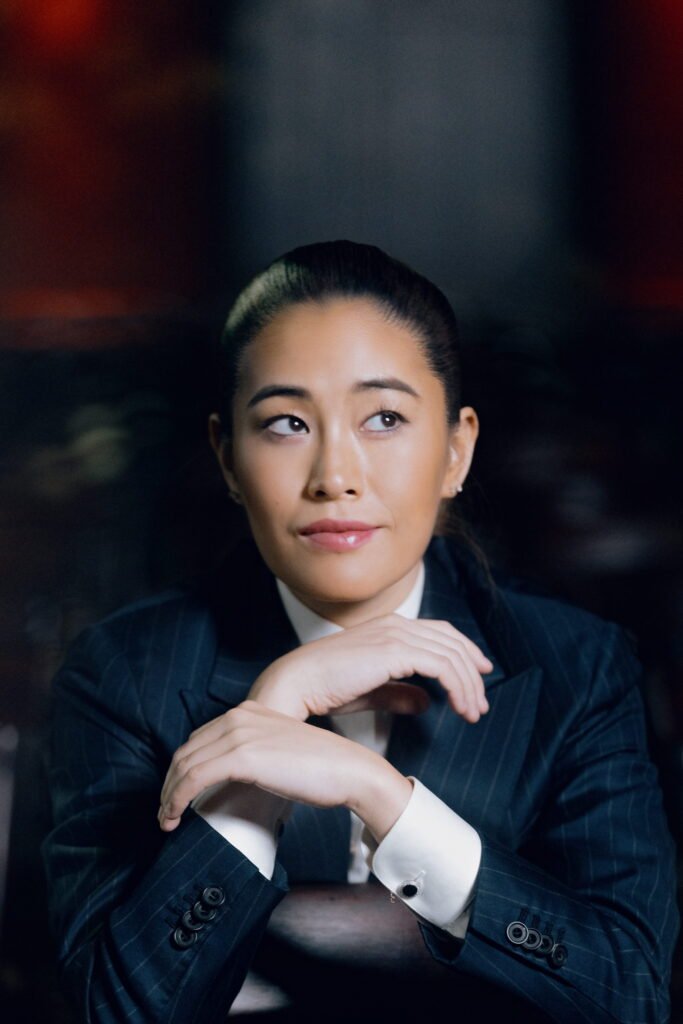
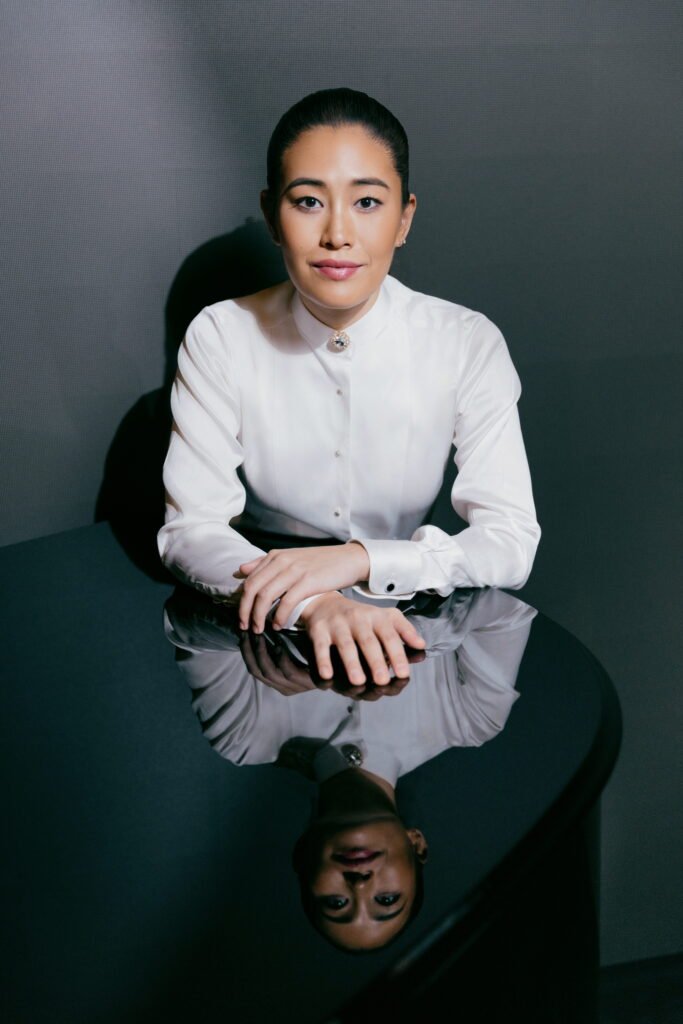
Gile Bae: For me, the piano is one of the most elegant yet also one of the most complex instruments. My stage attire must be in harmony with this character, which is why I consciously choose a clean and elegant style. For this reason, I do not favour overly extravagant or attention-seeking clothing.
I regard a concert as a complete and unified work of art in which everything fits together harmoniously: the sound, the atmosphere and the visual appearance. In my opinion, this is how classical music should be presented. Clothing should not distract attention, but rather create space for the audience to focus on what truly matters: the beauty of the music as it comes to life through the piano.
See Gile Bae Live: You can next experience Gile Bae live on 2 October 2026 at 7:30 p.m. in the Mozart-Saal, where she will present her piano recital “The Art of Sound.” The concert is expected to run until approximately 10:00 p.m
Interview by Helga Vizer