



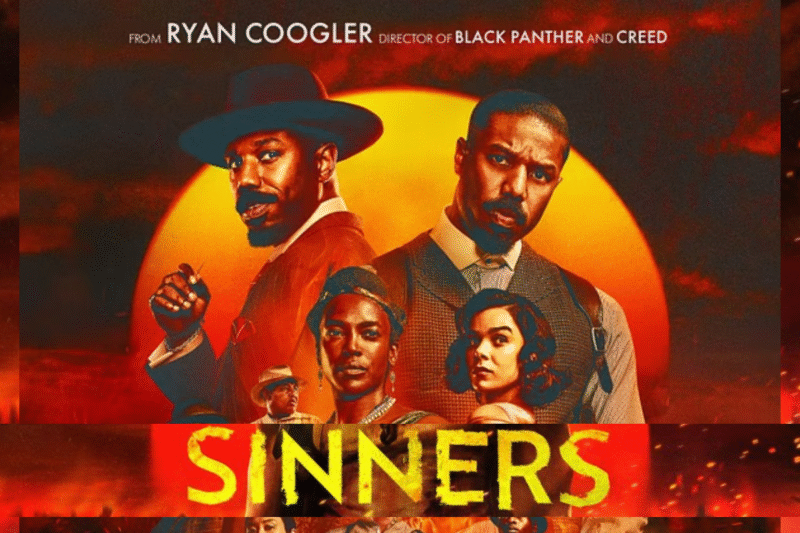
If you thought Michael B. Jordan’s Sinners was just another vampire flick with a few slow-mo action shots and Michael B. Jordan flexing, think again. What Ryan Coogler delivers instead is a genre-hopping, blood-soaked, blues-backed fever dream of a film that punches you in the gut, then hands you a guitar. It’s wild, it’s messy, and it’s somehow one of the most emotionally honest films of 2025.
Recommended For You
Skincare Routines: Vampire Facial Treatment and Ageless Skin
Set in 1930s Mississippi, Sinners follows twins Smoke and Stack, played by a chameleonic Michael B. Jordan. They’re fresh out of the Chicago underworld, dragging stolen mob money and World War I ghosts back to the Delta to build a juke joint. On paper, it sounds like a period drama. Add in voodoo, the Ku Klux Klan, an Irish vampire, and a cousin who might be possessed by Robert Johnson’s ghost, and you get a better idea of what you’re walking into.
The film is Southern Gothic with a twist of moonshine and magic. It leans into everything Coogler does best: complex characters, cultural commentary, and moments that hit harder than you expect. At its heart, Sinners is about community, Black resilience in the face of white terror, the power of music as resistance, and the complicated beauty of returning home to a place that both forged and scarred you.
What Sets Sinners Apart from Other 2025 Films
Jordan’s double performance as Smoke and Stack is a masterclass in duality. Smoke is the hothead with a gun and a past he won’t talk about. Stack is the idealist, slightly cleaner, maybe even hopeful. It’s a rare performance where the actor completely disappears into two roles, something few leading men can pull off convincingly. The supporting cast is equally electric. Miles Caton as Sammie, the young blues prodigy, channels raw talent and trauma in equal measure. And Wunmi Mosaku’s Annie? Quietly devastating. She grounds the film with every glance, her scenes with Smoke laced with the kind of emotional history that doesn’t need dialogue.
Now, let’s talk about the chaos. Sinners is delightfully unhinged. We’re talking pickled garlic juice as a vampire weapon, music-induced seizures, and a juke joint turned fortress. At times, it teeters on the edge of too much, but it never falls off. That’s largely thanks to the film’s tight direction and jaw-dropping visuals. Shot in 70mm, every frame feels like a painting dipped in shadow and sweat. And the soundtrack? Pure fire. Ludwig Göransson layers blues with Irish folk, early jazz, and even hints of hip-hop, creating a soundscape that’s both time-specific and timeless.
Themes of Trauma, Legacy, and Resistance in Michael B. Jordan’s Sinners
Sinners digs deep into racial trauma, cultural appropriation, and the age-old question of how far you’d go for legacy. The supernatural is less about jump scares and more about metaphor. The vampires aren’t just bloodsuckers; they’re colonizers, cultural thieves, the ghosts of white supremacy that haunt Black joy.
Sure, there are flaws. The first act takes its time finding its rhythm, and a few subplots—especially Stack’s arc—could’ve used more meat. But once the story hits its stride, it doesn’t let up.
Sinners isn’t a comfort watch. It’s a think piece with fangs. You’ll leave the theatre reeling, maybe even a little haunted. This original, unfiltered, unforgettable film feels like a rebellion. Go see it. And when you do, bring tissues.
Q: What is Michael B. Jordan’s Sinners about?
A: Sinners is a Southern Gothic vampire film set in 1930s Mississippi, starring Michael B. Jordan in a dual role, exploring Black resilience, legacy, and trauma.