
In the space of eighteen months, fashion changed hands. Chanel, Dior, Balenciaga, Fendi, Hermès, Marni, Proenza Schouler, and a dozen more houses installed new creative directors in what the industry has taken to calling its great mercato. The appointments were not simply staffing decisions. They were statements about who fashion thinks it is, who it wants to become, and how much of its own past it is willing to carry.
On the evening of 6 October 2025, showmanship returned to Chanel. At the Grand Palais, new artistic director Matthieu Blazy opened the season’s most anticipated debut beneath colossal celestial bodies, Saturn with its rings, and a full solar system suspended above a jet-black and mirror-bright runway, with reflections of the cosmos beneath. By the time the last look walked, the room was on its feet. Standing ovations, it turned out, were available again at Chanel, and Anna Wintour, who had once said “fashion needs its showmen”, got one.
Four days earlier, across the city, Jonathan Anderson drew a standing ovation from a celebrity-packed crowd as he launched a bold first women’s ready-to-wear collection for Dior in the Tuileries Garden. The week before that, Pierpaolo Piccioli, the new creative director of Balenciaga, presented a collection titled “The Heartbeat” in a chapel built during the reign of Louis XIII, part of Kering’s historic Paris headquarters. Meghan Markle was in the front row. So was Anne Hathaway.
This was the autumn of 2025, and fashion was doing something it had not done in a generation at this scale: changing its mind. About itself, about its future, about which voices should be shaping the objects that billions of people put on their bodies every morning. In 2025, the fashion industry underwent an unprecedented wave of change, with a rapid succession of new creative directors at the head of major luxury houses. At a frantic pace, the industry borrowed a term from professional football to describe “the mercato”.
Understanding what drove it, what it means, and where it leads requires looking past the standing ovations and the front-row celebrities to the structural forces, aesthetic arguments, and identity questions that these appointments were really answering.
Why Fashion Creative Directors Changed at This Scale
It all began in March 2024, when Pierpaolo Piccioli left Valentino after twenty-five years of loyal service. His departure marked the beginning of what became the fashion mercato. What followed was a cascade that gathered speed throughout 2024 and then broke wide open across 2025.
Over the Spring/Summer 2026 season alone, there were fifteen designer debuts across all fashion week cities, with the most concentrated in Paris in early October. To appreciate what that number represents, consider that a single major creative director appointment, at a house like Chanel or Dior, typically consumes months of industry attention, generates enormous press coverage, and is treated as a rare and consequential event. Fifteen in a single season was not a trend. It was a structural shift.
The causes were multiple and intertwined. The post-pandemic luxury boom that had sustained fashion house finances through 2021 and 2022 cooled sharply heading into 2024 and 2025, putting pressure on brands to justify creative direction with commercial results rather than critical admiration. Consumer sentiment around luxury shifted: the quiet minimalism that had dominated, the aesthetic sometimes called “quiet luxury” or “old money”, began to feel exhausted. Paris Fashion Week Fall/Winter 2026 delivered quiet luxury’s closing chapter, with a clear departure from the restrained minimalism that had defined 2024 and 2025 toward statement jewellery, archival couture references, and full-bodied glamour. Into this moment came a new generation of appointees, each carrying a different proposition about what a fashion house could become.
Jonathan Anderson at Dior
No appointment carried more immediate pressure than Jonathan Anderson’s arrival at Dior. As the first designer at Dior to lead both menswear and womenswear simultaneously, a historic level of power for one creative director at the brand, Anderson approached the Spring/Summer 2026 collection by thinking deeply about Christian Dior himself: “Who was this person, and why did he make all of these decisions?”
To open the show, the house’s almost eighty-year history was projected in a four-minute film that referenced and paid tribute to the work of the seven previous designers, including the founder. By doing so, it signalled Anderson’s larger narrative: bringing himself and his designs into alignment with the past while contextualising the clothes for today’s audience.
The fabrics Anderson used were based on swatches from the first two Dior collections. Christian Dior was fascinated with the eighteenth century, so Anderson explored that era while incorporating more modern references, including Andy Warhol’s portraits of Lee Radziwill and Jean-Michel Basquiat.
The reaction was characteristically divided. The initial reactions, coloured by fever-pitch expectations for Anderson taking the helm at one of the most historic and resourced maisons in luxury fashion, ranged from exaltation to shrugs. Critics who loved it noted the masterful tailoring, the surprising new silhouettes, and the balance of formality and ease. Critics who were less certain pointed to the collection’s density, its referential layering, and its willingness to ask an audience to do significant interpretive work from the very first show.
What no one disputed was the scale of the ambition. Anderson arrived at Dior not to update it but to interrogate it, to ask what the house actually believed about beauty and structure and time, and then to answer that question in seventy-odd looks assembled from the fabric of two centuries of French fashion history.
His first Dior haute couture show, held at the Musée Rodin in January 2026, mixed wonder, wit, and celebrity wattage, with the suspended ceiling hung with a garden of flowers that loosened and fell, one bloom at a time, as gravity did its quiet work. Beauty under pressure, as one observer wrote. A fitting image for any designer settling into a house this large.
Matthieu Blazy at Chanel: The Reinvention That Understood What It Was Reinventing
If Anderson’s Dior was an archaeology project, Matthieu Blazy’s Chanel was something closer to an act of translation. His debut felt like a firmly seated knowledge of an ideology of Chanel, rather than a tinkering with its surface. The show was a true reflection not just of the lazy notion of “house codes” but of purpose. “You can look at the codes, and make them very clean,” Blazy said. “Or you can look at them from another perspective.”
Blazy is only the fourth designer in Chanel’s 116-year history. He embraced the milestone with playfulness rather than solemnity, drawing on fairy-tale iconography and presenting the collection under a fairy ring of giant mushrooms in bubblegum pink, fuchsia, and sunny yellow, beneath the glass-vaulted ceiling of the Grand Palais.
Under a ceiling bejewelled with large planets illuminated in golden light, Blazy reinterpreted Chanel’s cultural tapestry as if seen through the otherworldly eyes of another dimension, making it hard to find a culture that is not somehow familiar with the interlocking Cs, the tweed suit, the little black dress, the two-tone shoe. The opening look was a classic Chanel suit done in transparent silk mousseline instead of bouclé, a luminous reinterpretation that felt like a memory of the house’s layered histories becoming newly legible.
The room gave him a standing ovation. With the reception he received, it was safe to say Blazy’s first show was a smashing success, with newly minted ambassadors Ayo Edebiri and Nicole Kidman in attendance alongside the broader Chanel constellation. What he had demonstrated, above all, was that deep institutional knowledge and genuine creative freedom are not opposites. The designer who understands a house completely is the one best positioned to take it somewhere new.
Recommended For You
Pierpaolo Piccioli at Balenciaga: The Romantic at the House of Structure
Of all the appointments in the mercato, Pierpaolo Piccioli’s move to Balenciaga was perhaps the most conceptually surprising. Here was the architect of Valentino’s decade of maximalist, colour-saturated, deeply emotional fashion arriving at a house whose previous era had been defined by streetwear irony, institutional-logo excess, and a deliberate provocation of everything Piccioli stood for.
For Piccioli, it was important to acknowledge those who had come before him. “To deny what has been done before is disrespectful,” he said backstage. “You have to be aware of the people who were here before you.” He demonstrated this by holding the debut in the historic Laennec chapel at Kering’s Paris headquarters, the same site where a retrospective for his predecessor Demna had been held just months earlier.
The collection, titled “The Heartbeat,” mixed the romance of Piccioli with the heritage of Cristóbal Balenciaga, with loving tributes to former creative directors from Demna to Nicolas Ghesquière. Piccioli took his bow to a standing ovation wearing the chunky dad sneakers from the Demna era. The gesture was one of the most eloquent of the season: a man defined by elegance paying respect to irony by literally wearing it on his feet.
The invitation itself had been a Walkman and cassette tape, which, when played, reverberated with the sound of a beating heart. “The heartbeat is the rhythm we share, the pulse that reminds us we are human,” Piccioli wrote. “For every heartbeat there is a name, a moment, a gesture. This collection comes from that place of love and connection.” Unarguably, Piccioli’s stood apart for what it said about what fashion could feel like when it was made by someone who believed genuinely in the emotional contract between a garment and the person wearing it.
Grace Wales Bonner at Hermès: A Different Kind of Appointment
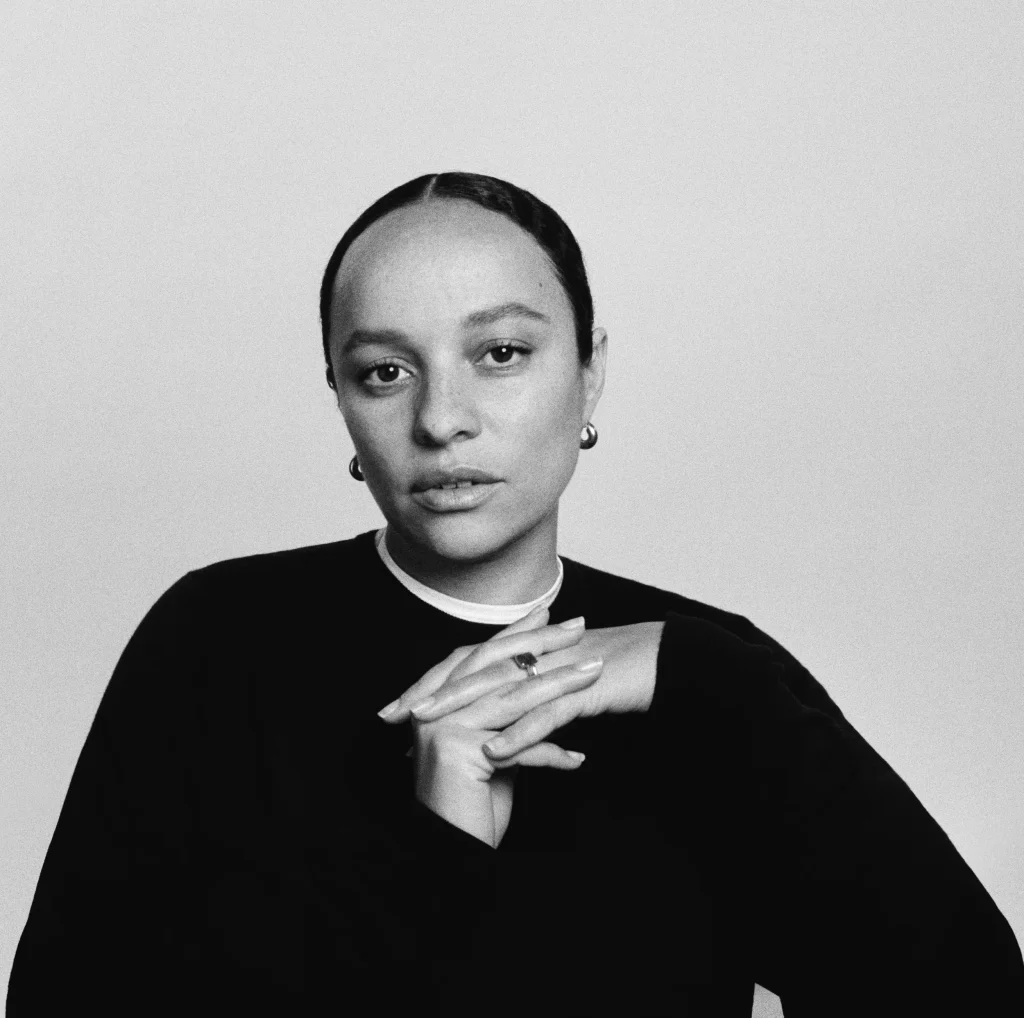
When Hermès announced that Grace Wales Bonner had been appointed as creative director of men’s ready-to-wear, following the departure of Véronique Nichanian after thirty-seven years, it was not simply another entry in the mercato ledger. Wales Bonner, the thirty-five-year-old South Londoner who graduated from Central Saint Martins, is the first Black woman to lead menswear at the esteemed French leather goods house.
Her namesake label, founded just over ten years ago, has married culture, craft, and style, drawing influences from Savile Row, football uniforms, and her Jamaican heritage alike. Her work has been worn by Solange, Lewis Hamilton, FKA Twigs, Kendrick Lamar, and Naomi Campbell, and she has collaborated with Adidas, Stüssy, and Yohji Yamamoto’s Y-3. “Grace’s appetite and curiosity for artistic practice strongly resonate with Hermès’ creative mindset and approach,” said Pierre-Alexis Dumas, General Artistic Director of Hermès.
Wales Bonner will present her debut Hermès collection in January 2027, which means her full impact on the house will not be legible for some time. But the appointment itself carries significance well beyond what the first collection will show. It signals a particular kind of institutional confidence: that a house rooted in French craft heritage and absolute quality standards can trust its future to a designer whose reference system is explicitly diasporic, whose work has always been an argument about whose culture belongs in luxury, and whose aesthetic intelligence has been developed entirely outside the traditional French fashion system.
The Independent Generation of Fashion Creative Directors
The mercato was not only a story about the great houses. It was also a story about a particular generation of independent designers being invited, for the first time at scale, to apply their individual visions to institutional contexts.
Rachel Scott, founder of New York-based label Diotima and a CFDA award winner, was officially appointed creative director at Proenza Schouler in September 2025, succeeding founders Jack McCollough and Lazaro Hernandez who departed to Loewe. Scott’s work at Diotima had been built on a deeply personal engagement with Caribbean craft traditions, crochet in particular, as a vehicle for exploring Black womanhood, memory, and belonging. What she will bring to Proenza Schouler is not simply a new aesthetic direction. It is a new set of questions about what American fashion is made of and what it is for.
Meryll Rogge, the Belgian designer who won the 2025 ANDAM Grand Prize with her own brand just weeks before being named creative director of Marni, brings to that house a sensibility characterised by wit, formal rigour, and a deep engagement with the strangeness of clothing as an object. Rogge succeeding Francesco Risso at Marni is an appointment that rewards attention: two Belgians in succession at an Italian house defined by its deliberate eccentricity and its rejection of convention as an aesthetic policy.
Then there is the appointment that generated the most comment for reasons beyond fashion itself. In September 2025, Christian Louboutin named Jaden Smith as the label’s first men’s creative director. Smith is moving to Paris to assume the role, overseeing the creation of four collections a year across shoes, leather goods, and accessories, along with campaigns, events, and immersive experiences. The appointment is unconventional by any measure. It is also, in a season that repeatedly asked who belongs in fashion’s institutional structures, a pointed answer.
What the Mercato Says About Fashion Creative Directors
Industry observers increasingly track new creative directors because their first collections often redefine entire brands. The anticipation surrounding these appointments has transformed runway debuts into major cultural events. Consumers now want to understand the inspirations, philosophies, and artistic visions behind collections. According to reporting from Business of Fashion, designer appointments increasingly influence investor confidence and long-term brand strategy, highlighting how creative leadership now influences business outcomes as much as aesthetics.
This is the shift underneath the spectacle. Fashion creative directors have become, in the vocabulary of luxury business, a brand asset as much as a creative function. The appointment of a new designer is an investment thesis as much as an artistic statement. It is a signal to shareholders, to press, to consumers, and to the wider culture about where a house intends to position itself over the next decade.
What is notable about the 2025/2026 mercato, taken as a whole, is the particular direction those signals are pointing. Anderson, Blazy, Piccioli, Wales Bonner, Scott, and Rogge: these are not appointments chosen for caution or consensus. They are appointments chosen for specificity. Each of these designers has a point of view that is genuinely their own, that has been developed over years of independent work, and that cannot be easily replicated or reduced to a mood board. They were chosen not despite their individuality but because of it.
Designers ingrained in the African diaspora used the runway not just to present clothing, but to assert narrative control, moving beyond aesthetics of struggle into an era of mastery. The maximalist turn in fashion, the return of colour, embellishment, and statement dressing, is not simply an aesthetic pendulum swinging back. It is a reflection of which designers are now in the rooms where decisions are made, and what they believe clothing is capable of saying.
The Question New Fashion Creative Directors Are Answering
Every designer who takes over a major house faces a version of the same problem: the institution precedes them, defines the context in which their work will be received, and will outlast them. The question is not what to make. The question is what to keep.
Anderson kept Dior’s relationship with the eighteenth century and its romance with architecture, while releasing the house from the specific femininity that had characterised the Chiuri era. Blazy kept Chanel’s codes while insisting that understanding a code deeply enough allows you to use it in ways its originators never imagined. Piccioli kept Balenciaga’s relationship with the body and with structure while replacing irony with sincerity, which in the context of recent Balenciaga history was the most radical move available to him.
What each of them is also doing, perhaps less consciously but no less importantly, is answering the question that the mercato raised in its broader cultural context: what is fashion for, in a moment when everything is accelerating, when algorithms are narrowing the range of what gets made and seen, when the gap between independent creative practice and institutional fashion is as wide as it has been in decades?
The answer, in the collections these designers have made so far, is consistent. Fashion is for the expression of a specific sensibility, rooted in a specific cultural history, made with specific craft knowledge, and presented to people who are capable of being genuinely moved by the result. It is not for efficiency or trend amplification. It is not for the validation of what the data already knew.
The standing ovations in Paris in October 2025 were not simply for the clothes. They were for the return of an argument: that creative direction, genuine and individual and irreducibly human, is not a luxury the industry can afford to treat as optional.