


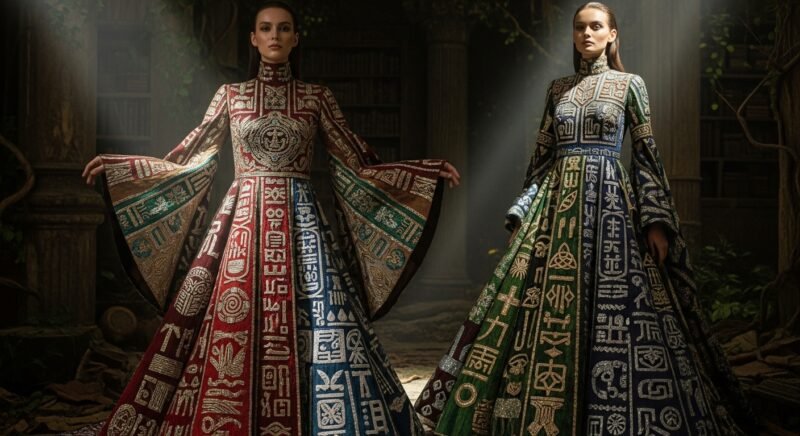
We often dismiss fashion as fleeting, a shallow cycle of trends dictated by seasonal whims and fast-moving commerce. We see racks of disposable garments, mere skin coverings designed to last only until the next social media drop. But if we look past the noise of the now, we find a truth as old as humanity itself: clothing is not just covering; it is a spiritual archive. Every stitch, every dye, every pattern is a coded message, a non-verbal narrative passed down across generations. To wear a piece of cultural clothing is to slip into the ancestral memory of your people, feeling the quiet strength of those who wore it before you.
This is the philosophical core of sustainable and meaningful design. It moves fashion from consumption into cultural continuity. It asks: what if the clothes we wear could serve as spiritual preservation, safeguarding not just fabric, but identity itself? It is a powerful concept, especially in a globalized world where cultural erosion is a real threat. We are exploring the concept of fashion as a sacred vessel, a silent language that speaks volumes about heritage, history, and profound respect for the past.
The Garment as Archive: Threads of Time and Identity
Imagine a textile as a history book written in fiber. Unlike parchment or clay tablets, these narratives were worn daily, gathering the energy and experiences of their owners. The complexity and enduring nature of these historical garments confirm that they were viewed as infinitely more valuable than a mere commodity.
The Weave’s Whisper: Encoding History
In many ancient traditions, the act of weaving was almost ceremonial, viewed as replicating the creation of the cosmos. The warp and weft crossing created a stable structure, mirroring the balance of the world. For instance, consider the intricate geometry of ancient Kuba cloth from the Democratic Republic of Congo. These textiles are not random designs; they are complex mathematical equations rendered in raffia fiber. Every repeated line, every interlocking diamond, is a piece of codified knowledge, acting as a historical registry of royal lineages and political events.
The artisan, often a woman, spent months on a single piece. When you look closely, you realize the weave itself is a meditation, a commitment to memory. That piece of fabric does not just cover the body; it carries the weight of history. The cloth becomes a physical testament to the technical skill and intellectual depth of an entire society, demonstrating that art and mathematics were never separate pursuits.
The Alchemy of Color and Form
Color in ancestral fashion was never accidental; it was always intentional, often carrying deep spiritual or social gravity.
- The Spiritual Pigment: Natural dyes represented a profound intimacy with the land. The extraction of brilliant purple from the Murex snail by Phoenicians, or the deep indigo from plants across Africa and Asia, was a chemical alchemy that required generations of specialized knowledge. These colors often held sacred meanings: red for life force or sacrifice, white for purity or mourning. Wearing a certain color at a certain time was not a trend; it was a ritual act that aligned the individual with the communal belief system.
- The Silhouette of Status: The way a garment was cut or draped often communicated status and identity instantly. Think of the elaborate headdresses of the Maasai or the complex folds of a Japanese kimono. These forms were not arbitrary flourishes. They were visual signifiers of age, marital status, or social position. My friend, a designer from Accra, once told me how the specific way her grandmother tied her kente cloth told the whole village what clan she belonged to and whether she was a respected elder. The silhouette was a social contract, instantly understood by everyone in the community.
Decoding the Ancestral Language: Codes of Continuity
Certain textile traditions are famous specifically because they function as complex, readable systems, acting as the preserved codes of the past. They prove that fashion can indeed be an ancestral memory bank.
Adinkra Symbols: Proverbs in Print
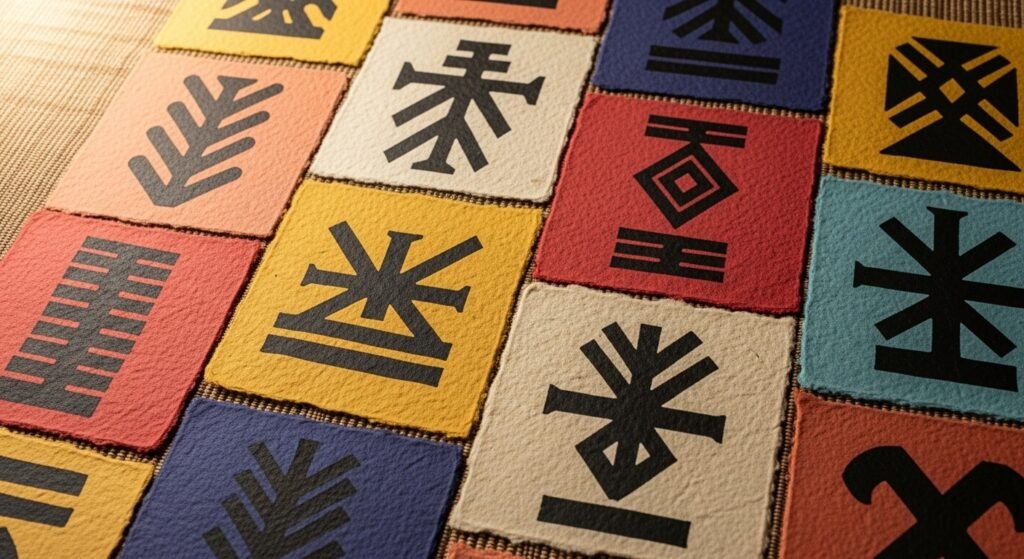
The Adinkra symbols of the Akan people of Ghana and Côte d’Ivoire are perhaps the most eloquent example of this coded clothing. These symbols are stamped onto cloth and each one represents a concept, proverb, or aphorism. For example, Sankofa (a stylized bird looking backward) means “Go back and get it,” urging the wearer to retrieve knowledge from the past.
When a piece of Adinkra cloth is worn, the individual is not just dressed; they are making a philosophical statement. They are reciting their values, demonstrating wisdom, and affirming their connection to ancestral maxims. The cloth serves as a portable public library of ethics. Imagine if modern clothing carried such intellectual weight—a t-shirt emblazoned not with a logo, but with a complex moral code. This is the power of fashion as ancestral memory.
Tartans: The Fabric of Lineage
Far across the world, the Scottish tartan performs a similar function of identity preservation. Every specific set of crisscrossing lines and colors belongs to a particular clan or district. Wearing your tartan is an immediate, visual declaration of your lineage and your bond to a specific geography and history. During periods when the British Parliament attempted to suppress Highland culture, the tartan became a powerful, silent act of resistance, a defiant affirmation of identity. It became a protected memory, woven into the very fabric of the culture.
Resisting Erasure: The Act of Wearing Memory
These traditions teach us that when external forces attempt to suppress or assimilate a culture, the textile becomes the last line of defense. It is harder to burn a thousand threads of memory than to burn a single book. The continued creation and wearing of traditional garments become an act of cultural defiance and spiritual preservation. The very act of a young woman today wrapping herself in a complex, traditionally woven textile connects her instantaneously to the hands and minds of her foremothers, keeping that knowledge stream alive.
This realization transforms the relationship we have with our closets. It shifts the focus from what is new to what is enduring. It suggests that the most meaningful fashion choices we can make are those that honor the codes, colors, and craftsmanship inherited from those who came before us.
From Archive to Avant-Garde: Translating Ancient Codes
Contemporary fashion designers are becoming cultural interpreters, drawing deep inspiration from the ancestral codes of textile traditions. This translation process is not mere imitation; it is an act of breathing new life and modern relevance into ancient knowledge, ensuring its survival in the 21st century.

The Designer as Cultural Librarian
Today’s most insightful designers treat traditional textiles like ancient manuscripts. They study the geometry of a Kuba pattern, not just for its aesthetic value, but to understand its mathematical logic and historical context. They are learning the language of natural dyes to reconnect with sustainable, earth-friendly practices. This approach transforms the runway into a classroom, making the wearer an educated participant in a cultural dialogue.
For example, many African and diaspora designers are reinterpreting the Adinkra symbols not just by stamping them, but by integrating their meanings into the structure of the garment. A sleeve might be intentionally voluminous to represent the Wawa Aba symbol (seed of the Wawa tree, symbolizing strength and perseverance), or a hemline might be sharply angled to reflect the Nkyinkyim (twistings, symbolizing the arduous journey of life). The fashion becomes a wearable philosophical essay.
Translating Techniques for Modernity
The translation also involves technology. Designers are using digital tools to map, categorize, and preserve complex weaving instructions that might otherwise be lost. They use modern looms to recreate the incredible precision of handwoven textiles, making them accessible to a wider market while ensuring the design DNA remains intact. This fusion of old knowledge and new technology creates fabrics that are historically rich and structurally modern. It proves that tradition does not mean stagnation; it means deep, resilient innovation.
The Ethical Thread: Memory, Respect, and Appropriation
As ancestral fashion moves onto the global stage, the critical issue of cultural appropriation arises. This is the difference between genuine tribute and respectful borrowing, versus shallow, exploitative consumption.
The Difference Between Tribute and Theft
Cultural appropriation typically occurs when an element of a marginalized culture (a pattern, a sacred motif, a silhouette) is taken by a dominant culture, stripped of its original meaning, and commercialized for profit, without attribution, respect, or compensation to the originating community. It’s like stealing the Adinkra symbol but ignoring the proverb it represents.
Tribute, on the other hand, involves deep research, collaboration, and reciprocity. Designers who practice ethical sourcing ensure the following:
- Attribution: They clearly credit the specific community or tradition that inspired the design.
- Collaboration: They work directly with artisans, guilds, or elders from the originating culture, compensating them fairly and sharing profits.
- Respect: They avoid using sacred or ceremonial motifs inappropriately or out of context.
The act of incorporating ancestral codes must be a conversation, not a monologue. When fashion facilitates a fair economic exchange and preserves the integrity of the original meaning, it becomes a powerful vehicle for cultural survival. It moves beyond just design and becomes economic justice.
Personal Spiritual Preservation: The Inner Armor
Beyond the runway and the ethical debate, the most profound modern relevance of ancestral fashion lies in its ability to aid personal spiritual preservation. In our frantic, fragmented digital age, we often feel disconnected from our roots and our sense of self. Clothing becomes a tool for re-rooting.
The Weight of Meaning
When you choose to wear a garment that carries the weight of memory—a pattern that symbolizes resilience, a color that signifies balance, a textile woven by hand—you are doing more than just getting dressed. You are engaging in a deliberate, affirmational act of self-identity.
Anecdotally, people who wear clothing connected to their heritage often describe feeling a surge of confidence or stability. The garment acts as a form of “inner armor.” It wraps you not just in fabric, but in the collective strength of your ancestors. If you are facing a challenge, wearing the Sankofa symbol subtly reminds you of the wisdom gained from looking to the past. This quiet psychological effect transforms fashion into a personal spiritual practice.
Fashion as Mindfulness and Slow Living
Ancestral fashion inherently promotes a slow living philosophy. These garments were built to last, meant to be mended, and passed down. This contrasts sharply with the frantic speed of fast fashion, which encourages spiritual emptiness through constant consumption.
Choosing a historically rich, ethically sourced garment forces a pause: Who made this? What does it mean? Will it last? This mindfulness extends the lifespan of the item and, in turn, deepens its spiritual value to the wearer. The clothes become keepers of your own memory, adding your life story to the ancestral codes already woven within the fabric. By choosing permanence over disposability, we honor both the Earth and the legacy of craftsmanship.
Ultimately, designing from the codes of the past is not about looking backward; it is about building a future where our identity is resilient, our ethics are strong, and our clothing carries a message that truly matters.