
What is the single, universal garment that you could confidently find on the streets of Tokyo, in the markets of Lagos, in the boardrooms of London, and on a ranch in Texas? The answer is always denim. Specifically, the pair of blue jeans that has become the single most democratic, enduring, and culturally potent piece of clothing in human history.
Denim’s superpower isn’t its color or its weave; it’s its complete indifference to social hierarchy. It holds no judgment. A freshly starched, dark-wash jean can walk the runway at a high fashion show, while the same style, ripped at the knees and faded from years of hard work, can be worn by a mechanic fixing a car. Both people are wearing the same fundamental textile, yet their social status, wealth, and profession are entirely different. No other fabric or garment achieves this dual citizenship so effortlessly. The story of denim is the story of modern aspiration, rebellion, and belonging, all spun into a single, sturdy cotton yarn.
The Origin Story: From Workwear to Warfare
To understand denim’s democracy, you have to appreciate its humble, utilitarian birth. The fabric wasn’t initially designed for fashion statements; it was engineered for endurance.
Its name itself is a geographical hybrid: “de Nîmes” (from Nîmes, France), the cotton warp face twill originally produced there, and its characteristic indigo dye, which made stains less visible. When Levi Strauss and Jacob Davis patented the use of copper rivets in 1873, they weren’t creating a style; they were reinforcing work trousers for gold rush miners and laborers in the American West. The garment’s value was purely functional: it had to resist tearing, withstand abrasion, and survive rough washing. It was literally the uniform of the working class, a badge of reliable grit.
This industrial pedigree is crucial. Unlike silk, which was born in imperial courts, or velvet, which adorned European nobility, denim came from the dirt and the factory floor. This DNA ensures that no matter how expensive a designer jean gets, it can never entirely shed its practical, common roots. This lack of pretension is the foundation of its democratic appeal.
The Great Equalizer: Reaching Across the Aisle
Denim’s true democratic takeover began not in the streets, but on the big screen and in the rebellion of youth.
The Uniform of Rebellion
After World War II, America’s surplus of denim was adopted by a generation looking to reject the stiff suits and formal constraints of their parents’ era. Figures like Marlon Brando and James Dean wore jeans not for work, but for defiance. They transformed the functional trousers of the proletariat into the emotional uniform of the counterculture. Suddenly, wearing jeans meant you were cool, you were anti-establishment, and you belonged to the rising culture of independent thought.
This was a pivotal psychological shift. Denim became the cultural meeting point for two previously segregated groups: the blue-collar worker and the intellectual rebel. The working man wore them out of necessity; the student wore them out of choice. Both, however, shared the same aesthetic of rugged authenticity.
The Bridge to High Fashion
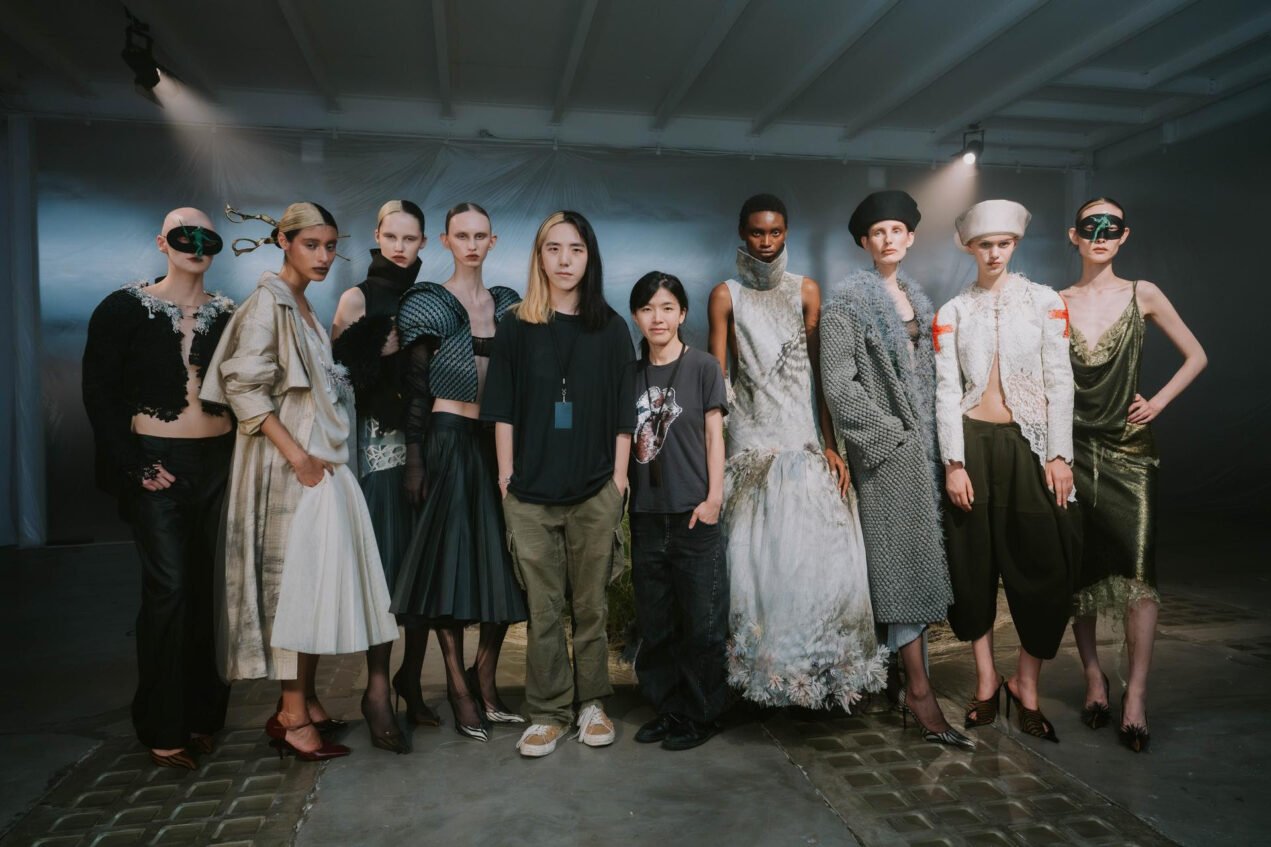
Even as designers tried to elevate fashion, denim always pulled them back down to Earth. When designers like Yves Saint Laurent declared in the 1970s, “I wish I had invented the blue jean,” it was a powerful acknowledgement that the most culturally relevant clothing had bypassed the elite fashion houses entirely. They were forced to adapt.
This forced adoption by high fashion is arguably denim’s greatest democratic victory. By absorbing denim, high fashion democratized its own output. By including denim, high-end brands tacitly admitted that genuine, global relevance resides in the ubiquitous cotton twill. A $1,000 pair of jeans and a $20 pair from a chain store may differ in quality and finish, but they both communicate the same fundamental message of accessibility and casual confidence.
The Biography of the Fabric: Fades and Personal History
The most profound aspect of denim’s democracy is its ability to capture and record personal history. A pair of raw, dark jeans is merely a blank slate; it is the wearer who writes the story onto the fabric.
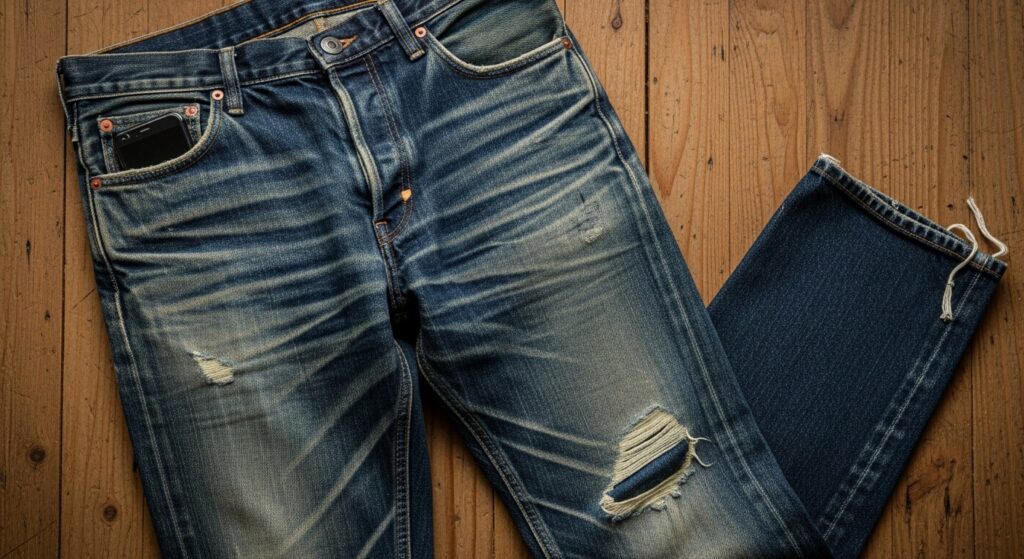
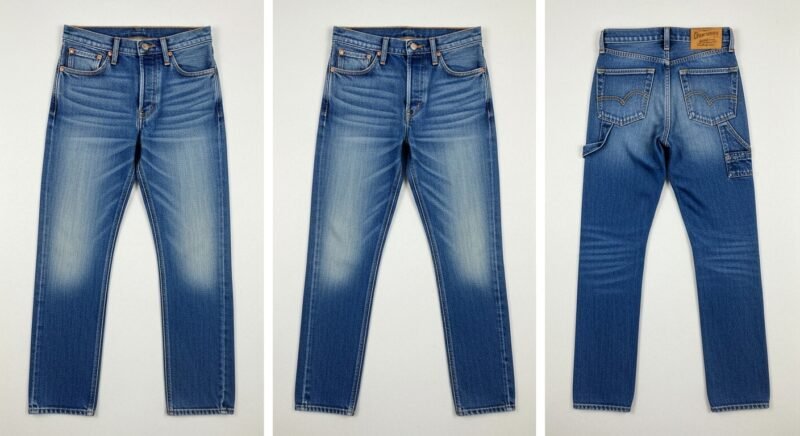
Unlike virtually any other garment, denim’s value often increases with age and wear. The unique fading patterns—known by enthusiasts as “whiskers” (creases at the crotch), “honeycombs” (behind the knees), and “train tracks” (down the outer seams)—are not random defects. They are biographical imprints. They mark the way a person sits, where they keep their phone or wallet, and how they move through the world.
A faded jean tells a tactile, true story. A patch might show where a clumsy repair was made after a night out. A paint smudge records a weekend art project. This authenticity is impossible to replicate artificially, despite the fashion industry’s constant attempts to mass produce pre-distressed denim. This is why vintage, naturally faded denim commands such high prices—it is not just a piece of fabric; it is a proven, verifiable human experience made visible. Denim transforms from a commodity into an heirloom, a textile that accrues memory and soul through daily use.
The Environmental Contradictions: The Dark Side of Democracy
Despite its status as the world’s most accessible and beloved fabric, denim carries a severe environmental price tag. This is the great contradiction that the industry must urgently resolve.
The Thirstiest Fabric
The production of denim, particularly the cotton farming and the dyeing process, is notoriously resource-intensive. Traditional cotton farming requires enormous amounts of water and often relies heavily on pesticides and fertilizers, draining local water tables and polluting soil.
Furthermore, the classic indigo dye, which gives denim its signature blue hue, historically involved large amounts of water and often toxic chemicals in the finishing stages to achieve that desired worn look. To create the vast quantities of denim needed to clothe a globally democratic consumer base, manufacturers have accelerated processes that are deeply unsustainable, creating a massive carbon and water footprint.
Chemical and Waste Burden
The push for rapid production has led to cheap finishing techniques. Sandblasting, chemical washing, and stone washing—all used to create the pre-faded aesthetic popular in fast fashion—contribute to poor air quality for factory workers and create chemical wastewater that severely harms local ecosystems. Denim’s democratic spread means its destructive production methods have been scaled globally.
True sustainability in denim requires innovation that completely changes the upstream process: using recycled cotton, implementing waterless dyeing techniques (such as laser finishing or ozone technology), and sourcing cotton from regenerative farms that restore soil health rather than deplete it.
Recommended For You
The Canvas of Self Expression: Customization and DIY Culture
Denim’s sturdy simplicity makes it the perfect canvas for self expression, reinforcing its democratic ideal. It is perhaps the most receptive garment to customization and DIY culture.
Because the fabric is tough, it can be ripped, patched, embroidered, painted, studded, and cut without collapsing entirely. This freedom allows the wearer to become a co creator, actively participating in the design process.
This is fundamentally democratic because it bypasses the need for exclusive designer labels. A person can take a basic, affordable jacket and transform it into a unique, personal statement using only thread, patches, and imagination. The resulting garment speaks louder than any brand logo, communicating rebellion, affiliation (through band patches or political slogans), or pure creativity. This tradition—from 1970s punk jackets covered in pins to modern, meticulously embroidered artisanal pieces—confirms that denim is not merely clothing; it is a cultural tool that empowers the wearer to visually define their own place in the world. It provides the base layer for identity, allowing millions of individual stories to be told on a single, shared textile