
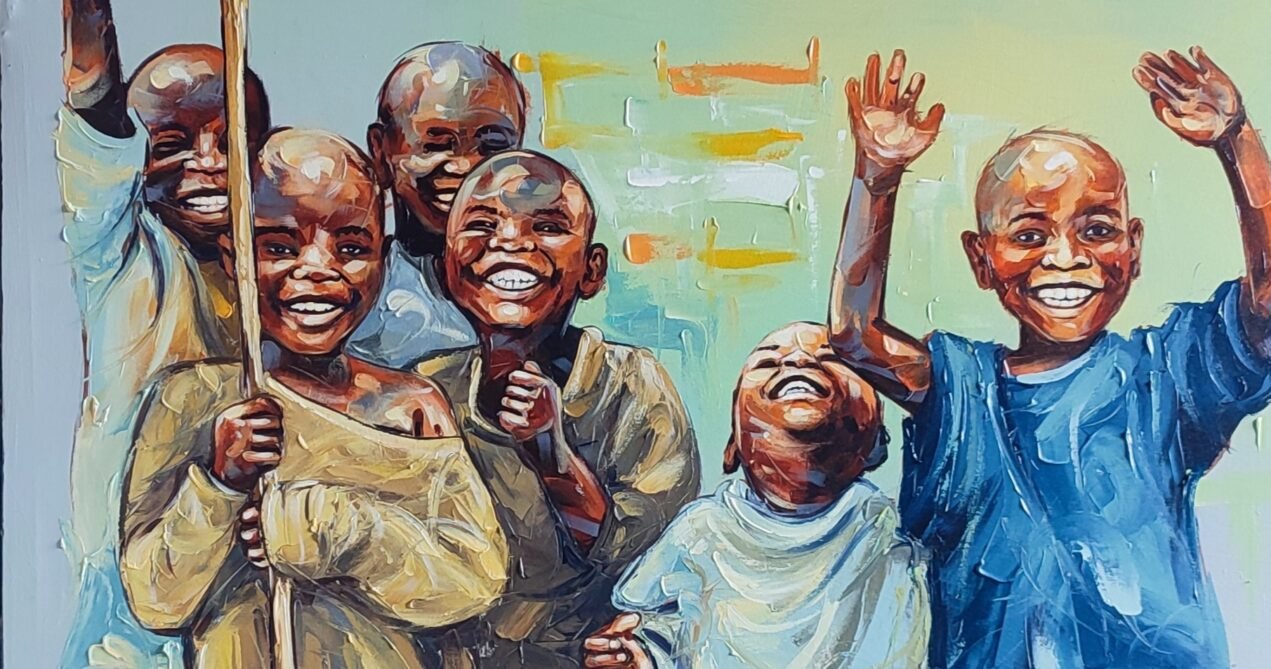

For Ugandan artist Sseguya Sadick, painting is more than a way to earn a living. It is a way to honour the sacrifices of his parents, recognise mothers who struggle to give their children better lives, and pass on a message to a new generation of artists. As he prepares to show his work in Vienna and elsewhere in Europe, his series, Faces of Love, carries a story that began long before he knew art could become a career.
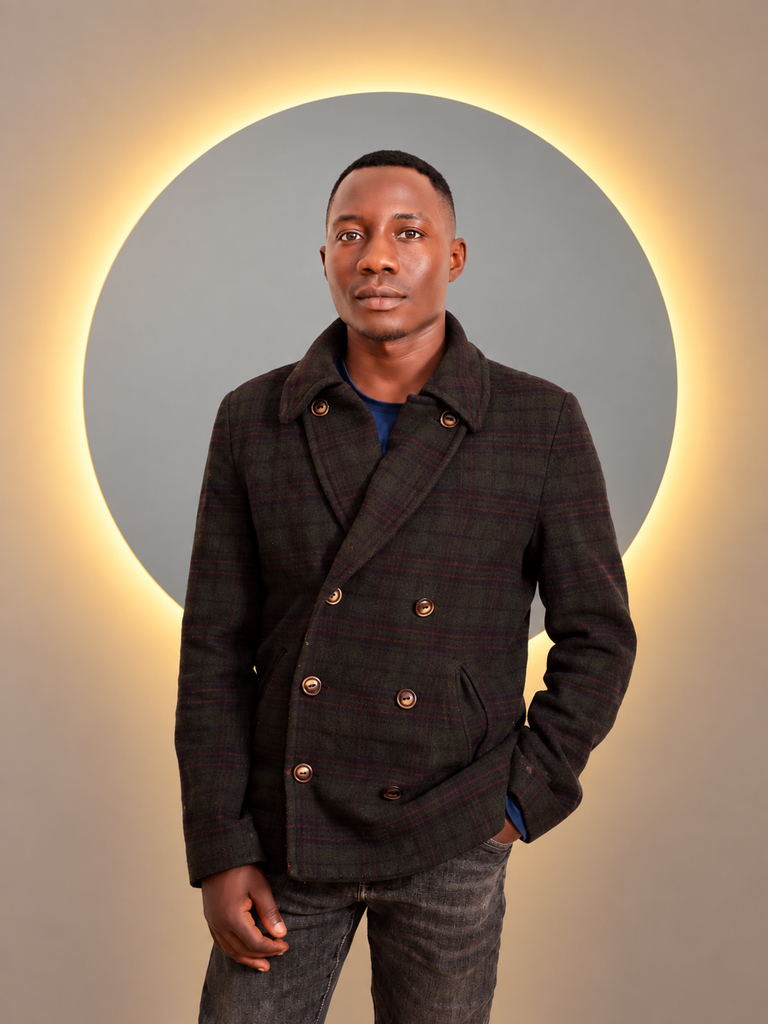
The Boy Who Copied Pictures on Classroom Walls
In 2002, Sseguya Sadick was in Primary Two when he first discovered his talent for art. His introduction was simple. His classroom walls were covered with charts and pictures, and he loved looking at them. Soon, he began copying the images into his books with markers.
His teacher noticed the drawings and recognised something in the young pupil that he had not yet recognised in himself.
“She was like, ‘I think there is a talent for art in this boy,’” Sadick recalls.
At the time, he had no idea where that talent might lead. He drew because he enjoyed it, not because he imagined it could become a profession or provide an income. His father also began to recognise his potential and supported him by buying art books, paints and other materials.
That early encouragement stayed with him as he continued his education. By the time he reached the advanced level of secondary school, he had chosen to pursue art. He later enrolled in a diploma course in Industrial Art and Design, where he focused on painting, the discipline in which he felt strongest.
But discovering a talent and building a career from it were two different things.
“When I came to the field, things were not easy for me because art needed lots of materials, which required a lot of money to invest,” he says.
Without enough money to sustain his practice, Sadick took on construction work. He used what he earned at the end of each week to buy the materials he needed to paint. He also searched for a place where potential buyers could find him.
Eventually, he secured a space at the craft village in Victoria Mall, Entebbe, where Ugandan artists and craftspeople sell their work. He has practised his art professionally since 2016.
The location helped him reach customers, many of whom were tourists. But the dependence on visitors also left him vulnerable when the COVID-19 pandemic disrupted travel and trade in 2020.
Sadick says the experience made him think more deeply about his work and what he wanted it to achieve. He did not want to keep producing paintings simply to meet the demands of buyers who might take a piece home without knowing the story behind it.
“I decided to organise myself such that I do art with a theme,” he explains. “I tried to make my themes relate to the experience of my life.”
That decision led him to the work that now defines his practice.
Faces of Love: The Mothers Behind the Paintings
Sadick’s relationship with the subject of motherhood began at home. Growing up, he watched his mother work hard to raise her children and provide opportunities that did not come easily. His father was present, but his mother also carried a significant share of the family’s responsibilities.
She worked to ensure her children could attend better schools, access medical care and have the essentials they needed. She did all this without a secure or comfortable source of income.
When Sadick reflected on her sacrifices, he began to think about the many other mothers living similar lives. He wanted his paintings to acknowledge their efforts and give their experiences greater visibility.
“I had to at least do something that could raise the voices of those mothers that are struggling to raise their children, to give them a better direction in life,” he says.
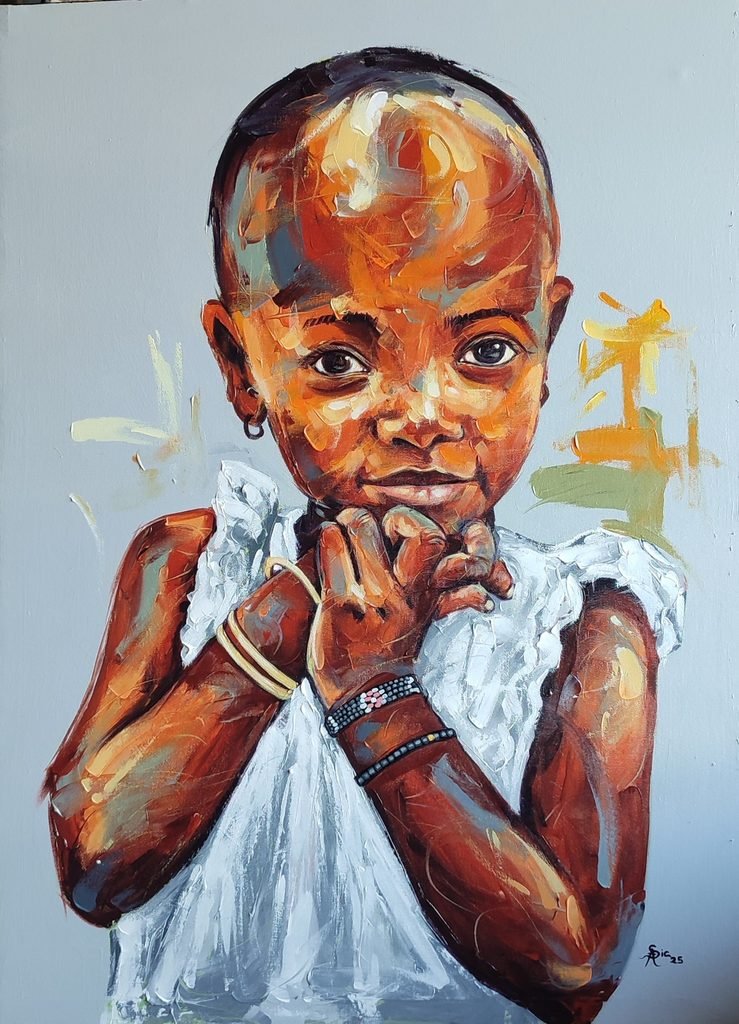
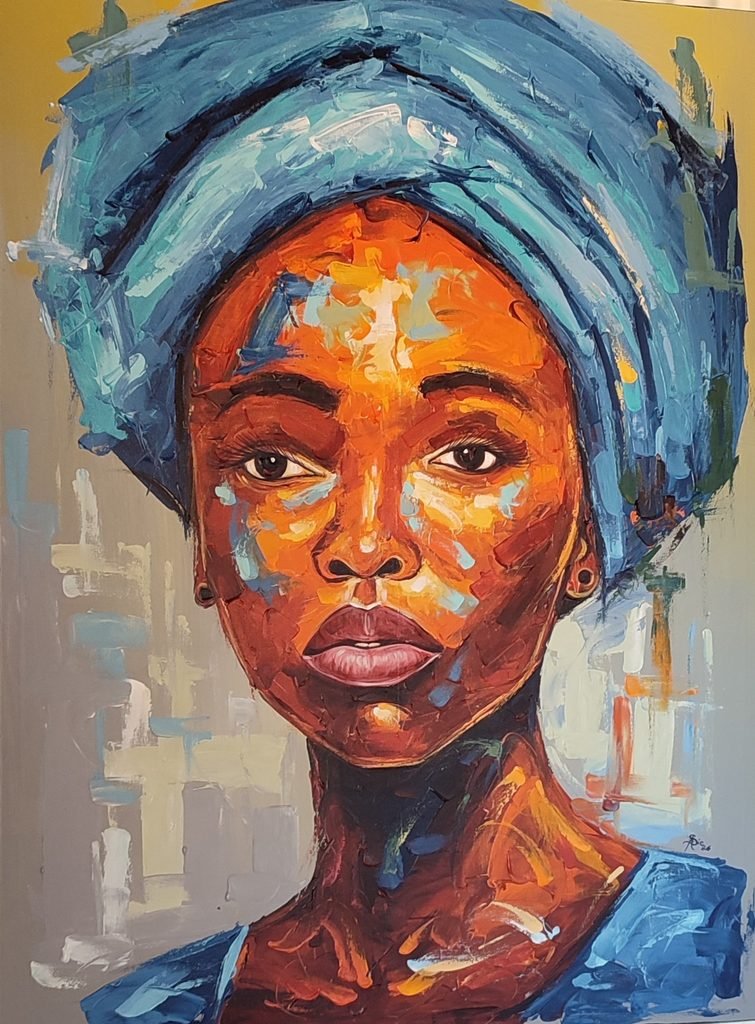
This became the foundation of Faces of Love, a series of paintings centred on women’s faces. The portraits communicate different emotions, but they share a common thread: the love mothers show their children, often through the difficult choices they make to give them a better future.
“Of course, you cannot put in much effort to raise someone you don’t love,” Sadick says. “That’s why I called them Faces of Love.”
The series asks viewers to look beyond the image itself. A face can carry a story of exhaustion, but it can also reveal determination. It can express the weight of responsibility while holding on to hope.
When someone stands in front of one of his paintings, Sadick wants them to recognise these qualities.
“I want a person who sees strength, love, and hope in the faces of the paintings that I make,” he says. “All my paintings are of ladies’ faces. When you look at them, you see love, you see hope, and you see strength in the mothers that are struggling.”
For Sadick, these women deserve attention because their efforts can go unnoticed by people whose own lives are more comfortable.
“When you are somewhere and you are okay, you have to know that there are some people who are not living a better life, but at least they are trying to see that they can raise their kids in a good way,” he says.
His paintings bring those struggles into view. They also ask viewers to consider the people behind the opportunities they enjoy, and the sacrifices that make a better future possible for the next generation.
Recommended For You
Ejiro Amos Tafiri on Prospect, Legacy and the Business of Fashion
The Sacrifices That Shaped the Artist
Although his mother inspired Faces of Love, Sadick’s understanding of sacrifice comes from both parents. As he grew older, he began to appreciate the choices they made to keep their family moving forward.
His father worked as an agriculture officer and was also a skilled farmer in their village. He loved cars, but supporting six children through school meant putting that personal ambition aside.
“He used to love a car, but he could manage to take us to school on a motorcycle,” Sadick recalls. “We are six children. He used to carry us on a motorcycle to school, yet he also saw that he needed a car.”
His father also sold land he had acquired for his future plans to raise school fees. Education took priority over the things he wanted for himself.
His mother made her own sacrifices. She had been studying to pursue a career, but her circumstances changed when she had children. She did not complete her course. Instead, she found ways to earn money by selling bananas, pancakes and matoke, a staple food made from cooking bananas.
Her earnings helped provide food, clothing, school expenses and medical care for the children. She also made sure they had what they needed for school, including money for food.
Looking back, Sadick sees his parents’ sacrifices as a lasting responsibility rather than a memory to admire from a distance.
“Whenever I sat down and thought about it, I saw that my parents had to sacrifice a lot so that I could become what I am right now,” he says. “That’s why whenever I’m doing something, I have to think about them, and the little I get from this art industry that I’m in, I have to make sure that I send back home.”
That responsibility has become especially urgent because his mother is now living with diabetes and needs regular medication. Supporting her has brought the sacrifices of his childhood into sharp focus.
“When I think about the old times, when she had to get money to do everything for us, I remember that at least she did give us whatever she managed to get,” he says.
The paintings may focus on mothers, but the story behind them is also about family, gratitude and the ways people give up personal comforts to help others move forward.
Fatherhood and the Responsibility to Pass Something On
Sadick’s understanding of responsibility has also changed since he became a father. He and his wife, Swabla, have two children. For him, raising a family has given him a clearer sense of direction and a stronger desire to prepare his children for the future.
He has already started introducing his son to art.
“Now that I’m a father, I can see that at least my children need to be groomed from the stage they are on right now,” he says. “I’m trying to bring them into the industry I’m in.”
His own childhood taught him that talent can exist long before a person understands its possibilities. He drew for years without knowing that art could become his livelihood or take him beyond the place where he grew up.
He wants his son to have that knowledge earlier.
“As a father and an artist as well, I’m trying to give direction to my son at an early stage,” he explains. “I’m trying to discover the talent at an early stage, such that I raise him in that direction.”
His aim is not simply to teach his son how to draw. He wants to give him a starting point, so that he can develop his abilities and find opportunities without having to discover everything through trial and error.
This desire to guide the next generation extends beyond his own family. As Sadick developed Faces of Love, he also began thinking about younger artists who lacked the information and support that could help them build sustainable careers.
He wanted to show them that art could do more than fill a wall. It could communicate ideas, earn an income and help an artist become known.
He also wanted to leave something behind that could guide others. A friend named Monica helped him with this ambition, although he has more work to do to realise it.
For Sadick, legacy is not only about the paintings people remember. It is also about what other artists learn from his experience and what they become able to do with that knowledge.
Taking Faces of Love Beyond Uganda
Sadick is now preparing to show his work in Vienna and elsewhere in Europe. For an artist whose career began with copying pictures in a primary school classroom, international exhibitions represent more than professional recognition. They give him the chance to share the experiences behind his paintings with people who may live far from the communities that inspired them.
“International recognition means a lot to me,” he says. “It means that at least my dreams are still coming true.”
He wants his work to travel because he believes the message should reach beyond his immediate surroundings. A viewer does not need to share his background to understand a mother’s determination to give her children a better life.
“I love to be known, at least to make sure that my message can reach out to the whole world,” he says. “Not only to stay in the communities where I live, where I do my art from, but also for other people to see that where they are known, there are some areas where people are struggling to have a good life.”
When his paintings are exhibited abroad, he sees the opportunity to connect with people who might otherwise never encounter these stories.
“Whenever I see my work is showcased somewhere abroad, I feel good, and I feel at least that I’m still making it,” he says. “My message can reach so many places.”
For European audiences, he hopes the paintings will become more than decorative objects. He imagines them hanging in people’s homes, but he wants their purpose to extend beyond the walls that hold them.
His work invites people to live with the message, to return to the faces and reflect on what they represent. The portraits carry the stories of women who keep going despite difficult circumstances, and of families whose futures depend on sacrifices that others may never see.
Sadick began painting because he loved the pictures on his classroom walls. Today, he wants people to look at his paintings and see something more than an image. He wants them to see the strength of mothers, the possibilities held in a child’s talent, and the love that can keep a family moving forward.