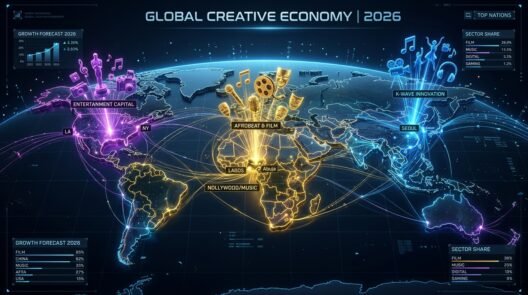
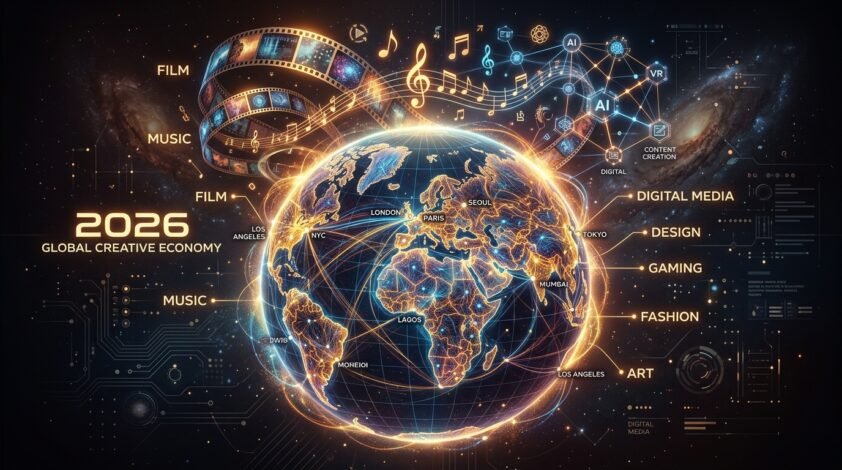
The global creative economy is worth more than $2 trillion and growing faster than most traditional industries. But the map of who leads it, who is rising inside it, and whose creative output the world counts at all is being redrawn in ways that most economic forecasts have been too slow to reflect. A new picture is forming. It is more complicated and more promising than the old one.
Let’s start with a number that should stop you: Nigeria’s music industry alone generates more than $600 million a year. Not the whole of Nigeria’s creative sector. Not Nollywood, which produces upward of 2,500 films annually and earns an estimated $590 million of its own. Just the music. Streaming, live performance, and the accumulated gravitational pull of a sound that has spent the last decade rebuilding what pop music sounds like everywhere from London to Lagos to São Paulo are all contributing factors. A single country, in a region the world’s economic institutions have historically undervalued, is building cultural export infrastructure that rivals the output of nations with ten times the institutional support.
Hold that number and then consider this one: South Korea’s content exports hit $14.9 billion in 2025. Gaming alone, which most people outside the industry still underestimate, generated $5.13 billion of that, more than Korean music, film, television, and animation combined. The government in Seoul has set a target of $265 billion for its K-culture market by 2030, and has backed that target with a cultural budget of roughly $5 billion for 2026. That is not aspiration dressed up as policy. That is industrial strategy.
The global creative economy is large, fast-moving, and being remade by forces that standard league tables have been too slow to capture. Understanding who leads it in 2026 requires looking beyond the obvious names, examining the gap between raw creative output and institutional support, and asking the harder question that sits underneath all the data: whose creativity does the world’s counting machinery actually count?
The United States Creative Economy in 2026: The Incumbent
The United States remains the world’s largest creative economy by almost every conventional measure. Its arts and cultural sector employs 5.4 million people. Its entertainment industry generates revenue at a scale no other country approaches. Hollywood still sets the global grammar of cinema, even as Netflix and the streaming era have democratised production across dozens of other markets. Silicon Valley’s software and games industries dwarf competitors. The US holds the top position in the WIPO Global Innovation Index for market and business sophistication, and ranks second globally in human capital and research output.
What is less discussed is the degree to which American creative dominance operates as infrastructure rather than as cultural production in any narrow sense. The platforms on which the world’s creators distribute their work, monetise their audiences, and build their audiences are overwhelmingly American. YouTube, Spotify, TikTok’s Western operating infrastructure, Instagram, and the major streaming services: the creative economy runs on American rails even when the trains are built somewhere else entirely. This distinction matters more than it appears to. Platform ownership and cultural production are different things. The US excels at both. Most countries are choosing between them.
The South Korea Creative Economy: The Model
If there is a country the rest of the world is studying most carefully in 2026, it is South Korea. The numbers are dramatic, but the strategy behind them is more instructive than the numbers themselves.
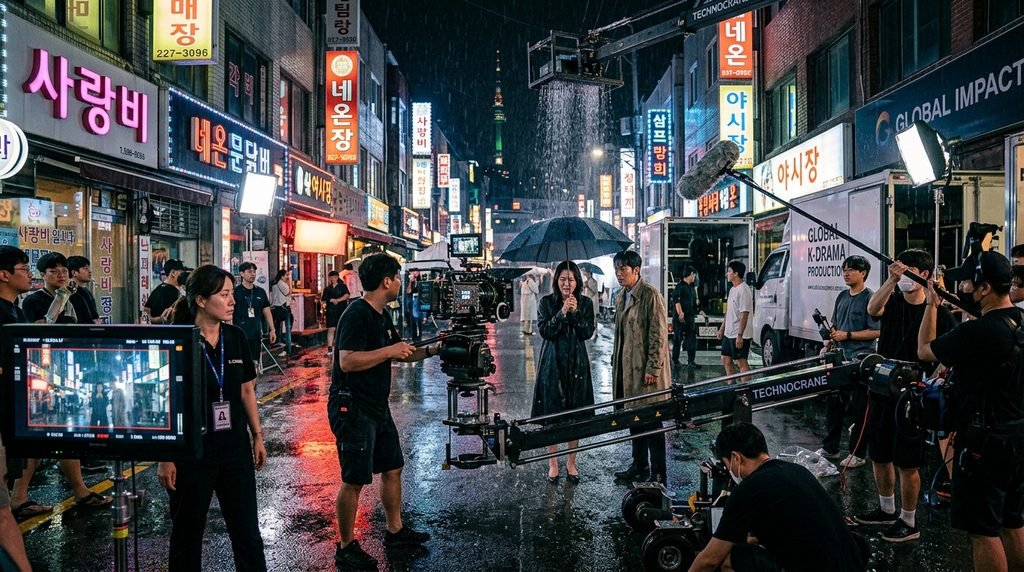
South Korean content exports hit $14.9 billion in 2025, making K-culture the country’s twelfth-largest export sector. That figure represents the endpoint of a deliberate, government-backed project that began in earnest after the Asian financial crisis of 1997, when the Korean government decided to treat cultural production as a strategic industry rather than a soft policy concern. What followed was a systematic investment in training, distribution infrastructure, intellectual property frameworks, and international market development that took roughly two decades to produce the results the world now associates with K-pop and K-drama.
South Korea is now targeting a $265 billion K-culture industry by 2030, with exports projected to hit $110 billion, roughly triple the previous target, backed by a 2026 cultural budget of approximately $5 billion. The ambition is real. So is the underlying machine. South Korea’s gaming sector alone exported $5.13 billion in intellectual property in 2024, exceeding the combined exports of Korean music, film, television, animation, and advertising. The country’s 29.5 million gamers represent 57% of its population. Its esports infrastructure has no global parallel.
The lesson other countries draw from South Korea is not that culture can be manufactured top-down. It cannot. The lesson is that infrastructure, finance, and policy can create conditions in which creative energy finds its audience faster, earns more when it does, and builds institutional resilience that survives individual moments of cultural heat. BTS was not a government project. But the ecosystem that allowed BTS to happen, and then to scale globally, was built with deliberate intention over many years.
The UK Creative Economy: The Established Voice
The UK’s creative industries generated around £124 billion in gross value added in 2023, equivalent to approximately 5.2% of total UK economic output, and supported around 2.4 million jobs. The economic contribution of the creative industries to the UK grew by 4.6% between 2023 and 2024. The UK is the world’s second-largest destination for creative sector foreign direct investment after the United States. It attracted £4.8 billion in film and high-end television inward investment in 2024 alone, driven by tax reliefs and a production infrastructure that stretches from Pinewood and Shepperton to the visual effects houses clustered across Soho and Shoreditch.
London operates as a creative capital in a way that few other cities manage: simultaneously a hub for finance, design, music, fashion, theatre, and the kind of cross-disciplinary collision that produces movements rather than individual works. UK music generated a gross value added of £7.6 billion and £4.6 billion in exports in 2023, a 15% increase from the previous year.
The tension in the UK creative economy is between extraordinary concentrated output and persistent structural inequality in who gets to participate. More than half of all UK creative businesses are in London and the South East. The self-employment rate in creative industries runs at 28%, nearly double the national average, which translates into intermittent income, limited access to pensions, and the invisible precarity that sustains an industry whose public face is almost always one of success. The UK knows how to produce creative work. It is still working out how to share the proceeds of that production more broadly, both within its own borders and in its relationship to the global creative communities, many of them in Africa, that have been feeding British creative culture for generations without adequate acknowledgement.
Germany: The Quiet Giant
Germany’s creative economy is large enough that its relative invisibility in global conversations about creative industries amounts to a category error. Around 238,000 companies are responsible for a turnover of around €205 billion, according to the Federal Ministry for Economic Affairs’ most recent monitoring report. The sector employs nearly 1.8 million people and outperforms sectors including the chemical industry and energy supply in terms of gross value added.
What Germany lacks in cultural soft power of the K-pop or Hollywood variety, it compensates for in depth and diversity of creative output. Berlin has become one of Europe’s most important cities for music, design, architecture, and the kind of experimental creative practice that tends to anticipate rather than follow wider cultural movements. The German publishing industry is one of the world’s largest. German design has shaped global visual language in ways that are so thoroughly absorbed into daily life that they have become invisible, which is perhaps the purest form of influence available.
The German Creative Economy Summit, which drew more than 1,100 participants in early 2025, identified artificial intelligence, sustainable business models, and attracting skilled workers as the sector’s defining challenges heading into the next several years. Germany brings to these challenges a regulatory seriousness and an institutional weight that can feel slow but also tends to be durable. The question it is wrestling with, and has not yet answered, is how to translate that institutional stability into the kind of international cultural presence its creative output arguably deserves.
Nigeria: The Rising Engine
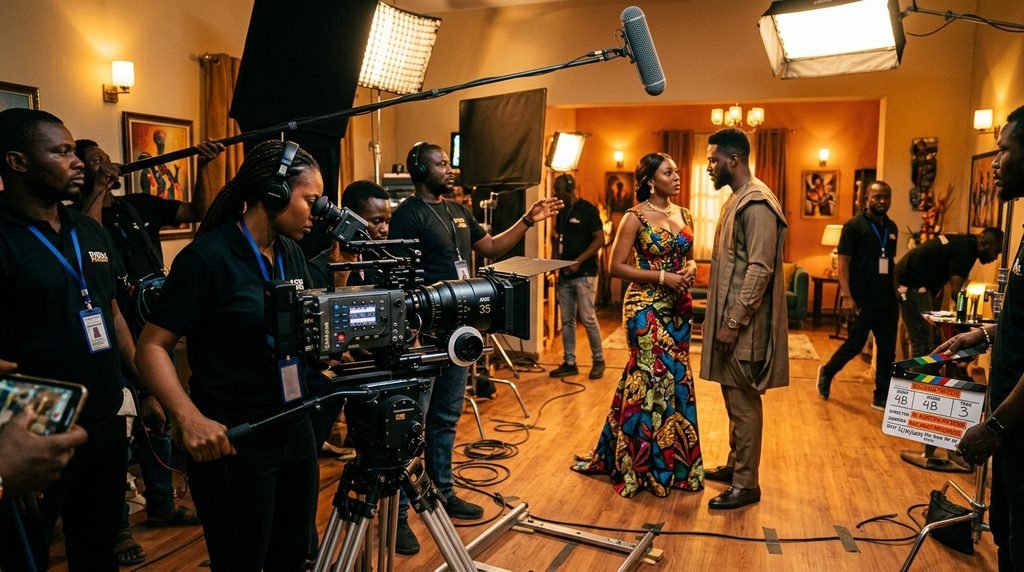
The numbers have been cited so often that they risk losing their texture. Nollywood makes more than 2,500 films annually, making Nigeria one of the world’s most prolific film producers. Music revenues exceed $600 million in Nigeria alone, driven largely by streaming, live performances, and global demand. Afrobeats is no longer an emerging genre. It is a dominant one, setting tempo across global pop in the same way that no African musical form has done before, at least not with this degree of institutional recognition and commercial infrastructure attached to it.
What the headline figures conceal is the structural gap between creative output and creative revenue capture. Nigeria’s entertainment sector was already valued at $9 billion in 2023 and continues to grow, but it does so in spite of, not because of, supportive policy. Intellectual property enforcement remains fragile. Piracy losses are substantial. The licensing and insurance infrastructure for live events is chaotic enough that concert promoters cite it as a more immediate threat than any lack of audience. Burna Boy can sell out Madison Square Garden while the system that should support the next Burna Boy remains underdeveloped.
By 2030, Africa’s creative industries are expected to contribute up to 4% of GDP, create more than 20 million jobs, and account for roughly 10% of global creative exports. Nigeria will be central to whether those projections are met. The talent exists at a scale that is genuinely unusual. What remains to be built is the policy scaffolding, the financing infrastructure, the IP frameworks, and the international distribution relationships that allow creative talent to become creative capital. That gap is real. It is also, for investors and policymakers who are paying attention, an opportunity of considerable size.
Kenya and East Africa: The Digital Frontier
Kenya’s creative economy story is inseparable from its digital infrastructure story. Nairobi has established itself as one of Africa’s most important technology hubs, and the relationship between tech infrastructure and creative sector growth is direct: better broadband, higher mobile penetration, and more sophisticated payments infrastructure all translate into faster creative industry development.
Kenya’s 20 to 30% film rebate scheme has attracted international productions that feed local talent pools, demonstrating how targeted policy can pull global investment while simultaneously strengthening domestic industries. The scheme has bureaucratic weaknesses. Payouts are slow. But the underlying logic is sound, and the results are measurable. Africa’s audiovisual subsector alone employs 5 million people continent-wide and generates $5 billion of the continent’s annual GDP, with the potential to generate over $20 billion in revenue and 20 million jobs in the coming years.
East Africa’s creative sector is also notable for the degree to which it is building its own institutional memory rather than waiting for external validation. Rwanda has made creative economy development a formal component of its economic strategy. Tanzania’s music industry, long underreported in global creative economy coverage, has been building digital distribution infrastructure that is connecting its output to diaspora audiences across Europe and North America. These are not stories about potential. They are stories about process, which is a harder and more important thing.
The Counting Problem
Any honest account of the global creative economy in 2026 has to reckon with the limits of the data itself. The figures that anchor most global rankings and policy documents reflect what established measurement frameworks were built to measure, which is largely the formal economy of countries with mature statistical infrastructure.
Sub-Saharan Africa’s creative sector has contributed nearly 4% of the region’s GDP and generated more than $58 billion in revenue since 2019, accounting for 8.2% of all jobs, more than any other continent and greater than the global average. That figure is striking and frequently cited. It is also almost certainly an undercount. The informal creative economy, which is where a very large proportion of Africa’s creative production lives, is structurally undercounted by methodologies designed for economies with high levels of formal employment and business registration.
This matters for more than statistical reasons. It matters because creative economy policy, investment, and international trade frameworks are built on the numbers that exist rather than the activity that is happening. Many African creative enterprises remain informal and lack access to finance. Formalisation without adequate support simply moves people from one kind of precarity to another. The challenge is building the conditions under which creative workers can participate in formal economies without losing the flexibility and community networks that have allowed informal creative industries to thrive at all.
What Leadership Actually Means
In 2026, leading the creative economy means different things in different contexts. It means export revenue in South Korea. Gross value added in Germany and the UK. Cultural influence in Nigeria. Digital infrastructure in Kenya. Institutional depth in the United States. Platform ownership almost exclusively in the US.
No single country is leading on all of these measures simultaneously. And the countries that dominate the headline rankings, those with the largest creative sectors by monetary value, are not always the ones producing the most culturally generative work, the work that will influence what the world sounds like, looks like, and thinks about over the next twenty years.
Global creative industries are projected to grow 4.5% annually through 2028. Africa’s creator and digital content economy stands at approximately $5.1 billion today and is projected to grow to nearly $30 billion by 2032. The direction of travel is clear. The distribution of benefit from that growth remains an open and genuinely important question.
The countries that will lead the creative economy over the next decade are not simply the ones with the most creative talent, of which there is no global shortage. They are the ones that manage to connect talent to infrastructure, infrastructure to finance, finance to fair distribution, and distribution to the kind of international relationships that let creative work find its audience without surrendering the terms on which it travels.
That is a policy challenge as much as a creative one. The numbers are beginning to say so. The question is whether the institutions that make policy are listening to what the numbers are actually telling them, or only to the parts of the data that confirm what they already believed.