
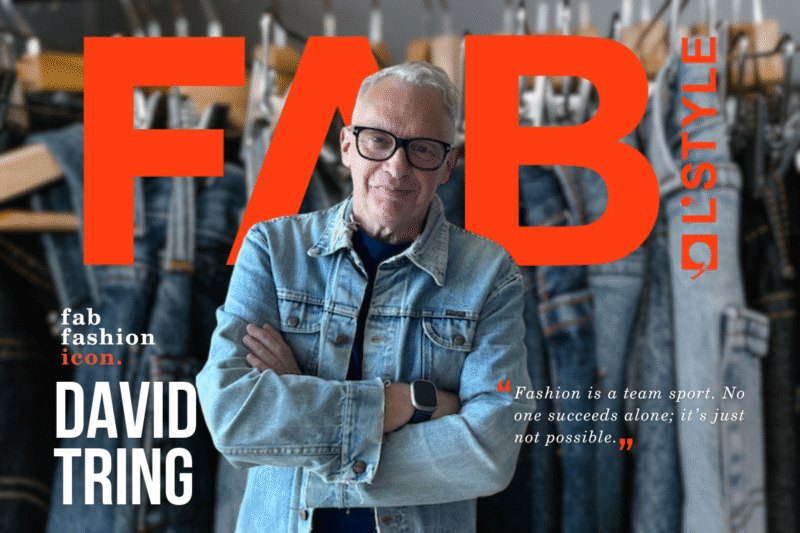
At 17, David Tring slipped on his first pair of Wranglers, unknowingly stitching himself into denim history. Now, nearly four decades later, he’s one of the most respected names in the denim industry. He’s worked across Asia and Europe. He’s held product leadership positions at Lee, Wrangler, H&M, and VF Corporation. And today, he leads The Magic of Denim, a consultancy devoted to circular fashion and sustainable design.
He’s also one of the industry’s most outspoken critics. Tring has warned that sustainability has been “misused in the green‑washing campaigns of big companies”, and he’s quick to call out why self-regulation in fashion has failed, urging for legislation, not lip service, to end the waste and emissions that still plague denim manufacturing.
Did you know that around 170 tonnes of clothing end up in Hong Kong’s landfills every single day? Yet while brands drag their feet, supply‑chain partners and educators are picking up the slack, driving innovation in fibre chemistry, recycling, digital tracing, and even biodegradable hardware.
As Tring joins us, he digs into his blue‑jeans experiment, two identical pairs, one worn daily for 20 years, the other stored untouched, revealing what truly makes denim valuable, sustainable, and culturally transformative. In this interview, he unpacks the global trends, the barriers, the breakthroughs, and why jeans are never just jeans.
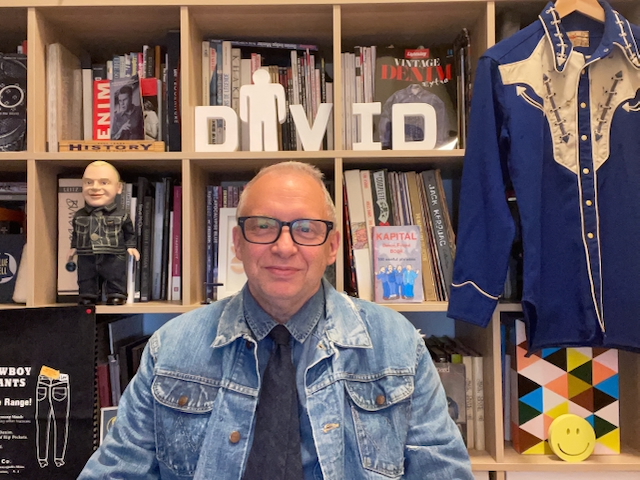
Why Denim Is More Than Just Jeans: Sustainability, Culture & Global Trends with David Tring
FAB: Let’s start from the beginning. How did a Saturday job at a denim and surplus store turn into a lifelong career in the global denim industry?
David Tring: I was probably 14 when I started helping out at a local denim shop just around the corner from where I lived—I could walk there. It was in my hometown, and I knew everyone. Honestly, I didn’t have a great time at school. I’m very dyslexic and failed almost everything. I remember the careers officer telling me, “If anybody’s stupid enough to offer you a job, David, take it.” Terrible advice.
After leaving school, I ended up making false teeth for a year—an absolute disaster. But I kept working weekends at the denim store. When I turned 17, they offered me a full-time job. By 18, I was managing the place. That’s when I realized I’d found something I was truly passionate about—something I was actually good at. I loved talking to customers, and I genuinely enjoyed every minute of it.
We weren’t just selling jeans; we had Levi’s, Wrangler, Lee and all the big names in the 1970s. We also sold Dr. Martens and classic workwear. It was a practical, hard-working kind of store, and it gave me a solid foundation. That early retail experience shaped everything that came after as I moved into more senior roles across the industry.
What Brands Can Learn from the Supply Chain
FAB: What a journey. You’ve held leadership roles at some of the most iconic brands—Lee, Wrangler, and H&M. What key leadership lessons have stayed with you across these experiences?
David Tring: You learn something different at every stop, but one big thing stands out: fashion is a team sport. No one succeeds alone—it’s just not possible. Whether you’re a lead designer at a luxury house or in fast fashion, you still need a strong team around you.
I’ve always surrounded myself with brilliant mentors. That made all the difference. But beyond that, I focused on building great teams, working collaboratively, and developing trust. I was never chasing titles or promotions. I always asked, “How do we make a better product?” That was the focus.
Over time, I realized that to improve the product and take ownership of it, I needed a capable team. So I built one. You have to empower people, not micromanage them. If you try to do everything yourself, you will fail. Fashion is collaborative by nature. Success comes down to your ability to lead people well and work as part of something bigger than yourself.
FAB: That brings me to the second part of the question—mentorship. What does mentorship mean to you at this stage of your career?
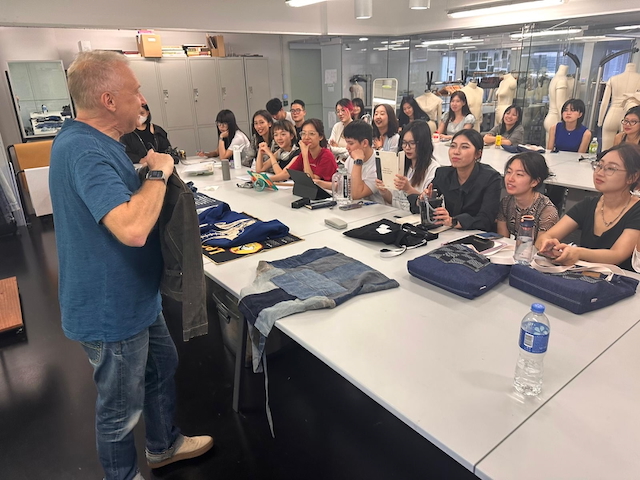
David Tring: I never went to university, so the people who took the time to train me had a huge impact on my life. That’s something I’ve always felt a responsibility to give back. I became more involved with universities whenever I could—especially during my time at VF, working with Lee and Wrangler. We had plenty of opportunities to collaborate with design and business students, work on real-world projects, and share industry insights. That started about 15 years ago, just after I moved to Asia.
That’s when I realized I wanted to focus the next phase of my career on mentoring and supporting the next generation. So, after COVID, I took early retirement, and, over the last few years, I’ve been working closely with universities and young creatives. We cover everything from how to run a fashion business to building collections—with a strong emphasis on sustainability and how we can do better in that space.
I also understand that this kind of work doesn’t yield immediate results. In the corporate world, everything revolves around quarterly reports, shareholder returns, and short-term wins—even when the plans are supposedly long-term. Now, I don’t have to think like that. Today, the most valuable things I have are time, experience, and a genuine desire to help.
So, I think about the return on time—not in profit, but in people. The investment I make in young people today might not show results for five or even ten years. But when it does, they’ll be in positions to lead and implement real change. That’s the long-term goal, and to me, it’s absolutely worth it.
FAB: How has your perspective on the denim industry changed now that you’re guiding others from the consultant’s chair?
David Tring: It’s actually been quite eye-opening. When I worked on the brand side, doing consumer research and building brand strategy, I always thought of the denim industry as a close-knit community. We shared challenges, learnt from each other, and tackled opportunities together.
But once I stepped out of that brand bubble and started working more with the supply chain and in education, I saw the imbalance. The relationship between brands and the supply chain isn’t as collaborative as I once believed—it’s very one-sided. Stay up to date on the newest in the world of Fashion, Arts, Beauty and Lifestyle; Follow FAB on Instagram.
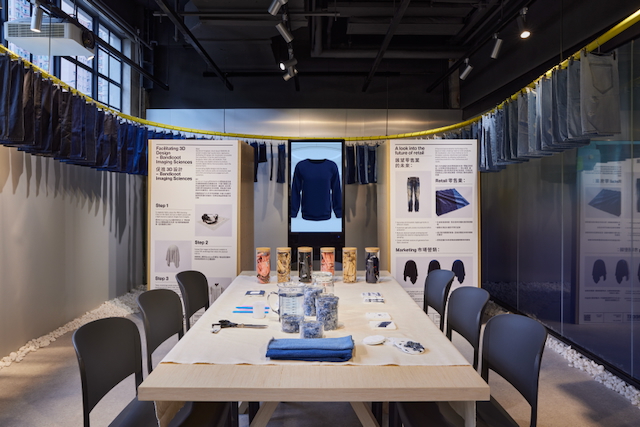
Take my current work, for example. A lot of it revolves around connecting industry with education. And the supply chain partners? They’re incredible. They say yes right away, offer fabric, and generously give their time to help students. But when we try to engage brands, it’s a different story. The corporate machinery is so bogged down by red tape and approval layers that many brands just don’t bother getting involved in these types of projects. It becomes more effort than it’s worth to them.
That’s been disappointing to see. At the same time, my admiration for the supply chain has grown. These are the people actually making the products. They’re the ones executing sustainability efforts and pushing innovation forward—often under extremely tough conditions with tariffs and other global pressures.
So yes, my view has shifted. I still love the industry, but right now, I have an even deeper appreciation for the people behind the scenes who make it all happen.
FAB: What does it mean to be a consultant in denim today? And how do brands benefit from having someone like you on board?
David Tring: Honestly, you might get a better answer from the brands themselves. I’m not consulting in the traditional sense anymore. After taking early retirement, I chose to focus more on education, schools, and sustainability. So when I work with companies now, it’s a two-way street. If I’m going to support them, I expect them to support my educational initiatives in return.
I look for companies willing to engage with students, support educational programmes, and champion sustainability. In exchange, I help them with everything from brand positioning and strategy to building sustainability roadmaps. I also advise on how to approach emerging markets—something many global brands overlook.
One area I always stress is that while a brand may be global, consumers are local. You can’t serve every market with a one-size-fits-all approach. Local tastes, trends, and cultural nuances matter. So I guide brands in adapting to those realities.
But beyond strategy, I get a lot of joy from making meaningful connections. I often introduce young designers to companies, sometimes entirely pro bono. If I know a company is looking for talent, I try to match them with the right people. It’s a bit like matchmaking—bringing people together where it makes sense. And when it works, it’s incredibly fulfilling. It’s like setting up your best friend on a date that turns into a great relationship. That’s the kind of impact I enjoy making now.
FAB: What’s one innovation in denim you wish you had pioneered?
David Tring: Honestly, the best innovations are still ahead of us. The industry is constantly evolving, with new ideas and technologies emerging all the time.
But if I had to choose a dream innovation, it would be the creation of the most sustainable pair of jeans ever made. A pair that keeps all the qualities we love about denim—its strength, durability, and personality—but is also designed with the end of its life in mind.
That means jeans that can re-enter the system: be reused, repurposed, or recycled into new garments. And when they truly reach the end of their lifecycle, they should biodegrade completely—leaving no harm to the planet. Not just compostable, but truly regenerative.
That’s the holy grail for me. And the good news is, we’re getting closer. There’s significant work happening across the industry—from developing innovative fibres and clean dyeing processes to rethinking rivets, buttons, and all the other components that make up a pair of jeans. The momentum is real, and that gives me hope.
FAB: You’ve spoken passionately about circularity and science-based sustainability targets. What do you think is holding the industry back from real transformation?
David Tring: When we talk about sustainability, it’s important to remember that the concept—at least as we know it—was first defined in 1987 in recommendations to the United Nations. Back then, it was proposed as something the industry should self-regulate. But over the past 30 to 40 years, I think it’s clear we’ve proven that self-regulation doesn’t work in business.
What we really need is legislation. We need governments to come together and agree on what a sustainable product actually is—what should be allowed in production and what shouldn’t. Because in a completely free market, where companies are expected to figure it out on their own, it becomes a race to the bottom. That kind of environment doesn’t foster meaningful change.
So, in my view, the biggest obstacle remains the same as it’s been for decades: the lack of strong, coordinated legislation.
That said, there are reasons to be optimistic. The European Union is starting to lead with some meaningful changes. Things like digital product passports, new laws around recycling, product durability, and circular design—they’re setting a new standard. They’re insisting that garments should be made to last, not fall apart after a few wears.
There are promising developments in the U.S. too, especially at the state level. The beauty of the federal system is that states like New York and California can push forward independently. Some of the legislation coming out of those states is excellent, and it will force companies to do better.
But ultimately, the core issue is unchanged: we can’t keep expecting the private sector to regulate itself. That model simply doesn’t deliver the transformation we need.
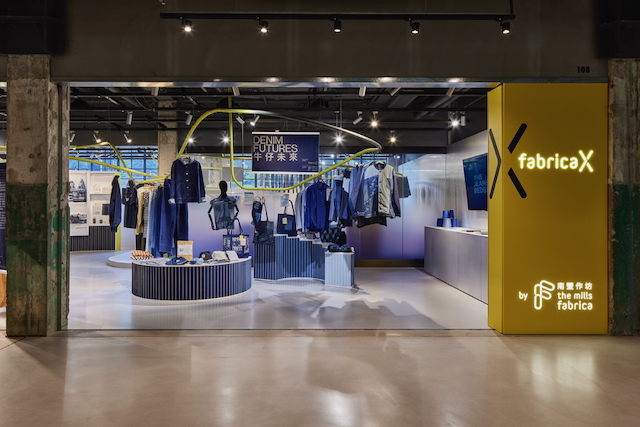
Innovations, Misconceptions, and the Future of Jeans
FAB: A lot of people still think of denim as “just jeans”. What do you think they’re missing about the fabric’s depth and cultural significance?
David Tring: Denim is actually one of the most unique and emotionally resonant fabrics out there. It’s the only fabric that gets better the more you wear it. Over time, it moulds to your body, reflects your lifestyle, and becomes truly personal. The creases, the fade patterns, the wear lines—all of that tells your story. That kind of transformation doesn’t happen with most other garments.
And because denim lasts so long, people often develop real emotional connections with it. A favourite pair of jeans or a denim jacket can stay with you for years. They go through life with you. Very few other items in your wardrobe offer that kind of longevity. Even T-shirts—which come close in comfort—don’t match denim in durability. They’re knitted, not woven, so they wear out much faster.
Then there’s the magic of indigo. Indigo is the dye that gives denim its iconic blue colour. It binds to cotton in a unique way and slowly rubs off with wear, creating those beautiful, distinctive fades. No other fabric or dye behaves like that.
So when people see denim as “just jeans”, they’re missing a whole world of design, craft, identity, and emotion. Denim has a deep cultural heritage, and it continues to evolve—it’s anything but ordinary.
FAB: Do you remember the first pair of jeans you ever truly loved—the kind that felt like a second skin?
David Tring: I sleep around when it comes to jeans! But if I can answer that a bit differently, the pair I remember most vividly goes all the way back to my childhood. I was a semi-professional skateboarder in the 1970s, and that lifestyle really shaped who I became. It gave me the confidence to be creative and to take risks.
I had a pair of Levi’s 501s back then, and I remember skating in my hometown, Nottingham, on a street called Hood Hill. It was a brutally steep hill. I was bombing down it—no helmet, no pads—and I came off the board, sliding face-first down the concrete. Sparks were literally flying off me because the metal rivets on my jeans were grinding against the road. It was wild—everything felt like it was on fire afterward. That moment stuck with me.
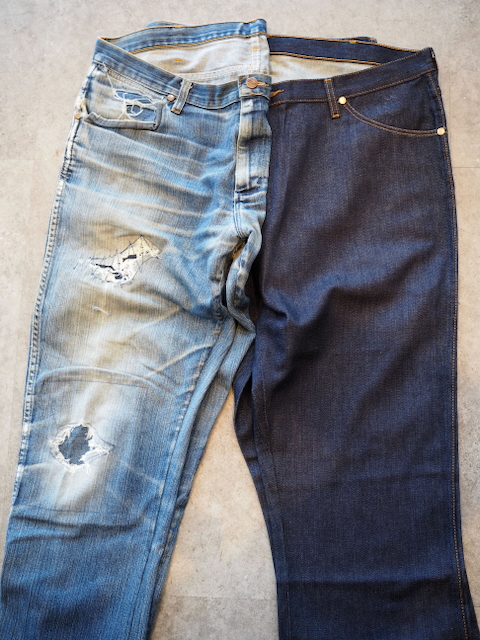
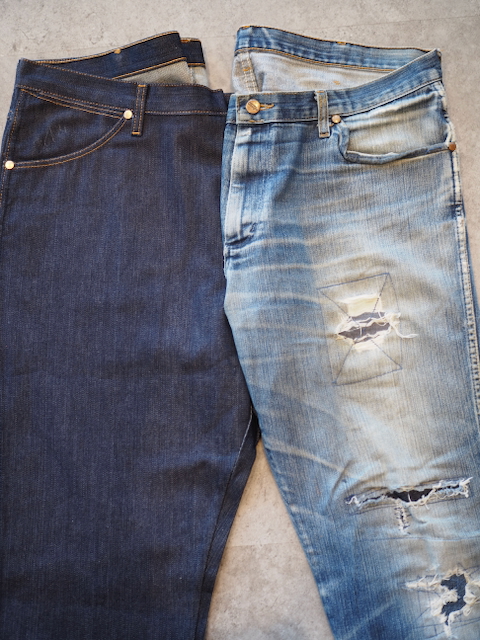
As for the jeans I truly loved? There are two pairs I consider my favourites—I call them “the brothers”. Back in 2002, I took two pairs of jeans from one of our Wrangler factories as part of an experiment. I wanted to study how denim ages: where it wears, how the fabric evolves, and how washing affects it. I wore one pair consistently for over 20 years—repaired them countless times. They’re patched, faded, and full of character. What happened to the second pair? I left them untouched, still sealed in the original packaging. They’re from the exact same batch. So now I have this living experiment—a direct side-by-side comparison of aged vs. unworn denim from the same origin. It’s a deeply personal project that’s still ongoing.
I also have a couple of pairs I call my “comfort armour”. When I have a big presentation or I’m feeling nervous—especially in unfamiliar settings—I reach for one of them. I remember giving a talk in China to 500 people. I even tried to speak some Chinese. Oh, I was nervous, so I wore my lucky jeans. It’s like wearing confidence. Those jeans become your shield. That’s the magic of denim—it becomes part of you.
What to wear to a concert: The best outfits for your big night out
A Capsule Wardrobe for Simple Fashion and Sophisticated Style
FAB: After all these years in the denim world, is there still a fabric, finish, or detail that makes you say, “Now that’s magic”?
David Tring: In the industry we define denim by its twill line, a right hand twill is the standard as used by Levi on the iconic 501. The challenge for the right hand twill is that it has a tendency to twist in the leg when washed. In 1964 a Wrangler technician called John Neil Walker invented the “Broken twill” weave to counter the twisting. It also gives a very soft and comfortable touch for the wearer. When you look closely the weave appears to have the letter “W” woven into it. Perfect for the Wrangler Brand and now a classic Denim fabric. That’s definitely a fabric I think is magical!.
FAB: You’ve walked across continents. Which city’s denim scene surprised you the most?
David Tring: I have a deep affection for Stockholm and Sweden. Scandinavian culture and style have influenced me in so many ways throughout my life. But I’d say the city that truly surprised me was Hong Kong. I’ve been travelling there since the late ’80s and living there for the past 19 years. The energy, creativity, and sheer innovation in the denim scene there are incredible.
Shanghai is another city that left a huge impression on me. I first visited in 1989 and later lived there for a couple of years. Being in Shanghai feels like witnessing history being written in real time. It’s how I imagine New Yorkers must have felt during the construction of the Empire State Building—everything around you is in motion, transforming, and filled with optimism. The pace of change is exhilarating.
China in general fascinates me. It’s a place of depth and complexity, and I think it’s often misunderstood by the rest of the world. But there’s so much creativity, talent, and cultural richness there. I genuinely believe China has a major role to play in shaping the future—not just in fashion, but globally.
FAB: In your travels, what are some of the biggest misconceptions you’ve encountered—those moments when your experience of a place was completely different from how it’s portrayed in the media or by word of mouth?
David Tring: Honestly, that happens in most places. I’ve always believed that if everyone had the opportunity to travel, we’d probably have far fewer conflicts in the world. You quickly learn that people—regular people—are fundamentally the same everywhere. I’m not talking about politicians. Politicians tend to be a bit strange no matter the country. But the average person? They care about their kids. They dream of a better future, especially if they believe life will improve for the next generation. That shared hope is universal. And right now, it’s a bit frightening—there’s a lot of uncertainty in many parts of the world.
FAB: Still on the subject of misunderstandings—you’ve watched denim trends evolve over several decades. Which era do you think is the most misunderstood in denim fashion?
David Tring: That reminds me of a line from “Raiders of the lost Ark”—the original movie. There’s this moment where someone says, “If we bury this watch in the sand and someone finds it a hundred years from now, it’ll be worth a thousand times more. Right now, it’s just junk.” That’s fashion in a nutshell. Trends are misunderstood by one generation and embraced by the next.
Take Y2K denim, for example—jeans from around the year 2000. For women, it was all about super low-rise, bootcut styles. Millennials weren’t fans at all. They preferred high-waisted, relaxed boyfriend fits—something more comfortable. Then along comes Gen Z, and they completely reinterpret the Y2K aesthetic. They see it with new eyes, giving it new meaning.
Every era of denim gets misunderstood at some point, only to be rediscovered later. History doesn’t repeat itself exactly, but it does rhyme—with a twist. I love that about fashion. I’ve seen some trends come back three or four times now, and each revival brings something new—a fresh take, a new story. That’s what keeps fashion alive. It’s not necessarily about chasing a dream, but about reimagining an idea in a new way.
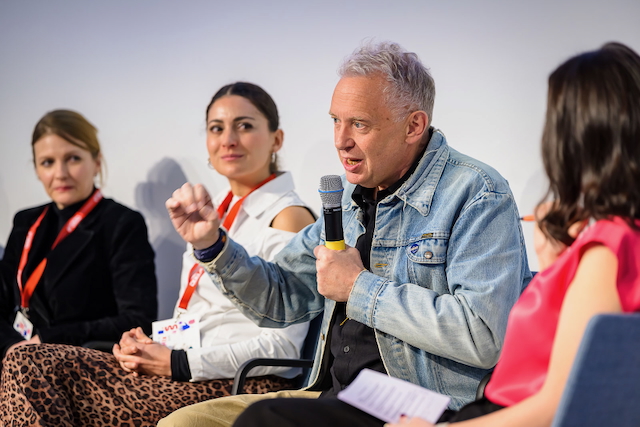
FAB: Many people forget or never realize that behind every great pair of jeans is a long chain of decisions: fabric, fit, wash, ethics, marketing, and more. Which part of that process do you think consumers should be more aware of?
David Tring: First of all, let’s not confuse marketing with making a great product. Great products come from the design and product development teams. Marketing should simply help people understand the value of what’s been created—without overhyping it, which unfortunately happens far too often.
If consumers had better insight into how products are made—not just in denim, but across fashion—they’d make more informed choices. They’d ask better questions: How was this made? How sustainable is it, really? These are the conversations we need. Right now, there’s a big disconnect. Many people think they’re making conscious choices, but the truth behind the products often gets lost. Raising awareness about that could shift the entire industry.
FunZone: #FabFastFive
FAB: Coffee or tea to kick start a design day?
David Tring: Coffee, coffee, and more coffee.
FAB: Asian night markets or European cafes.
David Tring: European Coffee
FAB: Indigo smells like
David Tring: It actually smells terrible.
FAB: If your career had a saint, what would it be called?
David Tring: Rodeo Ben who was the original designer for Wrangler.
FAB: And finally, a movie that inspired you with its fashion.
David Tring: I can use a television series that is set in the 1930s. It’s called “Brideshead revisited” based on the 1945 book by Evelyn Waugh.