

The question arrives, sooner or later, for every great fashion house. It is asked quietly at first, in boardrooms, in succession meetings, and in the private conversations of creative directors who understand what is about to be required of them. Then it is asked loudly, in the press, in the reviews, and in the retrospectives that follow the announcement. Then it is asked again and again, across seasons and decades, by every new designer who steps into the role and every critic who evaluates whether the answer has finally been found.
The question is simple. The answer never is. What happens to a fashion house when its founder dies is not one thing. It is several things simultaneously, a commercial problem, a cultural negotiation, an act of mourning that must be conducted in public, and a philosophical challenge that fashion, for all its sophistication, has never fully resolved. What is a house without the person who built it? What is a name without the body behind it? What does it mean to continue a vision that was, by definition, the product of a singular intelligence?
These are not rhetorical questions. They are the conditions within which some of the most significant creative work in fashion history has been produced and some of the most instructive failures.
The Founder as the House
To understand what is lost when a fashion founder dies, it is necessary to understand what a founder actually is. In most industries, a founder is a person who establishes an organisation and then becomes, over time, separable from it. The business outlives the individual because the business is a system — of processes, relationships, and assets — that does not depend on any single person for its continued operation.
Fashion houses founded on a creative vision do not work this way. In these cases, the founder and the house are not two things. They are one. The name above the door is the designer’s name. The aesthetic is the designer’s aesthetic. The values, the references, the obsessions, the refusals, and the particular quality of attention brought to every detail of cut and cloth and presentation; all of these originate in, and are organised by, the consciousness of a single individual.
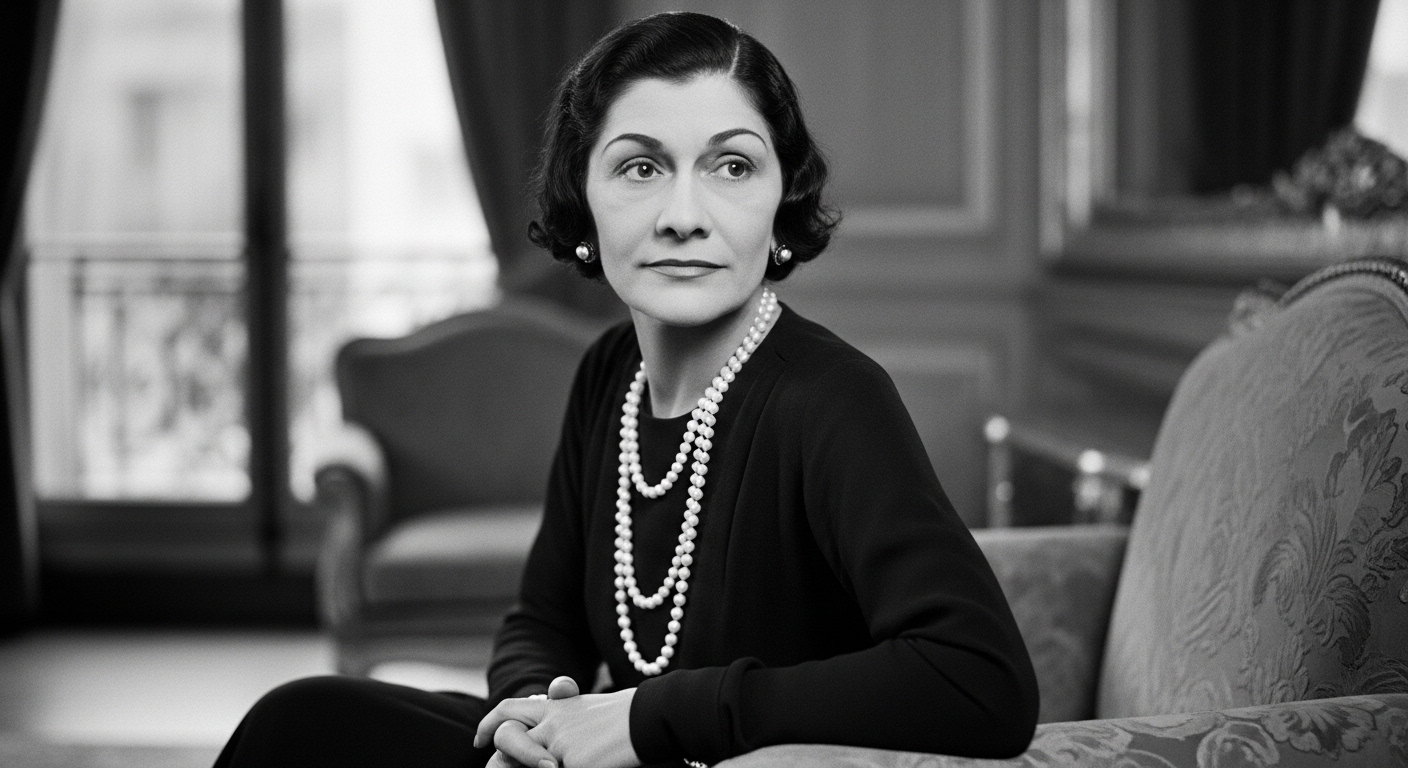
Coco Chanel was not the figurehead of a Chanel aesthetic that existed independently of her. She was the aesthetic. When Yves Saint Laurent was alive and working, Saint Laurent the house was the direct expression of his inner life, his love of art, his fragility, and his specific understanding of what a woman should be permitted to wear and why. When Alexander McQueen died, in 2010, the house that bore his name did not simply lose a creative director. It lost the intelligence that had generated everything it was.
This is the founding condition of every succession problem in fashion. The institution is being asked to continue producing a vision that was never institutional. It was personal. And persons, unlike processes, cannot be replicated or transferred.
Recommended For You
Who Is Terhas Berhe? Her Journey Across Art, Film, and Photography
The Three Paths
Fashion history suggests that when a founder dies, the house faces three broad possibilities. None of them is without cost.
The first is faithful continuation, the attempt to honour and extend the founder’s vision with maximum fidelity. This path is most credible when the successor has an intimate knowledge of the house’s DNA: when they trained under the founder, absorbed their methods, and understand not just the aesthetic outcomes but also the reasoning behind them. Karl Lagerfeld’s stewardship of Chanel — which began in 1983 and lasted until his own death in 2019 — is the most studied example of this approach. Lagerfeld did not attempt to replace Chanel. He interpreted her with a fluency made possible by an extraordinary depth of fashion knowledge and a systematic intelligence capable of identifying what was essential in the Chanel vocabulary and what could evolve without loss. The result was a house that felt, over decades, both entirely itself and entirely alive.
The risks of faithful continuation are significant. Fidelity, when it becomes rigid, produces pastiche. The archive becomes a prison. The house begins to cite itself rather than renew itself, producing work that is recognisable and correct and entirely without urgency. Several houses have spent long periods in exactly this condition, their seasonal collections impeccably executed homages to a founder who is no longer there to challenge them.
The second path is transformation, the appointment of a successor whose role is not to continue the founder’s vision but to reconstruct the house around a new creative intelligence, using the name and heritage as raw material rather than as a constraint. This is the riskier path commercially and the more interesting one culturally. When John Galliano arrived at Dior in 1996, four decades after Christian Dior’s death, he did not attempt to reproduce what Dior had done. He took the house’s founding obsessions — femininity, the New Look, the theatricality of the postwar silhouette — and put them through his own extraordinary, maximalist imagination. The result was neither Dior nor Galliano but something that could only have been produced by the specific collision of the two.
The danger here is dissolution, the gradual erosion of what made the house distinct, as successive creative directors import their own references without sufficient engagement with the founding vision. At its worst, this path produces a house that is famous for its name and has forgotten why.
The third path is the most honest and the least common: acknowledgement that the house, in its truest form, cannot continue, and that what remains is something different — a legacy enterprise, a perfume and accessories business, a cultural monument — rather than a living creative vision. Schiaparelli spent decades as exactly this kind of monument before its relaunch. The Martin Margiela house, after his departure, has navigated a version of this question with unusual transparency. There is something to be said for the houses that admit the difficulty rather than pretending it does not exist.
The Grief That Cannot Be Named
There is a dimension of this question that the fashion industry consistently fails to address directly, and it is the human one.
When a fashion founder dies, the people closest to their work, the atelier workers who understood their methods, the assistants who could anticipate their decisions, and the collaborators who had spent careers in the orbit of a particular creative intelligence experience a form of grief that has no adequate professional language. Fashion is an industry that prizes forward momentum above almost everything else. Sentimentality is not a value it rewards. Mourning is something to be conducted privately, briefly, and then set aside in favour of the next collection.
This is, in most cases, the wrong approach. The greatest creative continuations in fashion history have been those in which the successor demonstrated not just technical facility with the house’s language but a genuine reckoning with the loss. They understood that they were inheriting not just an archive and a client list but a history of human relationships — between the founder and the atelier, between the founder and the muse, between the founder and the idea of fashion itself — and that this history could not simply be noted and moved past. It had to be honoured, which meant sitting with its difficulty rather than resolving it prematurely into forward motion.
Sarah Burton at Alexander McQueen had this quality. Her first collection after McQueen’s death was not the triumphant declaration of creative independence that fashion’s discourse had perhaps expected. It was measured, tender, and visibly in dialogue with grief — not paralysed by it, but not pretending to be past it either. The house’s subsequent evolution under her tenure reflected an understanding that McQueen’s vision was not a set of aesthetic preferences to be reproduced or departed from, but a body of thought that required continued engagement, including engagement with the hardest questions it raised about beauty and darkness and what fashion was permitted to want.
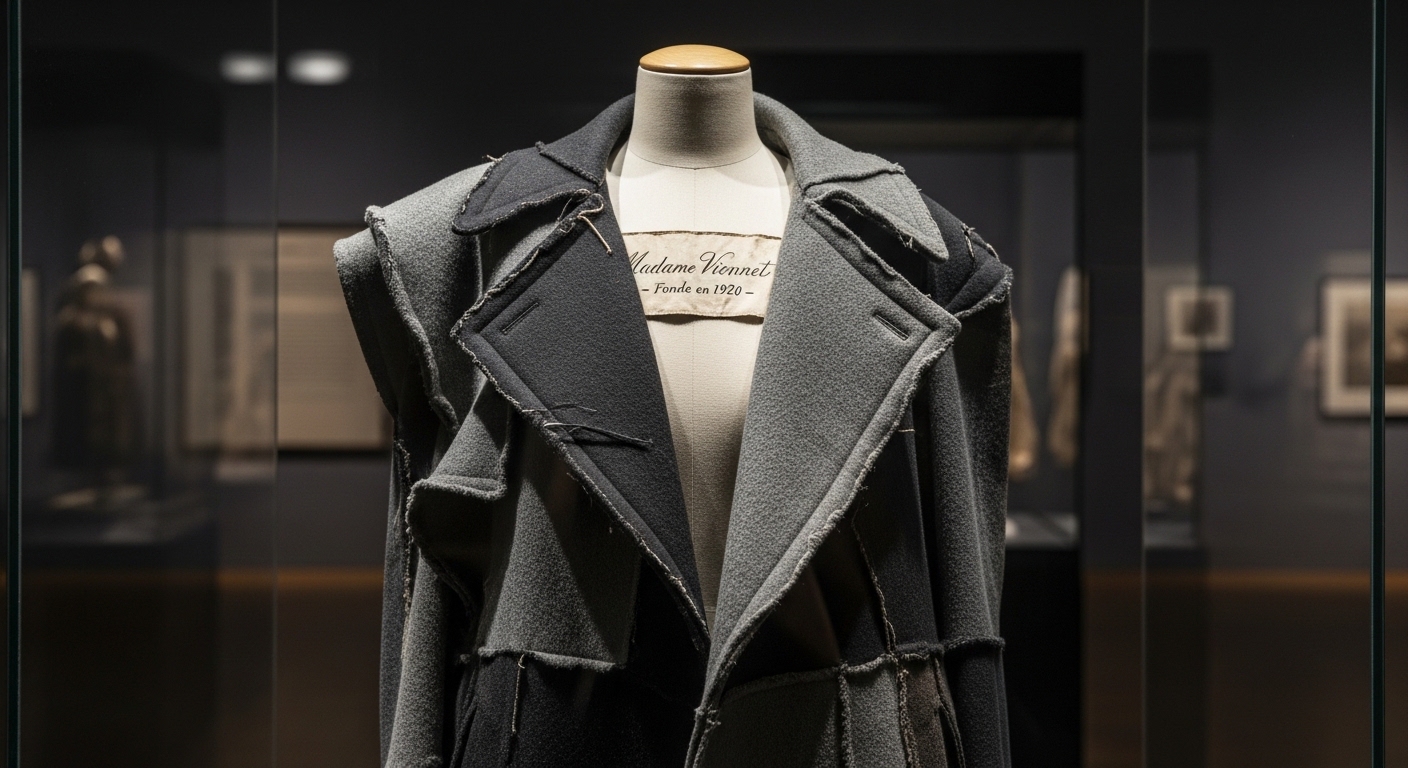
The Name as Burden
There is a particular difficulty faced by designers who succeed founders at houses that bear the founder’s name, and it is this: the name is always present.
Every collection made by a successor at Chanel is a collection made at Chanel. Every review begins with the founder’s shadow, every historical reference is measured against the original, and every departure is evaluated as a departure from something specific and named. The designer cannot simply make their work. They must make their work in explicit relation to someone else’s — someone who, by virtue of being dead and therefore unchanging, possesses an authority that no living successor can match.
This is not a problem that can be solved. It can only be managed, and the management of it is itself a creative act. The most successful successors tend to be those who develop a clear position in relation to the founder’s legacy — not subservience, not repudiation, but genuine dialogue. They understand what the founder was asking of fashion, they have a view on whether that question has been adequately answered, and they use their collections to extend the inquiry rather than close it.
The most unsuccessful tend to be those who either ignore the founder’s legacy entirely, producing work that reads as arbitrary, or who are so overwhelmed by it that they cannot find room within it for their own intelligence. Both of these responses are, in their different ways, failures of engagement. And fashion, perhaps more than any other creative industry, punishes failures of engagement with extraordinary swiftness.
What Endures
The houses that survive the death of their founders and continue to produce work of genuine significance tend to share one quality that is rarely discussed as such: an institutionalised curiosity.
By this I mean not just the preservation of the founder’s archive — though this is necessary — but also the preservation of the founder’s questions. The particular problems they were trying to solve. The aspects of fashion they found inadequate, dishonest, or insufficiently explored. The things they kept returning to, across seasons and decades, because they had not yet reached a satisfactory answer.
Chanel kept returning to the question of how clothing could give a woman freedom without requiring her to relinquish elegance. McQueen kept returning to the question of how beauty and violence could coexist honestly rather than being kept politely apart. Kawakubo, still living and working, keeps returning to the question of what happens when clothing refuses to serve the body in the conventional sense. These are not aesthetic preferences. They are intellectual projects. And intellectual projects, unlike personal styles, can in principle be continued by minds other than the one that originated them, provided those minds take the project seriously rather than borrowing its surface.
This is the most precise answer to the question of what happens to a fashion house when its founder dies. The house loses the person. It does not have to lose the question. The designer is irreplaceable. The inquiry is inheritable.
Whether the institution chooses to inherit it, whether the board, the commercial pressures, the succession planning, and the creative appointment conspire to produce a successor who understands the difference between replicating an aesthetic and continuing an argument, is another matter entirely. It is, in the end, a choice. And it is the choice on which everything depends.