
Fashion history, as it has been told in the institutions that hold the most authority to tell it, is largely a European story. The great museum collections, the canonical texts, the academic syllabi, the exhibitions that attract international press and inform how the industry understands its own past: these have been organised, for most of their existence, around a particular geography and a particular set of bodies. European couture is preserved, studied, catalogued, and celebrated with a thoroughness that reflects centuries of institutional investment in its significance. Its garments are stored in acid-free boxes. Its designers have dedicated archive rooms. Its influence is traced in footnotes and acquisition records and scholarship that stretches across generations.
The fashion of the African continent, and of the diaspora it produced, has received no equivalent attention. Not because it was less rich, less innovative, or less historically significant. Because the institutions that decide what gets preserved decided, for reasons that were never merely aesthetic, that it did not warrant the same care.
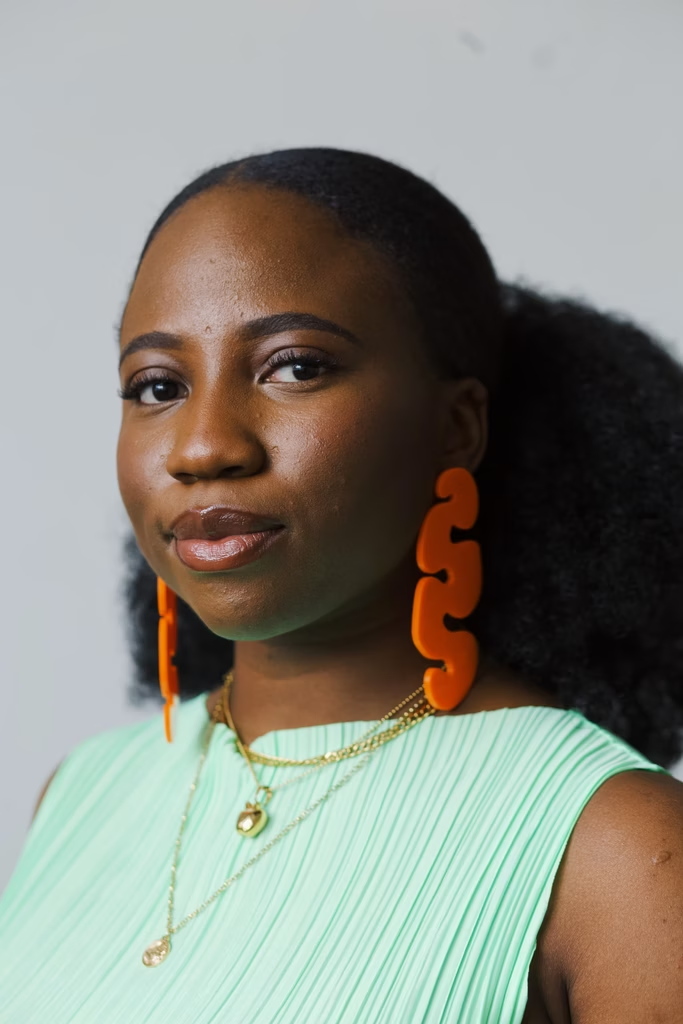
This is the problem that Tosin Adeosun set out to address. And the project she has built to address it, the African Style Archive, is, depending on how you look at it, a research platform, a visual repository, a curatorial practice, and something closer to a political act.
What an Archive Actually Is
Before understanding what the African Style Archive is doing, it is necessary to understand what an archive does, not technically but epistemologically.
An archive is not a neutral collection of things. It is an argument about what matters. Every object that enters an archive has been selected by someone who decided, consciously or not, that this thing deserves preservation, that it carries information worth transmitting to the future. Every object that is not collected, not catalogued, not stored in the right conditions, carries the inverse message: this did not matter enough.
Over centuries, Western fashion institutions made this decision repeatedly, in the same direction. The couture gown by a Parisian house entered the collection. The agbada, the kente cloth, the hand-printed fabric from a Lagos market, the photographs of Accra street style in the nineteen-sixties: these, for the most part, did not. When they did enter collections, they entered as anthropological objects rather than fashion objects: specimens of cultural practice, not expressions of design intelligence. The distinction is significant. The anthropological framing strips the garment of its authorship. It becomes evidence of a people rather than the work of a maker. The couture gown remains the work of a named individual. The African textile becomes an artefact of a collective.
The consequence of this asymmetry, accumulated across generations, is a fashion history in which African style appears primarily as influence, as the raw material absorbed and transformed by Western designers, rather than as a tradition with its own internal development, its own makers, its own critical vocabulary, and its own claim to the canon.
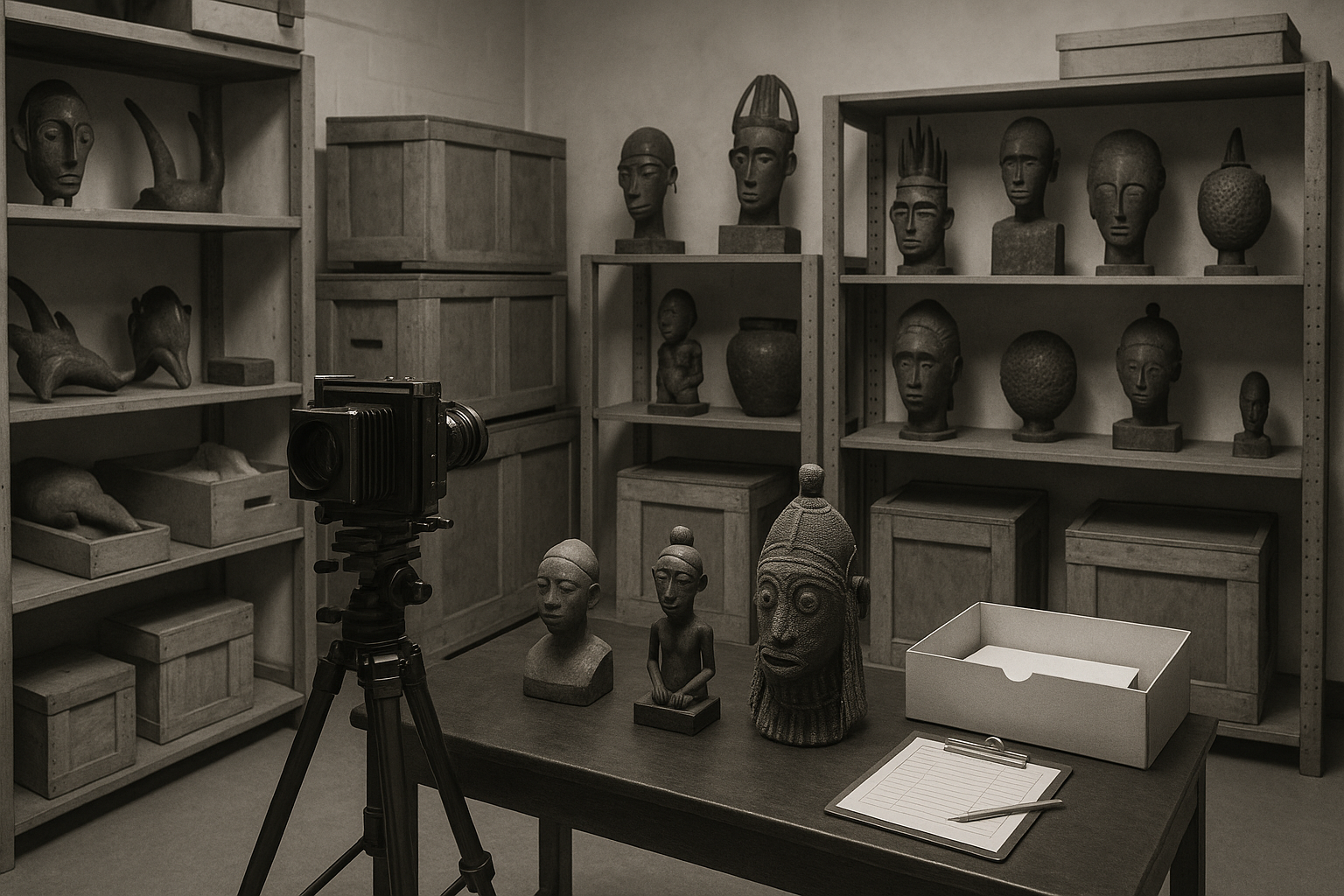
The African Style Archive is a counter-argument to this history. Not a rebuttal from outside the archival tradition, but a parallel institution built within it, using the same tools of documentation, preservation, and contextualisation that Western fashion history has always used, and applying them to a body of work that those institutions have systematically neglected.

The Founder and the Project
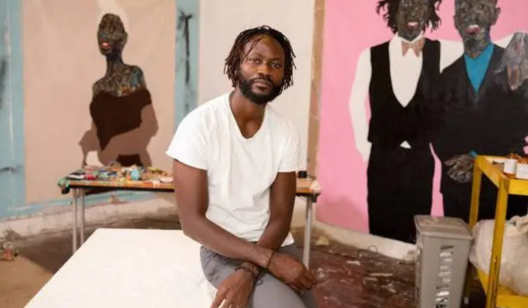
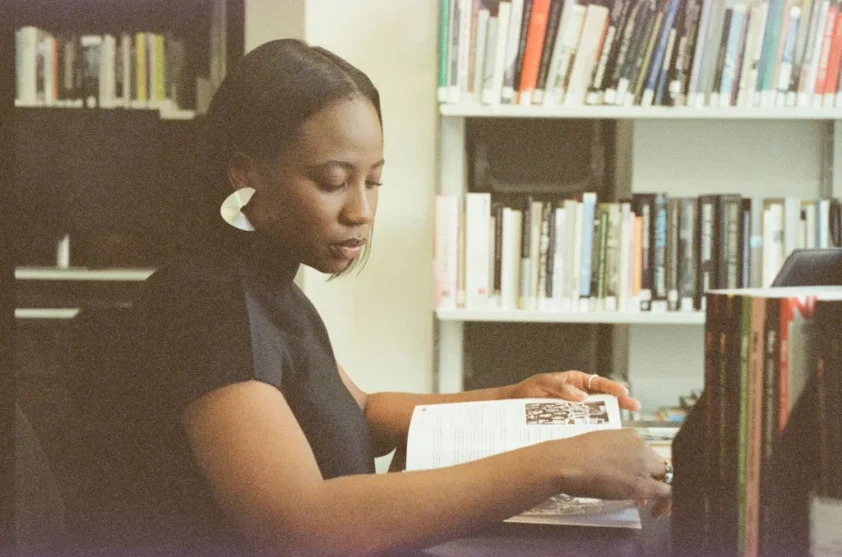
Tosin Adeosun is a London-based researcher, curator, and consultant whose work centres on the culture, art, and fashion history of the African diaspora. The African Style Archive, which she founded, operates as a research platform and visual repository dedicated to documenting and preserving African fashion history, collecting photographs, rare books, and ephemera, and placing them in relation to one another so that the connections between historical and contemporary African dress become visible and navigable.
What distinguishes the Archive from a simple collection of images is the attention it pays to context. A photograph of a well-dressed woman in Ibadan in 1962 is not merely an image of clothing. It is evidence of a photographer’s eye, a subject’s agency in how she presented herself, a city’s sartorial culture at a specific historical moment, a set of economic and social conditions that informed what was available and what was worn. The Archive does not strip this context away in the interests of clean documentation. It treats the context as inseparable from the garment, as part of what is being preserved.
This approach reflects a broader understanding of what African fashion history actually consists of. It is not only the work of named designers operating in formal commercial structures, though it includes that. It is also the street style that never made it into Western magazines, the photographers who documented their cities’ dress cultures without institutional support, the tailors and dressmakers whose craft sustained entire communities and whose names have not been entered into any record. The Archive is trying to capture all of this, to build a resource that reflects the full complexity of a tradition rather than the fraction of it that Western institutions were prepared to acknowledge.
Adeosun has worked across a range of institutional contexts in developing this work, collaborating with organisations including Google Arts & Culture, the London College of Fashion, and Guest Artists Space Lagos, among others. In early 2025, she held a residency at Lighthouse in Brighton, where she worked with a research assistant to deepen her archival investigations, source new materials, and develop the digital infrastructure of the Archive. The Open Session that closed the residency was titled Threads of History, a name that captured, with precision, the work’s essential proposition: that the history of African dress is threaded through with meaning that has not yet been adequately read.
The Politics of Who Gets Archived
The argument that archiving is a political act is sometimes treated as a theoretical claim, intriguing in the seminar room and somewhat abstract in practice. The African Style Archive makes it concrete.
Consider what is at stake when a fashion history is documented or not documented. Documentation produces legitimacy. The designer whose work enters a major museum collection is, by that fact, confirmed as significant. The collection’s authority is transferred to its contents. The designer who is not collected is not simply overlooked. They are, in the language of institutional power, unconfirmed, with their significance asserted only by those within their immediate community, which is to say, by people whose authority to assess significance is itself not institutionally confirmed.
This circularity is how the omission of African fashion from Western institutional records has been maintained and reproduced. African designers, photographers, and stylists have been producing work of extraordinary quality throughout the twentieth century and into this one. But because that work was not collected by the institutions that confer canonical status, it could not be cited in the scholarship that determines the curriculum, which could not produce the graduates who become the curators who make the acquisition decisions. The gap reproduced itself.
What independent archivists like Adeosun do is interrupt this cycle from outside it. By creating a dedicated institution, one that applies rigorous archival standards to materials that mainstream institutions have not bothered to collect, the African Style Archive builds a body of documented evidence that the mainstream cannot continue to ignore. It creates the resource that the scholarship needs to exist. It confirms the significance of the work through the seriousness of the attention paid to it.
There is a specific urgency to this work that is worth naming directly. Fashion history is not infinitely recoverable. Photographs deteriorate. Magazines go out of print and out of circulation. The people who remember the context in which garments were worn and photographs were taken grow older. Every year in which a community’s sartorial history is not documented is a year in which some of that history is irretrievably lost, absorbed into the general undifferentiated past from which it becomes impossible to retrieve. The Archive is working against time as well as against institutional indifference.
Recommended For You
The Institutional Conversation
The African Style Archive does not operate in isolation. It is part of a broader conversation about African fashion history that has been growing in visibility and institutional presence across the last decade.
The Museum at the Fashion Institute of Technology in New York mounted an exhibition in late 2024 that marked a significant moment in this shift. Africa’s Fashion Diaspora was, by the museum’s own account, the first exhibition to examine fashion as a mode of cross-diasporic cultural production, bringing together work by sixty Black designers from Africa, Europe, North and South America, and the Caribbean, and placing them in dialogue with one another in a way that traced the shared cultural networks connecting Black creative communities across geography and history.
The exhibition’s ambition was considerable. Rather than presenting African fashion as a regional phenomenon, it argued for the existence of a diasporic aesthetic conversation, one informed by the intellectual traditions of Pan-Africanism and Black consciousness, and expressed through the specific, material intelligence of dress. Designers from Lagos and London and New York and São Paulo were shown to be drawing from overlapping wells of cultural reference, producing work that was simultaneously local and transatlantic in its resonances.
This is precisely the kind of institutional recognition that independent archival work makes possible. The scholarship that underpins an exhibition like Africa’s Fashion Diaspora requires documentation: the photographs, the garments, the records of who made what and when and for whom. Without archives that have preserved this material, the intellectual case cannot be made with the evidence it requires. The institution’s capacity to mount the argument depends on the prior existence of the documentation.
The relationship between independent archivists and major institutions is not always a comfortable one. There are legitimate questions about credit, about access, about whether institutional adoption of previously marginalised material changes the material’s politics or simply changes its address. An African fashion archive absorbed into a New York museum is not the same political object as an African fashion archive controlled by its community of origin. These tensions do not resolve easily, and the most honest work in this space does not pretend that they do.
Documenting Your Own Culture Before Others Do
There is a phrase embedded in the inspiration for this article that deserves to be held for a moment: the radical act of documenting your own culture before others do.
The history of African cultural production and its relationship to Western institutions is, in significant part, a history of documentation happening in the wrong order. Western ethnographers, anthropologists, photographers, and collectors have documented African cultures since at least the nineteenth century, producing records that are now held in European and American institutions, studied by researchers who must request access, interpreted within frameworks that were not generated by the communities being documented, and cited as authoritative in contexts where the communities’ own accounts of themselves carry less institutional weight.
The African Style Archive inverts this sequence. It is a community documenting itself, producing the record from inside rather than having it produced from outside. The significance of this inversion is not merely symbolic. It affects what gets documented, how it gets documented, and what the documentation is understood to mean. An archive built by an insider carries different knowledge than an archive built by an outsider with the same materials. The context is different. The questions being asked are different. The sense of what is significant is different.
Adeosun has described the work as connecting historic and contemporary narratives of African dress, building a resource that allows scholars, institutions, and cultural practitioners to trace the development of a tradition rather than encountering it as a series of isolated moments. This is archival work in its most ambitious form: not the preservation of objects but the construction of continuity.
Fashion history is power precisely because it constructs continuity. The designer who can be placed in a lineage, one who can be shown to have emerged from a tradition, developed it, and passed something forward, occupies a different position in the canon than the designer who appears to have arrived from nowhere. Western fashion history has constructed these lineages carefully and at length for European designers. The African Style Archive is doing the same work for a tradition that has been denied it.
This is not a minor scholarly project. It is the production of the historical record from which future recognition will be drawn, future scholarship will be written, and future designers will understand where they came from. It is, in the most precise sense, the writing of history, undertaken at the moment when there is still time to write it accurately, before it is written by someone else with other interests and a different vantage point. The archive is not waiting for permission. That, perhaps, is the most radical thing about it.
The African Style Archive can be found @africanstylearchive on Instagram.