
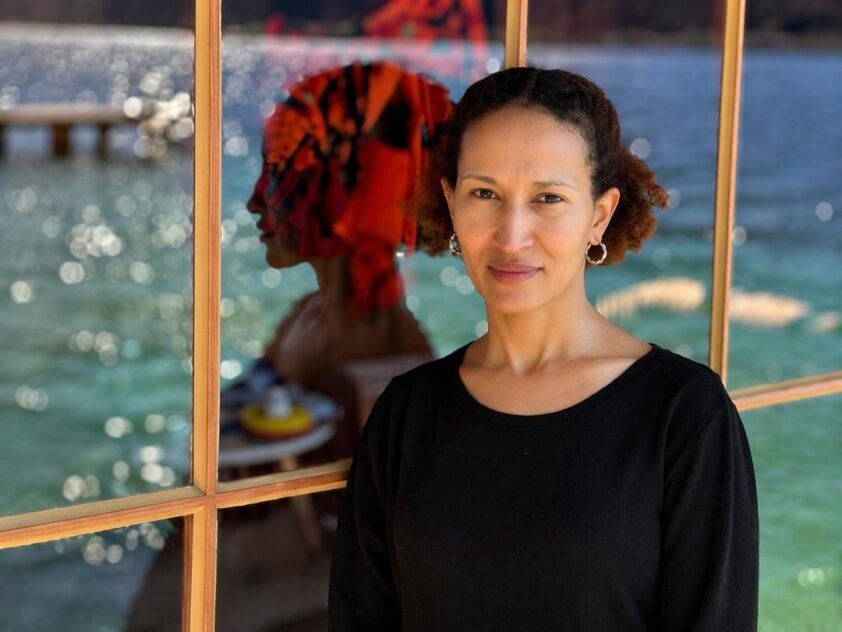
There are photographers who observe the world, and then there are those who rebuild the world, piece by piece, story by story, until it starts to resemble the truth more accurately than we’re used to seeing. Terhas Berhe is the former. Born in Addis Ababa and informed by her experiences travelling across East Africa, her photography has never sought to entertain. Instead, it has sought to uplift. From her early travels to help her understand her place in the world to the world stages where she has become known, Terhas has built a body of work centred on the power of memory, migration, and morality. In this conversation with FAB L’Style, she traces a life defined not by linear success, but by deliberate reinvention, revealing how photography, film, and cultural diplomacy converge in her ongoing pursuit to tell stories that do not extract, but restore.
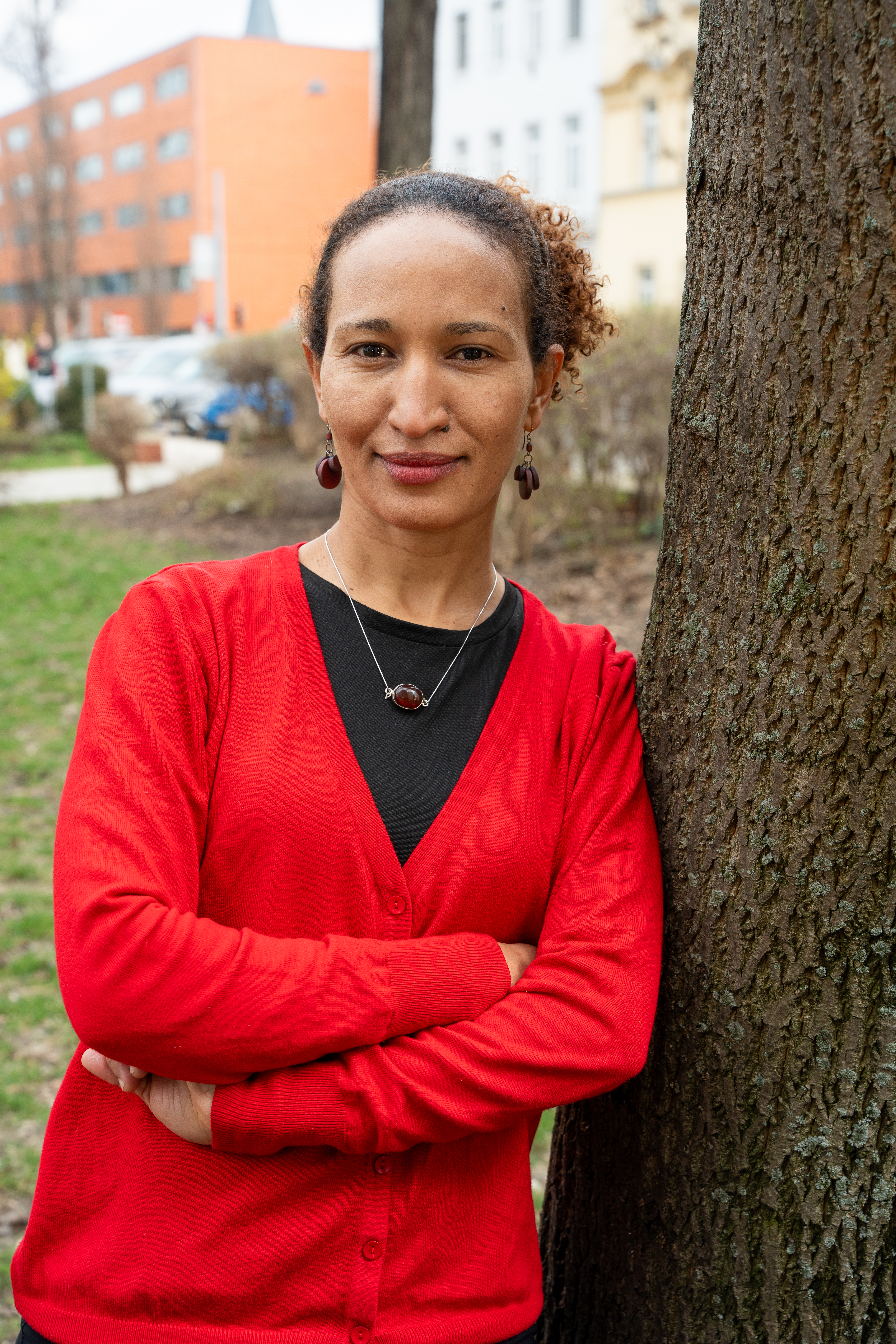
FAB: So far, what has been your story? Where are you coming from?
Terhas Berhe: I am originally from Ethiopia, and I now live in Vienna. I have been here for almost four years.
My interest in photography started very early in my life. My father was a truck driver, and he travelled between Addis Ababa, Sudan, and Djibouti. When I was about seven or eight, I began travelling with him. As the oldest child, I spent a lot of time with him, and I loved those moments.
That was where my love for photography began. I have always loved people. I love faces, and I love stories. As a child, I was curious. I listened to adult conversations and tried to understand people.
During one of our trips, my father gave me a disposable camera and told me to go out, take pictures, and come back. In Djibouti, I started photographing people. That experience changed how I saw the world. I realised that people are the same everywhere, no matter where they come from.
Growing up in Addis Ababa, you are often told to be careful around strangers. But those journeys showed me something different. They opened me up to people and to stories.
As I grew older, I followed a more traditional academic path. I studied accounting and business first, then moved into computer science because I was interested in technology. But after completing my degree, I chose to follow my passion.
I explored different creative fields. I took courses in theatre, film, painting, and journalism. However, I never wanted to be in front of the camera. I prefer to stay behind it. I take many photos, but I rarely take photos of myself. That is how my professional journey began.
FAB: Growing up and travelling across Ethiopia, Djibouti, and Sudan at such a young age must have shaped how you see the world. What did those journeys teach you about belonging?
Terhas Berhe: My understanding of belonging comes from my background. My parents come from different countries, which used to be one country. I grew up between cultures, languages, and identities.
I speak several local languages, including Amharic, Tigrinya, and Orominya. I also became interested in Arabic because of my friends and my curiosity about different cultures and religious texts.
Because of this, I have always questioned what belonging really means. For me, belonging is not about a place. It is about people. It is about the environment you are in and how you feel within it.
I also saw this through my mother’s experience. She did not have the same access to education when she was younger, and that shaped how I understood opportunity and identity.
So for me, belonging is not fixed. It is not about where you come from. It is about where you feel seen, where you feel connected, and where you can grow.
The Meaning of “Lucky”: Identity, Language, and Beginnings
FAB: Your name, Terhas Berhe, means ‘lucky’. When you look back at your life, what does that word mean to you today? Do you feel lucky?
Terhas Berhe: Yes, my name means ‘lucky’ in Tigrinya. But my relationship with that word is complex. I had to leave Ethiopia about four years ago because of my name and my profession. During the conflict between Tigray and the federal government between 2021 and 2022, names became markers of identity. When people hear the name Terhas Berhe, they associate it with Tigray.
For someone like me, who grew up believing that belonging is about people and not place, this was difficult. I saw how quickly identity could be defined by others. Your name, your background, and your religion, all of these can influence how people see you, even when you do not define yourself that way. At some point, my name felt like a burden. But I chose to change how I see it. I still see it as luck.
Leaving Ethiopia and starting again in Vienna was not easy. I came with my son, who was three and a half at the time. We had to rebuild everything from nothing. But along the way, I met incredible people who supported us. Many of them were Austrians and people from different backgrounds. Their kindness reminded me that luck is not just about circumstances. It is also about perspective.
So now, I see my name as a reminder. It reminds me that I can rebuild, that I can redefine myself, and that even in difficult situations, there is space for something good.
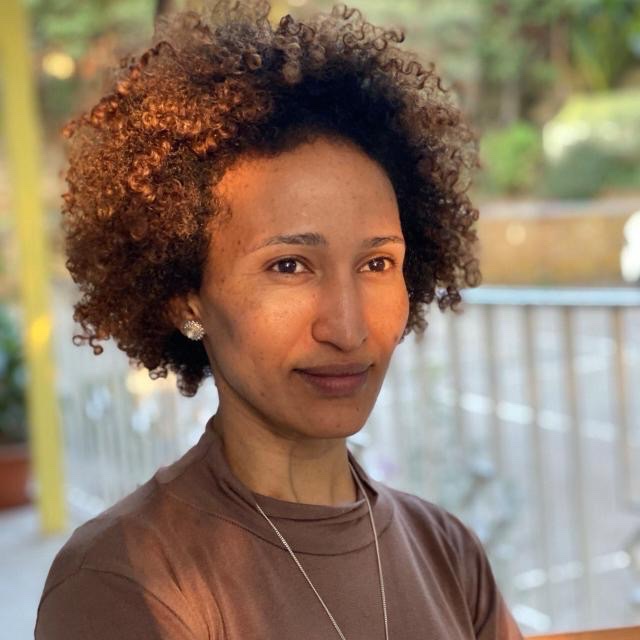
The First Camera: Where Seeing Became Storytelling
FAB: You received your first camera during a trip to Djibouti with your father. Do you remember what you photographed first and how that moment felt?
Terhas Berhe: I do not remember the exact images, but I remember the feeling. I was very young, around seven or eight. Now that my son is the same age, I try to imagine how people must have seen me then. In Djibouti, people were open and warm. They were happy to be photographed by a child.
I think I mostly took pictures of people, especially their faces. That has always stayed with me. Even though I do not have the photos anymore, that moment stayed with me. It shaped how I see people and how I tell stories through my work.
FAB: Reading your bio, you often describe your mother as your greatest teacher. Even though she is not formally educated, what lessons from her continue to guide your work today?
Terhas Berhe: There are many lessons. My mother influenced how I see education, identity, and womanhood.
She grew up in the countryside and did not have access to formal education. But she deeply believed in its value. She always told us that education was our strongest chance in life. She encouraged us to be strong and to stay connected to what we feel inside.
We were four girls and one boy in the family. Despite the challenges, my parents made sure we all had access to a good education. My mother’s goal was clear. She wanted her daughters to have the opportunities she never had. She wanted us to become independent.
One of my strongest memories is how she supported my learning. She would sit next to me and ask me to read aloud to her. At that time, I did not fully understand that she could not read or write. I simply read to her, and I took it seriously because she trusted me.
That trust became one of the most important lessons in my life. She trusted me completely, and I learnt to respect that trust. Today, I carry that same mindset into my work. I trust people, and I value the trust they give me.
She also taught me that life is not defined by formal education or privilege. What matters most is who you are as a person, as a woman, and as a mother. That belief continues to guide me.
Recommended For You
FAB: What part of your Ethiopian identity do you feel most strongly when you create images abroad? What do you still carry with you?
Terhas Berhe: I would say curiosity, openness, and friendliness. These are strong parts of my Ethiopian identity. They shape how I connect with people. In Ethiopia, it is easy to build relationships. People are open, and communication feels natural. In Vienna, it is different. When you are very friendly at first, people can feel uncertain. It takes time to build that same level of connection.
For me, this openness helps a lot in my work. I connect with people easily, and they feel comfortable with me. That comfort builds trust.
Trust is very important in my photography. For example, when I worked with women in vulnerable situations in Ethiopia, I made clear promises. If someone did not want their face shown, I respected that. Even if they later said it was okay, I still kept my original promise.
For me, trust is not flexible. Once someone gives it to you, you must protect it. This comes directly from my upbringing and from my mother. It also informs how I approach photography. My goal is not to create images for fame. My goal is to understand people and to tell their stories with respect. What I carry with me is this ability to connect, to build trust, and to honour that trust in every image I create.
Film, Festivals, and Expanding African Narratives
FAB: Your work sits at the intersection of art and cultural diplomacy. Why do you believe art is such a powerful diplomatic language?
Terhas Berhe: My understanding of this has evolved over time. About ten years ago, I studied at the Diplomatic Academy in Vienna on a scholarship. At that time, I was already interested in both art and cultural diplomacy. I wanted to understand how people see themselves and how they want to be seen.
One of my early experiences shaped this perspective. In 2010, I participated in an exchange programme in Berlin. German students visited Ethiopia, and Ethiopian students visited Germany. That experience showed me how differently people see the same place.
When I was in Berlin, I noticed things that stood out to me immediately. For example, I was fascinated by how people cared for their dogs and cleaned up after them. For me, that was new and interesting. But for the German photographers, it was normal, so they did not pay attention to it.
In Ethiopia, the situation was reversed. The German students focused on women working in construction or cleaning streets. For them, this was striking. For me, it was everyday life.
That was when I understood cultural diplomacy in a real way. It is about perspective. It is about what we notice, what we value, and how we share those observations with others.
Art allows us to exchange these perspectives. A photograph can show a reality that others may not see or understand. It creates a bridge between different experiences.
For me, cultural diplomacy through art is about this exchange. It is about showing how we see the world and learning how others see it.
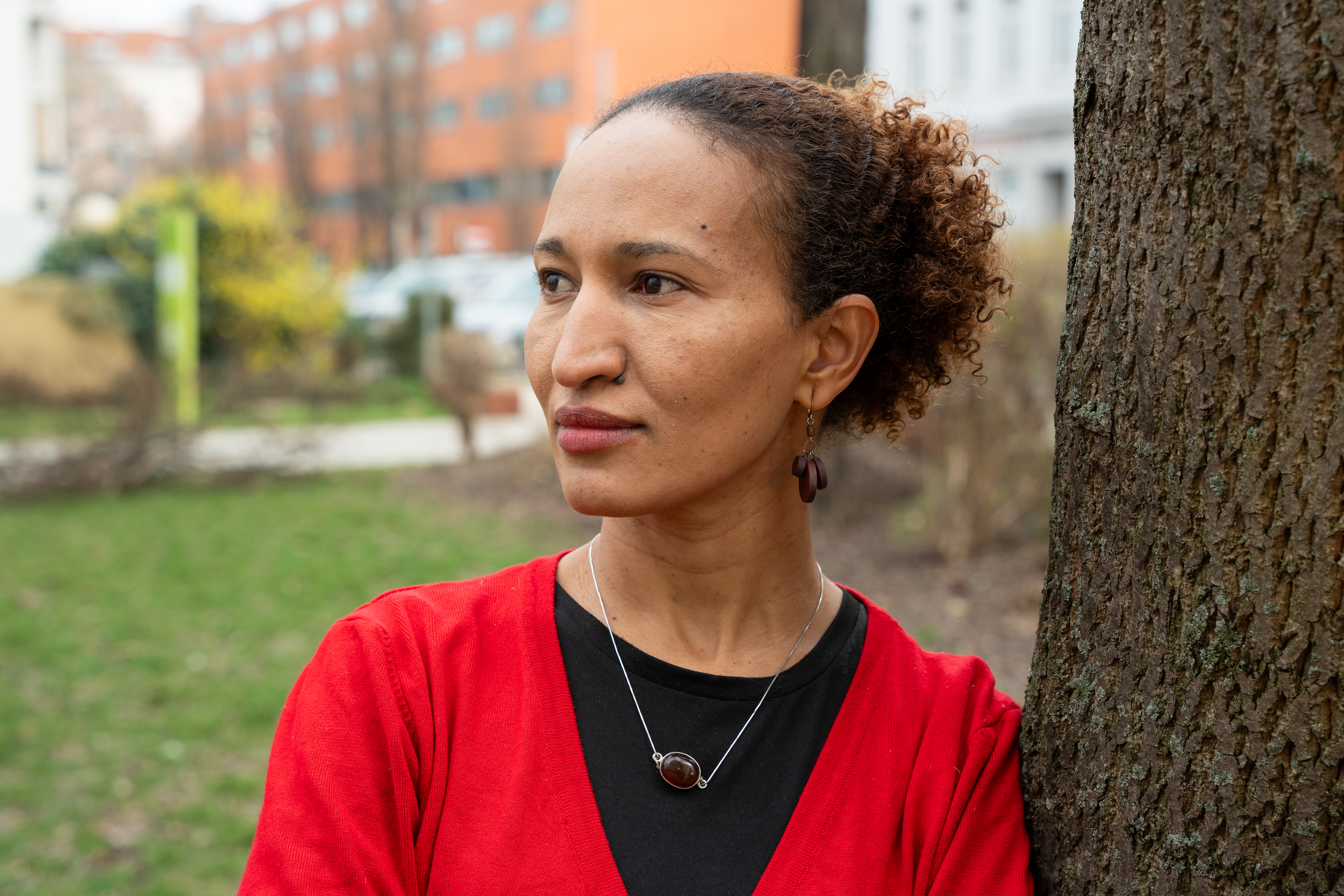
FAB: What were some of the takeaways from those stories, both for the public and for you? How did they affect you emotionally?
Terhas Berhe: I see it this way. Back home, I worked closely with different organisations, especially on issues around refugees. I visited communities and spoke with people in difficult situations.
At that time, I was an outsider. I had not experienced displacement myself, so my perspective was limited. Later, I became a migrant and a refugee when I left my country. That changed everything.
I remember that my first job after leaving was again working with refugees. For me, that felt like a full circle. I had moved from observer to participant, and then back to observer with a deeper understanding.
Now, when I tell stories about these experiences, I carry that awareness with me. I remember my own difficult moments. I remember how I did not want people to speak to me or see me in a certain way. That memory guides how I approach others.
I try to treat people with dignity and fairness. I know I am not perfect, and I make mistakes, but I try to remain conscious of how I see and represent others. That awareness gives me a sense of peace.
Sometimes those memories are heavy, so I step back and give myself time. I am still learning how to balance these emotions. I would not say I have mastered it, but I am working towards that balance.
FAB: Let’s talk about casting the lead actress for Fortuna and working on an international production. These are complex cultural spaces. How did you navigate them as an African creative?
Terhas Berhe: My journey into film started with photography at the local level, gradually expanding into work on both local and international projects, including short films, feature films, documentaries, and music videos. Over time, I worked across different parts of the continent, documenting people, cultures, and places.
One of the successful international Ethiopian feature films is Lamb. It was a major milestone. The film was selected at the Cannes Film Festival, making it the first Ethiopian film to reach that stage. That moment meant a lot—not just for Ethiopia, but for African cinema as a whole
After that, more opportunities opened up. That is how I became involved in other film and television projects, including Der Äthiopier (a German TV film) and Fortuna. I worked on casting and production. Some of these projects were filmed across different regions, including in Africa—such as Ethiopia, in places like Dire Dawa, one of the hottest areas—and in Europe, particularly in Switzerland, including the Alps. The production took place across different locations, and it was a powerful experience because of the contrast in landscapes and environments
Working in these spaces made me more intentional as a visual storyteller. Filming in East Africa often focuses on sunlight, warmth, and open landscapes. In the Alps, everything changes. You have snow, colder tones, and different lighting conditions.
This also raised technical questions. How do you photograph Black skin in snow? How do you work with light in such different environments? These details matter. Storytelling is not only about narrative. It is also about the tools you use, the lighting, and the visual language.
At the same time, working across cultures reminded me that we are all connected. We are all filmmakers telling human stories. But our experiences, techniques, and even budgets shape how we tell those stories.
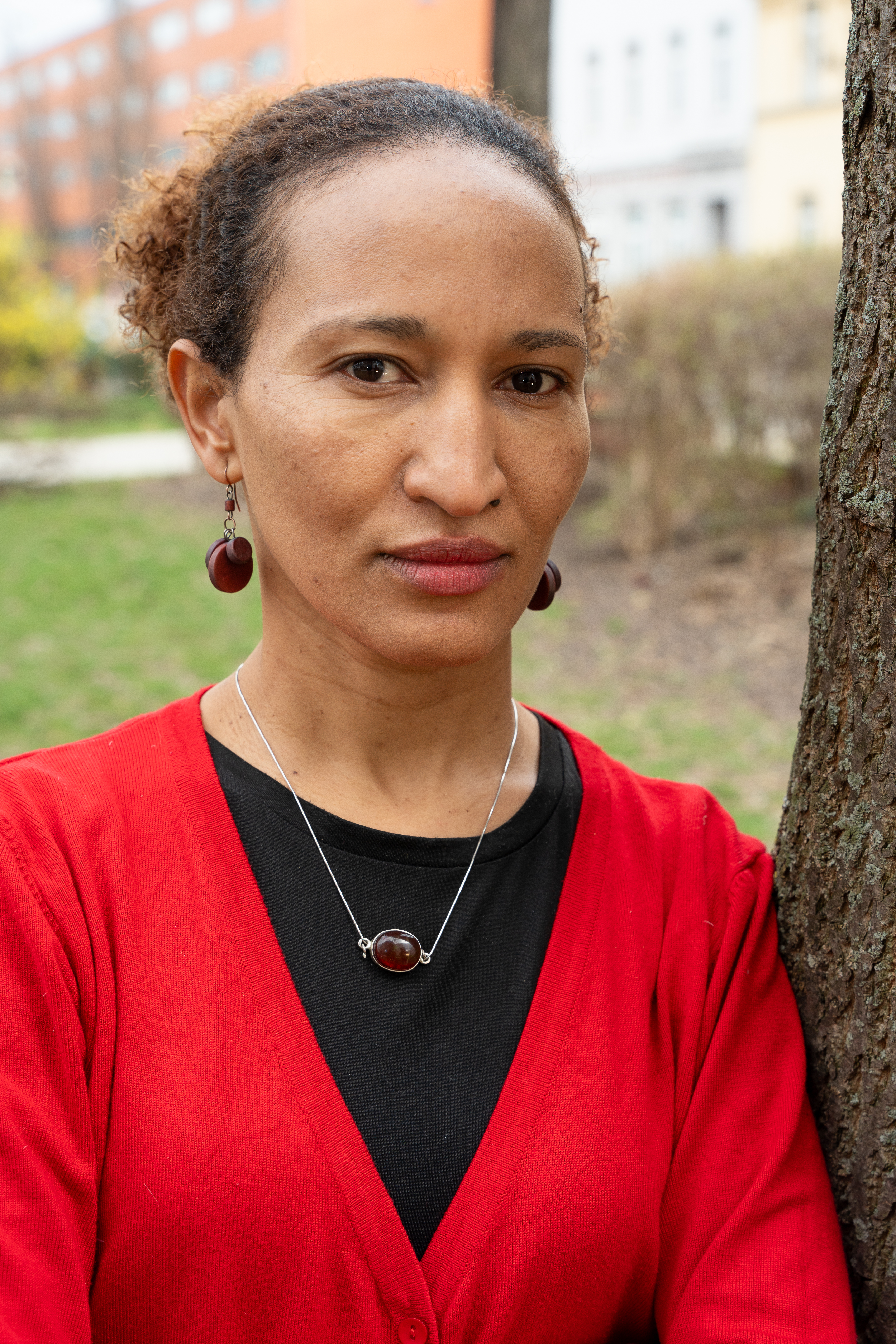
Photography as Ethical Practice, Not Extraction
FAB: You have worked on films screened at major festivals, including Cannes, Berlin, and Toronto. What did film teach you that photography alone could not?
Terhas Berhe: Film taught me the importance of dialogue and layered storytelling.
When people watch films, they often romanticise what they see. For example, when we filmed Lamb, we captured beautiful landscapes across Ethiopia. Many people were surprised because they did not expect to see that kind of environment in Africa.
There is still a limited understanding of Africa. Even today, many people see it as a single place with one story. But Africa is a continent with more than fifty countries, each with its own cultures, languages, and histories.
Even within Ethiopia, there are more than eighty languages, different identities, and diverse ways of life. So there is no single narrative.
Film allows you to show this complexity. It allows you to build layers, to create context, and to challenge assumptions. That is something photography can begin, but film can expand more deeply.
For me, the biggest lesson was this: Africa is not one story. It is millions of stories, and each one deserves to be told with care and depth.
FAB: When we started this conversation, you spoke about having to start again. According to your bio, this is not the first time you have had to do so, and you are not even afraid of it. What gave you the courage to begin again each time?
Terhas Berhe: That is a critical question. Sometimes, you simply have no choice but to start over. In my case, I did not. It was not about choosing to leave. When the conflict erupted between the central government and Tigray, my professional background in international collaboration, along with my name, made both sides suspicious of me. In times of war, there is no neutrality. Trying to remain neutral can even be dangerous.
Leaving Ethiopia became one of the hardest decisions of my life. I had to protect my son, and I had to protect myself. Starting over was not a choice. It was a necessity.
When I left, I left everything. My professional life; my parents; my siblings, some of whom were in prison; my work; everything I had built. When you lose everything and realise you have no options, you create one for yourself. You ask, ‘What is better now?’
I faced a clear decision. I could focus on what I had lost, or I could build forward. If I kept looking back at everything I left behind, it would break me. So I chose to build.
I’ve always loved to travel, but I never ever imagined building a life abroad. Even in 2017, when I studied at the Diplomatic Academy in Austria, I chose to leave rather than stay. But when life takes away your options, you create new ones. For me, it came down to one decision: focus on what I lost or move forward. I chose to move forward—and here I am.
FAB: You studied computer science and finance before moving into the arts. What made you trust that creative path despite such a different academic background?
Terhas Berhe: For me, it is about expression. It is also a form of healing. When I take a picture or share a story, it becomes part of that process.
I believe anyone can take a picture or make a video, but not everyone can tell a story or truly see people. That realisation became my motivation.
As the eldest daughter, I always felt the need to be strong. That is why I chose to study computer science and finance. Later, I shifted to art. At the same time, I needed to survive financially, so my work became both a creative outlet and a means of survival. In many ways, it forced me to grow, both creatively and practically. And through it all, it continues to heal me.
FAB: As a storyteller, what story are you still trying to tell through your work?
Terhas Berhe: I believe stories should not only be told about people, but with them. That distinction matters.
We need to think about how we relate to each other, especially in complex or uncertain situations. For me, storytelling is not about presenting people as subjects. It is about creating stories together, with intention and respect.
It is not about me being seen. It is about us. Every person has a story, but the way we tell it matters. When I create, I always ask, ‘Who am I to tell someone else’s story?’ Can we tell it together instead?
That question guides everything I do. It shapes how I take photographs and how people choose to appear in them. I often ask myself how I would want to be seen if someone told my story. Would I want to appear vulnerable or strong? Seen with pride or pain?
I try to offer others that same choice, to present themselves in the way they want to be seen. Even in my organisation, I emphasise this when we develop guidelines. Storytelling is not only about outcomes or income. It is about responsibility, collaboration, and respect for the people within the story.
FAB: If someone encounters your work years from now, what truth about humanity would you hope they recognise within it?
Terhas Berhe: My journey has taught me one thing: stories shape how we see each other. When we tell stories with care, dignity, and responsibility, we change perception. That, in turn, shapes who we become.
For me, the most important values now are care, dignity, and responsibility. I want people to see those qualities reflected in my work, because they define how we connect as human beings.
FAB: Are there any projects you are currently working on that you would like to share?
Terhas Berhe: Yes. For the past three years, I have been working on a project called I Am Red.
This project reflects how I see the world. I do not see life in black and white. I see red. When I left home, I carried a lot of anger. I felt it physically, like my blood was boiling. That feeling was red. But when I experienced love or joy, I also felt red. That made me think about what connects us as human beings. For me, the answer is red. It represents emotion, pain, love, and struggle.
Interestingly, all my photographs are in black and white. Yet I ask viewers a simple question: can you see red? You cannot literally see red in a black and white image, but you can feel it. Every person carries emotion within them. That is what I want people to recognise. So the project asks a deeper question: can you see what is not visible?