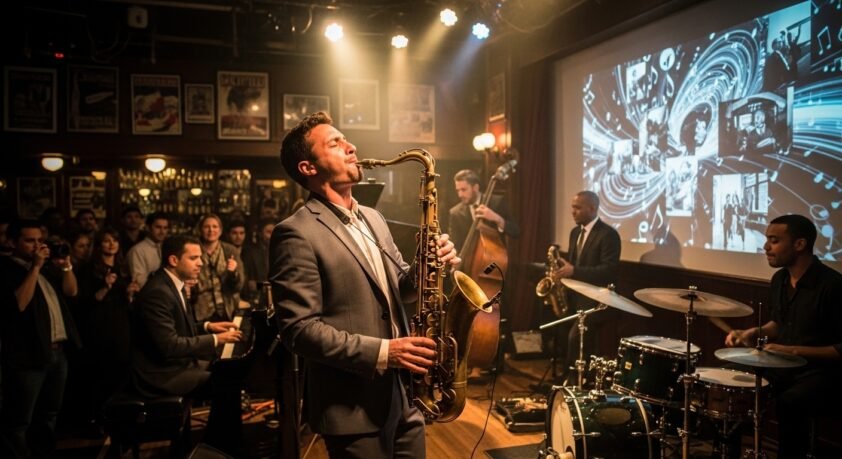
There is a moment, somewhere between midnight and the hour that doesn’t have a name, when a saxophone player closes his eyes and the room changes. The air thickens, the audience leans in, and something shifts between sound and memory, between what is being played and everything that made it necessary. If you have ever sat in that space, you know it cannot be explained. You can only be received by it. Jazz is not performed for you. It moves through you or it doesn’t move at all.
This music began in New Orleans in the late nineteenth century, in a city that always felt slightly out of step with the rest of the world. Here, cultures didn’t just coexist—they fermented. French Creole elegance, the rhythms of enslaved Africans, Caribbean energy, and the fervour of gospel all collided, compressed by the oppressive heat and the humidity of the delta. In Congo Square, where enslaved people gathered on Sundays to dance and play, the music was more than a pastime. It was a leak in the system. A way out.
What emerged was survival set to a beat. The blues carried a grief as deep as the soil, planting sorrow in a way that demanded growth. Spirituals reached for a higher ground because the earthly conditions were unbearable. Jazz held both: the wound and the release, the weight of history and the stubborn refusal to be defined by it.
These African roots provide the skeleton of the music. Call-and-response, the layering of rhythms, the physical insistence on movement—this is cultural memory turned into sound. When a trumpet bends a note, sliding away from the rigid rules of European theory, it isn’t a mistake. It is a sentence in a language that existed long before the first piece of sheet music was written.
As jazz migrated north to Chicago, Harlem, and Kansas City, it followed the families of the Great Migration. It travelledgipsy with them in suitcases and in the blood, seeking new versions of possibility. In Harlem, the sound became polished and electric; in Chicago, it grew urban and restless; in Kansas City, it stayed loose, stretching deep into the night.
Then it crossed the Atlantic. Paris offered American jazz musicians something structurally denied at home: the permission to simply be artists. Josephine Baker did not merely perform; she operated, bought property, and lived with an authority American apartheid made impossible. And the music, in European hands, evolved again. Django Reinhardt folded gypsy jazz into the form, speaking a new kind of rootlessness.
When the music crossed the Atlantic to Paris, it found something the American South and North denied its creators: the freedom to be seen simply as artists. Josephine Baker didn’t just perform; she commanded the room with an authority that was illegal back home. She understood that style was a weapon. The music evolved in European hands, too, as Django Reinhardt folded the wandering spirit of gipsy jazz into the form, creating a new kind of rootlessness.
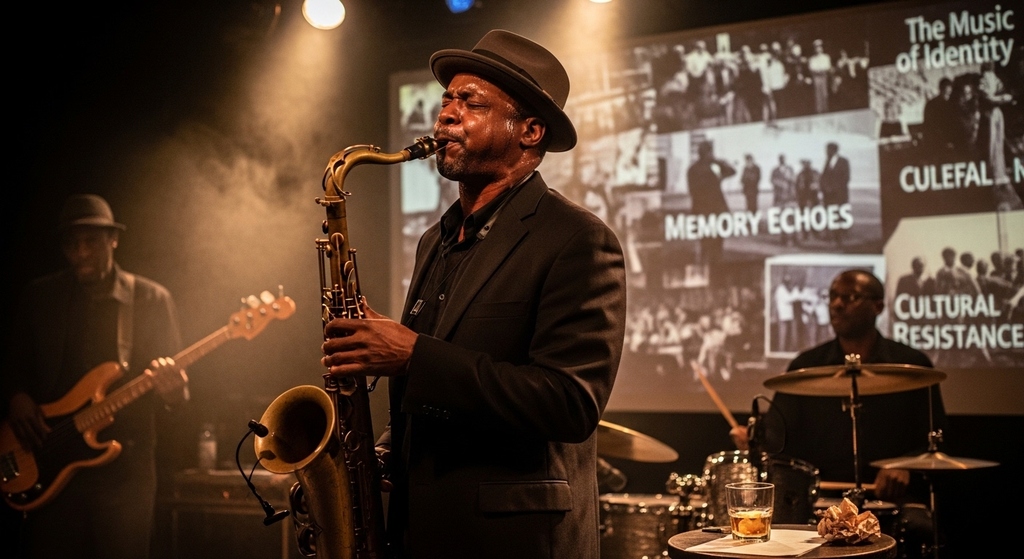
In West Africa, the conversation came full circle. Highlife in Ghana and Afrobeat in Nigeria weren’t copies of American jazz; they were letters written in different accents by cousins separated for centuries. Fela Kuti layered jazz sensibilities into politically charged rhythms, making music that felt local and global all at once. Hugh Masekela used the same dialogue, turning the horn into a tool for storytelling and resistance.
To improvise is to compose in real time, without the safety net of certainty. For Miles Davis, this was a way of life. He treated improvisation as a commitment to the present tense. When he recorded Kind of Blue, he gave his musicians sketches rather than scripts. He wanted the sound of trained minds agreeing to not know what would happen next.
Jazz elevates improvisation because it speaks of identity. The self is not a noun but an act, created in dialogue with circumstance. Blackness, in jazz, was never the monolith racism demanded. Jazz demanded complexity, individuality within collectivity, and a particular voice inside an ensemble. Louis Armstrong did not sound like Duke Ellington; Thelonious Monk did not sound like either. And yet, all voices remained part of the same conversation.
Grief in jazz is never decorative. Billie Holiday’s Strange Fruit is not a sad song about a difficult subject; it is evidence. Her voice, contained, precise, unbearably controlled, testifies to horror while demanding recognition. It refuses to aestheticise tragedy for comfort.
That thread continues today. Hip-hop producers sampling jazz do not mine nostalgia—they continue a dialogue, layering new meaning onto existing frequencies. When Kendrick Lamar built To Pimp a Butterfly on live jazz instrumentation, he insisted that certain questions about Black life in America remain unresolved, and the music most equipped to hold them was the music born from that same unresolved history.
Jazz’s influence extends into fashion. The era’s visual language—the cool, studied nonchalance, the way Miles Davis wore a suit as though the suit were auditioning for him—continues quietly in contemporary collections. Tailoring, posture, and presentation were inseparable from sound. To dress jazz is to perform identity: improvisation made visible.
What endures is jazz’s refusal to be finished. Every performance is unrepeatable. The standard can be played ten thousand times, yet each iteration responds to the room, the night, the musician’s state, and the conversation in the air. Jazz does not archive itself; it regenerates.
There is something profoundly human in that. The most interesting things happen when you trust knowledge in your hands but remain willing to not know, when you follow the sound wherever it decides to go. The music is still speaking. You only have to stay in the room long enough to hear it.