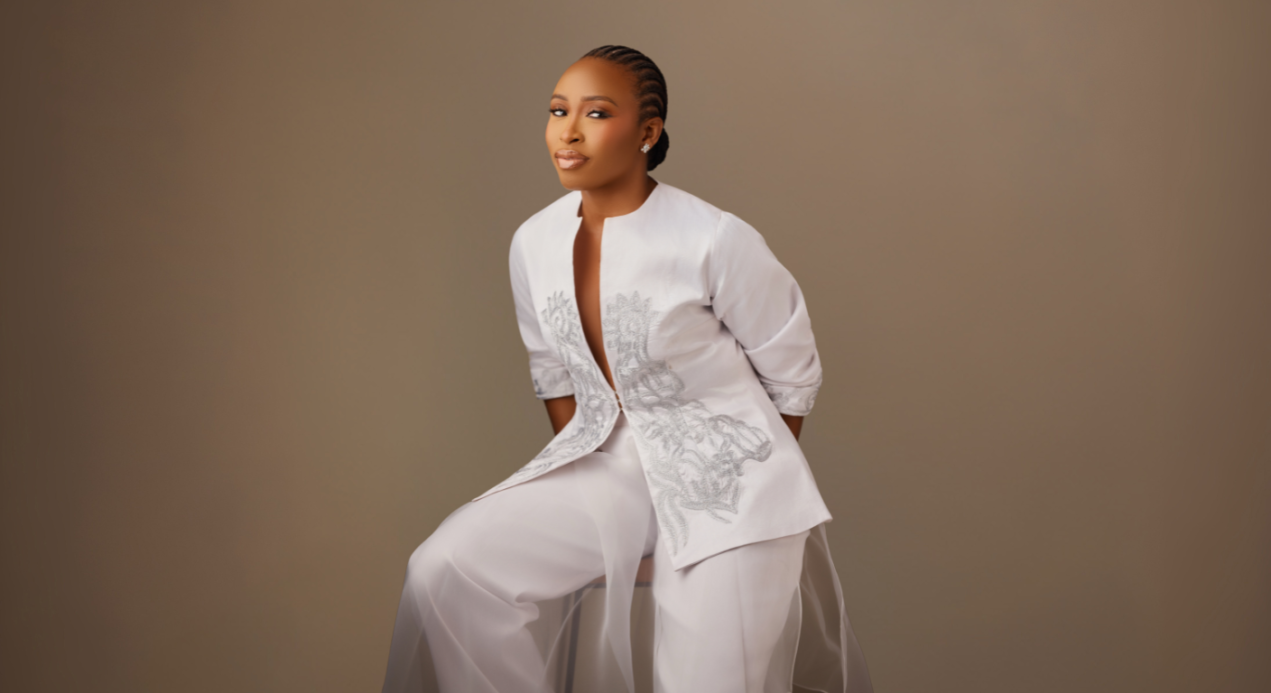
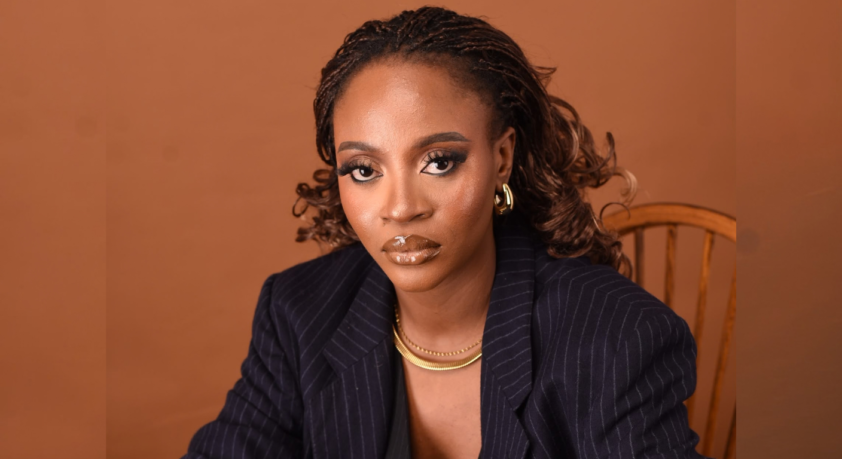
If there is one thing Omolola Akinsanya has never been very good at, it is leaving a question alone. Akinsanya grew up asking who made God. At six, she was already interrogating an alfa about the origins of the Almighty, apparently unwilling to accept “nobody knows” as a satisfactory answer. Years later, that same restless curiosity would take her from pretending to read newspapers to her parents to dreaming of television, studying International Relations in the Republic of Benin, working in radio and television, navigating the corporate world, and eventually producing Blindside, a psychological drama about fraud and social engineering.
But there is a thread connecting all of it: the desire to make people stop, look again and think differently. Akinsanya calls it “mindshifts through storytelling”. It is a fitting description for someone who has spent much of her life questioning what people accept as normal, including her own assumptions. In this conversation, she talks about curiosity, failure, survival, creativity, corporate life, the making of Blindside, and why the stories that matter most are often the ones that refuse to leave you alone.
FAB: Let’s start from the beginning. What’s your story?
Omolola Akinsanya: I have always been a storyteller, even before I understood what that meant. I remember reading a book after I finished university, and it took me back to my childhood. People often say that the things you enjoy as a child can show you what you are meant to do, and I think that is true for me.
When I was younger, I used to sit in front of the television with a table and chair and pretend to read the newspaper to my parents. I think I always knew that my purpose was connected to communicating information and making people feel something through what I create. That could be through my voice, something visual or something I write. At the core, it is about transmitting information, knowledge and experiences.
At another point, I said I wanted to be a newscaster. I cannot remember exactly what my dad said, but I remember where we were. We were standing in front of his car, and he muttered something that made me forget about that dream. Parents can project their own ideas onto their children, sometimes directly and sometimes indirectly.
Later, I said, “I want to study theatre arts. I am going to be an actor.” I knew that when I watched television, something about it made me feel a certain way. I did not have the words to describe that feeling yet, so acting seemed like the simplest explanation. Then my cousin told me, “No, you cannot go into acting. That is a hobby.”
He was not trying to be a bad person. He was speaking from his own understanding and experience. That was simply how he saw it. When I was in JSS 2, a teacher asked us about our role models. I said I liked Omotola Jalade and Genevieve because they were very popular at the time, but the teacher told me, “No, that should not be your role model.”
People will say different things because they often project their own reality onto you. So, at different points, those dreams disappeared. As I grew up in Nigeria, I always knew I belonged in the arts. I was an arts student, and I enjoyed literature, history and English. I enjoyed the subjects that allowed me to think creatively.
My school, Ota Total Academy, was very competitive. When we moved from JSS 3 to SS 1, most students wanted to go into science because there was this idea that the most intelligent students belonged in science class. Everybody wanted to become a doctor. I did not know what I wanted to become, but I knew it was not science, so I never bothered with it.
From the first tests, students were already being moved to arts or commercial classes if they did not perform well enough in science. I always knew I would be in the arts. I did not know which part of the arts I would pursue, but I knew that was where I belonged.
Even in primary school, I participated in choreography, choir, dance and drama. I did all of that. Secondary school was different. My school was very strict, and we did not have much room for those activities. There were no sports or arts programmes. It was mainly about studying.
Choosing a Different Path
Then I had to make a decision about university, and that became a very important point in my life. I was coming of age, and because I talk a lot, as you can see, people always assumed I would either become a lawyer or study mass communication. I knew I was not going to be a lawyer. That felt too complicated for me, and I was not ready for that life.
For a while, I thought I would study mass communication. Then I had a change of mind. I did not want to fit into the boxes other people had created for me. I made a decision that changed the direction of my life.
I had two options at the time. I reconnected with someone I knew from primary school. We were not even close friends, but he encouraged me to apply to a school in Cotonou, Benin. I have always been adventurous, so the idea appealed to me.
I had never really lived away from home. When I was younger, I enjoyed road trips because my family travelled during the holidays. We would visit Kwara State and other parts of the country. My dad was often away for work, so I always looked forward to those trips. I thought, “This gives me a chance to explore.”
I was accepted by both the University of Lagos (UNILAG) and the school in Benin. UNILAG offered me mass communication, while the school in Benin offered international relations. I chose Benin because I wanted to explore, live in another country and experience a different culture.
My mother listened to me because I had always been the child they did not have to worry about. So I went to Benin. I was only 17 and suddenly had my own apartment in another country. It was scary, but it was also exciting.
My mother’s friend’s child was studying there at the time, which made the decision easier for my mother. We also lived close to the border. My parents’ house was close enough that travelling there was not difficult. I could take a few cabs to the border, cross on foot and take another cab on the other side, so for us, it was not such a big distance.
I chose International Relations because I wanted to see the world. That was the mindset behind the decision. I lived very close to the beach, and I could see the beach from my house. There was something about the ocean that made me feel that there was much more beyond what I knew. The history of the transatlantic slave trade also made that feeling stronger.
While I was in Benin, I read a book about a man who travelled from Benin to Iceland. He moved from place to place and worked wherever he could. He lived a nomadic life, and I found that fascinating.
It was also interesting because I was reading the book while living in the same country where his journey had started. It felt like a strange coincidence. At that stage, I did not have much creative expression. My journal was probably the main one. I have kept journals since I was young.
My more serious creative expression started during my National Youth Service. I was serving in Ibadan, but I did my (National Youth Service Corps) NYSC camp in Calabar. While I was at camp, my cousin encouraged me to join Orientation Broadcasting Service (OBS) because she knew I liked talking. I joined, and I read the news. That was my first real experience of using my voice in that kind of setting.
I met many amazing people during camp. After camp, I was redeployed to Ibadan and posted to Ibadan North Local Government Area. There was an Immanuel Grammar School close to the University of Ibadan, and I taught literature there. At the same time, I wanted to work in radio. Splash FM was at Challenge, Ibadan, and my mom’s best friend lived close to Challenge. I thought about the distance and decided to combine the two.
So I taught at the school and worked at Splash FM on the side. I have always been someone who wants to do my own thing. I do not want to do anything unusual. I just want the freedom to do what I believe in.
Before Splash FM, I tried to work at Beat FM. They did not take me on, even though I was willing to work for free. So I eventually joined Splash FM. I worked with people such as Mr Seun Akinola, K-Boogie and M-Spice.
I did not do as much radio work as I wanted because of the distance and because it was not my primary place of assignment. Still, I enjoyed it. I had fun, and I got paid for some gigs. I also worked on a report at one point. I enjoyed the experience.
Finding Work, Finding Direction
After NYSC, I wanted to pursue a master’s degree. I wanted to study Communication and Language Arts at the University of Ibadan. I took the examination and was admitted, but I did not get the follow-up communication I expected. Later, I realised I should have followed up with the school myself, but I did not.
At that point, I also had to decide whether to remain in Ibadan or find a job and start my life. I chose to start working because staying in Ibadan would have meant my parents paying for another rent. I had reached a point where I wanted to support myself.
Unfortunately, the job I found in Ibadan paid ₦10,000. I thought, “No, this is not going to work.” So I packed my things and left. I did not really have a plan. I returned to Ogun State for a while and later moved in with my friend’s family at Berger, Lagos State.
Before that, I worked at a printing company as a marketing manager. It was a small business, and the experience was difficult. I was fired in my sixth week. I had gone home after close of business because I was having cramps, but I was expected to receive a shipment, and I was not clear about the details. It was a strange experience, and I was unemployed for a while.
Then I met someone through my cousin who was also a filmmaker. I will call him a director for this story. He was producing a programme on Classic FM called Amazons on Radio, and I joined the team as an associate producer.
I worked with a woman on the programme. I wrote scripts, brought in guests and helped organise the show. At one point, the director travelled, so I had to take on more responsibilities while he was away. That was an important period for me because I began to understand production better.
I learned how to communicate with people, bring people together, organise conversations and manage the production process. I did that for a few weeks, but I was eventually fired again because of internal politics. I became a scapegoat for issues involving some other staff members.
After that, I followed the same director onto film sets because he knew I wanted to make films. People would sometimes watch a film and contact me because they thought they had seen me in it. Even when I had not watched the film myself, I would still hear from people asking whether I was the person they had seen.
As a filmmaker, however, I realised that I did not want to tell the same kind of stories that the director was telling. His creative expression was different from what I wanted to explore. It became important to me to work with people whose vision aligned with mine. We did other projects together, and I learned from those experiences, but the connection around storytelling was not always there.
Storytelling as Social Change
Another important part of my journey was my work with communities such as the World Peace Initiative. We use meditation and mindfulness as tools for conflict resolution and violence prevention. I am still active with that work.
I also became involved with the Rotary Club of Victoria Island, district 9112. One thing that attracted me to Rotary was the way storytelling could support social change. The director made a short film called Savages about violence, and Rotary supported the film through the Peace Club.
When we went to schools for outreach programmes, we would show the film because we were trying to teach young people about violence prevention, mindfulness and peaceful conflict resolution. The film follows a boy who eventually gets killed. It is only about 10 minutes long, but it is emotional.
When we showed it to teenagers in government schools where violence and gangs were concerns, the room would become quiet. They would watch the film, and then we would discuss what they had seen. We would talk about how to avoid violence, how to meditate and how to control your breathing.
That experience confirms to me that storytelling works. Africans have a strong tradition of storytelling, even though oral storytelling is not as common as it used to be. Stories help people retain information because they remember the characters and what happened to them. That is one reason I believe storytelling can support education and social change.
Surviving and Starting Again
At the same time, I was still trying to survive as a young woman in Lagos. I had no stable income. I moved between different family homes. I lived with my friend and her family, then moved in with another family member in Surulere. After I lost another job, I moved in with my brother.
I do not like being insulted, and I like having financial security. I wanted to be able to take care of myself. At one point, I also tried to relocate because I thought moving abroad would solve everything. It did not work out.
Then I got a job at a financial institution as contract staff, thanks to my best friend. She pushed me to apply. They had been trying to reach me, but there was a network issue, so I thought maybe it was not meant to happen.
My friend said, “God does not what?” She did not allow me to give up on the opportunity. I went for the interview, did well and got the job.
I have worked in the financial institution since 2019. I started in the contact centre, moved to communications and later moved into strategy. The move to strategy came partly because I wanted something different. I was tired of doing work that did not give me enough creative expression.
But before I moved to strategy, something important happened. The people you work with and the leaders you have can influence your growth.
My leader at the time had a one-on-one conversation with each member of the team. During our conversation, she asked me, “What do you really want? What do you enjoy?” Interestingly, I was going through a very tough time then, what I would call my dark ages, if I am allowed to say that. I even shaved my hair (laughs). So, I told her, “I want to make films.” And she supported me.
Once or twice a week, I would work from home in Gbagada and travel to Plus TV to work on What Are You Saying? (WAYS), a show led by Osayuwamen Saleh. The show focused on women discussing politics, health, education and issues affecting society. By this time, I had moved out of my brother’s house and rented my own mini flat in a swamp. I needed a place that could accommodate me and my little sister, who had moved in with me during NYSC.
The first time I met her, we connected immediately. We understood each other, and she gave me an opportunity to contribute. I started with scriptwriting and later moved into stakeholder management. I began speaking with important people and building relationships with guests.
My background in customer experience also helped me. Customer experience was my foundation. My job was to make customers feel valued, and that mindset has stayed with me in other parts of my life. Because I cared about people’s experience, I naturally focused on making sure guests were comfortable and prepared.
Before I joined the show, guests would often arrive without much preparation. There was no structured process for checking on them, discussing the topics with them or making sure they were comfortable. I helped create that structure.
I became useful to the person I reported to and to the guests. Over time, I became valuable to her, just as she was valuable to me. I started there for free. She did not pay me, but I was happy to go because I could finally see my creative work happening.
I would think, “I can see what I am doing. I am watching it on television. People are talking about a topic I worked on. I wrote this script. I helped direct this. It is happening in real life, and people are responding to it.” That was very satisfying.
I did it for free for a while. Eventually, I started getting paid and was invited to participate in different conversations. I also became involved in building the structure of the show. The show eventually grew into its own media company.
That experience taught me what can happen when people share a vision and work together. I could brainstorm with her, and she could see that I cared about the work as much as she did. Of course, it was never the same as being the owner. There were days when I would say, “Please, just let me rest” (laughs). “But we worked well together.
Moving Towards Film
As the company expanded and more shows joined the programme, I had to make another decision. I was still working at the financial institution as contract staff and earning very little. I had moved into my own place, and my younger sister was living with me. Rent and other expenses were increasing.
I needed to earn more. At different points, I tried other businesses. I sold fruit salad in Ibadan. I sold jewellery, accessories and other things I liked.
Around that time, I was also moving towards strategy at work. Remember, I studied international relations because I wanted to see the world. As a creative person, I still wanted to travel and experience different places.
There was a tourism business unit at my workplace, so I decided to explore it. I joined a job-shadowing programme that allowed me to observe another department. I eventually realised that the team did not have enough decision-making power to execute the ideas they had. They had good ideas, but they could not always turn them into action.
That experience helped me understand where I wanted to focus my energy. I remember pitching myself to my boss. I told her, “This is what I want to do. I want to make films.”
At the time, I believed I needed film school to become a good filmmaker. I thought I needed to travel to New York and experience different environments before I could create the kind of films I wanted. I still believe those experiences can be valuable, but I no longer see filmmaking as one straight path.
I pitched the idea to my manager, and she asked me to come and speak with her when she returned. Then, in the middle of all of this, my father passed away.
That changed something in me. I thought, “This is my life. It has to mean something. I cannot just leave it like this…” At that point, I wanted to aim as high as I could.
I moved into the new team thinking I would simply make more money. It was a reality check. I still had my regular work responsibilities while continuing with television, film, research, business intelligence and other projects. I was also running a podcast, Na My View. I had to manage all of this while grieving and remaining active in the Peace Club and other communities.
It was a lot. That also explains why the film took so long. Before we shot it, we spent about a year on research and development, scriptwriting, casting and location scouting. We spent more than three years working on the project.
We finally shot the film in February 2024. Around that time, I had to leave the television job completely. I realised I could not continue doing everything at the same level.
It was not because I could not do several things. I can. The problem was that when I do something, I want to do it well. If I know I cannot give something the level of attention it needs, it bothers me.
The television company was also expanding, and I needed to grow with it. I could no longer give the work the attention it deserved while I was also developing in other areas. I had to make a difficult choice. The work I loved could not pay my bills (laughs).
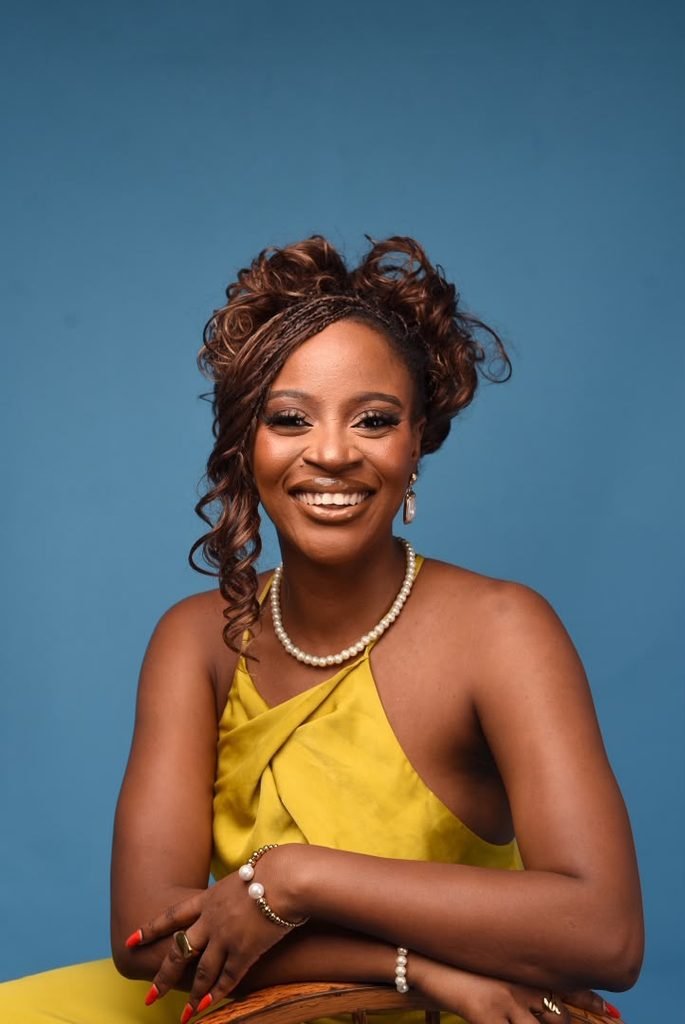
FAB: You described yourself as someone who is always asking questions, and you said you were fired twice in one year. Where did the curiosity come from, and has it ever gotten you into any trouble?
Omolola Akinsanya: Yes.
FAB: Tell me about it.
Omolola Akinsanya: I think I was born curious. Honestly, I do not know where it came from, but I remember one of the most awkward questions I ever asked.
Growing up, my dad was a Muslim and my mum was a Christian, but I grew up in a home where we did not go to church or mosque. There was no strong sense of religion or a higher being in our everyday lives. I knew we celebrated Sallah and that we fasted, but as a child, I never really had conversations about God with my parents.
I think my curiosity started when we moved into our own house. I was about six years old, and there was a mosque right beside our house. That was the first time I had ever lived so close to a mosque, so I started going there casually.
The area was still developing, with bushes everywhere, and I did not have any friends. I met someone called Mujida, and we became very close. She wore a hijab, and it was new to me to spend so much time with someone who dressed that way. We played together, and she taught me how to perform ablution and pray.
I also remember that in their backyard, there was a lali (henna) tree. We would grind the leaves, mix them with potash, and use them to paint our hands. As I became more familiar with that environment, I started asking questions about what I was learning.
I remember telling my dad, “Oh, I want to learn Arabic.” He was very happy about it. He got us an alfa (cleric) who would come to the house once or twice a week to teach us Islamic education.
We would also learn and memorise some Quranic verses and hadith. The alfa would come, and we would have normal conversations. One day, I remember asking him, “Who is God?”
He said, “God is the most powerful.” That answer scared me. Even while I was asking the question, I was scared, but I still asked, “Who made God himself?”
He said, “Ah, nobody knows!” Then I asked, “How does God look?” I was very inquisitive and probably rather annoying because if you did not answer my question, I would keep asking.
I do not think my parents or even the adults I spoke with always knew how to answer me. They would give me an answer, and I could tell that it was not the full answer, but I would accept it. I do not know where the curiosity started, but I know I have always been very curious.
Curiosity and Consequences
The curiosity has gotten me into trouble. There are some parts I cannot share today and some things I cannot tell you because it is cold, but yes, it has gotten me into trouble.
I have tried a lot of things, and there are many things I have been curious about. Just know that I have lived. I was talking to my best friend the other day, and she said, “Who would have thought that you would calm down like this?”
I said, “I know, right?” In my 20s, I was very inquisitive.
FAB: Your spiritual transformation journey, is that from age or life experiences?
Omolola Akinsanya: I do not think it is age, really. I think it came with a little bit of life experience. My dad also passed away, and although I had already started a spiritual transformation before that happened, I think his death accelerated it.
Creativity Inside a Corporate Structure
FAB: You started talking about working in financial institutions and being a creative, too. For you, how has it been being a creative and also being in a structured environment? Not just an ordinary one, but a financial institution.
Omolola Akinsanya: When you take sweat, tears and blood and bleach it, that is it. It is sweat, tears and blood.
It is hard. There were days when I would just ask myself, “Wait, what is this?” But I think that is part of what I have learnt over time. In some ways, I also think it has been a form of healing.
There were days when I was almost completely in a creative mindset while also being fully in the corporate headspace. There were other days when I was more creative, but I still had to operate within the structure of the corporate environment. There has to be balance.
I always try to find that balance, and that is what I have tried to do with all my projects and everything I am involved in. I try to bring the different parts together because one of the things I learnt very early is that finance and creativity are connected.
Financial literacy taught me that creativity requires continuity in terms of finance. You can be creative, but without continuity, nothing is going to happen. You can be lucky, and there is always God’s grace, but even when grace comes, you need the structure to turn an opportunity into something sustainable.
Structure as a Creative Tool
FAB: Creativity needs finance to come into a tangible result. But in terms of how you tell your story now, how has being in a structured environment influenced how you actually approach storytelling?
Omolola Akinsanya: I believe being in a structured environment is one of the best things that could have happened to me. I was able to express that, especially when I was producing, because I learnt that the work has to satisfy the customer.
I took that principle into everything I do. I lead my stakeholders by thinking ahead of them. I lead my clients by thinking several steps ahead, and I do the same with my vendors and colleagues.
I also learnt that being a creative does not always mean that I am the person producing the creative idea. Sometimes it means supporting the writer so I can help bring out the creative expression. It can mean supporting the sound person, the wardrobe person, the makeup artist, the hairstylist or anyone else who is helping to create the final work.
Being in a structured environment has allowed me to become a better producer because I learnt that production needs both creativity and structure. Creatives can sometimes become too focused on what is happening in their heads. I have been there myself.
You can create something, but you also need to think about how people will receive it. There are people who create good work that never reaches the world, not because the work is bad, but because they have not positioned it in a way that connects with people.
There is a whole process involved. You prepare the soil, plant the seed and take care of it, but the goal is not only to plant the seed. You need to create things that feed people, nourish them and open their minds and spirits. That is the essence of what we are doing.
Look at artists whose work continues to inspire people. Their creativity alone is not the only reason their work reaches so many people. There is usually a structure around them, which is why artists need managers and other people in their corner who understand how to build and sustain the work.
I think it is an excellent place to be because I get to express both sides of myself. I use the structure I have learnt at work, and I use my creativity in my creative space. Sometimes it is one or the other, but on most days, I find a way to balance both, and I think that is a great place to be.
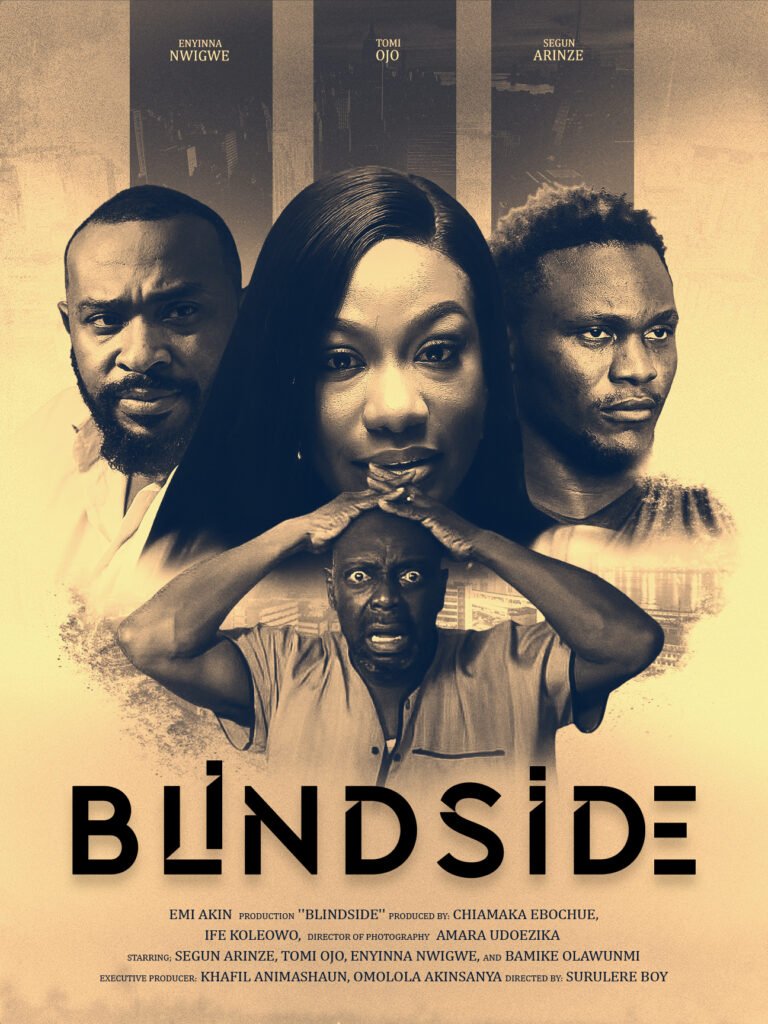
Why Fraud Became the Story
FAB: Let’s talk about Blindside, the movie, your first feature film as a producer. You could have chosen to talk about domestic violence or other social issues. What did you see or experience that made you think, “We need to have this conversation about fraud”? At what point did it become more than an idea and become something you needed to produce?
Omolola Akinsanya: The idea for the film started with a desire to highlight financial inclusion and financial education. I also wanted to “traumatize” my audience, shift their minds (laughs). Along the way, the idea of financial fraud came into the story. One might say it is not far-fetched because I work in the financial sector.
When we started, the first character I designed the story around is not even in the final story. That is one of the beautiful things about storytelling. The first thing I ever saw for this film was actually the final scene.
The final scene of Blindside is the beginning of the story. We are taking the story from the end and looking back at it from the perspective of the victim. Originally, we wanted to follow the story of the fraudster.
Then we realised that we were not going to tell the story by putting the spotlight on fraudsters. We knew a lot of people might relate to that perspective, but we decided to flip the story. The original idea was also much bigger. It had more characters, more scams and different storylines.
This process took about 3 to 4years. At some point, a movie called Love in Covid came out, and although it was not word for word, the plot and synopsis were similar to what we had developed. That taught me that when God gives you an idea, you should act on it. An idea is like a seed, and if you leave it for too long, someone else may develop something similar.
So we had to start again. I worked with a writer and began rebuilding the story from the synopsis. I also spoke to people and tried to understand the subject from different perspectives. I spoke to one of my very good friends who is an animator, and he introduced me to one of his friends. That helped us move the project forward.
The core of the film was education. We were already doing research for other things, so I moved around and gathered more information. Beyond education, we wanted to create a story that could stand on its own, not something people would simply watch and laugh about. We wanted to tell a story that could become a movement and attract more conversations around the subject.
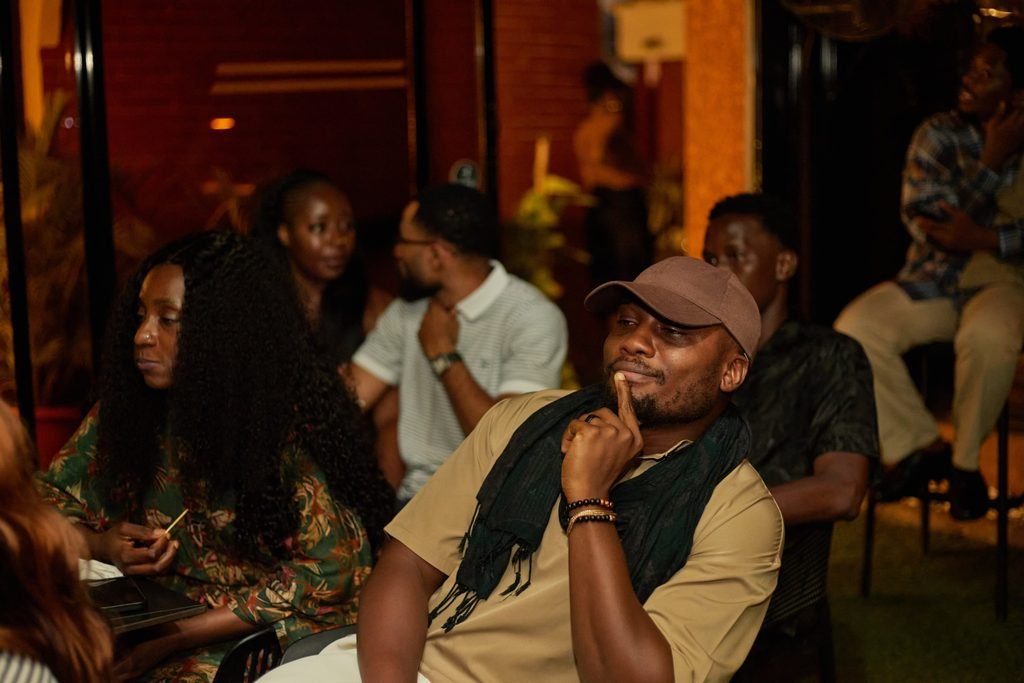
Making Fraud Feel Familiar
FAB: When people get defrauded, the reaction is usually, “How did you not know they were going to scam you? You should have known.” We often imagine a suspicious stranger, a dramatic scam or someone who looks like a criminal. From the production note, Blindside suggests that deception can be much closer, more ordinary and more psychologically sophisticated. Why was it important to challenge our assumptions about what fraud really looks like?
Omolola Akinsanya: Whenever anybody asks me about the film, I tell them that Blindside is a psychological drama on social engineering. I was very intentional about that because I wanted to make a film that stays with you. You know how you watch some films and cannot stop thinking about them? That is what I wanted to achieve.
I think social engineering is very psychological. I have seen it happen, and I know people who have experienced it too. We also spoke to people in that space, including Yahoo boys, because we wanted to understand the psychology behind these actions and the reactions of the people who experience them.
A lot of people’s reactions to fraud are misguided because they do not understand how these things work. For example, there are situations where someone may receive a call that appears to come from a bank and asks them to do something that sounds legitimate. Because of the format of the interaction, people may not recognise the warning signs.
That is why you need to know how legitimate communication from your bank should look. If someone calls you and says, “Oh, this is me,” you should still verify who they are and what they are asking you to do. You have to understand what information you should and should not give out. You shouldn’t give out your BVN, PIN, password, one-time password (OTP), and card details.
The psychology behind scams has existed for a long time. The old 419 scams worked on the same basic principles. Someone would come to you with an opportunity and say, “Let’s double this dollar.” The methods may change, but the psychology behind them remains similar.
Fraudsters use things such as greed, sense of urgency, fear of missing out (FOMO) and the promise of progress. These are some of the things people need to learn to identify. You also need to know what information you should never share, such as your password or other private transaction details.
The problem is that scammers continue to evolve. They find new ways to approach people and make their requests look legitimate. That is why financial education cannot stop at telling people that scammers exist. People need practical knowledge that helps them recognise the signs and protect themselves.
When we screened the film, we also heard reactions from viewers who recognised themselves in the story. One viewer said, “Ah, I’m one of the people that wanted to reap where I didn’t sow.” People who have been scammed often understand the experience because they can look back and ask themselves, “What was I doing at that moment?”
Of course, there are people who genuinely did not know what was happening. That is also important to acknowledge. The most important thing is that there are warning signs, and you need to identify the key before you open the door.
What Filmmaking Taught Her About Communication
FAB: You have remained in the communication field, communicating with audiences through radio, digital platforms and writing. You have also worked in corporate communication and customer experience. What did filmmaking teach you about communication that your previous careers or platforms were unable to?
Omolola Akinsanya: A television show, theatre and film all require different forms of communication. With theatre, for example, you have a live audience, and you are working directly in front of them. Film, especially a feature film, is different because you are working with both the creative expression and the technical process.
That was something I never imagined before I started. I never imagined that I would have to watch a film repeatedly while dealing with problems in the production. I never imagined that I would have to fight with a writer because I was not getting the script, or challenge a film company because the audio did not match the visuals.
So, in terms of communication, filmmaking taught me how to manage different people and different expectations at the same time. There were moments when I had to remind myself, “You are annoying me, but you are also my stakeholder. I love you, but you still have to get the job done.”
Everybody is my customer, so I have to balance everything. At the same time, I have to manage creatives in a way that allows them to bring their best work forward while still remaining true to the story.
That was one of the challenges I had with the director, whose name I will not mention. He had a different vision for the film from the one we had developed. I think that put him in a difficult position because he knew the story was not originally his, but he was still responsible for directing it.
Eventually, he made a director’s cut that did not reflect what we needed. We stopped communicating, and I had to take full ownership of the project. By the time I got to the final result, I could not allow anyone else to determine what the film should become.
At some point, people had dropped off, and I had to hold everything together. I had to protect the vision, manage the different parts of the production and make sure we reached the point where we are now.
Storytelling as a Mindshift
FAB: One thing that ties everything you do together is your interest in people and sustainability, which I find very intriguing. You have an initiative called CleanWaves, built around changing how people think about waste. There seems to be a common thread between that and your movie, Blindside. Both ask people to notice something they have become accustomed to ignoring. Is that deliberate?
Omolola Akinsanya: Oh yeah! I think I am in the business of mindshifts through storytelling. I want people to watch something and, because of that experience, change their behaviour towards a specific issue.
While I was still working in the strategy department at my 9 to 5, I also had a stint in theatre performance and production. I took a course at Terra Academy for the Arts, TAFTA, founded by Bolanle Austin-Peters. It was a virtual course. I could have gone for the EbonyLife course, but that required physical attendance, and my work schedule could not accommodate it. I considered leaving everything to focus on it, but I also needed to eat, so I had to choose an option that allowed me to keep working.
At TAFTA, I had the opportunity to work on monologues and musical performances. It was an eye-opening experience because I got to work on the live stage and create something from my head in real time. I was also part of the International Theatre Festival in 2025 as one of the opening acts. I am saying all of this because I am still very interested in theatre. There is something about the live, raw expression of performance on stage that continues to draw me in.
Storytelling is a powerful tool. You learn how to use it for good, and that is what I believe. That is why I am here, and that is why I am trying to do this work. With CleanWaves, we are trying to use storytelling to drive that change.
Beyond storytelling, though, I think CleanWaves also allows me to focus more on what happens behind the scenes. We have done a documentary, and we have worked on different projects, but there is something beautiful about using film as a creative expression for environmental mindshifts. I am creating something from my head, people are watching it, and it can change the way they think.
Starting With Yourself
FAB: Do you want to talk about how people can join? Are you looking for members for CleanWaves?
Omolola Akinsanya: Yes, we are always looking for members, but more importantly, do the work. Start in your own community. For me, it started with a mindshift too. I did not wake up one day or grow up thinking this way. Someone called me out on our way back from the gym after he saw me littering, with kindness, of course. I had to ask myself, “Why did I do that?” That experience made me rethink my behaviour.
The change we want to see in the world has to start somewhere. So, while we always need members, joining should not be the only goal. Start the work for yourself. When you begin and find more people doing the same thing, you become self-motivated. Nobody has to tell you what to do. Do the work yourself, and you can always find us online. We are on all the social media platforms.
When the Story Stays With You
FAB: Finally, when the conversation about the film eventually quiets down, however small, what would make you feel that the work has actually sunk in?
Omolola Akinsanya: It is the moment when someone is about to make a mistake and catches themselves because of something they saw in the film. Maybe the story, a character, or a particular moment brought the issue to their mind. That is the moment I want.
I want to believe that has happened very recently. For me, that is the real measure of the work. If someone watches the film, interacts with it, and remembers it at the moment they need to make a decision, then it has done what I wanted it to do.