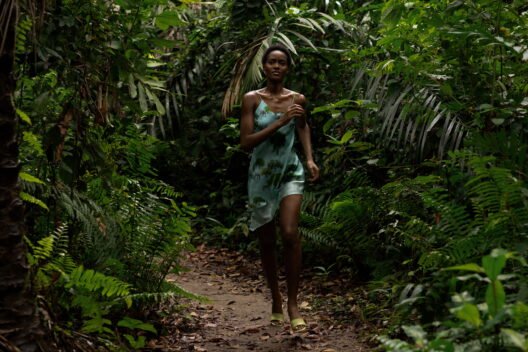
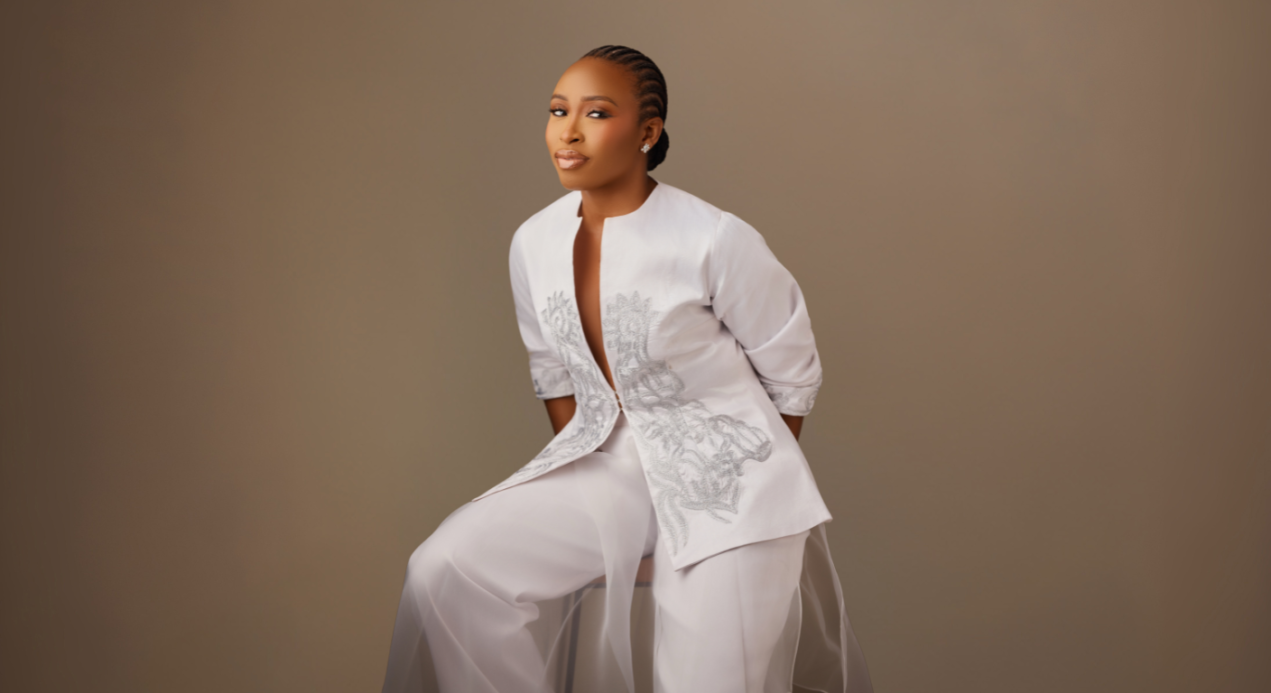
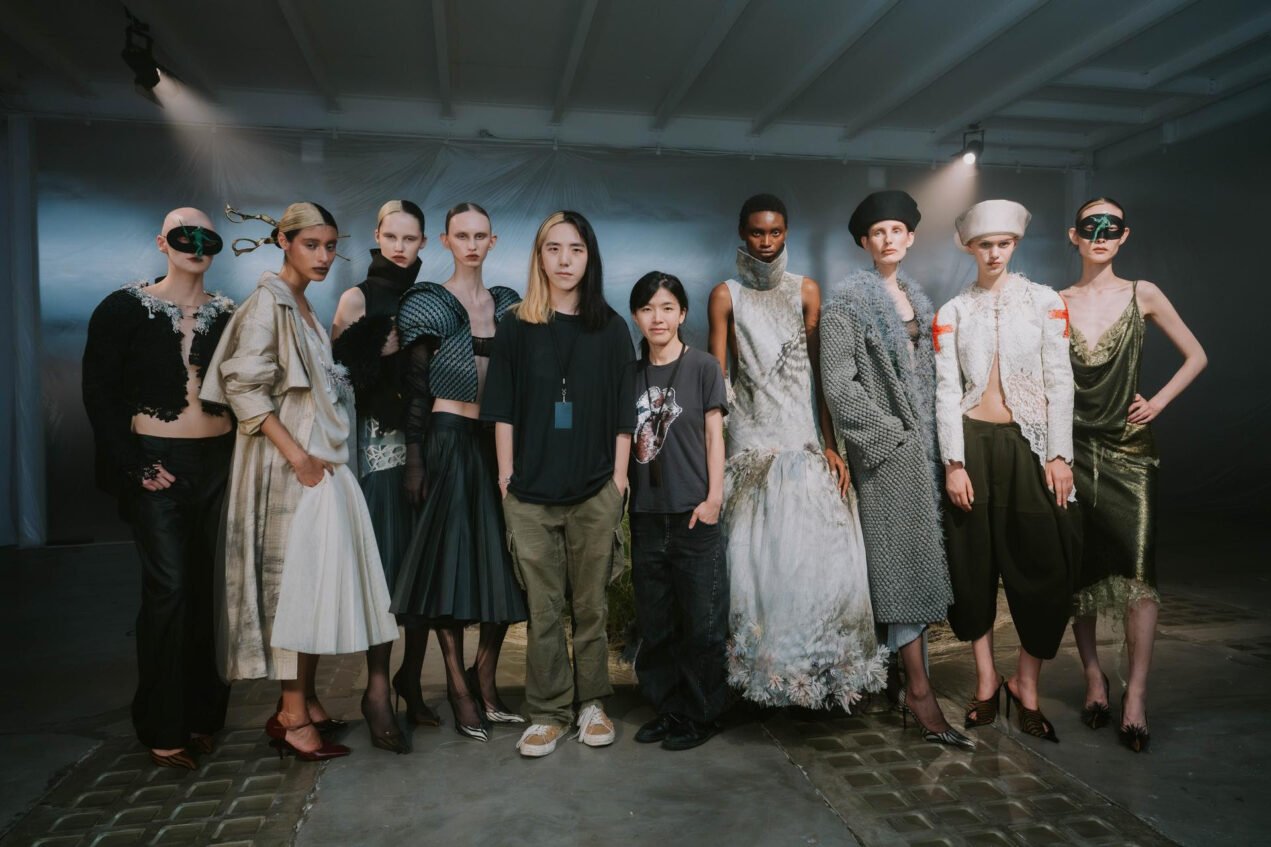
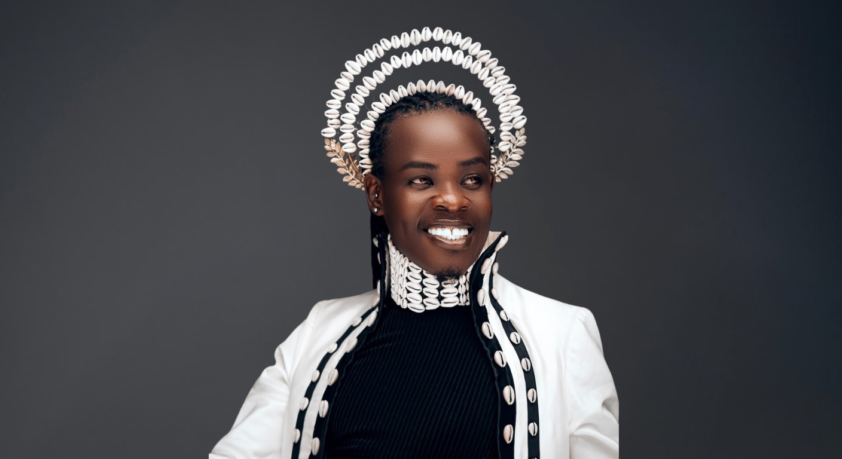
For Kaaku Mickydad, fashion began long before Mickyz Designs became a recognised name in Ugandan fashion and pageantry. It started in school, with art and craft, a willingness to experiment and a simple instinct to turn whatever materials were available into something new. Paper, bottles, sacks, polythene bags and even discarded manila folders became raw materials, and what began as school competitions eventually developed into a fashion career that would take him into pageantry, film, costume design and international collaborations.
Looking back, Kaaku Mickydad believes his journey has been impacted by faith, persistence and a determination to build something that belongs to him. “I believe God does not give you what you do not want,” he says. “I have seen that in my own life. The things I have asked God for, He has given me. For the things I have not received yet, I believe I will receive them.”
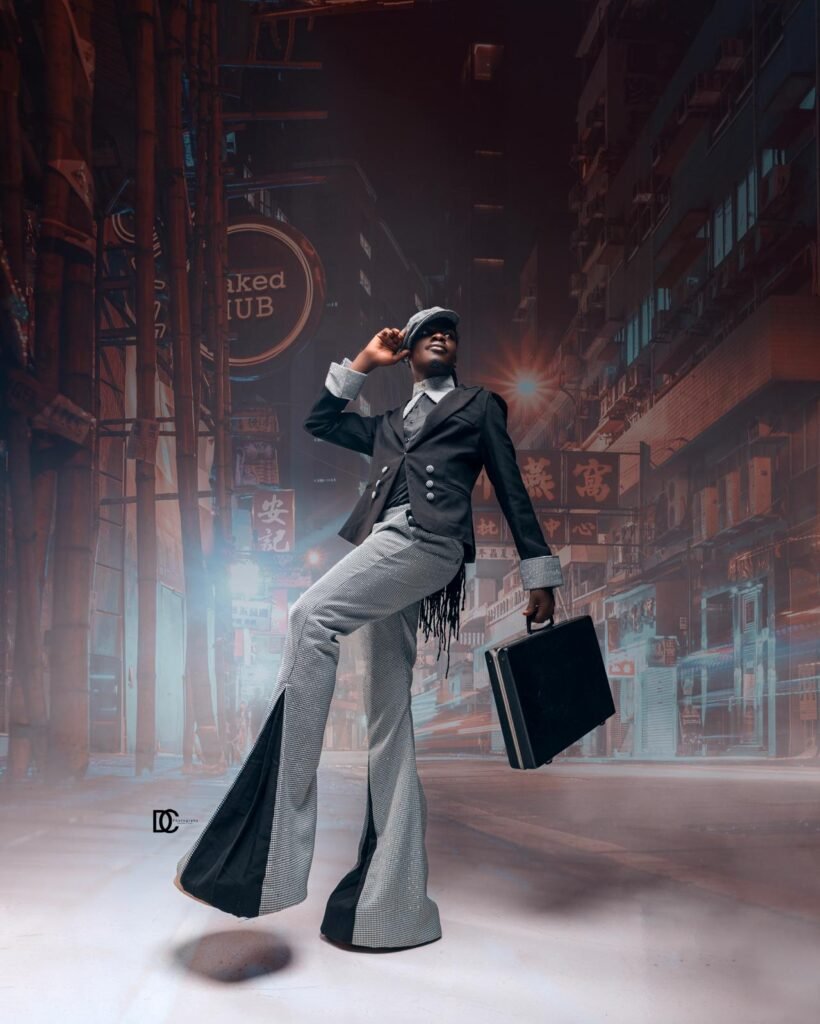
From School Competitions to Fashion
Mickydad’s creative journey began in primary school, where his parents enrolled him in schools that encouraged art and craft. “I did not choose the schools I attended, but my parents took me to schools that promoted art and craft. That started in primary school,” he recalls. Secondary school gave him an even bigger platform, as his schools organised competitions in fashion, music, dance and drama, and he was frequently chosen to lead the fashion department.
Because the schools could not always provide everything the students needed, Mickydad learned to improvise. “I started creating things with the materials we had because the schools could not always provide everything we needed. I had to find ways to turn available materials into something creative.” That experimentation became an early introduction to recycled fashion. “I made things from paper, bottles, sacks and polythene bags. I would even go to the school library and ask for manila folders, which I used to create dresses.”
For his first fashion competition, he created 10 pieces entirely from paper. He later experimented with sacks and different types of polythene bags. “I believe that was about 10 to 12 years ago,” he says.
One of the judges at that competition was Barbie Kyagulanyi, the wife of Ugandan politician and musician Bobi Wine. After the show, she called Mickydad aside and offered advice that would remain with him. “She said, ‘We have different people with different talents, but I want to advise you. If you love what you are doing and you believe in what you are doing, you are going to make it far.’”
He has carried those words with him ever since. “Whenever I feel like giving up, I remember what she told me. They remind me that I still have a lot to do.” For Kaaku Mickydad, ambition also means refusing to measure his success against someone else’s. “I do not want to become another person. If you wake up and say, ‘I want to be like this person,’ you may stop once you reach that person’s level. I want to become better and bigger.”
The Pageantry Connection
His first fashion showcase opened another door. People began sharing his work, and eventually the pageantry industry came calling. Pageants often include a national costume or creative wear segment, creating an opportunity for designers to interpret a country’s identity through clothing. Mickydad’s designs caught the attention of contestants.
“People saw my work online, and pageant contestants started contacting me.” He was still a teenager. “I remember I was in Senior Two, so I was about 15 or 16 years old. I started making money from my work at that age while continuing my studies. I created the outfits during my free time.”
By Senior Four, he had won his first national award for creative wear. “In 2018, I received the Rising Fashion Designer of the Year, Africa award in recognition of my work.” The recognition reinforced a lesson he had already begun learning: visibility matters.
“At that time, Facebook was one of the main platforms we used, and I made sure to post my work because you never know who is watching.” He kept posting, and the audience grew. “I posted my designs consistently, and that helped people discover my work. Winning my first award introduced me further to the pageant industry.”
His personal interest in pageantry then encouraged him to explore the industry from a broader perspective.
Designing More Than Clothes
For Kaaku Mickydad, fashion and costume design require more than technical ability. The designer has to understand the person wearing the garment, the environment and, in the case of costume, the character being represented. “When I design for someone, I do not start with the fabric. I start with questions. Who is this person? What message do they want to communicate?”
That philosophy changes depending on the brief. “If I am designing a costume, I need to understand the character first. I would not dress a pageant queen in the same way I would dress someone who is performing on stage. I need to understand what the person is going to do.” Comfort is another important part of his process. “Many designers forget about comfort, but it is very important. You can dress someone beautifully, but if they are not comfortable, the design may not work.”
When working with actors, the script often determines the visual direction. “When I am dressing an actor, the script usually guides the work. It may specify the colour, style or other details that define how the character should look. In that case, I have to follow the requirements of the script.”
Private clients present a different challenge because Mickydad has to balance their wishes with his professional judgement. “I look at their body and ask, ‘Does this look good on you?’ Sometimes a client wants something that may not suit them. That is where you have to act as a professional.”
For him, protecting the brand is part of that responsibility. “You cannot explain to the whole internet that the client asked for the design. People will see the work and associate it with Mickyz Designs. They will ask, ‘What did Micky do?’” That is why he sometimes turns down work. “Sometimes I decide not to take on a design because, although I need the money, my brand comes first.”
Finding the “Touch of Style”
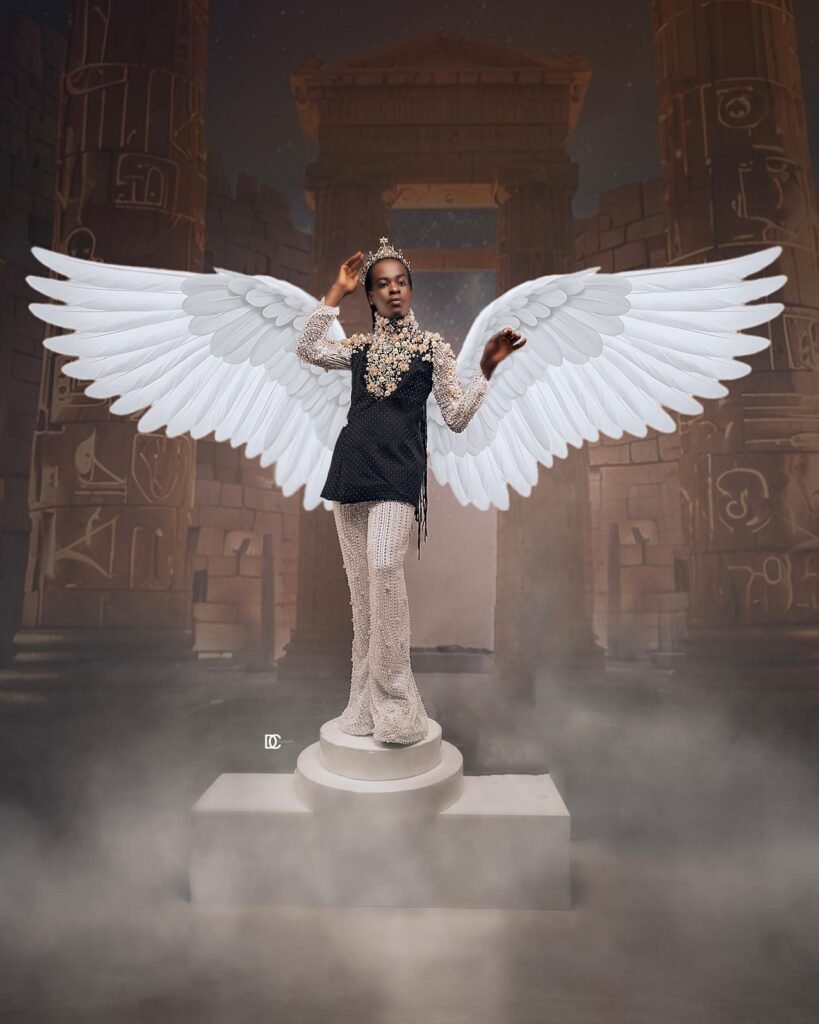
Clients often arrive with images they have found online and ask him to recreate them. Kaaku Mickydad understands the request, but he believes every commission should still carry the identity of his brand. “I always tell them, ‘I need to see a touch of Mickyz Designs.’ That is why my slogan is ‘Touch of Style.’”
He asks himself a simple question whenever a client wants an existing look reproduced: “What makes me a designer? What makes me different?” The answer has to appear in the final garment. “I do not want my work to speak Versace. I want people to recognise my work as Mickyz Designs.”
That recognition, he says, comes from having a distinct design language. “There is a certain way I work and a certain way I see design.” His process is often collaborative. Rather than simply accepting a client’s reference image, he returns to the drawing board with them. “We sit down, and I sketch what they want. Then I ask, ‘What do you think if we do this? What do you think if we add this?’”
The process allows him to introduce his own perspective while ensuring the client remains comfortable with the final result. “Design is not only about styling or giving a client exactly what they ask for. You need to look beyond the request. If you have a brand, you need to stand for it and protect it.”
For Mickydad, that responsibility extends beyond financial gain. “It is not only about the money. It is about what you put into the world and what people know you for.”
From Fashion to Film
Mickydad’s creative practice also extends into film, where he works as a costumer and illustrator. “I am also involved in movies. I work as a costumer, and I also draw.” His work in film has already earned recognition, including multiple nominations at the Uganda Film Festival. “This is my third nomination at the Uganda Film Festival. I pray I win the award.”
His interest in costume has also given him an opportunity to explore fashion as a form of historical storytelling.
Remembering “Threads of Legacy”
Among his many projects, Threads of Legacy remains particularly meaningful. “That is the first one that comes to mind,” he says. “I have worked on many projects, but Threads of Legacy felt like a dream come true.”
The project was built around an idea Mickydad felt the creative industry often overlooked: the value of older generations. “I have seen many creative projects, but older people are often forgotten. I have reached out to many people about creating projects that involve the elderly, and some would say, ‘That is a waste of time. Those people are tired. They have moved on. They do not know the new trends.’”
Kaaku Mickydad challenged that assumption. “I would tell people that these are the people who set the standards we are following today. They started many of the things we now see in fashion.” When he eventually found someone who shared his vision, Threads of Legacy came together. “It became one of the most special projects I have worked on.”
The experience was about more than a fashion presentation. It created an exchange between generations. “It helped bridge the gap between the elderly and young people. In many cases, there is very little connection between the two generations.”
Before the show, the team spent a night around a campfire with older participants, discussing fashion and comparing their experiences with those of younger generations. “As a creative, I learned a lot from those conversations.” He discovered that many styles considered contemporary have deep historical roots.
“That was when I learned more about the history of fashion, including bell-bottoms. I learned why certain combinations worked and why others did not.” The experience reinforced his belief that designers need to study fashion history rather than simply reproduce what they see online. “If we do not understand where these styles came from, we need to go back to the roots and learn from the people who experienced them.”
He points to Uganda’s own fashion history as an example. “When you look at the history of fashion in Uganda, there was a time when miniskirts were banned. Why were they banned? Why were women stopped from wearing them? These are important parts of fashion history that people need to understand.”
For Kaaku Mickydad, research gives designers the context they need to innovate responsibly. “If you want to change or modernise a style, you need to understand its history first. If you want to recreate a vintage style, you also need to know how people originally wore it.”
He believes that lack of research can also affect how people perceive one another. “You see someone wearing something different, and you immediately judge them because you do not understand the style or its history.” His answer is knowledge. “With more knowledge, we can teach people and also give them the confidence to understand their choices.”
That confidence is something he applies to his own style. “If I wake up and put something on, you cannot tell me what to wear. I am comfortable with myself. That is who I am, and that is how I want to dress.”
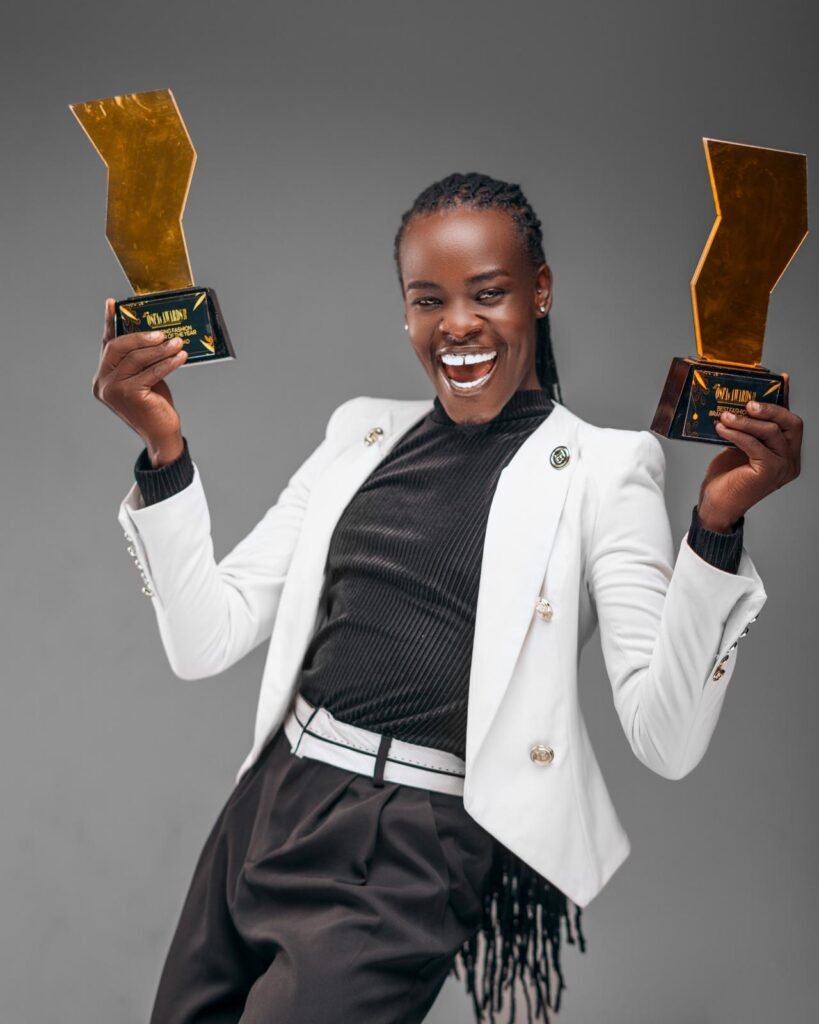
Dressing a Country
Mickydad’s work has appeared on major pageant platforms, including Miss Uganda, Miss Tourism, Miss Intercontinental and other international competitions. For him, dressing a contestant who represents a country carries a responsibility that goes beyond aesthetics.
“When my work appears on a major platform, I am not only representing myself. I am also representing my country and supporting the contestant I am dressing. That is a big responsibility and an honour.” He sees pageantry as an opportunity to promote Uganda itself.
“Uganda is also promoting local products through campaigns such as ‘Buy Uganda, Promote Uganda.’ When my work appears on international platforms, people can discover Uganda, my brand and me as a designer.” Those platforms have also created new professional opportunities.
One example came through Miss World, where a contestant wearing his work helped connect him to another major pageant figure. “I am currently working with Miss USA because she saw my work through a contestant at Miss World.” The exposure has opened doors to other international pageants, including Miss Intercontinental.
“Seeing my work on bigger platforms is an achievement for my brand and for me personally. It gives me hope because it shows me that when I work hard, more opportunities can come.” But success also creates pressure to improve. “When you reach a bigger platform, you have to ask yourself, ‘How can I do better? How can I create more? How can I make my work more visible?’”
His philosophy is simple: every achievement should create another goal. “If I have already achieved this, I want to know what I can achieve next.”
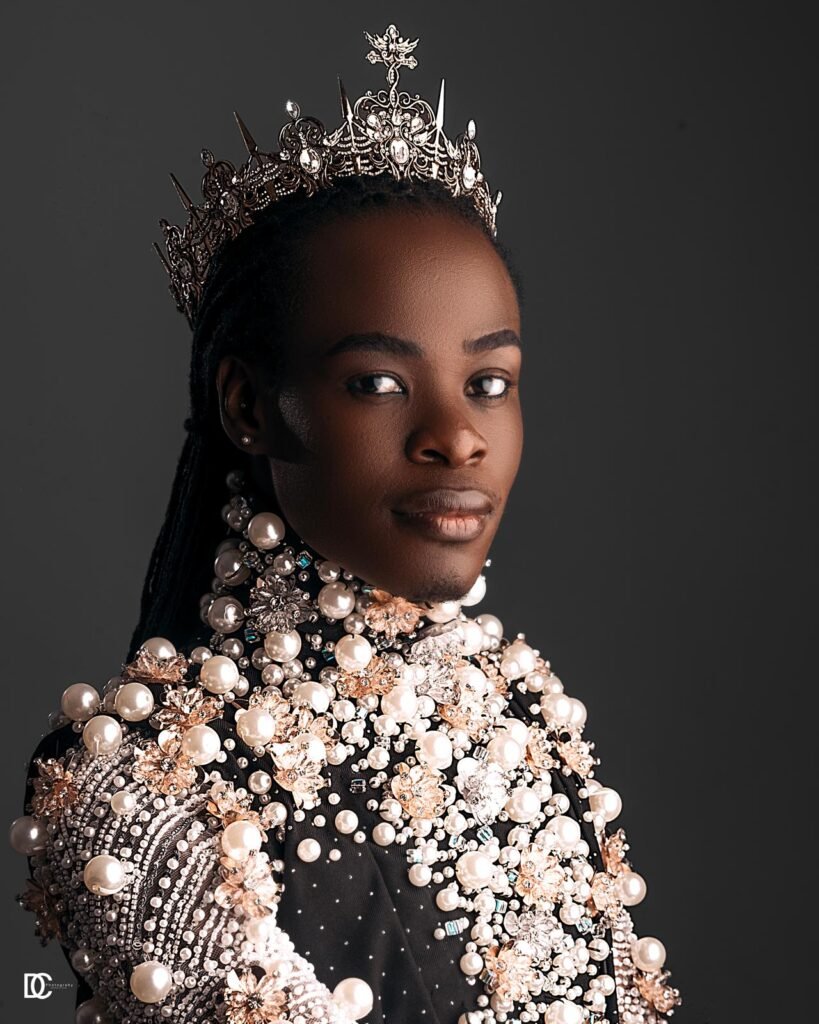
Advice to the Next Generation
After years of working across fashion, pageantry and film, Mickydad has developed a clear set of lessons for young designers. His first is visibility. “Take up space. No one is going to create that space for you. You have to put yourself out there and make your work visible.”
His second is honesty. “Be honest with yourself and with your clients. If you are not comfortable working in a certain way, stand up for yourself. Be bold enough to tell the truth.” He also encourages young creatives to become more selective. “You will receive many opportunities, but you do not have to fight for every opportunity or accept every one. Before you take an opportunity, ask yourself, ‘What does this add to my career? Does it benefit me?’”
He believes younger designers have access to resources that previous generations did not. “Some of us did not have anyone to tell us what to do or what to avoid. We made mistakes because we were sometimes desperate for opportunities.” Professionalism, he adds, matters just as much as creativity. “You also need to respect your clients. Some people speak to clients rudely or treat them badly. That is not professional.”
And above all, deliver. “Delivery is very important. If you cannot do something, tell the client that you cannot do it.” Social media, he says, is now an essential part of building a creative business. “No one is going to keep coming to your workshop just to see what you are doing. Put your work online and let people see it.”
Then there is collaboration. “Collaboration has pushed my work forward.” He encourages designers to build relationships with makeup artists, models, photographers and other creatives. “You can wake up one day and say, ‘Let us collaborate and create something.’”
For Mickydad, collaboration is not only about exposure. It also makes creative production more sustainable. “If you do not collaborate, creative work becomes expensive. You have to pay the model, makeup artist, photographer and studio separately.” Building relationships allows creatives to share resources and audiences. “When you build relationships, you can create together and help each other’s work reach a wider audience.”
The Difficult Side of Building a Brand
Behind the awards and international pageants, however, Mickydad’s journey has not been easy. His first major battle was convincing his parents that fashion was more than a hobby. “My parents did not want me to pursue fashion. They saw me doing these things at school, but they did not take them seriously.”
They expected him to become an architect. “When I finished high school, my parents wanted me to become an architect.” Eventually, he had to make his own decision. “That was when I had to stand up for myself. I told them, ‘This is what I want, and this is what I am doing.’”
Because he had already started earning money from fashion, he was able to take greater responsibility for his education. “I had a dream, so I started paying my own tuition. I would make money from other students and use it to pay my fees.”
Entering the professional industry brought another set of challenges. “People started taking advantage of me.” Young and eager to build his portfolio, he sometimes worked without receiving payment. “I would buy the fabric, make the outfit, and then the person would use it for a music video or pageant. They benefited from the work, but I did not.”
The experience made it difficult to sustain his work locally. “I am going to be honest about this. I feel that some people in the Ugandan fashion industry take advantage of others.” He believes the problem extends beyond individual designers and points to a wider culture of competition. “Instead of supporting one another, people sometimes try to block one another.”
For Mickydad, collaboration is one of the missing ingredients. He contrasts his experience in Uganda with the collaborative production structures he encountered while working with creatives from West Africa and elsewhere. “In Nigeria, one person does not always do everything. One person may cut the fabric, another may join the pieces, and another may handle embroidery. Because different people have different roles, one garment can be completed faster.”
“That is the power of collaboration.” He believes stronger industry associations could also help address some of these problems. “That is also why I believe we need stronger industry associations in Uganda. Everyone is doing their own thing. People do not always care about what others are doing.”
He is equally concerned about how the industry treats models and emerging creatives. “Models in Uganda can be overworked and underpaid.” He questions how an industry can grow when the people creating and presenting the work are not adequately supported. “How are we supporting that model? How are we supporting the designer?”
He also wants fashion shows to create more meaningful opportunities for designers beyond simply putting garments on a runway. “Some fashion shows do not even create enough visibility for the designers. The event happens, but there is little media coverage. There are no articles or meaningful discussions about the collections.”
His response has been to take greater control of his own visibility. “That is why, most of the time, I focus on my own work. I create it, put it out there and sell myself.” The lesson has been hard-earned. “I cannot depend on people who only want to use my work. I need to make sure that I also benefit from the opportunities I take.”
Five Years from Now
Mickydad’s ambition extends far beyond Uganda. His five-year vision is not simply to become a bigger designer. He wants Mickyz Designs to become a global fashion brand with a clear story and a recognisable origin.
“My dream for the next five years is for Mickyz Designs to become a brand that people are proud of because they have watched it grow.” He wants people to understand the journey behind the name. “I want people to know the history of Mickyz Designs and how it started. I want someone to be able to say, ‘We saw this brand grow, and look where it is today.’”
But international growth, for him, does not mean abandoning his roots. “My roots are in Uganda, and I want to build an international brand from there.” He already sees signs that the vision is beginning to take shape. Customers in Europe are ordering his work, and many of his clients live outside Uganda.
“I want people from the United States, Canada, Germany, the United Kingdom and other countries to travel to Uganda to buy from Mickyz Designs.” Eventually, he wants the brand to exist in those markets too. “In five years, I see Mickyz Designs as a global brand with branches in different countries.”
His dream is to make the journey work in both directions: the world should discover Mickyz Designs, while Uganda should remain visible in the story. “I do not want it to remain only a Ugandan brand. I want to build a global brand that carries its Ugandan roots with it wherever it goes.”
Images: Courtesy of MickyzDesigns