For fifteen years, the luxury industry chased growth by making itself more available. It raised prices while lowering the threshold for who could enter. The strategy worked until it didn’t. The collapse that followed is not simply a market correction. It is a referendum on what luxury actually is, and whether scarcity was ever really the point.
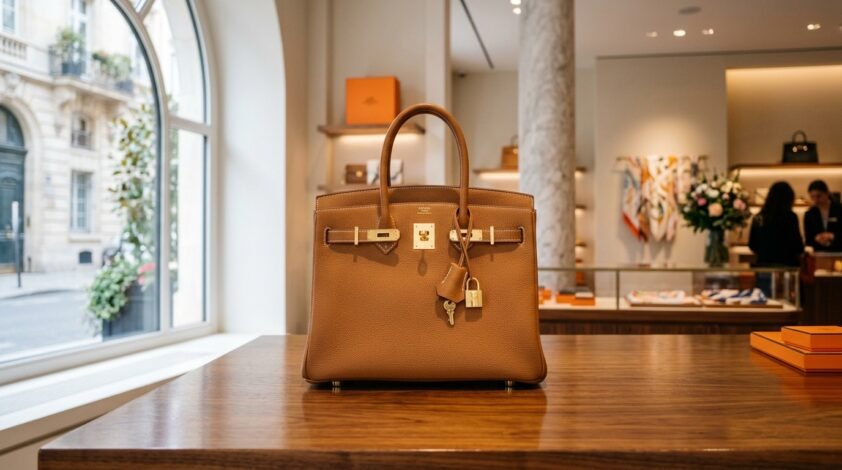
Somewhere in Paris, there is a waiting list for a bag that costs more than a year’s salary in most of the world’s countries. The bag is made by hand, one at a time, by a single artisan who requires eighteen months of training before being permitted to touch the leather. Each Birkin demands upwards of 40 hours of meticulous craftsmanship. Some versions, like the Himalayan Birkin, are produced only once or twice a year globally. The waiting list is not a marketing device. It is an honest reflection of the gap between how many people want the object and how many the house is willing to make.
This is the Hermès model, and in 2025 and 2026, while almost everything else in the luxury industry contracted, it continued to grow. Hermès reported robust first-half 2026 results, with revenue climbing 6 % to €8.2 billion from January through June, fuelled by strong demand across the Americas, Japan, and Europe. Meanwhile, LVMH’s profits dropped 15% in the first half of 2025, with organic growth down 3%, and nearly all divisions reporting flat or negative performance. Kering’s revenue fell 13% across the full year 2025, with Gucci’s sales down 8% in Q1 2026 alone.
The Q1 2026 results of the major luxury conglomerates reveal a structural divergence rather than a sector-wide crisis. This divergence reflects the difference between houses built on craftsmanship, provenance, and controlled scarcity, and those that pursued volume, visibility, and aspirational expansion over the past decade.
The luxury industry is learning, at considerable cost, a lesson it thought it had already learnt: that scarcity is not simply a supply management tool. It is the architecture on which the entire proposition rests. And when you dismantle that architecture in pursuit of growth, what you are left with is not a larger luxury industry. It is something that is no longer quite a luxury at all.
How the Industry Sold Its Own Myth Short
The story of how we arrived at this moment requires going back to 2009, when the global financial crisis forced the luxury industry into a strategic rethink. The old model, serving a relatively small base of genuinely wealthy consumers with products they alone could afford, felt too narrow and too vulnerable. A new model emerged: aspirational luxury, a tiered system in which the same brand identity could be expressed across a wide range of price points, drawing in consumers who could not afford the flagship leather goods but could stretch to a belt, a perfume, a wallet, or a canvas sneaker with the right monogram.
Between 2009 and 2019, the personal luxury goods market nearly doubled in size, reaching $332 billion. Post-pandemic, it got another burst of growth, advancing from $342 billion in 2021 to $431 billion in 2023. The numbers were extraordinary. The strategy appeared to have worked.
But that dynamic industry growth came at a cost. “In a race for scale, some of the soul of luxury was lost, as much of the industry traded exclusivity for reach, exchanging stability for volatility,” wrote BCG senior partner Filippo Bianchi.
The reckoning arrived in 2024 and accelerated through 2025. The luxury market lost 50 million customers between 2022 and 2024 as prices climbed roughly 20% since 2021. The customers who left were not the old money clientele who had always bought Hermès and Brunello Cucinelli regardless of the economic weather. They were the aspirational consumers, the ones who had stretched to buy into a dream and then, when the price of that dream rose 40 to 80% in five years while their own economic circumstances tightened, decided the dream was no longer worth it.
Increasingly, the question consumers asked was no longer whether they could afford a particular product, but whether it genuinely justified its price.
That question is fatal to a luxury proposition built on aspiration rather than substance. It is the question you never ask when the object is genuinely rare, genuinely made with extraordinary skill, and genuinely available only to a few. It is the question that arrives the moment a brand has made itself common enough to be evaluated rather than simply desired.
The Hourglass Economy
What is emerging from the wreckage of the aspirational model is a structure that analysts have begun calling the hourglass economy of luxury. Consumer demand is polarising into two growing extremes with a collapsing middle. At the top, ultra-luxury houses such as Hermès and Brunello Cucinelli grow through scarcity, authentic craftsmanship, and controlled access. At the bottom, mass-market and entry-level formats stabilise through volume and functional appeal. The middle is being squeezed because those brands are too visible to be truly exclusive and too expensive for the aspirational buyers they previously attracted.
The brands caught in the middle, and there are many of them, face a genuinely difficult strategic problem. Lowering prices could weaken brand positioning, expanding discounting would undermine exclusivity, and excessive retail expansion would risk diluting the very scarcity that makes luxury desirable. There is no clean exit from the aspirational middle. Burberry attempted to move upmarket, raising prices and narrowing its product range, and found that its core customers did not follow it there, while the customers it was reaching for were already loyal to houses with deeper heritage. Burberry’s share price dropped more than 55% from its 2023 highs by June 2025, erasing more than half its market value.
The lesson the market is delivering is one the industry’s most resilient houses never forgot: you cannot manufacture exclusivity after the fact. It has to be built in, from the beginning, at the level of production philosophy rather than pricing strategy. Hermès creates scarcity through deliberately limited production, with each artisan handcrafting only a small number of pieces annually. Their traditional manufacturing methods, like hand-stitching techniques requiring years to master, naturally limit output. The brand maintains small workshops where skilled craftspeople work at their own pace to preserve quality, making it impossible to scale production quickly even with increased demand or investment.
That impossibility is the point. It is not a constraint to be overcome. It is the source of value itself.
When Luxury Scarcity Becomes a Marketing Device
The defence of scarcity as the foundation of luxury is intellectually coherent and commercially proven. It is also, examined closely, not quite as simple as it appears.
There is a difference between scarcity that emerges from genuine production constraints and scarcity that is engineered as a marketing mechanism. Hermès produces fewer Birkins than the market demands because each one takes 20 to 25 hours to make by a single artisan. That is real scarcity, rooted in craft, in time, in the irreducible fact that skilled human hands can only do so much in a day. It is honest.
Other forms of luxury scarcity are less honest. Limited edition releases that are not actually limited. Waitlists for products that are sitting in stockrooms. Allocation systems that prioritise loyalty based on total spend rather than genuine relationship. These are artificial constraints dressed as authentic ones, and sophisticated consumers are increasingly capable of distinguishing between them.
Louis Vuitton introduced the “Tile Trunk” collection during Spring/Summer 2024, a series of exclusive phygital pieces limited to only 200 NFTs, priced at €6,000 each, blending physical craftsmanship with digital ownership to maintain exclusivity. The attempt to create genuine scarcity in digital form is real and reflects the industry’s need to think more creatively about what limits access. But an NFT is not a Birkin. The scarcity is real. The craftsmanship that justifies it at that price point is considerably less evident.
When luxury brands become associated with lower-status users, traditional high-status consumers may perceive a loss of exclusivity and disengage. This dynamic, visible and measurable, is not simply snobbery. It is a logical response to a signal system being corrupted. If the function of a luxury object is partly to communicate membership in a particular category of taste and means, then an object that is too widely owned no longer performs that function. The consumer who buys it is not being irrational when they walk away. They are responding rationally to information.
The ethical discomfort here is real and worth naming. A system that derives value from restricting access is, at bottom, a system that requires inequality to function. The Birkin is desirable partly because most people cannot have it. If everyone could have it, it would not be a Birkin in any meaningful sense. This is not a problem that the industry created, but it is one the industry profits from, and honest engagement with luxury requires acknowledging it.
Recommended For You
A New Geography of Luxury Scarcity
The conversation about scarcity and luxury has a geography that is rarely examined honestly, and it matters particularly to a publication operating between Europe and Africa.
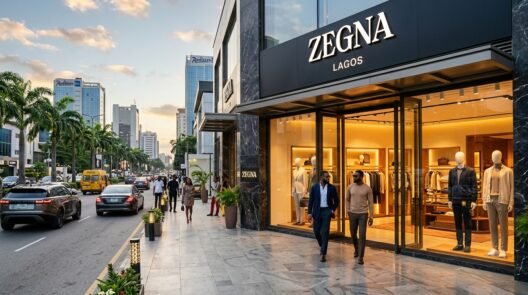
Around 85% of Nigerians buy their luxury goods outside the country, in Europe, South Africa, and the Middle East. Nigeria is the leader of African luxury consumption but remains almost entirely served by European houses whose physical retail presence on the continent is minimal. The luxury Nigeria buys is, almost by definition, European luxury, defined by European heritage, produced with European craft traditions, and priced in currencies that reflect European economic conditions.
This arrangement is beginning to shift, and the shift is more interesting than the figures alone suggest. Africa is no longer just a source of inspiration but the origin of global luxury creators. Designers such as South Africa’s Thebe Magugu, the winner of the 2019 LVMH Prize, and Cameroon’s Imane Ayissi, the first sub-Saharan African invited into the official Paris Haute Couture Week calendar, are not merely borrowing from Western aesthetics. They are embedding African narratives, craft, and history into the global vocabulary of high fashion.
What designers like Thebe Magugu, Laduma Ngxokolo of Maxhosa, and Kenneth Ize are building is a form of luxury whose scarcity is rooted not in limited production runs or artificial allocation systems, but in something more fundamental: the specific cultural knowledge, craft heritage, and creative perspective that only comes from being of a particular place and tradition.
Maxhosa, inspired by traditional Xhosa beadwork, has been worn by Beyoncé, Alicia Keys, and has shown at New York Fashion Week. The brand’s scarcity is real in a way that most luxury brands would find difficult to manufacture: the patterns, the colour relationships, and the craft knowledge encoded in the knitwear come from a specific cultural lineage that cannot simply be replicated by a competitor with a larger production budget. Thebe Magugu represents a new direction for African luxury, one defined by cultural research, political storytelling, and meticulous craftsmanship. Instead of relying on spectacle or trend cycles, Magugu builds collections that function like visual essays, turning clothing into a medium for memory, justice, womanhood, and the shifting realities of South Africa.
European luxury houses like Hermès and Louis Vuitton built empires on heritage, craft, and provenance. African luxury designers are doing exactly the same thing, but with a living, evolving cultural depth that cannot be replicated. The irreplicability is the scarcity. And it is more durable than any waiting list.
What Luxury Is Actually Selling
The deeper question underneath all of this, the one that the industry’s current crisis has made unavoidable, is what luxury is actually selling when it sells scarcity. Consumers are prioritising experiences over goods, and brands are losing both aspirational shoppers and margin power. The Bain-Altagamma study describes “tectonic shifts” as consumers redirect spending toward cruises, fine dining, travel adventures, safaris, and elite sports. These categories are redefining exclusivity, while anything that signals conspicuous consumption is struggling.
This is the most structurally significant data point in the current luxury landscape. The shift from goods to experiences is not a trend that will reverse when consumer confidence improves. It reflects a genuine change in what exclusivity means to the consumers who have enough money to define it.
An experience is, by its nature, scarce. It cannot be replicated, photographed in a way that fully captures it, or copied by a competitor. Dinner at a restaurant where reservations are available only to a few, a private cultural experience in a place most people cannot access, time in a natural landscape being steadily destroyed by climate change: these are forms of scarcity that no brand can manufacture and no algorithm can democratise.
The luxury goods industry is not going away. The Birkin will still be made, one at a time, by the same method, as long as there are hands skilled enough to make it and people willing to wait years for the privilege of owning it. But the industry is being forced to confront a question it avoided for fifteen years by chasing growth: what is the luxury proposition, at its irreducible core?
If the answer is simply limited supply, the model is fragile, because supply limitations can be worked around, replicated, or undermined. If the answer is the specific kind of value that comes from something made with extraordinary skill, rooted in genuine cultural knowledge, produced in a way that cannot be accelerated without destroying the thing that makes it worth having, the model is far more durable. Brunello Cucinelli grew 14% organically in Q1 2026. Hermès grew by 6%. Gucci declined 8%. In the same market, with the same consumers, under the same macroeconomic conditions.
The market has given its verdict. Scarcity is still the foundation of luxury. The question the industry spent fifteen years trying to avoid answering is what, exactly, the scarcity is of. Not supply. Not access. Not the waiting list or the allocation system or the limited edition drop. The thing that cannot be made faster, cannot be copied at scale, cannot be democratised without ceasing to exist. The craft. The knowledge. The specific, irreplaceable act of making something well. That was always the answer. The industry simply forgot it was the question.