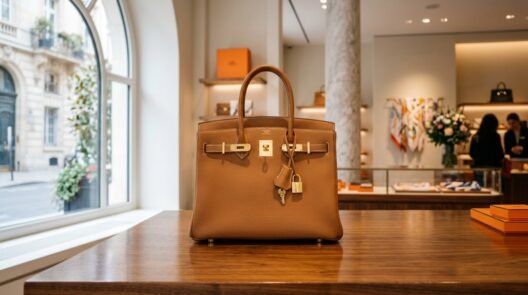


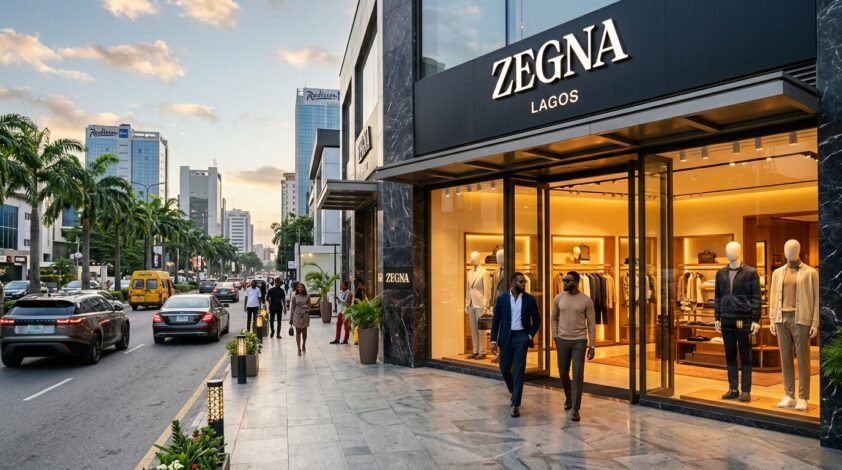
Fashion brand international growth is one of the industry’s most seductive traps.There is a boutique in Lagos that no longer exists, and its absence tells you more about international expansion than most case studies written in its honour. Zegna opened the store in 2013, betting on Nigeria’s appetite for Italian tailoring. It closed within a few years. Today, the wealthiest people in one of Africa’s largest cities still wear the house’s clothes. They simply buy them somewhere else. A regional trade fair director, describing how European luxury tends to approach the continent, put it plainly: brands arrive tentatively, treating Africa less as a market to be built than as a source of inspiration and a stage for representation. Ask around Lagos and you will hear the same joke repeated with different names attached. Everyone is dressed in Loro Piana and Bottega Veneta. Almost none of it was bought at home.
That gap, between showing up and actually scaling, is the real subject of this piece. Every fashion house eventually faces the same temptation. Another market means another line on the growth deck, another press release, another flag planted on a map that starts to look like ambition. But growth and scale are not the same thing, and the industry’s history is crowded with brands that mistook one for the other. Some diluted the very quality that made people want them in the first place. Others simply misjudged what a new market actually required, and paid for the miscalculation in ways that took years to undo.
The brands worth studying now are the ones that figured out how to grow without hollowing themselves out along the way.
The Price of Getting It Wrong
Brand dilution is not a marketing department’s abstraction. It is a measurable, well-documented commercial risk. Research into failed brand extensions has found something counterintuitive: when an expansion misfires, the damage rarely stays contained to the new product or the new market. It bleeds backward into the core brand, eroding the very equity that funded the expansion in the first place. And the brands with the strongest reputations, the paper found, are the ones that lose the most when an extension fails. Prestige, it turns out, is not a cushion. It is exposure.
The logic is intuitive once you sit with it. A brand’s edge, whatever specific thing makes people willing to pay more for it, tends to be fragile precisely because it depends on scarcity, restraint, or a story that only makes sense in its original context. Move that story somewhere it was never built for, and the story can curdle. A house known for exclusivity that starts chasing volume abroad risks training its own customers to see it differently. Not aspirational anymore. Just available.
2026 has sharpened this calculus considerably. The tenth annual State of Fashion report, produced jointly by McKinsey and The Business of Fashion, describes an industry recalibrating under sustained tariff pressure, with brands reassessing sourcing and pricing market by market rather than treating the world as one interchangeable customer base. Nearly half the executives surveyed expect conditions to worsen this year, not improve. Which means the old question, ‘Does this market want us?’, has been joined by a harder one. Can we actually afford to find out?
When Fashion Brands Arrive Without a Reason to Stay
Zegna’s failure in Lagos was never really about demand. Nigeria is Africa’s second largest market by population, home to more than 240 million people, and its luxury appetite is not in question. The problem was architecture. A single boutique, unsupported by the surrounding infrastructure that luxury retail actually depends on, service, logistics, and sustained investment, reads less like commitment than like a flag planted for optics. Shoppers noticed the difference between presence and investment, and they responded accordingly. They kept flying to Paris.
This pattern repeats across the continent’s relationship with European luxury more broadly. Chanel staged its Métiers d’Art show in Dakar. Resale specialists have run pop-ups in Abidjan. These gestures generate coverage, and they cost relatively little. What they rarely do is build the retail backbone that would let African consumers buy the actual product without boarding a plane. It is a lower-risk way of being present. It is also, judging by the evidence so far, not the same thing as scaling.
The Brand That Refused to Open a Store
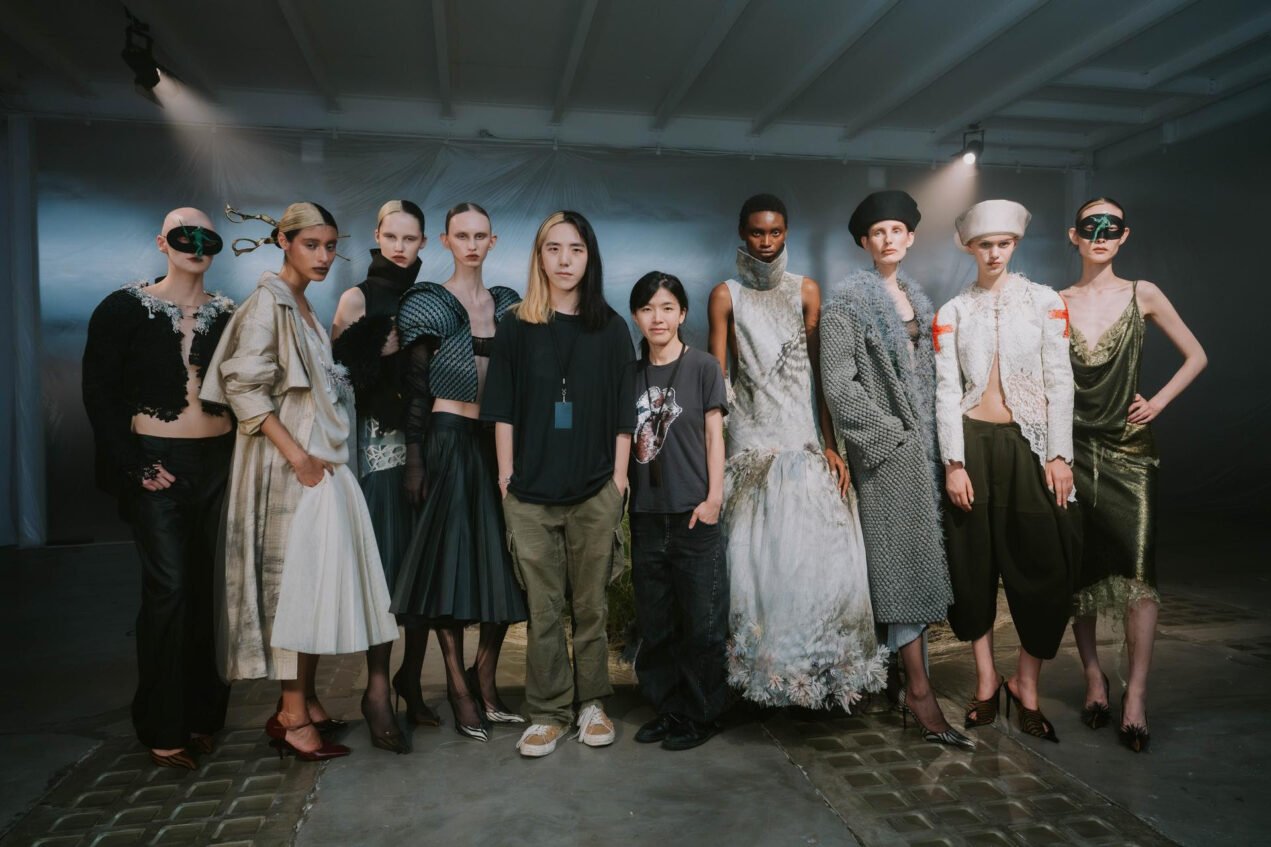
Contrast that with Tongoro, the label Sarah Diouf founded in Dakar in 2016. Its global breakthrough did not arrive through a flagship opening or a wholesale deal. It arrived through culture. Beyoncé wore Tongoro on vacation in 2018. She wore it again in Black Is King. Then she built custom Tongoro pieces into the Renaissance world tour, dressing herself and thirty dancers in a Senegalese label most of the audience had never heard of. Alicia Keys followed. So did Naomi Campbell. Each moment produced a measurable spike in sales, tripling at points, according to the brand.
What makes Tongoro instructive is not the celebrity attention itself but the model underneath it. The brand never opened a store in New York or Paris to chase its new audience. It stayed direct-to-consumer, fully digital, shipping worldwide from Dakar within five business days. Roughly seventy percent of its sales now come from the United States, sold entirely from a production base that never left Senegal. Diouf has been explicit that her ambition extends beyond commercial reach. She wants to build manufacturing capacity in West Africa itself, training tailors locally rather than outsourcing production to protect margin. The brand scaled its market without relocating its identity, which is precisely the opposite of the dilution trap the research describes.
The lesson here is not that every brand should go digital first. It is narrower and more useful than that. Tongoro scaled the parts of the business that travel well: the story, the product, and the cultural resonance, while keeping fixed the parts that define what makes it real. That is a discipline. It is not an accident, and it is not easily copied by brands unwilling to accept the limits it implies.
Learning to Fail Well
Uniqlo’s early years in the United States offer the clearest evidence that a bad first attempt does not have to be fatal, provided a company is willing to admit the mistake rather than defend it. Its first wave of American stores, opened in the mid-2000s, leaned into suburban mall locations with a product assortment built for Japanese bodies and Japanese shopping habits. The mismatch produced exactly the underwhelming results you would expect from transplanting a retail logic without adapting it.
What Fast Retailing did next mattered more than the initial misstep. Rather than retreating, the company slowed down and rebuilt with intention. It repositioned around flagship stores in dense urban centres, Fifth Avenue, and Union Square, using each one as what retail analysts later called a brand embassy: a controlled environment for teaching the market who Uniqlo actually was before expanding further. Sizing widened. Marketing localised. The company treated its first attempt as a pilot rather than a verdict, and by 2019 its international revenue had overtaken sales in Japan itself.
The distinction worth holding onto is that this patience was strategic, not sentimental. Uniqlo was not simply being cautious. It had a specific hypothesis to test: could a Japanese idea of everyday wear, quiet, functional, and deliberately unflashy, survive translation into American retail without collapsing into ordinary fast fashion? It built a small, controlled environment to find out before betting the balance sheet on the answer.
What These Three Stories Actually Share
Pulled apart, a shuttered boutique in Lagos, a digital label out of Dakar, and a recalibrated retailer from Japan look like unrelated stories. Different regions, different price points, different decades. Read together, they isolate the same variable. Each brand’s willingness, or refusal, to change its distribution model to fit the market it was entering, rather than asking the market to accept a model built for somewhere else.
Zegna did not fail because Lagos lacked demand. It failed because a single wholesale style boutique was the wrong mechanism for that demand. Tongoro succeeded in the United States not despite skipping physical retail but because digital distribution was the right mechanism for a story-driven brand with a small production base half a world away. Uniqlo needed two attempts at America because its first mechanism, suburban mall retail, had been borrowed wholesale from Japan rather than built for the American shopper standing in front of the rack.
This is the frame worth applying before any market entry decision gets made. Wholesale, owned retail, franchise, digital first: these are not rungs on a ladder toward some inevitable scale. They are different tools suited to different fits between brand and market. Choosing the wrong one is what actually causes dilution. International growth itself rarely is.
Recommended For You
Where Fashion Brands Growth Is Heading in 2026
The numbers for 2026 suggest the centre of gravity is shifting away from an old assumption, that international growth means Paris, New York, and Shanghai, in roughly that order. Emerging markets outside China, the Middle East, Africa, Latin America, Southeast Asia and India combined, have reached roughly forty-five billion euros in personal luxury goods value. That figure now matches mainland China in scale. It reframes Lagos, Nairobi, Riyadh and Casablanca from someday markets into markets brands should already be asking why they have not entered, particularly now that tariff pressure has made the traditional growth paths through the United States and Europe considerably more expensive to execute.
The brands positioned to benefit are unlikely to repeat the tentative boutique playbook that failed in Lagos over a decade ago. They are more likely to resemble Tongoro: digitally native, production anchored in the region that gives them authority, willing to let the brand travel through culture before it ever travels through square footage. Or they will resemble a recalibrated Uniqlo, patient enough to treat a first market entry as a hypothesis rather than a launch and humble enough to rebuild after getting it wrong the first time.
For African design houses in particular, the moment looks less like an obstacle course than an opening that most Western labels have not yet worked out how to use. Whether they figure it out before the continent’s own brands claim the ground first is, at this point, an open question. Nobody in Lagos seems to be waiting for the answer.
Sources and further reading:
The Business of Fashion / McKinsey, “The State of Fashion 2026”; FashionNetwork UK, “Export: fashion turns towards Africa”; reporting on Tongoro’s growth via Essence, Shine My Crown and Africa Renewal; retail analysis of Uniqlo’s US market entry via GLOBIS Europe and Metheus Consultancy.