
Every two minutes, somewhere in the world, a woman dies from complications related to pregnancy or childbirth. In 2023 alone, an estimated 260,000 women died from maternal causes, with Sub-Saharan Africa accounting for about 70% of those deaths. In Uganda, the latest WHO estimate puts the maternal mortality ratio at 170.3 deaths per 100,000 live births, while the country’s 2022 Demographic and Health Survey recorded 189 deaths per 100,000 live births over the preceding seven-year period.
Against that reality, even the way a woman gives birth can become a subject of judgement. A Caesarean section accounted for 13.9% of live births recorded in Uganda’s 2022 Demographic and Health Survey, and the World Health Organization describes it as a major surgical procedure that can be lifesaving when medically indicated. Globally, C-sections accounted for about 21% of births in 2018, with the proportion projected to approach 30% by 2030. Yet behind those figures are individual women navigating fear, medical decisions, surgery, recovery, and the profound physical experience of bringing a child into the world.
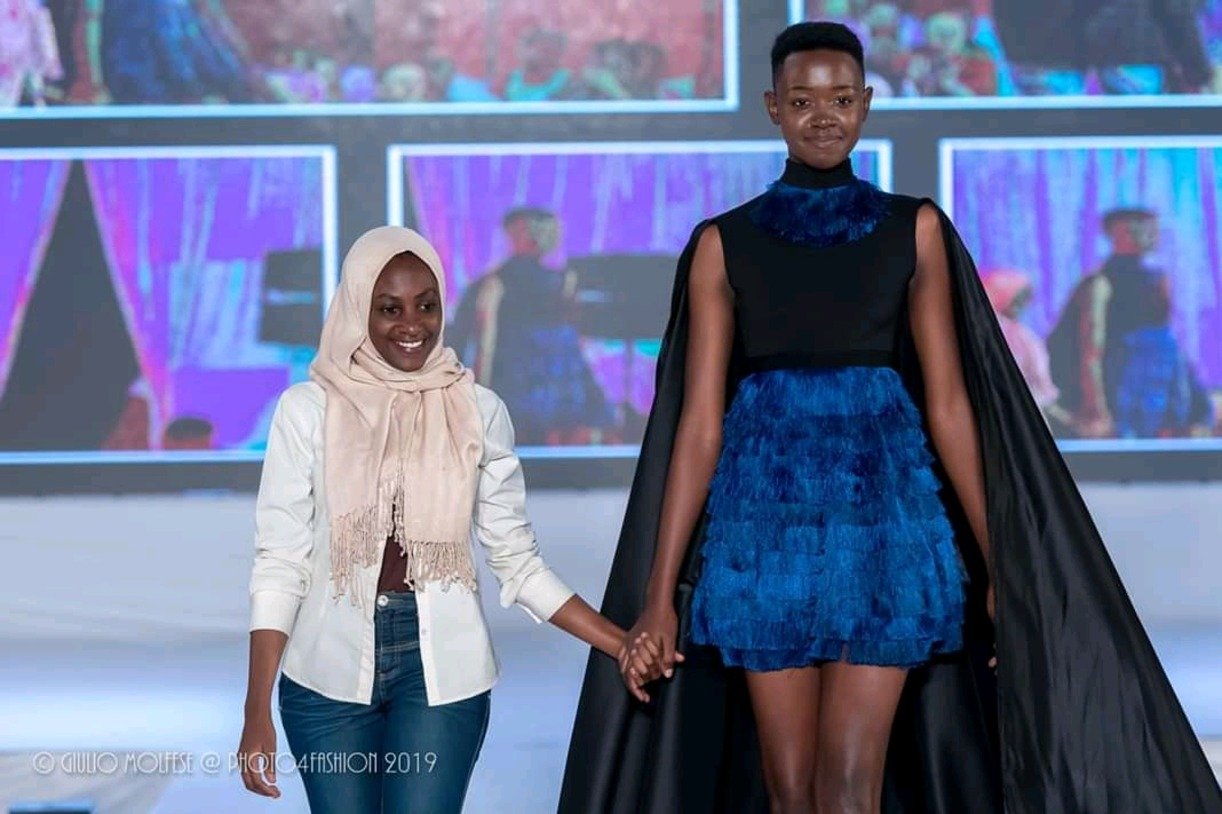
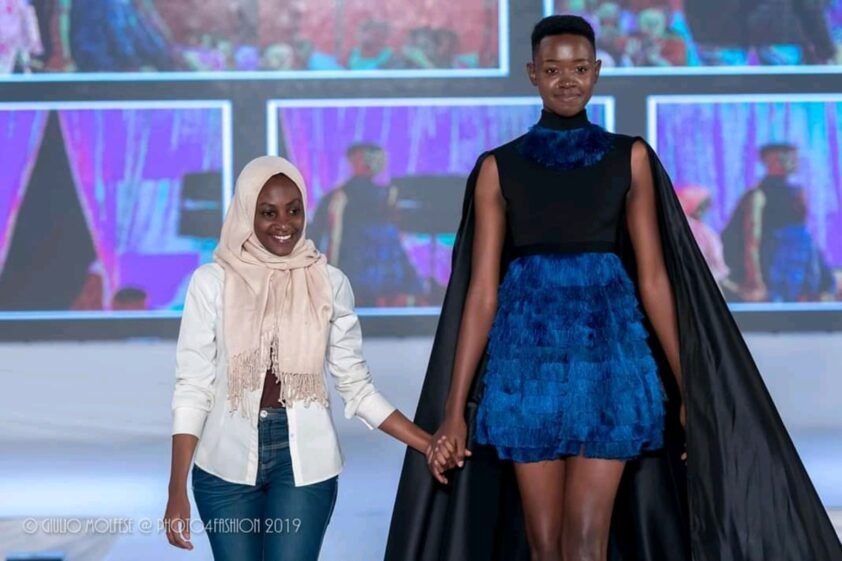
It is this often misunderstood territory that Ugandan designer Mushirah Rabaab Abdallah, better known as Keesha, chose to explore through fashion. Her couture creation, Layers of Life, transforms the anatomical layers involved in a Caesarean section into fabric, colour, texture and form, turning a medical reality that is rarely seen into a visual language of motherhood, childbirth and resilience. Miss World Uganda Trivia Elle Muhoza wore the gown during the Miss World 2026 Festival in Vietnam, and it became an international talking point, demonstrating how fashion can move beyond spectacle to make space for conversations that are deeply personal, culturally sensitive, and urgently relevant.
For Keesha, however, Layers of Life was never intended simply to create a viral moment. Inspired by conversations with women who had experienced C-sections, her own journey into motherhood and a broader interest in maternal health in Uganda, the designer set out to tell a story that could travel beyond the runway. In this conversation with FAB L’Style, Keesha opens up about the making of Layers of Life, the stigma surrounding Caesarean births, collaborating with Trivia Elle Muhoza, and her growing conviction that fashion can be more than something we wear. It can also be a language for telling the stories that society too often leaves unspoken.
FAB: Harriet shared your profile with me, and she mentioned that she had gone through the C-section procedure four times. I could only imagine what that must have been like. What first brought you to this subject?
Mushirah Rabaab: To be honest, I have one daughter, and I am pregnant again. I did not have a C-section with my daughter, but I have had women around me who went through the procedure, and it was such a major experience. Seeing what these women went through made it difficult for me to ignore the subject.
Their experiences inspired me, but the stigma around C-sections also made the topic important to me. My team and I felt it could become a source of inspiration for our work. However, the idea went deeper than the C-section itself. We were looking at maternal health issues in Uganda, and we eventually focused on the C-section as one way to tell that wider story.
When I describe Layers of Life, I explain that we were only able to create one piece for the Miss World competition. We had many other ideas that represented different areas of childbirth and maternal health in Uganda.
From Maternal Health to Fashion
FAB: What is the connection between that subject and dressing someone for an international competition?
Mushirah Rabaab: When we got the opportunity to dress Miss Uganda for Miss World, I saw it as a chance to tell a story through fashion on an international stage. Anyone can create a dress. You can make something beautiful, add sparkle and create a nice look, but we wanted to give the outfit a deeper purpose.
We had to research and find the right inspiration. As a team, we sat down and discussed the concept before explaining it to her. We told her what kind of dress we wanted to create and where the inspiration came from. Since she was going to step onto an international stage, we felt it was the right opportunity to use fashion to communicate a story.
To be honest, we did not expect it to go viral. We simply felt that the message was important to us, and we wanted to create something original and unique that carried a story. That was how we connected our inspiration to dressing her for Miss World.
Finding Fashion
FAB: Every creative has a story of where it started before the limelight. You said you never expected this to go viral, but what was it like growing up, and how did you find your way into fashion?
Mushirah Rabaab: From a very young age, I was interested in fashion. I had baby dolls that I loved dressing, and my mum knew that those were the toys I wanted most. I would make dresses for them and change their clothes from time to time.
At the time, I never thought I would become a fashion designer. In Uganda, some careers are seen as the good or respectable jobs, so even when I reached secondary school, fashion was not something I considered as a career. Yet I was always the person joining fashion competitions and school fashion shows. I was often the go-to person, but I still did not think I would turn it into a profession.
That changed when my dad sat me down and talked to me about becoming a fashion designer. I liked the idea, so I started learning a few things about fashion. I found an organisation that offered free training, and I used that opportunity to prepare myself for university.
When I got to university, I was given procurement. I did not even know what procurement meant, to be honest. I decided to go with it, but I found it difficult to move from that path back to fashion. By the time I wanted to switch, everyone had already registered, and I was too late to join a fashion school.
So, I found an apprenticeship with a Ugandan designer who was also very good at storytelling. He took me in, and I spent about a year learning from him. I taught myself many of the other things I know, but the most important lesson I took from him was the art of storytelling through fashion.
From there, I started getting clients and making dresses. I have never looked back. That is the story, precisely.
Beyond the African Print
FAB: What does being a Ugandan designer mean to you at a time when African fashion is gaining more international attention?
Mushirah Rabaab: I am still learning, but I was first inspired by African designers. They were my earliest sources of inspiration because they were close to me. I could access some of them, speak to them and see how they worked and approached their craft.
However, I have realised that some people expect African designers to use a certain print or traditional reference. With Layers of Life, I wanted to create something that someone might not immediately identify as African, even though it represents experiences that Africans also go through.
People can hear “African designer” and immediately think of African prints, traditional clothing or culture. I think we also need to tell stories about medicine, technology and other parts of African life because these things exist in Uganda and across the continent.
As designers, we can draw inspiration from those areas too. Those stories can travel beyond Africa and connect with people around the world.
The Idea Behind Layers of Life
FAB: You called your original concept a crazy idea. What did that first idea look like in your head before it became the gown the world eventually saw?
Mushirah Rabaab: I was looking for a starting point. I wanted something unique that we could take to the international stage. As I explained earlier, our team first looked at different issues and problems faced in Uganda. We eventually identified maternal health as one of the major issues we wanted to explore.
From there, we focused on two areas of childbirth: the C-section and traditional childbirth. My mind eventually settled on the C-section because it had so many layers that we could explore.
I felt it was a delicate subject, but I also saw the layers as representing strength, fear and sacrifice. Those are all part of childbirth. That was why I felt the C-section was the right inspiration for the story we wanted to tell. That was the idea in my mind when we began creating Layers of Life.
Translating the Body Into Fabric
FAB: Thinking about the C-section process, was there a particular layer that proved most difficult or meaningful to translate into fabric?
Mushirah Rabaab: I think it was the fat layer. The yellow layer was difficult for us because the other layers followed an ombre effect. We had the red, maroon, peach and burnt orange, but the fat layer was a completely different colour from the progression we were creating.
However, we felt that leaving it out would mean losing part of the actual C-section process. We wanted to represent the layers as accurately as possible. We also give thanks to God because He is the original artist. These layers were created by Him, so we wanted to emulate what actually exists in the body. I think the fat layer was the most difficult one for us to translate into fabric.
FAB: You are also talking about colour. The gown moves through different colours, textures and layers, from softer tones into deeper reds and burgundies. What is that progression communicating? Was there a specific thought behind it?
Mushirah Rabaab: We took a lot of references from different images of the layers involved in a C-section. We wanted to represent the actual process as closely as possible, so we also spoke to a doctor who explained the different layers to us.
At the same time, we wanted the gown to look fashionable first. Some of the layers may not be arranged exactly as they appear in the body, but we still wanted the final piece to work as a beautiful gown. We did not want it to look like a medical costume.
It became a process of going back and forth. We tried different colours and had shades that we planned to use but eventually removed. There was a lot of trial and error, but in the end, we were happy with the result.
Recommended For You
Designing for Presence
FAB: Pageant fashion often prioritises spectacle: shimmer, movement and visual impact. What was it like working with Trivia? What did it teach you about designing for a woman who has to communicate an idea not only through a garment but also through movement and presence?
Mushirah Rabaab: Trivia is a very open-minded person, and the Miss Uganda team was also very supportive. To be honest, they gave us all the creative freedom we could have asked for. Nobody told us to change this or change that. They trusted us with the concept.
When we sat her down and explained the story, she became even more connected to the gown. I could almost see her tearing up as I explained the inspiration, and she saw the dress on her. She looked at the details and said, “Oh, this is such a lovely inspiration.”
She is also a domestic violence advocate, so I think she connected with the message on a personal level. Talking with her was very easy. She received the story with grace and understood what she had to communicate through the gown.
Discovering the Power of Storytelling
FAB: What did this project reveal about you as a designer that you did not know before you made it?
Mushirah Rabaab: When I started creating this story, it was simply a story and a gown to me. I had no idea it would become so widely discussed or spark conversations around the world. It made me realise that I have the power to create something through what I know best, which is fashion, and use it to communicate issues that affect women and society.
I never knew I could create a story that would resonate with so many people or open conversations about different issues. This gown made me realise that storytelling through fashion is a path I want to continue.
I can also see myself teaching younger creatives how to use fashion to tell stories. I want to take this work beyond Uganda and present it to wider audiences, knowing that a story rooted in my experience can still resonate with people anywhere in the world.
Challenging the C-Section Stigma
FAB: Do you think some people see C-sections as a modern choice because they involve surgery and can cost more? Some people assume that women choose C-sections because they do not want to go through labour, tearing or the physical demands of natural birth. What are your thoughts on that perception?
Mushirah Rabaab: This goes back to the stigma I see around C-sections, and I believe it is something we need to address. I am happy that this dress has also sparked conversations like this.
Here in Uganda, when some older women hear that someone had a baby through C-section, they may not ask why the procedure was necessary. Instead, they may immediately say, “So you wanted to take the easy way out?” They do not always consider that there could have been a medical reason.
Many mothers genuinely want to give birth naturally. But sometimes, even after going through hours of labour, something happens at the last moment. Their blood pressure may rise, the umbilical cord may be around the baby’s neck, or another complication may occur. At that point, the mother may have to make another sacrifice and undergo a major surgery.
A C-section is major surgery, and recovery can take a long time. So, I do not agree with the idea that it is the easy way out. From what I have seen among women who have had C-sections, the experience can be twice as hard because you have to recover from the surgery while also caring for a newborn.
The healing process can be long and difficult. That is why I think we need to understand each woman’s experience before judging the way she gave birth.
Beyond One Gown
FAB: Finally, when all the lights and sound quiet down, what story do you want Keisha Abdalla’s next chapter to tell?
Mushirah Rabaab: Layers of Life feels like just the tip of an iceberg. I feel that this story needs to be told much more. We had an entire collection behind it, with different ideas connected to the wider subject.
I want to make the topic broader and create more pieces that communicate different issues around childbirth. If we focus only on C-sections, we leave out mothers who have experienced other challenges, including difficult recoveries and the physical trauma that can come with childbirth. There is so much involved in childbirth, and I do not want to stop with one gown.
I want to create more pieces that communicate these different experiences. Once I feel I have explored this subject fully, who knows what will come next? Maybe another project will allow me to tell stories about different issues affecting our society and environment.