

Africa is showcasing its talents, and Adama Paris aims for the continent to gain more than just applause. With Lagos Fashion Week having just taken its final bow, AFRIFF bringing filmmakers and the international film business together in Lagos, and Senegal opening the 2026 Summer Youth Olympic Games with a spectacular celebration, Africa’s creative energy is hard to ignore. Across fashion, film, sport and the wider creative economy, the continent is making its presence felt. But beyond the runways, red carpets and opening ceremonies, a more difficult question remains: who owns the business behind the applause?
For Adama Paris, visibility is only the beginning. The Senegalese fashion designer, entrepreneur and founder of Dakar Fashion Week has spent more than 25 years building platforms for African fashion. She knows what it takes to get designers noticed. She also knows that international recognition does not automatically translate into economic power. Who manufactures the clothes? Who finances production? Who controls distribution and retail? And why should African designers create the value while others control the machinery that turns it into money?
In this conversation with FAB L’Style, Paris looks beyond the excitement of fashion weeks to confront the industry’s biggest structural questions, from manufacturing and investment to policy, education and intra-African trade. Her message is clear: Africa does not need another reminder that its creative talent is world-class. It needs the infrastructure, capital and commercial networks to make that talent count on its own terms.
Who Really Owns African Fashion? Adama Paris on Power, Capital and Global Control
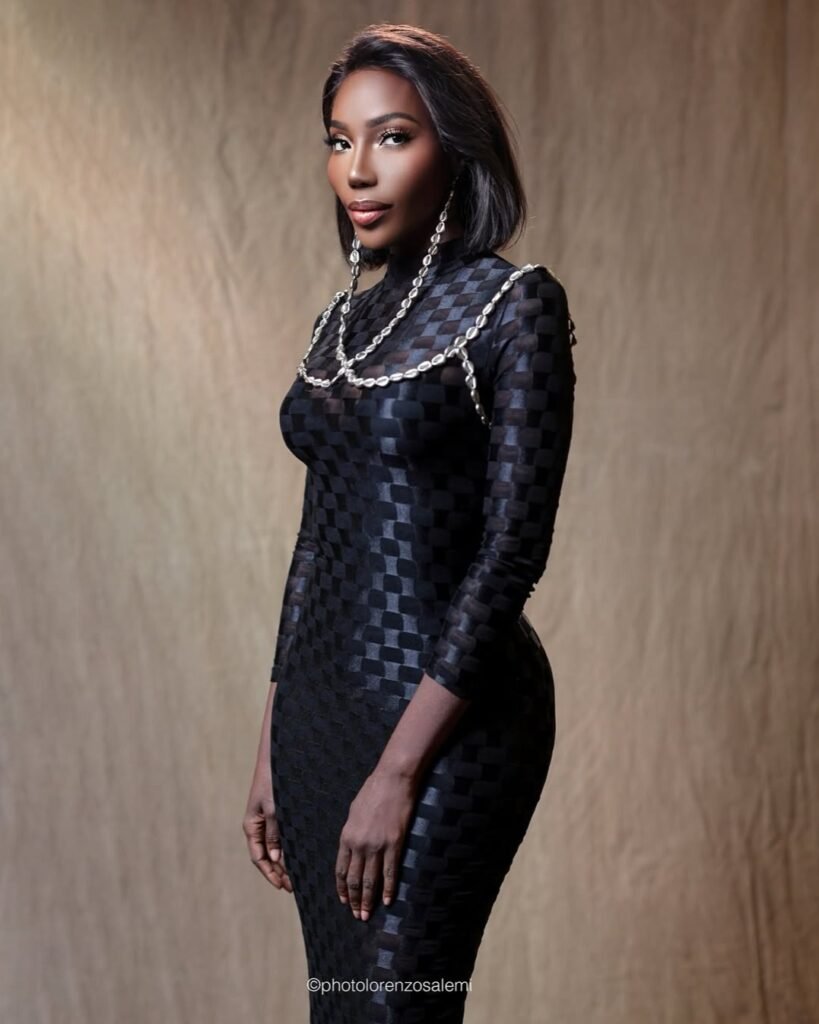
FAB: We are in 2026, and African fashion is globally visible, but not necessarily globally powerful. From where you stand, what is the single biggest illusion the industry is still holding onto?
Adama Paris: I think the biggest illusion is that visibility means power. It doesn’t. Today African fashion is everywhere. You see African designers on international runways, celebrities wearing African brands and African aesthetics influencing global fashion. But being visible is very different from controlling the business. The real question is: who owns the production? Who controls distribution? Who has access to retail? Who has the capital? Who is making money from all this visibility? For me, success will be when African fashion is not only celebrated creatively but also when we control more of the economic value that our creativity generates.
FAB: African designers are now on global runways, stocked internationally, but ownership of production, distribution, and retail is still largely external. Where exactly is Africa still losing control in the value chain, and how do we reclaim it?
Adama Paris: We lose control when we create the product but depend on somebody else to manufacture it, finance it, distribute it, sell it and sometimes even tell its story. A designer can have an amazing collection, but if she cannot produce 500 pieces at the same quality, deliver them on time, finance the production and get them into stores, she doesn’t really have a scalable business. We need to build the infrastructure around the designer. Manufacturing, logistics, financing, retail and distribution have to become part of the African fashion conversation. The designer cannot do everything.
FAB: If you had to prioritise one: manufacturing, distribution, or intellectual property, where should Africa focus first?
Adama Paris: Distribution. You can manufacture a beautiful product, but if you cannot sell it consistently, you don’t have a business. I have seen this myself. African designers don’t necessarily need more fashion shows. They need places where people can actually buy their clothes. Of course, manufacturing and intellectual property are essential. But if you ask me where I would start today, I would start with access to the market.
FAB: For decades, lack of funding has been cited as a barrier. But in 2026, is the problem still lack of capital or lack of the right kind of capital?
Adama Paris: I think it is both, but especially the wrong kind of capital. Fashion has a particular business cycle. You need money before you sell: to buy fabric, produce, photograph the collection, market it and ship it. And then sometimes you wait weeks or months to be paid by a retailer. A traditional loan doesn’t necessarily understand that cycle. African fashion needs investors and financial institutions that understand fashion as a business, not simply as an event or a cultural project.
FAB: What would a fashion-specific financing model for Africa actually look like in practice?
Adama Paris: It has to finance the different stages of the business. A designer who receives a serious retail order should be able to finance production against that order. A growing brand should have access to working capital. A manufacturer should be able to finance machinery and increase capacity. And financing cannot only go to designers. It has to go to textile producers, factories, logistics companies, technology and retail platforms. It has to support the entire ecosystem. That is how you build an industry rather than simply finance collections.
FAB: African fashion is celebrated for creativity but not yet industrialised at scale. What is stopping African fashion from becoming a true economic powerhouse?
Adama Paris: We have spent a lot of time proving that Africa has creativity. I don’t think we need to prove that anymore. What we haven’t built sufficiently are the systems around that creativity. There is still fragmentation between countries, difficulties with production, logistics, financing and market access. The next phase of African fashion has to be less about proving that we are talented and more about building the infrastructure that allows that talent to become economically powerful.
FAB: Do we need fewer designers and more operators – people building factories, logistics systems, and supply chains?
Adama Paris: I wouldn’t say fewer designers. I would say many more operators. We need factory owners, production managers, buyers, merchandisers, logistics specialists, textile engineers, retailers, investors and people who understand ecommerce and supply chains. We have put the designer at the centre of everything, but no global fashion industry is built by designers alone.
Dakar Fashion Week, Ecosystem Thinking
FAB: You didn’t just build a brand; you built platforms like Dakar Fashion Week and Black Fashion Week. Looking back, what did you understand early about ecosystem building that the industry is only now catching up to? And if you were starting today in 2026, what would you build differently?
Adama Paris: When I started Dakar Fashion Week, I understood very early that building my own brand was not enough. If there is no platform, no visibility and no network connecting designers, models, photographers, media, buyers and audiences, everybody struggles individually. That is why I built platforms alongside my brand. But if I were starting today, I would integrate the commercial side much earlier. I would think about retail, distribution and business development from day one. Because a fashion week can create visibility, but visibility has to lead somewhere.
FAB: You’ve always spoken about “fashion without borders”. But in today’s market, where identity is currency, how do African designers globalise without diluting cultural specificity?
Adama Paris: I don’t think being global means becoming less African. The mistake is thinking that to be international, you have to make yourself look like everybody else. The strongest designers in the world have a point of view. Their identity is precisely what makes them interesting. But identity also doesn’t mean putting an African print on everything. Africa is contemporary. Africa is urban. Africa is minimal, maximal, traditional and futuristic. It can be all of those things. The goal should be to create from who we are without allowing the international market to define what “African” is supposed to look like.
FAB: Your pieces are manufactured in Morocco, one of the few African countries with relatively stronger production infrastructure. What will it take to build a Pan-African manufacturing ecosystem that can compete globally?
Adama Paris: When I started as a designer, I was fortunate to be able to manufacture in Morocco. For me, that experience also showed that we already have manufacturing capacity on the African continent. Morocco has built a real strength in this area. Today, however, I no longer manufacture in Morocco. Over the years, I have developed my own production in Senegal, in my atelier. I started small, and little by little I have grown that production capacity.
My ambition is not only to produce for Adama Paris. I want to continue developing the atelier so that we can also produce for other African designers who may have the creativity and the market, but don’t necessarily have access to reliable production. I think this is how we have to build the African fashion industry: building capacity where we are, strengthening it, sharing it and connecting production capabilities across the continent. We shouldn’t necessarily expect every African country to do everything. Different countries can develop different strengths, and those strengths can complement each other.
For me, that is what a real Pan-African manufacturing ecosystem should look like.
Policy, Government & Real Intervention
FAB: Governments often speak about supporting the creative industry, but impact remains limited. What specific policy intervention would immediately change the trajectory of African fashion?
Adama Paris: I would focus on production and intra-African trade. We need to make it easier and cheaper for an African fashion company to produce, source and move goods within Africa. If fabric comes from one African country, production happens in another and the customer is in a third country, that process should not be more complicated than importing something from outside Africa. Government support also needs to move beyond sponsoring events. Events are important; I have built one for 25 years, but the industry also needs industrial policy.
FAB: Africa has talent, but not enough structured development pipelines. What is broken in how we are training the next generation of designers and fashion entrepreneurs?
Adama Paris: We train many people to become designers, but not enough to build companies. A young designer needs creativity, of course. But they also need to understand pricing, margins, production, cash flow, contracts, intellectual property, wholesale and distribution. And we need technical training as much as creative training. Not everybody in fashion needs to become a designer. A functioning industry needs thousands of skilled people behind every successful brand.
FAB: The diaspora is increasingly influential in influencing African fashion narratives. How can African fashion better leverage diaspora capital, not just culturally, but economically?
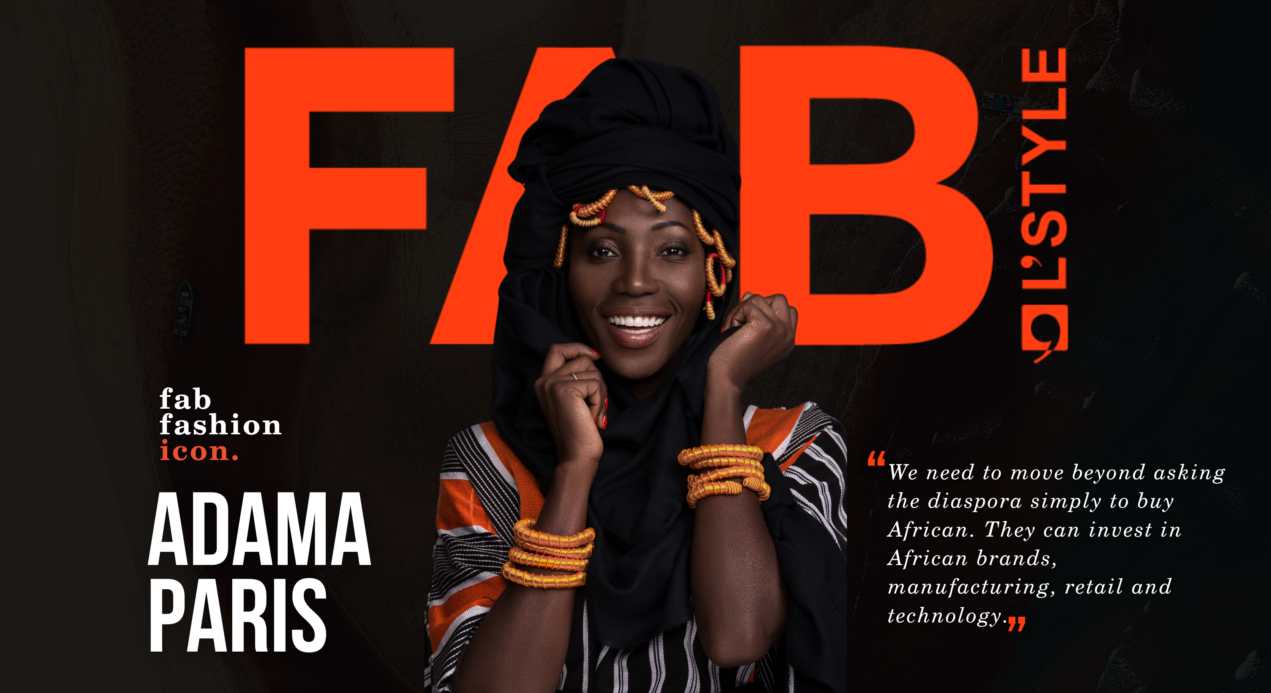
Adama Paris: The diaspora is an enormous opportunity because it already has an emotional and cultural connection to Africa, but it also has networks, expertise, capital and access to international markets. We need to move beyond asking the diaspora simply to buy African. They can invest in African brands, manufacturing, retail and technology. They can open distribution channels. They can bring expertise and relationships. The relationship should become economic as well as cultural.
FAB: Sustainability is now a global talking point, but Africa has historically practised circular fashion systems. What are we doing wrong in how we are packaging and communicating that story? How can African fashion lead the global sustainability conversation?
Adama Paris: Sometimes I find the sustainability conversation interesting because many practices now presented as new have existed in Africa for generations. Repairing clothes, reusing fabrics, producing locally, making garments to order and passing clothing between generations are practices that have existed for a very long time. But we haven’t necessarily documented, measured or communicated these systems in the language the international industry recognises. At the same time, we shouldn’t romanticise everything African as automatically sustainable. It isn’t. But there is knowledge here, and there are practices here that deserve to be part of the global sustainability conversation.
FAB: African fashion often thrives in moments, fashion weeks, and viral collections but struggles with continuity. What does it take to move from moments to systems?
Adama Paris: By asking what happens after the fashion show. That question is very important to me. You can have an incredible show; everybody posts it, everybody talks about it for three days, and then what? Can the customer buy the clothes? Can the designer produce the orders? Can they deliver? Can they finance the next collection? A moment becomes a system when there is continuity behind the visibility.
Personal Lens, Leadership & Legacy

FAB: You left banking to build this industry. Looking back, what did you underestimate about the scale of the challenge?
Adama Paris: I underestimated how much infrastructure we would have to build ourselves. When you start as a designer, you think your job is to design clothes. Then you realise you have to create the platform, find the models, convince the media, find sponsors, educate partners and create opportunities for retail. Sometimes you are building the road while you are driving on it. I don’t think I understood at the beginning how long that journey would be. Twenty-five years later, I understand it very differently.
FAB: You’ve been at the forefront of this movement for decades. What responsibility do pioneers like you carry now, to step back or to build stronger structures for others?
Adama Paris: I don’t think my responsibility is simply to step back. I think my responsibility is to make sure that what we built can exist beyond us. Twenty-five years of Dakar Fashion Week cannot just be about celebrating what happened. I have to ask: what remains for the next generation? The next generation shouldn’t have to fight every battle we fought. For me, legacy is not having people say, “Adama did this.” Legacy is creating platforms, opportunities and structures that allow somebody else to go further than I did. And if the next generation goes much further than us, then we have succeeded.