
It is a unique clarity that comes with the closure of a life lived for long. To Ngozi Rosemary Akande, retiring meant going back to herself; a transition from years of dedicated service to the creative freedom in the world of art. After dedicating 28 years to the Nigerian civil service, she went back to the studio with the mindset of an artist ready to deal with memories, materials and meanings in her unique way. This new series of works by Akande, using pieces of fabrics gathered over the years, uses the canvas as an archive where colour tells stories and textiles keep time. Through the interview with FAB L’Style, we get to learn more about her practice, heritage, discipline and the invisible work of the female artist. Not to mention, the quiet urgency of continuing to create long after the world expects you to stop.
FAB: You just presented your second solo exhibition since retirement. How did it go?
Ngozi Akande: The exhibition went very well. I retired on May 28, 2025. I marked my retirement and my 60th birthday with a solo exhibition with the theme “Life In Colours”. After serving 28 years in the civil service, work kept me extremely busy. Even with those demands, I continued to produce artworks and participated in exhibitions.
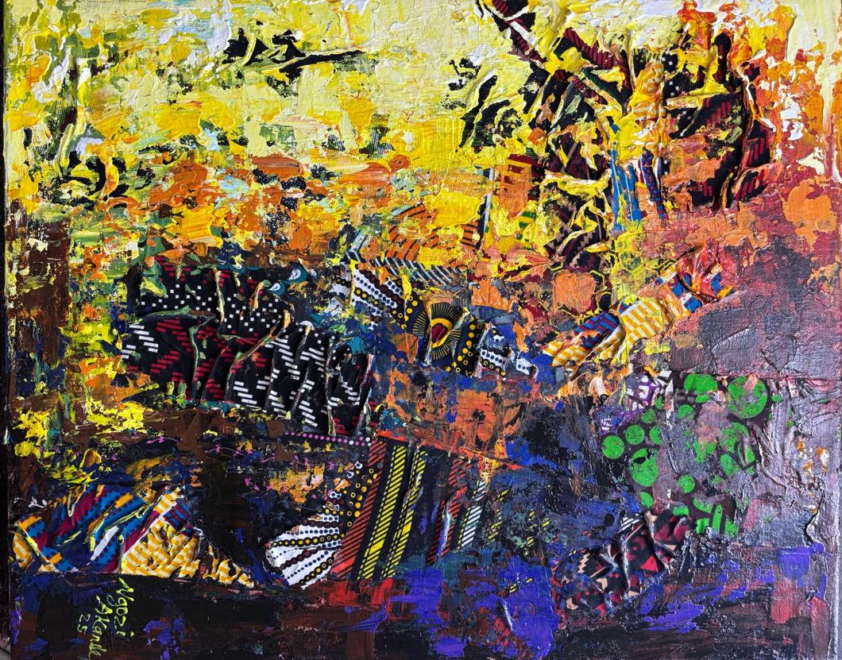
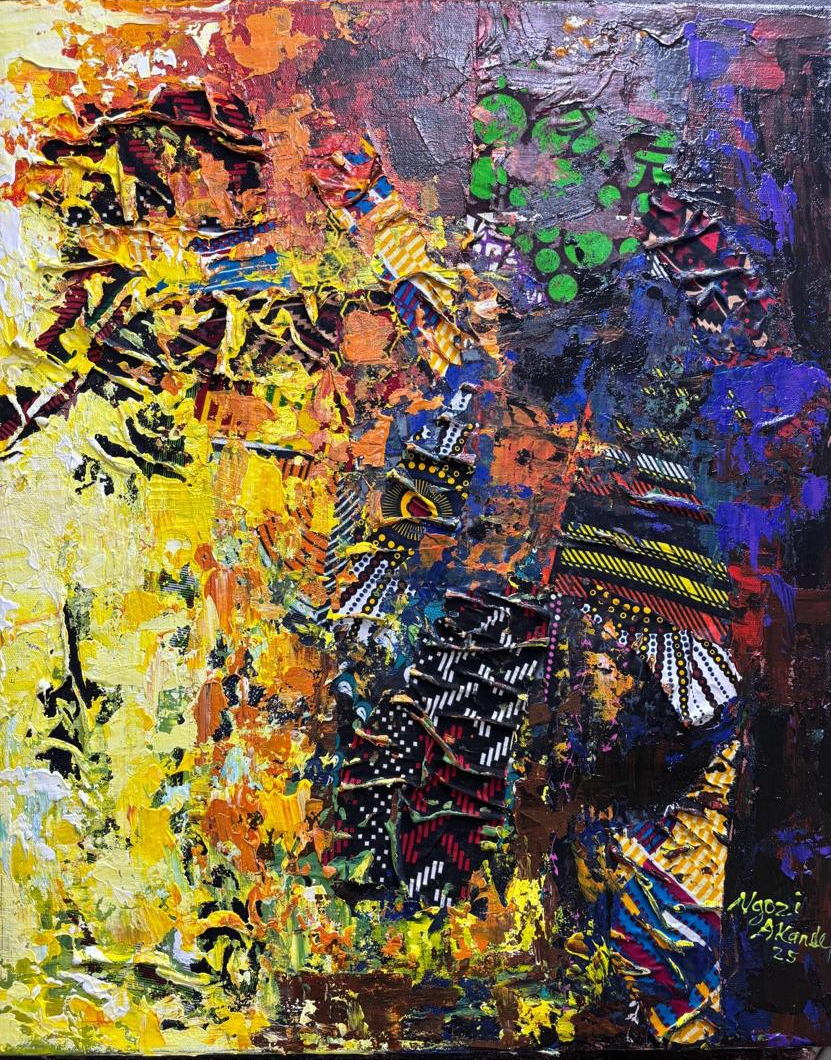
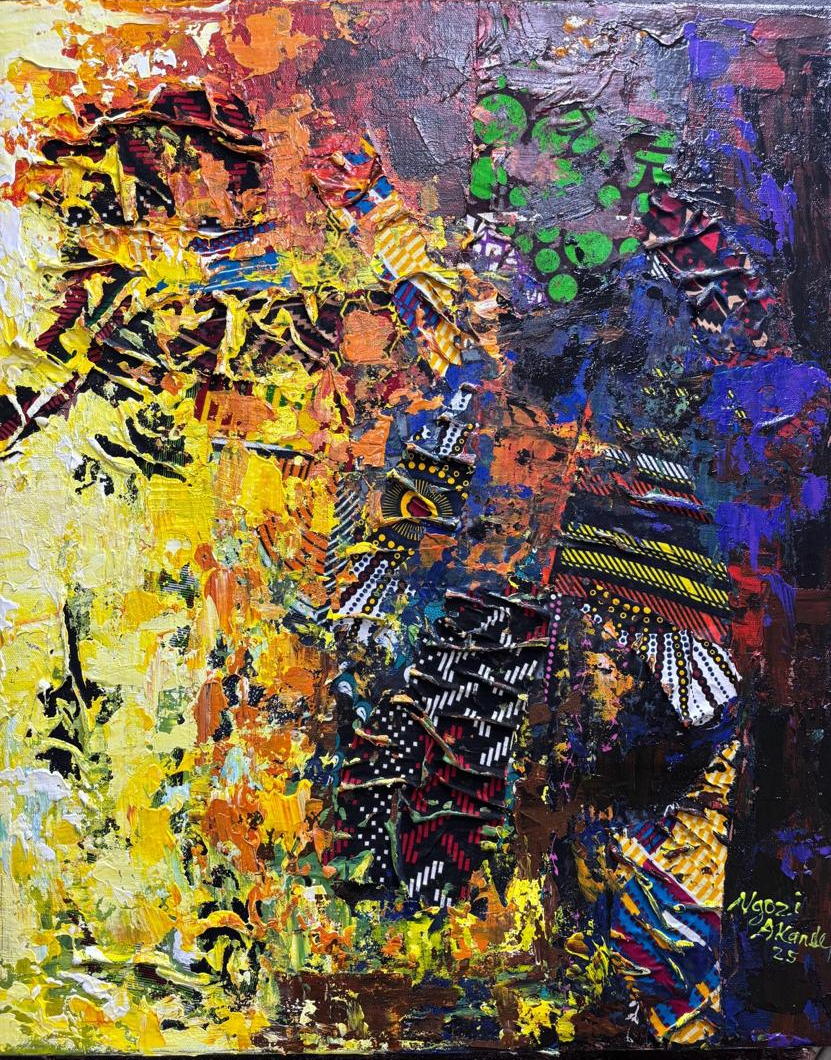
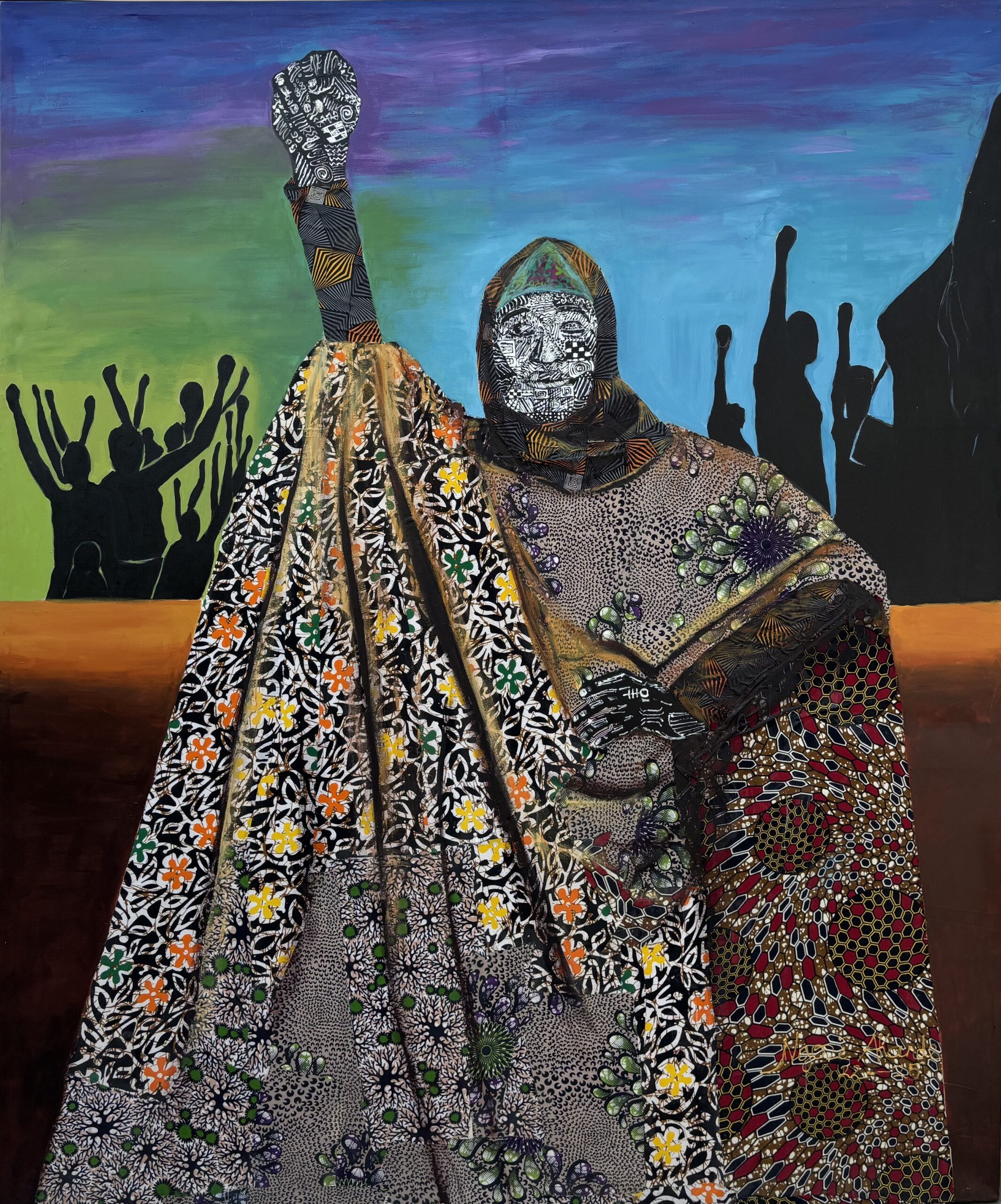
This time I had the freedom to spend more time in the studio. I could paint what I truly wanted to paint. The exhibition focused on fabrics that I have been collecting for many years. After sewing my clothes, I usually keep the leftover pieces of fabric. Over time I gathered many of them and decided to incorporate them into my artworks.
I created the pieces with deep emotion and passion. The process allowed me to express my love for art in a very personal way.
FAB: You titled the exhibition Pattern Pulse, where pigment meets textile memory through texture. What is this theme addressing?
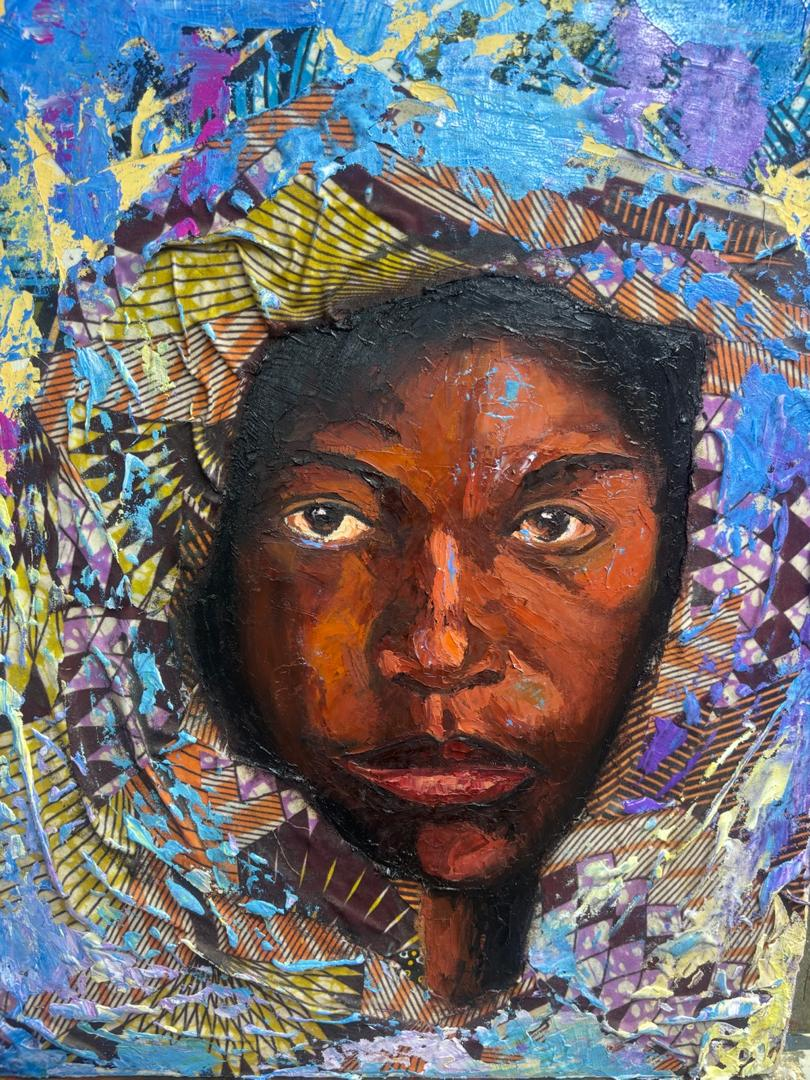
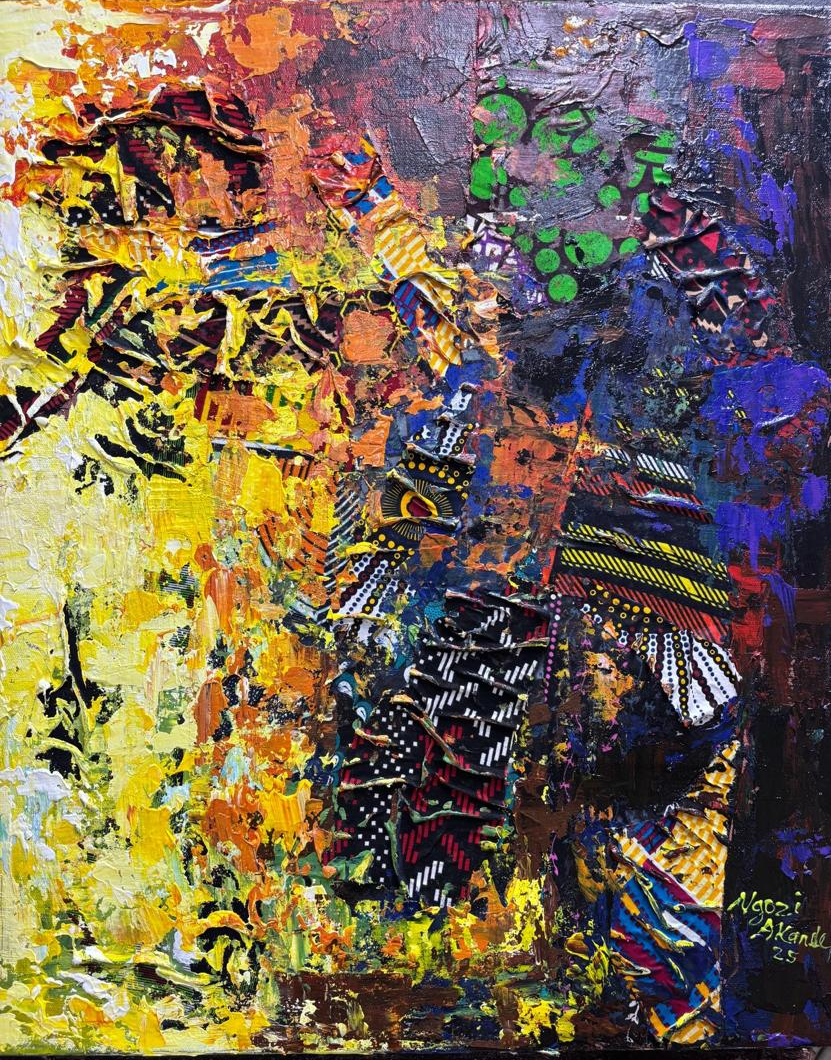
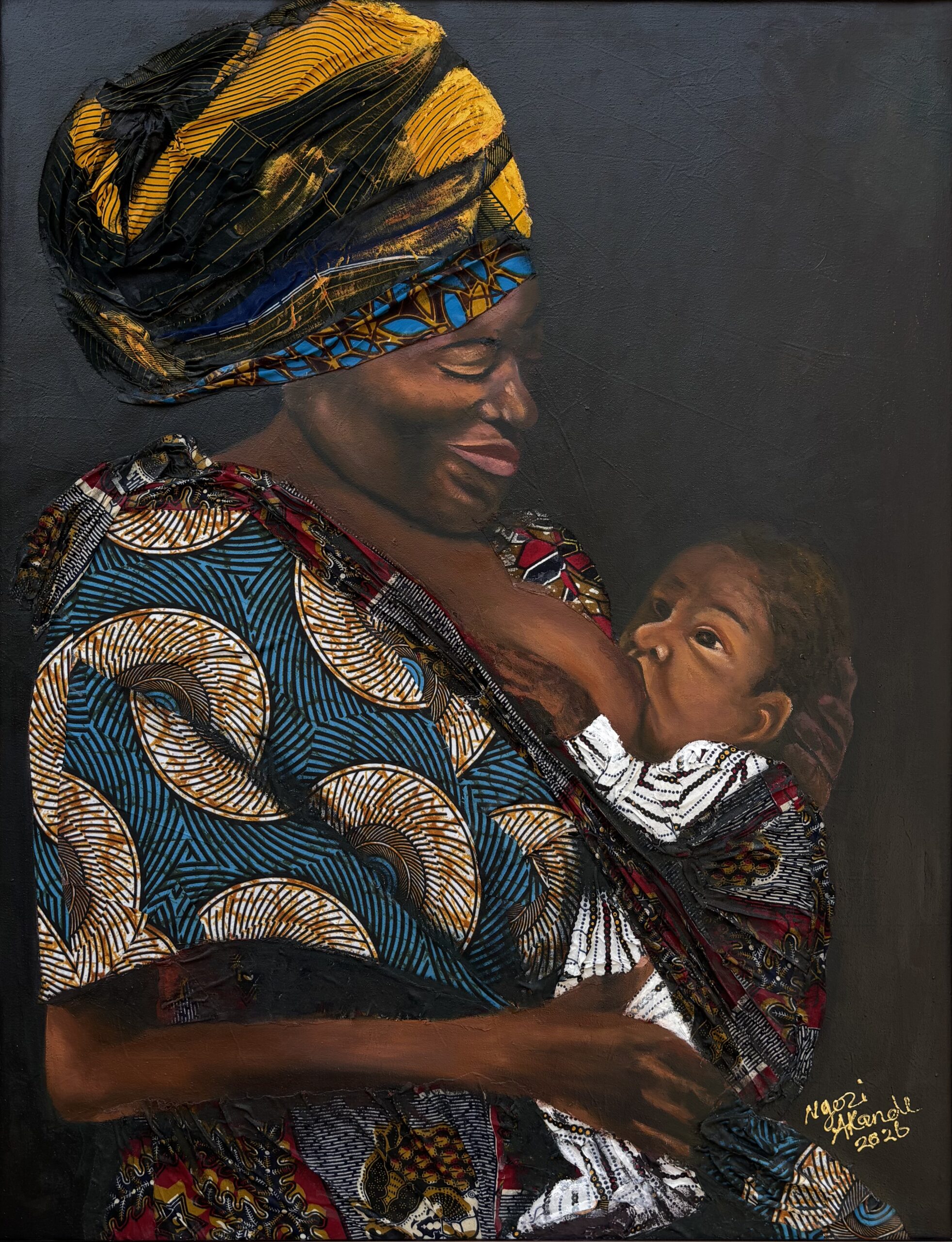
Ngozi Akande: The theme of the exhibition reflects my use of fabric to create texture within my paintings. I place textile pieces directly on the canvas and integrate them with paint to produce rich surfaces and layered effects.
Many people associate textiles with embroidery or sewing. My approach is different. I create thick textures that give the canvas a sculptural quality. The fabrics become part of the painting itself. After arranging them on the canvas, I apply colours and design elements with acrylic paint.
I have been developing this style for many years. Audiences responded very positively during the exhibition. Many visitors asked how I achieved the effect. Most people expect paintings to have flat surfaces, but my work combines mixed media elements where textiles and paint interact visually.
Through this work I also share a message about sustainability. Artists can use found materials and objects around them to create meaningful work. At the same time, these fabrics preserve cultural history. Some of the textiles I use may never appear again because styles change over time.
When someone looks at the painting years from now, they can recognise fabrics from different decades. The 1970s, the 1980s, the 1990s, and the 2000s each produced distinct textile patterns. By embedding these materials in my paintings, I preserve fragments of cultural memory while creating new visual compositions.
FAB: You studied at Ahmadu Bello University, an institution that has produced generations of influential Nigerian artists. Beyond technical training in symbolism and realism, what intellectual awakening did you experience in Zaria? Can you share some memories from your time on campus?
Ngozi Akande: My experience in Zaria provided a strong foundation. We learnt many artistic techniques, but one characteristic of artists from Ahmadu Bello University is our bold use of colour. We value vibrant palettes and understand how to combine colours effectively.
The northern landscape also influenced our work. Many of my early paintings depicted scenes from northern Nigeria. I painted Fulani communities, Emir palaces, city gates, and Fulani maidens. I also explored cultural scenes such as the Durbar and polo games.
After graduation, an artist must discover a personal direction. University training introduces many ideas, but life outside campus demands a different approach. Artists must respond to the wider world and develop their own voice.
During my studies we focused strongly on realism. We learned to observe carefully and paint what we saw. I also developed strong skills in landscape painting because I love nature. The campus environment offered many beautiful scenes to paint.
When I later joined the National Council for Arts and Culture in 1997, my schedule became very demanding. I had less time to produce highly detailed naturalistic paintings. That situation pushed me toward mixed media. The approach allowed me to work efficiently while still participating in exhibitions.
In university you often create work to pass your courses. You focus on mastering techniques and meeting academic expectations. After graduation you begin to identify the specific artistic path you want to follow.
FAB: From your experience, do you think students today still face the challenge of graduating without enough understanding of the realities outside the university environment?
Ngozi Akande: Artists usually possess strong creative instincts. Because of this, many art graduates succeed in different fields. Some become teachers, designers, or entrepreneurs. I know many fine artists who are excellent tailors.
One of my closest friends began sewing while we were still students. My tailor in Abuja also studied fine art at Ahmadu Bello University. I even know art history graduates who have become exceptional painters.
Artists can adapt to many professions. However, I always encourage artists, especially women, to continue practising their art regardless of the job they choose. History will not remember someone simply as a creative director in a furniture company. Artists gain recognition through exhibitions and creative output.
When I returned for my master’s degree, we studied earlier artists through exhibition catalogues and documentation. If artists do not exhibit their work or participate in artistic events, their contributions may disappear from the record.
I worked as a civil servant for 28 years, yet I never stopped practising art. Whenever I heard about an exhibition, I found a way to participate.
The economic situation today also affects artists. Many people need stable employment. I once advised some younger female artists not to accept certain jobs because I understood how demanding full-time work could be. Artists such as Millicent, Ndidi Emefele, and Jacqueline Sowari were among the younger artists I mentored.
Looking back, I realise that employment limited my own artistic growth to some extent. I managed to sustain my practice, but I know I could have achieved even more without those constraints. Very few artists successfully balance full-time work, financial stability, and consistent artistic practice.
Today I believe artists can still pursue employment while maintaining their creative work. It requires discipline and dedication, but it is possible to manage both paths.
FAB: You witnessed the formation of the Female Artists Association of Nigeria. What structural barriers facing female artists still remain largely invisible today? Have the problems been solved, or do major challenges still exist?
Ngozi Akande: It is difficult to say that any problem has been completely solved. Solving structural issues takes time. The formation of the Female Artists Association of Nigeria in 2001 was a very important moment for us.
My involvement actually began earlier. In 1991 I participated in the Guinness Unity Through Arts Exhibition. That experience introduced me to many artists in Lagos. Later, in 2001, I received an invitation to the Women in Art Exhibition organised by the National Gallery of Art, Nigeria. During that event, Dr P. C. Dike, of blessed memory, who served as the Director General of the National Gallery of Art, gathered the women artists together. He pointed out that many female artists were inactive and encouraged us to form an association.
We officially launched the association at the exhibition opening on November 2, 2001. Our goal was to encourage graduate female artists to continue practising after graduation. Many women completed their studies but became uncertain about their next steps. Some of them picked up other professions, becoming bankers, sales executives, or art teachers without continuing their artistic practice.
We wanted to change that narrative. We encouraged women to use their art to address social issues affecting women while also showcasing their works. At the time, the Society of Nigerian Artists often issued calls for participation in exhibitions. Very few women responded. Some felt shy or intimidated. However, when we organised exhibitions specifically for female artists, participation increased dramatically. Women felt more confident and empowered to present their works.
For the first ten years of the association, we did not sell a single artwork. That did not discourage us. During my tenure as president, I insisted that artists create new works for each exhibition. I did not allow members to repeat previous pieces. This approach pushed artists to keep producing.
Over time many artists realised they had built large bodies of work. When I eventually organised my own solo exhibition, I had more than 200 artworks and could not display them all.
The biggest challenge remains marketing and selling our works. Exposure helped us grow. I visited many embassies and wrote letters requesting collaboration. Eventually several embassies supported our exhibitions and helped showcase our works. We also collaborated with an international organisation in Washington, DC. Through these partnerships we travelled abroad and organised programmes to encourage the younger generation, which brought about the Children’s Creative and Culture Festival, the “Future Me” Art Competition and the “Nigeria Art Olympiad”. We also created an “End Violence Against Women and Girls” art competition for schools.
However, patronage and funding remain major obstacles. Male artists often find it easier to promote their work. They can travel freely, visit offices, approach galleries, and present their work directly to buyers. Many women find that process more difficult.
Another problem is infrastructure. We still do not have a permanent gallery space. Even the National Gallery of Art does not have enough exhibition space to support artists consistently. This situation reflects a broader institutional problem and a lack of awareness about the value of art.
Things have started to improve in recent years. More people now appreciate the arts and support artists. One of the first collectors who purchased my work was Prince Yemisi Shyllon, in 2007. That artwork is now part of the Yemisi Shyllon Museum collection in Lagos. The National Gallery of Art also acquired some of our works.
Even with these improvements, artists still struggle to find studio spaces, funding, and institutional support. Despite these challenges, we continue to work, create, and exhibit. We currently have an exhibition running at Mydrim Gallery in Lagos to mark 2026 IWD that opened on March 6. Another exhibition will take place in the French Institute, Owerri, and another is planned in Port Harcourt. Female artists continue to organise and push forward individually and collectively.
FAB: What responsibilities come with creating African artworks for an international audience? Does that create pressure to explore certain themes, especially when artists are seeking patronage and trying to sell their work?
Ngozi Akande: I believe every artist should remain authentic. Artists should express who they truly are. Eventually people will discover them for their originality. Every creative person carries a message. What matters is how the artist tells that story and how clearly the message appears in the work.
However, artists also need platforms to share their stories. Many talented artists struggle because they do not know how to present or communicate their ideas to the public. That is where we must begin.
When we talk about global recognition, consistency is very important. Artists must keep creating and continue exhibiting their work. They should never stop. Passion drives most artists more than profit. Many artists create because they love the work itself.
Personally, I often preferred to keep my artworks. I enjoy seeing them in my own collection. Sometimes I create a piece that I love so much that I hesitate to sell it. However, artists also need income to survive and support their daily lives.
Many artists want their work to make a statement first. Sales usually follow when people connect with that statement. If you speak with many great artists, you will discover that their original intention was not simply to make money.
For example, consider Nike Davies Okundaye. She spent many years creating art before financial success arrived. Visitors who see her gallery today may think she just began recently, but she has worked for decades.
The same applies to artists such as Bruce Onobrakpeya. Earlier generations did not sell many works when they began their careers. Recognition and financial value come much later.
We hope younger artists will live long enough to witness the appreciation of their work. Art is a legacy and a long-term investment.
Artists should focus on presenting themselves well, participating in exhibitions, and sharing their work widely. Today Nigerian and African art attract strong international interest. That creates new opportunities.
Instead of trying to satisfy foreign expectations, artists should focus on telling authentic African stories. International audiences want to understand our experiences through our own voices. They are not interested in colonial narratives about Africa. They want to hear the stories we tell ourselves.
Artists can share those stories through painting, literature, film, and other creative forms. In 2024 I attended Fame Week Africa in Cape Town. During that event we discussed the importance of African unity and storytelling. Instead of competing against one another, African creatives should co-create and collaborate to present stories that highlight the strength, culture, and traditions of the continent.
Those stories reflect who we truly are, and they deserve to be told.
FAB: You had a different career path in mind early in life. If you had pursued mass communication instead of art, what stories do you think you would still be trying to tell right now?
Ngozi Akande: As a mass communicator, I would have focused on writing because I was very good at literature during my A levels. I have always loved reading. When I was in secondary school, I spent every vacation trying to finish the entire African Writers Series. I also know that I am outspoken and not camera shy, so I believe I would have communicated effectively about the creative industry and what is happening in Nigeria. I would have used my platform to speak for women and advocate for the arts. I see it as another professional path where I could have made an impact. I did not practise mass communication, so I cannot say exactly what the field looks like today. But I know I would have used my voice to contribute to the creative industry.
FAB: For many professionals, retirement creates an identity vacuum. People begin to ask themselves, who am I now? A mother and an artist, in the past Dr Ngozi Akande was also an administrator, a coordinator, and a civil servant. So let me ask it this way. Who is Ngozi Akande without institutional titles, without administrator, coordinator, or civil servant, when only the artist remains today?
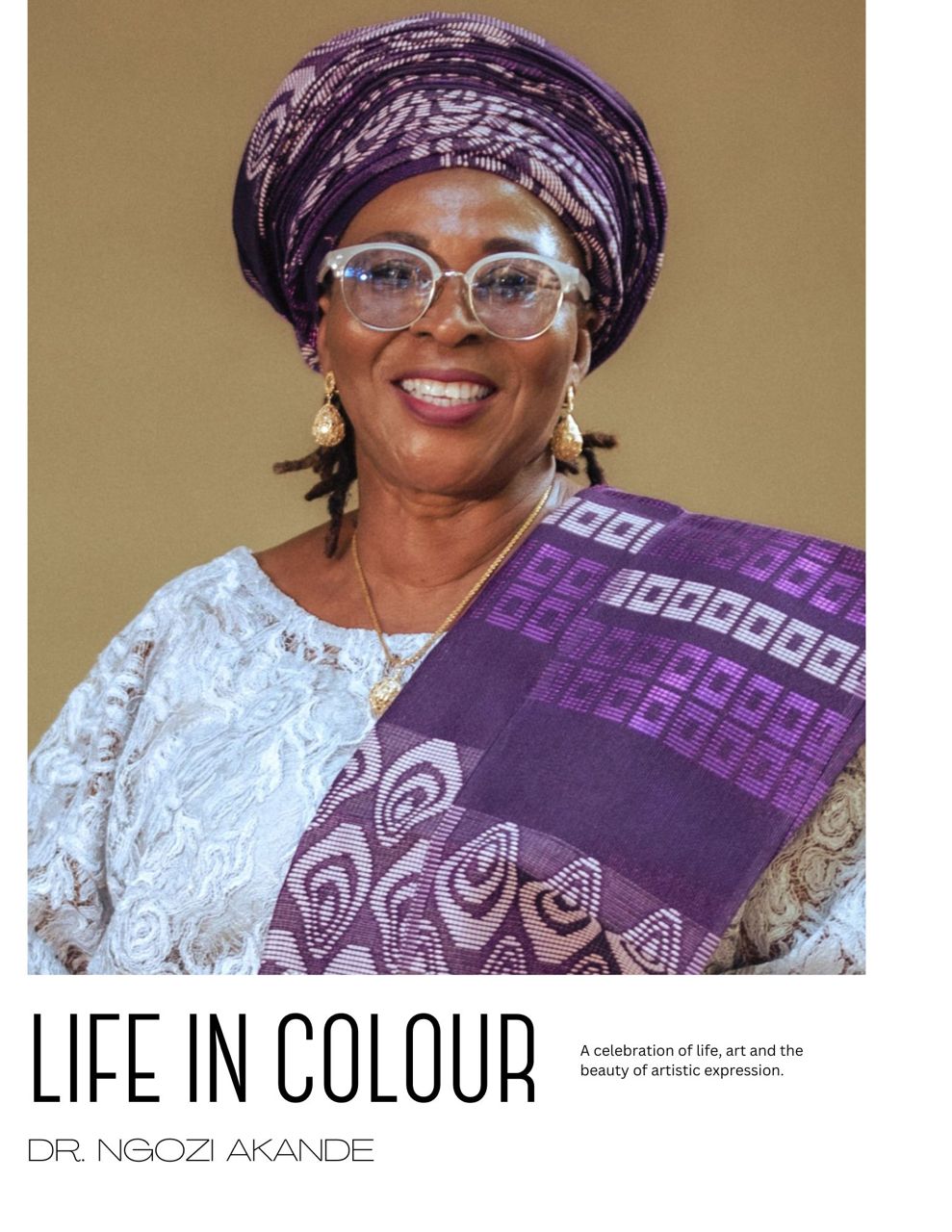
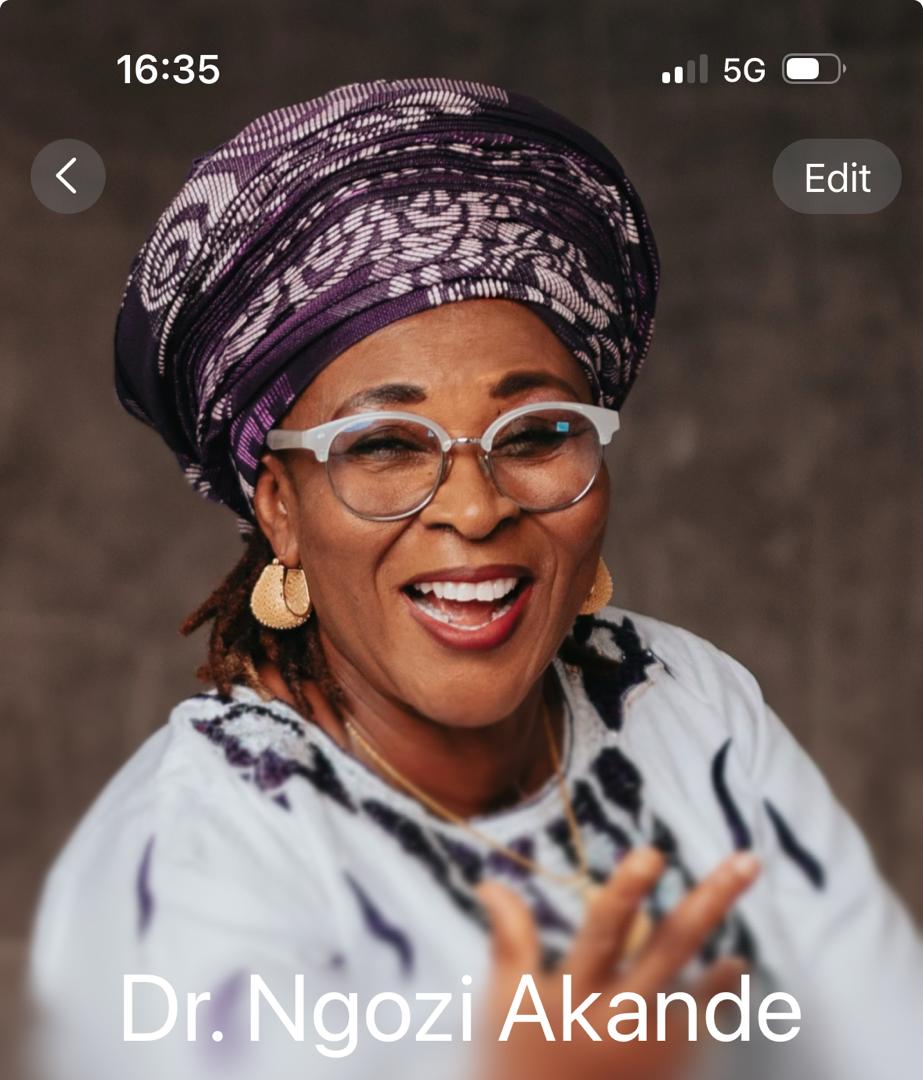
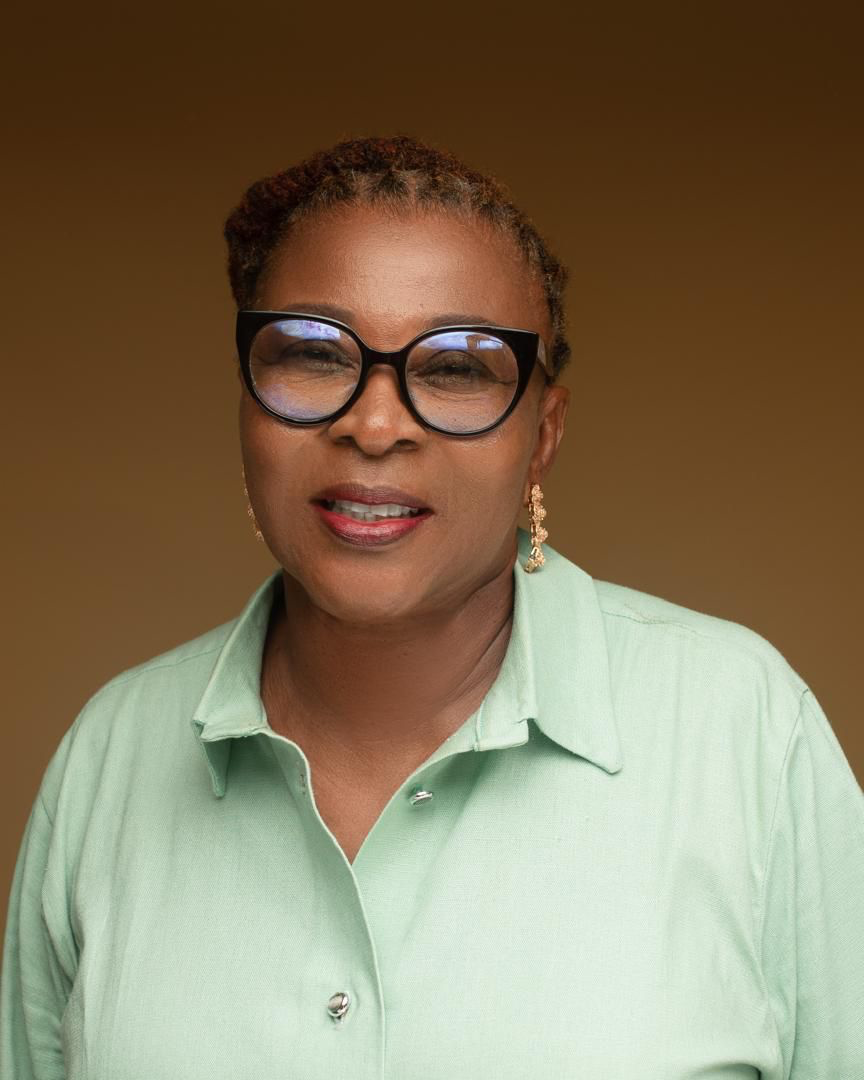
Ngozi Akande: Ngozi Akande is a strong-willed woman. She is resilient, focused, and determined. Ngozi Akande does not give up. I remain focused, and I love supporting women. I am a mentor, and I am also a disciplinarian. Even in my family, my father used to call me Thatcher. I am the seventh of nine children, yet I became the first graduate in my family at the age of 21. I was also the first person in my family to earn a master’s degree and a PhD.
Integrity matters greatly to me. My yes is my yes, and my no is my no. Nobody can buy my conscience. I do not believe in cliques or groups that compromise principles. I am a straightforward person. I recognise hard work, and I recognise people who contribute meaningfully.
For example, in the Female Artists Association of Nigeria, I look out for members who are performing and contributing. I can call someone to coordinate a project even if I do not know them personally. If your work within the association qualifies you, you will get the opportunity. Even if you are my friend, my daughter, or my sister, if you are not performing well, I will not give you special treatment. I value honesty, and I will not compromise my integrity.
FAB: What does a typical studio day look like for you today compared to ten years ago?
Ngozi Akande: When I was a civil servant, I painted mostly at night. Sometimes I painted from 11 p.m. to 2 a.m., or from 9 p.m. to midnight. Even when I was nursing my children, I still painted late at night and woke up at 6 a.m. to prepare them for school.
Today it is much easier for me to work. I simply walk into my studio whenever I feel inspired. As an artist, you do not feel the same energy every day. Some days you enter the studio and achieve very little. Other days you can complete three or four paintings in one session. It depends on your mood and your inspiration.
Personally, I enjoy working in the evening when it is quiet everywhere. I also paint with music because that was how we worked during our university days. Music would be playing loudly in the studio, and it inspired our creativity.
Now that I am retired, my schedule depends on the project I am working on. I often work late at night, so I do not wake up very early. Evenings remain my most productive time.
Honestly, retirement has been one of the best things that has happened to me. I feel refreshed. When people see me now, they ask what changed. I tell them retirement brought me back to what I love most, which is creating art. Now I have the freedom to enter the studio, create my work, admire it, and think about where to showcase it.
Sometimes I wake up in the morning and go straight to the studio just to look at the paintings on the easels. I observe them carefully and think about what the next step should be. After that I return to my household chores or prepare food for my husband. It is just the two of us now because our youngest child is already 25.
Later in the day I return to the studio to check the works again. That quiet observation helps me develop ideas. By evening I already know what I want to work on. I do not follow a strict schedule, like saying I must enter the studio at 10 a.m. every day. I work according to my inspiration, and that freedom is something I truly enjoy.
Recommended For You
FAB: You are a mother, an entrepreneur, a civil servant, and an artist. Many young artists and entrepreneurs today feel confused about their direction. Some do not know what to do. As someone who has lived through more than sixty years of experience, what advice would you give to that young girl, that young wife, or even a woman in her seventies who still feels uncertain?
Ngozi Akande: Let me give you an example. I have an uncle-in-law who decided to learn painting after he retired at the age of seventy. Interestingly, he once discouraged his daughter from studying art as a career. She became an accountant instead. Years later, the same daughter encouraged him to study painting, and now she manages her father’s art career.
My advice to younger people is that they are very fortunate today. There are many opportunities available to them. With artificial intelligence and digital tools, there are countless training programmes online.
In fact, within the Female Artists Association of Nigeria, we had to restrict admission for a time because so many people began creating art. Storytelling alone can generate income. Many people are digitising African culture and heritage. Someone can decide to focus on one part of the creative industry and build a career around it.
The challenge I see today is impatience. Many young people want quick money. They want immediate results. But success does not work that way. It requires hard work, focus, and consistency. Money may not come immediately, but it will come if you remain committed.
Let me share another example using my daughter. She studied law but struggled in law school. She could not understand why because she had strong grades in other courses. Eventually she accepted the situation and decided not to let it discourage her. She was delayed for one year, but did not give up. During her national service, she explored other fields such as customer relation management. She got employed and later converted back to law after passing law school. At school she had won a 500,000 naira essay competition while studying at the University of Jos. She used that talent and began writing paid essays. That became another source of income for her.
Today young people have many options. They can work online, learn digital skills, or join the creative industries. I know civil servants who also run tailoring businesses. Even my own tailor works in my office.
If you do not have a job, you cannot simply sit down and wait for money to appear. You must engage in something productive. There are many online courses available. My son is an architect; he has completed training in several fields like graphics, coding and product design online. Now he works confidently in those areas.
If you look at my exhibition brochures, my children designed them. They taught themselves these skills, and now they earn income from them. They employ themselves, and they pay themselves.
The world today does not give anyone the luxury of being idle. Opportunities exist everywhere if you are willing to explore them.
My advice, especially to young women, is simple. Do not give up. Even if you start with something small like cooking or preparing meals for families, you can build something meaningful. I know people who run successful food supply businesses from home.
Many people talk about leaving the country now. But migration is not easy, and many routes are already crowded. Instead of focusing only on leaving, people should also consider how to build opportunities here.
I know a young man who returned to Nigeria and started digitising Nigerian cultural archives. He works with libraries and institutions to preserve old newspapers, historical materials, and cultural records. He created that opportunity for himself.
There are resources around us if we choose to see them. People simply need patience, creativity, and determination. My final message is that nobody should give up.