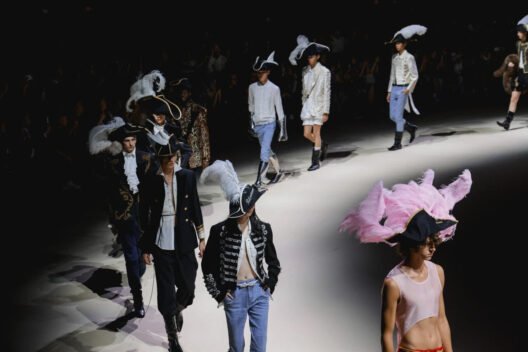

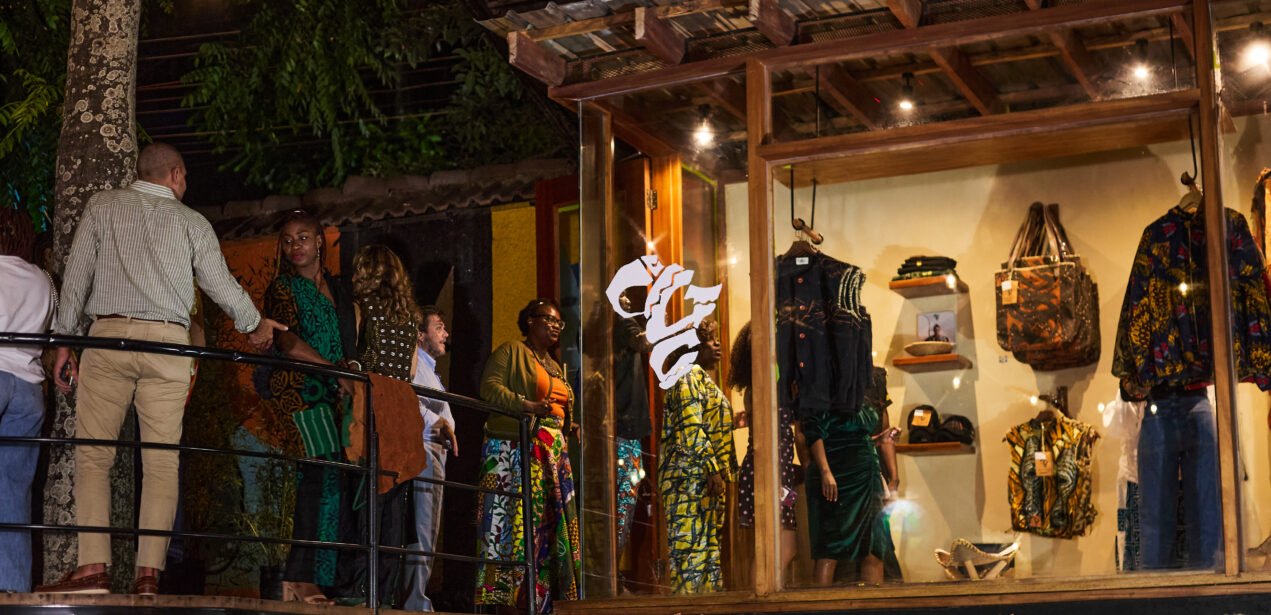
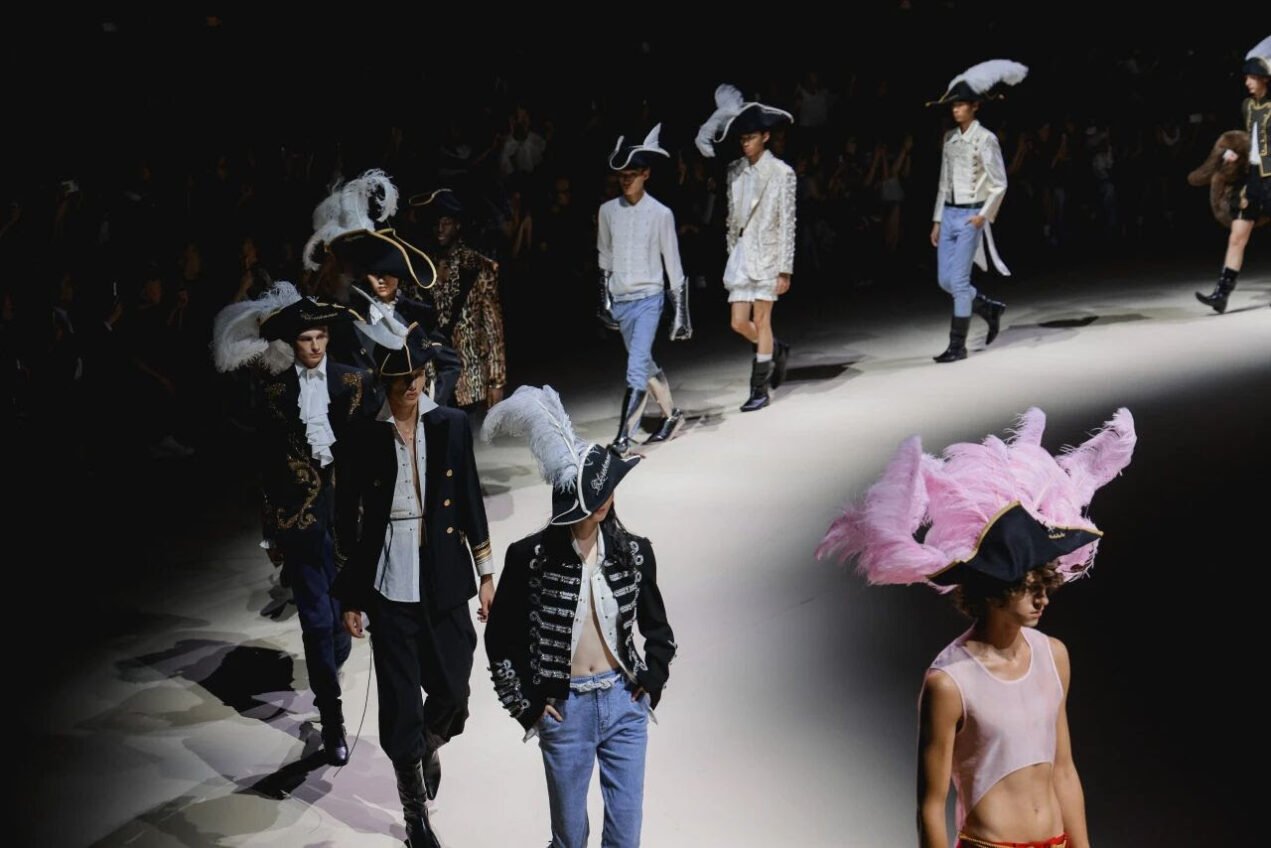
Ugandan fashion house IGC Fashion brought its new collection, Lubugo Taka, to Manchester Fashion Week on 9 September 2026. The presentation marked the first appearance of a Ugandan brand on the Manchester Fashion Week runway and placed an indigenous Ugandan material at the centre of a wider conversation about soil, sustainability and the future of fashion.
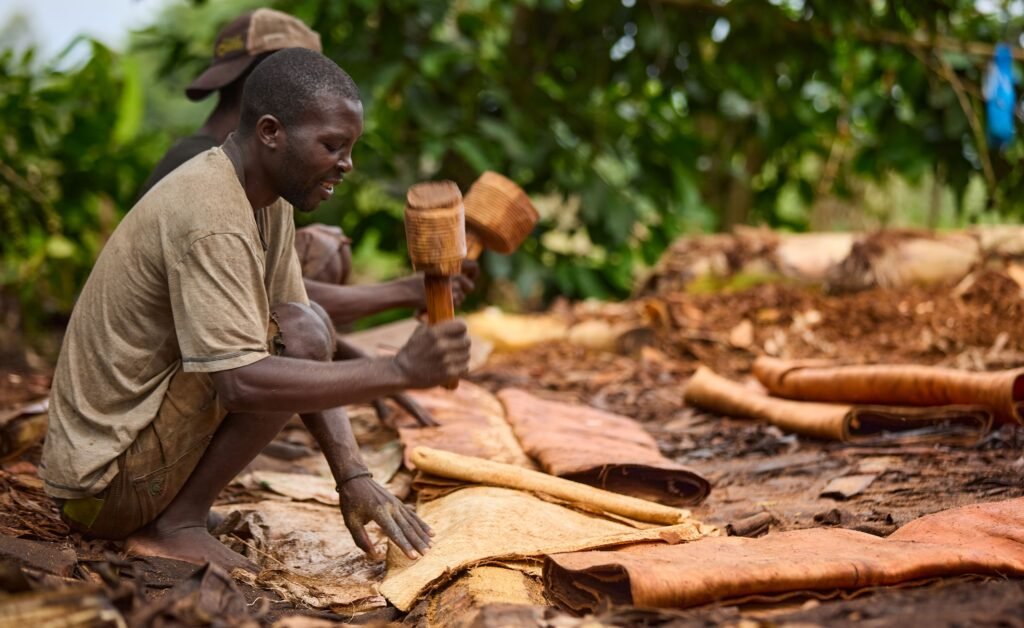
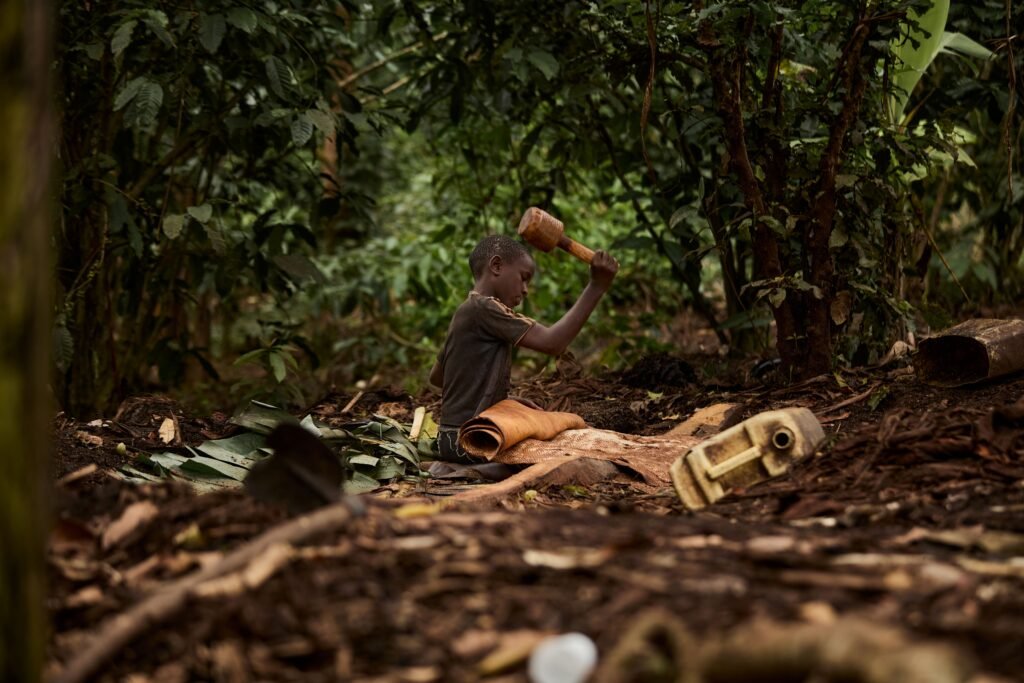
At the heart of the collection was Lubugo, a barkcloth made from the bark of the indigenous Mutuba tree in Uganda. IGC Fashion used the material to explore a simple question: what could fashion become if we looked at clothing through its relationship with the earth?
From Bark to Soil
The idea behind Lubugo Taka came from traditional ways of making and dyeing barkcloth. The word ‘Taka’ means ‘soil’ or ‘earth’, while ‘Lubugo’ refers to cloth made from raw tree bark. Together, the name connected the material to the land from which it came.
The Mutuba tree can be harvested for its bark without being cut down. Its cultivation and harvesting are also part of a wider relationship with the surrounding environment. For IGC Fashion, this made Lubugo more than a textile. It became a way to examine how fashion can use natural materials while respecting the systems that support them.
The collection also explored the use of natural dyeing methods. Designer Katende Godfrey experimented with Lubugo and iron-rich rust to create new ash tones on white cotton. These processes gave the collection a contemporary look while keeping its connection to indigenous material knowledge.
“We were excited to share Lubugo Taka with the world,” Godfrey said. “Lubugo is an ancient biomaterial made from the bark of a Mutuba tree. ‘Taka’ means earth. The collection is a reminder that we need more natural materials in our clothing, materials which are directly sourced from the earth and can equally return.”
A Different Way to Think About Fashion
Soil is rarely discussed when people talk about the clothes they wear. Yet the production of materials is closely linked to land, natural resources and waste.
IGC Fashion placed this relationship at the centre of Lubugo Taka. The collection brought together traditional barkcloth, natural dye processes and discarded textiles to create a contrast between regenerative materials and the waste created by modern fashion systems.
This approach formed part of the wider work of IGC Fashion. The Ugandan brand has focused on indigenous materials, cultural education and conservation while creating contemporary garments. Its work also connects with the Fashion Cypher Foundation, a vocational training programme that aims to create economic opportunities for young people and marginalised communities.
The result was a collection that treated fashion as more than a finished garment. Material, culture, environment and community were all part of the same conversation.
Reworking an Inherited Material
Godfrey’s experiments with Lubugo showed that preserving traditional knowledge does not mean leaving it unchanged. The collection used inherited techniques as a starting point for new forms, colours and processes.
“This collection marked an exciting moment for us because we had been experimenting with dyeing barkcloth in new ways,” Godfrey said. “I was excited to share the designs with the world, but also the new tones and processes we created with Lubugo, iron rust and other elements.”
The work also reflected a deliberate tension between old and new. Barkcloth has a long history in Uganda, while contemporary fashion continues to search for new approaches to materials and production. Lubugo Taka placed these two worlds in the same space.
Manchester as the Setting
The collection was presented at Versa Studios in Manchester, a city with a deep connection to textile production and industrial manufacturing. That setting added another layer to the presentation.
IGC Fashion arrived from Uganda with a material shaped by trees, soil and traditional knowledge. It presented that material in a city whose history has been strongly connected to the industrial growth of the textile industry.
The contrast did not need to be explained through the clothes alone. It was present in the setting itself. Lubugo Taka brought an indigenous Ugandan material into a major fashion city and asked what the global fashion system could learn from materials and practices that have existed outside that system for generations.
“The collection was not just about the clothes,” Godfrey said. “It was about starting a dialogue around materials, culture, the environment and the future of fashion.”
Beyond the Runway
The Manchester presentation formed part of a wider programme for Lubugo Taka. The collection was also featured in the INTERWOVEN exhibition at Castlefield Gallery, running from 9 to 20 September 2026.
The exhibition gave the project a different setting from the runway. Instead of seeing the work only as fashion, audiences could engage with the collection within a gallery context and consider the relationship between textiles, culture, materials and the environment.
For IGC Fashion, this wider presentation helped place Lubugo within an international conversation while keeping its Ugandan origin clear. The collection did not present indigenous material knowledge as something belonging only to the past. It showed how that knowledge could continue to inform contemporary design.
A Conversation That Starts With the Material
Lubugo Taka offered a clear position on the future of fashion. Change does not always have to begin with a new technology or a new synthetic material. It can also begin by looking again at what communities already know.
For IGC Fashion, that knowledge was found in the Mutuba tree, in barkcloth, in natural dyeing and in the relationship between material and land. The collection turned those elements into a contemporary fashion statement while keeping their cultural roots visible.
“The collection is not just about the clothes,” Godfrey said. “It is about starting a dialogue around materials, culture, the environment and the future of fashion.”
In Manchester, that dialogue moved from Uganda to an international fashion audience. Lubugo Taka showed that the future of fashion can also be found in materials with a long past, when designers are willing to look at them again, work with them differently and allow their knowledge to shape what comes next.
About IGC Fashion
IGC Fashion is a Ugandan clothing brand that brings indigenous knowledge and inherited materials into contemporary design. Its sculptural garments move between fashion, art and cultural expression, with a focus on heritage, community and nature.