
There is something about the final months of the year that changes our relationship with clothes. Suddenly, the invitations become more interesting. Wedding receptions, awards ceremonies, charity galas, Christmas dinners and New Year’s Eve celebrations begin to fill the calendar. The question is no longer what to wear to work or what to put on for a casual afternoon. It becomes a rather more exciting one: what makes an entrance?
For November and December, the evening gown occupies a special place in this conversation. It is the garment we reserve for occasions that deserve a little more thought, a little more effort and, sometimes, a little more drama.
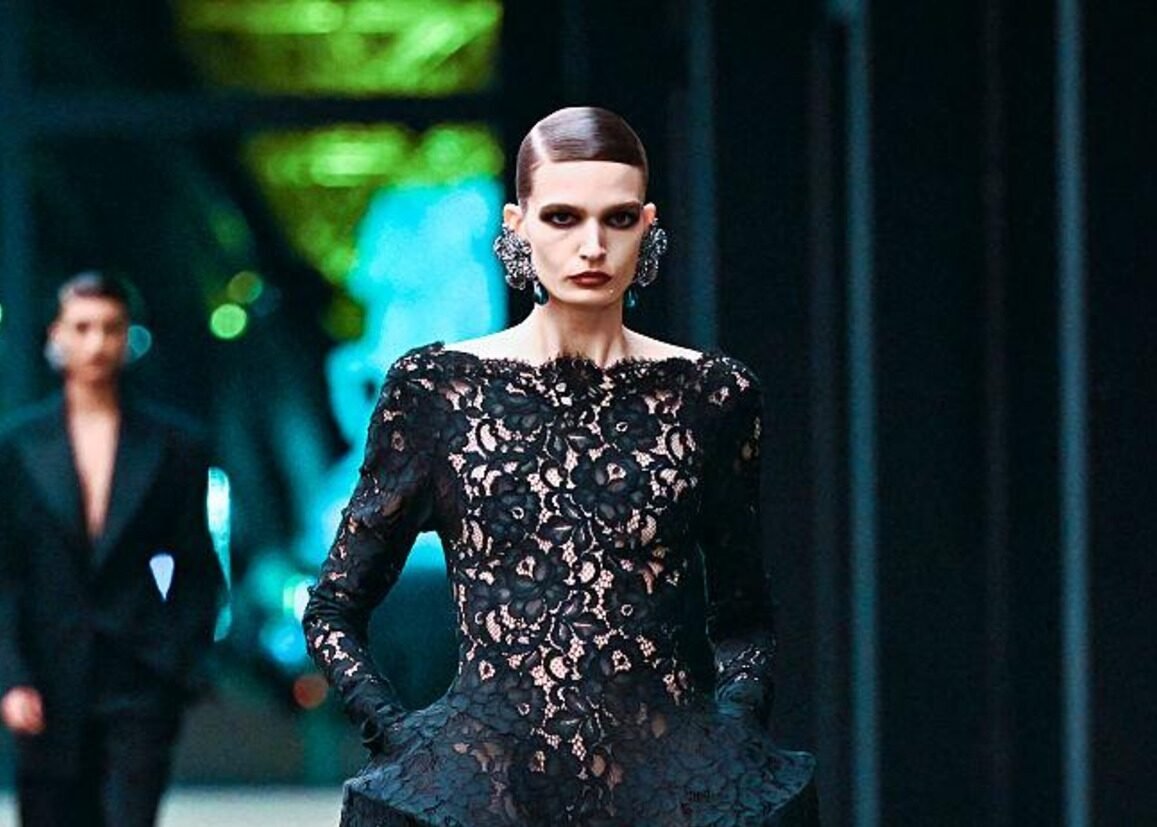
But the eveningwear conversation for 2026 is not simply about sparkle. The autumn/winter collections have revealed a renewed interest in shape, construction and the relationship between fabric and the body. At Dior, Valentino, Chanel and Alaïa, among others, designers have explored different approaches to femininity, from body-conscious dressing to generous proportions and richly detailed surfaces.
The result is a season that offers something for almost every kind of woman. Whether she prefers the quiet confidence of a beautifully cut column dress or the theatrical pleasure of a full-skirted gown, there is a silhouette worth considering.
Here are five that deserve a place on the eveningwear mood board.
1. The sculpted column: The beauty of a clean line
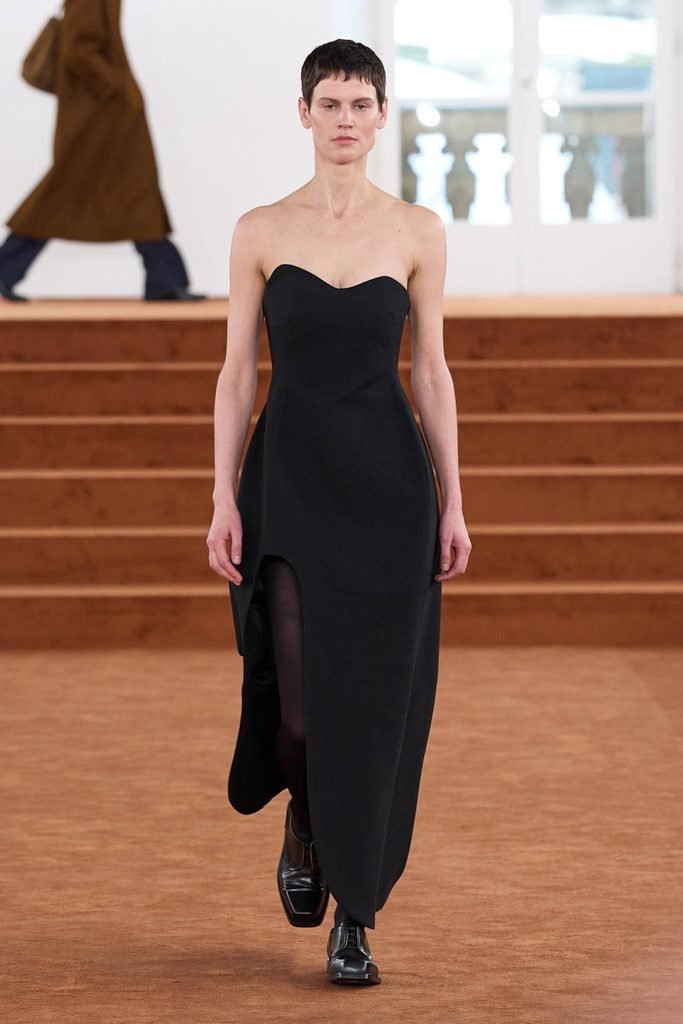
If there is one silhouette that proves elegance does not need to shout, it is the column gown. Long, narrow and close to the body’s natural lines, this design creates an uninterrupted vertical shape from the shoulders to the hem. It does not depend on a particularly full skirt, elaborate embellishment or an exaggerated waist to make an impression. Its strength lies in proportion.
For autumn/winter 2026, the renewed interest in streamlined dressing has given this silhouette fresh relevance. Designers have explored body-skimming shapes, clean construction and restrained detailing, allowing the quality of the cut and fabric to carry the look. The wider return of 1990s-inspired minimalism has also helped bring the understated evening dress back into focus.
Think silk satin, heavy crepe, velvet or a beautifully weighted jersey. A high neckline creates a more architectural effect, while a low back or a restrained side slit introduces movement without disturbing the simplicity of the design.
The column gown is particularly useful for women who want a sophisticated evening look without excessive decoration. It works beautifully at formal dinners, black-tie receptions and awards ceremonies.
The styling note: Let the dress do most of the work. A sculptural earring, a small evening bag and elegant heels are often enough. For women attending events in Lagos, where evening temperatures can remain warm, lightweight satin and fluid crepe are practical alternatives to heavier winter fabrics.
2. The basque waist and fit-and-flare: A return to romantic proportions
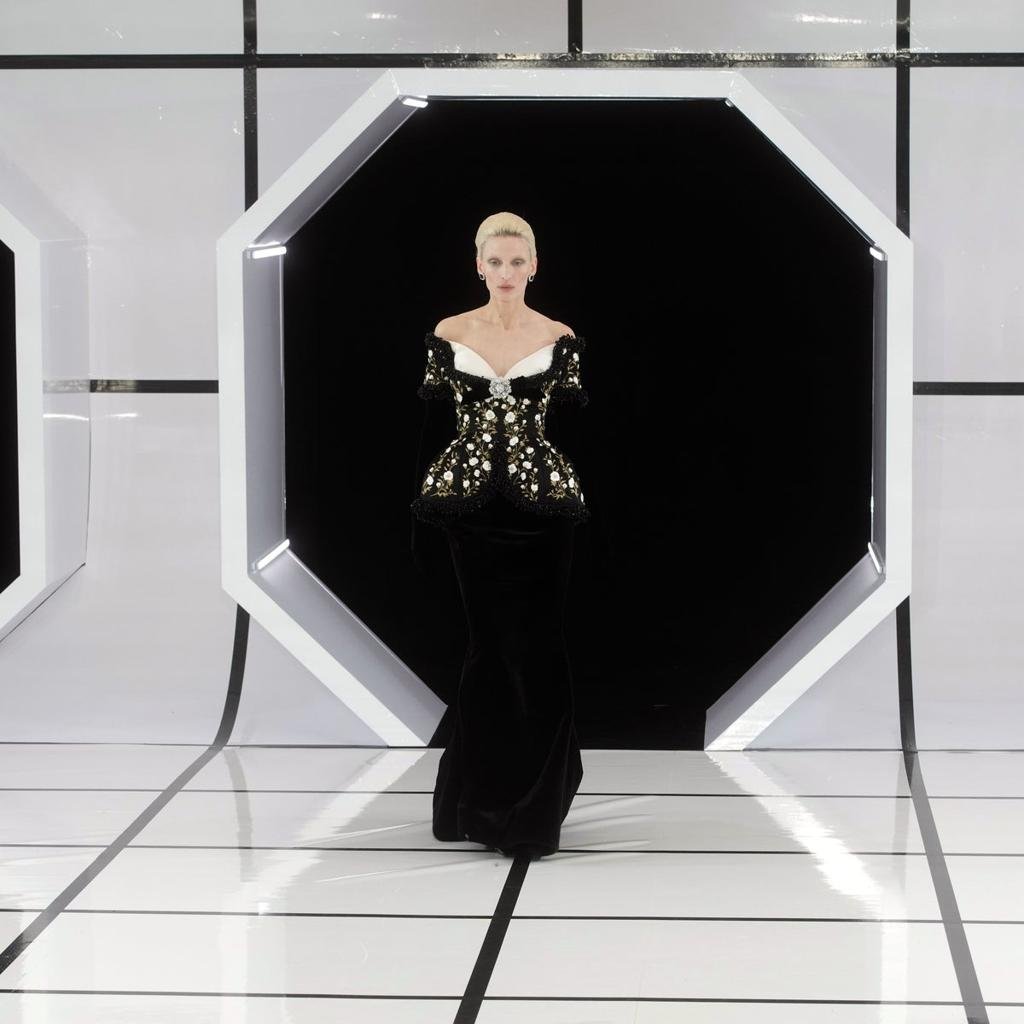
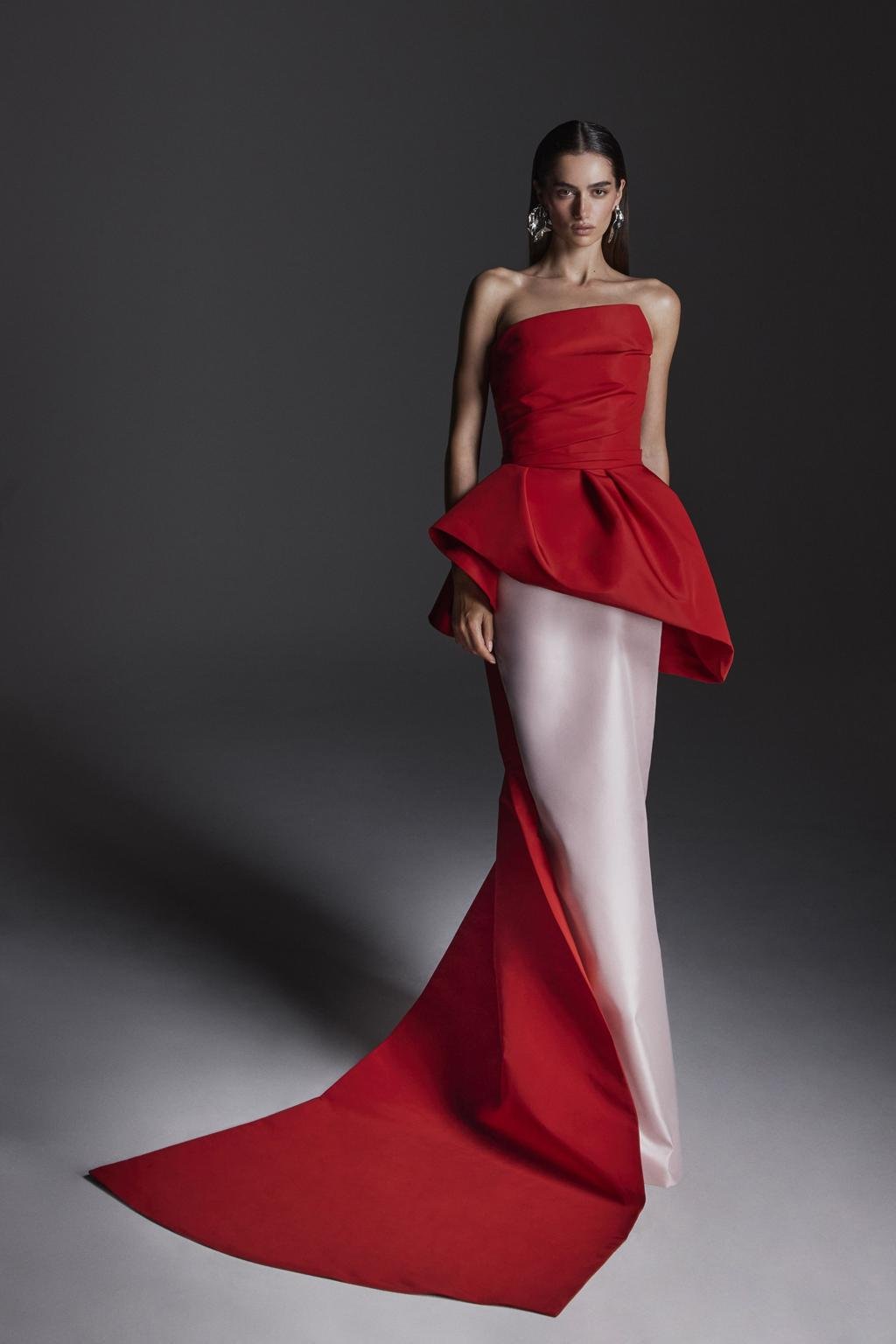
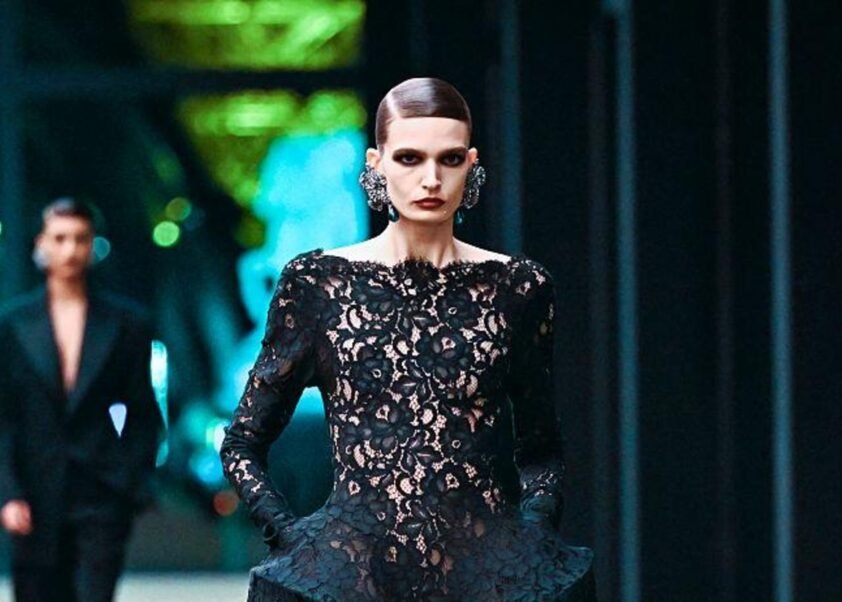
There is a particular pleasure in a dress that understands the waist. The basque-waist gown is returning to the eveningwear conversation with a renewed sense of purpose. Its defining feature is a fitted bodice that extends into a pointed or curved waistline, often dipping below the natural waist before opening into a fuller skirt. The result is a beautifully defined upper body with a more dramatic lower silhouette.
Its appeal is not difficult to understand. The construction creates shape without relying entirely on tight-fitting fabric. It also gives designers room to experiment with volume, pleating, embroidery and structured skirts.
The wider autumn/winter 2026 interest in sculpted proportions, peplums and expressive waistlines makes this a particularly relevant direction.
There is also a historical reference worth appreciating. The silhouette recalls the romantic proportions of Victorian and Edwardian dress, as well as the structured waists of traditional couture. However, the modern interpretation is less concerned with reproducing historical costume. It is about using construction to create a striking shape.
For eveningwear, the skirt can be full and sweeping, gently flared or finished with a subtle train. Mikado silk, duchess satin and structured taffeta are particularly effective because they hold their shape.
The styling note: Keep the waist visible. Avoid oversized accessories that compete with the construction. A neat updo, delicate jewellery and a defined shoe will complete the look. This is also an excellent direction for brides attending traditional or civil wedding celebrations who want a contemporary alternative to a conventional ball gown.
3. The draped goddess: When fabric becomes the decoration
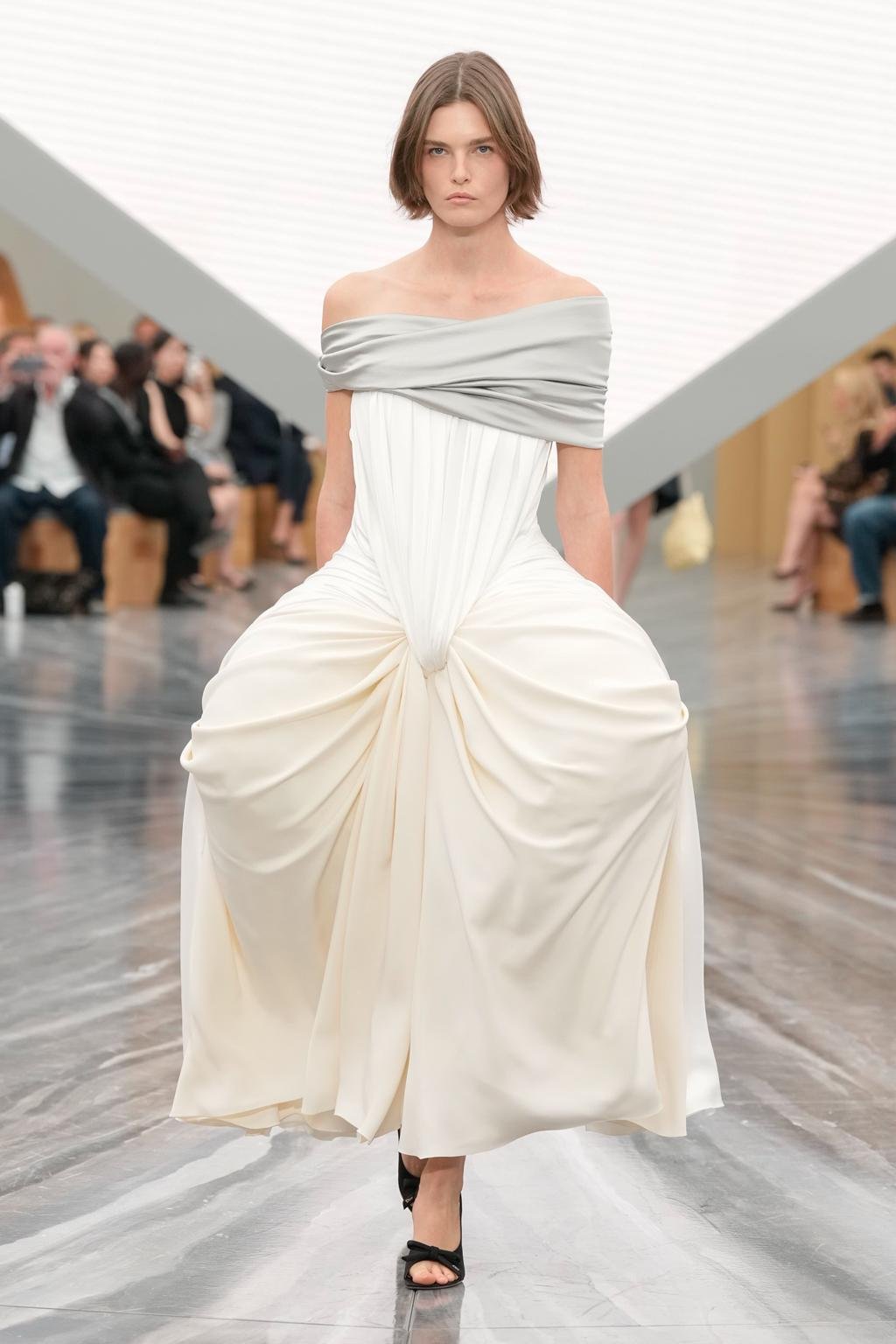
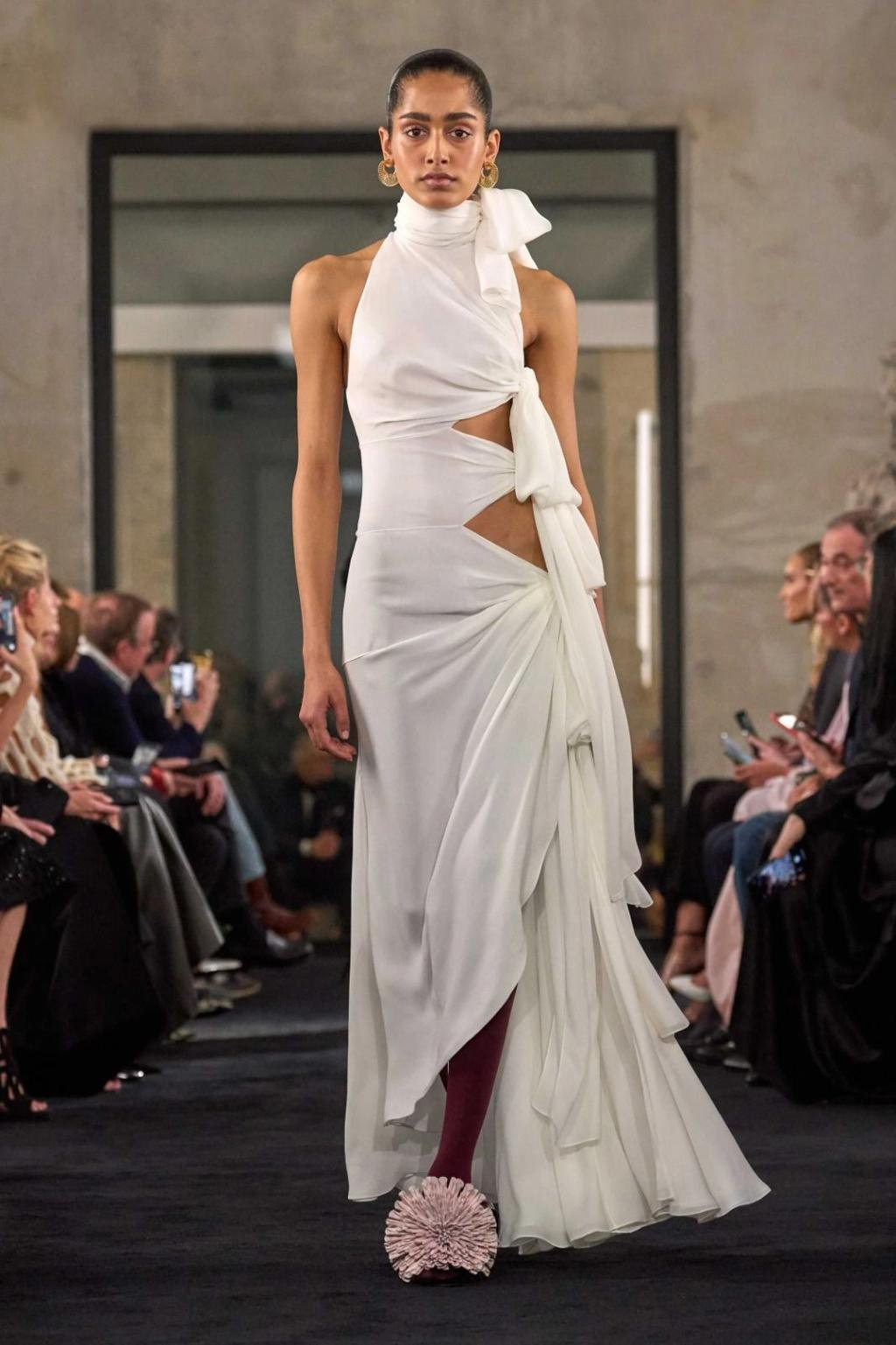
Some dresses are remembered for their embellishment. Others are remembered for how they move. The draped gown belongs to the second category.
Here, fabric is gathered, twisted, folded or allowed to fall across the body in deliberate arrangements. A single piece of material can create an asymmetric neckline, a soft waist detail or a cascading skirt. The effect is often sensual without being overly revealing.
This season’s interest in draping and body-conscious dressing has given the silhouette considerable relevance. At Gucci and Victoria Beckham, body-skimming shapes have reinforced the appeal of garments that follow the body while maintaining a polished finish. Meanwhile, the broader autumn/winter collections have continued to explore fluid fabrics and expressive construction.
The beauty of this design is its versatility. A softly draped silk gown can feel appropriate for an intimate dinner, while a more elaborate version with a gathered train can hold its own at a major red-carpet event.
For women in West Africa, this silhouette also presents interesting possibilities. Designers can work with silk, satin, lightweight velvet and locally sourced textiles to create gowns that respond to the climate without losing their formal character. A carefully placed drape can also introduce movement and dimension to richly coloured fabrics.
The styling note: Choose one focal point. If the dress has a dramatic shoulder or gathered neckline, avoid a heavy necklace. Let the fabric create the visual interest. Deep burgundy, chocolate, emerald, midnight blue and liquid gold are particularly compelling colour directions for the festive period.
4. The cape gown: An entrance before the first step
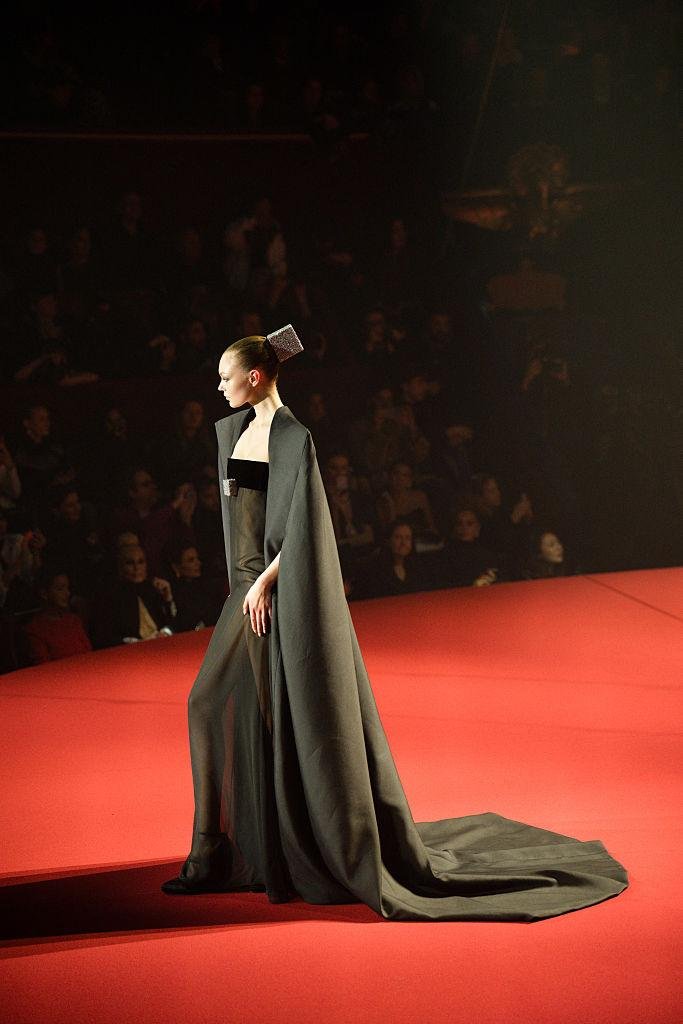
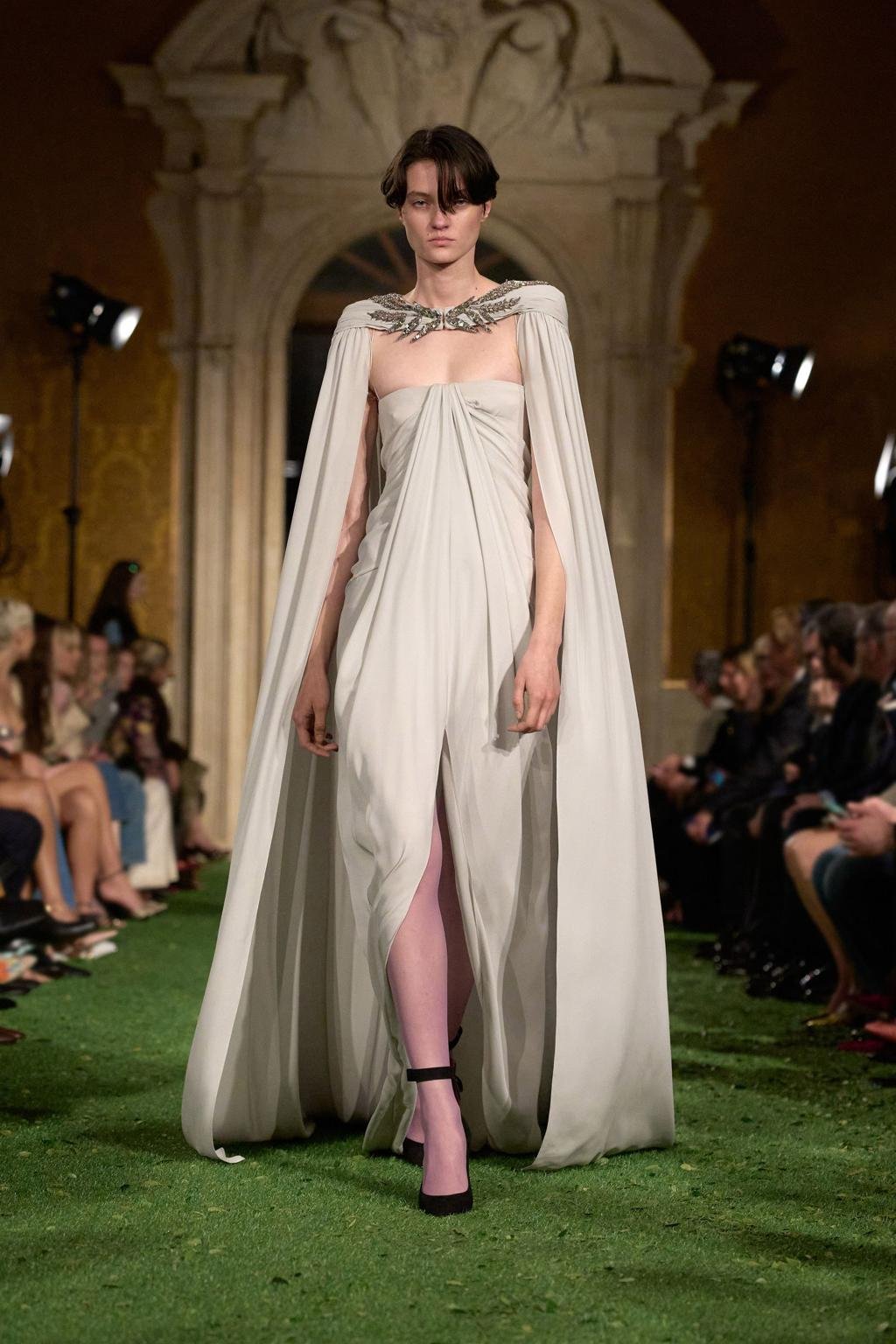
Not every woman wants her evening gown to follow the body. Some prefer a little mystery. The cape gown offers precisely that. It combines the familiarity of a formal dress with an additional layer of fabric that falls from the shoulders, sleeves or neckline. Depending on its construction, the cape can trail behind the wearer, extend into a dramatic train or create the impression of a single flowing garment.
What makes this silhouette particularly interesting is the way it uses movement. A cape changes as its wearer walks. It catches the air, reveals the dress beneath it and creates a sense of occasion without necessarily requiring heavy embroidery or elaborate jewellery.
The wider autumn/winter 2026 interest in theatrical proportions and expressive evening dressing supports its appeal. Cape dresses have also emerged as a distinct direction in seasonal trend coverage.
For formal events, the cape can be made from the same fabric as the gown for a seamless effect, or from a contrasting material to introduce texture. Imagine a black crepe column dress with a sweeping velvet cape, or an ivory satin gown with a sheer organza overlay.
For the African eveningwear market, the possibilities are particularly exciting. A cape can be constructed in richly coloured aso-oke, embellished lace or carefully selected brocade. It provides a way to incorporate local textile traditions into contemporary formalwear without relying on familiar conventional dress shapes.
The styling note: Pay attention to the shoulder construction. A cape should sit comfortably and move naturally. Keep the jewellery relatively restrained, especially when the fabric extends into a train. The silhouette already provides the drama.
5. The sculptural ball gown: Volume with a point of view
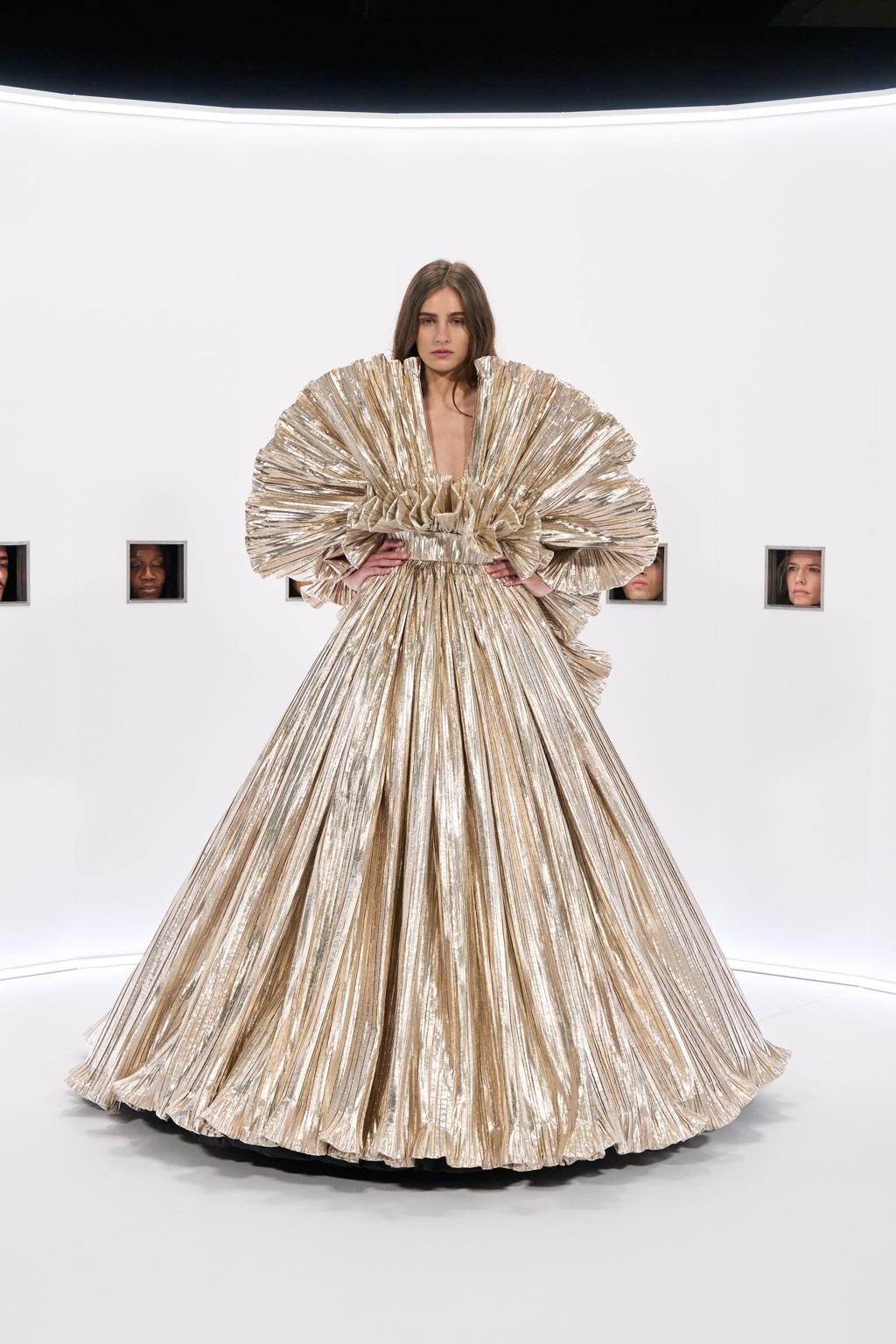
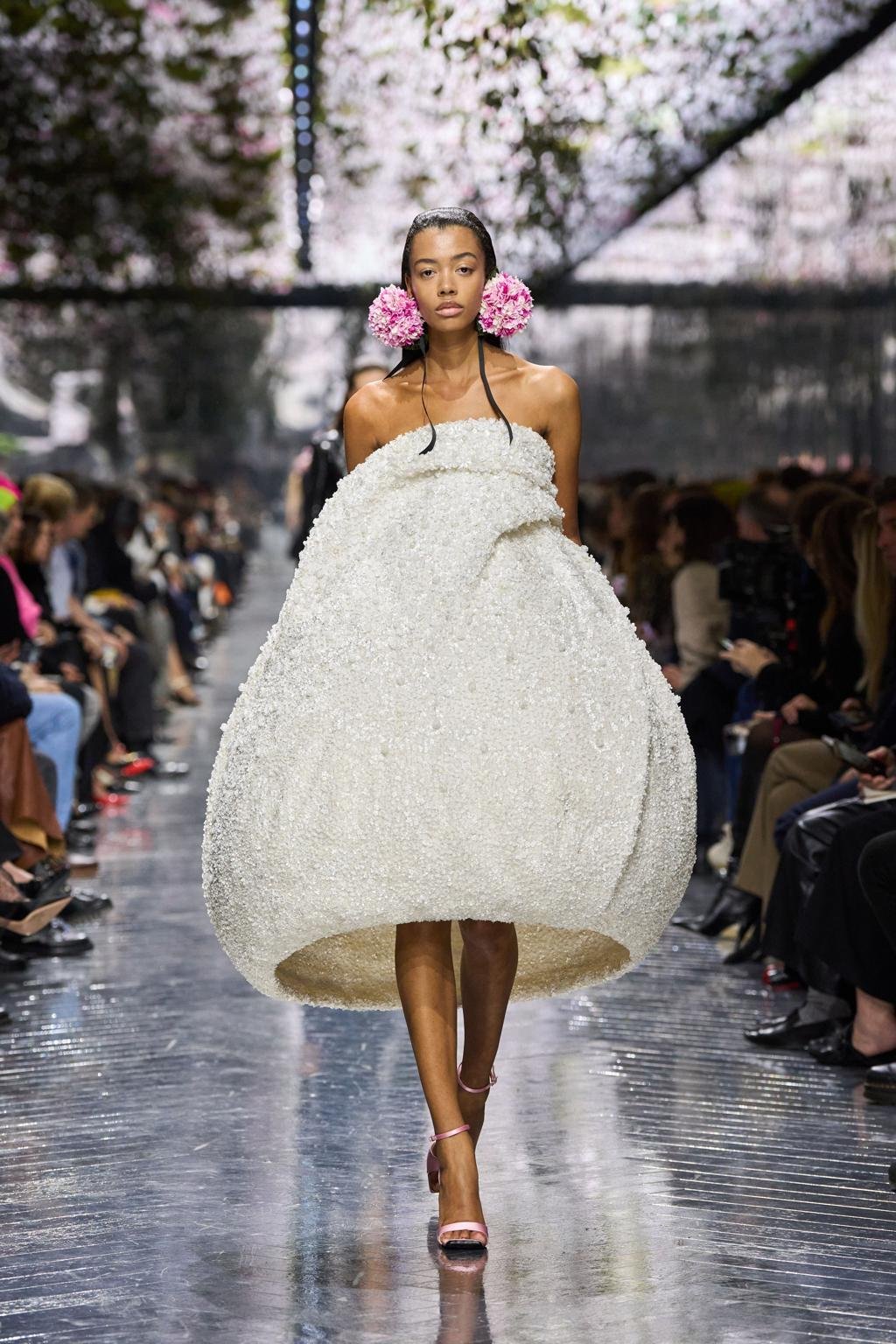
And then there are the occasions when subtlety is simply not the assignment. The sculptural ball gown is for the woman who enjoys the theatre of dressing. Its defining feature is volume, but this does not necessarily mean a traditional princess dress. Designers are exploring rounded skirts, exaggerated proportions, layered construction and unusual shapes that give the garment an almost architectural quality.
The autumn/winter 2026 runways have made a strong case for this approach. From exaggerated proportions to bubble-like shapes and dramatic hemlines, volume has become an important part of the season’s visual language.
What separates the contemporary interpretation from the familiar ball gown is its attitude. The bodice may be sharply structured, the skirt unusually rounded or the hemline deliberately asymmetrical. Some designs use layers of organza and tulle to create lightness, while others rely on heavier fabrics to maintain a more defined shape.
This is where craftsmanship becomes especially important. A full skirt needs proper internal construction, considered proportions and a comfortable foundation. Without these, volume can overwhelm the wearer rather than complement her.
For a December gala, New Year’s Eve celebration or a formal wedding reception, this silhouette offers a wonderful opportunity to experiment with colour. Deep red, sapphire, emerald, metallic silver and rich purple all deserve consideration.
The styling note: Give the gown enough room to speak. A simple hairstyle and carefully selected jewellery will usually work better than several competing statement pieces. Also consider the venue. A very full skirt may be spectacular in a ballroom but less practical in a crowded restaurant.
Recommended For You
The details that make the difference
Choosing the right silhouette is only the beginning. The difference between a beautiful evening gown and one that feels truly exceptional often comes down to the details.
Fabric matters. Satin and silk create fluid movement, while mikado, taffeta and structured crepe provide shape. Velvet remains a particularly attractive option for colder climates and winter celebrations. For warmer destinations, lighter fabrics such as chiffon, organza and silk blends can deliver an equally luxurious result.
Colour deserves consideration. Black remains a dependable eveningwear choice, but the season offers much more. Burgundy, chocolate brown, forest green, deep plum, midnight blue and metallic shades provide excellent alternatives. For the festive period, jewel tones are particularly effective because they bring richness without depending on excessive embellishment.
Fit should never be an afterthought. A well-made gown should allow its wearer to sit, walk and dance comfortably. Pay attention to the shoulder line, waist placement, bust construction and hem length. These small details determine how a garment behaves beyond the fitting room.
There is also an important consideration for women shopping across different markets. A gown that works beautifully for a December event in New York may need a different fabric or construction for an outdoor celebration in Lagos or Accra. The answer is not to compromise on elegance, but to understand the relationship between climate, occasion and material.
Elegance is personal
Perhaps the most interesting development in eveningwear this season is the absence of one dominant idea of glamour. The column gown offers restraint. The basque waist celebrates structure. Draping introduces softness. The cape brings theatre, while the sculptural ball gown embraces volume. Each silhouette expresses a different relationship with fashion, and none requires the wearer to follow a rigid definition of femininity.
For designers, this creates opportunities to experiment with construction and craftsmanship. For women, it makes shopping for an evening gown a more personal experience.
As the invitations arrive and the festive calendar fills up, the best advice is to begin with the occasion, understand the silhouette that makes you feel most comfortable and pay attention to the craftsmanship. Because a memorable evening gown should do more than photograph beautifully. It should move with you, make you feel confident and remain just as special when the evening is over. And that, after all, is the real beauty of getting dressed for an occasion.