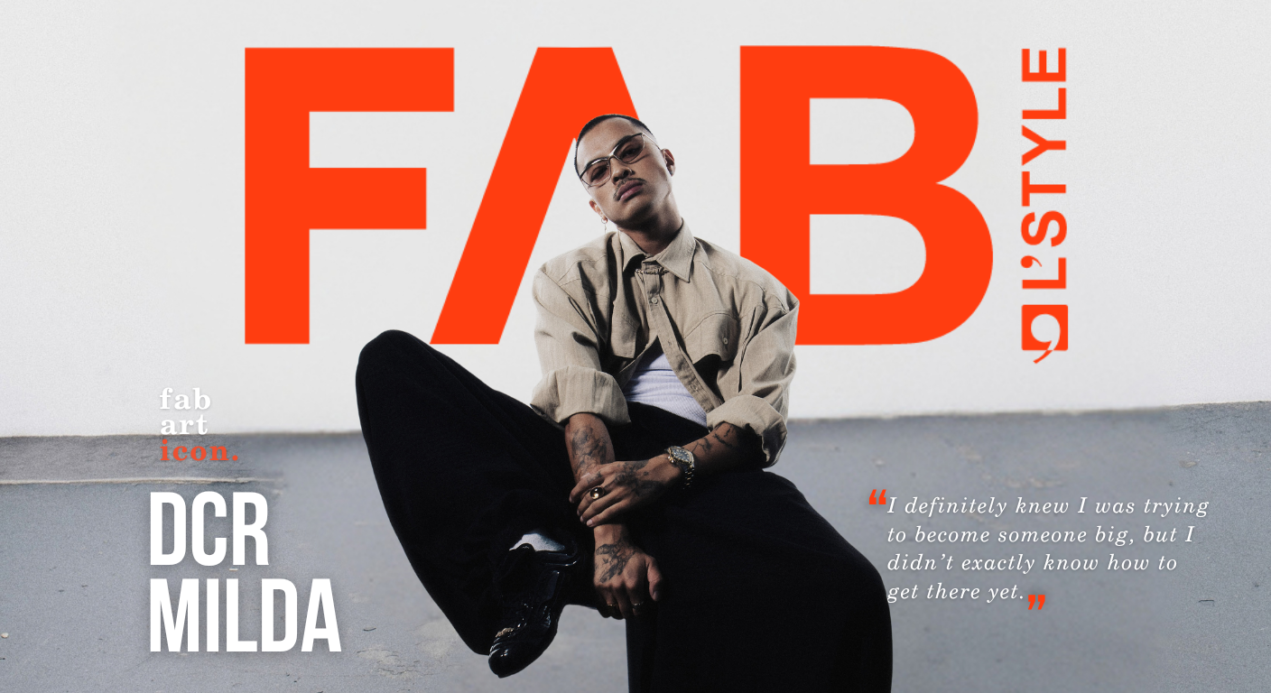
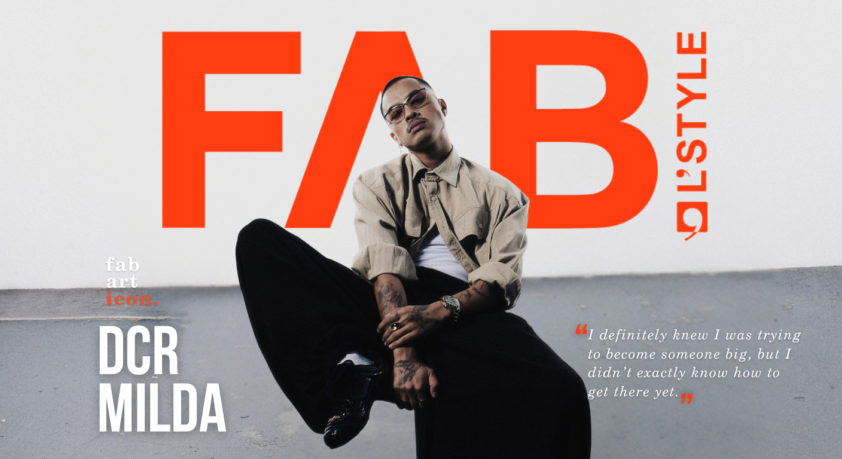
For FAB L’Style’s October Icon of the Month, DCR MILDA is back at his family home in the Czech Republic, about an hour outside Prague. He is eating his mother’s cooking, spending time with family and taking a few quiet days before another tour begins.
It is a slower rhythm for an artist whose career is increasingly defined by movement. For many listeners, Milda is first encountered through a short DJ clip, often a few seconds of movement, music and crowd energy. He understands the appeal, but he also knows how much can disappear when an entire performance is reduced to a moment on a screen. “What they might miss is that I’m also an artist,” he tells FAB L’Style over email. “I do everything live.”
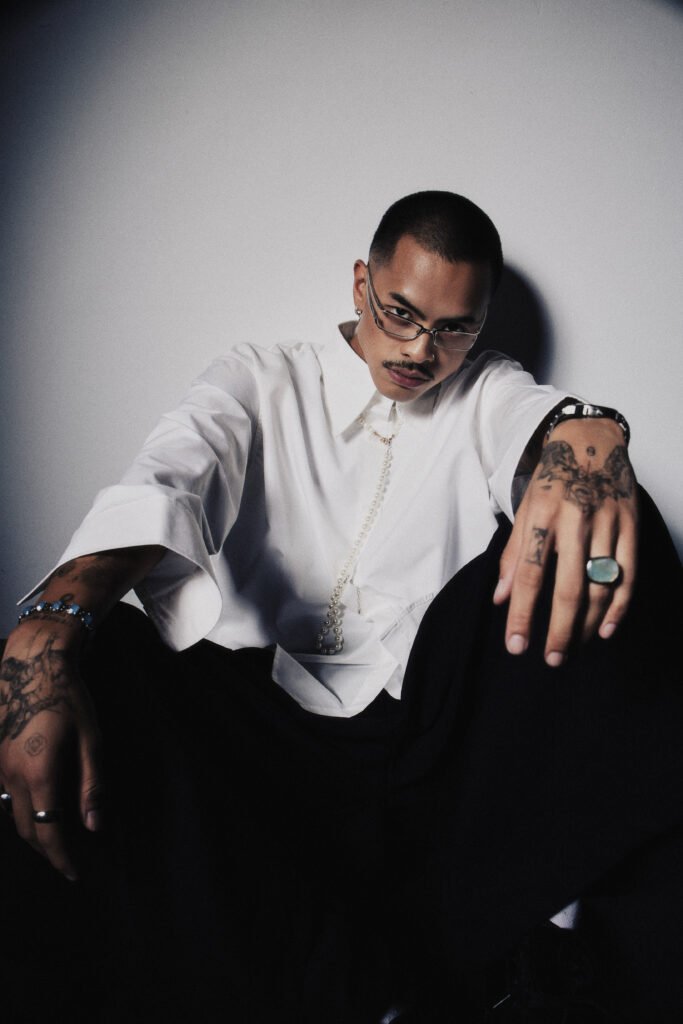
Before the Decks, There Was Dance
Long before touring became part of his life, Milda was a freestyle dancer studying music with the same attention he now brings to DJing. He would download tracks, open them in DJ software and study their waveforms, learning the kicks, snares and other sounds so he could understand exactly how to respond with his body.
DJing began partly as an extension of that practice. He wanted to become a better dancer, so he learnt the music more deeply. Then a right knee injury changed the direction of his life.
“I was very frustrated and very sad because I didn’t really know what I was going to do.”
Music gave him another way forward. Turning that interest into a career, however, meant convincing his parents that it could be more than a hobby. He continued his education while building his confidence and proving that music was something he was serious about.
Today, he considers his dance background to be one of his greatest strengths as a DJ. The dancer is still there, particularly in his sense of timing and his ability to read a room. He describes it almost as having a metronome inside him.
When he performs in a club, he anticipates several songs in advance. He watches what is happening in the room, considers what could keep people moving and pays attention to the moments that might interrupt that flow. It is a different relationship with an audience from playing at a large festival, where individual reactions are harder to read.
Finding His Place in Toronto
Toronto became another important chapter in that development. Milda arrived in the city at 21, knowing almost nobody and still building confidence in English. The beginning was difficult. He recalls being scammed over accommodation, dealing with problems at work and trying to find opportunities in a city where his name did not yet carry much weight.
Community changed that. Meeting the people who would become part of More Sauce gave him a sense that the ambition he had been carrying did not have to be pursued alone. He started More Sauce Music with Will, Fresh, Jebril and Chris, creating a platform that could connect music with other parts of local culture.
“That was a really important moment for me because I realised I didn’t have to build my dream alone.”
The idea extends beyond music. When the team travels, there is an intention to discover something from each place while contributing something in return. Local artists, food, fashion and other forms of talent become part of the experience.
It is an approach that reflects Milda’s own life. His career has moved between countries and cultures, and his understanding of belonging has developed through constant adaptation.
Growing up in the Czech Republic with Vietnamese parents, he encountered different cultural worlds from an early age. At home, his parents watched Paris by Night, the Vietnamese entertainment programme that became part of his childhood soundtrack. With his predominantly Czech friends, he listened to rap and R&B alongside Czech and other European music.
He does not immediately identify a single song that defines that period. Instead, he remembers the feeling of growing up with his grandparents, spending time with other children in a small city and having the freedom to imagine what might come next.
“I definitely knew I was trying to become someone big, but I didn’t exactly know how to get there yet.”
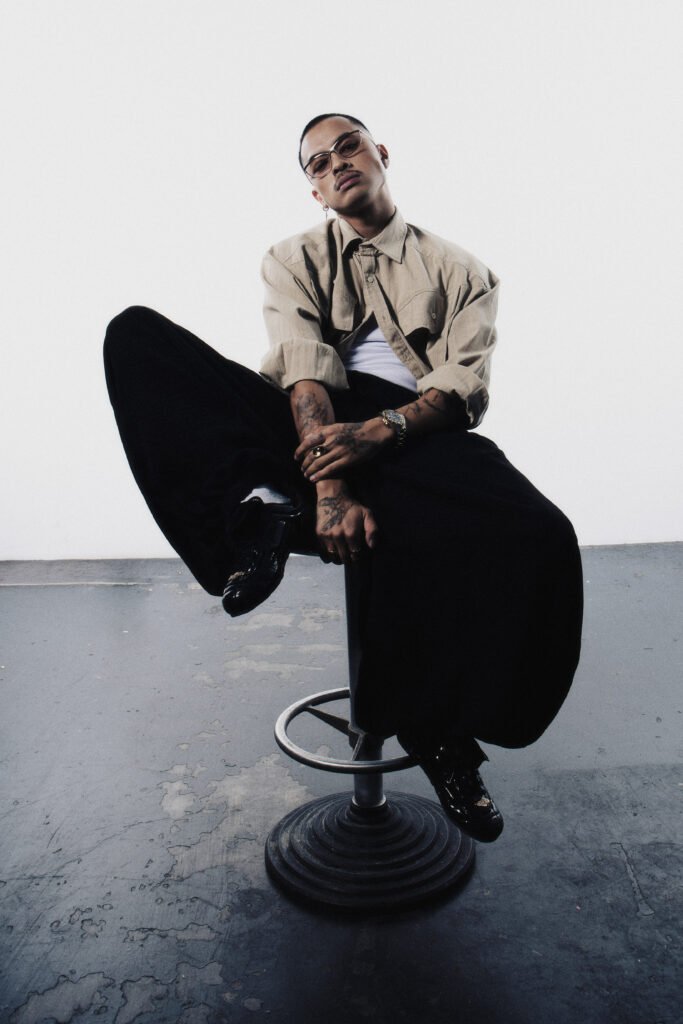
When a Set Changes Everything
His PLAYGRND set at APT200 became one of the defining moments of his career. Milda and his circle had spent years at the venue, almost every Monday, so the filmed daytime party carried a sense of familiarity.
He invited friends, relaxed into the environment and played without overthinking the moment. “Man, the whole set. The whole set, honestly. That was pure me in my flow state.”
The performance travelled beyond the room. As clips circulated online, so did new expectations. People booking him had often seen only a short, highly energetic passage and expected that same intensity to define the entire night.
For a while, he wondered whether he had created a version of himself that he would now have to keep performing. Eventually, he returned to a simpler understanding of what had connected with people in the first place: himself. “Honestly, that set changed my life.”
He is equally pragmatic about the role of phones and social media. He wants people to be present on the dance floor and lose themselves in the music, but he also recognises that people filming and sharing his sets helped build his career. For Milda, the answer is not to reject the technology but to preserve the experience underneath it.
Ask what he would change about club culture, and his answer is direct. “The club can look however it wants, but it cannot sound however it wants.”
For a DJ who has spent years studying the details of sound, poor acoustics are not a minor inconvenience. They can change the entire experience, from the way a performer works to the way an audience connects with the music.
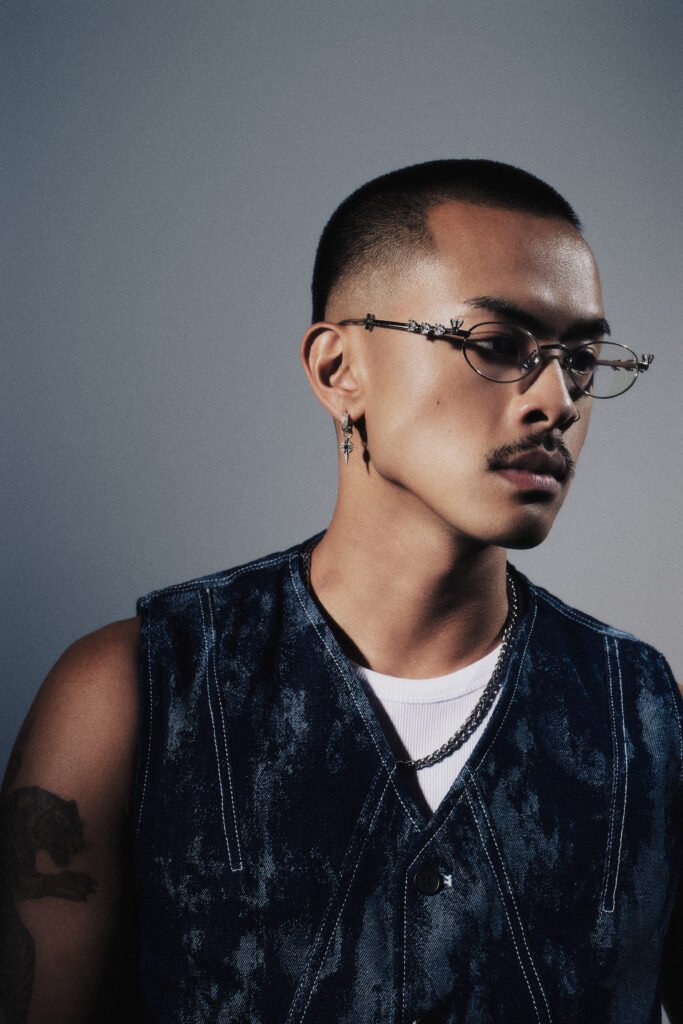
Dressing Beyond the DJ Uniform
Fashion enters Milda’s world through the same instinct for movement and individuality that shaped his dancing.
His earliest references were the dancers around him. Their clothes needed to move with their bodies, but they also had to communicate personality. Thrift stores became part of that education, with inexpensive pieces transformed through styling rather than price.
“They would go into thrift stores and buy hoodies for $2 or $3 and shirts for $3, and then it was all about how they dressed and paired everything.”
That resourcefulness remains part of his taste. Pharrell Williams is an influence, as are his friends Fresh and Will, but inspiration can come from almost anywhere, including a stylist discovered online or someone encountered at a party.
The all-black DJ uniform has its appeal, but it is not Milda’s preferred language. “For me, it’s ‘dress to impress.’ Always.”
His wardrobe remains open to discovery. A pair of sunglasses found in a vintage shop in Melbourne can become the piece that defines a particular moment. His relationship with Vietnamese fashion has also become stronger, with visits to RUE MICHE and recent appearances in brands including AA MIDNIGHT and CAOSTU.
The common thread is curiosity. He wants to find things, wear them, combine them and allow his style to change without having to justify every decision.
A Global House Perspective
That same curiosity informs his music. Milda describes his sound as “global house”, a term that reflects his interest in bringing different languages, cultures and musical influences into house music. The places he has lived and the sounds he encounters while travelling continue to shape that direction.
His first single, “Put Down Your Weapon”, came from a particularly personal place. He was dealing with difficulties of his own while thinking about the need for greater peace and unity. When a producer introduced vocals during a studio session, the message immediately connected with what he had been trying to express.
“It came at a time when I felt like both myself and the world needed that message.” The release also points towards a broader shift in his career.
As October begins, Milda is thinking less exclusively about the next DJ booking and more about original music. He describes the transition as moving from touring DJ towards touring artist, with greater attention going towards the work he releases under his own name.
That shift does not make the work behind the scenes any lighter. There are permits, travel arrangements, soundchecks and countless problems to solve before an audience sees him perform. He and his team refer to this as homework. The performance is only the visible part.
DCR MILDA Is Thinking Beyond the Next Viral Moment
For an artist whose career has been accelerated by clips and social media, Milda is surprisingly uninterested in making virality the final destination.
He wants his music to become part of people’s everyday lives. He wants it to accompany a celebration, carry someone through a difficult period or become connected to a memory that has nothing to do with the circumstances in which he originally made the song.
That ambition places his current evolution in a different light. The move towards original music is not simply a change in title from DJ to recording artist. It is an attempt to create something that can exist beyond the room, the set and the clip.
“I’m not just thinking about the next show or the next viral moment,” he says. “I’m thinking about what I can create that will stay with people long after I’m done performing.”
For DCR MILDA, there is still a dancer inside the DJ, a traveller inside the artist and a listener inside every performance. The set may be what introduces him to an audience, but the work now seems to be about everything that remains after the music stops.