


Millennials and Gen Z are the most design-conscious generations in history. Next generation architecture is also being shaped by the most housing-stressed generations in history. What they want from buildings, cities, and homes is redirecting architecture globally, from New York to Vienna to Lagos to Nairobi. Here is precisely what they are asking for.
Every generation gets the architecture it demands. The Baby Boomers got the suburb. Millennials accelerated the rise of co-working spaces, mixed-use developments, and compact urban living. Now Gen Z, born roughly between 1997 and 2012, is beginning to make its own demands on the built environment, and they are more specific, more urgent, and more globally interconnected than anything that came before.
Unlike previous generations, Gen Z has never experienced a world without smartphones, social media, or global connectivity. They prioritise flexibility over permanence, experiences over possessions, authenticity over luxury, and sustainability over excessive consumption. The result is a generation with a very clear picture of what it wants from buildings, and a very complicated relationship with its ability to get any of it.
Here is what the research, the architects, and the young people themselves are saying.
1. Next Generation Architecture Demands Real Sustainability
This is the most consistent demand across every market, every income level, and every geography. For younger generations, sustainable design is not a premium feature or a marketing point. It is a baseline expectation.
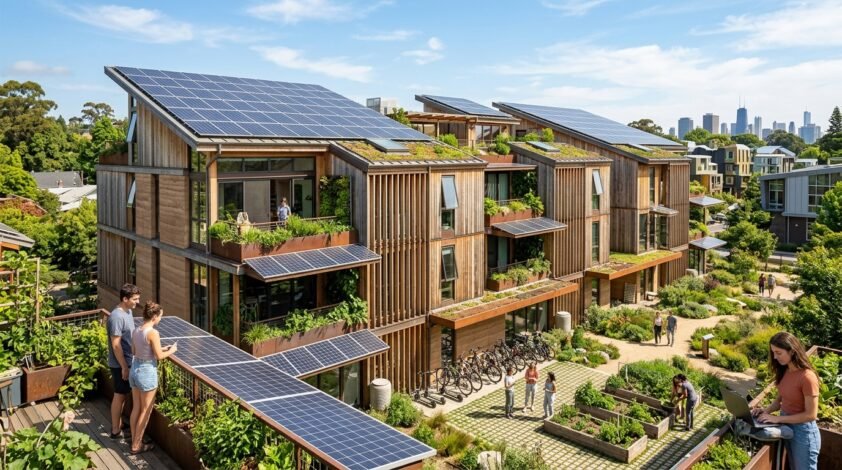
Eco-friendly features are no longer a bonus for Millennial and Gen Z homebuyers. They are an expectation. Homes with solar panels, energy-efficient appliances, and smart thermostats are highly sought after. These generations also favour homes built with sustainable materials and located in eco-conscious neighbourhoods.
Sustainable design is moving beyond energy-efficient technologies toward comprehensive life-cycle thinking. Architects increasingly evaluate embodied carbon, material sourcing, construction methods, operational performance, adaptability, and eventual deconstruction. Gen Z in particular pushes further than millennials on this point. Gen Z often takes a more active approach to sustainability, seeking out upcycled or repurposed materials. They are less interested in green-certified buildings that still consume heavily, and more interested in architecture that fundamentally rethinks its relationship to materials, waste, and energy from the ground up.
What this means in practice: Adaptive reuse of existing buildings over demolition and rebuild. Natural and locally sourced materials. Buildings designed to be disassembled rather than demolished. Passive design strategies that reduce energy demand rather than offset it.
2. Next Generation Architecture Must Be Flexible
Millennials entered adulthood during financial uncertainty, while Gen Z has grown up in an entirely digital world. These experiences have created different priorities from earlier generations. Affordability remains the dominant factor influencing housing decisions.
The traditional life script, get a job, buy a house, stay there for thirty years, does not reflect how younger generations actually live. Remote work, career changes, shifting household structures, and economic instability mean that the spaces they live and work in need to adapt with them.
Rather than merely designing buildings, architects are increasingly designing adaptive living ecosystems capable of supporting changing lifestyles, diverse family structures, and climate resilience. What younger generations want specifically:
Homes that work as offices. The dedicated home office is now a standard expectation, not a luxury add-on. Acoustic insulation, natural light, and reliable connectivity are non-negotiable.
Multipurpose rooms. Fixed-function rooms, the formal dining room being the most obvious casualty, are giving way to spaces that can be reconfigured based on need.
Flexible tenure options. Constraints such as limited mortgage penetration push younger people toward innovative financing instruments like rent-to-own schemes and micro-mortgages. Architecture that accommodates rental, co-ownership, and shared living is increasingly relevant.
3. Biophilic Design and the Demand for Nature
One of the most significant shifts in what younger generations want from architecture is the move toward biophilic design: spaces that actively incorporate natural elements rather than simply tolerating them.
In 2026, biophilic design is no longer a “nice-to-have”. It is becoming one of the core pillars impacting how architects, designers, and developers approach new spaces. With wellness now central to user experience, the demand for environments that feel uplifting, natural, and regenerative is accelerating across industries.
The science behind this demand is solid. Biophilic features like nature imagery, passive ventilation, running water, and organic colour palettes have been proven to help reduce feelings of stress and anxiety, improve alertness, and stimulate the production of dopamine and serotonin. A 2025 study exploring the link between biophilia and brain plasticity found that interactions with nature may help an area of the brain critical for memory and emotional regulation.
For a generation dealing with documented mental health challenges at higher rates than any previous cohort, this is not an aesthetic preference. It is a health requirement.
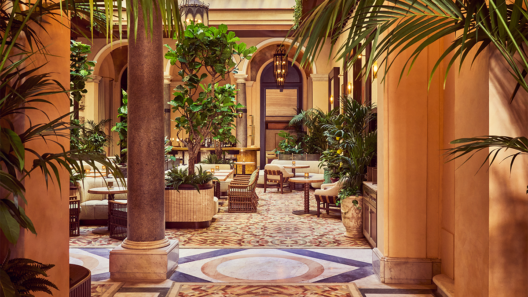
What this looks like in buildings: Green walls and indoor planting. Maximum natural light. Natural materials including wood, stone, linen, and wool. Views of greenery wherever possible. Outdoor space is treated as an extension of interior living rather than an afterthought.
4. Next Generation Architecture Is Community-Centred
The preferences and values of Gen Z, including sustainability, inclusivity, and innovation, are already disrupting traditional norms and redirecting the market. One of the clearest expressions of this is a shift away from the privatised, inward-looking architecture of the late twentieth century toward buildings and neighbourhoods that prioritise connection. Younger generations want more focus on green infrastructure, sharing resources, and supporting surrounding independent businesses.
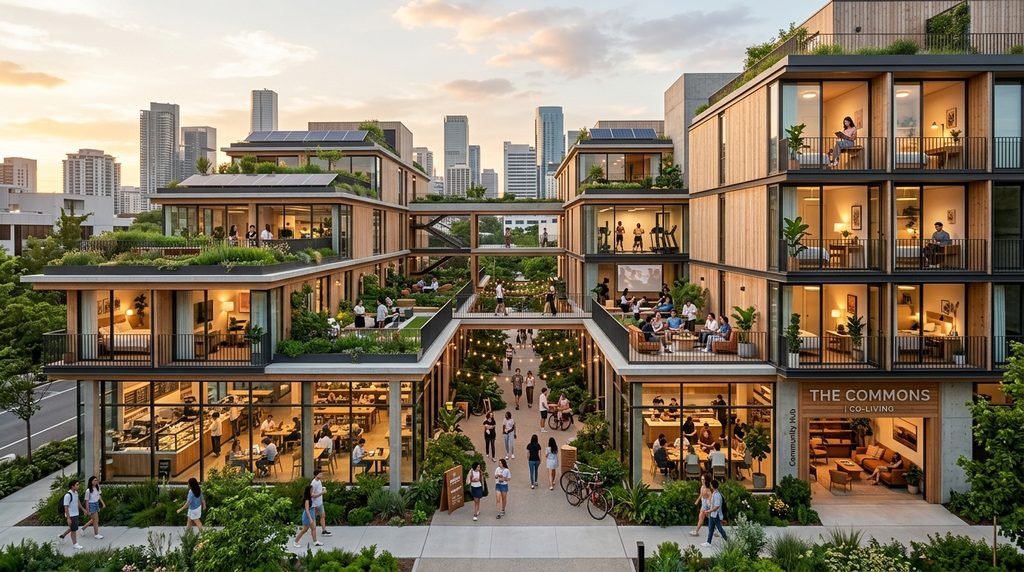
This extends to how they think about residential architecture. Co-living developments, which offer private bedrooms alongside shared kitchens, working spaces, and social areas, have grown significantly as a housing model precisely because they match how younger people want to live: with privacy available but community built in, rather than the reverse.
Public space matters more to this generation than it did to their predecessors. Eye-catching art, sustainable materials, and accessible spaces draw generations of visitors to well-designed public spaces. Architecture that treats the street, the square, and the park as extensions of building design rather than leftover space speaks directly to what younger generations value in cities.
5. Technology Integrated Seamlessly, Not Displayed
Gen Z integrates technology seamlessly into their homes, with smart home features and digital art displays. The distinction between seamless and displayed is important. The generation that grew up with smartphones does not want technology to be the visible selling point of a building. It wants technology to be invisible, embedded, and simply working.
Smart climate control that learns preferences without requiring constant input. Lighting that responds to circadian rhythms. Building systems that monitor energy use without demanding attention. Circadian lighting, a design approach that aligns indoor environments with the body’s natural biological rhythms, is becoming a key trend in wellness architecture, moving from cool blue-rich morning light that promotes alertness to warm evening tones that signal rest.
What younger generations are not particularly interested in is technology as spectacle. The building that leads with its smart features as a marketing point reads to them as inauthentic, the architectural equivalent of a brand that talks about sustainability without actually being sustainable.
6. Next Generation Architecture Values Authenticity Over Luxury
Millennials favour minimalism and simplicity, while Gen Z wants maximalism and authenticity. This is a significant shift with real architectural implications.
The quiet luxury aesthetic that dominated interior design through the early 2020s, with expensive materials, neutral palettes, and nothing out of place, resonated with an older millennial sensibility. Gen Z is pushing in a different direction. Gen Z adores all things vintage, as they can sustainably and affordably source unique pieces, offering a sense of individualism. Owning a piece of the past can be heartwarming, and living in a vintage-revival environment makes one’s home a conversation starter.
This translates architecturally into a preference for buildings that show their history, that have character developed over time, and that have not been sanitised into sameness. Adaptive reuse, the conversion of old industrial buildings, warehouses, schools, and public institutions into residential or mixed-use spaces, appeals to younger generations not just because it is sustainable but because it produces spaces that feel like they have existed, and therefore feel real in a way that new-build developments often do not.
7. Affordability: The Gap Between What They Want and What Exists
All of the above preferences operate within a constraint that shapes everything: younger generations are, in most major cities globally, priced out of the housing market in ways that previous generations were not.
Affordability remains the dominant factor influencing housing decisions for Millennials and Gen Z. Millennials entered adulthood during financial uncertainty, while Gen Z has grown up in an entirely digital world with different priorities from earlier generations.
In Africa, the challenge is structural and urgent at a different scale entirely. Africa’s urban population is growing faster than any other region in the world. Nearly 40 percent of Africans currently live in urban areas, a figure projected to rise to 60 percent by 2050. In cities like Lagos, Kinshasa, and Nairobi, populations are doubling every twenty years, yet housing infrastructure has not kept pace. The World Bank estimates that Africa needs to build 20 to 30 million new housing units annually just to meet demand, yet current production rates fall below one million per year.
Africa’s housing crisis is intensifying, with young people emerging as one of the most affected groups. Rapid urbanisation, rising housing costs, and limited access to finance are making it increasingly difficult for youth across the continent to secure affordable and adequate housing.
The Nairobi Declaration from the second Africa Urban Forum acknowledged that Africa faces a housing deficit exceeding 50 million units, and that youth, women, persons with disabilities, and people in vulnerable situations are disproportionately affected.
This is the context in which the preferences described above have to be understood. Younger generations in Lagos, Nairobi, and Accra are not choosing between a sustainable home and a conventional one. They are navigating a system in which adequate housing of any kind is out of reach for many. The architecture that serves them is not the architecture of individual preference. It is the architecture of collective infrastructure: affordable, resilient, climate-responsive, built fast enough to meet a demographic wave that is already here.
Recommended For You
8. Next Generation Architecture Must Reflect Who They Are
The next generation is the most diverse in history, and it wants architecture that reflects that diversity rather than defaulting to the visual language of a single cultural tradition.
Inclusivity is one of the core values already disrupting traditional architectural norms and reshaping the market. This means accessible design that accounts for a full range of physical abilities, not as an add-on but as a starting point. It means public spaces that feel genuinely welcoming to different cultural communities. It means residential architecture that accommodates different household structures, multigenerational living, non-traditional families, and the full range of ways people actually organise their lives.
In the context of European and African design specifically, it also means a long-overdue reckoning with whose aesthetic traditions are considered the default. The generation of architects now emerging from schools in Lagos, Nairobi, Accra, Johannesburg, Vienna, and Berlin is building a design vocabulary that draws from multiple visual traditions simultaneously. The buildings they produce will look different from what came before. That is not incidental to their values. It is an expression of them.
The Bottom Line
The next generation knows what it wants from architecture. Sustainability that is real, not performed. Flexibility that matches how they actually live. Nature integrated into buildings as a health priority, not a luxury. Technology that works invisibly. Community built into design rather than bolted on. Spaces that feel authentic.
What stands between these preferences and their realisation is not a lack of architectural imagination. It is the gap between what the built environment currently produces and what the scale of demand, particularly across Africa’s rapidly urbanising cities, actually requires.
The most important architecture of the next twenty years will not be the building that wins the award. It will be the housing framework, the policy infrastructure, and the financing model, that allows millions of young people in Lagos and Nairobi and Accra and Vienna and Berlin to live in spaces that were designed with them in mind. That is a bigger challenge than any single building can answer. It is also the most interesting design problem of our time.