Every civilisation leaves behind two kinds of inheritance. One is written in constitutions, museums, and monuments. The other lives quietly in the hands that weave baskets, the voices that tell stories by firelight, the women who prepare communal meals, the artists who remember what nations have forgotten, and the ordinary rituals through which a people learn who they are. Africa stands today at a decisive cultural crossroads. While the continent’s creative industries are attracting unprecedented global attention and its artists increasingly command the world’s galleries, biennales, and auction houses, another story unfolds beneath the applause. Ancient knowledge systems are disappearing. Craftsmanship yields to industrial speed.
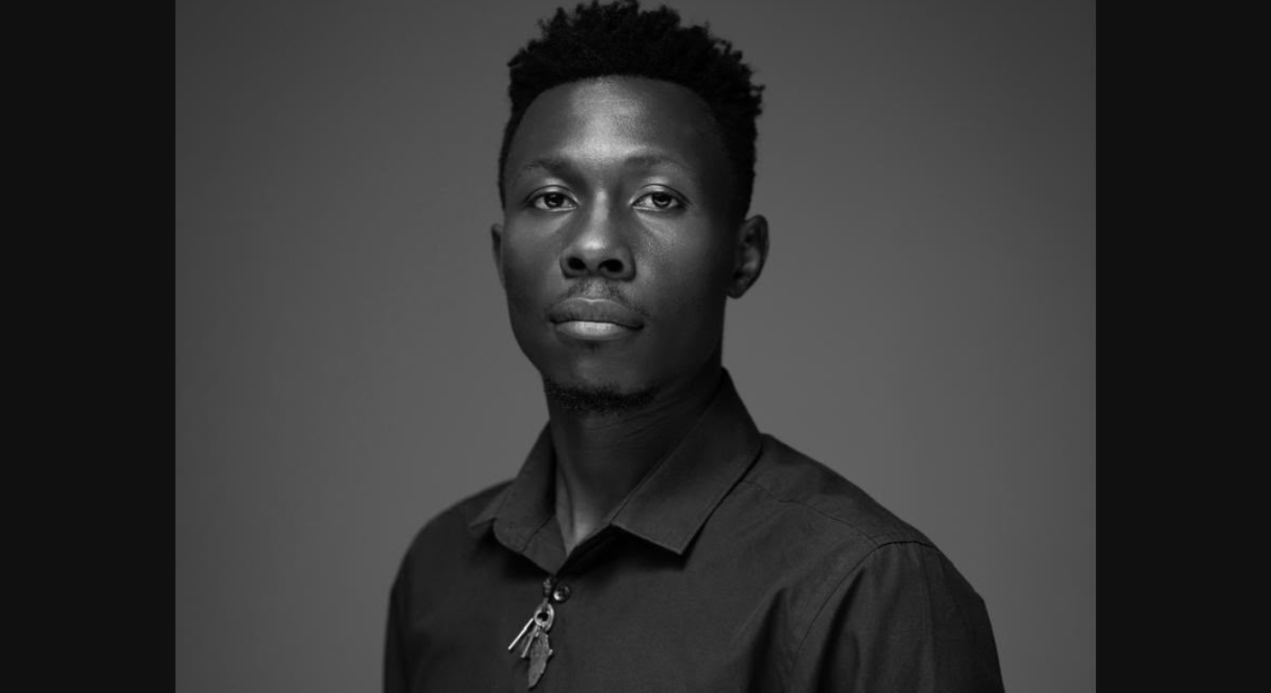
Communities that once experienced art as life itself are becoming spectators to cultures repackaged for foreign consumption, while many of the very artists building Africa’s global cultural renaissance continue to struggle for dignity, economic survival, and recognition at home. It is within this profound contradiction that Kajebe Jacob emerges, not merely as an artist or curator, but as one of a generation asking perhaps the most urgent cultural question of our time: Who is African art truly for? His answers challenge inherited definitions of creativity, expose the fragile economics beneath artistic brilliance, and remind us that the future of African culture will not be secured by visibility alone, but by restoring the intimate relationship between art, community, memory, and human flourishing.
FAB: Who is a curator, and what does a curator actually do in real life?
Kajebe Jacob: For me, curating is something I only came to understand recently. I did not even realise I was curating when I first started doing it. I went to university in 2017 for my bachelor’s degree, and while I was there, my friends and I started visiting galleries and organising gatherings where we could showcase our work. We wanted people to see what we were creating as artists. There is a deep desire artists have to share their work with others because if no one experiences it, it can feel like nothing is really happening.
I have always been very community-orientated. I like sharing what I do, whether it is good or bad. I want people to engage with it. That naturally led me into curating, even before I understood the term itself.
Later, I came across a call for curators, and that was the first time I seriously researched what curating meant. I learned about its historical roots, where curators mainly managed collections and museums. But today, the role is much broader. Curating is not limited to one task or definition. It is an open-ended practice that requires many different skills and competencies.
You need to organise exhibitions, plan events, design catalogues and posters, coordinate dates, handle shipping and transportation of artworks, and manage logistics. In my country, many of these systems are still not properly established, so you often end up doing many jobs at once.
For me, curating means conceptualising ideas, planning exhibitions, visualising how a show will look, and art directing the entire process. It includes everything involved in moving an artwork from the studio into public view. That includes documentation, writing exhibition texts, and creating pathways for the work to be seen, experienced, and eventually collected.
So I do not think there is one simple definition of curating. It is a combination of many moving parts that work together to help art reach people.
FAB: You’ve described art as a form of social practice, not just something displayed on walls. In your experience, how does art actually change the way people live, connect, or heal?
Kajebe Jacob: I come from the Margaret Trowell School of Industrial and Fine Arts, which was founded by a British woman named Margaret Trowell in 1937 in Uganda. She came as the wife of a doctor working at Mulago Hospital, and according to history, she sympathized with Uganda and East Africa and decided to establish an art school because she believed there was little formal art practice happening at the time. Of course, that idea itself can be debated.
The school focused on teaching printmaking, painting, sculpture, and other formal art disciplines. But over time, especially after graduating, I began questioning how much of that system connected with the realities of my local community.
I started asking myself what existed before colonial influence and before formal art education arrived. What I discovered was that art in Uganda, and in much of East Africa, had always been deeply communal. Art was part of everyday life. It existed in ceremonies, performances, weddings, food preparation, spiritual rituals, and social gatherings.
For example, during weddings, people would come together to decorate and transform spaces beautifully, even if that transformation only lasted one day. If you were not there to witness it, you missed it completely. There were also rituals surrounding twins, childbirth, cooking, serving food, and even practices like pouring something onto the ground for the spirits. All of these were forms of collective creativity and expression.
Because of that, I do not see art as something purely personal or confined to a studio. In my understanding, art originally belonged to the community.
That perspective influences the way I work today. I want art to be experienced and consumed, not stored away as clutter. One challenge I see is that many artists in Uganda and across Africa now create work mainly for foreign markets because that is how many institutions train us. But if you want local communities to engage with your work, you must think about how those communities can access and experience it because they are the source of the inspiration in the first place.
My work comes directly from everyday Ugandan life. My experiences are shaped by Uganda, so I want Ugandans to experience those stories first. Then, through that local experience, people from the rest of the world can also gain a deeper understanding of who we are. That is why the community element remains so important to me.
FAB: You work a lot around care, wellness, and community, as you’ve mentioned. Those are not words people traditionally associate with exhibitions. What do you think is missing from the way we currently experience art spaces?
Kajebe Jacob: I would not necessarily talk about what is missing. I would rather talk about what I want people to experience and what I am personally working toward creating. For me, an exhibition should engage all the human senses. It should involve sight, smell, touch, taste, and sound so that people can become fully immersed in the experience.
Most galleries and museums mainly engage the eyes. You walk in, look at the work, and constantly hear things like, “Don’t touch this” or “Be careful, it’s delicate.” It creates a very distant relationship between the audience and the artwork. But I am someone who loves interaction. I like touching things, experiencing textures, and feeling connected to the environment around me.
That is why I want exhibitions to feel fully immersive. If a work involves smell, then people should smell it. If touch is important, then people should touch it. If taste is part of the experience, then that should also be included. For me, the goal is to activate all the human senses and create something people can truly feel themselves inside of.
FAB: So you believe art should be more interactive and engage all five human senses. In that sense, would you say what’s currently missing is interactivity?
Kajebe Jacob: Yes, especially that immersive dimension of interaction and experience.
Another thing I feel is missing is that people are often disconnected from the actual process of making art. For example, I work with printmaking, and printmaking is a very physical and three-dimensional process. You carve wood, work with surfaces, apply pressure, and go through multiple technical stages. But in the end, what people see is only the final two-dimensional print on paper.
People admire the beauty or aesthetics of the finished piece, but they rarely understand what it took to create it. They miss the labour, craftsmanship, experimentation, and thought process that happened in the studio. In a way, audiences are being denied that experience.
I believe people connect more deeply with art when they understand the process behind it. Too often, they only see the final product and assume it appeared effortlessly. But the process itself is sophisticated, complex, and highly creative.
It is similar to coding. Someone works through endless lines of code and technical systems behind the scenes, but the audience only sees the final image or message on a screen. The same thing happens with art. People see the outcome without experiencing the steps that brought it into existence.
For me, the process is just as important as the final artwork. It is entertaining, educational, and emotionally engaging in its own right. People should experience that journey too, not just the finished result hanging on a wall.
FAB: A lot of young people love creativity, as you’d probably agree with me, but many of them still feel disconnected from galleries and contemporary art spaces. Why do you think art spaces can sometimes feel inaccessible or even intimidating?
Kajebe Jacob: I think today we have many ways to navigate access and inaccessibility, and social media is one of them. We’ve seen people build influence and completely change their lives through platforms like TikTok. Someone can post a short video and suddenly get invited to conferences or major opportunities.
At the same time, institutions are complicated. They can be both valuable and limiting. Personally, studying at Makerere University and the Margaret Trowell School of Industrial and Fine Arts gave me a strong foundation and helped me understand the system. Institutions can give you visibility and structure. But if you do not have access to them, you can still find ways around them, especially in this era.
I also think many people misunderstand the real problem. Often, the challenge is not creativity itself. The bigger challenge is survival. If you want to pursue art as a career and not just as a hobby, you need a livelihood. You need to pay rent, cover bills, and sustain yourself. Without that support system, many artists eventually feel forced to depend on institutions in one way or another.
That means you have to be strategic. Sometimes you work with institutions, even while questioning them, because they already exist and can help you build your career. You do not always have to fight against them directly. Sometimes you can work within the system while still pushing for change.
This reminds me of the 1962 Conference of African Writers at Makerere University, where writers and thinkers debated decolonisation. Some argued that African writers should reject English and write only in their mother tongues. Others believed they could Africanise English and use it to communicate their ideas to wider audiences. I think the same applies to institutions. They are not the final destination, but they are structures you can work through while building your own path.
You also have to understand what stage you are at in your career. An emerging artist may simply want to be included in an exhibition. But after having exhibitions, you realise that visibility alone is not enough. You also need to sell work, sustain yourself, and build long-term support. Some artists believe that as long as their message is seen, that is enough. But when rent is due, you realise financial sustainability matters too.
Institutions can help with that visibility. If a respected gallery or organisation writes about your work, it can introduce you to a larger audience without you constantly promoting yourself. So I think artists have to learn how to balance life both within and outside institutions because institutions can be both helpful and challenging.
Another issue, especially in Uganda, is that gallery audiences are often made up mostly of people already within the art world. Artists are not doing enough to break barriers and invite wider communities into these spaces. One reason is that many artists are creating work for foreign markets rather than local audiences.
As a result, local communities sometimes struggle to connect with the work or feel welcome in those spaces. But if artists begin creating with local audiences in mind, people will naturally feel more involved, attend exhibitions, and even start collecting art themselves before that work reaches international audiences.
Many artists who gain international recognition are not fully supported or understood back home because their work does not resonate with local communities. I think that is something artists and institutions really need to reflect on.
FAB: While you started talking about the local audience, if someone walks into an exhibition and says, “I don’t get art,” what do you think they are really saying?
Kajebe Jacob: I think there are several ways to answer that. First, sometimes art is ahead of its time. As an artist, you can create work that exists beyond the imagination or understanding of the present moment. Imagine talking about AI or WhatsApp in the 1930s. People would probably think you were crazy because the world had not yet caught up with those ideas. But now those things make complete sense to us. So sometimes people do not understand art simply because the work is speaking to a future they have not yet entered.
Second, sometimes artists create work that feels alien to the people around them, and that can also happen naturally. When someone says, “I don’t get art,” it also raises the bigger question of what art actually is. Even I am still trying to understand what art is and what it is not because, at this point, I see art in almost everything. If you put me in finance, law, or another profession, I will still notice the artistic qualities within it because art influences the way I look at the world.
At the same time, I think some people hide behind the title of “artist” without putting in the real work. They want art to automatically become a career or a source of income, but they are not committed to developing ideas that are meaningful, relevant, or necessary. For me, art should matter. It should connect to life in some way. If the work has no relevance to people’s experiences, then perhaps something important is missing.
I also think we cannot always blame audiences for not understanding art. Sometimes people simply have not been exposed to it, and that is okay. But other times, artists are producing work that was never meant for the community standing in front of it. Some work feels disconnected, overly influenced by foreign systems, or rooted in contexts that local audiences cannot relate to. In those cases, artists need to ask themselves an important question: who exactly is this work for?
If the audience in front of you is not the audience you created the work for, then it is understandable that they may not connect with it. At the same time, another audience somewhere else may completely understand and appreciate it. So I think artists need to be honest about who they are speaking to and why.
FAB: You’ve spoken about relatability. As a curator, what are the five important things you look for before giving a work your nod?
Kajebe Jacob: Personally, I approach exhibitions through a philosophy. There is a phrase I deeply connect with called ‘Ubuntu Bulamu’. For me, it represents well-being, humanity, and the essence of life itself. The work I am drawn to usually reflects that philosophy in some way. I love art that speaks about life, documents experiences, archives memories, reflects the present, and even imagines the future.
I also value tangibility and craftsmanship. Craftsmanship is something I feel has been overlooked, especially because of the education systems many of us went through. In a lot of spaces, craft is treated as “lesser” than fine art, but I do not really agree with that separation. Skill matters to me. I pay attention to the time, discipline, and intentionality invested in the work.
Another important thing is clarity of intention. I want artists to understand what they are creating and why they are creating it. An artist should be able to explain their work and communicate their thinking clearly. That helps me understand their perspective before I even think about how audiences might respond to it.
I also look for authenticity. I want to see how much the work reflects the artist as a person. The strongest work usually carries traces of the artist’s identity, experiences, and worldview.
Finally, I look for emotional or human connection. Even if the work is experimental or complex, there should still be something that invites people in, something that creates dialogue, reflection, or feeling. For me, the best art is grounded in humanity and intentionality rather than simply existing for aesthetics alone.
FAB: Your work explores inherited knowledge systems and cultural continuity. Earlier in this conversation, you also touched on some of these ideas. What forms of African knowledge or craftsmanship do you think are quietly disappearing while many of us are not paying attention?
Kajebe Jacob: Number one is food culture. One of the strongest traditions we have in Africa is community around food, the act of communing and dining together. In Uganda, there is a deep culture around mealtime, shared eating, and even the spices connected to those experiences.
As we advance technologically, we need to appreciate progress, but we should also ask why certain practices existed in the first place. Why was water stored in pots? Why did people avoid cooking more food than they could consume? Why was there no strong culture of storing leftovers in fridges? There were reasons behind those practices. They were connected to sustainability, health, and communal living.
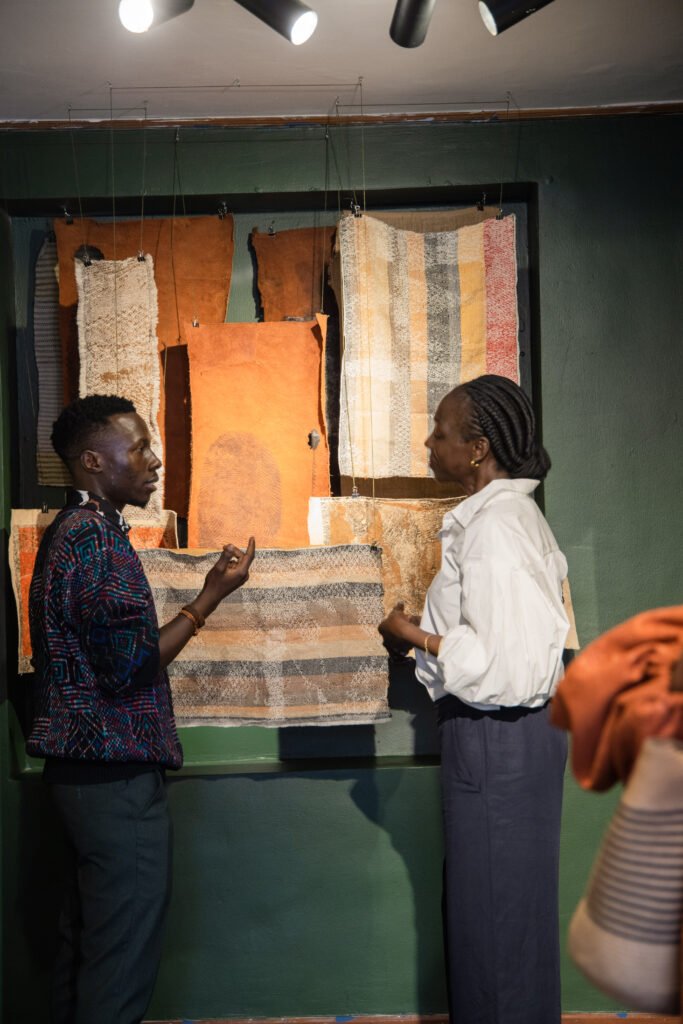
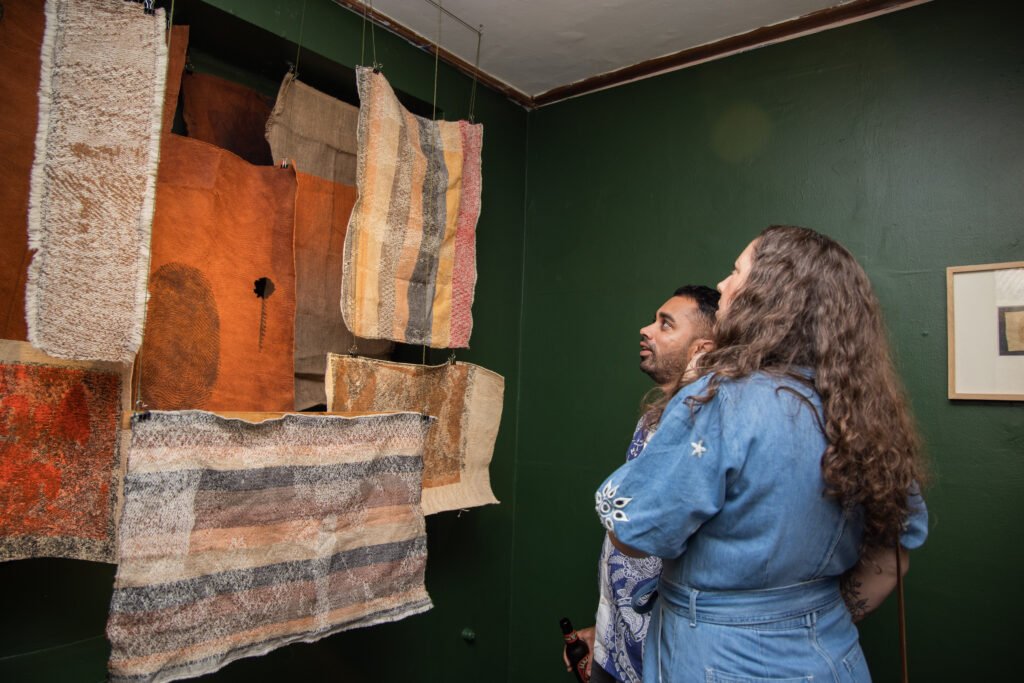
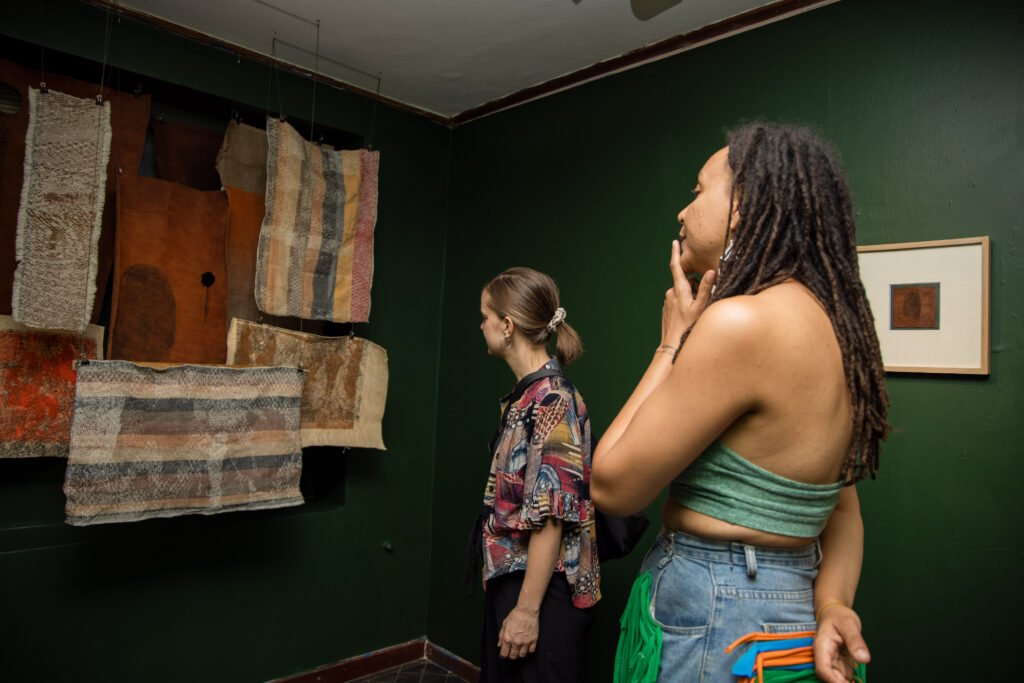
Another thing disappearing is craftsmanship itself. Basket weaving, textile making, architecture, and traditional methods of production are slowly fading away. In Uganda, for example, we have bark cloth making, which is a traditional textile practice. The process is entirely manual and cannot really be mechanised. The knowledge is passed down within families from childhood. You cannot simply go to school and learn it. It is inherited cultural knowledge.
The sad part is that the people making bark cloth are often not recognised or properly compensated. Meanwhile, others take the material, transform it into products, and profit from it at the end of the chain. There is a disconnect between the original makers and the consumers. Because the artisans are undervalued, younger generations are less motivated to continue these traditions, and that knowledge slowly disappears.
The same thing is happening with storytelling. Many people no longer know their histories, their clan stories, or even the deeper meanings behind their names. These traditions are fading little by little.
I was recently discussing how Africa is pushing heavily toward industrialisation while simultaneously allowing craftsmanship to die out. Craftsmanship is slow by nature. It requires patience, time, and intentionality. You cannot mass produce handcrafted work at the same speed as industrial production.
At the same time, industries already dominate the world through fast fashion and mass production. They produce enormous quantities of goods very quickly. Craftsmanship works differently. It produces slowly, carefully, and often only according to need. That slowness is actually valuable. It is sustainable. It prevents excess production and waste.
Today we live in a culture of speed. Everyone wants the fastest and easiest way to do things. But the slower pace of craftsmanship carries lessons about sustainability and intentional living that we are overlooking.
I also think we are losing important communal values connected to well-being. For example, in many African languages, there are very few direct words for certain mental health conditions like depression or schizophrenia. That made me reflect on how our traditional ways of living were deeply communal.
The philosophy of Ubuntu, the idea that “I am because we are,” shaped how people related to one another. Communities emphasised care, mutual respect, and interdependence. People hugged each other, checked on one another, shared meals, and lived collectively. Those practices supported emotional well-being in ways we may not have fully understood at the time.
Now, individualism is rising. People increasingly live by the idea of “me, myself, and I”. That shift affects not only our relationships but also the way we create and live. Many of the small communal practices we overlook today were actually supporting our mental health and social wellness.
So I think we are not only losing craftsmanship or storytelling. We are also losing ways of living that once held communities together and contributed to people’s emotional and spiritual well-being.
FAB: One of the things you are deeply invested in is creative labour and sustainability. You’ve argued that artists and cultural workers are still expected to survive on passion alone. At the same time, many conversations about African creatives focus heavily on visibility. But is visibility enough if artists still cannot build stable lives from their work? What would a truly sustainable African art ecosystem look like to you?
Kajebe Jacob: When most artists talk about sustainability, they usually focus on materials or environmental concerns, which are important. But for me, sustainability goes far beyond that. I think about whether artists themselves are sustainable. Can they survive financially? Can they meet the basic requirements of life?
As creatives on the continent, many people are incredibly talented, but they still struggle to afford the bare minimum. Two meals a day, accommodation, proper rest, and basic health care. A huge number of artists cannot sustain these things consistently, especially if they rely entirely on their creative practice. Even some artists who appear successful are quietly struggling behind the scenes.
So when I talk about sustainability, I’m talking about the full ecosystem of life. Africa is not lacking in talent. We are overflowing with creativity. The real question is whether it is sustainable to live as a creative person in Uganda or across Africa. Who is supporting these artists? Who is consuming their work? Who is investing in them?
Sometimes artists look happy during gallery openings or creative gatherings, but that is only one side of the story. Afterwards, many return home worried about rent, food, transport, or survival. You invite artists to workshops, and they genuinely want to attend, but some cannot even afford transportation. That is the reality.
I also believe artists need stronger economic and life education. They need to understand what I call the different capitals of life. Social capital matters because the people you know can open doors and opportunities. Financial capital matters because you need income to survive. Physical capital matters because your health matters. Locking yourself inside a studio for seven months without rest or exercise is not sustainable.
Intellectual capital is also important. Artists need to keep learning, reading, attending workshops, and developing themselves. Then there is spiritual capital, which helps ground people emotionally and mentally.
Right now, many creatives invest all their energy in studio production while neglecting other areas that actually sustain a long-term career. For me, a sustainable ecosystem means helping artists build balanced lives, not just produce more work.
Artists also need to think strategically about branding and income generation. What are the actual earning opportunities connected to your creativity? How do you position yourself? How do you balance artistic freedom with economic survival?
Talent is beautiful, but it can also become a burden. Creativity often comes from a deeply personal or spiritual place, but the market pays you for solving problems or creating value. Balancing what you want to create with what people are willing to support financially is one of the hardest parts of being a career creative.
There is a huge difference between doing art as a hobby and building a life around it professionally. A career artist still has ordinary human responsibilities. You need housing, food, relationships, family, and community. You need to participate in life like everyone else.
For performing artists, people buy tickets to shows, so there is usually a direct payment structure. For visual artists, you often create work and hope someone collects it. That uncertainty forces you to think more broadly. Maybe you start a podcast, collaborate with brands, sign partnerships, teach workshops, or diversify your income streams.
So for me, a truly sustainable African art ecosystem is one where artists are not surviving on passion alone. It is one where creatives are supported economically, socially, intellectually, physically, and spiritually. It is an ecosystem where artists can build meaningful careers without sacrificing their well-being or dignity in the process.
FAB: Let’s get more personal. You are still very young yourself, yet you are already helping drive cultural conversations. Do you ever feel pressure to have everything figured out?
Kajebe Jacob: Yeah, definitely. I’m a very family-orientated person because I grew up in a close family environment. My grandfather has been married for 56 years, and my parents have been married for close to 30 years. That impacted me deeply. It is part of my inheritance. So naturally, I also think about marriage, responsibility, and building a future. My wedding is actually in a few days, so there is pressure. You begin thinking beyond passion. You start asking yourself questions like ‘If I have children tomorrow, how will I support them?’ How will I pay school fees? What kind of life will I build?
At the same time, because I now work with other artists and collaborate with institutions, some people assume I already have all the answers. But honestly, I can only do as much as I can. There is also what many people call the African tax or Black tax, where responsibility extends beyond just yourself. But I also think that is part of what makes life meaningful. If life had no challenges, it would not be as interesting. Solving problems, overcoming them, and then facing new ones the next day is part of being alive.
I welcome the pressure because it keeps me moving. I remember hearing some people in the art industry admit that they still do not fully know what they are doing, but somehow they manage to keep their heads above water. I also once heard Ibrahim Muhammad from West Africa say that if everything else fails, art will solve it. I truly believe that. Art solves many things. Sometimes simply creating, instead of staying silent, becomes a way of surviving and moving forward. Doing what I can with what I have is already a step toward solving whatever I am going through.
FAB: Outside galleries and exhibitions, what inspires you creatively in everyday life?
Kajebe Jacob: My life itself inspires me. At this point, I believe my life is the art, and everything else I create is simply an extension of it. The exhibitions, the textiles, the prints, they are all fragments of a much bigger story. They are like Instagram posts, small glimpses into the life of an almost 30-year-old man.
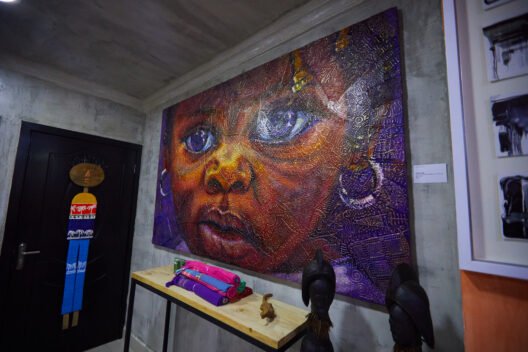
My current exhibition, The Quiet Side of Falling Trees, is deeply personal. It is about my experiences and everything I have lived through. When people first meet me, they only see the surface. They hear my name and know that I am an artist and curator. But they do not see the emotional experiences, the struggles, the beautiful moments, or the difficult memories that shaped me. That, to me, is the real art.
If people could truly see what I have seen or feel what I have felt, they would understand me differently. But the same applies to everyone. Every person’s life is art. What we present publicly is only a small extension of a much deeper story.
Even now, you are in Nigeria, and I am in the UK, yet we are speaking as though we are sitting next to each other. Life itself amazes me. Every day carries details that often go unnoticed. The sun rises and sets every day, yes, but what matters are the small moments within that cycle. The weather changing, conversations, memories, emotions, silence, laughter, heartbreak, healing. Those are the details that inspire me.
In my exhibition, I explore quiet experiences, the moments we often suppress or choose not to amplify. Some memories make us cry, some make us laugh, and some stay hidden within us. That emotional landscape is the real art for me.
FAB: Speaking about that life, one would wonder what a day in the life of an artist and curator looks like. Run us through it.
Kajebe Jacob: There are days when creativity completely takes over me. I usually say, “The thing attacks me,” and I cannot settle down until I create something tangible. Most of my art actually exists in my head before it becomes physical. I spend a lot of time imagining, remembering, replaying moments, and processing experiences internally.
Even with this interview, I kept replaying possible conversations in my mind. I did not sit down to formally plan anything, but I would suddenly find myself imagining the discussion while in the bathroom or walking around. It is not always intentional. It just happens naturally.
Then there are moments when I feel an intense urge to create. If I do not express it somehow, I become restless. I need to pick up a pen, sketch, doodle, write, or make something physical just to release the pressure in my mind. Once I create it and see it exist outside my head, I finally calm down and can continue with my life.
Sometimes I even lose sleep because of it. I cannot rest until I create something. Every day is different, but some days feel like a buildup of creativity that desperately needs an outlet. It is difficult to explain, but it feels like creative pressure building inside you until it finally has to come out.
FAB: If you could radically change one thing about how art functions in Africa tomorrow morning, what would it be?
Kajebe Jacob: In the Ugandan context, I would want governments to genuinely take art seriously and make it a central part of national development. Art could employ so many people if leaders truly understood its value. It can influence policy, educate people, shape public conversations, and provide solutions to societal challenges.
I strongly believe artists are highly intellectual people. They think deeply about society and often see problems differently. Governments should not only praise art verbally but actively work with artists and invest in creative industries. That is what many countries around the world are already doing. They understand the value of culture, which is why they invest heavily in it.
If we do not take our own cultures seriously, we will eventually pay other countries to teach us about our own histories and traditions. What Africa offers the world is deeply connected to art, culture, storytelling, and identity. Those things are valuable.
FAB: Finally, if a young creative from Kampala comes across this conversation and feels unseen or uncertain about their future in art, what would you want them to understand about the value of their voice?
Kajebe Jacob: I would tell them to appreciate the season they are currently in, especially when they are still unknown. Every stage of life has its own value, and there is a reason you are experiencing what you are experiencing. Do not rush through it. Enjoy it fully and make the most of it.
When opportunities begin opening up, life changes. It is similar to graduating from school. Once you graduate, certain possibilities disappear because you move into a different stage of life. The same applies to every phase of growth.
I usually compare it to being in your mother’s womb. In that space, everything is provided for you. You are protected, comfortable, and untouched by the pressures of the world. But once you enter the world, everything changes. You begin to experience discomfort, growth, hunger, responsibility, and adaptation. Each season comes with its own realities.
So while you are still in the early stages of your creative journey, enjoy the freedom that comes with it. At that point, you are often most connected to yourself and your truth. Once recognition comes, systems and expectations can start influencing you, and sometimes you lose parts of yourself in the process.
That is why I would encourage young creatives to stay focused on their work, trust their voice, and enjoy the process as much as possible.