
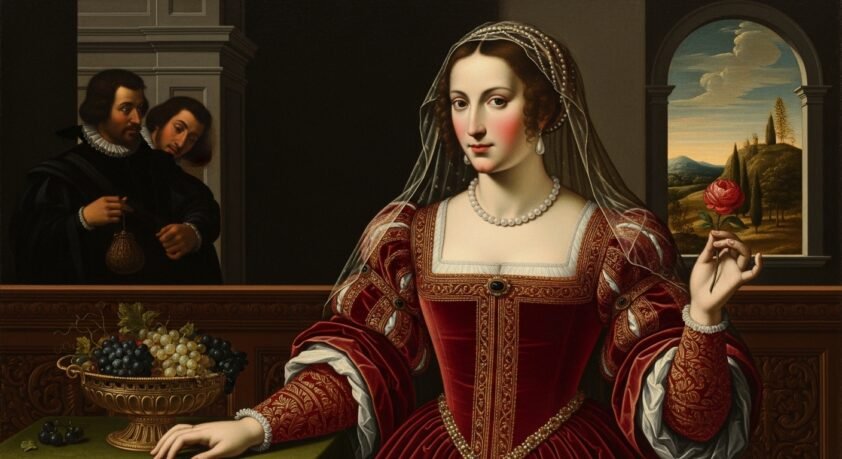
The question is so familiar it has stopped feeling like a question. We know what a beautiful woman looks like. We have always known. It is one of those things that seems to require no instruction, no argument, no authority behind it — it simply exists, self-evident, as natural as gravity and about as open to challenge. We absorb it so early and so completely that by the time we are old enough to examine it, it feels less like a standard that was imposed and more like a truth that was discovered.
This is the first and most important thing to understand about beauty standards: they are designed to feel inevitable. An imposed standard that announced itself as such would invite resistance. A standard that feels like nature, like common sense, like the simple recognition of what is and has always been — that standard is almost impossible to argue with, because there appears to be nothing to argue with. You are not disagreeing with a decision. You are disagreeing with reality.
But someone made the decision. Several someones, across several centuries, in specific places with specific interests, operating within specific structures of power. The standard that feels like nature has a history. It has authors. And understanding who they were and what they were doing when they wrote it is the beginning of being able to see it clearly — which is to say, as a choice, rather than as a fact.
The Painters and Their Patrons
The Western beauty standard — the one that has, through colonialism, media export, and the global reach of the beauty industry, become the most widely disseminated standard in human history — has its roots not in science or philosophy but in art. Specifically, in the art produced by men for the pleasure and prestige of other men.
The women who appear in the canonical paintings of the European tradition — in Botticelli, in Titian, in Rubens, and in Ingres — were not portraits of what beauty objectively was. They were propositions about what beauty should be, made by painters working within the commercial and social constraints of a patronage system in which the patron was almost always male and the subject was almost always female. The woman depicted was not a participant in the representation of her own beauty. She was its object. She was being looked at, which meant that beauty, from the outset of its Western codification, was defined in relation to the act of looking — and the person doing the looking was not her.
This is not a minor or incidental point. It means that the foundational Western definitions of female beauty were produced by the specific tastes and desires of a specific class of men, at a specific historical moment, in the service of specific social functions — the demonstration of wealth, the celebration of patronage, and the eroticisation of the female body for a male audience. The woman in the painting was not asked whether she found herself beautiful. She was not asked anything at all.
What those paintings produced, over centuries of reproduction and reference and cultural circulation, was a visual vocabulary of female beauty that came to seem, precisely because it was everywhere and had always been there, like the vocabulary of beauty itself. The narrow waist. The pale or golden skin, depending on the era. The particular arrangement of facial features that the Western tradition has consistently valorised. These were not discoveries. They were preferences, amplified into norms by the sustained authority of institutions — the church, the academy, the aristocracy — that had every interest in their preservation.
The Scientists Who Measured
If painters established the aesthetic vocabulary of female beauty, scientists — or those who called themselves scientists — provided the ideological infrastructure to make it stick.
The nineteenth century saw the emergence of a body of pseudo-scientific thought, operating under names like physiognomy, phrenology, and anthropometry, that claimed to have discovered objective, measurable relationships between physical characteristics and human value. This thinking was not marginal. It was academically credentialled, institutionally supported, and widely influential. And it was, from its foundations, in the service of a specific political project: the naturalisation of racial and gender hierarchy.
The beauty standard that emerged from this period was not merely aesthetic. It was taxonomic. It organised bodies into categories of more and less beautiful, more and less civilised, more and less human — and it did so along lines that mapped precisely onto the existing hierarchies of colonial power. European features were not simply described as beautiful. They were described as objectively, measurably, and scientifically superior. Features characteristic of African, Asian, and Indigenous bodies were coded as lesser — as deviations from a norm that was, in reality, not a norm at all but a particular body type elevated to the status of universal standard by people who happened to possess it and happened to control the institutions that produced and distributed knowledge.
This legacy is not historical in the sense of being past. It is historical in the sense of being the foundation on which contemporary beauty standards still, in significant part, rest. The preference for lighter skin that operates across multiple non-Western cultures — in South Asia, in East Asia, and in West Africa — is not a natural preference. It is a colonial one, produced by the sustained association of lightness with power, education, and social value that European colonialism installed and the global beauty industry has spent a century and a half profiting from. The rhinoplasty trends, the hair straightening, and the contact lenses in lighter shades: these are not expressions of individual taste operating in a neutral context. They are the downstream consequences of a beauty standard that was built, explicitly and deliberately, to make certain bodies feel insufficient.
The Advertisers and Their Motives
If painters gave the Western beauty standard its visual form and pseudo-scientists gave it its ideological justification, the twentieth-century advertising industry gave it its infrastructure — and transformed it from a cultural norm into a commercial engine.
The beauty industry’s founding insight, and its most durable one, is that the most reliable way to sell a product is to first create the problem it solves. This is not cynicism applied in retrospect. It is a strategy that was articulated explicitly by the early architects of modern advertising, who understood that desire is manufactured more reliably than it is discovered, and that the most powerful desires are those attached to the deepest anxieties.
The anxiety about female appearance — about whether one’s body, face, skin, and hair conform adequately to the current standard — is, in large part, a manufactured one. Not manufactured from nothing, because anxiety about social acceptance is a real and ancient human experience. But manufactured in its specific contemporary form, directed at specific features, attached to specific products, and sustained by a media environment that has spent a century producing images of a standard that the vast majority of women cannot meet, because the standard was not designed to be met. It was designed to be pursued. A standard that could be achieved would not generate repeat purchases. The standard must always be slightly beyond reach.
What advertising did, in the twentieth century, was take the existing vocabulary of female beauty — already narrowed by centuries of male artistic preference and colonial ideology — and connect it directly to commerce. Beauty became not just a social value but a market. The woman who did not meet the standard was not merely socially disadvantaged. She was a consumer who had not yet bought the right things. And the industry that had defined the standard she was failing to meet was also, conveniently, the industry selling the means of approaching it.
Recommended For You
The Language of Fashion Has Authors. Here’s How to Recognise Them
The Mirror and the Screen
The twentieth century added one further mechanism to the production of beauty standards that had not existed in the same form before: mass media.
For most of human history, the reference points for female beauty were local. A woman’s understanding of what was beautiful was formed primarily by the women she could actually see — in her community, her family, her immediate social world. These references were varied, human, and subject to the natural diversity of bodies and features that characterises any real population. They were not curated.
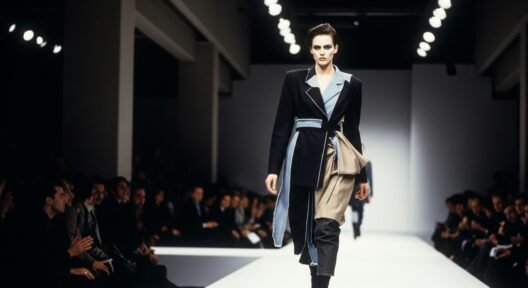
The arrival of cinema, then magazines, then television, and finally the internet and social media produced something categorically different: a globally distributed, relentlessly curated visual environment in which the bodies and faces presented as beautiful were not a sample of the actual population but a selection from it — and a selection made, for most of the medium’s history, by a small number of editors, casting directors, photographers, and executives who were, in the overwhelming majority, white, Western, and male.
The effect of sustained exposure to this environment on the average woman’s relationship to her own appearance has been extensively studied and is largely consistent: it produces dissatisfaction. Not because the women exposed to it are vain or irrational, but because comparison to a standard that was selected for its distance from ordinary experience is, by design, an exercise in coming up short. The standard exists at the level of the screen, not the street. It is produced by lighting, by selection, by retouching, by the systematic exclusion of everything that does not conform. And it is then presented, and received, as simply what beauty looks like.
Social media has intensified this dynamic to an extent that is still being reckoned with. The volume of curated beauty imagery now available to the average person is without historical precedent, as is the intimacy with which it arrives — not in a magazine bought once a month but in a feed consulted many times a day, interspersed with images of people the viewer knows, blurring the line between mediated ideal and lived reality until the distinction becomes difficult to maintain.
What Happens When You Name the Author
Understanding that beauty standards were made — that they have authors, histories, and interests behind them — does not make them disappear. The standard does not dissolve the moment it is recognised as a construction. It remains culturally powerful, commercially sustained, and psychologically real in its effects on the women who live within it.
What naming the author does is change the relationship between the woman and the standard. It transforms the standard from a fact about the world into a position taken in the world — one that can be examined, disagreed with, and, in however limited a way, refused.
This is not a small thing. The woman who understands that the preference for lighter skin is a colonial legacy rather than an aesthetic truth is in a different relationship to her own complexion than the woman who does not. The woman who understands that the beauty standard of any given decade was produced by a specific set of commercial and cultural interests is in a different relationship to her own face than the woman who experiences that standard as nature. The knowledge does not liberate anyone from the standard’s effects. But it introduces a gap — between the standard and the self — that was not there before.
In that gap, something becomes possible that was not possible when the standard felt like reality. Not necessarily beauty as the industry defines it. Something more interesting than that: the capacity to look at oneself with curiosity rather than judgement. To ask not whether one measures up, but who decided what measuring up means, and whether that person’s judgement deserves the authority it has been given. The answer, almost invariably, is that it does not. It never did.