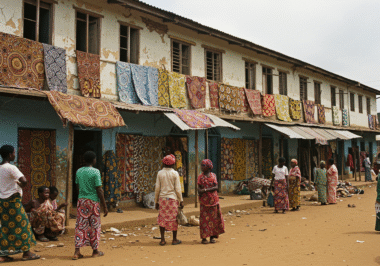




We live in a world obsessed with the new: the latest app, the fastest chip, the flashiest skyscraper. Yet, sometimes, the deepest wisdom for our modern problems is found not in tomorrow’s tech demo but in yesterday’s thriving civilizations. Look to the East African coast, and you will find a quiet, enduring lesson echoing from coral-stone ruins and bustling spice markets. This is the story of the Swahili Coast, a civilization that has been innovating in globalization, sustainability, and diplomacy for over a millennium.
The Swahili identity, forged by the Indian Ocean trade winds, is one of Africa’s oldest and most globalized cultures. It is a beautiful fusion: African Bantu roots seasoned with Arabic, Persian, and Indian flavors. The result is a cosmopolitan coastal society that, by the 13th century, boasted prosperous city-states like Kilwa, Lamu, and Mombasa. These cities were not isolated villages; they were powerful mercantile hubs connecting the gold mines of Great Zimbabwe to the porcelain kilns of Imperial China. Today, their blueprint offers invaluable lessons for modern societies struggling with climate change, cultural friction, and the relentless pursuit of progress. We are going to explore how the Swahili masters of the monsoon can teach us to design, connect, and endure.
Sustainability: The Coral Stone and the Coast
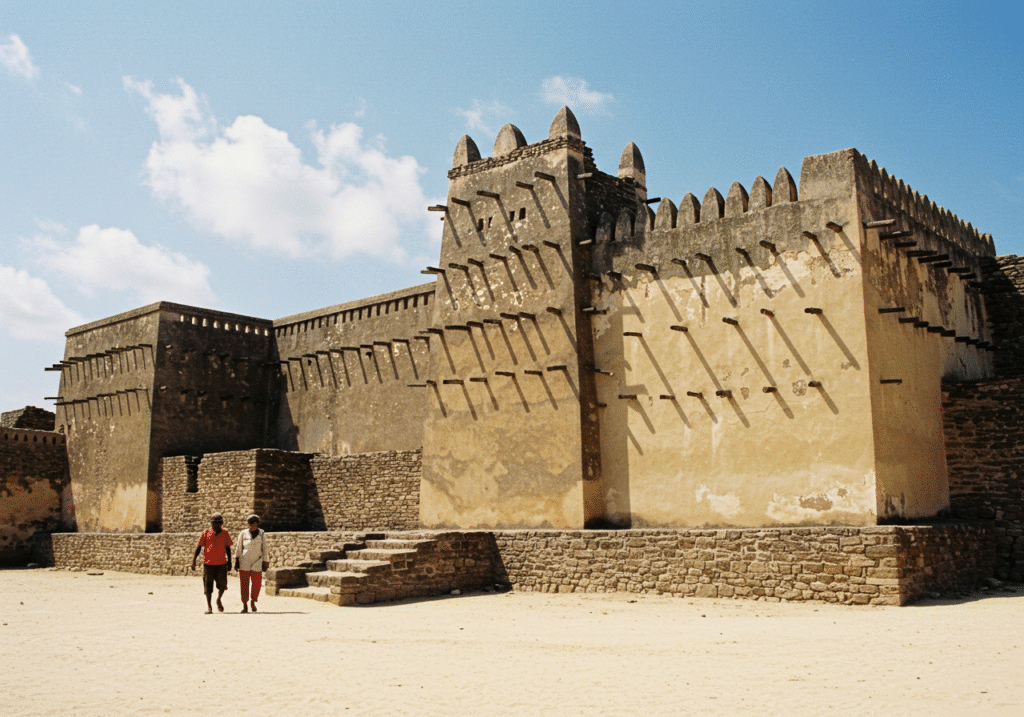
If you want to talk about true sustainability, you need to talk about Kilwa Kisiwani. This former Swahili city-state, now a UNESCO World Heritage site, was an architectural marvel built to last, not to be replaced. Moreover, the Swahili builders were masters of using local, abundant materials in ways that worked with the environment, not against it.
Architecture That Breathed
Swahili houses and mosques were primarily constructed using coral rag, a porous, naturally occurring limestone harvested from the reef or quarried locally. This material has incredible thermal properties. The porous coral stone naturally absorbs heat during the day and releases it slowly at night, creating interiors that are consistently cool and comfortable despite the oppressive coastal heat. Air conditioning was unnecessary; the buildings themselves were the climate control system. This is a profound lesson for modern construction, which relies heavily on energy-intensive cooling technologies and imported materials.
Furthermore, traditional Swahili urban design utilized narrow, winding alleyways. This was not simply an aesthetic choice. These compact streets are brilliant examples of passive climate design. The narrow walls cast deep shadows, reducing heat absorption on the ground. The arrangement funnels cooling sea breezes, creating miniature wind tunnels that naturally ventilate the dense city centers. My friend Aisha, an architect from Lamu, once told me how her grandmother’s house, with its thick walls and hidden courtyards, feels like a cave in the midday sun: quiet, cool, and perfectly still. It is a testament to timeless, eco-friendly design.
Maritime Reliance and Resourcefulness
The Swahili livelihood was inextricably linked to the ocean. They did not just fish; they managed the coastal ecosystem. The tradition of building their iconic sailing vessels, the dhows, offers a lesson in resource efficiency. In addition, Dhows were built using indigenous timber and were designed to harness the power of the seasonal monsoon winds for trade across the entire Indian Ocean. These were zero-emission vessels that powered a global economy for centuries.
Their respect for the sea extended to resource management. They did not industrialize fishing; their practices were local and aimed at sustaining the coastal fish stock for generations. This deep understanding of their ecological niche is what allowed their culture to persist through centuries of climate variability and political change. They understood that the prosperity of the market was dependent on the health of the coral reef.
Design and Aesthetics: The Power of Intentional Space
The Swahili have a sophisticated aesthetic that blends practicality with a deep spiritual and cultural reverence. Their homes and furniture are not just functional; they are narratives carved in wood and stone.
The Swahili Door: A Statement of Identity
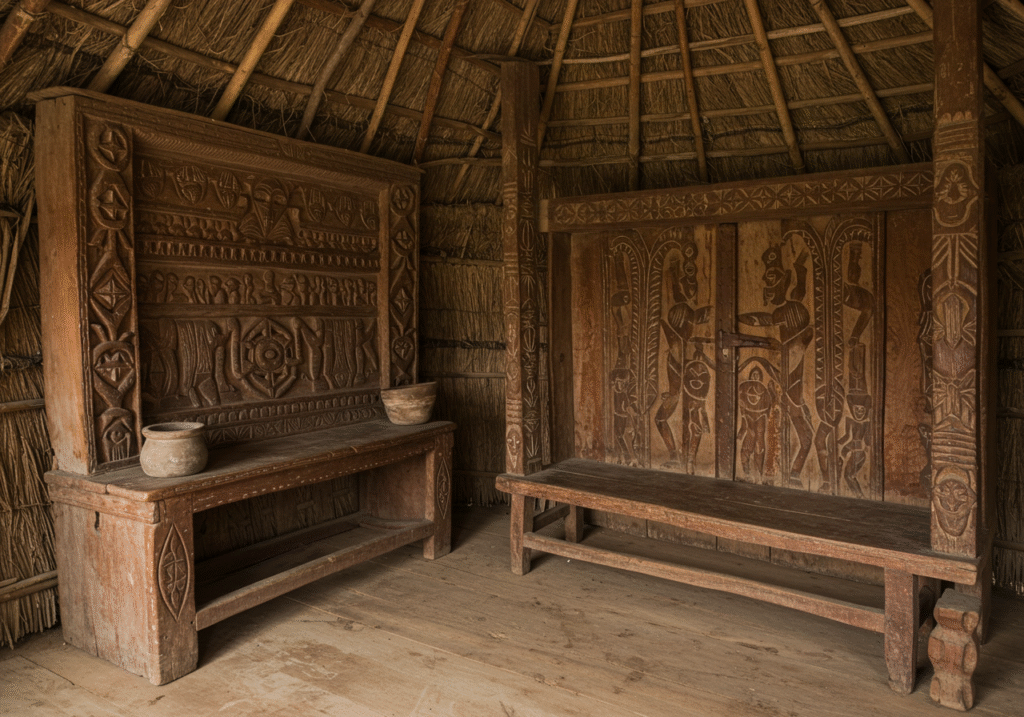
Perhaps the most recognizable feature of Swahili architecture is the intricately carved wooden door. These doors are much more than entry points; they are a public declaration of the family’s wealth, status, and lineage. Historically, the style of the door indicated the culture of the owner. A rectangular lintel (the beam above the door) often points to an Arabic influence, while certain geometric patterns betray a Persian or Indian hand.
Interestingly, the oldest doors found in places like Zanzibar often have the inscription carved before the threshold. This subtle design choice symbolized that the home’s spiritual protection and welcome were paramount, preceding even the physical structure of the house. It is a design principle that puts human and spiritual value before material ostentation. In an age where digital identity is paramount, the Swahili door reminds us that physical spaces should also reflect deep, intentional character.
Interiors of Privacy and Piety
The interiors of Swahili homes are a lesson in minimalist, mindful living. They prioritize air circulation and privacy. Homes are often organized around a central courtyard, a cool, communal oasis hidden from the street. The rooms themselves feature built-in coral-stone shelves, or zidaka, where precious items like porcelain bowls, Qur’ans, and spices were displayed. The shelving acts as built-in furniture, reducing the need for movable items and keeping the space open and airy. This design encourages a life focused on simplicity, contemplation, and the appreciation of a few treasured items.
Recommended For You
Diplomacy and Globalization: The Language of the Sea
The Swahili civilization did not conquer to connect; it traded, spoke, and married its way across the sea. Their very existence is a masterclass in soft power and cultural fluidity.
Kiswahili: The Ultimate Bridge Language
The single greatest export of this civilization is the Kiswahili language (or Swahili). Kiswahili is a Bantu language at its core, but it seamlessly absorbed thousands of words from Arabic, and smaller influences from Portuguese, German, and English, mirroring its trade history. It became the lingua franca of the East African coast because it was a neutral, practical language of commerce and communication.
A caravan porter from the interior could speak Kiswahili to a merchant from Oman, and both would find common ground. It was not the language of an imperial power imposing its will; it was the language of people who just wanted to do business and get along. Today, Kiswahili is spoken by over 100 million people and is one of the official languages of the African Union. It is the perfect example of how a flexible, adaptive cultural tool can become a force for unity and economic integration.
The Monsoon Network: Trade over Territory
For a thousand years, the Swahili city-states were the essential middle link in the world’s most extensive trade network, predating the European age of exploration. They exported African goods (gold, ivory, timber) and imported Asian luxuries (silk, porcelain, spices). Their power did not come from a massive standing army but from their unmatched knowledge of the seasonal monsoon winds and their impeccable reputation as reliable, sophisticated traders.
This is a key lesson for modern global diplomacy: Prosperity comes from mutually beneficial exchange, not dominance. The Swahili understood that if their trading partners flourished, they too would flourish. They mastered the art of receiving foreign influence—absorbing the best of Arabic mathematics or Persian aesthetics—without losing their distinctive African soul. They showed the world how to be fiercely local and thoroughly globalized at the same time.
Anecdotes of Survival and Adaptation
The 1,000-year history of the Swahili people is not just a tale of prosperous trade; it is a profound narrative of survival through centuries of external pressure, from shifting trade routes to colonial conquests. Their enduring presence offers powerful insights into cultural resilience.
The Kilwa Sultanate: Bouncing Back from Portuguese Shock
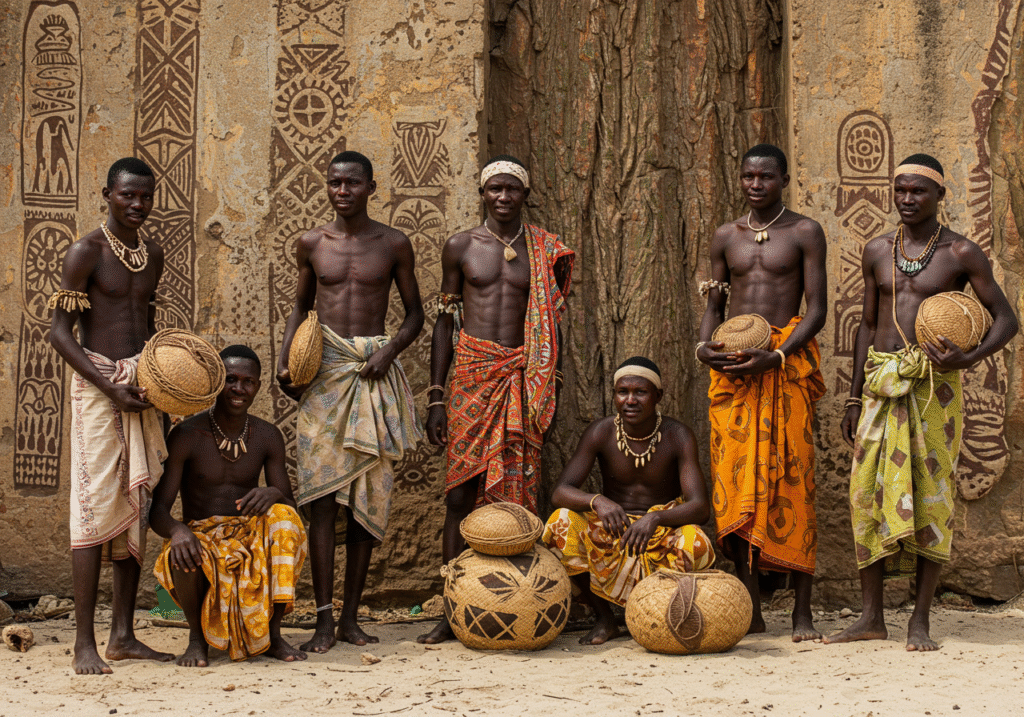
One of the most powerful examples of Swahili resilience comes from the 16th century, specifically involving the once-mighty city of Kilwa. When the Portuguese arrived, seeking to dominate the Indian Ocean spice trade, they viewed the prosperous Swahili city-states as rivals. In 1505, the Portuguese sacked Kilwa, destroying its royal palace and disrupting its established trade networks with an aggressive, territorial approach.
Most civilizations would have collapsed entirely under such a sudden, violent economic shock. However, the Swahili culture survived by adapting its trade routes and preserving its core identity. While Kilwa itself declined, other northern cities like Lamu and Pate took on the mantle of cultural and commercial leadership. The Swahili diaspora simply shifted its operations, moving inland to establish new caravan routes and utilizing smaller, less conspicuous ports. They proved that their power was not dependent on a single king or city, but on the adaptability of their language and the cohesion of their merchant network. They became masters of lying low until the external pressures faded, only to re-emerge stronger centuries later. This flexibility is a critical lesson for any modern economy facing rapid technological or geopolitical disruption.
Lamu’s Quiet Endurance: The Power of Refusal
Lamu Town, a jewel of Swahili architecture in Kenya, stands as a living anecdote of cultural resilience. Lamu essentially survived the aggressive modernizing pressures of the 20th century by quietly refusing them. When motor vehicles started appearing on the mainland, Lamu doubled down on its ancient transportation: the donkey and the dhow. To this day, the narrow coral alleyways are too small for cars, preserving the city’s historical, human-scale architecture and climate-controlled design.
This seemingly simple choice had a profound ripple effect. By maintaining the pedestrian nature of their town, they maintained their traditional, interconnected social structure and their unique aesthetic. They prioritized the quality of life and cultural integrity over what was perceived as “progress.” Lamu shows us that resilience is sometimes found in resistance, in the conscious choice to protect the human element against the tide of industrial uniformity. It is a powerful antidote to our current age of breakneck urbanization.
Modern Relevance of the Swahili Aesthetic Philosophy
The Swahili aesthetic is often described by the phrase uzuri na heshima, meaning beauty and respect/dignity. This philosophy, rooted in Islamic principles and coastal practicality, offers a timely critique of contemporary Western design trends.
1. Dignity Over Flash: The Anti-Branding Aesthetic
In a world saturated with logos and self-promotion, the Swahili design approach is refreshingly modest. Their elegance is internal. The exterior walls of their homes are typically plain white coral plaster, intentionally devoid of external decoration or pretense. The beauty and wealth were reserved for the interior: the elaborate doors, the spice-scented air, the expensive imported porcelain displayed on the zidaka shelves.
This teaches us a powerful lesson in modern lifestyle: True value is found in the substance, not the outward signifiers. It challenges our consumer culture, which often values the branded exterior (the luxury car, the logo t-shirt) over the quality of the private life (the peaceful, sustainable home, the enriching relationships). The Swahili aesthetic encourages investing in spaces and objects that bring dignity and contemplation, rather than fleeting status.
2. Design for the Senses: Coolness and Scent
Modern design often focuses on visual appeal, but Swahili design is deeply multi-sensory. The thickness of the coral walls is designed to feel cool. The zidaka shelves are not just for display; they were used to store precious spices and incense (like frankincense and myrrh) that filled the air. The home was meant to smell as good as it looked, creating an environment of sensory wellness.
- Modern Application: This suggests that contemporary architects and interior designers should move beyond visual trends. They should prioritize materials that regulate temperature naturally (sustainability), textures that feel good to the touch, and subtle, natural scents that enhance mood. The Swahili model shows that holistic comfort is the ultimate luxury.
3. The Power of Human-Scale Architecture
The narrow, winding streets of Lamu are the direct result of a design that values human interaction and community safety over vehicular convenience. These streets force people to slow down, to walk, and to engage with their neighbors.
This is fundamentally relevant to the global urban planning crisis. Planners worldwide are trying to build “15-minute cities” that prioritize walking and local commerce. The Swahili figured this out a thousand years ago: Architecture should serve the pace of human life, not the speed of the machine. Their aesthetic philosophy prioritizes the pedestrian experience, creating dense, interconnected, and fundamentally social environments that foster strong communal bonds.