
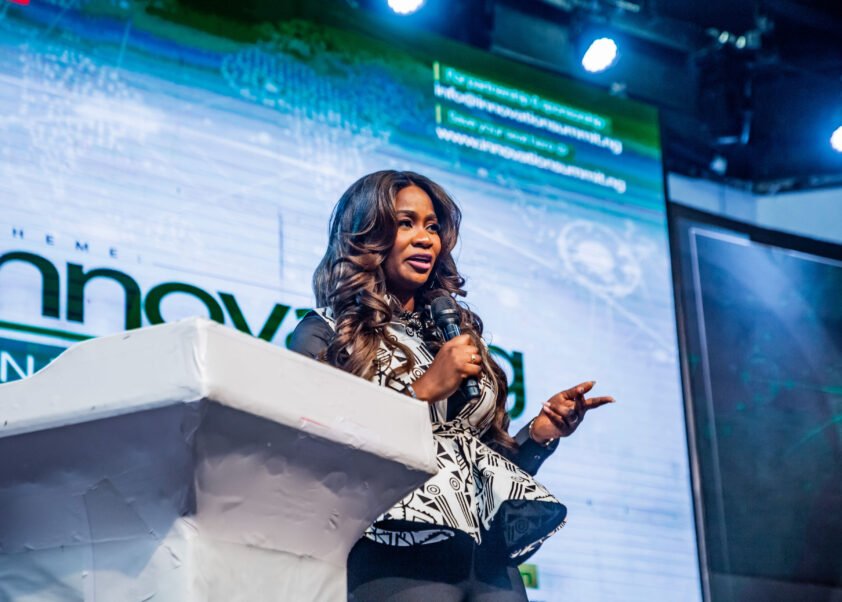
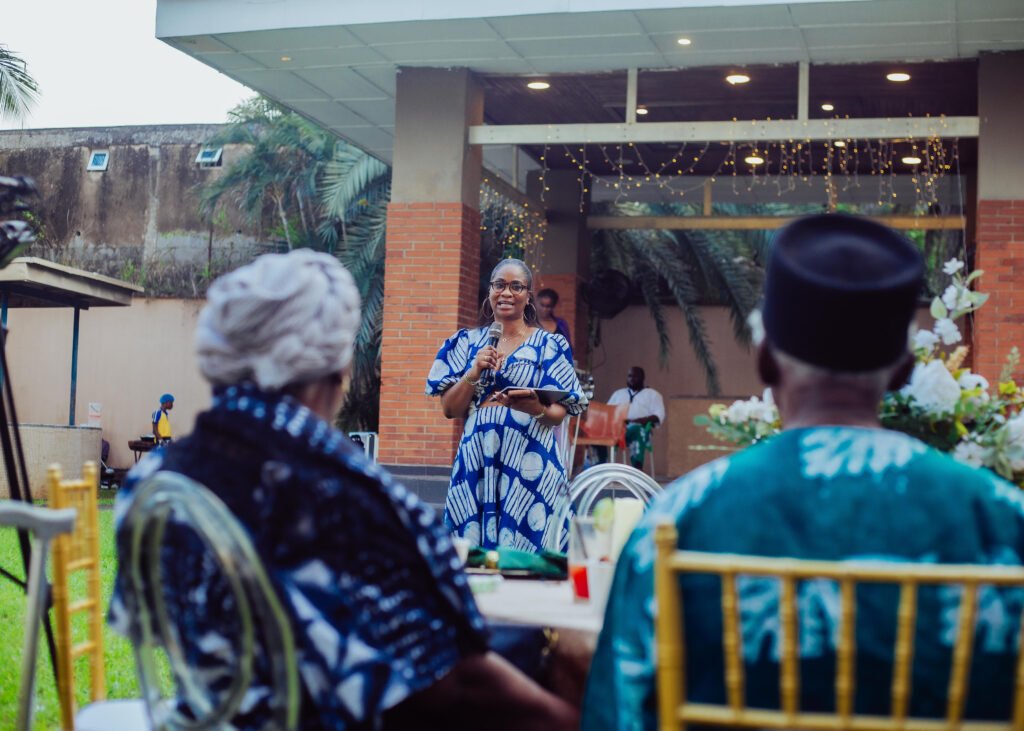
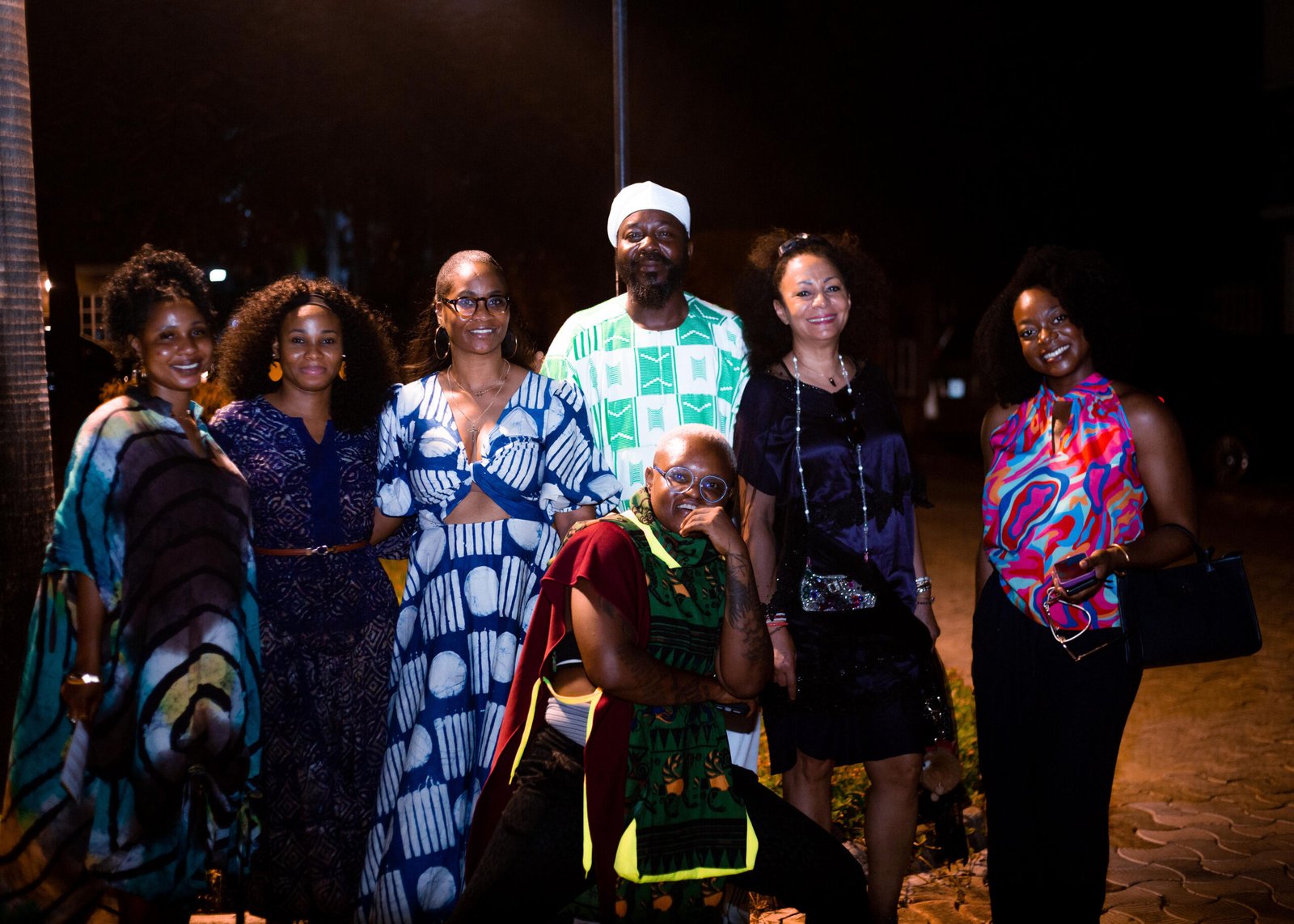
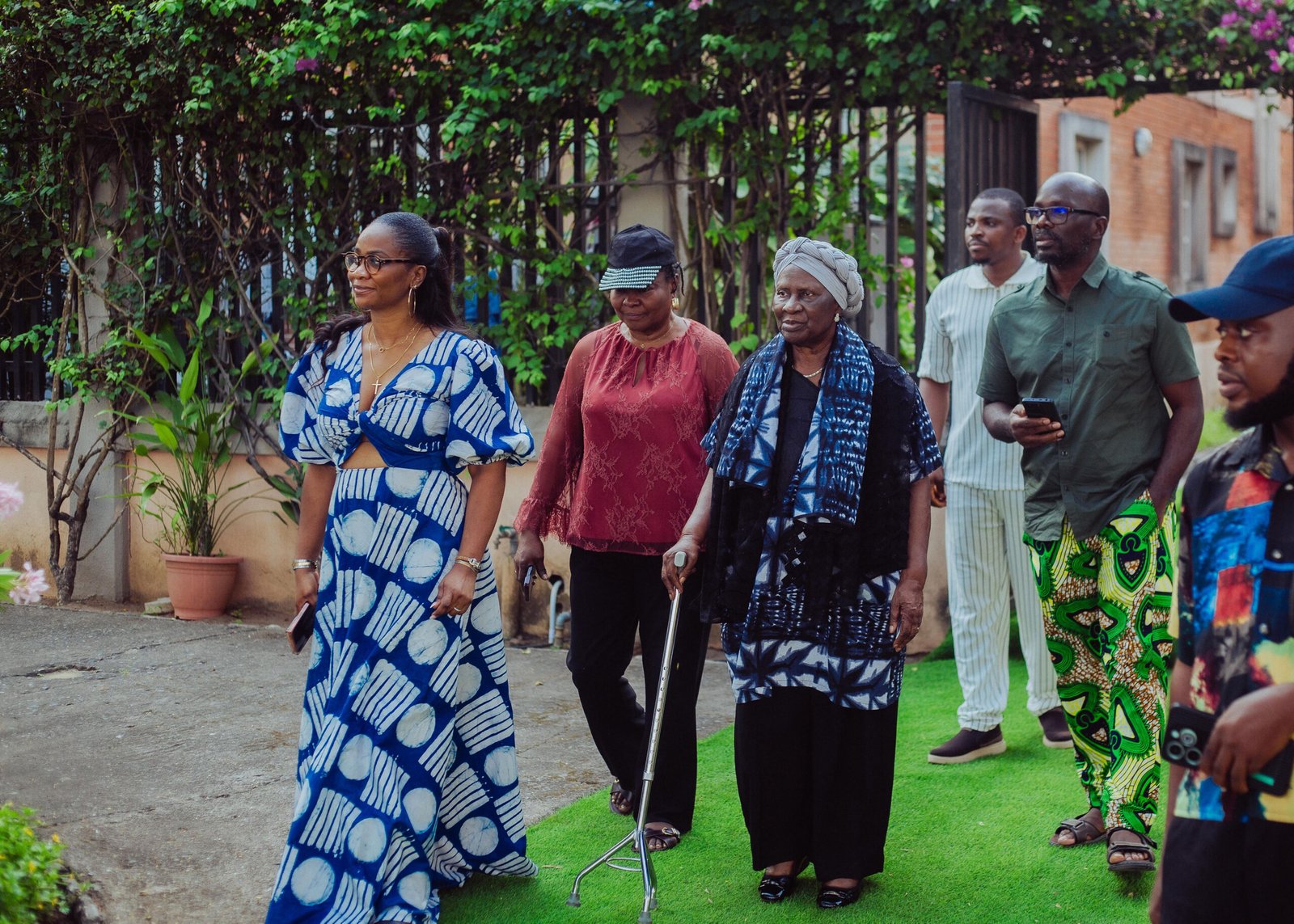
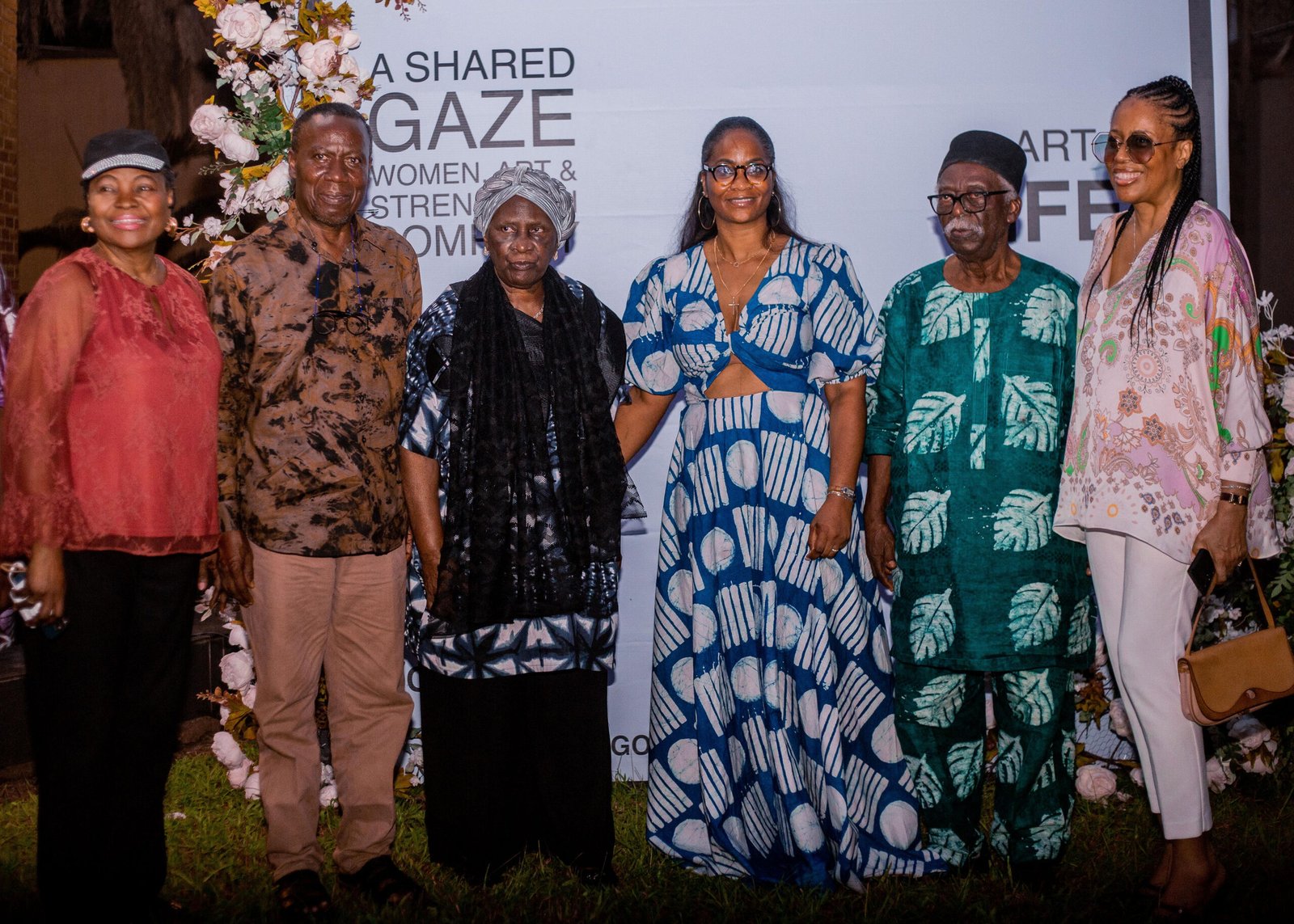
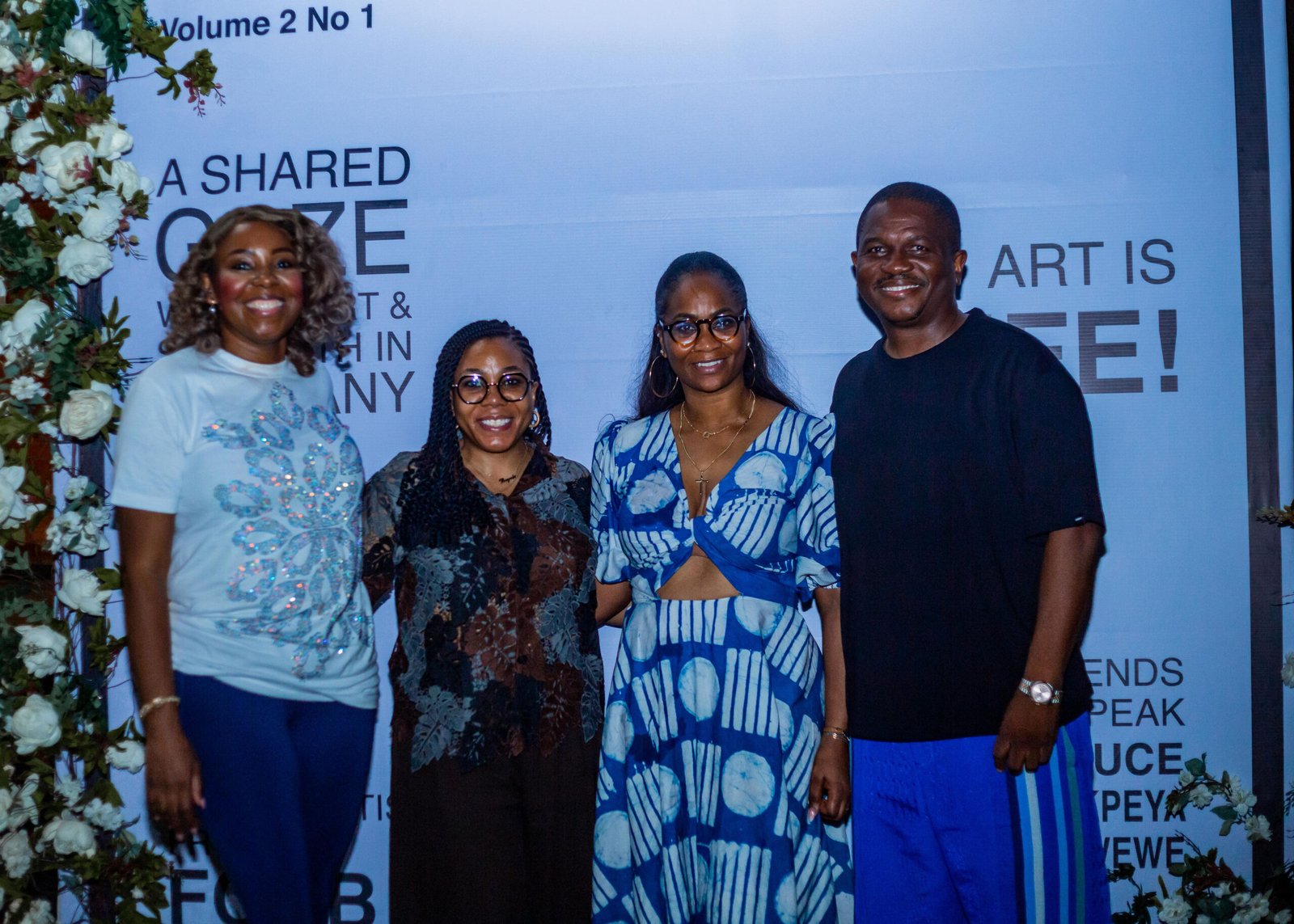
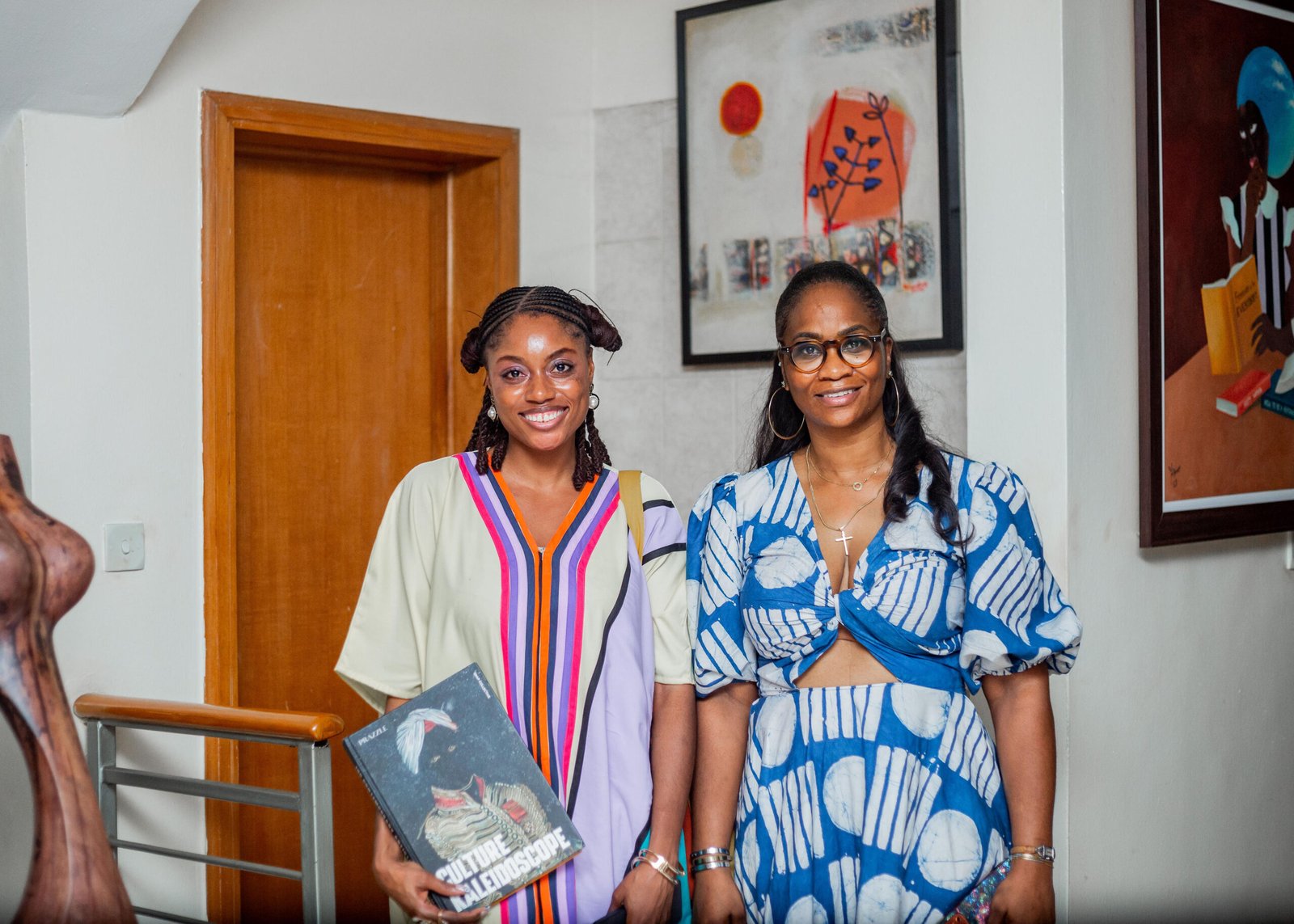
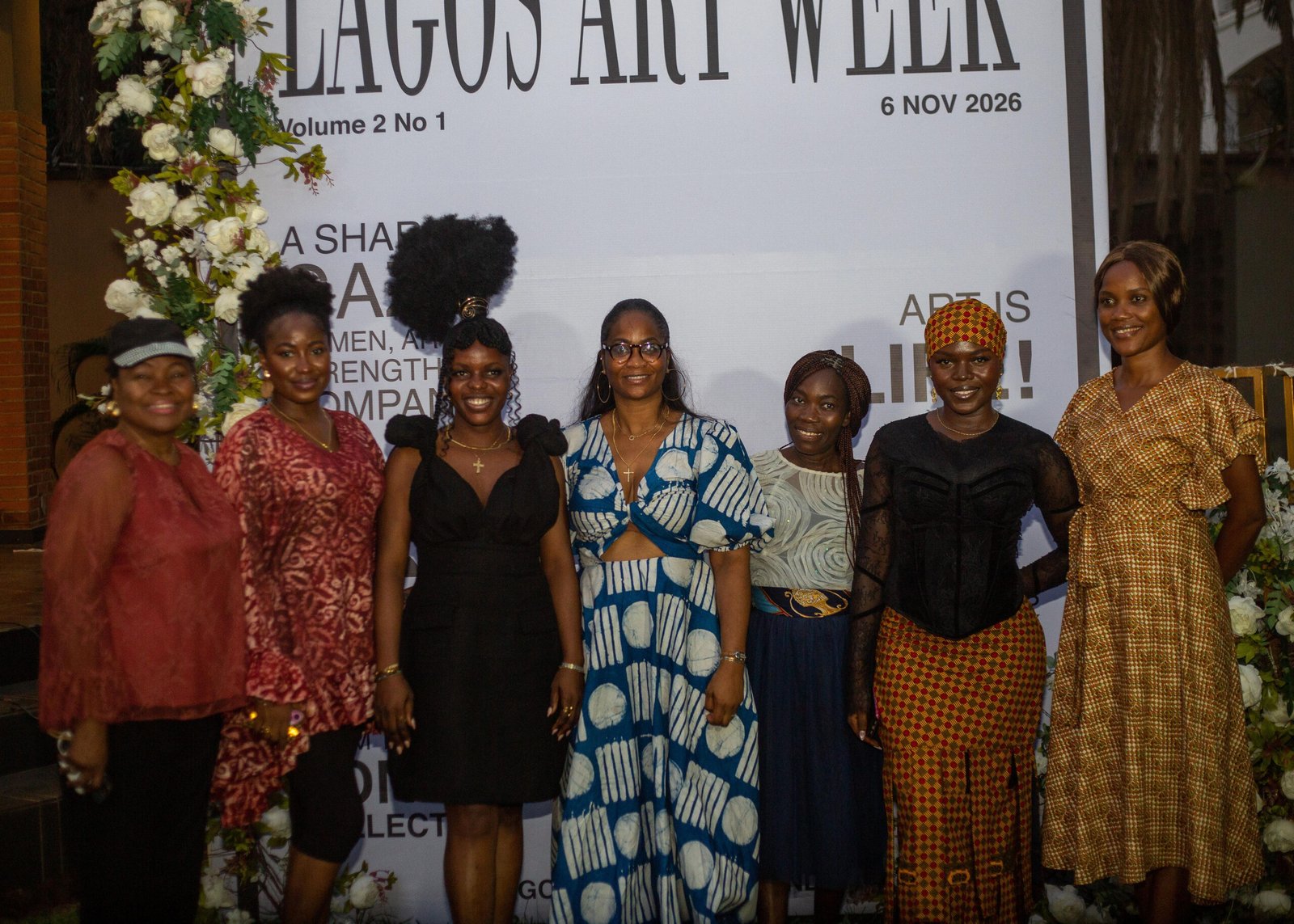
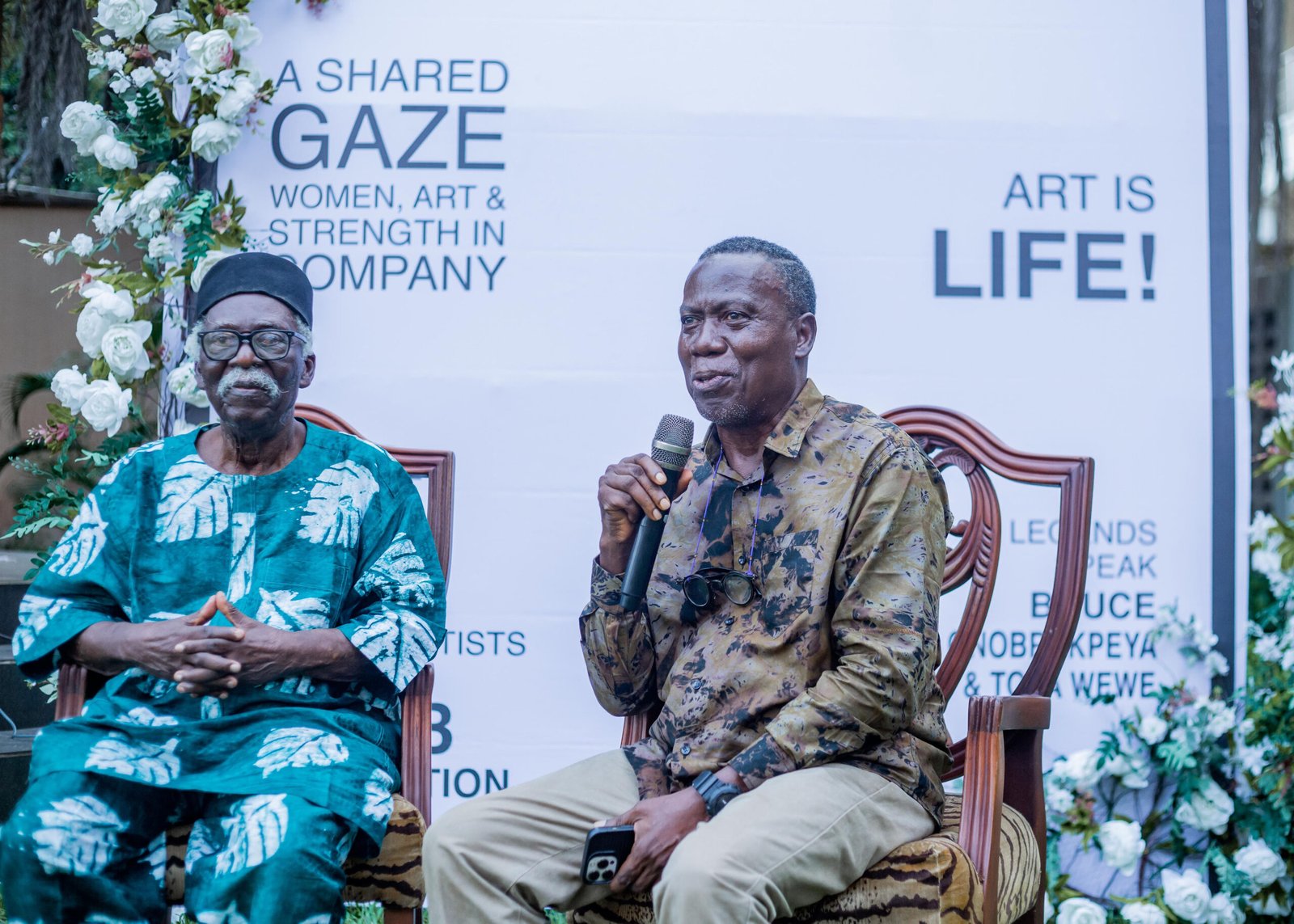
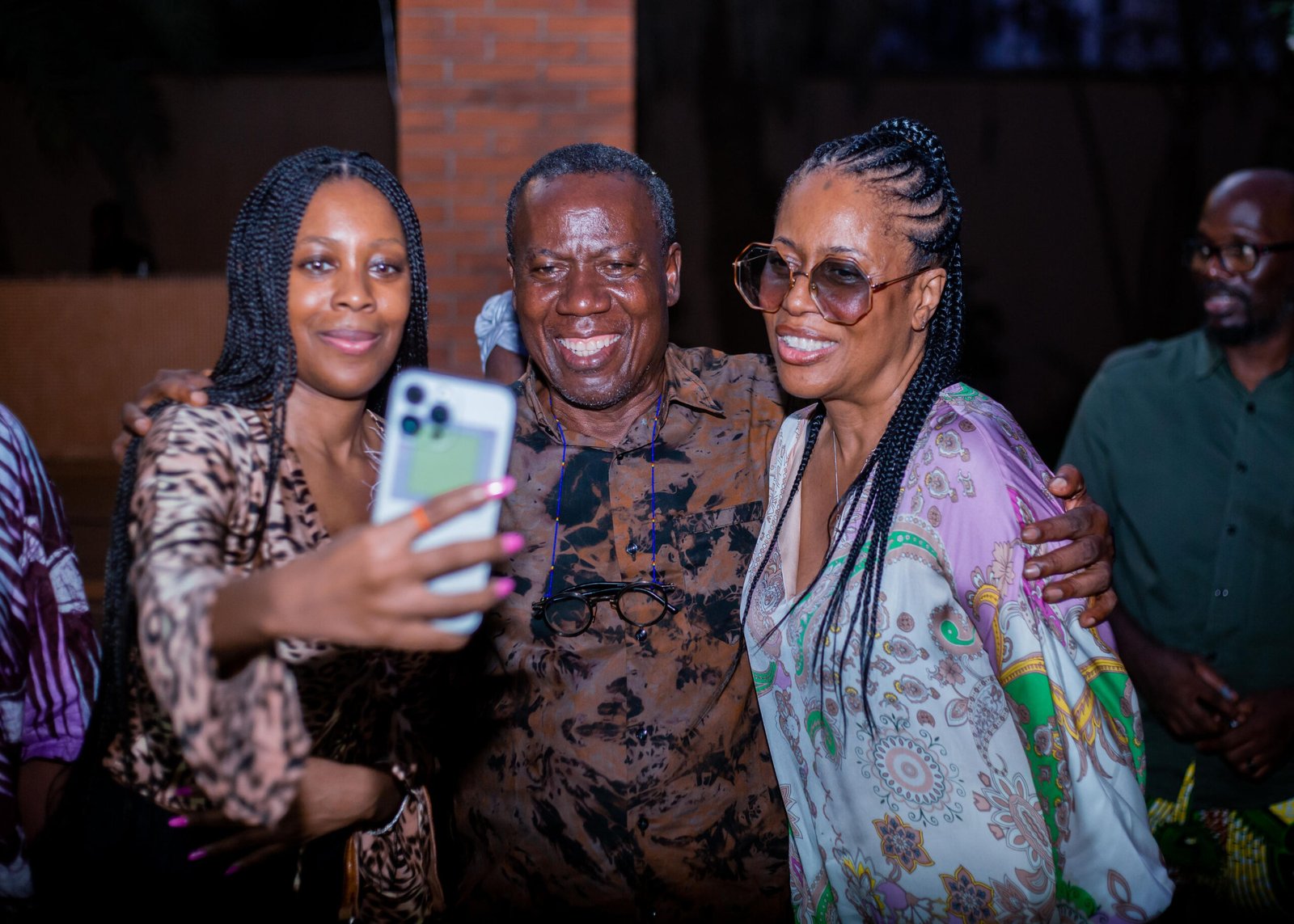
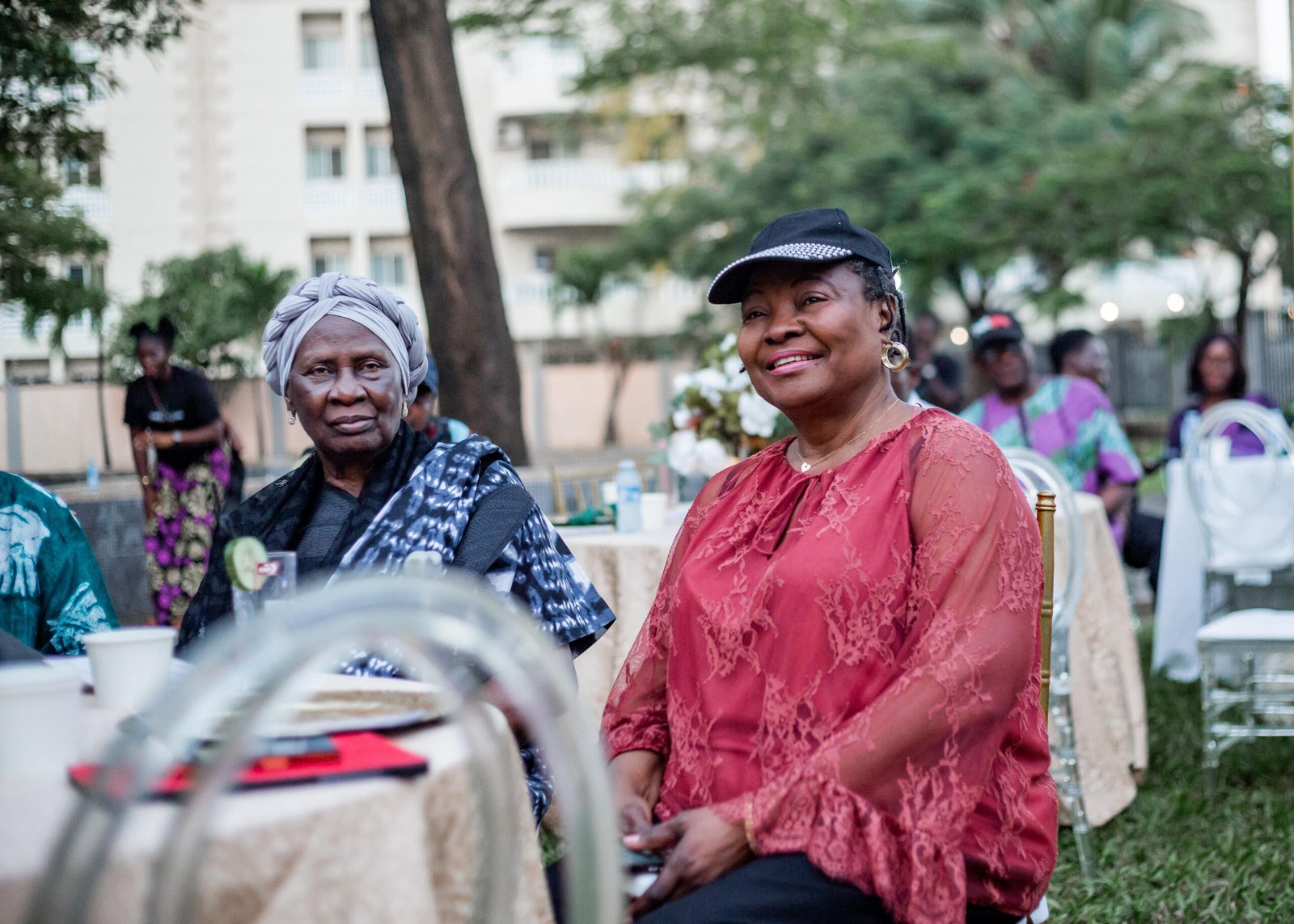
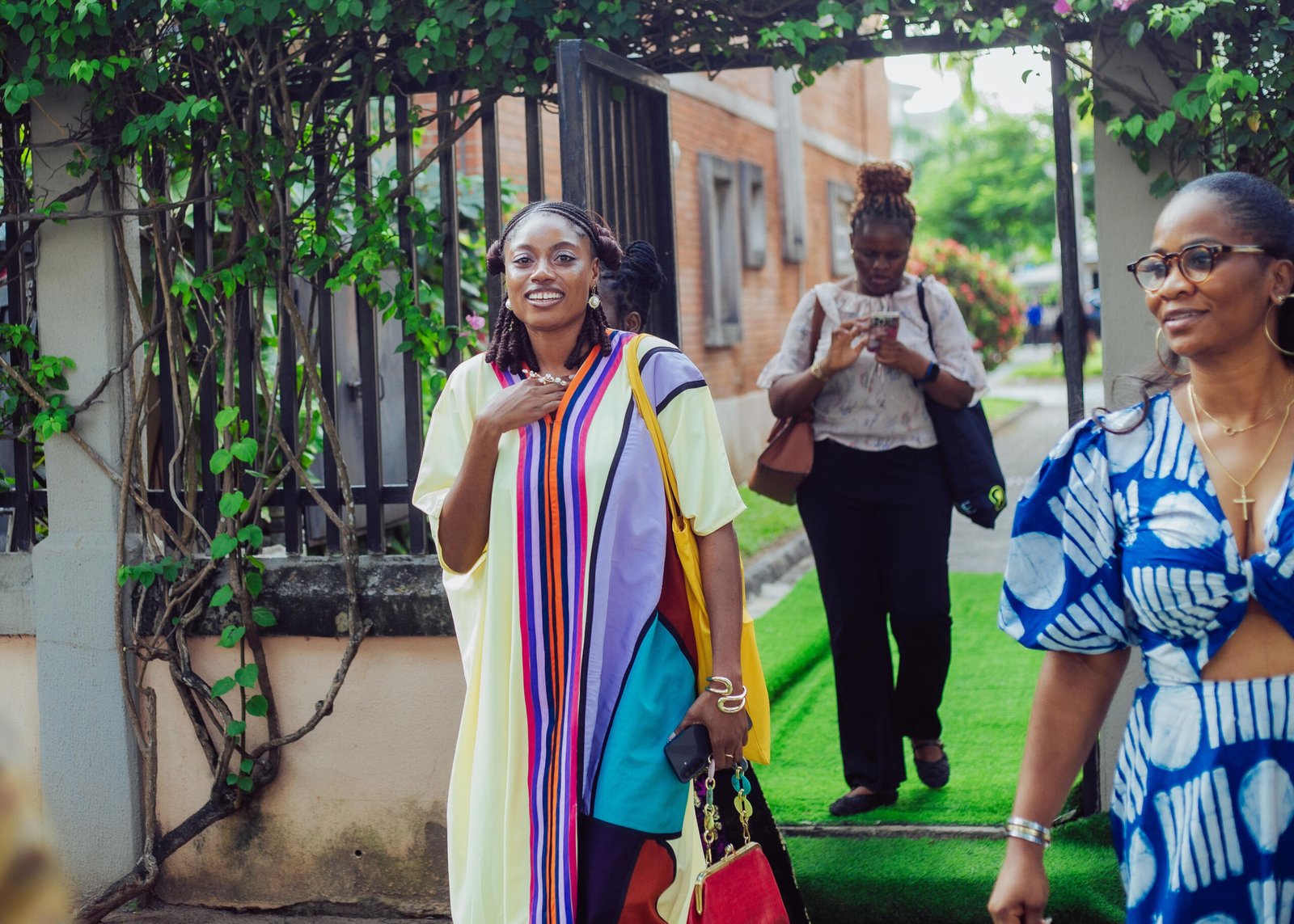
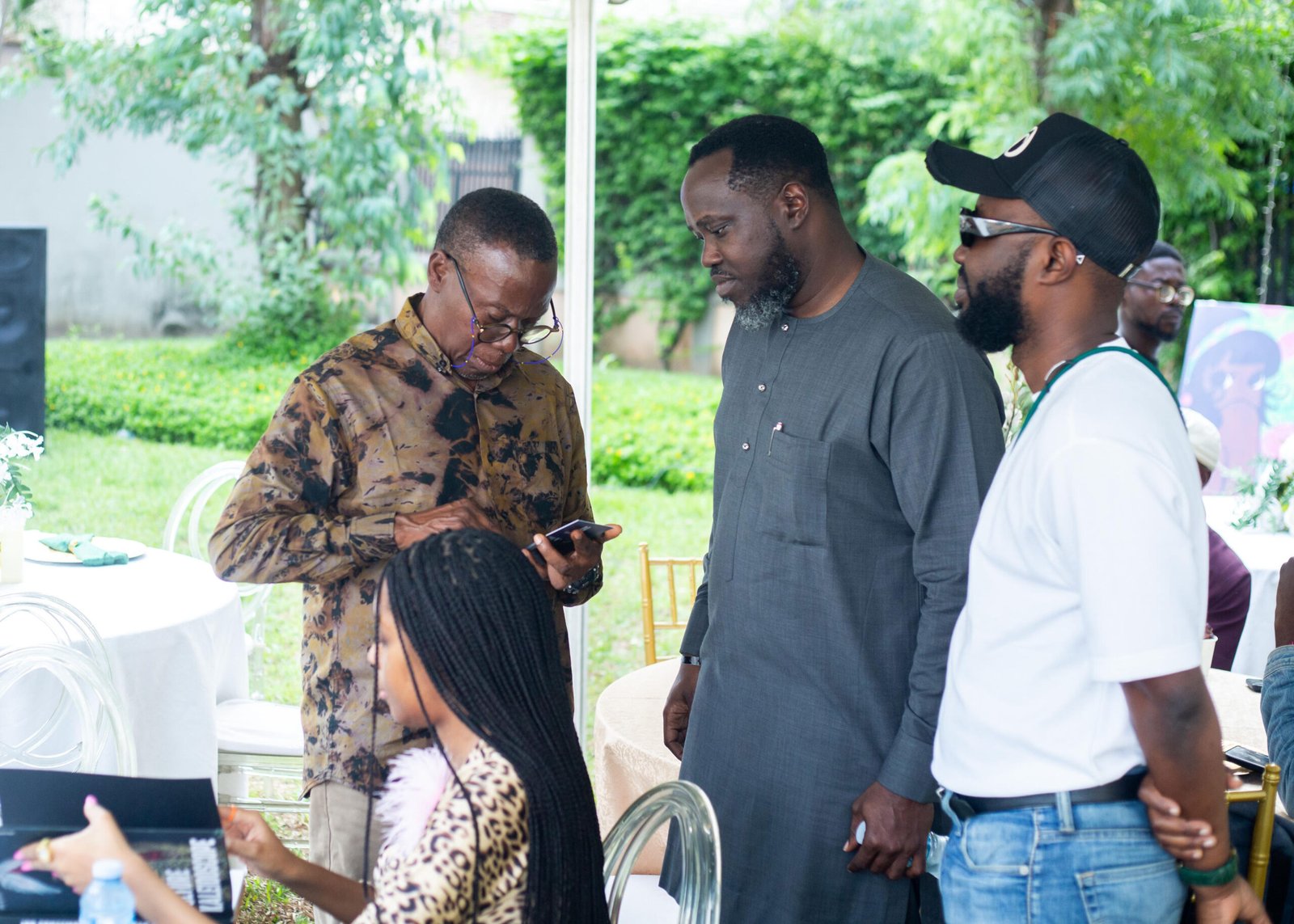
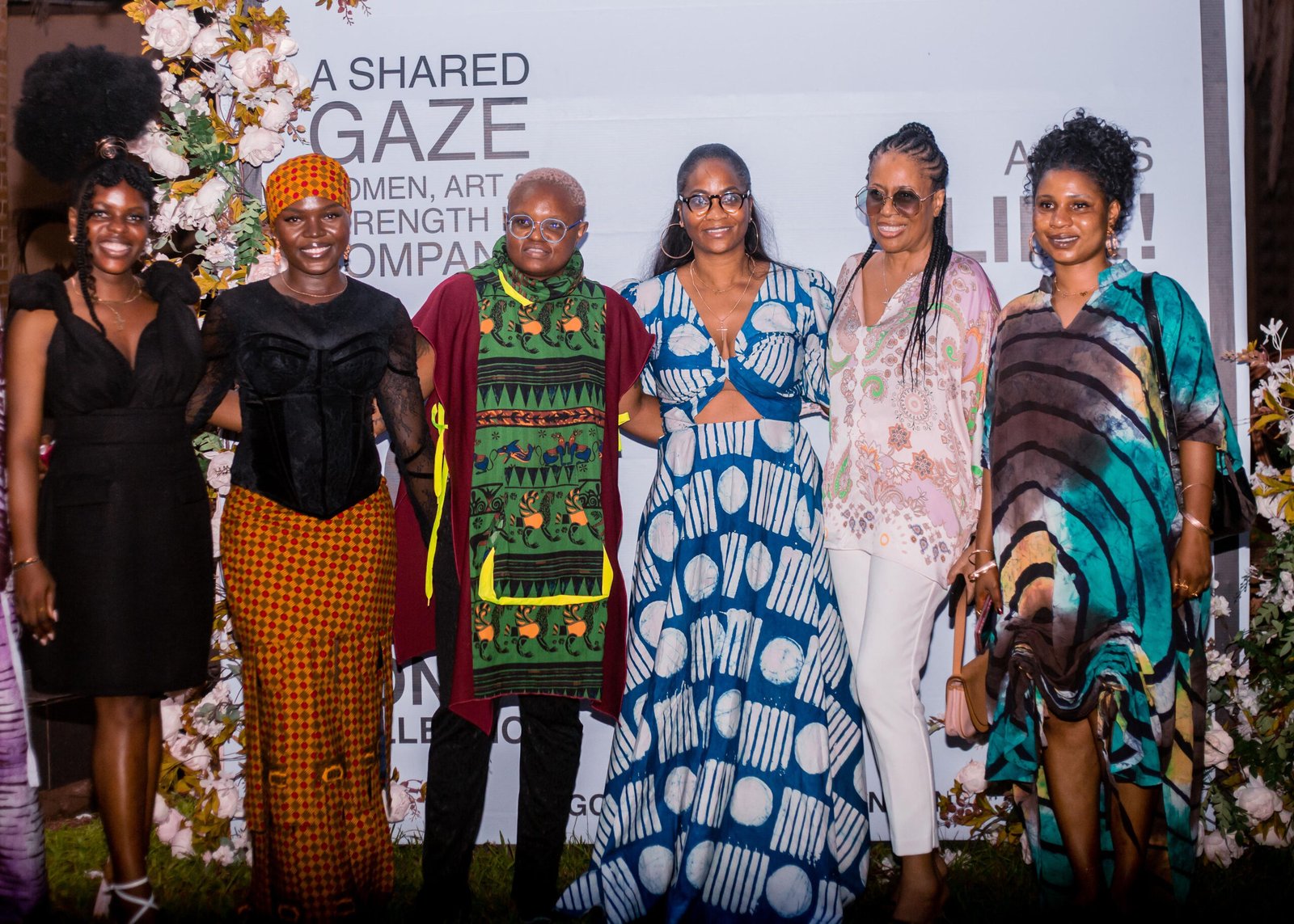
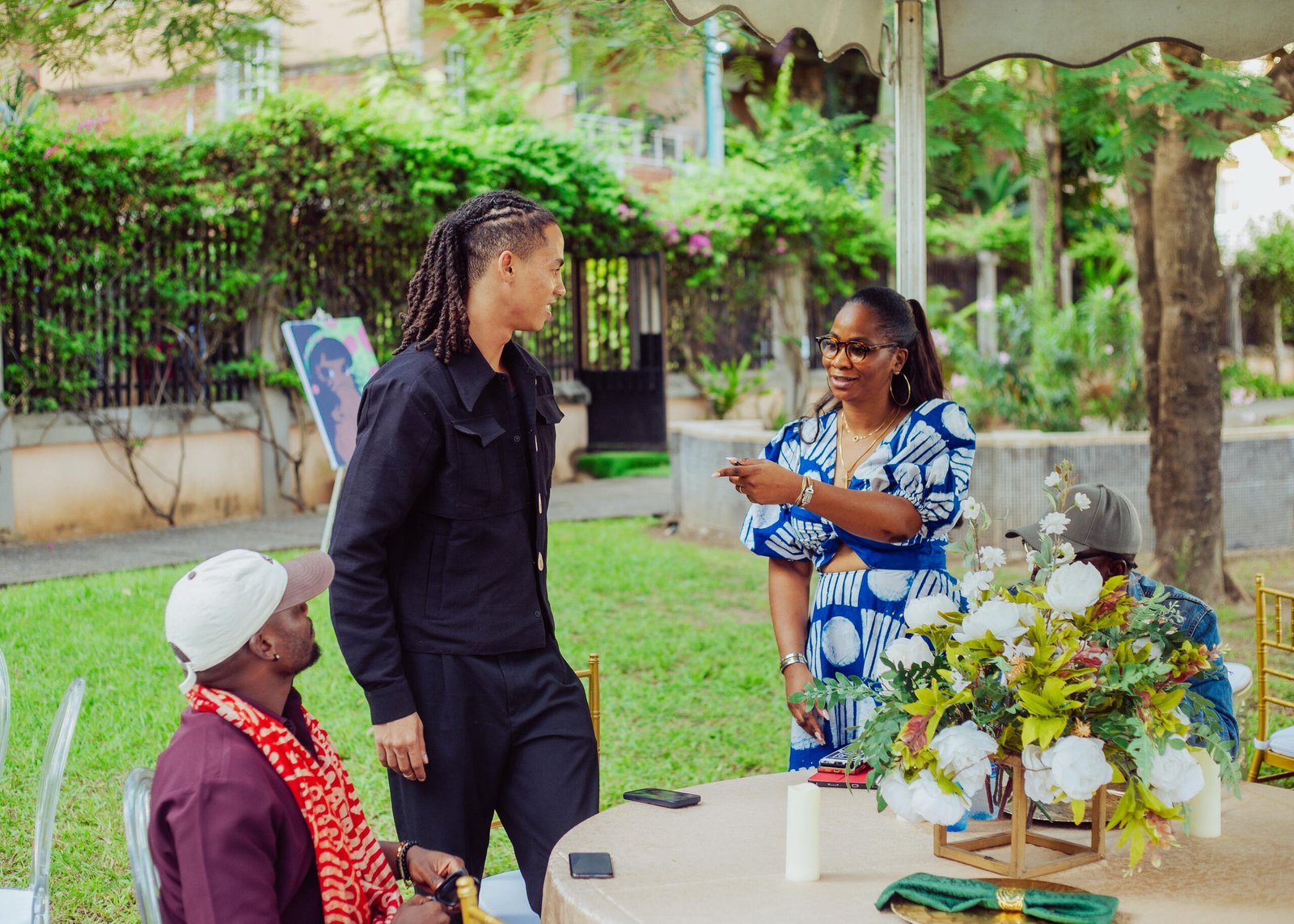
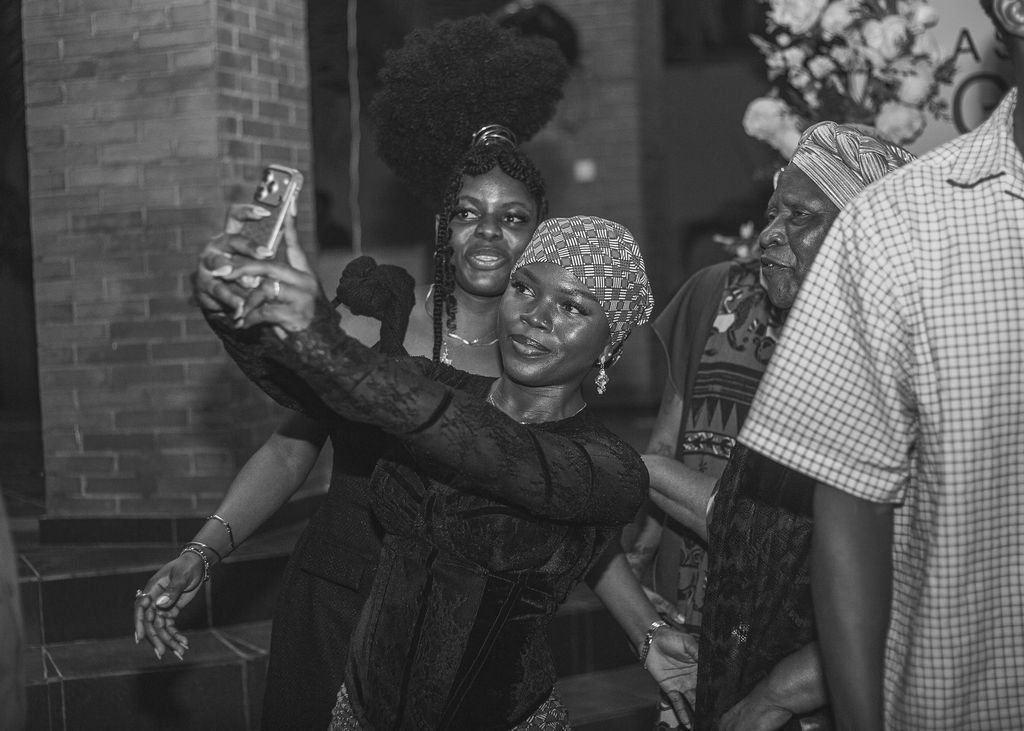
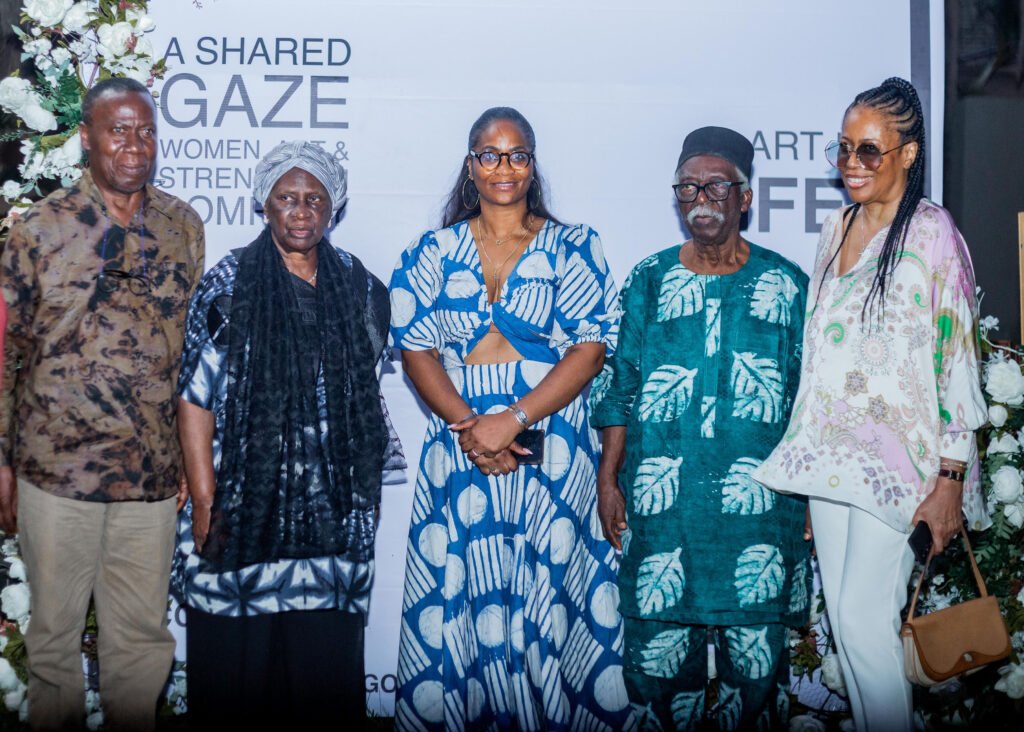
An artwork can command attention from across a room. The artist behind it, however, may still struggle to find the recognition, relationships and support needed to build a lasting career. It is this gap between being seen and being supported that sits at the heart of A Shared Gaze: Women, Art & Strength in Company, a gathering hosted by Olufunke Olufon and her husband, Babatunde Olufon, through the FonB Collection during Lagos Art Week. Bringing women artists, collectors, patrons and established figures in Nigerian art into the same room, the event set out to make space for more than admiration. It was about conversation, mentorship, visibility and the relationships that help creative work endure.
For Olufunke, the idea began with a closer look at the couple’s own collection. As she puts it, “a collection is really a record of what you’ve paid attention to.” Looking across works by established masters and emerging artists, she and her husband began to consider how women artists see the world and how they choose to be seen. That question informed A Shared Gaze, including the decision to feature artwork by their 15-year-old daughter, Ysabella, on the event invitation.
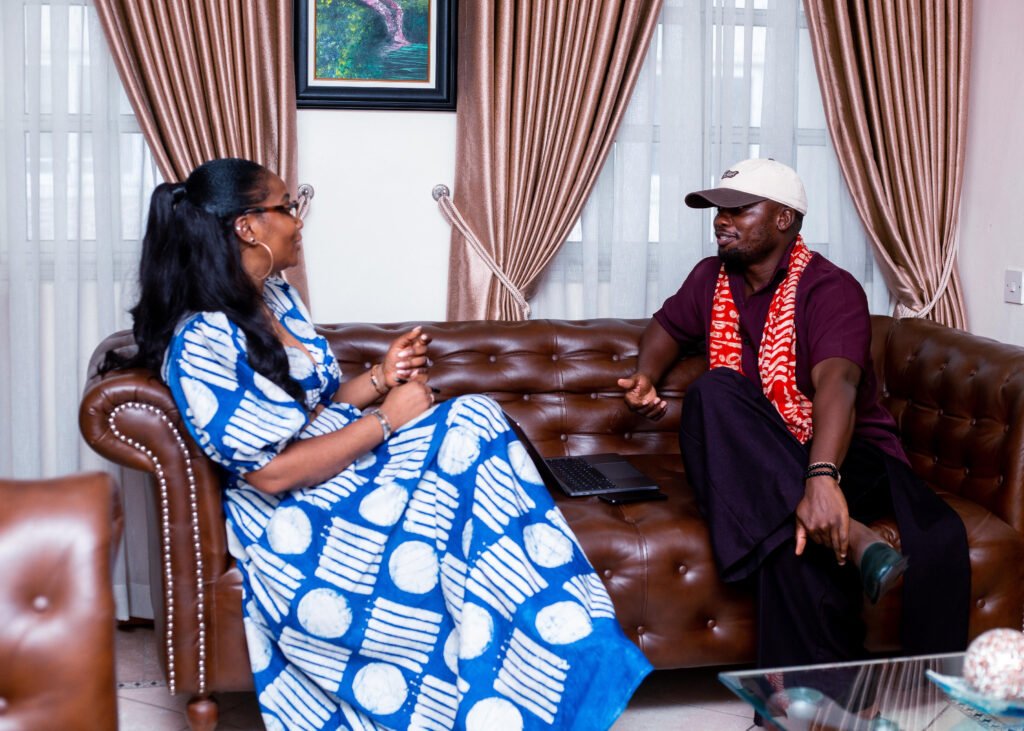
But Olufunke’s interests extend beyond collecting. As founder of Iwà Consulting, she has spent more than two decades helping organisations close the gap between the work they do and how people understand it. Her belief that character precedes reputation has clear parallels with the art world, where talent alone does not always secure opportunity. When she sat down with FAB L’Style at the gathering, we spoke about the responsibility of collectors, the visibility of women artists, the next generation, the business of creative practice and why supporting art must go beyond buying a beautiful piece.
FAB: Have you always been an art lover, or what was your own foray into the art world?
Olufunke Olufon: My husband has always been an art lover. Over the years, he has collected art, and perhaps because we’re in close proximity, I’ve also learned to appreciate it. Tunde, the other half of the FonB Collection, is deeply immersed in the art world. He lives and breathes art.
For me, my appreciation has grown over the years, particularly through meeting artists and hearing the motivations and inspirations behind their work. As a communications person, I’m a creative at heart. Still, it’s wonderful to see what artists can produce with their hands. For that alone, I have so much respect for the art world and the level of ingenuity artists demonstrate every day.
FAB: We’re having an event today specifically focused on bringing women and female artists together. What is it about the artistic community, particularly women in the creative industry, that resonates with you personally?
Olufunke Olufon: For this conversation, and to explain why we’re having this event, I would say that a collection, is really a record of what you’ve paid attention to. Over the years, as I mentioned, my husband and I have brought together works by established masters and artists who are just starting their careers. So, our collection covers a wide range of artists and styles.
However, when we looked at the collection as a whole, one thing stood out: how much women artists see and how they decide to be seen. That’s where the idea for A Shared Gaze, the focus of this event, came from. We wanted to create a room where women artists, patrons and collectors could look at the same works together and speak honestly about what it takes to sustain an artistic practice.
Lagos Art Week was a natural setting for this conversation. For a few days, people who shape the ecosystem are here in Lagos, especially women artists. If you want a conversation to lead somewhere, you hold it where the decision-makers, industry players, participants and audience are. Women are a crucial part of this conversation, which is why we chose this moment to host A Shared Gaze.
FAB: You are the founder of Iwà Consulting, a communication firm, and also supporting the running of the FonB Collection. What has your experience taught you about the business and infrastructure required to turn creative ideas into sustainable ventures?
Olufunke Olufon: Tunde leads the collection. The vision is his, and I’m his partner in it. That said, if I see a piece I really love, we might add it to the collection.
There is obviously a business side to art and collecting. As in any other field, collectors hope that the value of a work will increase over time. So, there is a balance. Sometimes, you recognise that a particular work by a great artist is a good investment and decide to acquire it. That’s where the business angle comes in.
I think, as with anything, it’s about finding a balance. Buying art isn’t always a business decision, although business considerations can influence some of the works we acquire. Ultimately, our passion for the artist and their work remains the underlying factor.
My husband often asks, “What does this artwork tell you?” If a piece speaks to him, he acquires it. He also spends a lot of time engaging with artists, and I’ve been impressed by the relationships he has built with them. For him, it goes beyond asking what they’re producing. It’s about building relationships.
Being a collector isn’t just about the artworks. It’s also about the relationships you establish with the people creating them and understanding the history behind their work. You might walk into a room or look at a piece and simply admire it. However, when you engage with the artist, you learn about it’s history and the story behind it.
For my husband and me, collecting isn’t just about business. It’s about appreciating the ingenuity and the work itself. When you build relationships with artists, many of them eventually become friends. Bruce Onobrakpeya, Baba Bruce as we call him, for instance, will be here today. One of his artworks is on our table, and he is also like a father to us. So, for us, it’s not just business. It’s much more than that.
Iwà Consulting: The Character Behind the Brand
FAB: Let’s talk about Iwà Consulting. Because I’m Yoruba, I might understand the meaning of Iwà. However, for someone encountering the name for the first time, how would you explain what the company does, the problem it solves, and why you felt there was a need for it?
Olufunke Olufon: Iwà’ means ‘character’, and that translates into the world of brands. From a very young age, we’re taught that your name comes before you, even before you enter a room. Your character comes before you. Who you are and what you stand for precede any personal introduction.
You said it yourself. Before you even met me today, you had already researched me and found out more about what I do. That’s really what Iwà was born from. It’s something that has been ingrained in me since childhood. As I’ve worked in communications and with brands, I’ve realised that this is essentially what branding, communication strategy and brand positioning are about.
Before you hear about an organisation, experience its services or buy anything from it, you’ve probably looked at reviews and checked what people are saying. Ultimately, your brand character is just as important as what you’re selling. That’s where the name Iwà came from.
I’ve also always believed that, regardless of where I am in the world, this is where growth and development need to happen. I trained outside the country, but this is where we need to give back and contribute to development. Even when I left for school, I knew home would always be part of my work. This is where I believe I can contribute to the development of Africa. I studied international relations and diplomacy. I knew that my background in diplomacy and international relations would eventually bring me back to Africa, specifically Nigeria, to do something meaningful with what this country has to offer.
In terms of what Iwà does, we essentially help organisations say what they mean and mean what they say, so that they’re heard by the people who matter to them. We work on strategy, communications and leadership voice for foundations, government institutions and the private sector. We work with organisations in Nigeria, across the continent and in the United States.
You’ll find that many organisations and companies do excellent work, but the gap is often in how they explain that work to the people who matter: their different audience groups and even their own staff. How do you translate your excellent work or product into something that all your stakeholders can understand? That’s where we come in. We close the gap between the great work you’re doing or the products you’re selling and how people experience your character as an organisation. The name explains so much about what we do, and that’s where we start. We start with your character. What are you saying, and does it match who you are as a person, a brand, an organisation or a leader?
From Chemical Engineering to Communications
FAB: How did you find your way into this field? Have you always known that you wanted to be a communicator, or was there a point when you identified a problem and realised there was a business opportunity?
Olufunke Olufon: No, I actually went to school to study chemical engineering. Growing up in Nigeria, particularly around the Ajah axis, I always wanted to become a chemical engineer. I had an uncle who worked for Chevron. We would visit him, spend time there and engage with him. He was a family friend and a chemical engineer.
I was talkative, but I was also strong in maths and science, and my uncle’s example made engineering feel like the obvious path.
I studied science subjects and eventually got accepted into a university in Boston to study chemical engineering. I took it quite far. By my second year, I began to realise that seeing people do something and actually doing it yourself are two different things. That’s why I mentor many young girls today. Even with my own children, my daughter and my son, I encourage them to explore what they think they want to become. I’ve learned from experience that you should try something first because you only really know whether it’s right for you when you experience it in practice.
Alongside my main courses, I also took electives. These weren’t necessarily related to my field of study; they were designed to broaden my horizons beyond it. I took some electives in International Relations and began learning about the world and discussing conflicts in different parts of it. It was fascinating to connect what I was learning with the reality I had experienced.
I began learning about the history of Africa, how Africa was presented to the rest of the world, and how countries were classified as developing, developed or third-world countries. For me, the world I had known all my life suddenly came alive because I was learning the theories behind the realities I had experienced. I was also beginning to understand how decisions made by world leaders affected people and countries.
I remember learning about the coup that happened in Nigeria while I was living in the country. At the time, I had no idea what it was about. Learning about it, I suddenly understood what I had lived through. For me, the decision was a no-brainer. That was how I realised the direction my life was going to take. The challenge then was how to break the news to my parents that I no longer wanted to study engineering and wanted to pursue international relations instead. At that point, it was an unfamiliar field to them.
Communication, however, wasn’t initially part of my career plan. I’ve always been someone who talks a lot. People would tell me, “You talk too much.” Then, as I grew older, the feedback changed to, “You actually make sense,” and, “You have so much presence.”
I think it was just a matter of following my passion, as people often say. That’s exactly what I did. I genuinely love what I do. As a business owner, you never have enough time. I often find that I can keep working for hours. It’s simply my passion.
Why Communication Must Come First
FAB: When you walk into a room with a new client, what are some of the things you immediately look out for based on your experience? What are businesses often getting wrong that they don’t necessarily recognise themselves?
Olufunke Olufon: When I walk in to meet a new client, I don’t go in with any preconceived notion that I already know the answer to their problem. I have to listen. With anything, you have to listen. I’ll eventually understand the problem, but before you can offer a solution, you have to understand the situation.
Before a doctor can diagnose you, they need to understand what you’re going through. They then apply their technical knowledge and perspective to make a diagnosis. It’s exactly the same thing. When I meet a client, I have to listen. Every client has a different need and something different they’re struggling with.
What we do covers a wide spectrum, from strategic communications to content co-creation and leadership advisory. So, the first step is understanding exactly what the client needs. I listen to what the leaders of the organisation are saying or, if I’m working with an individual, what that person is saying. For instance, if I walk in and three people are telling three different stories, that’s already a gap in how they understand themselves or their brand.
It’s through listening that you’re able to identify the service you need to provide, the campaign you need to develop or whatever solution you’re offering. The mistakes are very consistent.
Communication is often treated as an afterthought. Everybody is looking at their business, profits and revenue, but nobody is looking at communication. They call it a soft skill. They think it’s enough to post something on social media or run a campaign. But campaigns aren’t supposed to come afterwards. I always say this whenever I speak: communication is not an afterthought. It’s not something you do after your work is done. It has to be part of the process.
I’ve worked at the World Bank, the Gates Foundation, and EY. One thing we always emphasise, particularly with the World Bank and the Gates Foundation, is that you cannot put a programme together and only then start thinking about communications. Communication has to be at the table when you’re developing your programme design.
That’s usually where the problem lies. Organisations talk to themselves instead of talking to their audiences. They talk about the business before considering how to communicate with the people they need to reach. That’s where things often go wrong.
Activities then become confused with impact. Organisations say, “We’ve done this. We’ve done that. We’ve done this.” But if you don’t know what you’re aiming for, anywhere you hit becomes the goal. You have to understand exactly what you’re trying to drive. Communication has to be at that table from the beginning.
Turning Strategy into Measurable Results
FAB: Consulting firms often say they’ve prescribed a solution, but it hasn’t been implemented. Sometimes, it becomes an exercise in producing impressive reports and recommendations that never make it beyond the boardroom. How does Iwà Consulting ensure that its work translates into actual decisions, implementation and measurable results?
Olufunke Olufon: We design for implementation from day one. Every recommendation has an owner, a timeline and a measure of success, all agreed upon with the client before we finish. We know exactly what the end goal is, and we agree on it just as we would with any business goal.
They’re not two separate tracks. You can have a business goal and a communications goal. I always say that communication is in service of your business goal. Just as every business has a goal, your communications objectives, strategies and needs must also have goals tied to your business objectives. We’re not saying we need to be at the table just for the sake of being there. We need to be there to add the value required to help the business achieve its goals.
We also stay very close to the delivery process. This can vary. It could involve drafting a speech, preparing a spokesperson or running the first phase of a campaign alongside the team. For me, it’s not just about money. Money is important; you can’t work for free. But it’s essentially about discipline.
Most leaders know what the problem is. Accepting it is usually harder, and sticking with the solution is the slowest and hardest part. So, we address that directly and very early. We agree on what success looks like before we begin. We keep the first phase small enough to show results quickly and achieve early wins. Those early wins help create real change. When business leaders start seeing results, we can then scale up.
If it makes sense to start small and scale, we do, as long as we’re clear on the impact we’re working towards.
A Shared Gaze: Making Room for the Next Generation
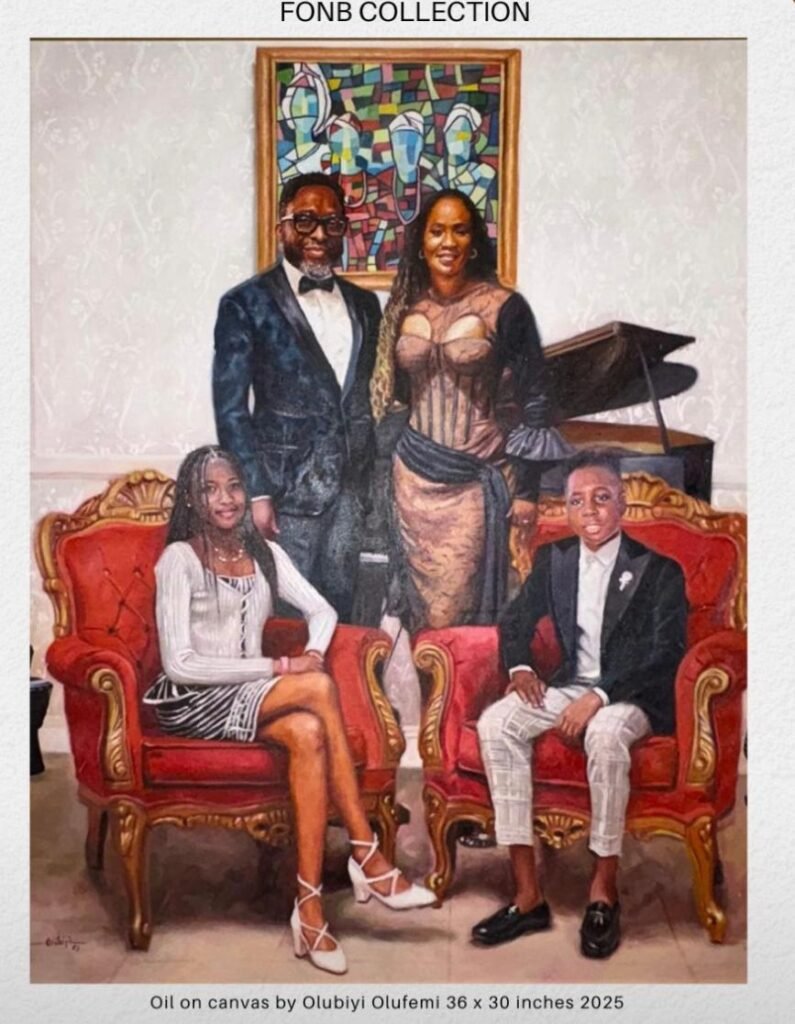
FAB: Let’s talk about Ysabella. Ysabella is 15 and is adding her work to this event. What do you hope young people inherit from the artistic ecosystem you’re helping to build, especially with the spotlight on your daughter?
Olufunke Olufon: I think putting Bella, as we call her, and her artwork on the invitation was deliberate. I have a daughter and a son. They’re both very interested in art, and they even compete over whose artwork is better. There’s currently a competition going on in our house because Bella’s artwork is the one being promoted right now.
Bella is 15, and my son is also interested in art. They’ve both grown up around it. At home, Tunde takes them to galleries and art openings all the time. Putting her name on the invitation was a way of showing that this is truly a family commitment. She also has a genuine interest in art, so it’s not something we’re forcing her to do. Nobody has to tell her to paint. She simply sits down in her room and paints. Both of them do, interestingly enough.
So why Bella’s painting? A Shared Gaze is about bringing attention to women and spotlighting their work. We have a young woman growing up in our family, so why not start with our own child? I’m saying this so that when my son reads it, he’ll know why. This is where you’re helping me play the referee.
As they say, charity begins at home. Why not start with our daughter and let her know from an early age that she is seen and that her work matters? It’s also important that what we’re promoting aligns with that message.
To answer your second question, I hope young people inherit two things. The first is the habit of looking closely: standing in front of a piece long enough for it to change how you see something. The second is understanding that collecting is stewardship. Whatever you do, it’s stewardship. You hold a piece of work for a time, care for it and pass it on. If her generation grows up thinking that supporting artists is normal, then the ecosystem will be in good hands.
I go back to Baba Bruce. He’s a legend, and those coming after him are protecting the work he does. Many of our masters have created art that will live beyond them. For young people, it’s about teaching them this, especially in this age, where everything is microwaved and driven by technology. They need to understand that there’s a legacy that must continue. That’s why, even with my daughter, I hope this is a lesson that many young people will learn.
I started by saying that a collection is a record. It’s a record of what you pay attention to. Yoruba people say it’s also about how you value things and how you carry them. It’s about teaching young people that these things carry great value, even though they might look like just a painting. You have to value them, and you have to value the artists behind them. As we carry on the legacy of Baba Bruce or Tola Wewe, we hope that the young people coming after us will do the same, even after we’re gone.
Everyone Can Start Collecting Art
FAB: Away from your professional responsibilities and the demands of organising experiences, what kind of art, beauty or creative expression speaks most strongly to you? What might surprise people about your personal interests?
Olufunke Olufon: I’m drawn to work that tells us where we come from. I named my business after my language. I’m a pure Lagos Yoruba girl through and through. There’s nowhere in the world you can put me where I won’t find my way back home.
This week, I attended Kelani Abass’s exhibition, Becoming Immortal, where he told the story behind one of the pieces he painted. It was inspired by his naming ceremony. I was with Gbolahan Ayoola yesterday, and he was talking about his art and how he sees beyond the person standing in front of him. I’m drawn to works that tell us where we come from.
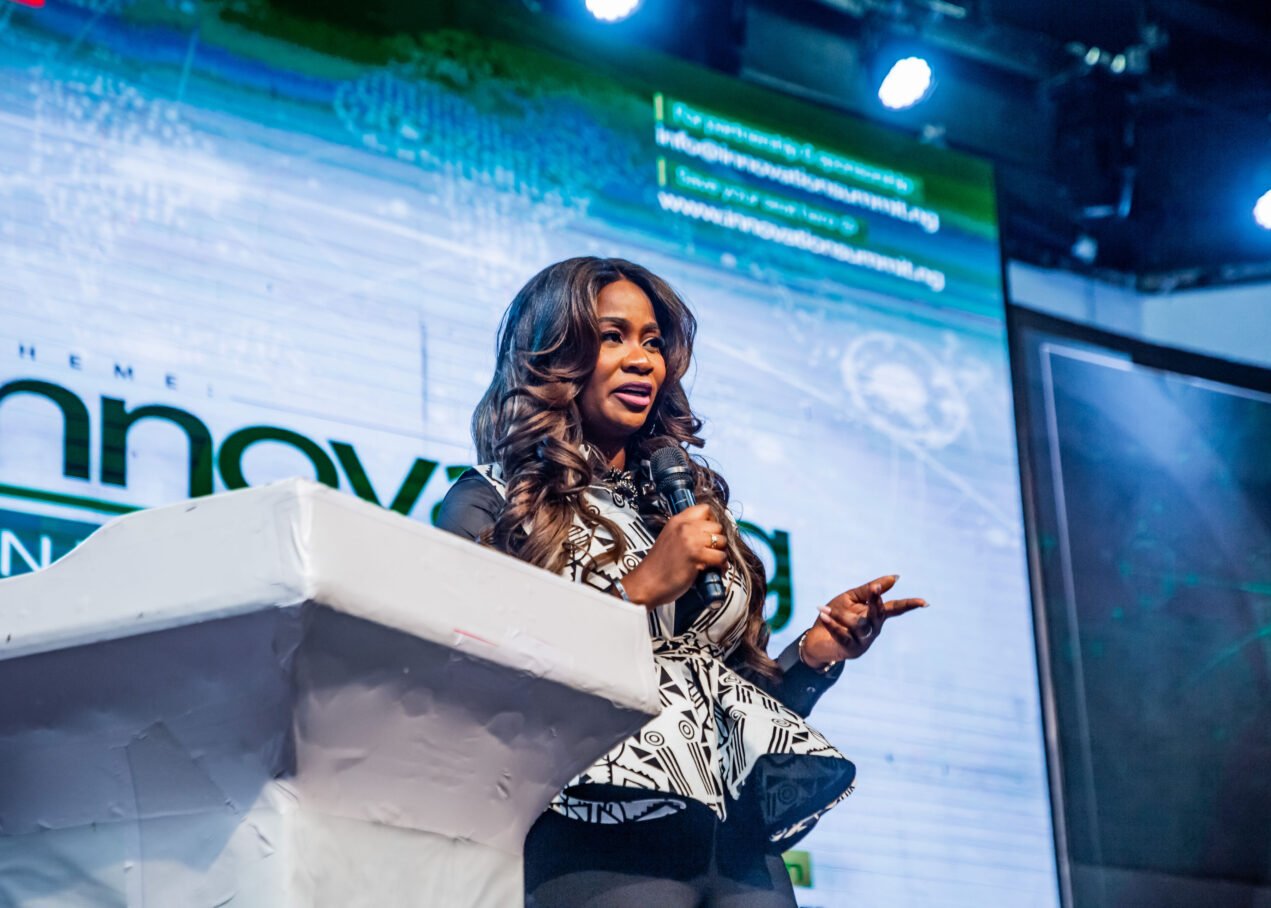
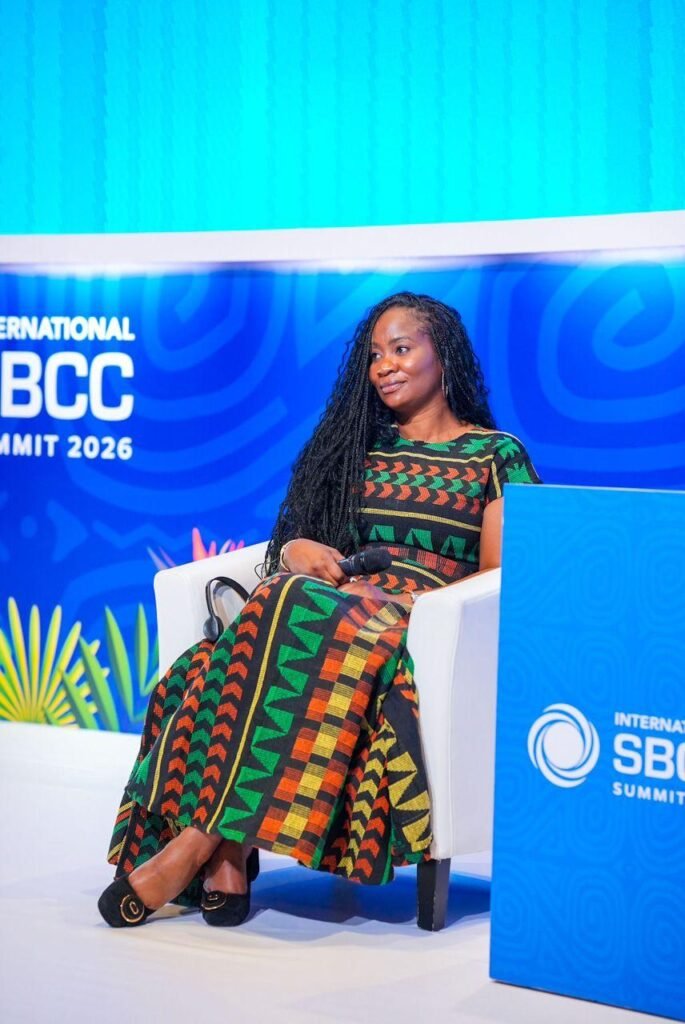
I’m also drawn to textiles. Beyond art, I love textiles, particularly Aṣọ Oke. I’m a speaker, as you probably know, and you will almost always see me wearing African prints whenever I’m on stage. If I can incorporate Aṣọ Oke, why not? I’m wearing a hand-tied batik right now. For me, it’s about everything that carries history through its patterns and craftsmanship.
I wear these fabrics just as much as we collect art. Wherever I am, I feel I have to take a piece of who I am and my culture with me. I also tell my children this: Never forget where you come from. It’s very easy to forget where you come from.
That’s what I’m drawn to: my history and the people who made me who I am today, my mother, my grandmother and my father. I don’t know my grandfather, but I’m a child of history. I relate to that so much. Ọmọ Agbanimi, I guess, is one way to put it. That’s what art does for me as well. Those are the things that draw me in: history and the essence of who we are as Nigerians, as Yoruba people and as Africans.
FAB: For someone who may not consider themselves an art enthusiast or collector, what do you think they’re missing?
Olufunke Olufon: It took me a while to call myself a collector. My husband always reminds me that I am one, just as he is. I think being a collector doesn’t mean you have to own as much art as a gallery. We all start somewhere. They say a little drop of water makes the mighty ocean.
So, you might think you’re not a collector, but if you buy pieces that speak to you, you’re already collecting. It doesn’t have to be the most expensive piece or a work by a master artist. Buy what speaks to you and build your collection over time.
Images: Courtesy of Olufunke Olufon