
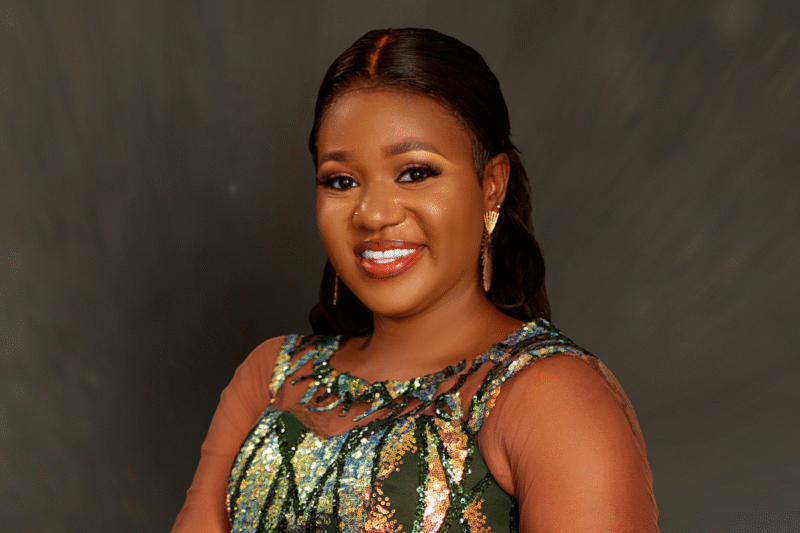
Naomi Oyeniyi wasn’t supposed to be here. But she painted her way in. In a family of 17, silence was safer than speech. Emotions were things you learnt to hide, not honour. But in the middle of that quiet chaos, a young Naomi Oyeniyi did the unthinkable: she started drawing joy. Not the life around her, but the life she wished for: a girl with a bold smile, a house with warmth, and colours that whispered hope. She didn’t know it then, but she was already building a language of survival.
Years later, that same child, now a full-grown woman with a palette knife in one hand and conviction in the other, is shaking up Nigeria’s contemporary art scene. Her work doesn’t beg for attention. It demands it layer by layer, fracture by deliberate fracture. At a time when the global art world still undervalues women (just 13% of museum collections feature female artists, and fewer than 3% make it to blue-chip galleries), Naomi is participating and disrupting.
In this fearless conversation, Naomi opens up about confronting bias in the male-dominated art industry, the feminist act of painting raw emotion, and the moment one of Africa’s most prominent collectors unknowingly bought a work he’d have rejected if he knew a woman painted it. This isn’t just about brushstrokes. It’s about breaking rules, rewriting futures, and proving that emotion isn’t weakness but a weapon.
FAB: Can you tell us about your background and how you first discovered your passion for art?
Naomi Oyeniyi: I discovered my passion for art at a very young age. As a child, I was naturally drawn to colourful things, and growing up as the sixth child in a large polygamous family of 17, my environment was often filled with tension, secrecy, and emotional hardship. Amidst the chaos, art became my escape. It was a way to express the emotions I couldn’t speak aloud. I would unconsciously sketch scenes of the peaceful, loving home I wished for, using colour and form to create a sense of beauty and safety.
My father’s recognition and encouragement of my talent played a significant role in nurturing my creativity. That support inspired me to fully embrace art as a lifelong path, leading me to pursue a career in fine arts and explore the full extent of my creative voice.
Told Art Was a Waste of Time — Ibrahim Quyum, 21, Now Paints the Future of African Creativity
What Audrey Kodjo Wants Europe to Finally Understand About African Creatives
FAB: What inspires your work?
Naomi Oyeniyi: My work is deeply inspired by my personal experiences and an ongoing curiosity about the human condition. I draw inspiration from psychology, spirituality, social-cultural dynamics, my immediate environment, and observations of the world. Each of my artworks tells a unique story, encapsulating the essence of thoughts transformed into tangible form.
FAB: Do you remember the first work you ever created? What was it, and how did it make you feel?
Naomi Oyeniyi: Yes, I remember my first work; it was a drawing of a girl with bold smiles. Creating it made me genuinely happy. It was a simple yet powerful moment that sparked something in me, showing me how art could express joy and emotion in ways words sometimes couldn’t.
FAB: Who are your biggest influences?
Naomi Oyeniyi: Two of my biggest influences are Bolaji Ogunwo, a Nigerian artist, and Joshua Miels, an international artist. I’m inspired by Ogunwo’s masterful use of colour and how it evokes emotion, while Miels’ impasto technique deeply resonates with me; the texture and depth in his work add a physicality that I strive to explore in my own practice.
FAB: How would you describe your artistic style, and what makes it unique?
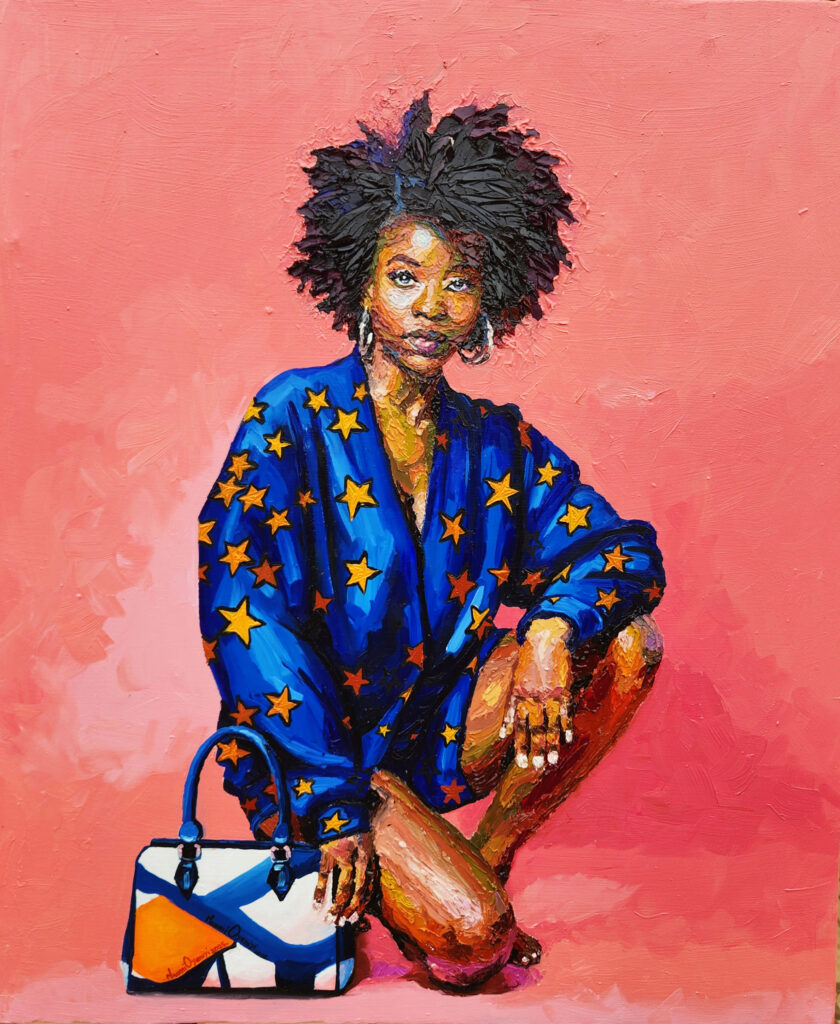
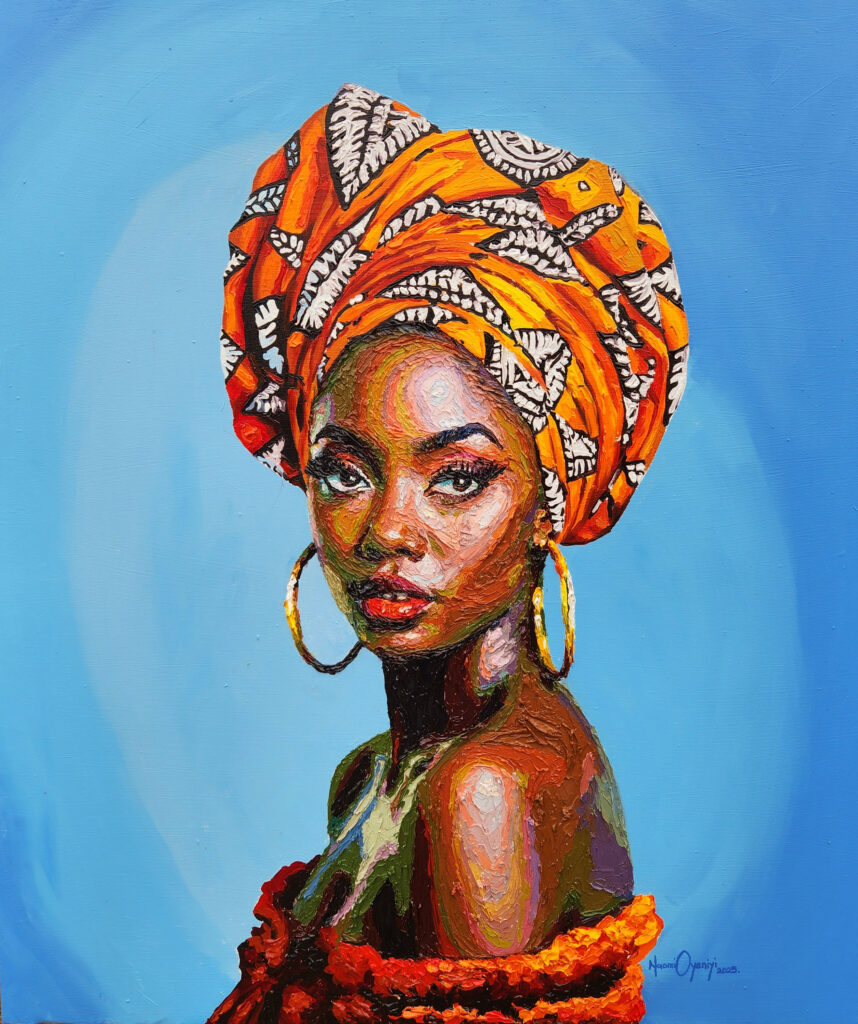
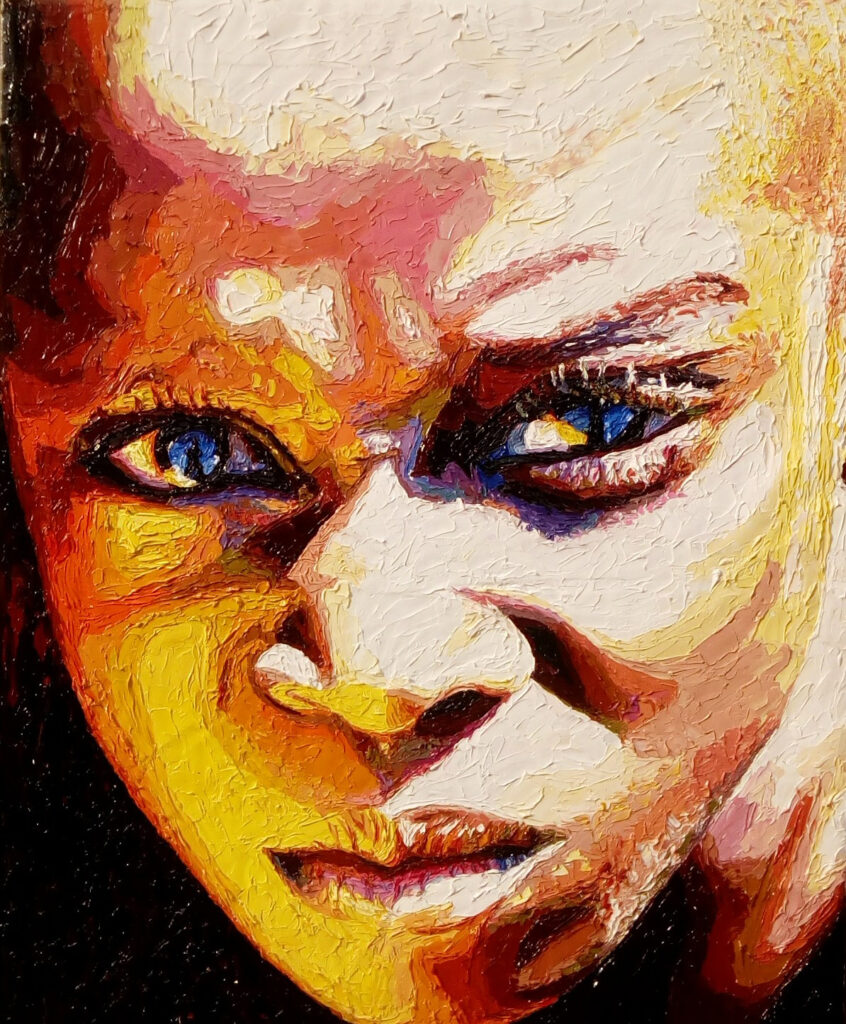
Naomi Oyeniyi: I would describe my artistic style as stylized realism, a dynamic blend of realism and impressionism, marked by vibrant colours and bold contrasts that convey deep emotional resonance. I use a palette knife to meticulously layer colours, creating fractured lines that gradually come together to form figurative subjects. Subtle textures and intricate details symbolize the complexity of human consciousness, while each deliberate brushstroke reflects my commitment to balancing expressive emotion with refined technique. This fusion of colour, texture, and thoughtful execution is what makes my work unique.
FAB: What is your creative process like, from the moment an idea comes to you to the final piece?
Naomi Oyeniyi: My creative process begins the moment an idea comes to mind. I start by searching online for reference images and assembling them in Photoshop. If I can’t find exactly what I need, I create physical references by taking my own photographs. Once my concept is solid, I stretch and prime my canvas.
After it dries, I sketch my composition directly onto it. I then prepare my oil paints, mixing base colours that I can expand into a variety of shades as I work. I record my painting process throughout. When the piece is complete, I sign both the front and back of the canvas. Finally, I document the finished work by taking photographs, which I either post on social media to share with my audience or submit for exhibitions.
FAB: What materials and techniques do you enjoy working with the most?
Naomi Oyeniyi: I primarily work with oil colours; they’re my go-to material because of their richness and versatility. In terms of technique, I really enjoy working with impasto, using a palette knife to build texture and create a sense of depth. I also love using brushes to achieve smooth finishes and refine fine details, which allows me to balance texture with precision in my work.
FAB: Is there a specific theme that runs through your work?
Naomi Oyeniyi: There isn’t one fixed theme that runs through all of my work, as I draw inspiration primarily from personal experiences and the situation in my environment. What remains consistent is my deep interest in portraying human emotions and feelings, especially those that are difficult to express in words. Moving forward, I’m also interested in exploring themes of gender inclusion more intentionally in my practice.
FAB: As a female artist in Nigeria, what challenges have you faced, and how have you overcome them?
Naomi Oyeniyi: One major challenge I’ve faced as a female artist in Nigeria is breaking into a male-dominated art industry, where outdated beliefs still persist, like the idea that a woman’s place is in the kitchen. Some collectors are even hesitant to invest in female artists, fearing that she might eventually abandon her career to start a family, making their investment seem risky. I’ve worked extremely hard to counter these biases by consistently creating powerful, high-quality work that speaks for itself.
Over time, my dedication and output earned me recognition. At exhibitions, people are often surprised to learn that I’m the artist behind the work; they usually expect a man. That surprise often leads to deeper conversations about gender and talent, and in many ways, it’s become a powerful part of my presence in the art world.
FAB: What has been the most rewarding moment in your career so far?
Naomi Oyeniyi: One of the most rewarding moments in my art career so far has been witnessing people emotionally connect with my work, especially when they resonate with the feelings I’ve poured into the canvas. Another powerful experience is the reaction I often get at exhibitions when people ask to meet the artist, only to be surprised that I’m a woman. These moments spark meaningful conversations around gender, perception, and value in the art world. It reminds me that I’m not just creating art; I’m challenging norms and opening up space for others.
The most affirming moment was when Omooba Engr. Yemisi Shyllon, one of Africa’s most prominent collectors, who had publicly stated in 2012 that he doesn’t collect works by female artists, unknowingly purchased one of my paintings at an exhibition at Nike Art Gallery in 2017. He was stunned to learn it was created by a woman. That moment meant a lot to me; it proved that the power of my art could transcend bias and speak for itself.
FAB: Have you ever doubted your abilities as an artist? If so, how did you push through those moments?
Naomi Oyeniyi: No, I’ve never doubted my abilities as an artist because I have a strong belief in myself and in the power of my vision. That self-confidence has kept me grounded and focused, even when faced with challenges or skepticism from others.
FAB: How do you confront the conflict between creating for yourself and meeting market or audience demands?
Naomi Oyeniyi: For me, I don’t create art just to please people; I paint what resonates deeply from within me. My work is an extension of my thoughts, emotions, and experiences, not a reaction to market trends. While I’m aware of market trends and audience preferences, I try not to let them dictate my direction. Of course, commissions are different; when I’m paid to create a specific piece, I approach it professionally, deliver the work, and move on.
But when it comes to my personal body of work, I believe that the right audience will connect with the authenticity of my work when I stay true to my vision, not the other way around. That said, I also listen and observe how people respond to my art, not to conform, but to understand how my work lives in the world and how it can start meaningful conversations.
FAB: How would you describe the state of the art scene in Nigeria, particularly for women?
Naomi Oyeniyi: The Nigerian art scene is evolving, especially for women artists. While there are still challenges rooted in gender bias and societal expectations, things are beginning to shift. Female artists have historically faced under-representation in galleries, exhibitions, and major collections. However, many are now making significant strides—carving out their own spaces and voices. Social media has become a powerful tool, allowing women to showcase their work, reach global audiences, and build supportive communities beyond traditional gatekeepers. This digital visibility is helping to challenge old norms and reshape the narrative around what it means to be a woman artist in Nigeria today.
FAB: What changes would you like to see in how female artists are supported and recognized in Nigeria?
Naomi Oyeniyi: I would love to see more intentional support and visibility for female artists in Nigeria. This includes equal representation in exhibitions, gallery rosters, and art fairs, as well as access to funding, residencies, and mentorship opportunities. I’d also like to see collectors and institutions move beyond gender bias and judge works based on their quality and impact, not assumptions about a woman’s long-term commitment to her career.
More platforms that amplify female voices, especially those telling unconventional or deeply personal stories, are essential. Ultimately, recognition should be based on merit, not gender, and women artists should feel empowered to thrive without having to prove themselves more than their male counterparts.
FAB: What role do you think art plays in addressing societal issues, especially those affecting women?
Naomi Oyeniyi: Art serves as a mirror to culture by amplifying voices that are often silenced and shedding light on experiences that are overlooked or misunderstood. Through visual storytelling, artists can challenge harmful norms, provoke critical conversations, and create awareness around issues like gender inequality, discrimination, and the complexities of womanhood. For me, art is not just about beauty or expression; it’s a tool for resistance, healing, and visibility. It gives women the space to own their narratives and demand the change they want to see in society.
FAB: How do you see Nigerian art contributing to global culture?
Naomi Oyeniyi: Nigerian art is making a growing impact on global culture by creating works rooted in our history, identity, and lived experiences through traditional forms and contemporary expressions, and these stories resonate beyond our borders. Our stories, colours and symbols reflect our cultural heritage while equally delving into global themes like identity, resilience, and social justice. As more Nigerian artists gain international recognition, they’re reshaping the global narrative about Africa, not just as a subject, but as a powerful voice in the global art conversation.
FAB: Where do you see your art taking you in the next five years?
Naomi Oyeniyi: In the next five years, I see my art taking me to greater heights, both creatively and professionally. I hope to have international exhibitions, collaborate with global institutions, and have my work included in prominent collections. I also want to use my platform to amplify under-represented voices, especially around themes like gender inclusion and emotional expression. Beyond recognition, I aim to keep growing as an artist, pushing my technique, exploring new materials, and staying true to the stories I want to tell. Ultimately, I want my art to continue creating impact, opening conversations, and building bridges across cultures.
FAB: What advice would you give to aspiring female artists who are just starting out?
Naomi Oyeniyi: My advice to aspiring female artists is to believe fiercely in yourself and your vision, even when others don’t. This industry can be tough, especially for women, but don’t let that discourage you. Keep creating, stay consistent, and don’t be afraid to take up space. Surround yourself with people who support your growth, use social media to share your work, and never stop learning. Most importantly, don’t feel pressured to fit into anyone else’s idea of what your art should be—your unique voice is your power. Trust that if you stay true to it, the right opportunities will come.
FAB: How do you hope your work impacts future generations of the female creatives?
Naomi Oyeniyi: I hope my work inspires future generations of female creatives to embrace their voices with confidence and without apology. I want them to see that it’s possible to create from a place of authenticity, to challenge societal norms, and still be seen, heard, and valued. If my journey can show even one young female artist that her story matters and that there’s space for her in the art world, then I’ve done something meaningful. Ultimately, I want my work to serve as both a mirror and a doorway, reflecting real emotions and experiences while opening paths for those who come after me.
FAB: If you could collaborate with any artist, living or dead, who would it be and why?
Naomi Oyeniyi: If I could collaborate with any artist, it would be Joshua Miels. I admire his unique style, the way he captures the human form with expressive brushwork and layered textures that evoke emotion and complexity. His approach to portraying vulnerability and strength through abstraction and realism resonates with my own interest in depicting human emotions that can’t easily be put into words. Collaborating with Joshua Miels would be an incredible opportunity to explore new techniques and deepen the emotional impact of my work.
FAB: What is your favourite piece you’ve ever created and why?
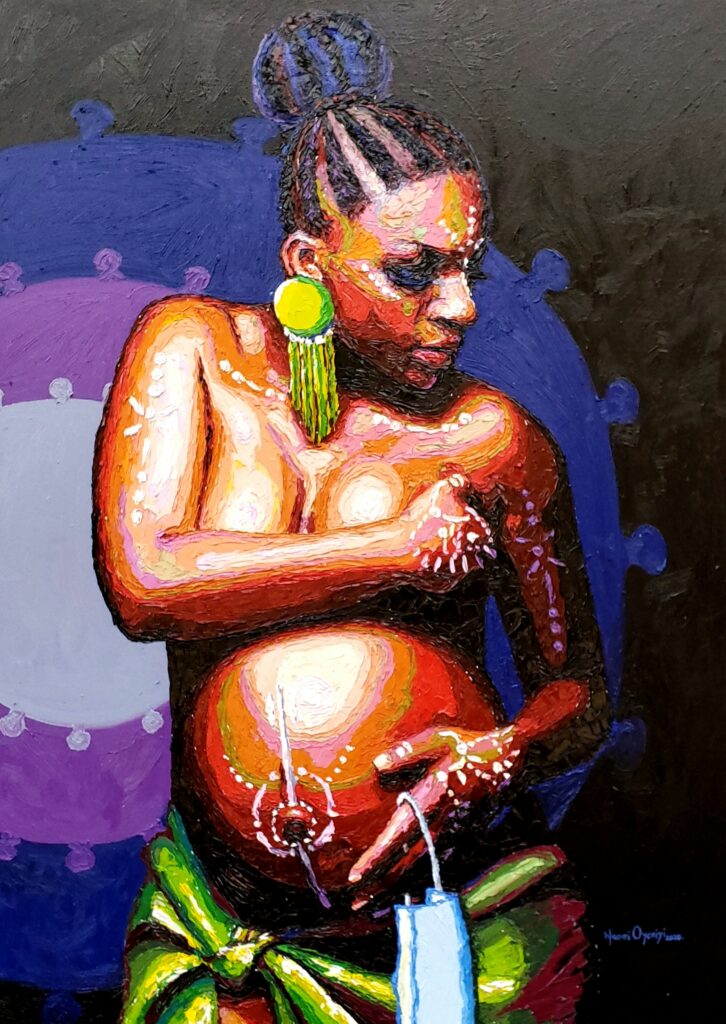
Naomi Oyeniyi: My favourite piece is a painting I created in 2020 during the height of the COVID-19 pandemic, titled Life: Be Still. This work captures a personal and universal moment, a reflection on uncertainty, hope, and resilience during a global crisis.
The painting depicts an expectant mother holding a nose mask, which symbolizes protection—covering the nostrils for breath, the mouth for sustenance, and the breasts as a source of nutrition for her unborn child. One hand gently covers her breasts, while the other rests over her stomach, sending a message of reassurance and hope to the future life she carries.
The woman represents the present, and the unborn child symbolizes the future, highlighting how today’s actions shape what lies ahead. I chose to portray her with an African plaited hairstyle and green flowing earrings to celebrate the richness of African culture amid a dark background filled with icons of the virus, underscoring the pervasive impact of the pandemic. This painting is my meditation on faith, protection, and the collective responsibility to nurture a better world for the generations to come.
FAB: If you weren’t an artist, what other career path might you have chosen?
Naomi Oyeniyi: If I weren’t an artist, I would have pursued a career in acting. I’ve always been drawn to storytelling and expressing emotions, and acting feels like another powerful way to bring stories and characters to life.
FAB: How do you unwind or recharge when you are not creating art?
Naomi Oyeniyi: When I’m not creating art, I like to unwind by watching movies or going for picnics to enjoy some fresh air and nature. I also spend time visiting friends and connecting with fellow artists—it’s inspiring to learn from them and see their work. Attending exhibitions is another way I recharge, as it keeps me engaged with the art community and fuels my creativity.
FAB: Do you have any rituals or habits that fuel your creativity?
Naomi Oyeniyi: Yes, I do. I usually start by gathering references and inspirations, both online and in real life, which helps set the mood for my work. I like to prepare my materials carefully, from stretching and priming my canvas to mixing my base colours. Playing music or working in a quiet space also helps me get into a focused, creative mindset. Recording my process is another habit that keeps me motivated and allows me to reflect on my growth as an artist.
FAB: What is the one thing people might be surprised to learn about you?
Naomi Oyeniyi: One thing people might be surprised to learn about me is that despite being deeply focused on my art, I’m also really curious and love learning from others, whether it’s through conversations with fellow artists or exploring new ideas outside of art. It’s this openness that constantly inspires and shapes my work.