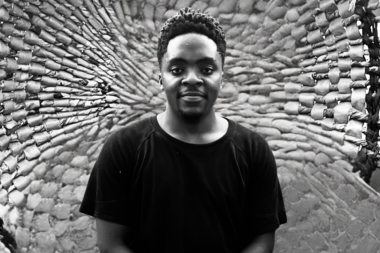



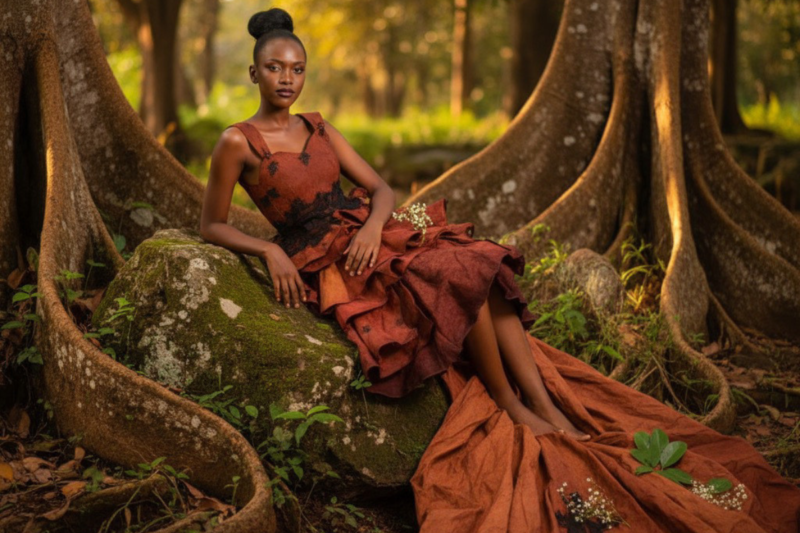
Some designers follow trends. Others follow instinct. But Doreen Namatovu follows the rhythm of a tree. Her work begins long before a sketch touches paper, long before a garment meets the body. It begins in Masaka, where the ancient Mutuba tree yields the barkcloth that has clothed kingdoms, blessed ceremonies, buried ancestors, and carried centuries of Ugandan memory. In her hands, this heritage textile becomes more than a fabric. It becomes an archive of identity, a renewable ecosystem, a classroom, and a living story that refuses to fade.
As the founder of House of Dorlin, Doreen moves with the quiet authority of someone who understands both the fragility and power of tradition. She dyes barkcloth into unexpected colors, softens it without betraying its soul, collaborates with farmers to plant new forests, and teaches the next generation to treat culture not as nostalgia but as innovation. Her journey from a young designer presenting her first runway collection to a researcher, lecturer, and guardian of a centuries-old craft is a lesson in resilience, curiosity, and purpose-driven creativity. In this intimate conversation with FAB L’Style, Doreen opens up about the science behind barkcloth, the future she imagines for African fashion, and the girl who dared to dream her way from Masaka to the world.
The Early Story of Ugandan Designer Doreen Namatovu
FAB: What’s your story?
Doreen Namatovu: I’m a Ugandan artist, mainly a fashion and textile designer. I’ve worked in various areas of art, fashion, and textiles. My journey began in 2018 when I presented my first runway collection as a young designer. I run a clothing brand called House of Dorlin, which is a made-to-order kind of brand and focuses on barkcloth as its niche. My interest in barkcloth started because I come from Masaka, the region where it originated.
During my first degree, my research focussed on both barkcloth from Uganda and Kuba cloth from Congo and discovered that they share several similarities. Since then, I’ve continued my work with barkcloth, and my research keeps evolving as I uncover new insights. During my master’s degree, I went deeper into the study and started conducting workshops and experiments.
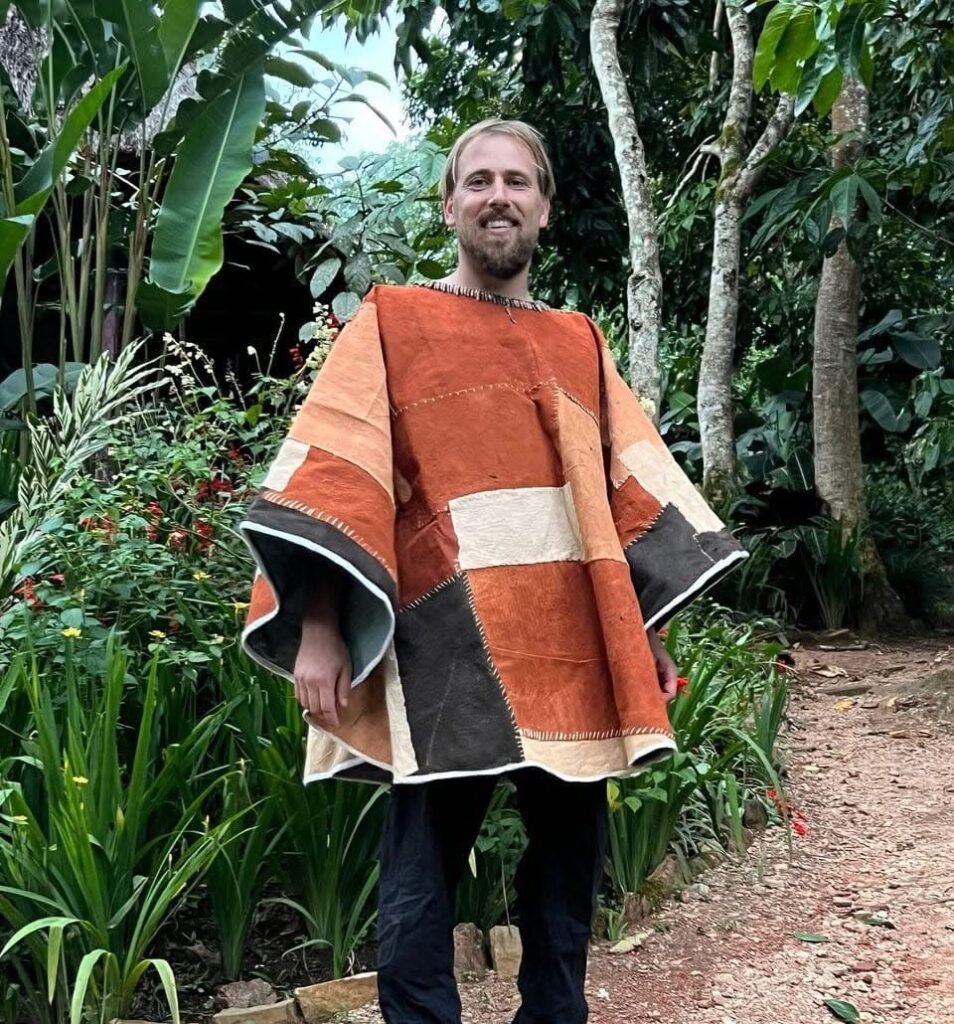
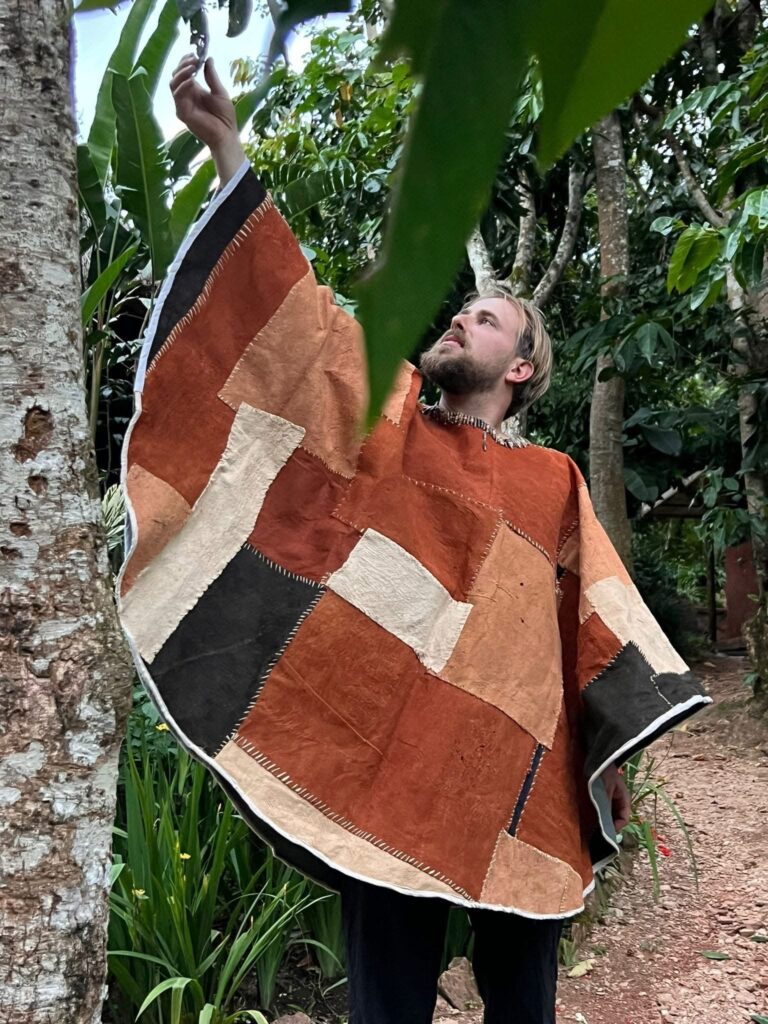
For context – traditionally barkcloth was used as cloth to wear but thereafter for burials and other cultural ceremonies. However, over time, more people began to take interest in the textile. My work focuses on adding value to barkcloth and showing people its potential as a textile. In my workshops, I test its durability and versatility to understand what it can and cannot do.
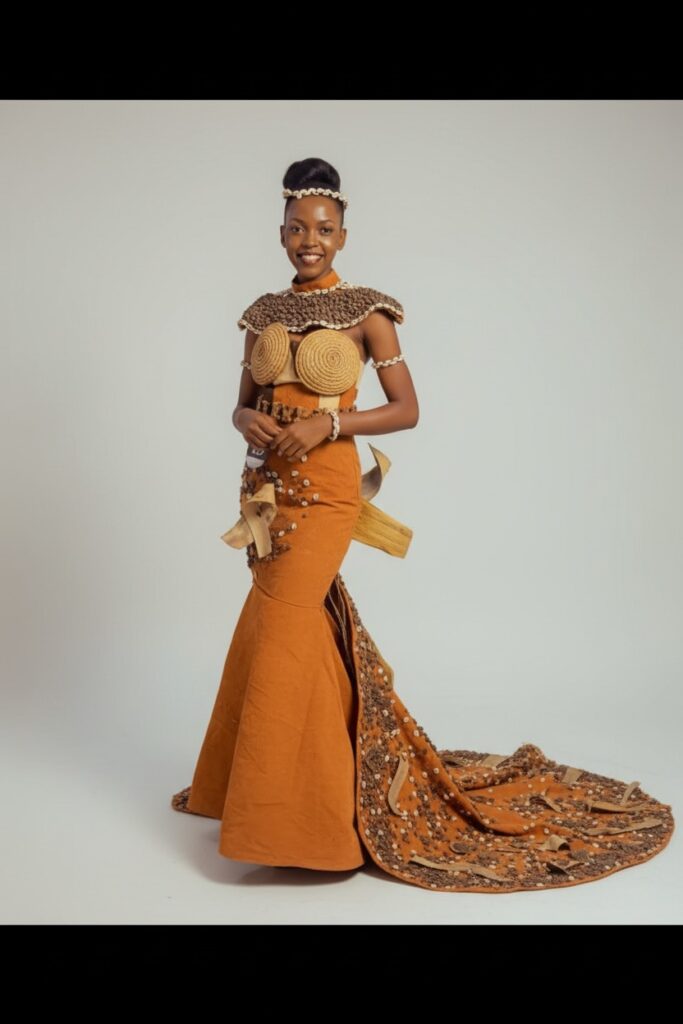
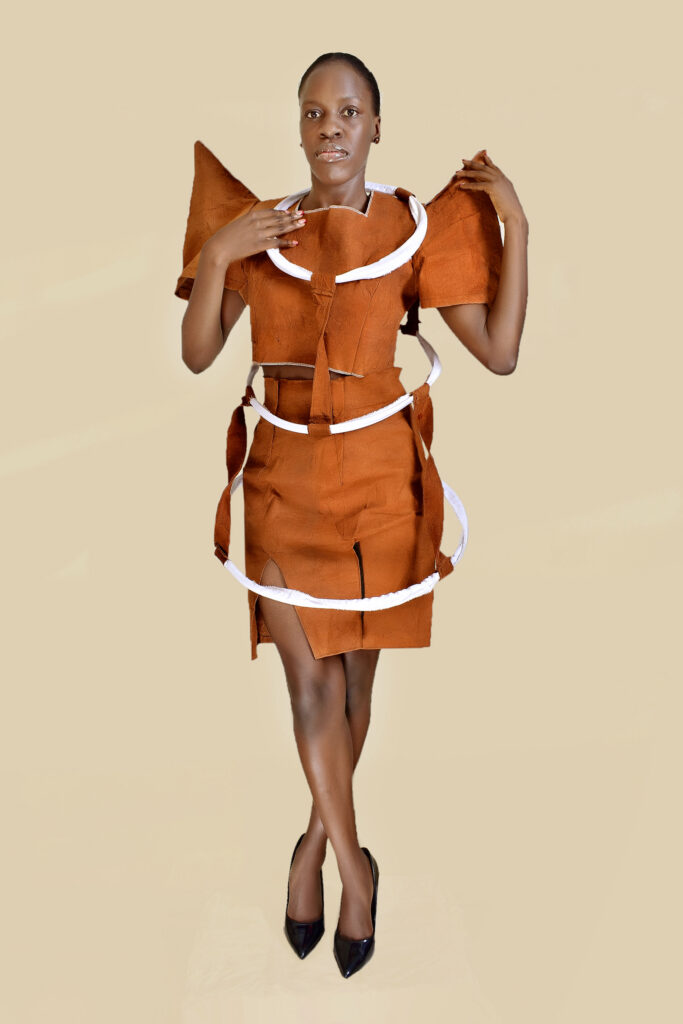
One challenge I’ve faced is the perception of barkcloth’s natural brown colour. To change that perception, I use natural dyeing techniques and introduce new colours like green, red, and purple. By transforming its appearance, people begin to appreciate the fabric before realising it’s barkcloth.
As a designer, I receive many orders for barkcloth garments. However, the material can be rough on the skin, so I started looking for ways to make it smoother without losing its authenticity. During an exchange programme in Israel, I visited several universities, including one called Shankar, where I explored advanced textile techniques. I learnt that barkcloth can be combined with soft natural fibres to create an inner layer, making it more comfortable to wear while keeping its natural look. That discovery answered a question I’d been asking for years. I’m still developing the process, and once it’s finalised, I plan to publish my findings.
Another important part of my work involves sustainability. I’m a member of an organisation called BOTFA. Before joining, I used to buy barkcloth from markets like Kibuye and Owino, where it was easy to find. But through BOTFA, I learnt about the importance of planting trees for sustainable barkcloth production.
At BOTFA, we encourage artists and all stakeholders to plant Mutuba trees, as each tree contributes to a more sustainable production process. Every piece of barkcloth tells a story — but if we keep buying it without planting the trees that make it possible, we silence the farmers behind that story. Many love barkcloth, yet few know its roots. We’re here to change that.
We invite everyone—not just artists—to join us in planting trees. You can do it to give back to nature or to create a lasting personal memory. Once you’ve planted a tree, you can choose to use the barkcloth it produces, gift it, or simply become its “tree parent”. Each tree is assigned a unique pin number, allowing you to track its growth, see when it’s harvested, and learn who worked on it. This traceability system forms what we call the “DNA” of every barkcloth piece. You can even return years later to witness the harvesting process yourself.
Our goal is to create a strong connection between the people who use barkcloth and the farmers who produce it. We want to plant a forest of Mituba trees to meet the growing demand for barkcloth sustainably. This way, if a thousand people need barkcloth tomorrow, we’ll have the resources to meet that demand. To us, that’s what sustainability means. When the farmer, the harvester, and the artist are all happy, the entire ecosystem thrives.
Because I work in fashion, I often need barkcloth with specific characteristics such as thickness, lightness, or smoothness. Through BOTFA, we now customise barkcloth based on its intended use. If you’re a painter, a fashion designer, or someone making canvases, you can order the exact texture you need. You can even get fabric as fine as a handkerchief. That level of customisation was hard to find in the market, where you could only buy whatever was available. Working directly with the producers allows me to get the perfect material for my work.
I’ve said a lot, but that’s the world I’m in — one that connects fashion, sustainability, and cultural heritage through barkcloth.

How to Care for Barkcloth Garments and Accessories
FAB: For someone in the diaspora wearing barkcloth, how should they clean it if something happens, say oil or food spills on it? It’s a fragile and delicate material. How do you care for barkcloth?
Doreen Namatovu: For now, based on what we’re doing with our team, we’re experimenting with blending barkcloth with other natural fibres to make it stronger. But as it currently is, if you have, for example, a bag or a purse made of barkcloth, the best way to clean it is with a damp soft sponge. Gently wipe the stained area, and it will come clean. If it gets wet, simply place it under the sun to dry.
However, barkcloth is too delicate for washing machines. It’s best to handwash it in cold water using a mild detergent. Hot water can cause shrinkage, so cold water is always recommended. I own several barkcloth pieces myself, and since I can’t wear something like a waistcoat multiple times without washing, I handwash mine in cold water, use a regular detergent, and dry them under the sun. They dry quickly and are ready to wear again the next day.
That said, barkcloth can lose some of its strength over time with repeated washing. For now, that’s the care method I can recommend until there’s development of a stronger, more durable version through research.
FAB: Barkcloth is centuries old, yet it’s now entering modern conversations about sustainable luxury. How do you envision its role in global fashion moving forward?
Doreen Namatovu: Barkcloth has an incredible future. It’s one of those rare textiles that connects heritage with innovation. I once spoke to a group of social scientists who had no background in art, yet they were fascinated by how barkcloth is made. That shows its power to cross disciplines.
The main challenge now is scalability. As global demand increases, we need more skilled artisans to produce it efficiently. For instance, if a large order of 30,000 pieces arrived today, fulfilling it quickly would be difficult; that’s our current limitation.
Still, barkcloth has already reached almost every corner of the world. It’s being used in interior design, footwear, sculpture and accessories. Once we refine production and close these small gaps, I believe barkcloth will earn a lasting place in global fashion.
It has survived difficult times when it nearly disappeared from the textile scene, yet it made a comeback that’s proof of its resilience and value. Going forward, the focus should be on adding value, refining texture, improving versatility, and helping designers integrate it into modern textile industries. The future of barkcloth is bright, and it’s only just beginning.
FAB: You teach at Uganda Christian University (UCU). How are you preparing the next generation of designers for such a fast-changing industry?
Doreen Namatovu: I approach teaching with the perspective of both a practising fashion designer and an academic, a combination that allows me to bridge theory and real-world experience. Because I work directly with clients and creative teams, I understand how quickly the fashion industry moves. I take that experience into the classroom so my students can learn what’s actually happening in the field.
The new curriculum emphasises project-based learning instead of just coursework. We want students to engage with real design challenges, not just complete assignments. This helps them gain hands-on experience while they study. By the time they graduate, they already understand industry expectations.
For example, we encourage students to treat their final projects as professional portfolios. At the end of their programme, they showcase their work on a runway. That event is their official entry into the fashion world. It gives them exposure and helps them understand how presentation and storytelling matter in design.
When students finish two or three years of this kind of training, they’re not just ready for the field—they’re already part of it. They know how to respond to market trends, manage clients, and develop collections that reflect their creativity and professionalism. That is how I prepare them for the fast pace of today’s fashion industry.
The Long Term Vision for House of Dorlin
FAB: Let’s move back to your own work, House of Dorlin. What’s your long-term vision for the brand?
Doreen Namatovu: House of Dorlin has been around for seven years now. Like many designers, my story began at home — in my parents’ house, where I first started creating clothes. Later, I moved the brand to my home space while completing my second degree and eventually to where we are today.
One thing that gives me confidence in the brand’s future is how it survived the COVID-19 period. That was a tough time for small and growing businesses, yet House of Dorlin pulled through. Over time, it evolved into a training centre as Dorlin Fashion School.
A major turning point for me was a trip to Israel organised by Tamar. There, I learnt the difference between a tailor’s workshop and a true clothing brand. That experience completely changed how I viewed my work. After that, I expanded House of Dorlin and began shaping it into both a fashion label and a creative training institution.
So far, we’ve trained and mentored about 43 men and women through fashion and design programmes and internships. My dream is to continue growing both sides: the brand and the school. I want House of Dorlin to become a recognised name for high-end, sustainable fashion, especially through the use of barkcloth.
In Tel Aviv, there’s a brand called MASKIT that produces luxury pieces from cashmere. I see a similar path for House of Dorlin, using barkcloth to create exclusive, eco-friendly designs. It’s a sustainable fabric that doesn’t harm the environment, and it connects deeply to our heritage.
Looking ahead, I envision House of Dorlin standing among the world’s leading fashion houses, offering both ready-to-wear and made-to-order collections. Yet our identity will remain deeply rooted in barkcloth, sustainability, and craftsmanship. The dream is ambitious, but it’s unfolding step by step. I’m proud of how far we’ve come and even more excited about where we’re going.
FAB: Every creative journey has its highs and lows. Was there ever a time you almost gave up, and how did you push through?
Doreen Namatovu: Yes, there was a time I nearly gave up. Every business faces challenges, but I learnt that speaking to the right people can make all the difference. This happened the year before my expansion.
One thing that truly helped me was understanding the value of social capital. I realised that I wasn’t the first person to face these struggles. Many others had gone through similar experiences, so I decided to reach out and talk to them. During that time, I also enrolled in a short online course from Yale University on business expansion. It emphasised the power of social capital and the importance of relationships.
While I was taking the course, I spoke with several people, including my family, who offered support and advice. Not long after, a new opportunity came up in a much better location, and I decided to start again. That experience taught me something valuable: it’s okay to start over as long as you don’t give up. What truly kills potential is giving up on yourself.
If you had a reason strong enough to make you start in the first place, hold on to that reason. Talk to people, seek advice, and surround yourself with a strong circle of friends who can guide you when you make big decisions. Sometimes, the right conversation can change everything.
Doreen Namatovu: That would be a dream come true. The story I would want to tell is about a young girl who had a vision and made it real. That’s always been my story.
There was a photo shared online around the time when the current U.S. Vice President became the first woman to hold that office. It showed a little girl’s image beside the shadow of a successful woman. To me, it symbolised how a dream becomes reality, and that image represents me perfectly.
When I started, I had my family and a few close friends who believed in what I was doing. But others questioned me: “Why quit your job?” “Who gave you this idea?” “Will it really work?” Still, I believed in my vision because I’ve always been that one risk-taker.
So, the story I would tell on that global stage is about a young girl who dared to dream, started with very little, and is now living her purpose. And she’s still reaching for more.
FAB: And that’s exactly the girl we’re speaking with today. In three words, how would you describe your personal design philosophy?
FAB: Which colours or textures currently dominate your mood boards?
Doreen Namatovu: I’m still deeply connected to earth tones; I’m also drawn to grey and black tones. I tend to prefer achromatic colours to warm colours.
FAB: If you could collaborate with any global designer or textile innovator, who would it be and why?
Doreen Namatovu: That’s a tough one. I’d need to think about it carefully. When I look at other designers, I focus more on their stories than their fame. That’s why I often mention MASKIT, a brand that makes clothing from cashmere. I don’t even know if it’s owned by a man or a woman, but their story connects deeply with mine. I admire that alignment of vision and purpose.
FAB: You’re both a lecturer and a practitioner. What are you currently working on? Is there a project or research you’re developing that the world should look forward to?
Doreen Namatovu: Yes, I’m working on something that’s very important to me. It’s part of my PhD research, which I began in 2014. Once it’s complete, I plan to publish it. The project explores the use of ink on barkcloth, which fills the final gap in my broader research on this fabric. It represents the culmination of years of work and my continuous effort to advance knowledge around barkcloth as both a cultural and sustainable textile.
FAB: We’ve talked about you, your brand, and of course, a little about bark cloth. But outside the studio and classroom, where do you go in Kampala or beyond for creative inspiration?
Doreen Namatovu: My research focuses a lot on people and culture. By people, I mean the stories and perspectives of different individuals, how they define fashion, and what it means to them. I look deeply into these narratives, but my biggest inspiration comes from culture itself. I draw from how people eat, dress, and express their traditions, as well as from taboos and social norms in different communities. That cultural diversity continues to shape my creativity and design process.
FAB: If someone visited Uganda tomorrow, which three places would you take them to? The ones that mean the most to you personally.
Doreen Namatovu: The first place would be my workshop. The second is the Kasubi Tombs, a site that holds deep personal meaning for me. And the third is my home village in Masaka, where we produce barkcloth. That’s where I take everyone who visits Uganda, especially those close to me. It’s where they witness how the magic happens, and they always leave transformed. Each visitor plants a tree, leaving behind a living memory. Those are my three special places.

What Doreen Wants Her Legacy to Be
FAB: When you think about African fashion in 2035, ten years from now, what do you imagine it will look like?
Doreen Namatovu: I imagine Africa rising to reclaim its power in the fashion industry. We need to restore our creative independence. Africa is rich in culture, talent, and heritage. We can and should regain our place in global fashion.
FAB: Looking ahead 50, 100, or even 200 years, what would you love to be remembered for?
Doreen Namatovu: I hope people will remember my kindness. I want to be remembered as a kind woman, and I hope that whenever bark cloth is mentioned, my name is mentioned too. That connection means everything to me.