
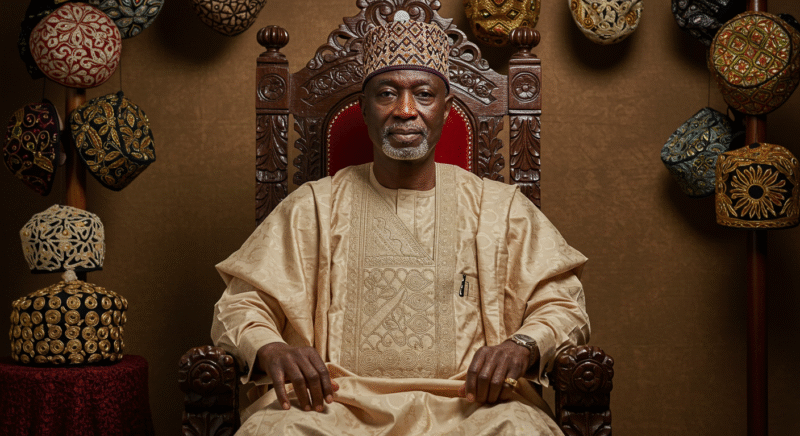
In the bustling markets of Kano or the quieter artisan corridors of Zaria, a cap can cost you more than a designer jacket. We’re not talking baseball hats or bucket trends; we’re talking about the Hausa Tangaran cap, the meticulously embroidered, deeply symbolic, and quietly powerful cap worn by men across Northern Nigeria.
You’ve probably seen one on a president, an ambassador, or a sharply dressed wedding guest. But what you might not know is that behind those intricate patterns and upright silhouettes lies a living archive of status, memory, and generational pride. And sometimes, yes, a Tangaran cap really does cost more than a tailored Italian suit.
What You Wear on Your Head Speaks Louder Than Words
In much of Northern Nigeria, to wear a Tangaran cap is to carry a story, one woven not just in silk or cotton thread but in unspoken codes of heritage and honour. It serves as both an accessory and a signal.
For centuries, Hausa-Fulani men have worn caps as part of their daily and ceremonial attire. But not all caps are made equal. The more ornate the embroidery, the more personal the design, the more hours spent on a single piece, the higher the value. Never miss a beat in fashion, arts, beauty, and lifestyle, follow FAB L’Style Magazine.
Some men even commission caps for specific milestones—birth of a son, ascension to a chieftaincy title, pilgrimage to Mecca, or marriage into a prestigious family. For a culture so strongly dependent on oral tradition, your cap can definitely say things you’ll never need to.
The Price of Precision
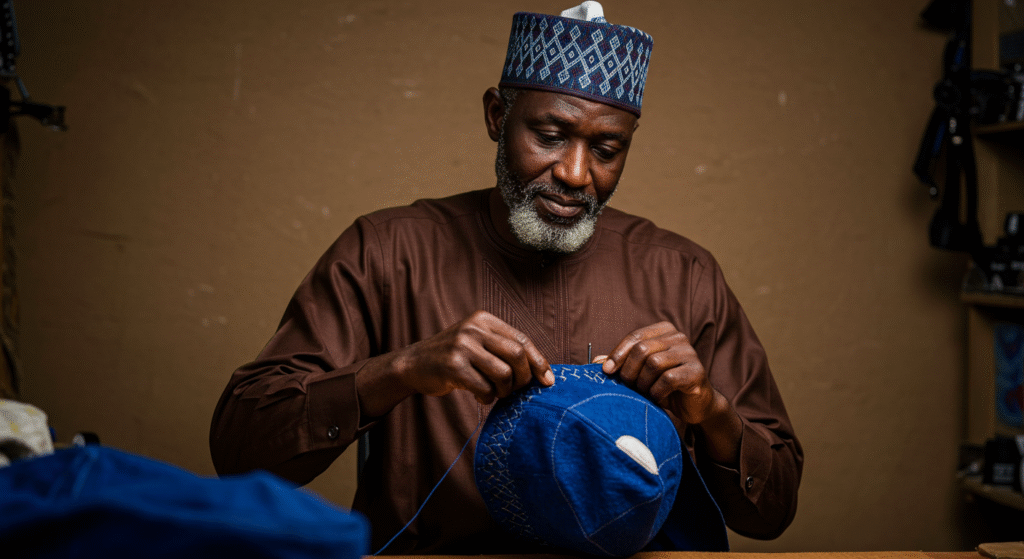
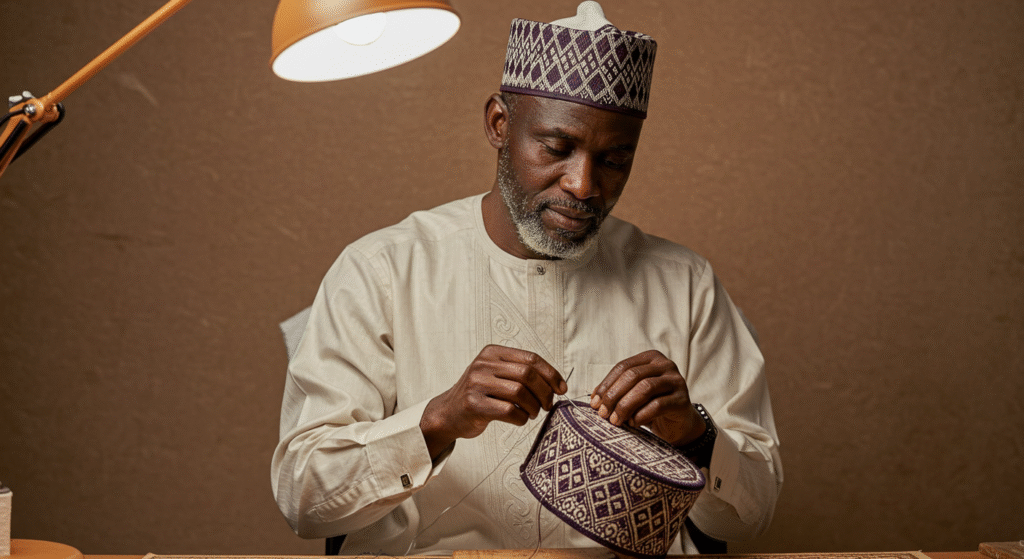
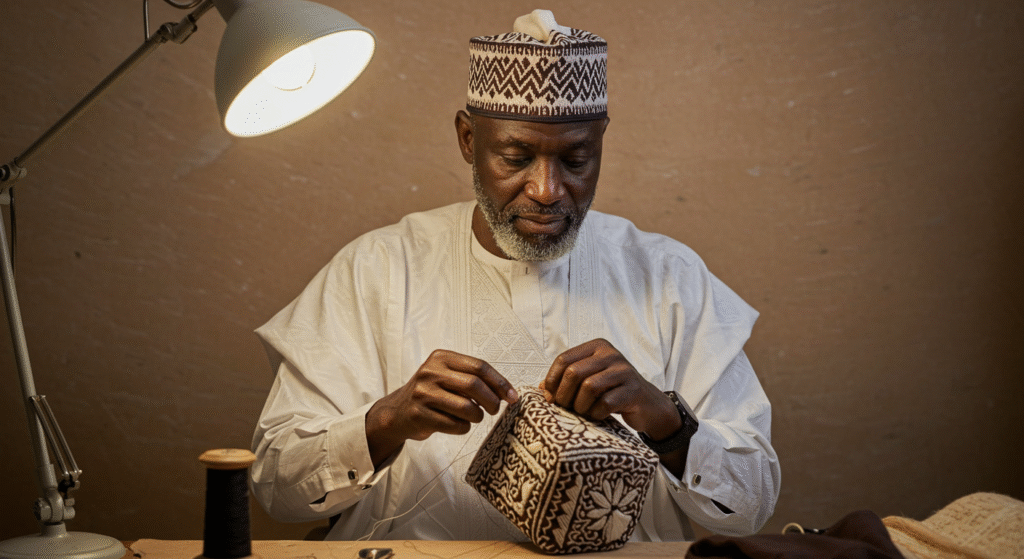
Many of the most revered caps are still made by hand—no machines, no shortcuts. Some are crafted by older men who’ve been doing this for over four decades. A master craftsman can take four to six weeks to complete one cap, depending on the pattern.
“People often ask why it’s so expensive,” says Umaru Bello, a third-generation capmaker from Katsina. “But if you watch someone sit for 8 hours a day stitching with a single needle and a steady hand, you won’t ask again.”
The base fabric must be thick enough to hold the shape yet soft enough to be folded without damage. The threads are usually cotton, but wealthier clients opt for silk or even metallic thread. Some elite orders incorporate 24-karat gold thread, rare, luxurious, and reserved for the few.
Hausa Tangaran cap as Cultural Haute Couture
In many ways, the Tangaran cap operates like couture, designed for an individual, deeply expressive, and often unrepeatable. While Western menswear leans toward subtlety, the Northern Nigerian aesthetic is not afraid of bold geometry, proud colours, and sacred symmetries.
This is not accidental. The cap’s design reflects ancient Islamic and Sahelian influences. Repeating motifs often hint at Arabic calligraphy, ancestral lineage, or clan identity. To the untrained eye, it’s pretty. To the community, it’s a biography.
“It’s like wearing your family tree,” says cultural historian Fatima Jibril. “The lines are a metaphor. The stitch is not only for style but memory.”
Modern Day Kingship: Status and the Tangaran Economy
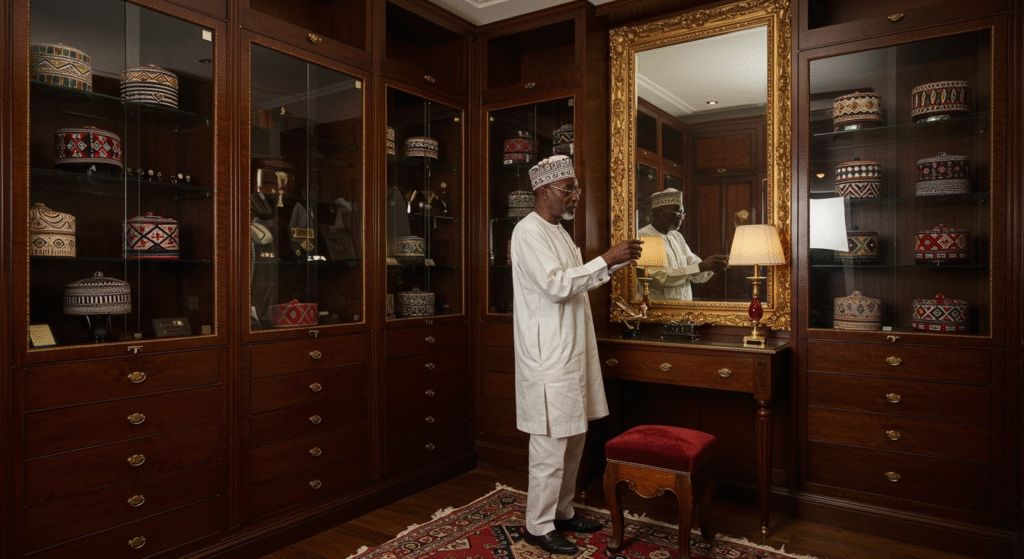
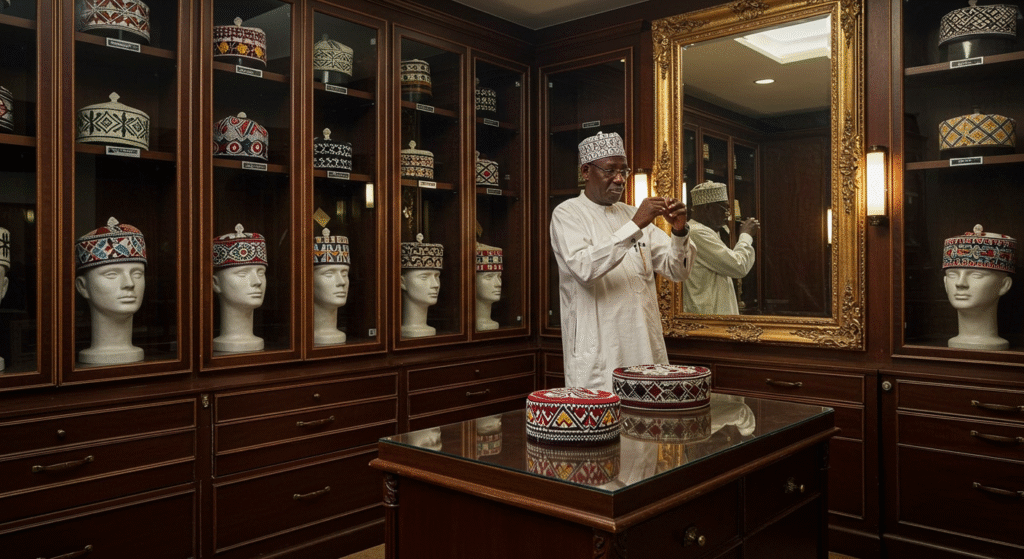
Among politicians, business elites, and royals, Tangaran caps have become a quiet competition in taste and affluence. Some clients have entire wardrobes of caps matched to specific babanriga (agbada) or kaftans. The most elite among them often have custom cap vaults—cool, preserved cases where the caps are stored upright like prized wine bottles.
There’s also an economy of admiration: a well-embroidered Tangaran in a political gathering can attract attention, spark envy, or trigger imitation. In an unspoken way, the cap has become a wearable résumé, a curated extension of a man’s power and prestige.
The Diaspora Touch to Hausa Tangaran Cap
Interestingly, the Tangaran cap is no longer confined to Northern Nigeria. In recent years, African diaspora communities in London, Paris, and Toronto have begun wearing these caps at high-profile events: weddings, galas, and cultural showcases.
It’s become a symbol of rootedness. For second- or third-generation Africans abroad, wearing the Tangaran is a way of claiming ancestral identity in cosmopolitan spaces. Several young designers now incorporate tangaran elements into global fashion lines, pairing them with blazers or streetwear to tell a layered story of cultural fusion.
So Why Is It So Expensive?
The simple answer is that Tangaran is not just fabric. As a matter of fact, it is a craft. It’s a language. And when you buy a Tangaran cap, especially one made by a true artisan, you’re investing in a collapsing archive of oral art, dignity, symbolism, and pre-colonial knowledge systems. You’re supporting the survival of a tradition that refuses to be mass-produced.