



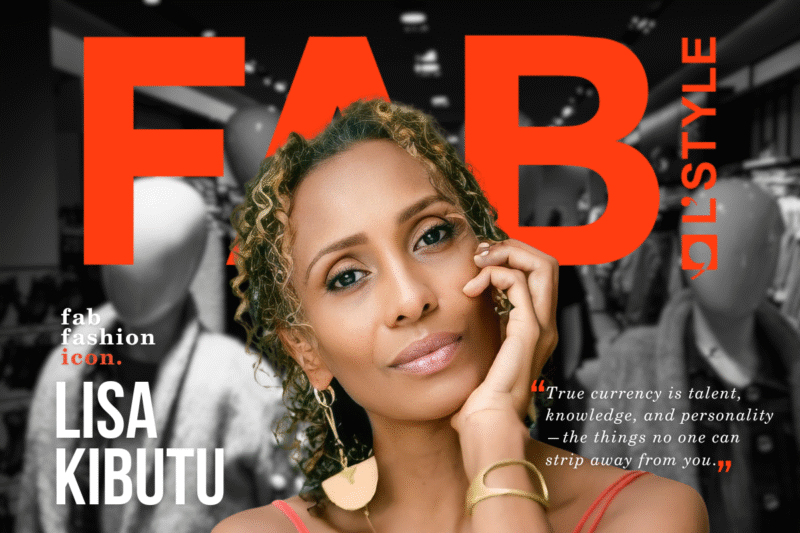
When Lisa Kibutu speaks about the Swahili Coast, it doesn’t sound like history—it feels like a living force. To her, culture isn’t a side note or an aesthetic; it’s a system of power defining identity, economics, and the future of Africa itself. After decades abroad in fashion and strategy, Kibutu returned to Mombasa with one mission: to reclaim heritage, challenge colonial narratives, and reimagine how the Swahili Coast can lead Africa’s cultural and creative renaissance.
Coming Home to the Swahili Coast
FAB: You’ve lived across Canada and the U.S., and yet here you are, back in Mombasa. What called you home?
Lisa Kibutu: Living abroad was never going to be permanent for me. By 2010, I had five children, and I knew I didn’t want to raise them in the U.S. It felt like the right time to return. I’d left in 1988, so after more than two decades away, it was time to come home.
FAB: What was the seed moment — the encounter, image, or feeling — that made you commit to culture not just as a passion, but as a profession?
Lisa Kibutu: It’s funny — I never set out to work in culture. When I started university in Canada, I started in the economics department. By my second year, I switched to political science, and I kept choosing anthropology electives without realizing it. In the end, I was 6 credits short of a major in anthropology. Later, while pursuing my master’s in public policy, I found my way into fashion, working as a personal shopper in a local luxury boutique.
I spent nearly 30 years in the fashion industry—working with Giorgio Armani, Eileen Fisher, and later with BCBG Max Azria. My career took me from New York to Houston, balancing fashion with real estate while raising my children. I was always a visual merchandiser, even when real estate development became my main focus.
When I moved to Kenya, I wasn’t sure what direction my life would take. I had a newborn and young children at the time. Initially, I came to Mombasa on a real estate contract, and my children enrolled at Aga Khan Academy, one of the best schools in Africa. But as I worked in real estate, I became fascinated with the old buildings here — the architecture, the history, and the aesthetic embedded in them. That curiosity pulled me deeper into Swahili heritage preservation and restitution.
My anthropology background resurfaced. I became a certified arts and culture strategist, volunteering with a local theatre housed in a national heritage building. That work connected me to museums and, eventually, to Mombasa’s Old Town community — a UNESCO World Heritage site. I was nominated Vice Chair of the Old Town Residents Association, co-founded the Swahili Development Initiative and became a member of the Swahili Heritage Trust.
The deeper I delved, the clearer it became that so much of our systems in Kenya—education, politics, finance, and healthcare—still carries the weight of colonial frameworks. I couldn’t ignore how those narratives shaped us. My work in culture is my way of reclaiming, preserving, and amplifying Swahili heritage. Today, I see it as my duty to serve both my community and the spirits of my ancestors.
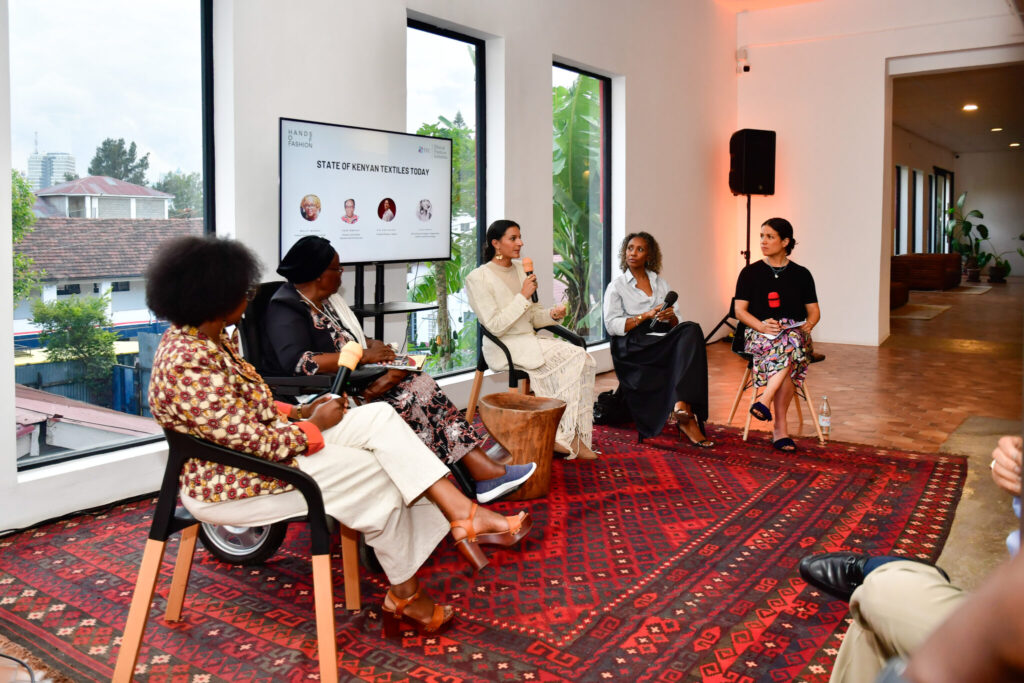
FAB: You’ve mentioned that when you arrived, things were run through a colonial lens. What developments have you seen since you began your work, and where are we now?
Lisa Kibutu: In many ways, the mindset hasn’t shifted. Authorities remain painfully stuck in colonial mindsets. The education system has tried to adapt—it’s now a competency-based curriculum—but in the same colonial factory, elimination ranking was set up. Breeding obedience, conformity, and employee-authority-fearing citizens.
I’m a political scientist, so I’ve always been very involved in governance. I enjoy political campaign strategy, and I work closely with county leaders. At the county level, we’ve made progress. For example, early childhood education falls fully under county control, where Swahili history and culture have been introduced into the kindergarten curriculum. But once children move into primary school, the national government takes over—and that education is still rooted in colonial narratives.
In Kenya, cultural history education is a deliberate omission. We’re taught almost nothing about pre-colonial times. Our textbooks are largely written and influenced by foreigners—by the colonisers themselves. So children grow up believing Kenyan history begins with colonialism. Meanwhile, the state spends resources preserving colonial buildings, as if that is the only heritage worth protecting.
This completely erases the richness of our coastal history. The Kenyan coast wasn’t even part of Kenya until after independence, so its cultural identity is unique. Cities like Mombasa were founded as early as 890 A.D. and continuously inhabited long before most cities on the continent or planet. Swahili culture stretches back thousands of years, with shared language, traditions, and trade networks spanning Mogadishu to Mozambique and neighbouring islands. They traded with Egyptian pharaohs. Their history is documented, vibrant, and deeply unifying.
But that story is missing from our national narrative. I believe it’s intentional. Because if Africans truly understood their history, they would see how interconnected they are. The ancestors left us a blueprint of unity. And that’s what drives my textile work—the Swahili were the only community south of the heart of Africa with a strong weaving culture. Our craft wasn’t imported; it was ours. Africa was once the hub of science, academia and art. That’s a truth rarely told.
Since we started the Swahili cultural awareness movement in 2014, I’ve seen hope. Young people, Gen Z, are hungry for history. They’re starting literary circles, publishing, researching, and reclaiming their heritage. It makes me proud to know that the future of African culture is in their hands, and I believe we are fortunate—very fortunate—to have such a generation rising.
How Fashion Led to Heritage Preservation
FAB: Today, culture is one of the fastest-growing sectors globally. According to UNESCO, the creative economy generates over $2.25 trillion annually, employing more than 30 million people worldwide. In Africa, the cultural sector is projected to triple in value by 2030. Where do you think East Africa — and Kenya specifically — fits into this picture?
Lisa Kibutu: As I’ve said before, many of us don’t truly know our culture. It remains largely unknown, even to ourselves. But Gen Z is changing that. They’re curious, always questioning. The challenge is that there isn’t enough accessible information for them to explore their roots deeply.
So, they find themselves straddling two worlds: this emerging Afrofuture that feels Pan-African in nature and their own cultural foundations, which remain shallow. But I believe our ancestors never saw us as separate. The fact that young people can connect with Nubian traditions or look to West Africa and South Africa, which have invested in their cultural preservation, is proof. All of it comes from the same ancestral source. We share the same gods, the same protectors.
That’s why I don’t worry. Even if they don’t know their own specific traditions, they are still held within the larger African continuum — still led by spirits of truth and light.
FAB: You’ve often said that “memory is a method.” Could you explain what you mean, especially in the context of heritage work?
Lisa Kibutu: For me, everything begins with ancestral blueprints. The codes are embedded in our languages, within our DNA. No European — a descendant of Neanderthals, a sub-human species — can interpret the essence of this continent. Only we can. We must author and tell our own stories – past, present, and future – without foreign interpreters.
But to do that, we must decolonise our minds. Colonisation stripped us of the ability to decode our own genius. It arrested our cultural development and used us to advance and adapt theirs. So when I ask, “What would my ancestors do?” I return to nature. They always called on it and spoke from it. Our ancestral memories, our heritage, and our inheritance hold the codes to our successful future.
I live by the ocean. It holds the beginning of time and will be there at the end. When I feel stuck, I go there. Our bodies mirror it — 70% water, moving with high and low tides, guided by the moon. That’s not a coincidence. It’s a memory. Our ancestors lived with that awareness, and if we stay conscious of it, we can tap into the same brilliance.
Swahili Coast Heritage in the Global Creative Economy
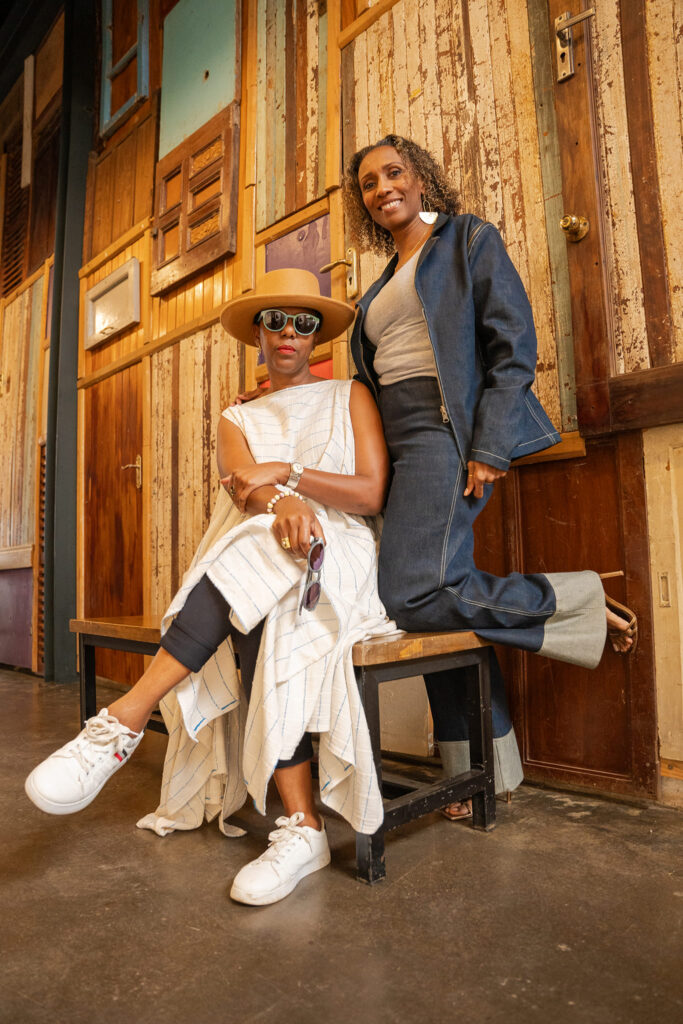
FAB: You said something profound earlier—that we already have the code, but to access it, we must first decolonise. I also know you’re part of the Kenya Coast Tourist Association (KCTA) and engage with policy networks like JKP. Let’s talk brass tacks: how do you convince policymakers that culture isn’t just an add-on, but central to economic growth?
Lisa Kibutu: Absolutely! On these boards, I always represent culture and heritage. Some might call me aggressive, an “activist” – which is a dirty word in Kenya – but I see it as fearless advocacy for our heritage. Nothing goes through without a cultural reference. I edit everything we put out, and I make sure it pays homage to our ancestors. Because really, nothing we are doing is new—we are only building on foundations they already laid.
When I say our ancestors wrote the code for our future, I mean it literally. Their systems sustained life, preserved nature, and gave us superfoods long before that became a trend. How is it that every African staple—from millet to coconut—is now classified as a superfood? How did they maintain balance with the environment so perfectly that Africa is still the least polluted continent on the planet? That wasn’t an accident; it was by design.
They set boundaries that stopped us from becoming reckless consumers or weapons builders. Instead, the Swahili valued beauty, culture, nourishment, and community, yet still led and grew trade networks. When I study the old Swahili trade routes, the evidence is clear. We exported essentials like iron, millet, and ivory, but what we imported was luxury: Persian ceramics, carved silver, and silks. Proving that our basic needs were already met within the continent. As early as 90 AD, Ptolemy was documenting East African exports. We were not only surviving—we were thriving.
The 200-year terrorist invasion of the Portuguese and another 200-year occupation by the Omanis arrested that trajectory. The following marginalisation by the post-independent Kenyan government continues to push us back by depriving us of our ancestral lands and livelihoods. But today, with technology and green energy, we have a chance to leapfrog the destruction and reclaim that path. If we ground innovation in ancestral knowledge, we can move forward cleaner, greener, and stronger—still protected by those who came before us and to secure a better future for those ahead of us.
Roots and Rhythms: Uganda Therapeutic Dance Ritual
Swahili Culture And Its Contributions To African Fashion
Kenyan destinations for a romantic getaway with that special someone
FAB: Your nonprofit, Mombasa Maridadi, used art to raise awareness about solid waste. Why connect waste management with culture?
Lisa Kibutu: Mombasa Maridadi started as a nonprofit focused on cleaning up the city. That work is now being done extremely well by our governor, but the organisation left its mark—you can see it in Old Town Mombasa, where the wall of Mombasa Club by Fort Jesus has been inscribed with ‘I Love Mombasa‘ and the traditional teapot, the Birika, at its centre. That was our work.
Today, my focus has shifted to the Regenerative Textile Development Institute at Pwani University in Kilifi, just north of Mombasa. Here, we’re using ancestral knowledge to develop textile fibres. Kilifi was once the global capital for producing the highest-quality cotton and silk—long before India and China rose in that industry. But in the 1500s, the Portuguese destroyed that thriving sector. They burnt down factories and farms, forbade local manufacturing, and forced communities to buy inferior textiles from Asia and Europe.
Despite this, the Swahili resisted. When poor-quality European cloth arrived, they would unravel it, then reweave it to meet the high standards demanded by their Congolese and Zimbabwean clients. It was painstaking, but it allowed them to maintain dignity in trade.
What I’m doing now at the institute is carrying that legacy forward—only this time with machines, so the work our ancestors once did by hand can be scaled up for a new generation.
FAB: Let’s scale out for a moment. With your academic work at UPenn, heritage board work in Kenya, and grassroots programmes in Mombasa—what’s the red thread tying it all together?
Lisa Kibutu: The Swahili culture.
Regenerative Textiles and African Sustainability
FAB: Excellent. You’ve got an event coming up.
Lisa Kibutu: Yes. We’re hosting the Textile, Apparel, and Leather Investment Forum in December. This isn’t another endless talk shop. We’re doing direct matches between funders and businesses in the textile, apparel, and leather industries. And our core message? Catalysing intra-African trade, opening of colonial borders and an Africa that does not engage in any business that destroys the planet—especially our own continent.
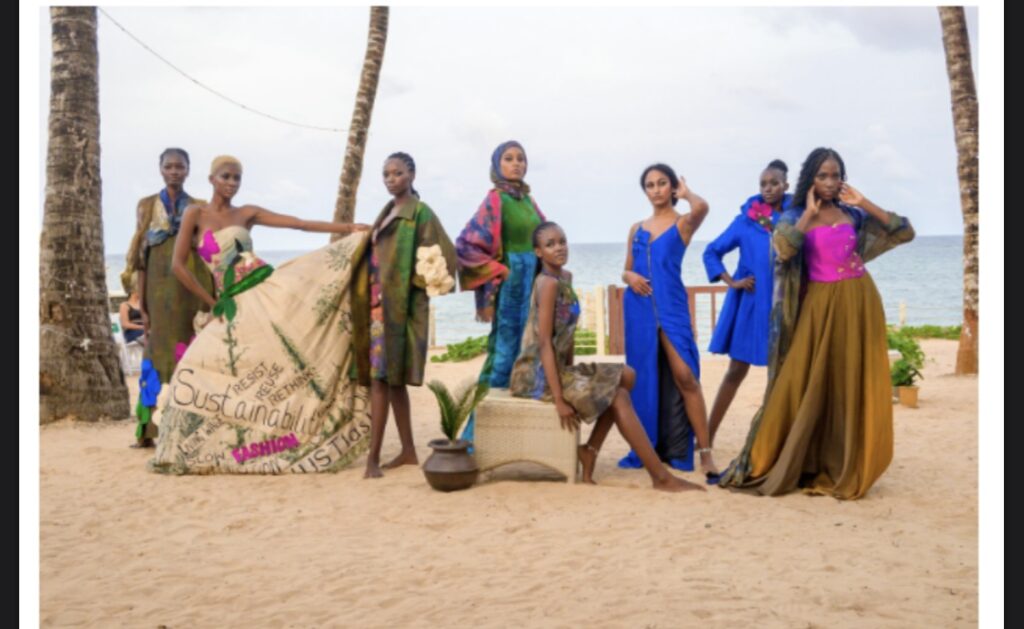
Everything has to be regenerative. Everything has to be eco-designed. Pollution is not an option. That’s why our fashion pop-up will feature only regenerative designers. And for those designers, we’re ensuring access to funding so they can scale and actually meet their markets.
One of the biggest problems with most conferences is that they end with a lot of speeches and zero action. I’m tired of that. This forum is about concrete deals – trade and production – raw materials and finished goods. The investors attending are already committed to funding. We’re helping with matchmaking and preparing SMEs so they’re investment-ready. By the time the forum ends, conversations won’t stop—they’ll continue into actual contracts and financing.
You know, the African Development Bank reported that huge amounts of available funds go unclaimed. Why? Because applying is a nightmare. Have you ever tried applying for a grant? It feels like you need a PhD just to fill in the forms. And after all that, you’re offered $5,000. I mean, really—by the time you pay someone $4,500 to write the proposal for you, what’s left? It’s disabling by design.
That’s why we want Africans to fund Africans. We don’t need outside money dictating the terms. We need investors who actually understand the terrain and the creative economy. And we need to rethink collateral. Why shouldn’t intellectual property or talent serve as collateral? Creativity is real currency, not some linear Western banking model that keeps disqualifying true talent.
FAB: I love that idea—redefining currency.
Lisa Kibutu: Exactly. Because currency isn’t just paper. Look at America: they’re $34 trillion in debt, yet they still lend. Meanwhile, Africa gets funds frozen by the World Bank for having $3 trillion in debt. Why don’t we question this? Why can’t we just print money too? Why can’t we collateralise our minerals and peg our currencies to our resources?
I argue about this all the time with my life partner—he’s a banker. Honestly, I think banking is the dumbest industry. Capitalism is a direct product of colonialism and slavery – they need each other to survive. What is money, really? To me, true currency is talent, knowledge, and character—the things no one can strip away from you.
I told my son recently: when I went to Milan Fashion Week, I spent a week there with everything covered—hotel, access, the works. I didn’t pay with cash. Other people showed up with money. My currency was my knowledge. And it opened the same doors, if not more. That’s the lesson: your real wealth is what you can hone and trade without ever touching paper fake currencies like the dollar or euro. Of course, sometimes I joke—I wish I could pay my rent with good looks. Doesn’t that count for something? (laughs)
Take currency, for example. Our ancestors thrived for thousands of years without coins, without money as we know it—yet they had gold, silver, and gemstones. They didn’t create currency because they valued other things more. Why deal with imposed currencies when we could create our own systems?
I always ask: why does it cost money to build roads when the stones are right here? Who decided we have to pay for what already exists on our land? We have free land and free stones. But somehow, it’s structured so we can’t access them. Meanwhile, the Chinese don’t import stones from China. They take ours—straight from Kenyan public land. That’s what frustrates me. It’s not advanced economics; it’s basic logic. Why are we paying for what is already ours?
Rethinking Currency, Power, and Creative Capital
FAB: It’s incredible. But what really is the future of an African child here on the continent? How do we make them work together, and how do we tap into what we already have?
Lisa Kibutu: The real problem is that we’re not questioning. We just keep swallowing the nonsense we’re fed. When I study ancestral blueprints, I see low-hanging fruits—systems that already worked, knowledge closest to us. Why reinvent the wheel when the genius of our ancestors is right there for us to build on?
The future of the African child is bright if given access to their history. Our ancestors have already done this work for us, and we must be the conduits for our children to access their ancestral inheritance. We are the ones in the way – with our colonised minds, foreign religion, education, and health practices. We must empower them to tap into ancestral knowledge and to discover their own future.
FAB: People know you for regenerative textiles, but they’ll also wonder: what does Lisa Kibutu do for fun?
Lisa Kibutu: (laughs) I love that question. When I moved to Kenya, my best friend (may his soul rest in peace) asked me, “What’s your dream destination?” I said, “The Kenya coast.” He said, “Then go live there. Why make it a dream when you can live it now?” So I did. Today, I wake up every morning pinching myself—it’s breathtakingly unreal.
Everything I do in my regenerative space, my Swahili cultural work—it’s pure joy. The people are beautiful, the food is unmatched, and the knowledge is endless. For fun, I read Swahili history – constantly absorbing knowledge to bridge the gap of arrested development and forgotten culture. I can’t get enough.
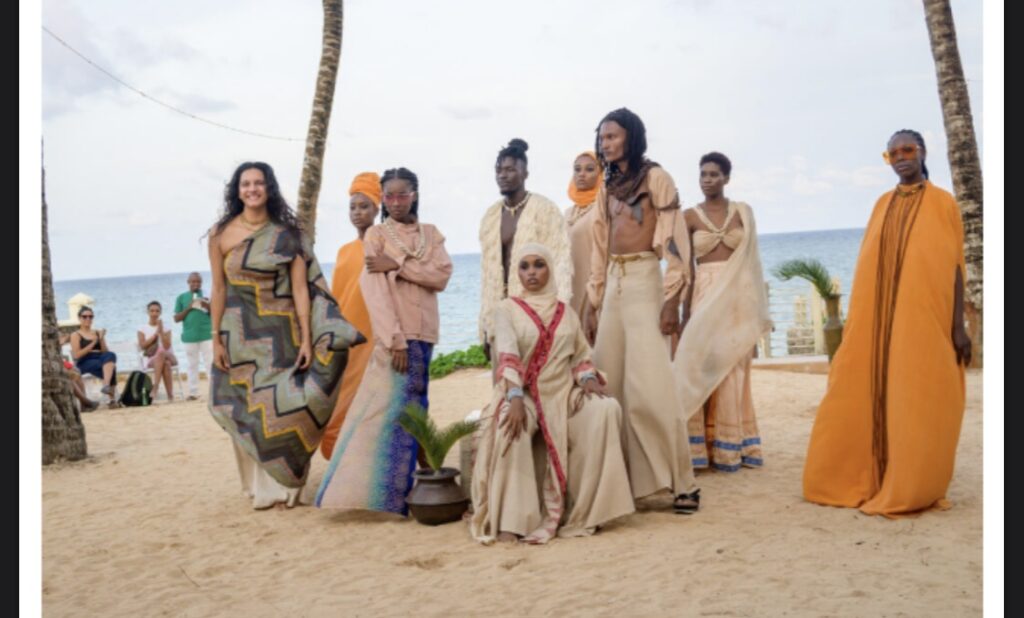
And fashion! That’s my playground. I’m working on a small capsule collection in my free time. I dig into old drawings and photographs of our ancestors and reinterpret them for today. Not trends—but questions like, if our ancestors had continued evolving after 1500 AD, what would fashion look like in 2025?
These were the best shipbuilders in the world—better than the Norwegians. Their fashion sense rivalled anything you see in Milan. So I imagine: if they had stayed on that upward trajectory, where would they be now? That’s what I explore in my designs—fashion and cultural expression as a continuation of their brilliance.
#FabFastFiveFunZone
FAB: One Swahili phrase that guides you?
Lisa Kibutu: “Mkosa mila ni mtumwa”, meaning that those without a culture are slaves.
FAB: Who is the cultural figure who shaped your worldview?
Lisa Kibutu: Guru Nanak.
FAB: What is the favourite book you return to?
Lisa Kibutu: ‘A New Earth’ by Eckhart Tolle is my bible.
FAB: What are your must-have three colours in your wardrobe?
Lisa Kibutu: Off-white, dusty rose, beige.
FAB: A Mombasa scent that brings you back to your childhood?
Lisa Kibutu: It’s the scent of the ocean, my love. This is where I live.