

The global creative economy generates more than two trillion dollars a year. Yet most of the people who make it run are broke, undervalued, or both. The question of whether creative work should be measured by profit is not simply an economic one. It is a question about what a society decides to keep, who it decides to pay, and which kinds of value it has the imagination to count.
Passion as justification for exploitation runs through the creative industries at every level. The extreme willingness of passionate artists to work for very low incomes enables a Wild West economy in the arts. There is extreme and unrestrained competition. The supply of people who want to make things, who will accept poverty as the price of doing so, consistently exceeds the supply of people willing to pay them fairly for it.
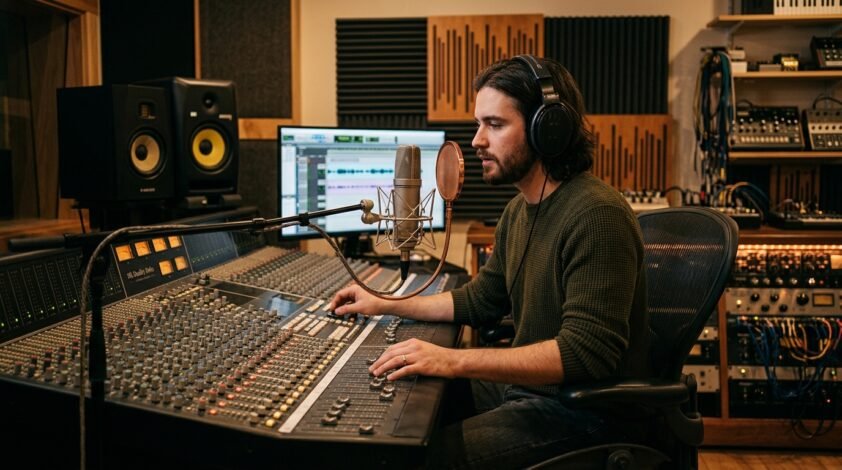
Now, musicians, actors, artists, and other cultural workers have been confronted with a startling realisation: the very place that promised them visibility and discovery instead served to devalue their labour. The internet democratised distribution and then, almost immediately, used that democratisation to drive the price of creative work toward zero. A song streamed a million times on a major platform can earn its creator less than a thousand dollars. A photograph licensed for global commercial use through a stock agency can net its maker a fraction of what it would have earned in the analogue era. A writer’s article, read by hundreds of thousands of people, earns a flat fee that has not meaningfully increased in a decade.
The creative economy, in aggregate, is worth trillions. The individual creative worker, in many cases, earns less than a mid-level administrator in an industry that would not exist without their work. This is not a paradox. It is a distribution problem. And measuring creative work by profit, without examining who captures that profit, tends to obscure rather than resolve it.
What Profit Cannot Count in Creative Work Value
There is a more fundamental objection to profit as the primary measure of creative work, and it does not depend on the distribution argument at all. Some of the most important creative work ever produced was not profitable at its moment of creation. Van Gogh sold one painting in his lifetime. Kafka asked that his manuscripts be destroyed after his death. Naguib Mahfouz, the Egyptian Nobel laureate, spent decades writing novels that the Egyptian state periodically tried to ban. The blues that became the foundation of twentieth-century popular music was made by people for whom profit was an almost entirely theoretical concept.
None of this is a romanticism about poverty. It is a recognition that creative work generates value across time and across contexts in ways that immediate market feedback cannot capture. For three hundred years, the arts economy was built on a simple idea called copyright: I make a thing, I own the thing, and I sell you a copy or a licence. The scarcity of the copy guaranteed the value of the labour, skill, and talent it took to produce it. In 2025, we had to finally admit that deal is dead.
What replaced it has not yet been fully named. Streaming replaced record sales but did not replace record sale income, at least not for most artists. The attention economy replaced the circulation economy but rewarded reach over depth, virality over longevity, and the instantly shareable over the slowly essential.
The things that the market is best at valuing in creative work, novelty, scale, speed, and replication, are not the same things that make creative work matter. A song that soundtracks a generation does not necessarily chart. A film that changes how a culture sees itself does not necessarily make its production costs back. A fashion designer who defines the aesthetic vocabulary of a decade does not necessarily build a profitable business. Measuring creative work by profit tends to reward the wrong things. Not always, not in every case. But systematically, over time, in ways that compound.
The Specific Stakes for African Creative Work
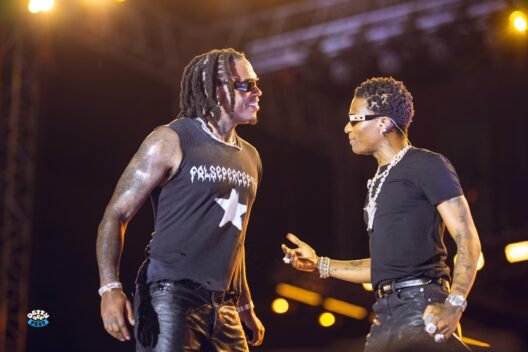
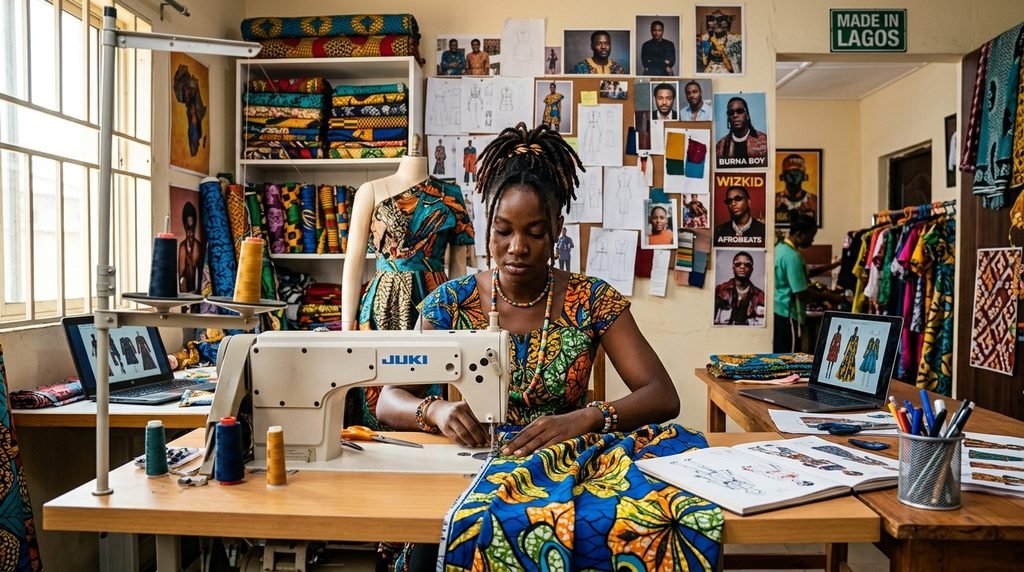
Africa is no longer simply contributing to global culture. It is helping define it. Afrobeats, Nollywood, African fashion, visual arts, and digital content have evolved from regional industries into global forces. Today, the conversation has shifted beyond international recognition to a far more important issue: ensuring that African creators own, protect, and profit from their intellectual property.
This matters precisely because the profit question cuts differently here. In contexts where the formal infrastructure for capturing creative value, publishing contracts, licensing agreements, performing rights organisations, and distribution deals has historically been controlled from outside the continent, measuring creative work by profit means measuring it against a system that was not built for the people doing the work.
The creative economy is about identity, commerce, and transformation. That ordering is not accidental. Identity comes first. The creative industries of Nigeria, Ghana, Kenya, Senegal, and the broader African continent are not simply economic activities. They are acts of self-definition, conducted in public, in the face of decades of external misrepresentation. Nollywood does not simply entertain. It tells Nigerians stories about Nigerians, in Nigerian languages, with Nigerian moral frameworks, at a time when the alternatives were largely produced elsewhere. The economic value of that is real. It is also not the primary reason it matters.
By prioritising the development of creative industries, African nations can foster economic resilience but also enhance cultural identity and social cohesion, ultimately contributing to a more inclusive and sustainable future. Cultural identity and social cohesion are not line items in a profit and loss statement. They are the conditions under which everything else, including economic activity, becomes possible.
When we measure creative work only by profit, we risk building policy and investment frameworks that support the most commercially legible creative industries while systematically defunding the ones that do the less legible but equally essential work of holding communities together, transmitting knowledge across generations, and keeping a culture’s story alive in forms it can recognise as its own.
The AI Complication
The question of how to value creative work has acquired a new urgency in 2026 because artificial intelligence has introduced a new variable: creative output that does not require a human creator, produced from training data that human creators made without consent or compensation. In early 2025, Augmented Intelligence, Christie’s first AI art auction, drew criticism for showcasing a controversial genre. Amid wider legal uncertainty, artists voiced concerns over data mining practices, notably with respect to copyright.
Prominent creatives including Sir Stephen Fry, Sir Paul McCartney, and Dua Lipa wrote to the Times to oppose a proposed UK copyright exemption that would allow AI companies to train models on creative work without licensing it. Their joint letter stated that Britain’s creative industries want to play their part in the AI revolution, but that to do so from a firm intellectual property base is essential.
The stakes are direct. The data that humans produce, our writings and our voices and our connections, our experiences, our ideas, should belong to us. And any economic value that is generated from this data should be shared with the humans that produce it. If AI can generate music, writing, images, and design at scale from human creative work, and if the profit from that generation does not flow back to the human creators whose work made it possible, then the measurement-by-profit framework does not merely undervalue creative work. It actively transfers its value to the machines and companies that process it.
This is the most pointed version of a much older problem. The question of who captures the value of creative work has always been contested. What is new is the scale and speed at which the answer is now being decided, and how little power individual creators have in that decision.

What a Better Measure Looks Like
The alternative to profit as the primary measure of creative value is not the absence of measurement. It is a better measurement. Better measurement would count employment quality, not just employment numbers. It would track whether creative workers earn a living wage, have access to healthcare, can build savings, and can sustain a practice over time. This measures the longevity of creative work, not just its immediate commercial performance. It would capture the externalities that creative industries generate: the tourism they drive, the urban regeneration they catalyse, the social cohesion they sustain, the cultural diplomacy they enable. It would account for the informal creative economy, which in many African countries represents a larger share of actual creative activity than the formal economy that gets counted.
Some of this measurement is already happening. UNCTAD’s Creative Economy reports have been building frameworks for understanding creative value beyond GDP contribution for years. The African Union’s call to the G20 to support inclusive financing frameworks explicitly tied creative industries to employment, sustainable development, and cultural resilience rather than profit alone. The CANEX programme, which brought African fashion designers to Galeries Lafayette in Paris and connected African writers, filmmakers, and musicians to international platforms, was built on the understanding that market access and cultural visibility are related but distinct forms of value.
What is missing, still, is the political will to fund what cannot yet be measured, and the institutional imagination to value what the market consistently underprices.
The Question Worth Sitting With
Seventy-five creators spanning writers, fine artists, filmmakers, musicians, and digital creators were asked to reflect on their futures in 2025. Despite widespread uncertainty, their collective responses revealed a paradox: as precarious as creative work is today, there is also a moment of opportunity that demands a radical rethinking of artistic practice, community, and sustainability.
That radical rethinking is the real conversation. Not whether creative work should be profitable, it should, and the people who make it should be paid fairly for their labour. But whether profit is a sufficient measure of creative value, and whether the frameworks we build around that measure are capturing the right things or systematically ignoring the most important ones.
A song that makes a billion streams but earns its creator two thousand dollars has not been fairly valued. A novel that sells three hundred copies but changes how its readers understand what it means to be alive in a particular city at a particular moment has not been fairly ignored.
The creative economy is large enough, and important enough, to deserve more sophisticated tools for understanding what it produces. The numbers already make the case that creativity drives economic growth. What they have not yet managed to say, clearly enough to change policy, is that creativity drives something else too, something harder to count and more important to keep.
That is the argument this industry needs to make, in every language, in every market, with every tool available. The alternative is a creative economy that optimises for what it can measure, loses what it cannot, and wonders, eventually, why the numbers stopped adding up.
Recommended For You