

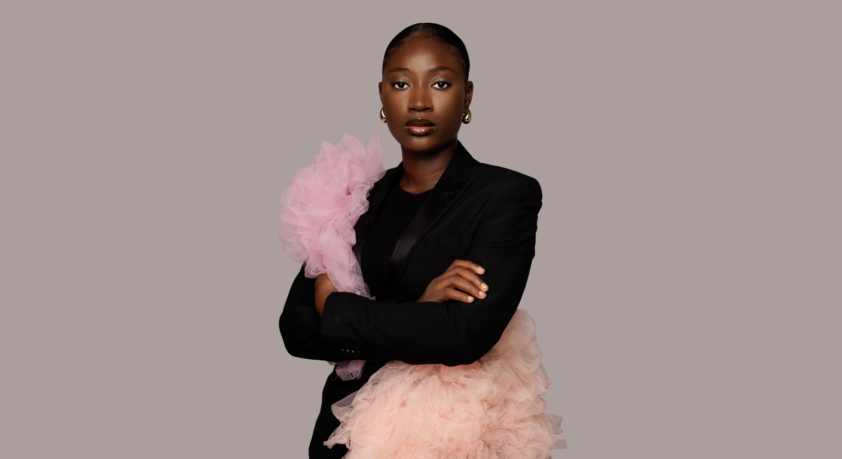
Why is Black hair important in Black history, you might ask? Black hair has always been a significant symbol of identity, resistance, spirituality, and community in Africa and the Black diaspora. In fact, historically, African hairstyles have been used to convey tribe, status, marital identity, and spirituality. This Black History Month, we are spotlighting Christele Codo Clotilde Pauline, a West African hairstylist, researching banana fibre as a substitute for synthetic hair extensions and turning salon waste into activism. Her work spans major productions, from Made in Lagos by Wizkid to sculptural hair art worn by Ciara.
Despite the fact that her work continues to travel widely, it has always found its way back home, to ancestry and to ritual. This is because, at the end of the day, her work is about preserving Black hair as living history. She is a cultural archivist, a public health advocate, and the founder of the Confidence Afro movement, building what could be Africa’s first living hairstyle library. The hair industry is worth billions globally, but synthetic extensions dominate markets, and Black women remain the primary consumers. Codo is asking harder questions about heritage, health, and ownership.
Who Is Christele Codo? A Journey Across Benin, Togo & Ghana
FAB: We are all a collection of stories walking around. Some of us have found the arc of our story, while others are still discovering it. Every day, we continue writing it. So far, what is your story? Where are you coming from?
Christele Codo: I am originally from Benin, Togo, and Ghana. Benin because my father is Beninese and I spent most of my childhood there. Along the way, I moved to Ghana to explore more of my mother’s culture. She is Ghanaian and Togolese.
I would say my journey began in high school. My mother always took care of our hair and styled it with African thread, the non stitched traditional styles. We went to school like that, and she constantly reminded us that our hair is a crown. She told us never to feel shy, even if people bullied or insulted us. She always said our hair was beautiful.
That stayed with me. No matter the hairstyle my mother gave me, I wore it with pride and confidence. Eventually, the other girls in school began changing how they wore their own hair. That influence pushed me further. I started doing my classmates’ hair in boarding school and charged between 300 and 500 CFA. I was studying science, yet I was already earning money through hairstyling.
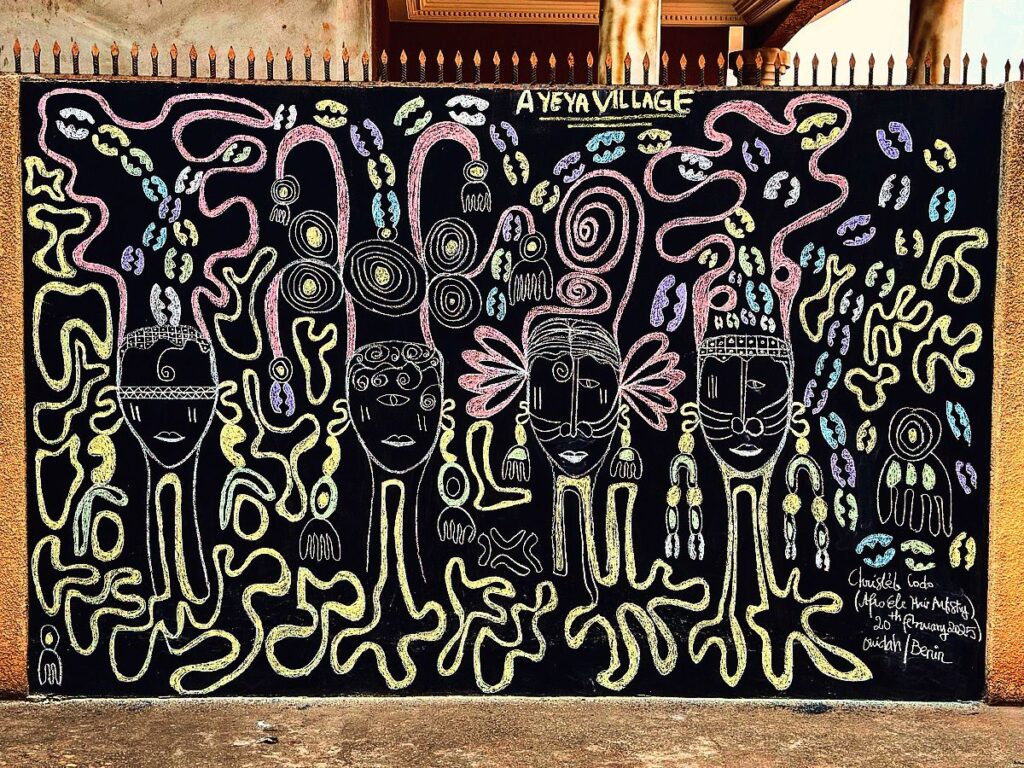
When my father heard about it, he asked me to stop and focus on my studies. I did, but that was when something else emerged. Around the age of thirteen to fifteen, I began drawing constantly. I drew on boards, on the floor, in the garage, even on my father’s car, which earned me punishment more than once. Later, I started drawing in my notebooks. One of my lecturers advised me to get a sketchbook, and that was how my drawing journey truly began.
Most of my drawings focused on women’s hairstyles. I would sketch them and write descriptions of how they should be positioned. That was when I discovered my ability to visualize and design hair. I promised myself that once I had the freedom to choose my path, I would return to hairstyling.
After earning my baccalaureate, my mother encouraged me to go to Ghana and explore her culture. I received a scholarship to study English for one year, then decided to stay. I later earned a degree in public health with a specialization in disease control.
While in university, I started the Confidence Afro movement. I wore my natural hair openly despite the humid weather in the forested area where my university was located. It rained often, but that never stopped me. My classmates noticed and admired my confidence. Many of them said they loved the hairstyles but lacked the courage to wear them. That was when I started styling their hair on campus and gradually built a client base.
I have always been deeply connected to my culture. I love dance, especially traditional dance. At the University of Ghana, I joined a group of student dancers. We exchanged culture through movement. I taught them Beninese dances, and they taught me Ghanaian dances. Through that community, I met many creatives and artists. I began styling the dancers’ hair, and soon artists reached out, asking me to work on their own looks.
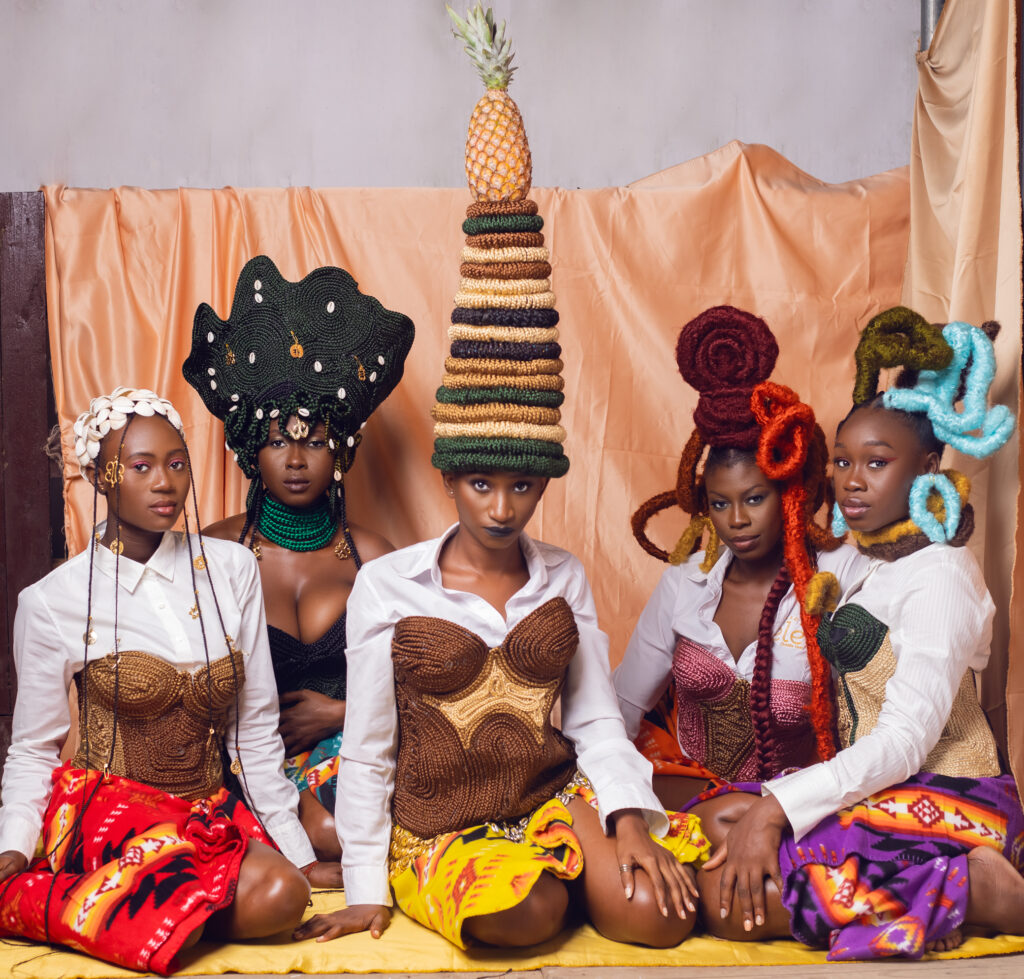
That was when I realized it was time to bring my sketches to life and create the hairstyles I had always imagined. In 2018, my journey as a professional hairstylist truly began. People started paying attention and asking questions about my work. At the time, I was not confident enough to explain the meaning behind my styles, so I focused on creating and learning.
I found my voice in 2021, after the lockdown. That period forced me to spend time alone, refine my craft, and work closely with friends and family. One of my university friends from Nigeria constantly encouraged me to take my work seriously. She pushed me out of my comfort zone and even registered me for my first hair show in Ghana, just before the lockdown in March.
That show brought me visibility on social media and confirmed that this path could take me somewhere meaningful. I balanced school and hairstyling until my first major breakthrough in 2021 on the Made in Lagos production. The team came to Ghana, and I worked on set for five days, exploring different hairstyles. That experience led to working on the Wizkid production. From that moment, I never looked back.
When people ask why I style hair the way I do, the answer is simple. I saw a gap in the creative space. I was raised in a deeply cultural environment, and I do not wear human hair wigs. I wanted to create hairstyles I would love to wear myself. That vision became a movement.
The journey has not been easy. Because I come from Benin, some people label my work as voodoo or associate it with witchcraft. The negative comments were difficult at first, but I eventually realized this is my culture and my calling. African hairstyles have existed for generations, yet few hair artists take the time to tell their stories. Why a hairstyle is named a certain way, how it connects to tribes, and how it has evolved across cultures.
That realization pushed me into research. I travel across Nigeria, Benin, Togo, Ghana, and Ivory Coast to study African hairstyles. For the past five years, I have been working toward building an African hairstyle library. This is the direction I am heading.
Through this work, I have developed a strong sense of purpose. In 2023, I won Miss Health Ghana Ambassador. My project focused on hair self care, a topic often overlooked in both the hair and beauty industries. Hair health is deeply connected to overall wellbeing, and hair also carries spiritual significance. I brought these elements together during the competition and won.
September 2025, I launched my self care hair kit. Confidence Afro is also evolving into a fully plant based hair care brand. What started as pure artistry has grown into purpose driven work centered on health and education. I now focus on teaching women how to care for their natural hair and explore alternative styles without relying on harsh chemicals or synthetic hair.
I am currently working toward launching my own hair care line, made from one hundred percent plant based. That is the journey I am on, and it is only just beginning.
The Spiritual and Ancestral Meaning of African Hairstyles
FAB: When did you first realize that hair could be a medium for storytelling and advocacy, both for yourself and for your community?
Christele Codo: People say our ancestors always find a way to send us messages or return to us. That is exactly how this felt for me. My mother is a hairstylist, and in her family, every woman has a connection to hair. My mother and my grandmother before her. My great aunt was once a hairstylist for the Royal Palace in Aného, Togo.
My mother told me she styled the hair of queen mothers and the king’s concubines. She also explained that she learned hairstyling in Kumasi, Ghana. She never met her own great aunt, but she grew up hearing stories about her. Her mother told her, “Your great aunt, whom we call Mimi or Nanga, also used to do hair.” My mother was surprised when she realized she had inherited that same calling.
Today, she often tells me, “You are living my dream.” In the eighties and nineties, during FESPACO and other film festivals, my mother styled hair on film sets. During festivals in Ouidah, including what we now call Voodoo Days, she would go to the beach and style people’s hair. Sometimes she stood outside a shop, and people stopped just to watch her work. Everyone knew her. She was famous for it.
In my era, she never sat me down to formally teach me hairstyling. Still, whenever she was in a salon, I sat beside her and watched, even when I was supposed to focus on my schoolwork. I watched her hands move. I absorbed everything.
I cannot pinpoint the exact moment I started braiding or doing cornrows. I only know that I began by doing my own hair at home. Even then, I did not see it as a calling. In high school, I styled my classmates’ hair, but I still did not feel it fully.
That changed when my father became very involved in directing my education and what I should focus on. At that point, I felt something missing. I realized I had been connected to hair for so long, and cutting myself off from it left a gap. That feeling pulled me toward drawing.
What I drew were not things I had seen before. They were not styles I had encountered in real life. It felt like déjà vu, like remembering something rather than inventing it. I was young, yet I felt as though I had drawn these things before. Later, in Ghana, when I began recreating those hairstyles on real people, that same feeling returned.
I would tell my mother what I was doing. One day, she called me and asked me to style one of her apprentices. Afterward, she explained the technique I had used and told me those styles were no longer commonly practiced. That moment confirmed it for me. I knew then that this was a calling.
From that point, I began studying more intentionally. I focused less on suppressing it and more on drawing and practicing these hairstyles. That was when I accepted that this was something I needed to do.
Interestingly, whenever I stop working with hair, I feel unwell. I also feel a strong need to teach. When I do not share what I know, I feel incomplete, like I am holding something back. That is when I realized this is not only a skill but a responsibility. I need to advocate for it and pass it on.
Whenever my family needs traditional hairstyles for ceremonies, they call me. Even my clients say the same thing. They tell me, “You have healing hands.” When I work on someone’s hair, I feel things. I often advise them on what to eat or what to add to their cooking to feel better overall.
That is how I understood this as heritage. I have to protect it, nurture it, and give it visibility. To ignore it would feel like rejecting a gift given to me by God and affirmed by my ancestors. What makes it even stronger is that no one formally taught me. It comes naturally, even during difficult moments in my life. When I experience anxiety, depression, or panic attacks, I draw hairstyles. That calms me, and ideas begin to flow.
Over time, I realized this heritage requires care and research. I need to connect with hairstylists across the world so we can come together and build an African hair heritage library. That is the long term vision.
FAB: So the foundational element of your work exists first in thought, in dreams, before it manifests physically?
Christele Codo: Yes. It begins in dreams, but also in my soul. I cannot live without that feeling. One of my challenges has been explaining it. At one point, I tried to suppress it because I felt the world would not understand. Even my family struggled to understand why I chose hair.
As I grew older, I learned to live with it and accept it fully. I stopped asking myself why. Before, I would ask, “Why me? Why not my sister?” Now I carry it without resistance.
Since accepting it, something unlocked creatively. It also taught me patience, resilience, and a different way of understanding womanhood. I remember a dream from my youth where a voice told me this craft would make me travel and shine a light on women who came before me, whose daughters now carry that heritage.
I see it as my duty to call on those women and remind them that we are here. We only need the right channel to connect.
During my travels, I have met more than twelve women who told me they were never taught hairstyling, yet their great grandmothers were hairstylists. Each encounter confirms that I am on the right path. It reassures me that this work matters and that I must keep going.
FAB: Let’s talk about Benin, Togo, and Ghana. These places are central to your story. What is the connection between each of them and your artistry today?
Christele Codo: My father is from Benin, and my mother is from Togo. Ghana also became part of my life very early on. As a child, I traveled constantly across these three countries. In Togo, we attended Yeke Yeke, a major cultural festival. In Ghana, my mother took me to Akan festivals, and we even traveled to Ivory Coast for cultural gatherings.
From a very young age, I was deeply exposed to tradition and ritual. That exposure shaped me into the woman I am today. Even now, I struggle to fully adapt to certain aspects of globalization because culture and tradition are so deeply rooted in everything I do.
When I left Benin to study in Ghana, the transition was difficult. I experienced serious culture shock. Ghana is a strongly Christian country, and that was very new to me. In Benin, religions coexist. Traditional beliefs, Christianity, and Islam live side by side in harmony. There is a strong sense of cohesion and mutual respect. I had never felt tension around belief systems until I moved to Ghana.
In Ghana, religion is more segmented. You see different Christian denominations, alongside Islam, but traditional culture is less visible in daily life. In Benin, tradition is the first thing you notice when you arrive. That difference affected me deeply, and I had to consciously adapt.
Culture also shows in how I dress. At university, I wore buba and Ankara outfits to school. People would stare and ask why I was dressed that way. That experience made me even more aware of how strongly culture defines identity.
Togo and Benin share a close bond. We often call each other cousins. I conducted extensive research in Togo, especially in Kpalimé and the northern regions. I spent time with women, learning how they care for hair and the herbs they use for purification and healing. Hair became the thread that led me across these regions, driven by curiosity and a need to understand.
I lived in Ghana for about ten years, and it truly became my second home. I learned so much through dance, fabric, and especially hair. Recently, I started a project that took me to Kumasi, Winneba, and Bolgatanga. I spent time observing women, watching how they style their own hair, and learning directly from their daily practices.
That is how Benin, Togo, and Ghana became inseparable from my creative journey. I feel at home in all three countries, and each one continues to shape my work.
Banana Fiber as a Future for Sustainable Hair
FAB: You mentioned earlier your exploration of banana fiber and plant based alternatives for Afro hair care. What drew you in that direction?
Christele Codo: That journey began during my university studies. I wanted to research natural hair care in a structured and intentional way. As I studied, I realized how deeply connected women’s health and hair truly are.
The beauty industry is worth billions, and women spend enormous amounts of money every year. Much of that wealth comes from Black women, yet very little consideration is given to whether the products we use are actually safe for our health.
Through my research, I discovered that many hair products contain high levels of harmful chemicals. The risks are serious. We see high rates of fibroids, cysts, breast cancer, and cervical cancer. Whether we acknowledge it or not, many of these conditions are linked to what we consume, both internally and externally, through our skin and hair.
I wanted to highlight the possibility that daily exposure to these substances plays a role in the alarming health risks women face, especially in Africa, where breast and cervical cancer cases are increasingly common.
That research led me to synthetic hair. I have worked with several hair brands over the years. Based on my experience, Outre Hair offers premium quality that respects the environment. I tested their products extensively. Previously known as Amina Togo, Outre produces some of the best synthetic premium hair available in Africa. Still, even with them, I wanted answers. I asked whether women’s health was being considered. Women are the primary users of extensions, so safety matters.
Those questions were often ignored. These companies generate millions, yet they avoid transparency. As a hairstylist providing services to clients, I believe it is my right to know whether the products sent to African markets are safe and properly approved.
When claims circulated on social media linking synthetic hair to cancer, no major brand stepped forward to clarify or debunk the allegations. That silence angered me. Women use these products daily. We help generate profits, yet no one takes responsibility for educating us.
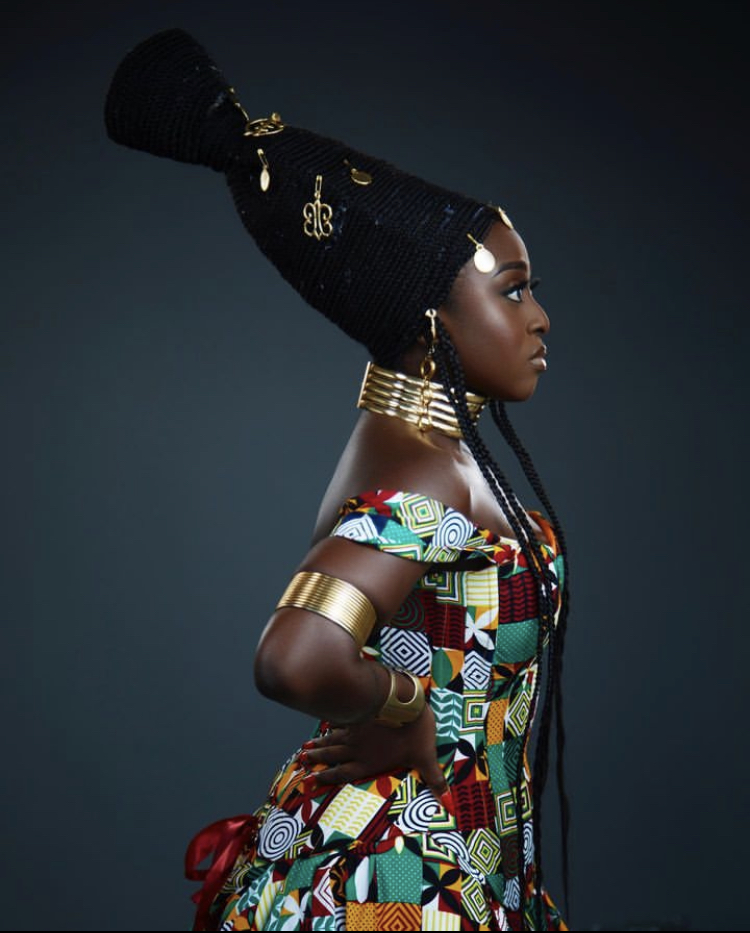
When I received no answers, I decided to search for plant based alternatives. I began by using one hundred percent cotton yarn, the same type used for crocheting clothes. I created an entire campaign showing women how to style their hair using yarn alone.
From there, I launched the Confidence Afro Movement. The goal was to showcase hairstyles achieved using only natural hair. It was challenging. Many women said their hair was too difficult to manage. I was fortunate because my mother taught me how to care for my hair. When mothers do not pass down that knowledge, young girls grow up disconnected from their natural hair.
Education is essential. I run awareness campaigns, use social media, and organize small community meetups. Training hairstylists is also crucial. When clients request certain styles, we can guide them toward healthier options.
This work is difficult because it challenges an industry that prioritizes profit over health. I actively encourage people not to choose money over well being.
In 2024, I traveled to a village in Benin to work with banana farmers. The goal was to create a recycling system that transforms banana trunks into fiber instead of burning them. I conducted multiple tests and experimented with different hairstyles using the fiber.
The process is ongoing. Banana fiber is not as soft as synthetic hair, so acceptance will take time. It requires unlearning old habits and embracing new ones. Scaling production also requires funding, government support, and machinery.
I researched machinery in China and India, but the costs are high. I also connected with banana fiber researchers in Kenya, Uganda, and Rwanda. Many wanted to sell their fiber, but I wanted collaboration and shared learning. That created challenges.
That is how the Chasing the Banana Fiber journey began. I realized I needed patience and a gradual approach. When introducing new ideas, people need time to see, touch, and understand them. Change happens step by step. I believe we will get there.
FAB: How does using natural hair change the way people experience and connect with it? What is the real difference in that relationship?
Christele Codo: The biggest difference is that synthetic hair is not biodegradable. It stays in the environment permanently. You see chickens walking around with it wrapped around their feet. Goats and other domestic animals eat it, and eventually, we consume those animals. Over time, this turns into microplastics that enter our digestive systems.
Natural fiber works very differently. You can reuse it many times and repurpose it across different industries. You can use it in fashion, turn it into baskets, shoes, or other functional items. At the end of its lifecycle, when it comes into contact with the soil, it simply degrades and returns to the earth.
It will not be easy to stop people from using synthetic hair. That is why the integration of banana fiber into the beauty industry needs to start now. If we begin today, then in five, ten, or fifteen years, it can become normal. Change like this is gradual.
I push this idea because I do not want future generations of women to grow up attached to synthetic hair culture the way my generation did. I would love to see young girls wear their natural hair with pride and confidence, using natural alternatives to style it. Many women relax their hair just to match synthetic textures, and chemical relaxers alone expose us to serious health risks.
Years of exposure to these chemicals affect the body in ways we do not immediately see or feel. Biological changes happen quietly. If we can slow down the rate of fibroids or reduce exposure to cancer causing substances, then we must start applying these alternatives now. The goal is that in ten, twenty, or thirty years, we no longer see such high rates of these conditions.
As a hair artist and a health advocate, I feel responsible for highlighting these conversations. Many regulatory bodies approve products that are not truly safe. The same thing happened with bleaching creams. They were approved for years, profits were made, and only later were they banned when the damage became undeniable. By then, it was already too late, and women paid the price. Men are rarely affected at the same scale because they are not the primary consumers of beauty products.
Recycling Synthetic Hair Into Art Installations
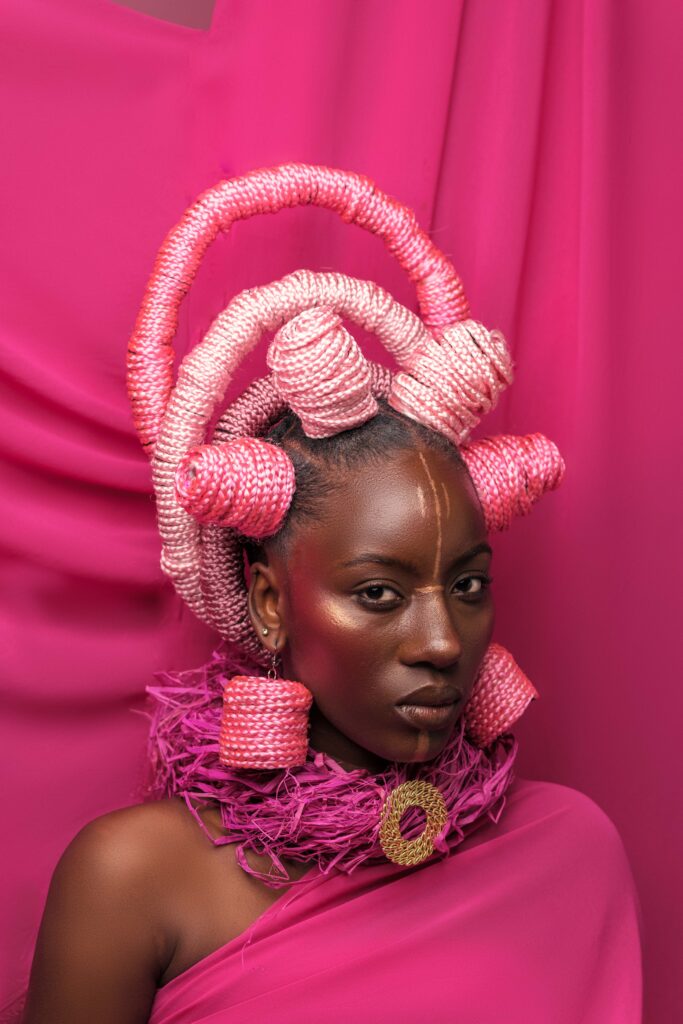
FAB: You are also transforming discarded synthetic hair into art installations. What have you learned from collecting hair debris in salons, and what stories have emerged through that process?
Christele Codo: This started from drawing. As a hairstylist working on music videos and films, hairstyles are often removed after shooting and forgotten. I kept asking myself how to preserve these creations that meant so much to me. How do I immortalize what I draw?
Over the years, my studio filled with discarded hair. It was just sitting there, lifeless. I decided to transform it into structures that could tell stories and connect with people emotionally. I began shaping the hair into balls, lines, and large scale forms.
The process is very manual, and that physical engagement creates a deep sense of satisfaction. Working with my hands pushes me to explore more. Each piece led to new techniques and ideas. As the work grew larger, I needed more material. Some of my biggest installations were over four meters long.
I started walking around my neighborhood, asking salons if they had hair they were about to throw away. I collected it in large bags, sometimes sweeping salons for free just to take the hair. At home, I washed, sorted, and separated it. Some strands were reusable, others were too damaged and served different purposes.
I combined the hair with clay, dried plants, coconut husks, and branches. The materials came together to form new structures. This became my way of recycling synthetic hair and also a way to speak directly to hairstylists about responsibility.
I ask clients to package their removed braids and send them to me so I can transform them into meaningful pieces. I use color intentionally. Pink represents breast cancer awareness. Teal speaks to cervical cancer. Each color carries a message.
At Madina Market, near the bus station, there is a group of women who braid hair under a tree. They discard large amounts of hair daily. I asked to spend a day with them. I sat there working on my university assignments, observing, assisting, and offering advice.
I encouraged them to ask clients to bring personal combs and needles. I taught them to wash hair with apple cider vinegar before use. Many work without kettles or proper sanitation because they operate in open markets. I also advised them to get regular health checkups. As hairstylists, we risk cuts and exposure to infections like HIV or hepatitis without even realizing it.
Because many of these women are illiterate, I use colors to teach health awareness. Blue, red, purple, and pink each represent different conditions. When a client chooses pink, it opens a conversation about breast health and self examination.
Through hair, education becomes possible. Awareness spreads naturally. Recycling becomes activism. I collect hair across Accra to create wearable art, corsets, dresses, and sculptural pieces. These works speak about resilience.
Women spend hours doing micro braids, not just for money, but because we love working with our hands. That love, patience, endurance, and entrepreneurial spirit have existed for generations. I bring all of that into my work to honor the women who came before me and those who will come after.
Globally, I want this work to spark conversations about climate change, sustainability, and responsibility within the beauty industry. We spend so much money on hair without considering the environment or the systems around us. Recycling hair became my way of addressing all of that and passing the message forward.
Working on Made in Lagos and Styling Ciara
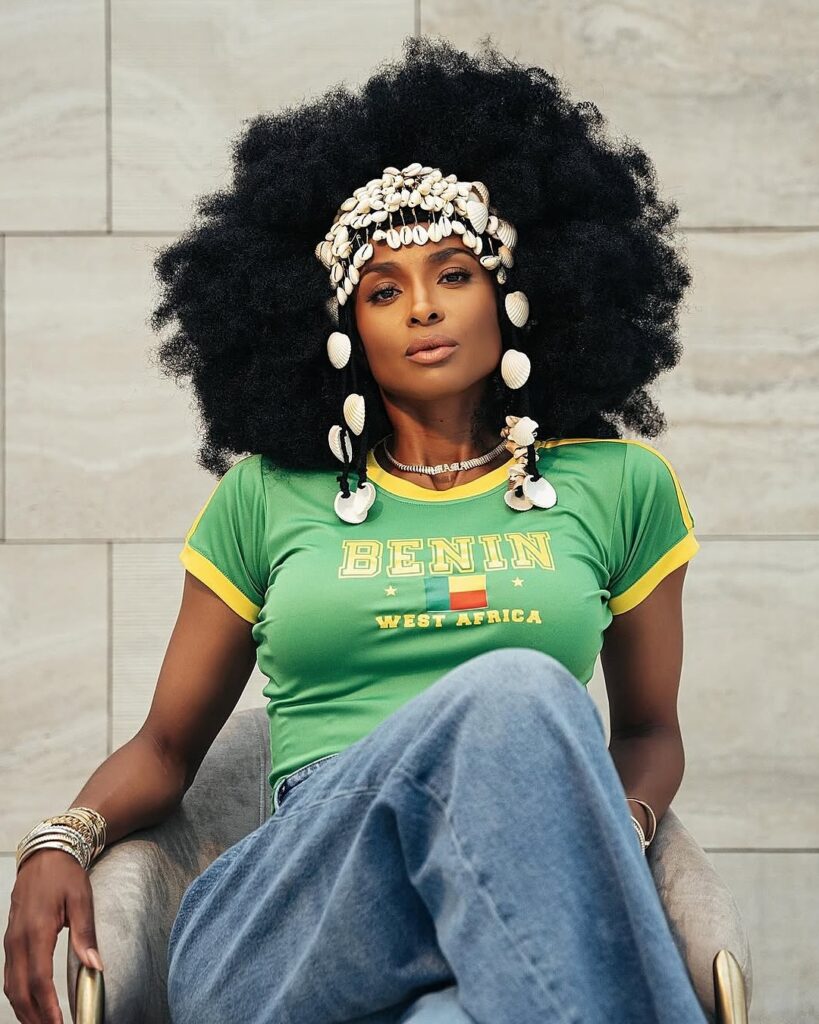
FAB: A diligent person stands before kings and not mere men. Your work has taken you beyond Africa and led to collaborations with international stars like Ciara. What was that experience like, and what did it teach you?
Christele Codo: It did not surprise me that the opportunity came. What surprised me was myself. Mentors always emphasize consistency, and I live by that daily. But exploration is just as important.
I cannot stay in one place for too long. Movement fuels me. One week I am in Ghana, the next in Togo, then Benin or Nigeria. I feel called to move, to connect, and to create.
I traveled to Benin to collaborate with local creatives. Benin has extraordinary talent, I wanted to showcase photographers, makeup artists, and models to audiences in Ghana, the diaspora, the United States, and the Caribbean.
We created content purely through collaboration, without spending money. That work eventually reached Ciara’s team, and she loved the hair.
The style was one I had already drawn and deeply connected to emotionally. Half of it used Afro hair from OUTRE, which produces the most eco conscious quality hair I have worked with. The base was cotton wool, sewn together with shells sourced from the sea. I chose cotton because my brand is evolving toward being fully plant based.
The piece symbolized transition. It showed that we can move from synthetic dependence to more sustainable, natural approaches. The response was overwhelming, and many people now associate me with that work.
Every accessory and material I use carries intention. It is my subtle way of communicating a message. That experience reaffirmed that when you stay consistent, curious, and intentional, the work will travel further than you ever imagined.
FAB: When you sit down and reflect on that experience, what has changed for you since then? Does it feel like a burden now that people say, “Everyone knows Christele Codo, she did Ciara’s hair”?
Christele Codo: I still see it as the beginning. Every step in the evolution of my brand feels like a starting point to me. I asked myself many questions afterward. How did she find me? Was it Instagram? Was it someone recommending my work? But I eventually understood that when you are truly good at what you do, people will always find a way to reach you.
Collaboration played a huge role in that moment. When you open yourself up and share your skills with others, it attracts more people naturally.
FAB: That is true.
Christele Codo: That collaboration in Benin was completely organic. None of us spent money. No one said, “I will pay the model” or “I will pay the photographer.” We all simply wanted to combine our knowledge and create something meaningful. The content went viral, and that is how her team discovered the work and reached out.
Internally, a lot changed for me after that. I became even more intentional about the content I share. I deepened my storytelling through hairstyling because I realized that if more people were paying attention, then I had a responsibility to share more knowledge and more of my history. It reached the right audience, especially people in the diaspora, and that made me feel more comfortable and affirmed.
What meant the most to me was when people said, “I felt connected to the hairstyle you created for Ciara.” That connection is everything. People saw themselves in the story I was telling.
It never got to my head. Not at all. What also stood out was how humble she was. I have worked with many celebrities, but my experience with her was different. It felt natural and human. I did not even plan to charge her, but after the work was done I was paid . That alone meant a lot.
I have worked with celebrities who promise visibility instead of payment, and you just let it go. In her case, she paid me and tagged me without me asking. Many celebrities do not even tag you after paying. Everything about that experience felt free and respectful.
She treated me like a human being, not just a service provider. Often, service providers are seen only for what they offer. With the kind of hairstyling I do, energy matters. I feel the room. I feel the person. She gave me full creative freedom and told me to explore her style and create what felt right. That trust is rare.
She came all the way from the United States, and that first experience with her was genuinely beautiful. She was kind, open, and authentic. I remember thinking, “Please, let all my clients be like this.”
FAB: Amen to that. A Nigerian artist once said that when fame comes, no one teaches you how to carry it. People assume being a celebrity means being proud, harsh, or dismissive. Is that the same with celebrities in Ghana and Benin?
Christele Codo: In Ghana, there are wonderful people. Sister Debbie, for example, was one of my first celebrity clients. She later became like a sister to me. She is my best friend and the person I confide in the most. She introduced me to many of the celebrities I have worked with and always advised me on how to approach each client calmly and professionally.
Ghana is very diverse, so I always prepare myself mentally before working. Not everyone is kind or patient. Some people just want their hair done and nothing else. As a service provider, I learned how to make myself almost invisible in certain spaces.
When I walk into a room, I read it carefully and adjust myself. Even when I am quiet, my presence can be felt. Sometimes that creates tension, especially when multiple creatives are working together. I have learned not to compete for attention. I focus on my work, do it well, and leave.
I also teach my students this. Every room has its energy, and you must learn how to adapt to it. That skill has saved me many times.
Black History Month, The Cultural Politics of Black Hair
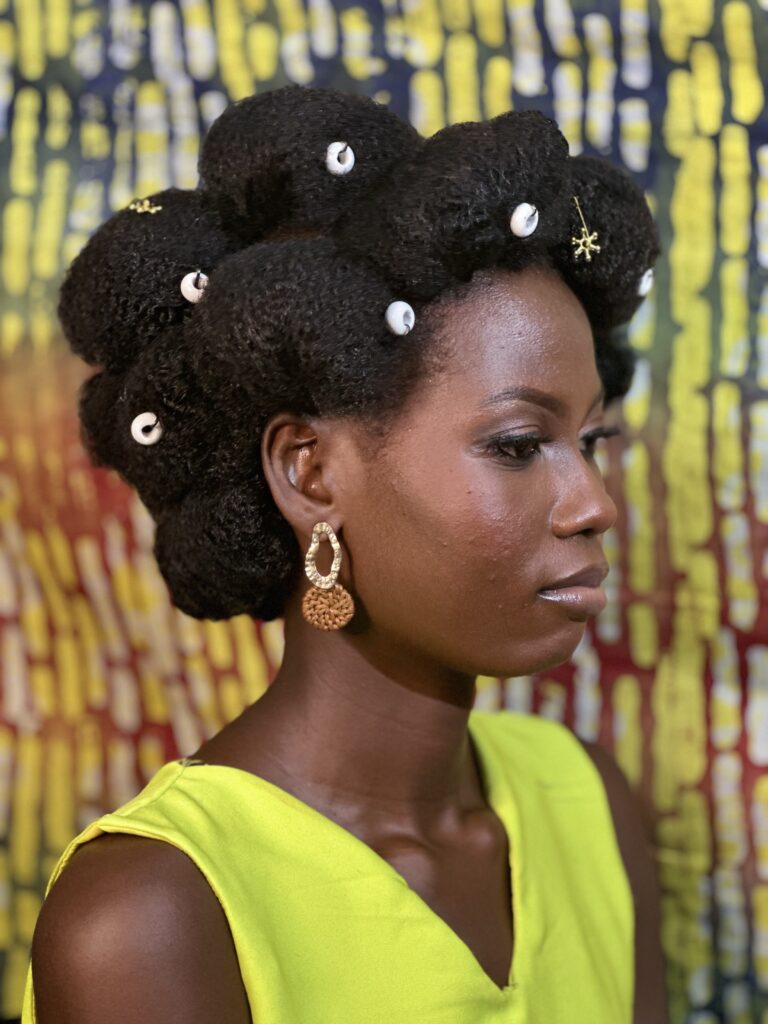
FAB: This year marks one hundred years of Black History Month. When you think about hair across that long history, what do you believe it has carried for Black people beyond beauty?
Christele Codo: A lot of work has already been done. African hair is visible everywhere now. But reaching one hundred years is about ownership. When I reflect on it, I ask myself what still needs to be done.
Black entrepreneurs are doing amazing work globally, but in the hair industry, we need stronger support for Black owned and women owned businesses. In Ghana, many hair brands sell outside the country instead of within it. Africans often do not use products made by Africans.
For me, the solution is simple. We need to intentionally support Black owned hair brands and use our own products.
FAB: That issue keeps coming up. Why do you think Africans struggle to use African made products, and what is the way forward?
Christele Codo: Collaboration is key. Talking about products alone does not solve the problem. Last September, during my Confidence Afro campaign, I invited several natural hair product owners to participate. Many people said they had no idea such brands existed.
By bringing everyone together in one space, people could see, learn, and buy directly. Pop ups, joint events, and shared platforms create visibility and trust.
Another issue is limited access to workshops. I organize workshops, but without enough visibility, attendance can be low. That is why I reach out to creative spaces to host shared sessions where their audiences can also participate. On a larger scale, partnerships with bigger organizations could help expand these conversations globally.
FAB: Do you think fear plays a role in the lack of collaboration, even between mentors and apprentices?
Christele Codo: Absolutely. I do not subscribe to that mindset, but I have experienced it firsthand. Two years ago, I traveled to Come in Benin to learn how to produce banana fiber. I paid for the training, but the instructor was rarely available. For almost a month, I learned only basic mechanical steps from other apprentices.
On the final day, when I finally spoke with the instructor, he admitted he did not want to teach everything because he feared we might get funding and surpass him. That was painful to hear, especially since he had also learned the process from elsewhere.
I believe everyone is at a different stage. Teaching others does not erase your value. I left that experience feeling frustrated and disappointed. I had paid, but I did not receive the full knowledge I came for.
That experience shaped how I teach today. When students come to me, I tell them clearly that passion and consistency are essential. I teach openly because I do not want to repeat the cycle of gatekeeping.
The same issue exists with collaboration. Many brands see energy and curiosity as a threat. Responses are slow, and openness is rare. I even reached out to a company in Uganda producing banana fiber. I asked to visit and learn. They were only interested in selling fiber at extremely high prices, not sharing knowledge.
Most people focus solely on profit instead of growth through collaboration. That is the reality I face in my space, and it remains one of the biggest challenges.
FAB: So you do not do that to your own students. Do you have any ideas on how we can move past this? I will use the word insecurity and ask how we find a way out.
Christele Codo: I think much of it comes down to lack of funds. I have been doing hair professionally for almost seven years now, and most of what I have built has come directly from my own pocket. My projects have been self funded. To reach the level I am at today, I invested a lot of money, and that reality makes many people hesitant to help others.
When someone is struggling financially every day, the fear becomes, “If I show someone my craft, they might make more money than I do.” There is also a clear social divide. We have people from upper class backgrounds, the middle class, and those who have very little. As an entrepreneur pushing every day, I do not have the same tools or connections as someone who comes from a privileged background. If that person enters my space, they may move faster than I can. That gap makes people afraid to share knowledge.
Even my students notice it. Some of them say, “Madam, you are showing us everything.” I always tell them that we all come from different backgrounds. Sometimes I am overwhelmed with clients and I cannot serve everyone. When that happens, I see the work as a chain. When I teach you, you go into your own space and serve people I may never meet in my lifetime.
If someone else can offer that service elsewhere, it reduces pressure on me and allows me to focus on my own clientele. That is how I see it. We all come from different places.
FAB: That is an interesting perspective.
Christele Codo: We all know different people who still need the same services. Teaching my students creates a chain of work that spreads awareness of African hairstyles. We can all do similar work and still thrive in our own spaces. I cannot take all the money in the world anyway.
FAB: Absolutely.
Christele Codo: I tell my students that just as I have been open with them, they must also be open with others. I use myself as an example. I started purely out of passion and love, and it was difficult for me to put a price on my work. If I install a hairstyle and charge fifty thousand, I often feel that it does not fully reflect its value.
I teach them that at the beginning, it is not about money. It is about the satisfaction your client feels. Pricing evolves with time. In your first year, you may charge ten thousand. Years later, that will change. The same thinking should apply to how you share knowledge.
Impact matters more than money. I have clients who, despite my university education, still want their children to come and learn from me. That means a lot to me. It shows a bridge between generations. I am a millennial, and the type of people who want to learn is changing. My students will take what I teach them and transform it into something very different from what I do.
That is the impact I seek. I ask them what they learned last week and how they can transform it using tools like AI or Canva. I want them to push the work further than I have. I always encourage them to collaborate with technology, jewelry, animation, or any other field that can coexist with hair. That is how I see progress.
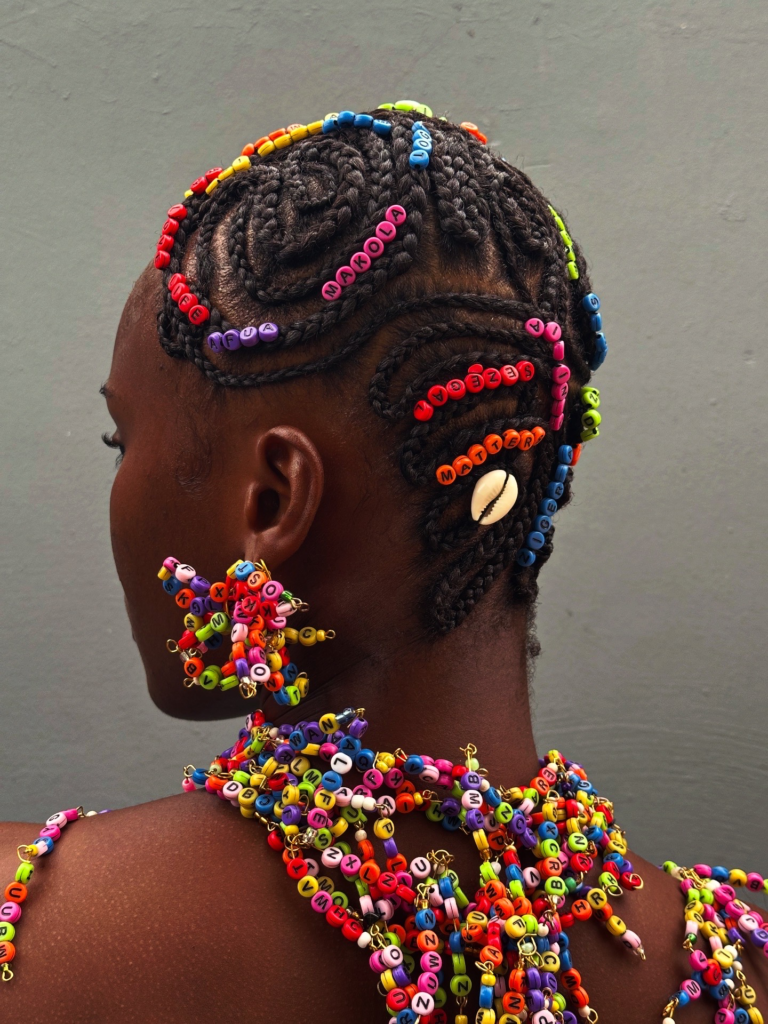
FAB: Let me follow that line of thought. In the modern world, your work challenges the idea that modern must mean Western. How does ancestral African knowledge fit into the future of beauty?
Christele Codo: It plays a huge role. In 2024, I applied for a Creation Africa grant and was selected as one of thirty participants out of more than twelve thousand applicants. That alone showed me that my work is needed.
During the incubation and pitching process, I was not selected among the final fifteen. I later realized that I had not yet reached the level they expected, and that is still part of my learning journey.
African hair history is essential to our identity. Hair and beauty shape how we understand ourselves as Black people. Hair has always been a form of communication. It shows where someone comes from, their community, and sometimes their status. That knowledge still matters today.
Unfortunately, Western techniques dominate the current narrative. That is changing, but African hair and beauty still need more space. We no longer practice face scarification, but we can reinterpret those symbols through makeup and hairstyling. Tribal marks can become makeup designs that reflect identity.
In my work, I do this through hairstyles. For me, it is about Africans reconnecting with spirituality and with themselves.
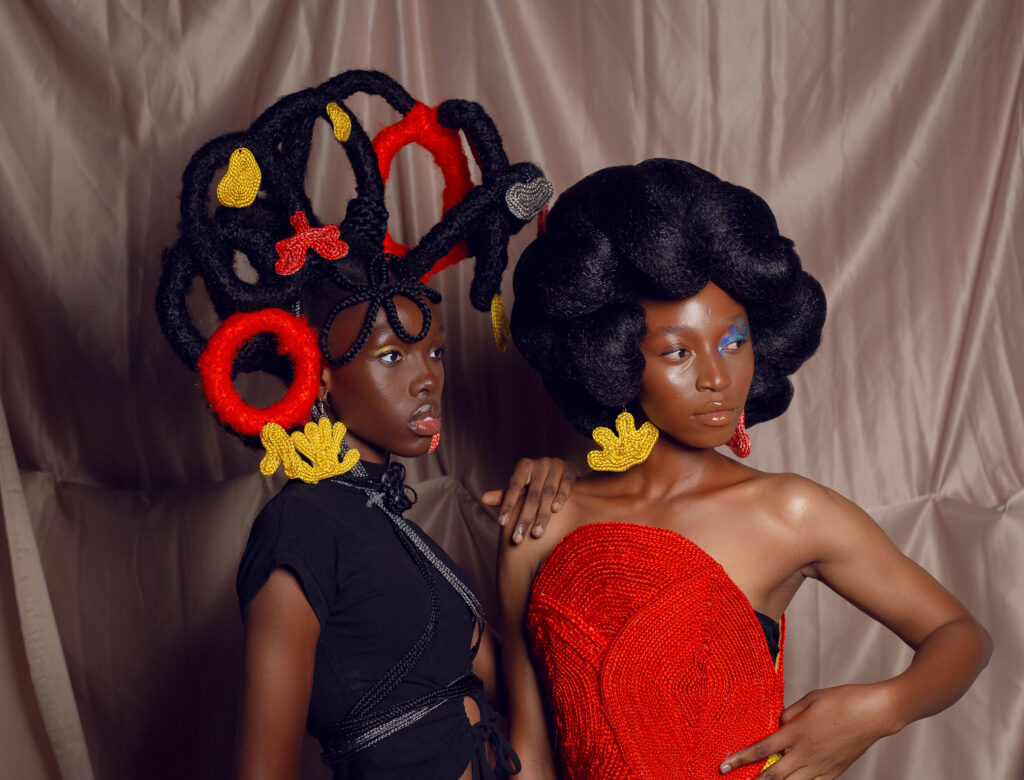
FAB: Why do you think Black hair has carried so much political and emotional weight across generations?
Christele Codo: Oppression plays a big role. A university classmate of mine was born with red hair and Black skin. Teachers constantly forced him to cut his hair because they thought he dyed it. That was his natural hair.
When my own hair grew thick, people called it bush hair. I felt ashamed and kept cutting it. Almost all of us have experienced hair related oppression at some point. Imagine how much worse it was one or two hundred years ago.
Even today, many workplaces expect hair to fit European standards. I believe we should have African standards that allow professionalism without erasing identity. That is why I organize mother and daughter workshops. Mothers need to teach their children confidence early, so they grow up owning their hair and their identity.
FAB: If you were writing a policy note today, what three standards would you include?
Christele Codo: The first would be self love. Accept yourself fully, from head to toe. Skin color, hair texture, everything. Black hair comes in many forms, not only dense or coiled textures.
The second would be building your own hair identity. I teach personal hair branding, especially for public figures. People can have one or several signature styles that make them feel powerful and authentic.
The third is ownership. Own who you are in every space you enter. When you do that, you inspire others to do the same. Celebrities have a huge influence, and when they embrace their identity, thousands of people watch and learn. That is why I enjoy working with them. Even small changes can create impact.
FAB: Black hair, in one word, is what to you?
Christele Codo: Safeguard.
FAB: Excellent.
Christele Codo: Everything I do is about safeguarding. I archive constantly. My mother was a hairstylist, and I have albums of her work from decades ago. She started documenting because I encouraged her to. Clients would go to photo studios to capture their hairstyles. I still have those Kodak and Fuji prints.
That archive is precious to me. It keeps me accountable and reminds me why I do this work. Safeguarding my heritage is my responsibility.
FAB: If we were having this conversation fifty years from now, what change would you hope has already happened globally?
Christele Codo: I see myself as a messenger. I will do my part, and others will continue the work. My dream is for every African country to have a hair library or museum. A place where hairstyles from different regions are documented with their meanings and histories.
That is why I am currently in Benin, building my own hair library. I travel, observe women doing their hair, ask questions, and document everything. In ten or fifty years, I hope countries like Benin, Ghana, Nigeria, Togo, and Senegal will have these spaces.
We talk about tourism and history, but ancestral African beauty has not been fully explored. I want future generations to learn from it, build on it, and even see African hairstyles represented in animation and storytelling.
Our Audience Asked
Who is Christèle Codo?
Christèle Codo is a West African hairstylist, sustainability advocate, and founder of the Confidence Afro Movement.
What is the Confidence Afro Movement?
It is an initiative promoting natural Afro hair styling, plant-based alternatives, and African hair heritage preservation.
What is banana fiber hair?
Banana fiber is a biodegradable plant-based material Christèle is researching as an eco-friendly alternative to synthetic hair extensions.
Did Christèle Codo style Ciara’s hair?
Yes, she collaborated with Ciara’s team on a culturally inspired hairstyle that gained international recognition.
What is her African Hair Heritage Library project?
It is a long-term initiative to document and archive traditional African hairstyles across countries like Benin, Ghana, Togo, and Nigeria.