
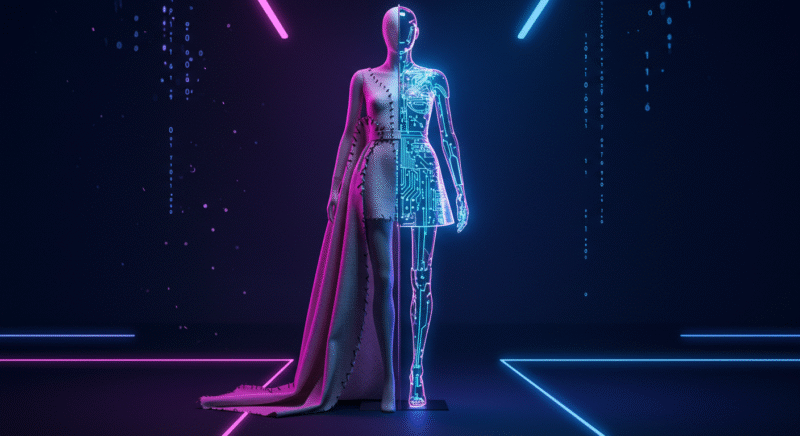
I was sitting in a cafe across from a young designer who sketched feverishly in a notebook. She dreamt of owning a couture atelier. But then she placed her phone on the table and said, ‘I just used AI to create 30 dress variations in ten minutes.’ That moment made me realize that the future of fashion isn’t just handcrafted; it’s co-created with algorithms. By 2026, AI in fashion industry will no longer be a supporting tool; it will redefine the way entire sectors operate. Here are five areas where that transformation will be most vivid.
1. Design & Trend Forecasting with AI in Fashion
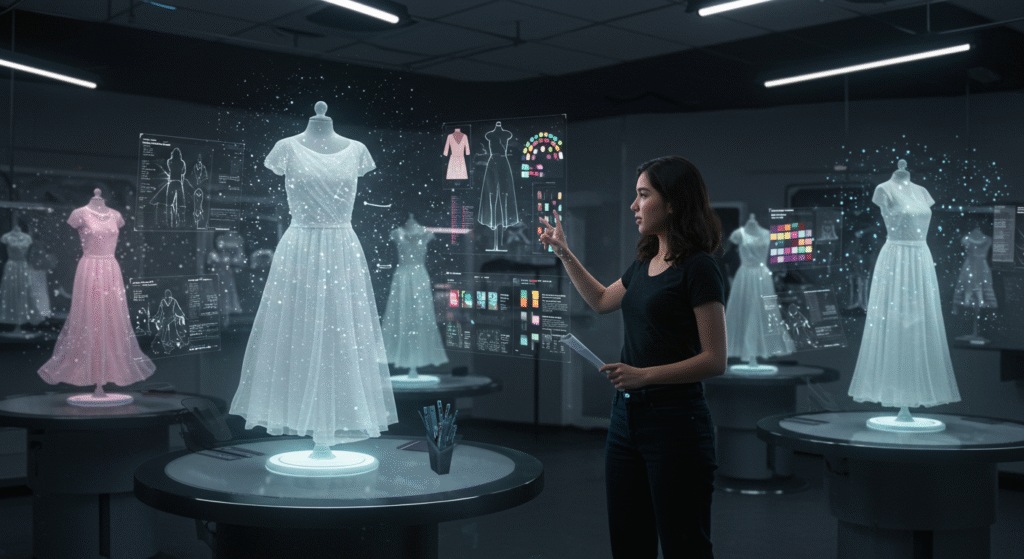
Designing by instinct will feel quaint. According to Wifi Talents, AI tools are already capable of predicting trends with up to 90% accuracy and shortening design cycles by 70%. Imagine uploading a mood board and getting back multiple style drafts, colour palettes, and tech packs ready for production. Just like that, your sketches evolve into showpieces. The future creative director might be part human, part algorithm.
2. Virtual Try-On & Reduced Returns
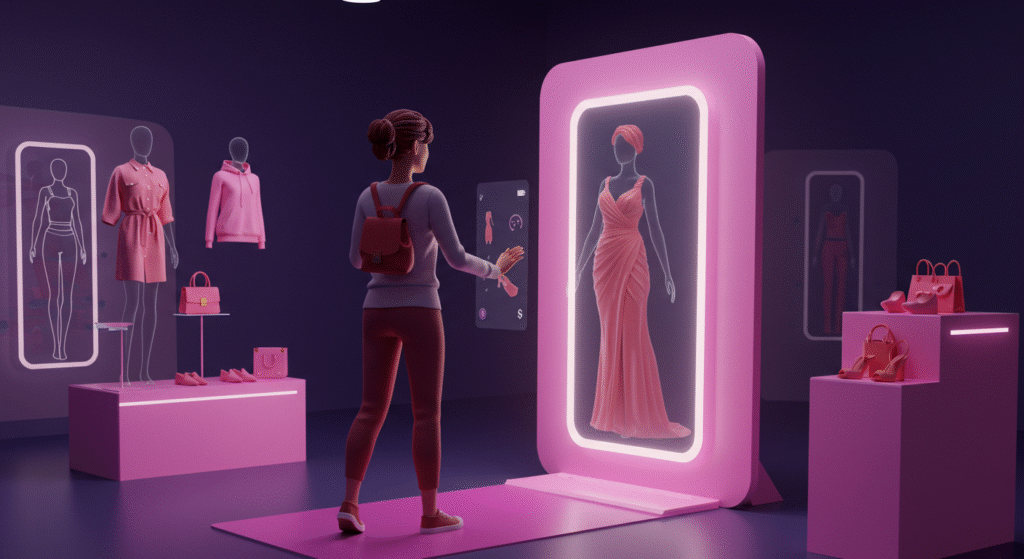
In e-commerce, nothing drains margins like returns. Not anymore; virtual fitting rooms powered by AI slashed return rates by up to 30% (Gitnux). And it increased customer engagement by 40% (Wifitalents). Soon, shoppers will swipe through styles on their screens and see themselves in outfits in real time, no dressing room required. It is convenience and confidence, wrapped in pixels.
Must Read
Can AI Be an Artist? The Debate Changing Art Forever in 2025
Personalized Nutrition: How AI Is Creating Diets for Your DNA
3. AI Supply Chain and Inventory Optimization in Fashion
Every misorder, every forgotten SKU, eats into profit. AI is changing that. It can reduce forecasting errors by up to 50% (ZipDo), slash product launch time by 35% (Gitnux), and cut operational costs by 20% (Gitnux). Think of a world where fast-fashion giants like Shein are outrun only by supply chains powered by real-time algorithms. That is efficiency at its finest.
4. Automated Production & On-Demand Fashion Manufacturing
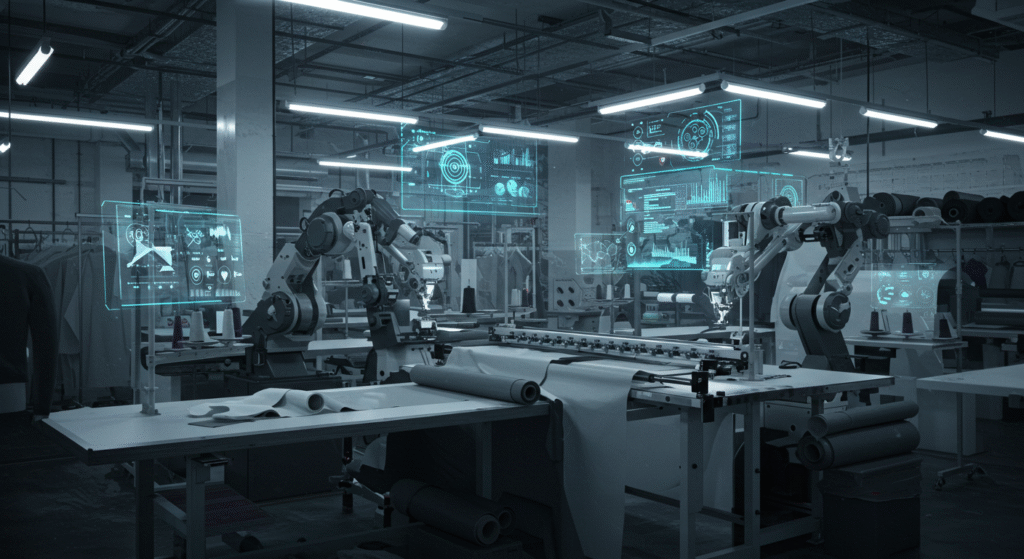
Walk into a factory in 2026 and you might see fewer people and more robots. AI in manufacturing is speeding up production, ensuring precision, and cutting waste. Sustainability won’t just be a buzzword. Digital fashion factories will align production with demand, reducing surplus and environmental cost (arXiv). It’s localized, quick, and lean. It also conforms to the principles of conscious fashion.
5. Digital Models & AI-Generated Campaigns
Models are still beautiful. But AI-generated “glam bots” are already stepping into ad campaigns, offering endless variations without fatigue (New York Post). Brands like Mango are using synthetic faces more often now. Soon, image rights, casting, and retouching might all be managed by code, reducing costs and expanding diversity in unseen ways. It feels uncanny. It feels powerful.
AI isn’t going to replace fashion. It will redefine it. The designer’s pen will exist alongside the algorithm’s output. Factories will hum with smart technologies. Stores will dress screens before they dress bodies. For investors and entrepreneurs.