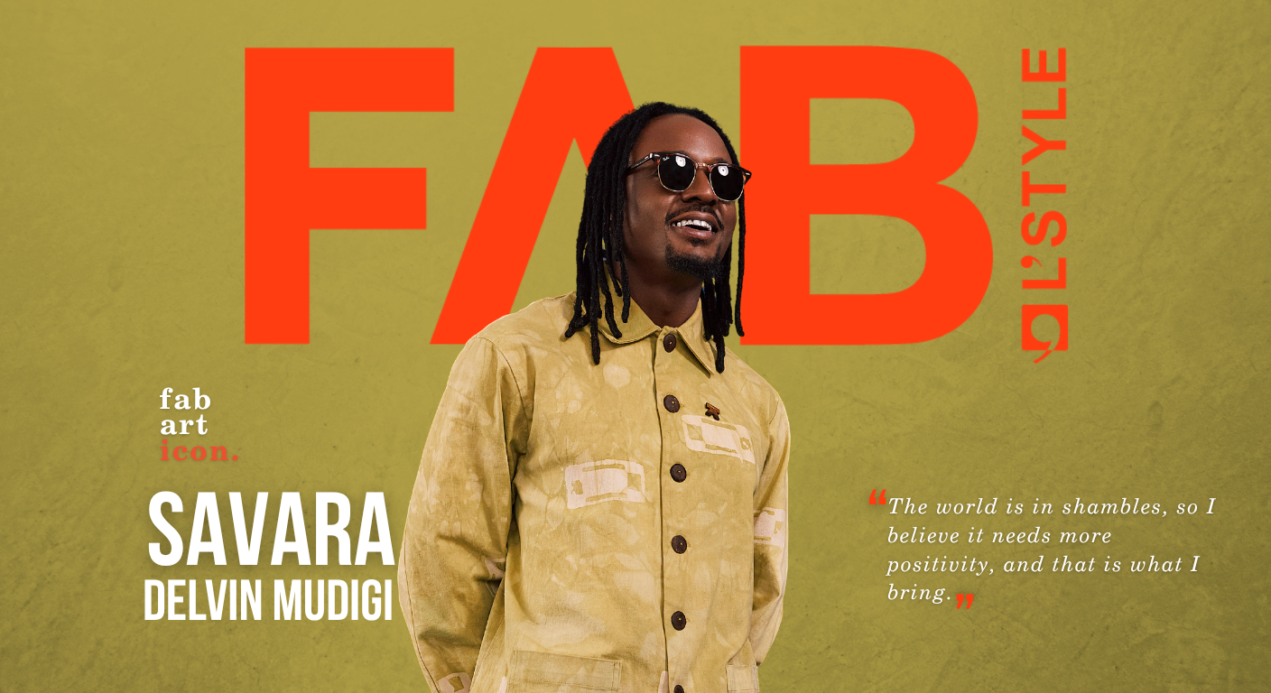


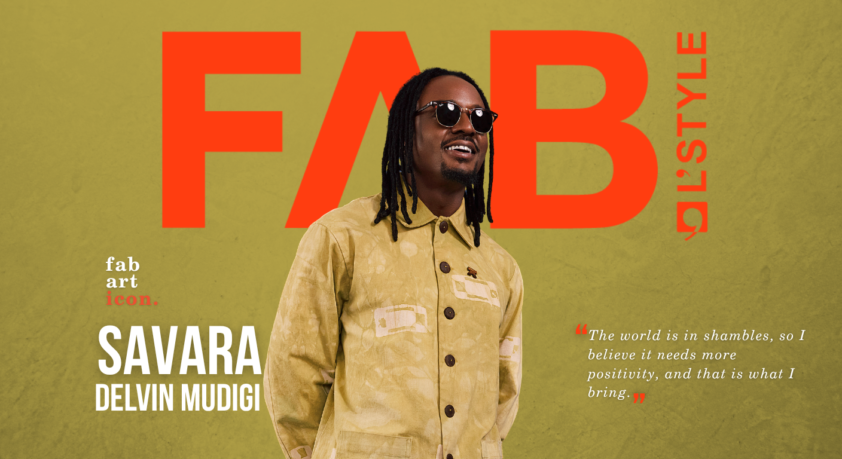
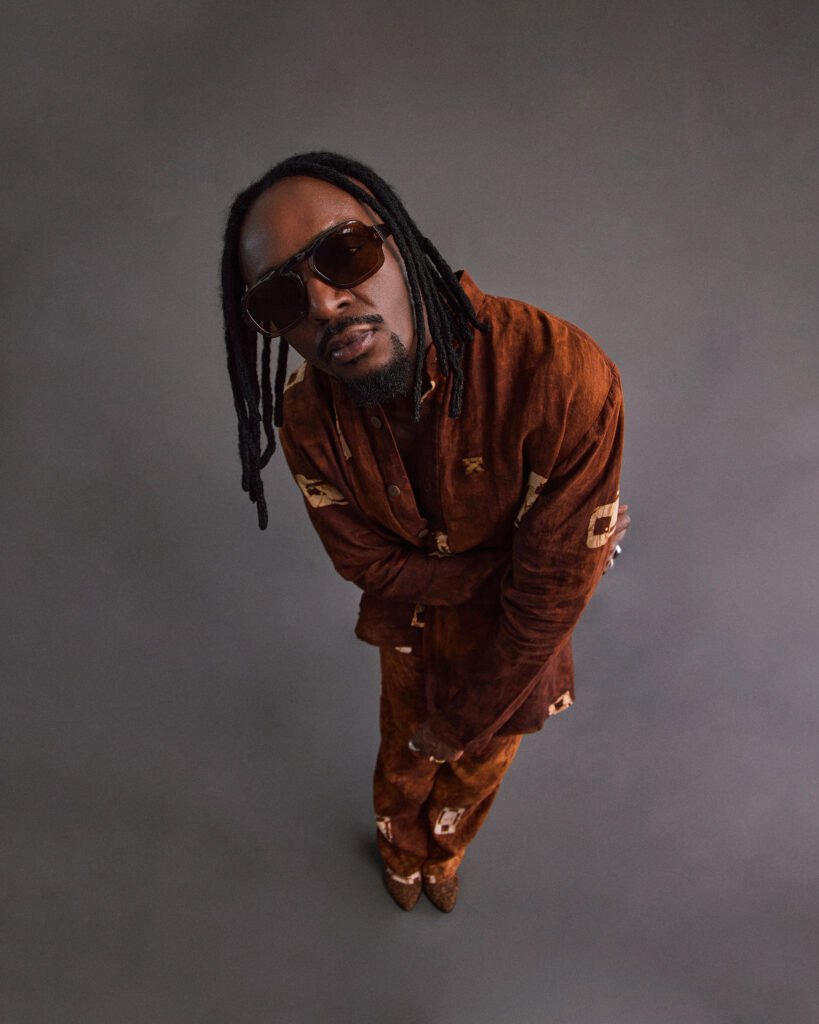
We met Delvin Savara Mudigi, a Grammy-certified artist and cultural entrepreneur, in Vienna on a sun-bright afternoon, a few hours before he was due on stage. If that timing tells you anything, it is this: there are artists who need quiet before a performance, and then there are those who seem to draw their energy from being present, reading a city, speaking to people, and moving through the world with the kind of attention that later becomes music.
Savara, the Nairobi-born musician, entrepreneur and former member of Sauti Sol, is firmly the second kind. Kenya’s music audience streamed more than 203 million hours on Spotify in 2025, with listenership growing by an average of 68% each year since the platform launched in the country in 2021. Yet, for Savara, the more urgent conversation was never about streaming numbers. It was about what comes next: the creative infrastructure, policy frameworks, cultural institutions and collective confidence needed to help East African music not only travel, but endure.
In the hours before his Vienna concert, he spoke with FAB L’Style about the sound of East Africa, the responsibility that comes with being an artist who is also a builder, the confidence of a generation that has stopped waiting for foreign validation, and why, when the storm finally comes that evening, it feels more like a proclamation than a performance.
Savara Is Not Only a Name. It Is a Movement
FAB: You’re having a concert here in Vienna. Everybody is excited, including me. Before we get into the concert, tell us, who is Savara?
Savara: Savara is a multifaceted artist and entrepreneur from Nairobi, Kenya, in East Africa. I am a lover of life, and I represent the motherland by enjoying life and living it to the fullest. The world is in shambles, so I believe it needs more positivity, and that is what I bring.
I am also involved in building the creative economy back home. As I travel, I do my research, meet new people, and learn from different cultures. I bring those experiences back to the work I do. That is Savara in a nutshell.
FAB: You’re performing in a few hours, so let’s start easy. What kind of mood is Savara in today? Are you calm before the show, or do you need some chaos to get into performance mode?
Savara: It depends on the situation and the weather. It is sunny today, so the energy is already good. I have also been speaking to many beautiful people, so I do not need to create extra energy.
I like to adapt to my surroundings. Today, the sun is shining, people are smiling, and they are ready to come out and dance. The energy is already here. If this is the calm, imagine what the storm will be like.
FAB: This is calm for us, so we better keep the storm inside. What is one thing people would be surprised to learn about you when you are not on stage?
Savara: People see the artist, but there is a lot more behind Savara. I am involved in building creative infrastructure back home. There is a strong entrepreneurial side, a policy side, and a well-educated team working around me.
Savara is not only a name. It is a movement. I represent many young people in Kenya who are doing important work to take East Africa to the world. Education is also a major part of what we do because we want to help shape the next generation.
FAB: Young people need that kind of motivation. Coming from East Africa, it is also important to create communities where young people can feel empowered, learn from others, and share what they know.
Savara: Exactly. That is why I keep talking about the youth. We have to learn from them too. We have to interact with Gen Z because this is an interactive world. Everyone has something to contribute, and I like that we are becoming more inclusive.
Reading a City Through Its People, Food and Architecture
FAB: When you walk into a new city, what catches your attention first? The music, people, food, fashion, or nightlife?
Savara: You have mentioned everything. I start with the people. How warm are they? How do they interact with me? The weather also affects the energy of a place, although I try not to judge people because of it.
Even the first interaction at the airport tells me something. When my passport is stamped, I pay attention to the energy. Am I welcome? Does the country see me as someone who can contribute, build, and pay taxes?
Then I look at the city itself. The buildings tell you a lot about a place. When I leave the airport, I speak with the driver, especially if they are local. I ask questions about the culture. Their answers and energy help me understand how people live.
Then there is food. Your first meal can tell you a lot about a culture. Even the way a hotel welcomes you can reveal something. If everything is automated and you serve yourself, that tells you something about how the place operates. When it comes to food, I always want to find something that connects me to home. For example, if I am in East Africa, I will look for Luombo.
FAB: Why Luombo?
Savara: I love it. Luombo is a special Ugandan delicacy, and I find it fascinating. If you visit East Africa, you should try it.
I also like to run through a city before a show. It gives me a chance to experience the streets and see how people live. I look at fashion too. If shops are easy to access and there are many fashion stores, you can tell that fashion is important to the city.
So I take in a city through its people, architecture, food, movement, and fashion. But my first impression usually starts with that person at the airport stamping my passport.
Recommended For You
FAB: Would you let a negative mood affect your experience of a new city?
Savara: No. I am blessed to know how to separate someone else’s mood from my own experience. I also learn a lot from older people. They often speak openly about their culture and history. They can tell you what life is really like in a place.
Then I look at the children. For example, Vienna has many families and children, and the city has beautiful spaces for them. That tells me something about the social life of the city. I love Vienna. It is a beautiful city, and I have enjoyed being here.
Why Vienna’s Architecture Caught His Attention
FAB: So, talking about Vienna, you mentioned that you pay attention to the city, its buildings, and its architecture. What do you think of Austrian architecture?
Savara: Oh, don’t even mention it. I love architecture, and my better half, Yvonne, loves it too. I am performing tonight, so you would think I would sleep in tomorrow, right? No. We already have a schedule. I will leave the hotel at 7 a.m. to visit museums and explore the city.
Architecture is definitely number one for me here. Before I came, a friend of mine, Nienke, who lives in Holland, told me that Vienna is beautiful and that I should make time for sightseeing. So I already know I am going to visit several museums and explore as much of the city as I can.
FAB: There is one recommendation I must make. We have a museum called the Weltmuseum. There is a pavilion in front of it, and if you walk behind the statue, you will find a Ugandan installation about boda bodas. A young Ugandan artist created it. She has just returned to Uganda after spending about two and a half months here working on different projects. She also created a large piece that is now inside the museum.
Savara: You see, this is what I am talking about. We are spreading our wild energy and our vibes from East Africa to the world. I definitely have to see that installation.
FAB: You should. I think you will connect with it, especially because of your work in Uganda. Let’s talk about style. Does what you wear on stage affect how you perform, or do you choose your clothes based on the energy you want to bring?
Savara: I choose based on the energy, the weather, and, most importantly, comfort. My performances are very wild, so I need to move freely. There is a thin line between being stylish and being comfortable, and I usually choose comfort on stage.
When I am on a red carpet or at a different kind of event, I can wear something more avant-garde and carefully styled. But on stage, I might be topless with only a neckpiece. The priority is that I can perform without restrictions.
FAB: So comfort comes first?
Savara: Absolutely. Comfort first.
FAB: You’ve got your better half here, but I have to ask: don’t you drive the girls crazy when you perform?
Savara: I sing for the ladies, man. They make the world go round. I do not want to spend all my time singing about world politics. We have suffered enough. I would rather sing about brilliance and celebrate African women. So, shout out to all the ladies out there. You make the world go round.
FAB: What is something about African creativity right now that genuinely excites you?
Savara: African creative infrastructure. I see it as one of the biggest opportunities for the future. The world is changing, and Africa has a chance to build systems around a resource that has been underdeveloped for a long time. The creative economy can become a major source of jobs across the continent.
Look at Uganda. We are building systems around the music industry, including organisations such as the Music Collecting Society of Uganda. We are creating structures that did not exist before. I call it organised chaos because we are still figuring things out, but the systems are taking shape.
Look at Nigeria. It can feel chaotic, but the creative industry works. There is a huge music, film, fashion, and entertainment economy operating within that environment. That is why I am excited about the focus on East Africa and Africa as a whole. Creativity is becoming a major part of the continent’s economic future. Technology is helping us move forward, but culture and creativity are also creating opportunities.
What excites me most is that Africans are beginning to recognise the value of what we already have. We are not waiting for foreign intervention before we act. We are looking at our own resources and saying, “This is valuable. We need to build around it.” This is the cradle of mankind. We have always had the creativity. Now we are building the systems to support it and celebrate it.
What East Africa Brings to African Music
FAB: That would be awesome. But as someone who lives in Austria, in the heart of Europe, I still feel that more needs to be done to empower Africans. It is not enough for people to listen to Afrobeats. We also need to show them how powerful and valuable it is to be African, so they can embrace themselves and then embrace the world.
They should not believe that the grass is always greener somewhere else. We need to water our own grass, and you are doing that. I hope more people will go deeper because knowledge is power. But people also need the tools to use that power.
Sometimes we are still viewed as naive or incapable. People may see us as good at music and dancing, but they do not always expect more. Someone saw my necklace yesterday and asked if I was a musician. When I said no, they asked if I was a dancer. I told them I was neither, and then came the question: “So, what do you do?”
It shows how limited some people’s expectations can be. There is nothing wrong with being a musician or dancer. Those are powerful creative professions. But we also need people to see the many other things Africans can do. So, to the people back home, I would say, ‘You are on the right track.’ Keep educating yourself. Open your eyes, learn, and keep moving forward.
Savara: I like that. Your concern and positivity are powerful. I also want to assure you that it is happening.
Back home, we are building structures that help educate and empower people. Young Africans are becoming more confident in who they are and are finding strength in their culture.
Look at London. You hear Afrobeats everywhere. Amapiano is everywhere. Ten years ago, that level of visibility was difficult to imagine. Now, the Internet has helped African music travel across the world. It is spreading, and it is not going to stop. We are coming.
FAB: You are about to go on stage here in Vienna. What do you hope people will be talking about after you leave?
Savara: I want them to leave more emancipated. I want to give them a piece of home through a show that is full of nostalgia, realness, aspiration, and inspiration. Most of all, I want it to celebrate oneness and the new Africa, an Africa that is global but still connected to its spirit.
This is part of a bigger movement. It is part of what Burna Boy, BNXN, Diamond Platnumz, and many other African artists are doing. We are all contributing to the same movement in different ways.
I also want to recognise everyone who has worked to make this event happen. There is a lot of energy behind this show, and I can feel the work that has gone into it. We are on the right track.
FAB: Let’s talk about African music. Afrobeats is often linked to West Africa. What does East Africa bring to the sound? When people hear East African music, what makes them say, “That is East Africa”? I do not hear enough East African music in Vienna outside diaspora events, so tell us more about the sound.
Savara: East African music has a very mixed sound. West Africa opened the door for African music on the global stage, and we appreciate that. East Africa brings a different energy. It is often more relaxed and melodic. That diversity is what makes Africa beautiful. Every part of the continent brings something different.
In East Africa, there is a strong focus on melody and lyricism. Ugandan music often carries a lot of meaning, while Tanzanian music is also known for its deep lyrics and storytelling. The rhythm can be relaxed, but it still makes you move. That is why we love sounds such as kompa. There is something steady about it. You keep moving and keep grooving. When you combine those East African qualities with the energy of West African music, you get something special.
So, I love what our West African brothers and sisters have done. They opened the door for all of us. This is not a competition. It is a celebration and a contribution from West, East, and Southern Africa. East African music brings lyricism, rhythm, and melodies that stay with you. That is our contribution.
Why Savara Wants Gen Z and Millennials to Have More Hobbies
FAB: What is Savara currently obsessed with? Food, fashion, travel, football, new hobbies, anything?
Savara: New hobbies. I want to develop more of them. I get a lot of advice from older people, and one thing I have realised is that we need to think about how we want to live as we grow older. Gen Z and millennials are more open to different ways of living, and I think we should use that freedom to explore new interests.
I want to have many hobbies so that, when I grow older, I will always have something meaningful to do. I do not want to become the older person who has nothing to do and ends up disturbing everyone around them.
FAB: So what could those hobbies look like?
Savara: I could be playing golf somewhere in a beautiful country. I could be kayaking or deep-sea diving in another part of the world. I want to keep exploring and enjoying life instead of sitting at home with nothing to do. So, Gen Z and millennials, develop hobbies. Try new things. Enjoy life.
FAB: And you could add Austria to that list. In summer, we have beautiful forests where you can walk for hours. In winter, you can ski or go for winter walks. We also have some amazing lakes.
Savara: And shout out to one person before I forget. There is a Kenyan woman who is a champion skier here. She is amazing. I keep forgetting her name, but she is doing incredible things in skiing. Shout out to her.