There are exhibitions you attend because of clever advertising, and then there are those you remember for how they make you feel long after you’ve left. Endless Possibilities at Quintessence Gallery, Victoria Island, belongs firmly to the latter, a place where contemporary Nigerian art asks to be experienced before it is understood.
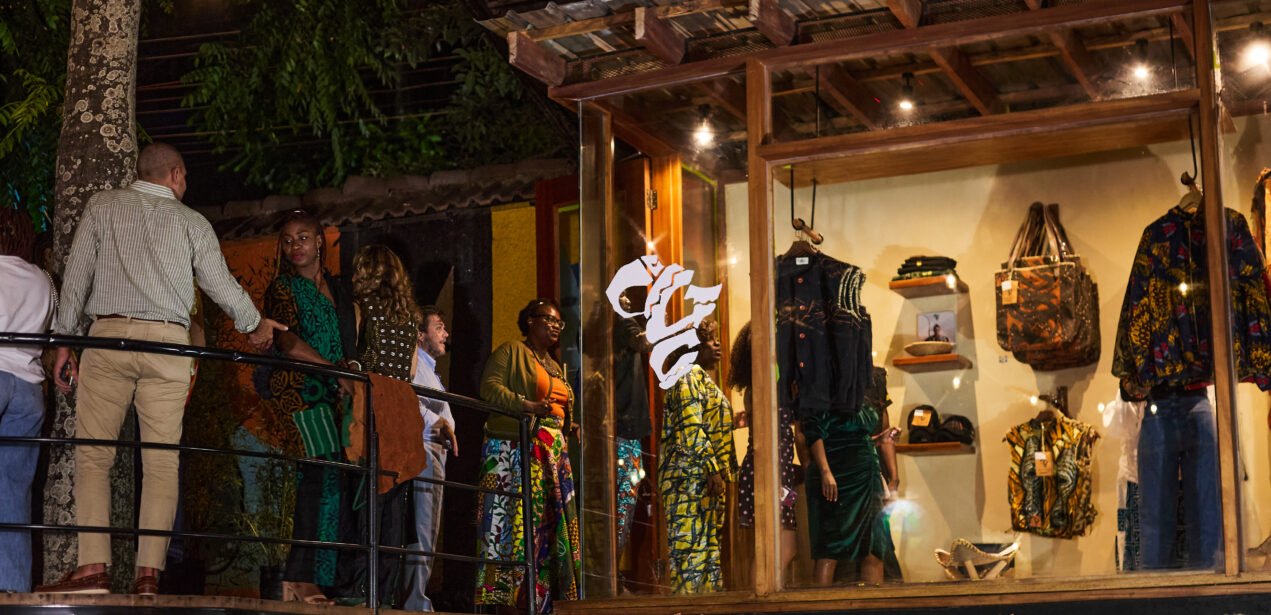
I arrived as the crowd thinned, expecting quiet, but found lingering energy instead, conversations drifting between artworks, artists still engaging visitors, and families lingering over each piece. As a photographer, light is usually my first consideration, but here the atmosphere took precedence. The gallery’s calm resisted Lagos’ usual rush; its warm lighting, inviting air, and subtle encouragement to slow down made the space feel less like an exhibition venue and more like a home built around art.
The exhibition reflects that same philosophy. The title, Endless Possibilities, speaks less about abundance than the freedom to experiment, evolve, and resist artistic boundaries. Twelve accomplished Nigerian artists, working across painting, sculpture, ceramics, charcoal, mixed media, bronze, wood, and metal, form a visual dialogue that is layered, diverse, and unmistakably contemporary.
No two works compete; they coexist. One painting invites stillness while another pulses with movement. A textured sculpture interrupts polished surfaces, and delicate charcoal drawings whisper beside radiant canvases. Diversity here is measured not only by medium but also by perspective.
Sylvester Aigbogun’s richly layered paintings celebrate community, belonging, and shared experience through vibrant colour and tightly connected figures.
Aina Felix’s Life on Water (Makoko) transforms a familiar Lagos community into a meditation on resilience. At the same time, The Crossroads of Life turns the movement of everyday markets into compelling visual narratives.
B.B. Babatunde’s mastery of charcoal shines in Omo Oba (Prince), where remarkable technical precision meets quiet dignity. His depictions of masquerades and ceremonial figures remind viewers that tradition is never fixed; it continues to evolve alongside contemporary society.
Henry Unuigboje’s Unleash Resurge, rendered in bronze and mild steel, commands attention through its powerful balance of strength and vulnerability.
Nearby, Ato Arinze’s Echoes of Connections I and II reveal remarkable restraint, using fired clay to explore balance, form, and human connection with quiet confidence.
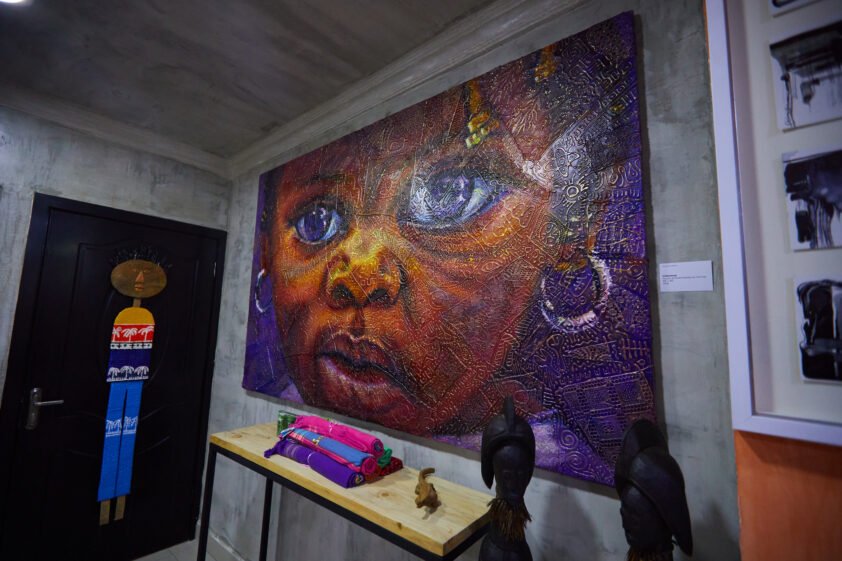
Ankeli Christopher blurs the boundary between painting and sculpture, allowing heavily textured surfaces to become part of the narrative itself.
Olumide Oladiran combines African motifs with contemporary visual language.
Adebimpe Adebambo, the exhibition’s only female artist, explores environmental consciousness through expressive abstraction, transforming sustainability into visual poetry.
Desmond Dubre extends the exhibition’s dialogue through works such as Shanty & Scanty and his Manoeuvring Masquerade series, where flowing white robes and iconic Lagos masquerades celebrate heritage, movement, and collective memory.
Kafaru Abiodun shifts attention toward everyday social landscapes in Ladies at Night, Victims of Violence, Reminiscence of Old Beach, and Street Market, combining realism with abstraction to preserve familiar Nigerian experiences through colour and symbolism.
Idowu Sonaya’s charcoal portraits, including Inner Peace, Joy, and Happiness, strip emotion to its essentials, allowing expression rather than colour to carry each narrative.
Mokayi Olusegun approaches storytelling through sculptural craftsmanship, combining mahogany wood, iroko, and acrylic in works such as Health is Wealth, Threads of Prosperity, Truth is Like an Indigo, Elegance, and Endless Wealth, where cultural wisdom and everyday life are preserved through carefully considered form.
The exhibition’s greatest achievement lies not in the individual works but in what happens between them. The most compelling images, for me, were the unscripted moments: a visitor gesturing toward a sculpture, an artist explaining a process, old friends embracing after recognising one another, a family moving quietly through the gallery, someone standing silently before a painting, lost in reflection. These are the moments great exhibitions create, where art becomes the beginning of conversation rather than its conclusion.
Stories were exchanged. Strangers asked questions. Artists listened as much as they spoke, and laughter mingled with thoughtful discussion. Young visitors noticed details adults overlooked, while collectors and first-time guests alike found something meaningful.
The experience felt remarkably democratic; everyone belonged. As a photographer, I search for decisive moments where composition and emotion meet. At Endless Possibilities, they appeared everywhere: a spontaneous embrace, an animated discussion, quiet reflection before a canvas.
By evening, as the gallery gradually emptied, nothing felt vacant. Every artwork had found an audience, every conversation revealed another perspective, every artist had shared part of their creative journey, and every visitor left carrying something uniquely their own.
That, perhaps, is what Endless Possibilities ultimately means: not limitless artworks, but limitless ways of seeing, endless conversations waiting to happen, and interpretations shaped by memory, identity, and culture.
The exhibition does not attempt to define contemporary Nigerian art; instead, it refuses to confine it. It expands our capacity to ask better questions and recognise ourselves in unfamiliar experiences. As I stepped back into the rhythm of Victoria Island, I carried away more than photographs. I left with conversations, moments of generosity, and a renewed appreciation for artists whose work continues to celebrate, question, and preserve Nigerian identity. Endless Possibilities succeeds because it is not merely an idea; it is lived, felt, and shared.
This post was contributed by:
Justice Lopez