



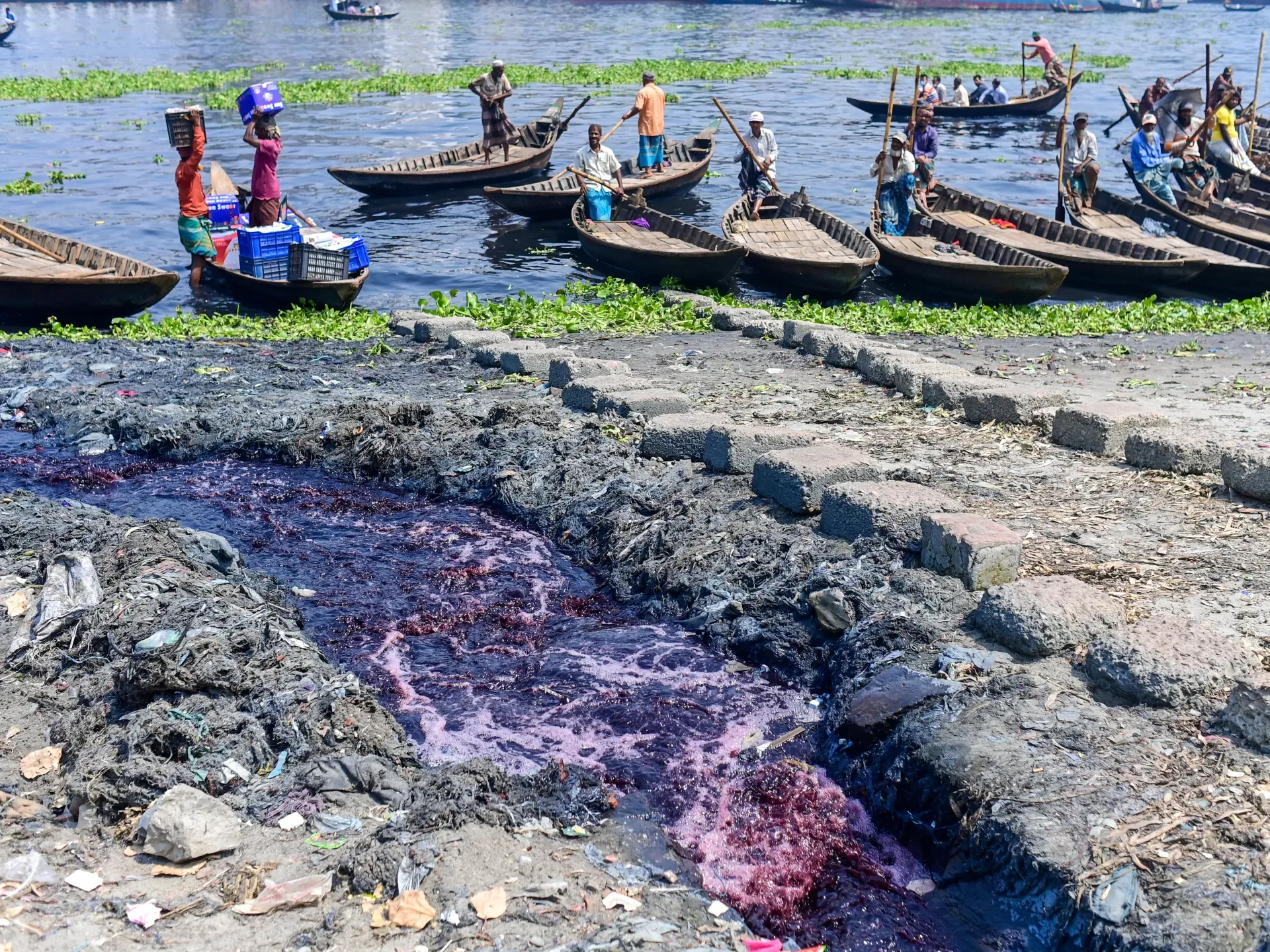
Somewhere in the rivers surrounding the garment districts of Bangladesh, the water runs in colours that no river should run. Ink-thick and chemical-dense, the wastewater discharged from textile dyeing facilities carries the residue of a process that has, since the Industrial Revolution industrialised colour production, been among the most environmentally destructive steps in the making of a garment. The World Bank estimates that between 17% and 20% of global industrial water pollution originates from textile dyeing and finishing. Researchers have identified seventy-two toxic chemicals in waterways that trace back solely to the dyeing process, thirty of which cannot be removed by existing treatment methods.
This is not a niche environmental concern but the cost of colour. And it is paid, almost entirely, by communities and ecosystems that have no commercial stake in the garments being dyed.
How an Austrian Start-up Is Using Bacteria to Solve Fashion’s Most Toxic Problem
Dr. Karin Fleck knows this with the precision of a chemist. With a background in chemistry from TU Vienna and RMIT Melbourne, she spent years managing large-scale industrial projects in the oil and energy sector before arriving at a conclusion that would inform the direction of her career: the problem had been hidden in plain sight for decades, and the solution was not a better version of the existing process. It was a fundamentally different one.
In 2017, at an international innovation competition called ClimateLaunchpad, she began developing the idea that would become Vienna Textile Lab. By 2021, the company was registered as a GmbH, operating out of Vienna’s third district. Its proposition was as simple to state as it was difficult to execute: replace synthetic textile dyes, derived from petrochemicals and toxic to humans, water systems, and ecosystems, with dyes produced by naturally occurring bacteria.
Not approximations of natural dyes. Not plant-based alternatives with their own limitations. Bacterial dyes: living systems harvested from nature, cultivated in controlled conditions, and applied to fabric through a process that requires no crude oil, no farmland, no greenhouses, and no seasonal calendar.
The Problem With Colour
To understand why Fleck’s solution matters, it is necessary to understand what the current solution actually involves.
The history of synthetic dye begins in 1856, when the British chemist William Henry Perkin accidentally produced a purple dye from coal tar while attempting to synthesise quinine. The discovery opened an industrial era of colour production that transformed what clothes could look like and at what cost they could be produced. Synthetic dyes were cheaper, faster, more consistent, and capable of producing a range of vibrancy that plant-based alternatives could not match at scale. The textile industry adopted them with near-total enthusiasm. Today, approximately 90% of clothing is dyed synthetically.
The environmental arithmetic of this process is severe. Up to 200 tonnes of water are consumed per tonne of fabric dyed in the textile industry, and the majority of this water re-enters natural systems as toxic waste carrying residual dyes and hazardous chemicals. Between 10 and 50% of the dyes used in a typical dyeing process end up in wastewater rather than bonded to the fabric. Many synthetic dyes, including certain azo dyes, are carcinogenic. The chemicals involved include formaldehyde, aniline, and hydrogen cyanide. Workers handling these substances throughout supply chains in South and Southeast Asia experience documented health consequences, including skin irritation, respiratory disease, and elevated cancer risk. The communities living downstream from dyeing facilities experience water contamination that affects drinking water, agriculture, and the health of everyone who depends on waterways that no longer run clean.
The fashion industry has known this for decades. The regulatory response has been, at best, partial. The EU bans the most acutely dangerous azo dyes within its jurisdiction, but the vast majority of global textile production occurs outside European regulatory reach, and enforcement even within it is inconsistent. The brands whose garments are dyed in these conditions have largely treated the problem as a supply chain externality rather than a commercial responsibility. The dyes remain cheap. The rivers remain coloured.
How Bacteria Make Colour
The Vienna Textile Lab process begins where synthetic dye production emphatically does not: in nature. Fleck and her team collect bacterial strains directly from natural environments, sourcing organisms from flowers, feathers, stones, soil, and water. These are not engineered organisms or genetically modified strains. They are naturally occurring bacteria whose biological processes happen to produce pigments, a capacity that exists in the natural world without any human intervention and that Vienna Textile Lab has developed the methodology to harness, control, and scale.
Once collected, suitable bacterial strains are identified, grown in laboratory conditions, and cultivated to produce the colourants that are then purified into pigments. The bacterial strains can be stored indefinitely in laboratory conditions and reproduced as required, which means that unlike plant-based dyes, bacterial production is independent of seasons, growing conditions, geography, and the agricultural inputs that plant cultivation requires. There is no harvest to miss, no drought to contend with, no competition for farmland between dye production and food production.
The resulting dyes perform on fabric comparably to conventional synthetic dyes in daily use. They can be applied in different ways: as extracted pigments prepared for the dyeing bath or, in certain applications, with bacteria applied directly onto fabric where they grow and develop patterns organically. The palette available through bacterial production is still more limited than the full spectrum of synthetic dyes, which is one honest limitation of the technology at its current stage, but it is expanding as the Lab’s research deepens and as collaborations with industry partners accelerate development.
The environmental profile of the finished product is categorically different from its synthetic equivalent. The dyes are biodegradable. Production requires no crude oil and generates significantly lower emissions than petrochemical dye synthesis. The process uses low temperatures and minimal water compared to conventional dyeing. The bacteria themselves are natural organisms rather than synthetic compounds, which means their downstream environmental footprint is fundamentally different from that of a petrochemical dye that persists in waterways and resists remediation.
The company has protected its process through patents, a decision that reflects not only commercial instinct but also the strategic understanding that intellectual property is the infrastructure through which a scientific idea attracts the investment and credibility required to travel from laboratory to industrial application.

The Road to Industrial Scale
The question that any promising sustainable innovation in fashion must eventually answer is whether it can operate at the scale the industry requires. It is a question that has sunk many technologies whose laboratory credentials were impeccable but whose translation to industrial volume proved technically, commercially, or logistically prohibitive.
Fleck has been direct about the challenge. The path to industrial scale is not primarily a scientific problem at this stage. It is an infrastructure problem, a capital problem, and a knowledge problem: understanding precisely how microbial dyes behave across the full range of fabrics, applications, and dyeing conditions that global textile manufacturing encompasses. Each fabric type presents different chemistry. Each manufacturing context presents different variables. The conditions under which bacterial dyes perform consistently and predictably at volume are still being mapped.
This is the explicit purpose of the Vienna Textile Lab’s most significant industry partnerships. In 2022, a collaboration was announced with ALBINI_next, the innovation hub of the Albini Group, one of the world’s leading producers of fine cotton shirting, and the Kering Material Innovation Lab, the research division of the luxury group whose brands include Gucci, Balenciaga, Saint Laurent, and Bottega Veneta. The project set out to explore the application of microbial dyes on cotton and other natural fibres, generating the fabric-specific knowledge that industrial adoption requires.
Fleck described the collaboration’s purpose in terms that illuminate how this stage of the technology’s development actually functions. Working with partners like Kering and Albini, she noted, allows the Lab to understand how its microbial dyes behave on different fabrics, and to use what is learnt from that close cooperation to bring the manufacturing method to an industrial level more quickly and effectively than laboratory work alone could achieve. The partnerships are knowledge infrastructure. They are the means by which a technology proven in controlled conditions is stress-tested against the complexity of real manufacturing at real scale.
The implications of Kering’s involvement are worth dwelling on. Kering is not a sustainability-first company in the way that a smaller brand with a purely ethical mandate might be. It is one of the largest luxury conglomerates in the world, with production volumes and supply chain relationships that represent exactly the industrial scale that bio-based dye technology needs to be proven against. If microbial dyes can perform consistently within the Kering supply chain, on the fabrics that Albini produces for markets accustomed to the highest standards of colour quality and durability, the technology’s scalability case is substantially made. The collaboration is, in this sense, not just a research project. It is a proof of concept at the level that the market requires.
The remaining barriers are real and should not be understated. Cost competitiveness with synthetic dyes remains a challenge; the economic case for switching is currently easier to make for premium brands with sustainability commitments and the price architecture to absorb higher input costs than for the mass-market manufacturers who account for the majority of global dyeing volume. Regulatory frameworks in major textile-producing countries have not yet created the conditions of urgency that would accelerate adoption. And the limited colour range currently available through bacterial production means that brands cannot yet replicate their full creative palette through microbial means alone.
These are solvable problems, but they are not solved yet. The Vienna Textile Lab’s position is that of an enabler working toward conditions that do not yet fully exist, which is the uncomfortable but accurate description of where most genuinely transformative industrial technologies sit for a portion of their development trajectory.
Africa’s Prior Knowledge
The conversation about sustainable textile dyeing in fashion almost invariably proceeds as though the problem of colouring cloth without toxic chemicals is a new one, requiring technological innovation to address what was previously unaddressable. This framing has the distinction of being precisely wrong.
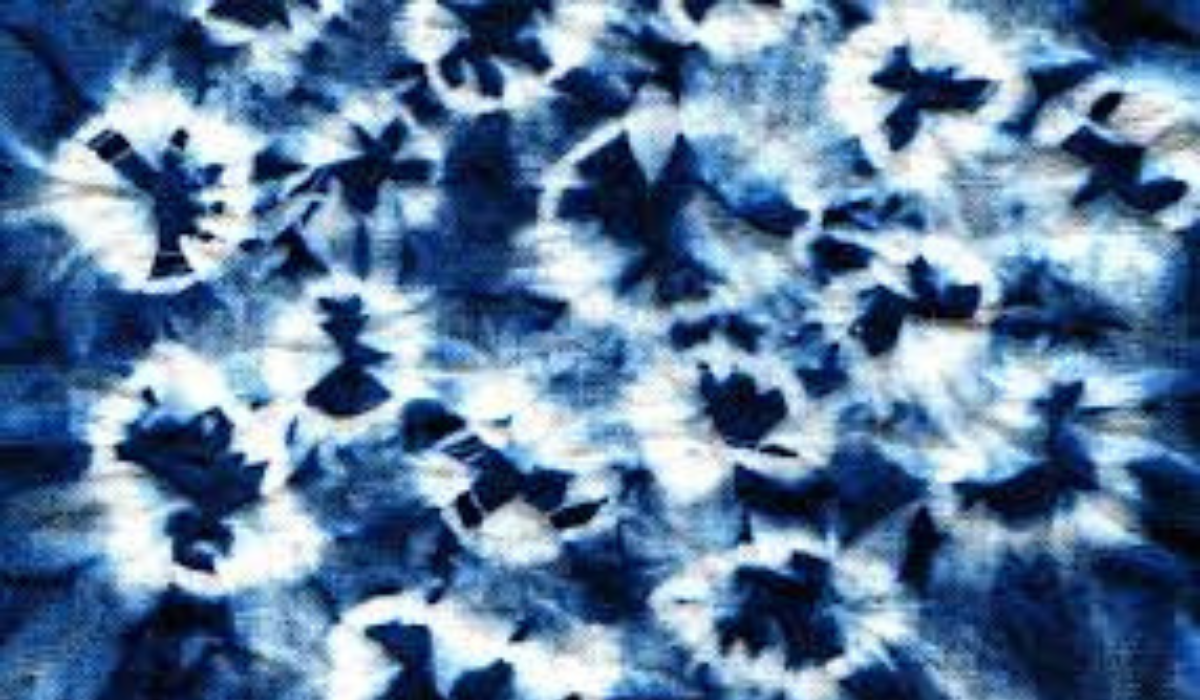
Africa has been solving this problem for at least a millennium. The oldest surviving indigo-dyed textiles were recovered from the Tellem caves in Mali, dating to the eleventh century. Fragments of indigo-dyed cloth found in royal graves in Nigeria have been dated to the thirteenth century. These are evidence of a sophisticated technical tradition, developed across West Africa, that produced extraordinarily rich and durable colour from entirely natural sources without the petrochemical infrastructure that the industrial dyeing system treats as a prerequisite for quality colour.
The tradition of adire, practised by Yoruba women in south-western Nigeria, uses indigo derived from plants applied through resist-dyeing techniques involving tying, stitching, and the application of cassava paste as a resist agent. The process requires no crude oil, no synthetic fixatives, and no toxic runoff. Its designs, passed from mother to daughter across generations, encode cultural knowledge, social meanings, and aesthetic traditions that are inseparable from the technical knowledge of how to produce them. The indigo vat is not merely a production tool. It is a cultural institution.
In Mali, the Bambara tradition of bogolanfini, known more widely as bogolan or mud cloth, produces its characteristic geometric patterns through the application of fermented mud to cotton that has been pre-treated with plant-based dye. The interaction of the mud with the dye creates the characteristic dark-on-light patterns whose symbolic meanings reflect historical events, social identities, and cosmological understandings that the fabric itself carries and communicates. Here, the dyeing process and the meaning of the dyed cloth are entirely continuous. Colour is not applied to a neutral substrate. It is the medium through which the cloth speaks.
These traditions are not merely ecologically sophisticated. They are technically sophisticated. The mordanting knowledge, the understanding of dye chemistry in pre-industrial terms, the management of fermentation processes, and the calibration of patterns through the control of resist: these represent accumulated technical intelligence of a high order, developed over centuries without the institutional science that Western technology mobilises, and they produced results whose durability and beauty are matters of historical record rather than nostalgic reconstruction.
The irony of the contemporary sustainable dyeing conversation is that the problem it is working to solve, how to produce rich and durable colour in textiles without toxic chemicals and environmental destruction, was solved in West Africa centuries before the problem was created by the European Industrial Revolution. The knowledge of how to do it did not disappear. It was displaced, commercially marginalised by synthetic dyes that were cheaper to produce at scale, and stripped of the institutional recognition that would have identified it as prior art in the emerging discourse on textile sustainability.
This displacement has costs that are not only historical. When fashion’s sustainability conversation frames bio-based dyeing as a frontier to be reached through biotechnology, it implicitly positions African dyeing traditions as heritage to be admired rather than knowledge to be engaged. The two framings are not mutually exclusive, and there is genuine complementarity between microbial dye technology and indigenous natural dye traditions: both proceed from the understanding that living systems can produce colour without petrochemical inputs, and the knowledge encoded in centuries of African dye practice contains insights about mordanting, fixation, and colour development on natural fibres that scientific research on bacterial dyes is, in some respects, independently rediscovering.
A genuinely comprehensive approach to sustainable textile dyeing would treat African dyeing heritage not as context but as a knowledge base. It would investigate what traditional West African mordanting chemistry understood about fixing natural dyes to cotton that remains directly relevant to current challenges in microbial dye fixation. It would fund the documentation and scientific translation of traditional dye knowledge with the same seriousness that it funds laboratory innovation. And it would ensure that the communities whose ancestors developed these technologies are positioned as participants in the knowledge economy that their prior art helped to create, rather than as observers of an innovation story that has been framed, without them, as starting from scratch.
Recommended For You
Why the Right Colours Can Change How You See Yourself
Barkcloth, Sustainability, and Reclaiming African Fashion at House of Dorlin
What Comes Next
Vienna Textile Lab’s trajectory from innovation competition concept to luxury industry partner in under a decade is, by any measure, a significant achievement. Fleck’s decision to leave a secure career in energy to rebuild her professional life around a problem that the industry had treated as intractable is the kind of decision that retrospective narratives make sound inevitable and that was almost certainly, at every stage, anything but.
The technology is real, the partnerships are serious, and the environmental case for rapid adoption is not merely compelling but urgent. The World Bank’s estimate that textile dyeing accounts for up to a fifth of global industrial water pollution is not a projection or a worst-case scenario. It is a description of the current situation, repeated every day that the synthetic dye system continues to operate at its present scale.
What bio-based dyeing represents, at its most ambitious, is not an incremental improvement to an existing process. It is the possibility of decoupling colour from petrochemistry entirely: of building a dyeing industry whose inputs are living organisms rather than fossil fuels, whose outputs are biodegradable rather than persistent, and whose environmental signature is compatible with the continued functioning of the water systems and ecosystems that the current system is quietly destroying.
Whether that possibility is realised depends on decisions that go beyond the laboratory. It depends on whether the regulatory environment develops to price synthetic dye pollution honestly. It depends on whether brands at scale make commitments that survive the commercial pressures of cost reduction. It depends on investment, on infrastructure, on the willingness of the textile industry’s largest players to accept transition costs in the service of outcomes whose benefits are primarily distributed across communities and ecosystems rather than concentrated in supply chains.
None of this is guaranteed. The fashion industry’s history with sustainability commitments is not one that rewards uncritical optimism. But in a laboratory in Vienna’s third district, bacteria collected from flowers and feathers and stones are making colour without oil and without toxins and without the downstream consequences that the current system has treated, for too long, as the invisible cost of making things beautiful. That, at minimum, is where the next chapter begins.