

An Exposé on Intellectual Property, Cultural Ownership, and the Western Commodification of African Art and Heritage
The question is simple, yet the answer is wrapped in layers of historical injustice and contemporary complexity: Who owns culture? For too long, the brilliant tapestry of African heritage—from the geometric precision of the Kuba cloth to the profound spirituality of Benin bronze figures—has been treated as a limitless, free resource for the global North. Today, a vibrant generation of African creatives, legal minds, and community leaders are challenging this narrative. They are fighting not just for fair credit, but for the economic and spiritual sovereignty of their ancestral knowledge. This is a battle for the soul of a continent’s creative economy.
The Theft of the Soul: A History of Commodification
The Western appetite for African art and culture is nothing new; it’s a story as old as colonialism. It didn’t begin with a high-street fashion brand ripping off a Maasai shuka pattern. It started with literal theft.
Loot, Labor, and the Museum Walls
Think about the Benin Bronzes. These stunning, historically vital plaques and sculptures were looted in 1897 during a British punitive expedition. They now sit in the world’s most prestigious museums and private collections, their monetary value soaring into the millions. For the Edo people of Nigeria, these objects are not mere “artworks”; they are sacred records, spiritual conduits, and vital historical documents. Their displacement is not just an aesthetic loss, but a wound to cultural memory. The bronzes, and countless other artifacts across Europe and America, became financial commodities for the West only after being violently separated from their cultural and spiritual context.
This pattern of extract, isolate, and profit continues. In the early 20th century, European modernists like Pablo Picasso and Henri Matisse were profoundly inspired by African masks and sculptures, famously influencing the birth of movements like Cubism. They found “primal energy” and “spiritual depth.” Yet, the names of the original African creators and the communities who owned the spiritual significance of these forms were largely ignored. The Western avant-garde was built, in part, on an uncredited, uncompensated foundation of African genius. The aesthetic became global property, but the intellectual property rights remained stubbornly localized, yet powerless.
The IP Problem: Western Law, Communal Knowledge
The challenge in protecting African creative assets is rooted in a fundamental clash between two worldviews: the Western Intellectual Property (IP) framework and the African Traditional Knowledge (TK) system.
The Square Peg of IP in the Round Hole of TK
The conventional IP system—comprising patents, copyrights, and trademarks—is designed to protect the individual, the novel, and the fixed. It assumes a single creator, a defined moment of creation, and a limited term of protection.
African traditional knowledge and cultural expressions (TCEs), conversely, are often:
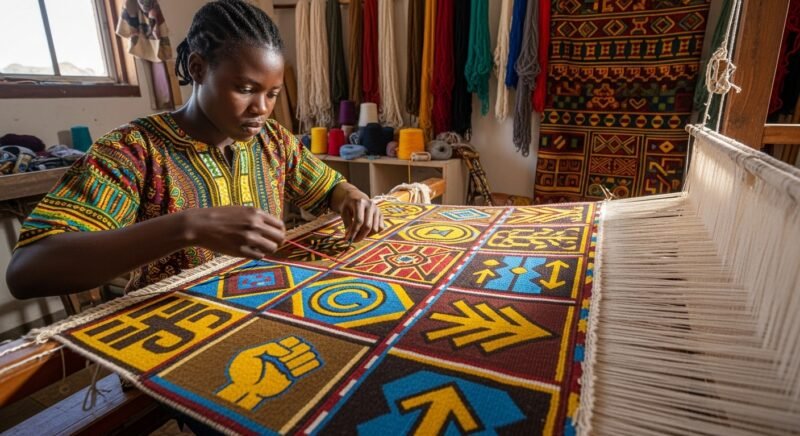
- Communal: They belong to the tribe, the clan, or the collective. The Kente weave, for instance, isn’t owned by one person but by the Ashanti people.
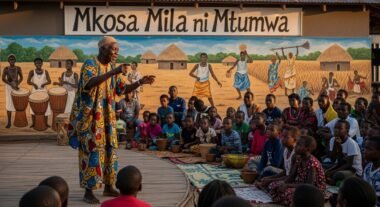
- Inter-generational: They are developed incrementally over centuries, passed down orally and through practice. They lack a single “author.”
- Functional and Spiritual: A pattern or a mask is often not just decorative; it’s a sacred text, a medicinal formula, or a tool for community governance.
The result? When a designer in London or Paris lifts a traditional West African textile pattern, standard copyright law often fails to protect the originating community. The design is considered “old” or “folklore” and therefore in the public domain. This “public domain” argument is effectively a legal loophole for appropriation, allowing the theft of ideas without consequence or compensation.
The Bio-Piracy Precedent
The issue isn’t restricted to art and textiles. Bio-piracy, the unauthorized commercial use of traditional knowledge about biological resources, offers a parallel warning. Indigenous communities hold vast, sophisticated knowledge about medicinal plants. Cases have emerged where foreign corporations patent an active ingredient derived from an African traditional remedy, like the anti-malarial properties of the Bitter root (Quassia amara), without acknowledging or compensating the communities who used it for centuries. The knowledge is taken for free, commercialized at a premium, and the originators are excluded from the wealth generated.
The African Reckoning: Reclaiming the Narrative
A quiet revolution is happening across the continent, driven by communities, legal experts, and designers who are actively and strategically fighting back. They are using the very tools of the West—legal and digital—to reclaim their heritage.
The Maasai Initiative: A Legal Blueprint
Perhaps the most significant victory is the Maasai Intellectual Property Initiative in East Africa. For years, the iconic checked patterns and name of the Maasai people were used indiscriminately by global corporations in fashion, tourism, and media, reportedly costing the community millions of dollars in potential revenue.
The Maasai community didn’t just complain; they acted. They used the legal framework of Collective Trademarks and Certification Marks. A collective trademark protects the commercial use of the name or symbol for a group, ensuring that any product bearing the Maasai name is genuinely linked to and approved by the community. This move has created a legal blueprint for other indigenous groups, forcing international brands to enter into fair licensing agreements and ensuring that a percentage of profits flows back to the community. This is about transforming appropriation into reciprocity and economic empowerment.
Digital Sovereignty and the New Generation
The digital age offers a powerful counter-narrative platform. African artists, fashion designers, musicians, and storytellers no longer rely on Western gatekeepers to present their work.
- Online Archives and Virtual Museums are being built by African institutions to digitize, document, and present their heritage on their own terms, controlling the narrative and access.
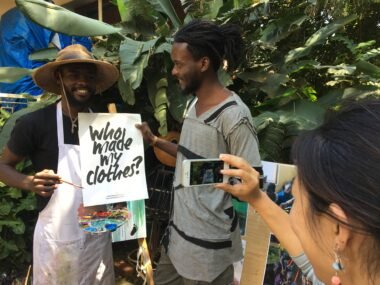
- Digital platforms like Instagram and YouTube allow designers to showcase their work globally, building authentic brands and direct consumer relationships. A young Ghanaian designer using genuine Adinkra symbols can now directly educate a global audience about the meaning of Sankofa (to retrieve wisdom from the past), making the wearer a partner in preservation, not just a consumer of aesthetics.
- Fashion Law Institutes and African IP organizations are actively training creatives on how to use trademarks and industrial designs to protect their work, moving the conversation from mere cultural complaint to enforceable economic strategy.
The Path Forward: Justice, Policy, and Partnership
The battle for Africa’s creative economy will be won not just through legal battles, but through fundamental shifts in global policy and corporate behavior.
A Call for Sui Generis Protection
Many experts argue that the solution lies not in fitting communal knowledge into Western IP boxes, but in creating a sui generis (unique) system tailored to the specific nature of traditional African knowledge. This would be a flexible, hybrid legal framework that acknowledges collective ownership, offers protection for traditional expressions (TCEs) that are dynamic and evolving, and provides legal redress against misappropriation. International bodies like WIPO (World Intellectual Property Organization) have been tasked with exploring this. However, progress remains painstakingly slow.
The Ethical Mandate for Global Brands
For multinational corporations, the mandate is clear: ethical sourcing and cultural due diligence are non-negotiable. Inspiration should be followed by partnership, not theft. This means:
- Prior Informed Consent: Seeking explicit, transparent permission from the originating community before using their intellectual property.
- Benefit Sharing: Establishing clear, binding mechanisms to ensure a percentage of commercial profits is returned to the cultural custodians.
- Authentic Collaboration: Working directly with local artisans, weaving guilds, and craft cooperatives, ensuring economic value remains at the source.
The ownership of culture is not just a legal matter; it’s a moral one. The collective heritage of Africa is its creative capital, its historical anchor, and its future economic engine. The new battle for restitution is happening in the courtroom, on the runway, and in the digital sphere, demanding that the world finally respects the deep, invaluable, and owned intellectual property of the continent.