

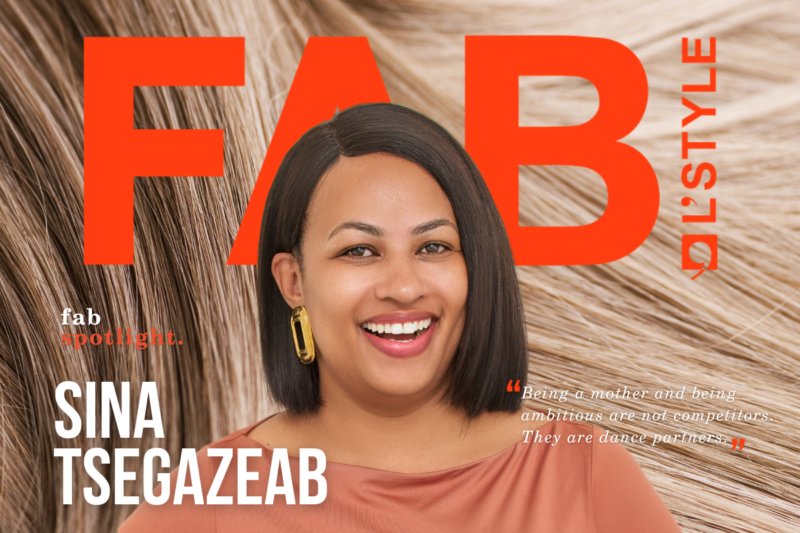
When Sina Tsegazeab arrived in Kampala in late 2013, she came with one suitcase, a degree in accounting and marketing, and a clear desire to start again. At the time, East Africa’s beauty and hair industry was largely informal, with little transparency around sourcing, quality, or standards.
Since then, the global human hair and extensions market has grown into a multibillion dollar industry, driven by increased beauty awareness and rising demand for ethically sourced products. According to Fortune Business Insights, the human hair extension market is projected to exceed USD 10.78 billion by the mid 2032, with Africa playing an increasingly visible role in both consumption and supply.
Against this backdrop, Sina built Natna Hair. The brand, whose name means “ours” in Tigrinya, has grown into one of East Africa’s most trusted luxury hair companies. What began as a personal frustration about quality soon became a mission to challenge industry norms. Rather than rely on labels, Sina focused on education, trust, and consistency.
Today, Natna Hair sits at the intersection of beauty, science, and culture. In this conversation with FAB L’Style, Sina reflects on migration, reinvention, and the long-term work of building a brand that believes African beauty deserves clarity, integrity, and global respect.
Why Uganda Became Home for Sina Tsegazeab

FAB: You often describe Uganda as home. When you first arrived in Kampala, did you ever imagine you would one day run one of East Africa’s most recognisable hair brands?
Sina Tsegazeab: I always believed I would build something special, because everything I touch, I want it to stand out. I want it to feel different. But I did not imagine it would grow to this level. I came from a very different culture and background, so arriving in Kampala in late 2013 felt like starting from zero. I had to understand how the fashion industry worked, how the hair industry worked, the knowledge behind it, the people, the music, and the entire environment. It was a completely new world. Looking back now, I feel blessed to have reached this milestone.
FAB: You studied accounting and marketing, and your family probably expected you to become a chartered accountant at a consulting firm with a life full of travel and corporate work. You already had siblings abroad, cousins abroad. So why beauty, for God’s sake?
Sina Tsegazeab: I may not have the perfect answer. Sometimes life simply leads you where you need to go. When I wanted to buy hair, I had an advantage. My aunties and sisters abroad always sent me things. When you are the youngest, they spoil you and say, “Try this, have this.” So I learnt early what good hair looks like. When I moved here, I saw how much people love hair. Everyone loves it. The market is full of hairpieces. But I still wanted to play with styles that were not available. When I went looking for good-quality hair, I could not find any. So I started asking sellers how they knew a product was good hair or how they confirmed it was 100 percent human hair. The common answer was, “It is written on the pack. The label says it is 100 percent human hair. These companies cannot lie.”
What people did not understand was where true human hair comes from, how it is collected, and why it costs what it costs. Someone might tell you that hair worth 300 dollars is ten dollars. They insist it is good hair. So that is where the idea began. With my business background, I saw a clear opportunity.
Found For You
Effective Ways to Care for Dyed Hair
Now That Corporate Branding Is Failing and Personal Branding Is Winning
FAB: What cultural shocks stood out to you when you arrived in Uganda compared to where you were coming from?
Sina Tsegazeab: Where I come from, we are minimalists. There are hairstyles we fear to try. The first time I came here, I saw people plaiting bright green, blue, red, and other bold colours. I imagined myself in those colours and could not picture it. It scared me. But the people looked beautiful and confident. You see someone in green braids or blonde mixed with white, and they look incredible. Then you ask yourself, “Could I ever try this back home?” I knew the whole community would ask what I was doing.
The colours surprised me, and so did the products. We do not use many products where I come from. Here, people use many products at once. Someone might use two or three tubes of oil, a smoother, and a gel, all together. For us, that is unusual. I kept wondering where all that product goes and why it is needed. Those were some of my biggest shocks.
FAB: What inspired the name Natna?
Sina Tsegazeab: “Natna” means “ours” in Tigrinya, my local language. When I started this brand, I believed it would grow. And because it is a Ugandan brand, I wanted the name to represent both where I come from and the home I found here. The name balances both of my worlds.
What 100% Human Hair Really Means
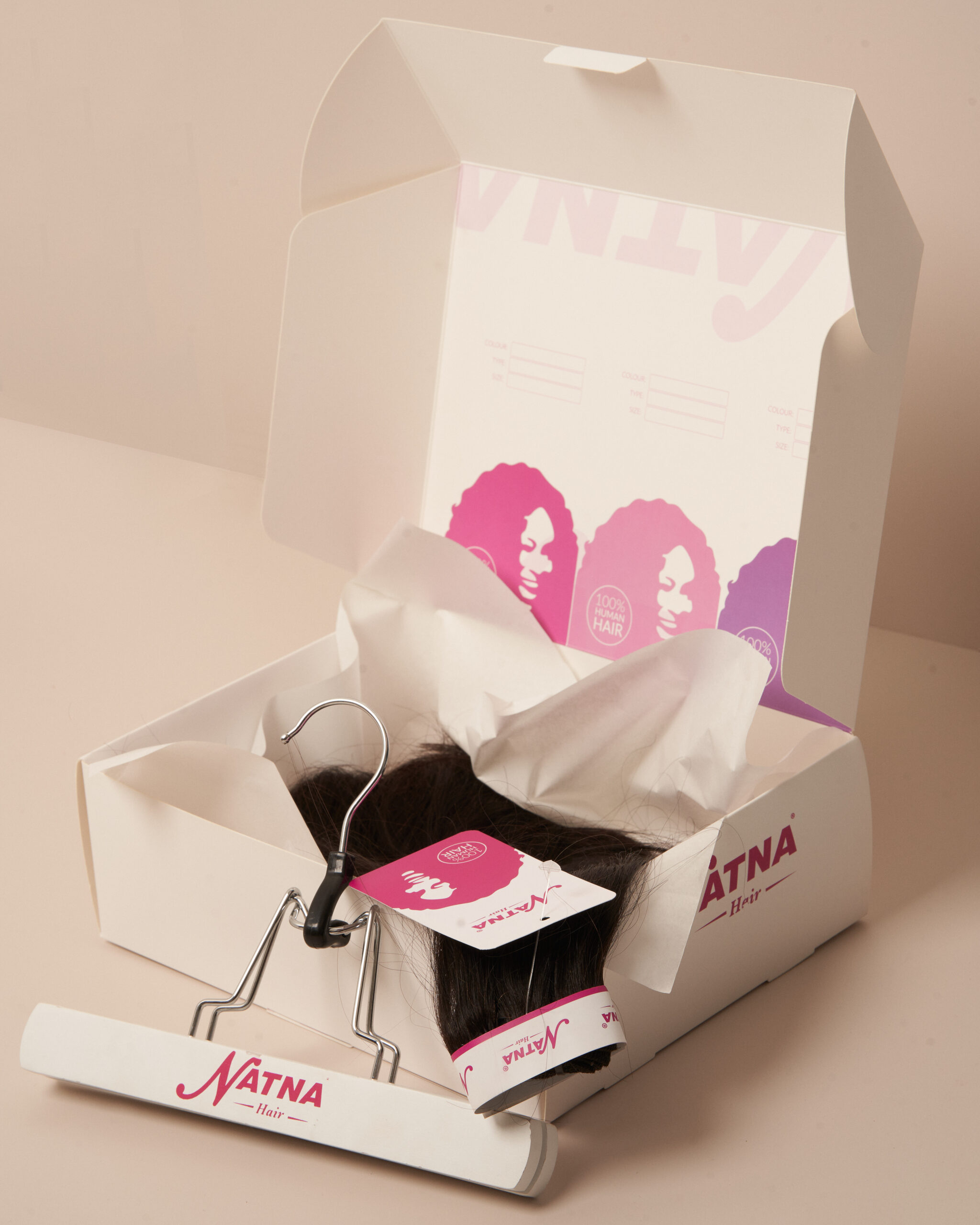
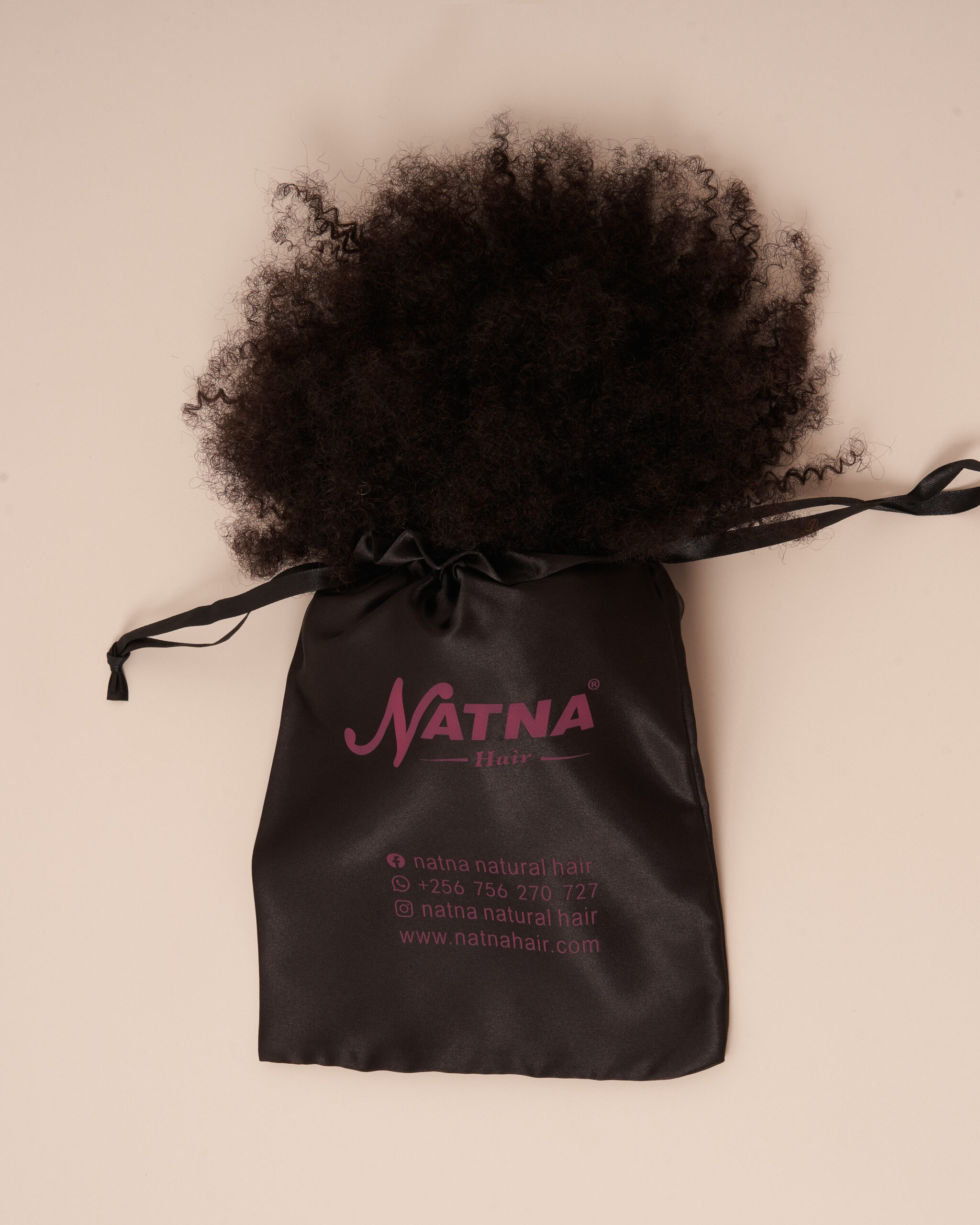
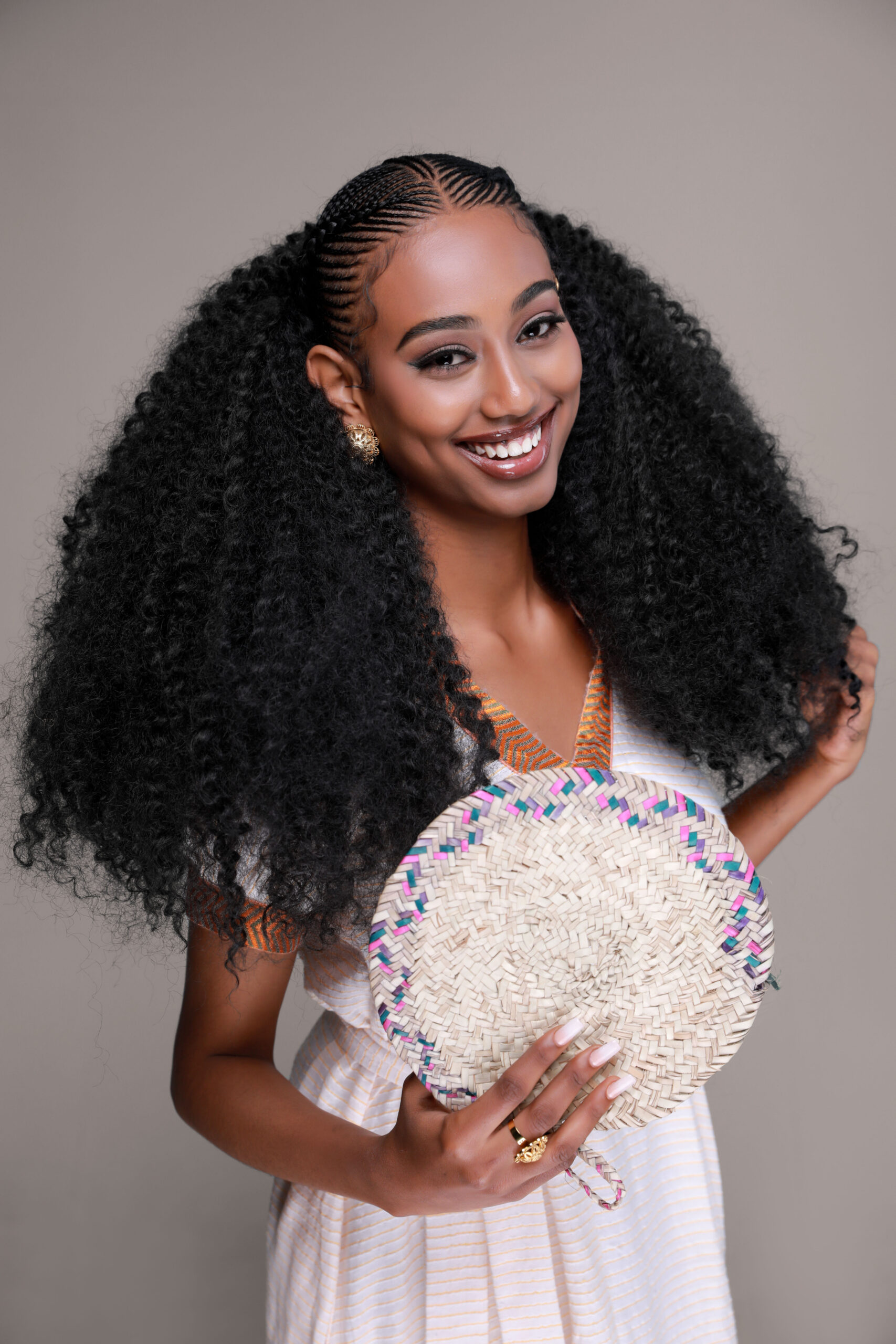
FAB: While building your brand, you once said many customers did not understand what 100% human hair really meant. People believed the label on the package, and if it said 100%, then it had to be true. How did you turn that lack of awareness into education and eventually into trust for your own brand?
Sina Tsegazeab: We invested in people. We let them take the hair and try it. We showed them what heat resistance looks like and explained different scenarios they needed to understand. We visited different places. We went to corporate offices. We hosted hair nights and small events. We demonstrated the product in real time. People saw the difference with their own eyes. Trust grew slowly, one moment at a time and one step at a time.
FAB: Would it be right to say that you call yourself a hair technologist rather than a stylist because of these choices?
Sina Tsegazeab: Yes. A hairstylist and a hair tech do very different work. A hair tech understands the industrial side of hair. They know how hair is made, what chemicals are needed, and what happens before packaging. If the hair is synthetic, they know how it should be balanced. Anyone who understands the industrial side of hair is a hair technologist. A hairstylist works with the final product. They style, wash, and plait. Their work happens outside the factory.
Ethical Hair Sourcing and Fair Practice
FAB: Walk us through what happens before a wig reaches the shelves. From sourcing to production, what does the process look like?
Sina Tsegazeab: The process begins with sourcing good hair. We have different locations and villages we work with. After sourcing, the hair goes into sterilising (multiple rounds, hospital-grade). Next come the processes most brands never talk about: aligning cuticles one direction (Remy), gentle colouring or steaming into curls, hand-ventilating wigs so they breathe on the scalp. Only then does it become the piece a woman falls in love with on the shelf.
FAB: How do you safeguard your products and your brand from people who create fake products that dilute trust in the beauty industry?
Sina Tsegazeab: We focus on awareness and quality. When we say you can achieve something with our product, we make sure it is possible, and we support you through it. You cannot avoid imitation in any industry. People will always try to copy. Your job is to lead. You keep educating customers about the quality of your products. The other side is that fake products expose themselves. Someone will buy a product that claims it can be coloured. They try to colour it, and it fails. They come back and say, ‘I tried this other product, and it did not work.’ That experience builds even more trust in us. So education and consistency help a lot. I hope that answers your question.
FAB: As a mother yourself, how has raising your children intertwined with raising this brand?

Sina Tsegazeab: Oh, they grew up together. My children have attended more hair events at their young age than most people do in a lifetime. I am raising them to embrace the business and value money and with that they can tell Virgin from processed hair by touch, and correct me when I call something “just brown” – “Mum, that’s chocolate auburn!”
But more than the technical side, I want her to see what quiet persistence looks like. That you can be soft-spoken and still move mountains. That being a mother and being ambitious are not competitors – they are dance partners. Some days I close my laptop early to braid my niece’s hair; other days I fall asleep on sacks of hair in the store while I finish orders.
Manufacturing Challenges and Local Production
FAB: Let us move to some of the debates in the industry. One of the biggest is the tension between embracing natural hair and wearing extensions. How do you promote natural Afro hair and also support clients who choose to wear wigs without feeling they have denied their African identity?
Sina Tsegazeab: Our philosophy says natural hair, natural look. I encourage women to enhance their beauty, not change it. If someone has soft hair, they should pick an extension that looks like their own hair. Someone with Afro hair should choose something Afro. Wearing extensions does not mean you should ignore your natural hair. We teach people how to select and how to protect. We are also developing hair care products because people need to know they should not neglect their natural hair simply because they wear extensions. It is a continuous learning process.
FAB: You mentioned that men are now quietly buying your products too. How do you see masculinity and grooming evolving in East Africa?
Sina Tsegazeab: We have many male clients. We supply hair toppings for men and also moustache and beard pieces. Most of these clients struggle with hormonal imbalance or health conditions that stop their beards from growing. They want to keep their sense of masculinity. We also work with men who have bald spots or are losing hair. They are important clients for us. Men in film also come to us when they need to change their look. For them, this is not a playful accessory. It solves a real problem.
FAB: And how is that part of the business going? Are more men embracing the option?
Sina Tsegazeab: Yes, the number is growing. The challenge is that many of them do not want to be seen or celebrated publicly as happy clients.
FAB: Why do you think they are reluctant to show their faces?
Sina Tsegazeab: Many of them work in the corporate world. They want people to believe it is their natural look. Privacy matters to them. Social media can also be overwhelming. We respect their privacy at all times.
FAB: Starting any business is tough, not just in beauty. What was the hardest part of scaling Natna?
Sina Tsegazeab: In many parts of the world you can access different financial tools. You can get funds or loans. Here, when you start a business in Africa, the capital comes from your own pocket. That is the reality. If you do not have someone who can support you or invest in you, the dream can collapse. Lack of access to finance was the biggest challenge. You want to grow, but you need someone to help carry the financial load. That support is not always available here.
FAB: Now that you have gone through that process, what lessons stand out for you?
Sina Tsegazeab: No matter how small your steps are, trust the process. Use the resources you have. Sometimes you collaborate. Sometimes you borrow from family or people who trust you. Sometimes you do the work yourself instead of hiring an expert, because that saves money. The most important thing is to avoid comparing yourself with others. You do not know their journey. You do not know the support system behind them. Focus on your process and keep moving.
FAB: There are many controversies around human hair sourcing. For clarity, how do you ensure ethical practices when acquiring materials?
Sina Tsegazeab: People should understand that many women willingly sell their hair to support themselves. Some sell their hair to pay school fees or take care of their families. It is nothing like the stories people imagine where someone shows up and cuts hair off a woman’s head. That is not how this works. It is a source of income for these ladies. We support them. We pay them fairly. We wait until they are ready to give. That is how we maintain an ethical and sustainable supply.
FAB: Let us talk about manufacturing. You currently source from outside, but you have spoken about wanting to manufacture locally. What structural challenges stop large-scale production in Africa or specifically Uganda?
Sina Tsegazeab: Manufacturing demands manpower and technology. Technology comes with heavy financial requirements. Competing at a global level is expensive. Technical skills are also needed. As a first phase, we have begun training people on a small scale. This is how we build capacity. I believe the process will become simpler with time because our goal is to have products made in Uganda.
Africa’s Future in the Global Beauty Economy
FAB: Where do you see Africa in the global beauty supply chain in the next ten years?
Sina Tsegazeab: With the pace we are moving, I believe Africa will be in a strong position. We already have what it takes. We have the raw materials. We have natural products. If we continue with the same energy and discipline, we will become one of the top leaders in the global beauty industry.
FAB: Do you see a future where the products are made in Uganda, stamped with ‘Made in Uganda’ or ‘Made in Africa’, and recognised globally the same way ‘Made in Italy’ is in fashion?
Sina Tsegazeab: Definitely. People already trust the brand. That trust makes the transition easier because we are not starting from zero. We know how to maintain the brand, and we know how to maintain quality. So I believe it will be much easier to grow and also contribute to the economy.
FAB: Some creative sectors feel threatened by new artificial intelligence tools. Consumers even claim they no longer need photographers because they can edit their own images. What is the experience in your sector?
Sina Tsegazeab: No, our situation is different. We are integrating AI into our website. Many of our clients shop online, and they often do not know how a hairstyle will look on them. AI becomes a solution. You can look at a hairstyle, upload your picture, and AI will show you how it will look on you. It helps us. But beyond that, AI cannot make a wig. Not yet. It is only simplifying the experience.
FAB: Many African universities still do not treat beauty and hair as formal disciplines. For most parents, if you say you want to become a hairstylist, they ask why you would choose that path. Should we be training beauty technologists alongside engineers, marketers, lawyers, and doctors?
Sina Tsegazeab: This is a very important and personal question. A few years ago, I realised that many stylists here are missing essential knowledge. Hairstyling was often seen as work for people who were not smart. When you told your parents you wanted to become a hairstylist, they questioned it. In many neighbourhoods, the stylist was someone who did not go to school. They learnt how to plait hair, one client at a time, and eventually built a skill. Because of this perception, people lacked product knowledge and did not understand what products were suitable for different hair types. Harriet’s hair and Samuel’s hair are completely different, yet they need different products.
To solve this and change the narrative, we are creating a beauty academy built on international standards. We plan to launch it early next year. This will raise the level of skill in the industry. Another challenge we face in Uganda is recognition. When we try to place products on big shelves outside Uganda, everything looks perfect until they ask, “Where are you from?” When you say Uganda, it is not familiar to them. But if someone says Nigeria, the reaction is positive because Nigerians are known for fashion, film, and music.
To make my work easier, I need more Ugandan creatives to join the industry at an international level. We need a common voice. When people hear Uganda, they should think of Harriet the stylist, Samuel, MPCB, and others. This collective recognition will make our work easier and help us promote Uganda globally. Creating this academy has been part of my dream. I want to build something that lasts, so we are opening the training school early next year.
FAB: When we look back twenty years from now, what do you hope the African beauty industry will be known for globally?
Sina Tsegazeab: Very interesting question. I believe Africa will stand out. We are large consumers, and we will become leaders in the industry. It will be us.
FAB: As leaders in consumption or production?
Sina Tsegazeab: In both. In production and consumption. We will produce what we consume, one hundred percent. No one else will take that market from us.